
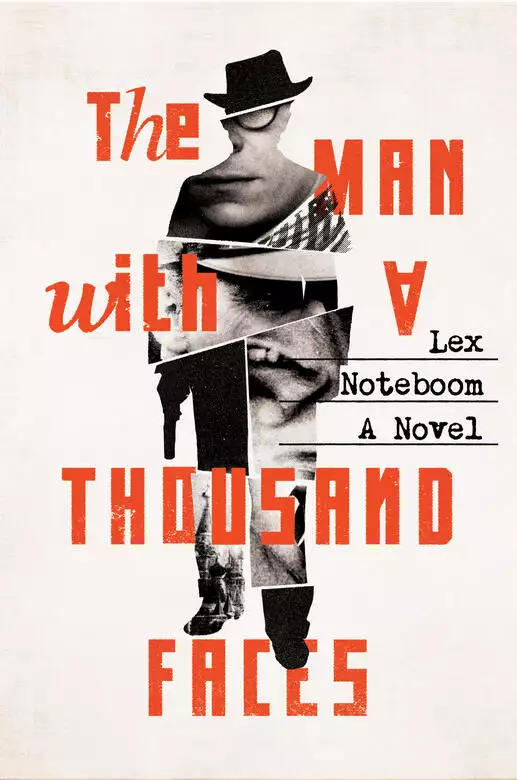
The Man with a Thousand Faces
- eBook
- Paperback
- Book info
- Sample
- Media
- Author updates
- Lists
Synopsis
A fast-paced international political thriller set in a fictitious former Soviet state, in which a new president has to fight for the survival of his family and his nation, and in which nothing and no one is what they seem.
Michelle is about to go on vacation with her husband, Daniel, and their children, when they learn that Daniel’s twin brother has tragically died. They must return to Dan’s homeland of Kazichia to attend the funeral. Once there, Daniel is pressured into staying—his late brother was the nation’s president, and now Daniel is his successor. Michelle wants to get back to Amsterdam as soon as possible, but that proves to be no easy task: a rebel leader is trying to unite the people in an uprising against the regime. No one knows who the leader is or how he gets his resources, but he has a growing rebel army behind him and is carrying out attacks.
As Russian intelligence and the CIA meddle in the conflict, and Michelle does everything she can to get her family home safely, Daniel battles the elusive rebel known as the Man with a Thousand Faces.
Fans of John le Carré, Ian Fleming, John Grisham, and Lee Child will be captivated by this propulsive thriller.
Release date: July 8, 2025
Publisher: Union Square & Co.
Print pages: 448
* BingeBooks earns revenue from qualifying purchases as an Amazon Associate as well as from other retail partners.
Reader buzz
 Please log in to recommend or discuss...
Author updates
The Man with a Thousand Faces
Lex Noteboom
The first passport the man opens belongs to Michelle Verdier Lechkova, born on 7th June 1986 in Zutphen. Michelle is in the back seat of the car. She is quiet because she feels like throwing up. During her first pregnancy, she was fine, but this time round, she’s tired, grumpy, and nauseous. Every little hurdle seems impossible to overcome, which is why she called their favourite resort in Dubai the day before arriving; she needs sun and a pool, stat. And the villa of the resort turned out to be available. “How lucky,” she told the resort manager, and she read out her credit card number. But Michelle knew that it was not a question of luck. The manager covered the phone with his hand and told his co-worker that the villa needed to become available immediately. “The guests that are there now need to be moved to a suite,” he said. “Think of an excuse. It’s for Mrs. Lechkov.” Michelle pretended not to hear them, but “Lechkov” sounded more like a warning than a last name.
The military policeman has entered Michelle’s information and opens the second passport. The document belongs to Alexa Lechkova, three years old, born in Amsterdam. The girl sits beside her mother in the car and stares out the window holding her stuffed dog. Alexa is quiet too, but for an entirely different reason; her parents were fighting before they started driving. Alexa doesn’t understand what her parents were talking about but can tell that the silence in the car is tense. It feels like something is about to happen. But what? She stares out the window at the flags behind the hangars, which are being pulled this way and that by the gusts of wind.
When Alexa’s information has been entered, the military policeman opens up the last document. The passport photo shows a man with a rough face, a broad nose, and soft eyes. Daniel Petar Lechkov, born in 1982 in the former Soviet state of Kazichia. But the passport is Dutch. Daniel is sitting next to the driver and quietly texting. He is trying to reach his family because something strange has happened; that morning he had fourteen missed calls from his mother—his mother, who normally never calls. On the off chance that she wants to talk to him, she lets him know through one of her assistants. Even when his father had collapsed on the steps of the Kazichian parliament, Daniel received a text with a request for a call.
And now fourteen missed calls…
Daniel wanted to delay the trip to Dubai immediately. Fourteen missed calls, fourteen reasons to worry. But Michelle dismissed it as a malfunction or a mistake. That angered him. He didn’t think she should prioritise a few days of holiday time over his family’s wellbeing—their family’s wellbeing. Michelle said that he wasn’t understanding enough. She needed rest, did he not get that? Because Alexa was visibly shaken by their discussion, he restrained himself. But he was still worried, and on the way to Schiphol he had tried to reach his mother or his uncle. Nobody responded. And he couldn’t find anything about his country of birth on any of the international news sites.
Not yet.
Because over three thousand kilometres east, just outside the capital city of Kazichia, something happened that night that would make international headlines. Between a badly maintained two-lane road and the narrow Kazichian shoreline lay the wreck of a Rolls-Royce. The road was scattered with glass and showed dark red streaks of oil and blood. On the side of the wreck, a hole was sawed to free the driver. But when the firemen pulled the man from the car, and one of them started performing CPR on him along the grey-blue surf, it was already too late. The victim had passed away. The fireman stopped, and when he leaned back, he took a good look at the deceased man’s face. He jumped back in shock.
“Lechkov!” he shouted to the paramedics running out to the beach. “It’s President Lechkov!”
The name sounded like a warning.
The military policeman returns the passports to the driver and breaks the silence in the car. “Have a great holiday, Mr. and Mrs. Lechkov.” Nobody responds. The gate opens, and while the car enters the grounds of Schiphol, the smile on the man’s face disappears. “Lechkov,” he mumbles to himself while trudging back to his station, and that second time, it sounds more like a curse word than a name.
A few dozen metres away, the BMW stops by the Lechkovs’ private jet. Daniel helps Michelle get out of the car and tells her that she can board the jet—he’ll take Alexa and get the bags through security. Grateful, she hoists herself up the steps of the plane, and while the flight attendant welcomes her, she promises herself to make peace. It’s not fair to push Daniel away when he’s talking about his family, especially when he’s worried. She likes to pretend her last name is just as powerful as any other name, but she knows that just isn’t true.
Daniel has lifted Alexa from the car, but when he feels his phone vibrate in his pocket, he sets her down and pulls out the device.
“Tsvali,” a woman’s voice says. “Are you there?”
“Mum?”
“It’s Vigo.”
Daniel looks at the plane and sees his wife behind one of the windows, closing her eyes.
“Daniel, do you hear me?” Maika Lechkova asks. “You need to get back to the family now. Your brother is dead.”
THE LAPTOP IS OLD AND THE FILE IS BIG, so the system needs to let the memory buffer fill up before the video starts. After a few moments of silence, a chair appears on the dusty screen. A wooden chair in front of a green wall. Nothing else.
The resolution of the recording is high: you can see tiny scratches in the wood of the armrests and dust particles floating through the air right by the lens.
The microphone is highly sensitive: you can hear all sorts of background noises. Something hums or hisses—studio lights or a fan—and people are discussing something quietly. The voices are far away and hard to understand. They speak a foreign language.
In the bottom at the right of the screen there’s a code visible, which ends in three zeroes:
ANTD = >> 000
Someone starts talking, his voice booming through the sensitive microphone.
“Madam, could you come here and sit on that chair? Then we can check if everything works as it should.”
“Where did that American soldier go?” a woman’s voice asks.
The man sighs. “He will come and get you afterwards. No worries.”
To the left, a woman walks into the frame, dressed in a black robe. The sleeves cover her hands, and embroidered in the fabric are countless white symbols. She looks like a pagan priest. When the woman makes it to the chair, the code in the corner of the screen starts going up fast. It stops at one hundred.
ANTD = >> 100
A different male voice sounds, this one further away. “He recognises her immediately,” he says. “That’s a good sign.” It’s unclear what the man means by this.
The woman in the black robe turns to the camera and asks, while looking into the lens, “Do you want me to sit?”
She has big, dark brown eyes and a black plait on her shoulder. Her face is delicate, but she has thick pink marks on her left cheek that demand attention.
“Please,” the man close to the camera says. “We will need to turn the chair a few times, but for now, you’ll look into this camera.”
The woman takes a seat, looks to her right, and then down. She seems to be unsure if she should stay there.
“You have brought an impressive amount of equipment,” she says, and she looks to her right again—maybe towards the door she entered through. “I did not expect you’d need this much technology for a TV interview.”
When she turns her face, the scars on her neck are visible, leading down to her collar. They look like scratches from a bear’s claw.
“Look straight into the camera and move as little as possible. Thank you.”
The woman straightens her back and looks into the lens. She is in her early forties, maybe a little older, and there’s no fear in her eyes; mostly, she seems annoyed.
“Don’t move, madam.”
The man further away says something, but he’s hard to understand.
“Madam, is it possible for you to remove your tunic? What are you wearing underneath?”
“I can remove it if you want,” she says, but she doesn’t move.
“Madam?”
She nods and stands up. By holding up her right arm, her sleeve falls, and her hand is free. With a hard tug, she pulls the black fabric over her head. Now she’s only wearing a tight white T-shirt.
“Is this better?” she asks, putting the robe away.
She is short and thin. Her left sleeve hangs loosely over her shoulder, and the end is tied; she only has one arm.
“Much better, thank you. If you sit down again and look straight into the camera, we can try again.”
The woman feels under her armrest. “This chair has shackles.”
“Could you sit still and look straight into the camera?”
“Why does this chair have shackles? Are you planning to chain me up if I don’t cooperate?”
The man laughs. “If you prefer, I’ll have my colleague find you a different chair.”
The one-armed woman shakes her head. “Ask your questions. It’s time to start.”
“Could you briefly introduce yourself?”
“Are you with CNN? You don’t sound American.”
“Could you introduce yourself?” the man repeats.
The woman rubs the scars on her neck and looks at the ground. The video quality is so high that you can see flakes of dandruff in her hair.
“Okay,” she says. “I’m known as Nairi. I live in the mountains of Akhlos, a part of the Caucasus that you’ll find in the country Kazichia in the encyclopaedia. But the border of that country is drawn by people who don’t have the right to have such powerful ink.”
“You’re the leader of the Jada resistance.”
“I prefer to call it a revolt.” She looks to her right for a moment. “My people, the Jada, have guarded the true border for centuries. The border of our independent country. But we are being oppressed by the oligarchs in the Mardoe Khador, led by the Lechkov family.”
Some paper rustles. The man standing close by is holding notes or instructions.
“Maybe I should go ahead and ask you the question that everyone has been meaning to ask,” he says, while the rustling gets louder. “Are you the rebel leader that calls themself ‘the Man with a Thousand Faces’?” The rustling stops.
The woman smiles for the first time, a pretty smile. “Absolutely not.”
“You would have named yourself ‘the Woman with a Thousand Faces,’ correct?”
“No, the name is fitting. I understand the reference to that awful statue in the capital. I get why he calls himself that.”
“So you sympathise with him.”
“As I told you earlier, I don’t have a clue who or what he is. But if the shreds of rumours I’ve heard contain any truth, we are striving for the same thing. The same skulls.”
“Which skulls?”
“All skulls with the last name of Lechkov. All of the family’s heads should be put on spikes, instead of them lying on pillows, filled with the down of our geese.”
“So you’re inciting violence.”
“I’m not a terrorist, but I don’t disapprove of the actions of the Man with a Thousand Faces. Unfortunately, there is nothing left but violence. The talking stage is behind us. Very far behind us.”
“So now it’s come to putting heads on spikes? The new Middle Ages.”
“Absolutely.” The woman leans forward onto her one arm and retracts her upper lip like a guard dog. “Starting with the head of the last-born son: Daniel Lechkov.”
While the woman starts explaining what she would do to Daniel Lechkov, the code in the bottom right of the screen shifts. The number goes down from one hundred to ninety-nine, without any indication of what just happened. Without an explanation of why it just got one step closer to zero.
ANTD = >> 99
THE PRIVATE JET SINKS THROUGH the clouds and starts descending. First, dark green mountains with white peaks appear. Then the coastline, along grey-blue water. Even from far away, you can tell that the sea is freezing. The last cloud plumes disappear, revealing a city like a blot of ink on a napkin, a few kilometres from the coast. Light grey on the outside, with long, winding branches of two-lane roads and high-rise buildings. Towards the city centre, the blot gets darker and more concentrated until the very middle, which looks black. The ink has seeped in and dried; nothing can be rewritten.
The plane lands, and Michelle can hardly believe they’re there. Kazichia, the country she pretended didn’t exist for all these years. As if it was some abstract place that could only be a source of money. The plane meets the landing strip, and she can feel the wheels hit the asphalt concrete, and the earth underneath it—Kazichian earth. Now there is no denying it anymore. It exists.
Another thing that can’t be denied is Vigo Lechkov’s death. The president of the Democratic Republic of Kazichia was killed, and on paper, his brother, her husband, is the rightful heir. Michelle has never studied the country’s politics that extensively, but she knows the name “Democratic Republic” is ridiculous. Blood determines the highest appointment of the country, not the people. There are elections, but the results are determined beforehand. So, if Daniel hadn’t built a life in the Netherlands with her, he would now ascend the throne. Her Daniel—the scientist, the computer nerd—is entitled to an entire country. It feels surreal. But when she looks at him, even that can’t be denied anymore. During the four-hour flight, he seems to have lost a few kilos. His cheeks are hollow. His grey-blue eyes look dull, like they have lost colour.
What are we doing here? she thinks. Why didn’t Alexa and I stay home?
When Daniel told her on the plane that morning that his twin brother had died in a car crash, she had one thought: I’m here for you. Naturally, she would join him for his brother’s funeral, even though his family scared her. Naturally, they needed to stay together and grieve. The plane was rerouted from Dubai to Stolia—better known in the West as Kazichia City—and within thirty minutes, they received permission to take off. But when Amsterdam had shrunk to a grey dot from her window, she started hesitating. She asked Daniel: Was it wise to bring Alexa and her unborn sibling to such a turbulent country? He reassured her that nothing would happen; his mother said it was safe. And the civil war took place in the East, between minorities. In the capital, it was quiet.
“But the funeral will be tense, right?” she asked. “Things will change in the country. And people will expect something from you. You’re the heir; the last Lechkov.”
“Yes and no. I am indeed the last male Lechkov, but that’s all. I will tell them they can’t count on me. And you’re right, that will be difficult. Especially with my mother, who will do everything in her power to change my mind.”
“Are you dreading that talk?”
Daniel shook his head. “No. If she expects me to drop everything and come back, she shouldn’t have sent me away.”
“But what will happen if you refuse the presidency? Does the government have a plan?”
“One of the other families will try to take my place. There will be chaos, I assume. But they will have to figure that out amongst themselves, Michelle, we have nothing to do with that. Anyway, I don’t want to think about that now. My brother just died.”
She nodded but felt uneasy for the rest of the flight. And now that they have landed, that unease has turned into anxiety.
A ground stewardess waits for them at the private gate. As soon as the family leaves their jet, the blonde woman leads their way. Hurry up, says her body language. They walk through a myriad of narrow hallways to avoid the terminal. Michelle doesn’t need to show her passport anywhere, and while she is used to getting priority everywhere, the way they are being coached through Vorta Airport feels more like a necessity than a luxury—as if standing still would be dangerous. The thought occurs to her that someone might be watching the airport. Maybe they’d want to know if Daniel has landed. Whoever “they” is.
When they leave the airport through the sliding door of the diplomat’s exit into the cold air, a row of black, armoured Mercedes four-wheel drives awaits them. Next to every car, a soldier is holding a machine gun, their faces scrunched into a frown.
The men salute only Daniel, as if Michelle and Alexa don’t exist. Their luggage gets loaded into cars, and they take off before getting the chance to settle into their seats. Alexa jolts awake in her car seat, and Michelle has to grab onto the door so she doesn’t go flying.
Anxiety makes way for fear.
“Why are we in such a hurry, Daniel? Do they expect trouble?” He rests his hand on her leg and smiles reassuringly.
“Don’t worry, nothing is wrong. They drove me around like that as a child every day. I went to my friend Leonid’s birthday party with flashing lights. All the neighbours came outside to watch. I almost died; I was so embarrassed.”
“Couldn’t your mother make an exception for you back then?”
“When I asked her to turn off the flashing lights, she said I shouldn’t be too modest. Lechkovs can’t afford to be modest. I had no idea what she meant by that; I just didn’t want to be gawked at.”
She can tell that Daniel is not just grieving his brother’s death, it’s also painful to be back. He is dreading coming home. And however bad she feels for him, it mostly comforts her. The faster they can return to Amsterdam, the better.
The convoy drives through the streets of Stolia, and after a few minutes, Michelle can relax. She studies the capital they rage through, surprised by its strangeness. Of course, she has always known that Daniel came from a different country with a different culture, but only now does she truly see the difference between East and West. The suburbs are modern, but neglected; tall grey flats, abandoned car parks with groups of people hanging around. It looks unsafe. When they drive into the city, the roads get wider, and the architecture is Stalinist. In the middle of the giant, empty roundabouts they have placed statues of workers with strong jaws and farmer wives with wide hips. But the Soviet slogans on the tall government buildings are hardly legible anymore, McDonald’s restaurants colour the side streets red and yellow, and they pass the swoosh of a Nike store. It is as if they are driving through history, through the rings of a tree.
After three roundabouts the cars hit a ridiculously wide, empty road, heading to the city centre. She sees the ninth-century city wall, and behind it winding alleys and even older buildings, the central ring of the stump. She has seen this centre before: it comes up when you look for the city on Google. The most important landmark is a statue of a traditional Kazichian soldier towering over the prolapsed town gate.
While they pass under the soldier, Michelle presses her face to the window to look at him. His legs are wide apart, he has his hands on his back and the weapon of Kazichia on his chest. But the strange thing is that there is nothing beneath his thick head of curly hair: no ears, no nose, no mouth.
“He’s kind of scary in real life,” she says.
“The Man with a Thousand Faces,” Daniel says. “My grandpa had it placed there to honour the Kazichians who freed the country from Ottoman oppression. He stands for all those soldiers who could only have won with the power of many. That’s why he is faceless.”
“But that makes him elusive.”
“I think so too. I do like the idea. The new nation of Kazichia needs a story to become a real country. But that statue is not the way.”
“If your grandfather had it built, then the Man with a Thousand Faces must be younger than he seems.”
“Yes, the statue is supposed to look like it’s been here since we became independent. But the inside is made of steel and concrete.”
The five Mercedes race through the city gate and ancient pastel-coloured buildings pass by Michelle’s window.
“It’s beautiful here,” she says.
“This is the nicest part of Stolia. There are restaurants, tea shops, and an underground market. If we have time, we’ll walk around.” He forces a smile, but she can see his pain.
“We’ll get through this together,” she says.
“Thank you for coming with me.”
She squeezes his hand gently, while her other hand clings to the car handle like a trapped animal.
Through the windscreen, Daniel points at a hill in the middle of the city centre. An old, dark brown fort lies submerged in the rocks.
“Is that the Neza fort?” she asks.
“Yes, and the hill is called Arschta Sk’ami. The Chair of God.”
“The Chair of God?”
Daniel laughs. “The Arabs called it that. Long before Grandpa seized power.”
“Even your megalomaniac family wouldn’t go that far.”
He lets go of her hand. “Plenty of insanity, here.”
“And you lived on the Chair of God? That’s the house from your childhood photos?”
“On top of the hill, behind that gate, lies the Mardoe Khador. That means ‘the House of the Highest Law’ or ‘the High House.’”
“From which the country is governed.”
“Yes.”
“And your family has the most influence in the Mardoe Khador?”
“Our family. And yes, as of yet. My grandpa had the Mardoe Khador built, and since then, the Lechkovs have had the most influence. So, the question now is what happens when they don’t appoint a new president.”
The cars enter a tall gate, with barbed wire and cameras. They end up on a dirt road and start to climb the hill. Michelle sees a giant Russian-style villa looming, with five wings that grasp the Chair of God, like fingers. A building that exudes power. The Mardoe Khador. She can hardly fathom that Daniel grew up here and wonders what would have happened if Daniel’s mother hadn’t sent him away. What would have become of him? Who would he have become?
The convoy stops next to a bombastic-looking fountain. The front doors of the High House open, and a small woman appears; Maika Lechkova, mother of the nation and her mother-in-law. Michelle sees the small woman standing there and forces herself to count to ten. Everything about her mother-in-law, even the tiniest things, offends her. The way she puts out her cigarette in an ashtray held by a staff member, as if that thing can’t be placed on a table. The way she has to waddle to the car, as she has her trouser suit tailored a few sizes too small, even though she is getting fatter. But Michelle knows she needs to get over that.
She just lost her son. However insufferable she is, these people are your family, and they need you.
Daniel gets out and greets his mother in Kazichian. Michelle can tell by his voice that he is about to cry. When she walks to the other side of the car to get Alexa, who has fallen asleep again, out of her car seat, Maika grabs her shoulders. Michelle holds her breath. The old woman smells like the fruity tobacco of her Merit cigarettes. For Daniel, that smell is nostalgic—he told Michelle once that he smuggled packs of Merit to his room in boarding school to burn them without taking a single hit as if they were sticks of incense, to fade away his loneliness—but for pregnant Michelle, it’s hard to imagine the smell bringing comfort. Her nausea is getting worse, but she forces herself to embrace her mother-in-law.
“I cannot imagine what you must be going through, Mother,” she says slowly, in English. “We are here for you.”
“Grandma iPad?” Sleepily, Alexa looks at the grandmother she has only ever seen on FaceTime.
Maika pecks her granddaughter on the cheek and points Michelle to a window in the big building. “We prepared a private apartment for you. You will be taken care of here. It’s a pity that winter is coming, but you’ll see how gorgeous this country is once the sun comes out in a few months.”
Michelle looks at her mother-in-law in surprise. “In a few months?”
“Yes, springtime in Kazichia is beautiful.”
“Um, Mother, that’s very kind, but we won’t stay for that long, unfortunately. After the funeral, we’ll have to get back. But maybe you would like to come to Amsterdam? You could stay with us for a few nights. We redid the guest room.”
Maika looks at her but doesn’t respond. She turns round to her son and says something in Kazichian. She sounds angry.
“What is it?” Michelle asks Daniel. “Did I do something wrong?”
“Let’s not mention our return trip.” His voice sounds curt. “My mother just lost her eldest son.”
Is he scolding me? Michelle thinks. Should I have lied about staying?
Daniel turns round and is about to follow his mother to the house when a car comes racing up the hill, its brakes screeching as it halts next to the family. The door swings open, and a tall, dark Kazichian man gets out of the car. Michelle recognises him immediately from family photos. General Radko Lechkov, Secretary of Defence and commander-in-chief of the Kazichian army. Daniel’s uncle. The military man, tall as a tree, reminds her of an American football player, but Daniel has told her once that a sensitive soul hides behind his intimidating appearance.
“Tsval’a!” the man shouts. In two steps he is with them and holds Daniel’s face between his enormous hands. Tenderly, the military man kisses his nephew’s forehead.
“Uncle Radko, let me introduce you to my wife, Michelle,” Daniel says when he manages to wriggle himself out of his uncle’s firm grip.
The man turns round to Michelle and kisses her cheeks as if they’ve known each other for years. “Welcome to Kazichia, Mikaella Lechkova.” He turns back to Daniel.
“We are going to make this right. You do know that, Daniel? We are going to make this right, as much as we can.”
“What do you mean? Vigo’s accident? How can we make up for an accident?”
Confused, Daniel looks at his mother, and Michelle can see he’s startled. Radko wants to explain, but Maika stops him.
“Chumad!” she says fiercely.
Daniel asks what is wrong in English.
“Chumad’i sule! O’tu abscha var?!” Maika continues. She sounds grim.
Michelle wants to ask if she’s done something wrong, but the conversation turns into a heated argument, and she turns Alexa away from the commotion. Now and then, Radko’s baritone voice interrupts the two quarrellers as if trying to calm the situation, but it doesn’t seem to have any effect. After a few minutes, Maika suddenly walks to the front door.
Michelle pulls Daniel’s sleeve. “What was that all about? Was that about Vigo’s accident?”
He smiles. “No, it was about our stay here. I asked if they had a cot prepared for Alexa. So that she can go right to bed.”
She gives him a puzzled look. “A cot? You fought over a cot?”
“I don’t want to go to sleep,” Alexa says, unconvinced of her own words.
Daniel bends down and kisses his daughter. Then he gets up and looks Michelle right in the eye. “Something went wrong, but it’s all been taken care of,” he says. “Don’t you worry.”
THE ONE-ARMED WOMAN THEY CALL NAIRI shifts in her chair.
“Stay seated, please,” a male voice says.
The woman arches her back. “I’m not a doll. Ask your next questions while I relieve my joints.”
“Maybe you could give us some background on Kazichia. Most Westerners hardly know the country, if at all.”
The woman rubs her eyes. “Can I have some water?”
“I’ll send someone for water. In the meantime, look straight into the camera and answer my question. The longer you look straight into the camera, the sooner we’re done here.”
“You’d think my answers determine whether we’re done, not the position of my body. But that’s not how it works at CNN?”
It’s quiet. Someone is typing. The keyboard sounds like rain drumming on a window.
“All right, I’ll tell you about Kazichia,” she says.
While the woman starts talking, the code at the bottom of the screen changes.
ANTD = >> 98
“There are two countries named Kazichia. The true Kazichia is centuries old, and the largest part of that small country was inhabited by all sorts of clans and tribes of my people, the Aschjadazians. Or the Jada, for short. The current Kazichia is a country taken over by oligarchs who oppress my people systemically.” The woman’s neck breaks out in hives, and she starts talking faster and faster.
“But nobody is willing to save our children. Just as Yemen is cast aside, despite all its horrors, Kazichia seems to have been erased from the world map. Forgotten by the whole world.”
“Perhaps you could give us some concrete context?” the man asks. “And please, look…”
“Yeah, yeah, I’ll look into the camera. And I’ll tell you about this country. Am I getting water or what?”
“It’s coming.”
The woman shifts again and looks into the camera. “The story of the modern Kazichia is the story of Petar Lechkov. In the capital, he is seen as a god, but my people call those kinds of people parasites.”
“Tell us about him, please.”
“That’s what I’m doing. During Stalin’s
We hope you are enjoying the book so far. To continue reading...
