
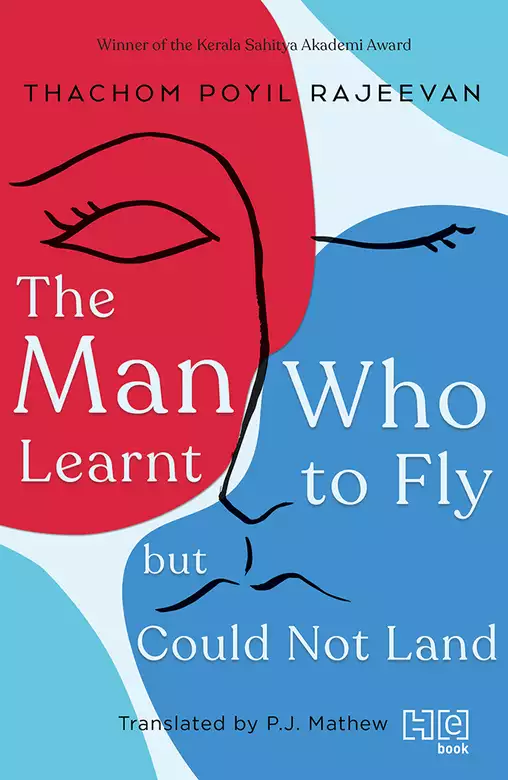
The Man Who Learnt to Fly but Could Not Land
Available in:
- eBook
- Paperback
- Book info
- Sample
- Media
- Author updates
- Lists
Synopsis
K.T.N. Kottoor was activist, lover, communist, friend, saint, sinner ¿ but, above all, he was a writer¿ Born into a family of rural wealth and near-feudal influence in a village nestled in British Malabar, Koyiloth Thazhe Narayanan Kottoor knows little of want. But as a patriotic fervour grips the country in the last decades of the Raj, a veritable avalanche of new ideas and ideals shapes the young KTN. As he grows from a boy who takes to writing not only as art but also as a tool of social change, to an activist enamoured of varying philosophies and enmeshed in India¿s freedom struggle, he grapples with hardship, love, lust and a search for meaning in a reality that forever disappoints. His is a tale both deeply personal and political ¿ tracing a web of caste, sexuality and ideology, while also navigating the struggles of a man coming to terms with himself as a writer and as an individual. Award-winning author Thachom Poyil Rajeevan weaves a magical almost-biography of a fictional writer, one inhabited by goddesses and ghosts, a fortune-telling parrot, dead humans in the avatar of crows, and a blind woman who hears ¿ and sees ¿ better than anyone else. Masterfully translated from the original Malayalam, The Man Who Learnt to Fly but Could Not Land is a poignant exploration of the power of writing, the chaos of a country¿s rebirth and the life of an idealist caught up in the maelstrom.
Release date: August 20, 2020
Publisher: Hachette India
Print pages: 336
* BingeBooks earns revenue from qualifying purchases as an Amazon Associate as well as from other retail partners.
Reader buzz
 Please log in to recommend or discuss...
Author updates
Close
The Man Who Learnt to Fly but Could Not Land
Thachom Poyil Rajeevan
AUTHOR’S NOTE
It was neither from teachers nor from books that I first heard the word ‘freedom’ and came to know about India’s freedom struggle. Born into a family of nationalists, I imbibed these terms from my familial and social environs. Elders in the family used to narrate to us not only village myths and stories from the Puranas but also real incidents and experiences from their participation in or hearsay about the freedom struggle. Looking back, I realize that through this interlacing of history, myth and personal narratives, they were cultivating in us – certainly unknowingly – an agrarian and a subaltern way of understanding history. Hence, K.T.N. Kottoor: Ezhuthum Jeevithavum, now translated into English as The Man Who Learnt to Fly but Could Not Land, is a compilation of the past, which has always been an area of creative fascination and expressional challenge for the writer in me.
When I began writing this novel in Malayalam in 2011, with about seven years’ preparation, my prime objective was to trace the evolution of the concept of freedom from an inspired idea and slogan to its political reality, and to chronicle the diverse and mysterious paths the struggle for it took in its onward march to fruition. But during the process of writing, the main theme fanned out in various directions like the roots and branches of a tree on fertile land. And that land is Kottoor, a tiny, rural village, which lies at the foot of the Western Ghats.
Kottoor the village is real and at the same time imaginary, like its inhabitants – except the protagonist, Koyilothu Thazhe Narayanan, who, honestly, bears all the hallmarks of being fictional. Even so, my publisher and I had got quite a few inquiries about the availability of K.T.N. Kottoor’s literary works when the novel’s Malayalam original was published in 2012. This enthused me a lot, but beyond that enlightened me about the visceral transparency of the membrane that divides fact and fiction, and history and myth.
Now, I must acknowledge my indebtedness to many for facilitating the writing of this novel: primarily to Vettukattil Johnson of Nilambur, who opened the doors of his old bungalow in the middle of a forest in Wayanad for my lonely stay and studies, and to the Rockefeller Foundation’s Bellagio Center in Italy, for providing me a residential fellowship for completing the novel.
I know that a culture- and language-specific work of this kind is not easy to translate into English, because it is filled with local idioms, slangs, rituals, hierarchical ways of caste and class in addressing one another, familial and social relations in the feudal and joint family systems, names of flora and fauna which might have no equivalents in the target language, etc. Had the veteran journalist and translator P.J. Mathew not taken up the task of translation, and Shanuj V.C. and Cibani Premkumar not contributed their precious time to its editing, this book would not have taken its present avatar. I remain deeply grateful to them.
Finally, I owe my wife, Sadhana, and my daughters, Sreedevi and Parvathy, for allowing me to be myself in my creative journeys.
Ramavanam, Kottoor
Thachom Poyil Rajeevan
4 March 2020
PROLOGUE
There is an image that continues to linger in the memory of the elders of Kottoor. It was of 26 January 1930, when people across the country observed Freedom Day after the Indian National Congress, under Jawaharlal Nehru’s leadership, passed a resolution in Lahore declaring complete independence from British rule. The people of Kottoor village, which lay at the foot of the Chengottu Hills in the Malabar region of the Madras Presidency, also observed Freedom Day.
Kottoor was completely secluded from the world outside. It had the Chengottu Hills and Veyappara to the west, the Oolery Hills and the Koorachundu Hills to the east, Pallikkunnu to the north, and the Thandapram Hills and the Kaliyath forest to the south. Kottoor lay in the middle, safely protected by nature. No military expeditions or other incursions had ever reached this enclave. No thieves or robbers either. It could have been that all of them had turned back thinking that no humans lived beyond the thick forest and the tall ranges. The villagers of Kottoor thus survived as remnants of some great movement, unaware of what lay beyond the hills that gave them natural protection, unaware about a world beyond it and what went on out there.
For Kottoorans, it did not matter who ruled them. None of the established instruments of governance, such as the court, the military or the police, had ever peeped into their lives. They had not even heard of the Zamorin or Tippu Sultan, the Portuguese or the British.
Since they weren’t aware of what government was, they didn’t know what freedom meant either. And if someone who knew asked, they would say: ‘Freedom? We already have it, don’t we? We can punish the Pariahs and Pulayas, and evict the tenants at will. Isn’t that freedom?’
It wasn’t usual for all the villagers to gather at one place, disregarding caste and community. Even the people of the same caste got together only rarely. They gathered only on occasions like weddings or deaths or during the festival in the ancestral temple. Bhagavati, Kuttichathan and Gulikan were the gods of the Kottoorans. The Nairs and the Thiyyas, who were almost equal in number, had their separate Bhagavatis, Kuttichathans and Gulikans. The Pariahs and the Pulayas had no right to watch the festivals of the Nairs and the Thiyyas. Their god was Kooly. A separate Kooly for the Pariahs and the Pulayas. And their gods did not have, like their devotees, either land or permanent shelter, and had to relocate themselves along with the devotees to the shores of brooks or the slopes of boulder-strewn hillocks.
Elsewhere, in the normal course, a footpath would first take shape as the common thoroughfare, followed by a school at one end of it. A post office would come next, then a registrar’s office, a village office, police station, tea shops and grocery stores. Though the neighbouring Perambra and Naduvannur villages had all this happening and the people there mingled, overcoming caste and community barriers, Kottoor remained insular. It had only one thing that could be called a road – a path taking off at Velliyur, known as the New Road, that headed towards the Oolery Hills via the lower side of Veyappara and Puliyottumukku. It was actually a path created by footfalls. All other paths were too narrow even for a single person to pass, or were ridges of rice fields or fallow lands that anyone could take to go anywhere.
Into one of these alleys on the morning of 26 January emerged a father with his son in tow. The father was Koyilothu Thazhe Kunjappa Nair. The son was Narayanan. He was about eight or nine. He walked in front, carrying a bamboo pole with a tricolour tied to it. The father wore a white khadi loincloth, a buttonless shirt and a Gandhi cap.
‘Where is our Kunjappa Nair off to with his son?’ people wondered.
Kottoorans had hardly heard of the Lahore meeting of the Congress or the decisions taken there, leave alone of the gathering strength of the freedom struggle. They had, of course, seen Kunjappa Nair going off somewhere and returning days later, totally rundown. Kunjappa Nair could afford it, they thought, for he had inherited acres and acres of land. A landlord and a scholar, he knew the entire vocabulary of the Sanskrit dictionary, Amarakosa, and was an expert in the materia medica, Siddharoopa. A noble man, he was unwavering in his observance of the dharmic mores and duties. A true philanthropist, he wouldn’t turn away anyone approaching him for help – in kind, cash or advice.
And there he was that morning – walking with his only son who was carrying a flag. It was the washerman Raman who had ventured out early to deliver the day’s load of washed and ironed cloths, who ran into the man and his son first.
‘Where’s the father off to, taking the little Nair along?’ Raman asked, his hands clasped behind him, and stooping a wee bit. That was Raman’s way of showing respect to all and sundry. Indeed, this had given him a permanent stoop. ‘Ah, Raman! I’ll tell you, come along,’ said Kunjappa Nair.
There was no one in all of Kottoor who could say no to a command from Koyilothu Thazhe Kunjappa Nair. ‘Even the dead would get up and stand in line if Kunjappa Nair asks’ was a refrain among Kottoor folks.
‘Give me a minute,’ said Raman and ran home.
He changed into a clean, white mundu – he didn’t care whose it was – and slung a towel over his shoulders, and ran back even faster. The same motions were repeated in front of every home they passed. The entire village trooped behind Kunjappa Nair without even knowing why and where they were headed. Among them were the Nairs, Nambiars and Kurups, besides the Thiyyas who could, going by the mores of the day, come up to the veranda of the Nair houses. But at this sight, the Pulayas and Pariahs panicked and ran to hide behind trees and bushes. They feared that the landlords were coming to evict them from their hovels.
By the time the gathering reached the Thykkandy plains, it had transformed into a procession. Some of them hadn’t even had breakfast. They had just come out of their houses as usual only to run into Kunjappa Nair.
And at the head of the procession walked Narayanan, enthusiastically holding the flag aloft.
The procession wended its way through the Irikkampath field, then Cherumanthottu and reached the lower reaches of Veyappara where nature seemed to have cried a sudden halt to the Chengottu Hills. Now, Kunjappa Nair turned back, raised his arms and motioned everyone to sit down.
The crowd sat down. Narayanan, who was holding the flag aloft, kept standing without turning back. Standing under a banyan tree by the path, Kunjappa Nair began to speak. That such a tree had always existed there, spreading its branches and foliage, came to the notice of some among the crowd only when Kunjappa Nair began speaking.
It was the first speech that the people of Kottoor had ever heard. A lot of people – political leaders, sociocultural activists, writers and artists – have since come to Kottoor and delivered impressive speeches – only to be promptly forgotten. But the speech that Kunjappa Nair made that day still reverberates all across Kottoor. You can hear it even now if you prick up your ears:
‘My dear countrymen, we should get freedom. We should have the freedom to work and grow as we want. We cannot surrender it to anyone.
‘We should destroy the government that denies us this freedom. We should install in its place our own rule. It is our right to do so.
‘The British are denying us our freedom. Not only that. They also exploit us economically, culturally and spiritually. We should cut off our ties with Britain. We want full freedom. We should win it. Therefore, let us take a pledge here and now to implement the directions of the Indian National Congress in order to achieve full freedom.’
These words flowed strong and quiet. After uttering each sentence, Kunjappa Nair would pause briefly and look around at the crowd, as though he was engaged in a personal dialogue with each listener.
Even though they did not quite understand what Kunjappa Nair meant by words like ‘freedom’, ‘British government’, ‘culture’, ‘spirituality’ and ‘economy’, all of them nodded at every word. After all, it was their Kunjappa Nair who was speaking.
‘Now, come.’
Kunjappa Nair started walking again.
Narayanan was still in front, holding the flag aloft.
When they realized that Kunjappa Nair was leading them to the top of Veyappara, they were a bit bewildered. Though they saw that massive black rock every day like an immovable fate, none had ever gone to the top of it.
From anywhere in Kottoor, Veyappara seemed like an elephant running in heat. Its top even appeared to move like the temple of an elephant. The rock was believed to be the abode of several terrible, formless demons like Kaalabhairavan, Pottichute and the single-breasted Ottamulachi, all of whom curdled the blood of Kottoorans with their sourceless screams and mind-numbing deceptions. Nobody dared to go anywhere near the rock after dusk. It was said that those who did had come down spitting blood and turned into bare skeletons.
Kunjappa Nair began climbing, and the entourage began clawing up the craggy surface that had never felt human footfall. Several of them felt a tingling sensation when their soles felt the rough surface and crevices that had been nurtured since the beginning of time. It was not fear or wonder they felt, but a wild and inexplicable numbing.
As for Kunjappa Nair, he kept climbing without pausing to look back. And Narayanan kept his pace a few feet ahead of his father, with the flag flying high. The wind was so strong that it looked like he might be swept up in the air with the flag. But, with the expertise becoming of a dragonfly, Narayanan kept flitting from one sharp edge to another on the enormous rock face. Under the impact of the marchers’ feet, the layers and layers of ferns and fungus that had grown over centuries of relentless rain, and had withered and dried up over uncountable centuries of sunshine, began to crumble. The true colours of the rock face began to show. Several stroked the rock as though it was a wild beast that had just been tamed.
The procession finally reached the top. Many of them felt they were no longer on earth and that with a little more height, they could touch the clouds. Some even raised their arms.
Kunjappa Nair was panting heavily. No one had seen him panting so badly.
‘Howsoever high it may be, we are still on earth. And wherever we stand, it is our earth and sky. We have come up not just to touch and grab the sky, we have come up to also look down, to see where we came from. Only then can we understand what freedom means,’ said Kunjappa Nair, in between spells of coughing. Then he began to cough incessantly.
People looked down in all directions, down to the deepest depths, to the farthest points. They saw a feast of hills, valleys, rivers and rice fields. And overlooking them were the Wayanad ranges in the east and the Arabian Sea in the west.
‘There is a world beyond that…and people live there…like us…’ Kunjappa Nair struggled to complete the sentence; his coughing and panting had aggravated.
‘Have you seen…our Kottoor?’ Kunjappa Nair pointed downwards even as he coughed and panted severely.
Beyond unseen roads lay their Kottoor – like a crinkled tin vessel. ‘Have we been living in such a deep pit, and yet walking about with our chests swollen?’ they wondered.
The smallness of Kottoor made them sad.
By then, even though he was struggling, Kunjappa Nair had managed to erect a podium for the flag by collecting the boulders that lay strewn around. The villagers gathered around the podium.
Narayanan planted the bamboo flagpole in the middle of the podium. He looked at everybody, saluted the flag and began singing in a sweet voice:
Vijayee vishwa tiranga pyara
Jhanda ooncha rahe humara…
The conqueror of the world, our beloved tricolour
Let our flag always fly high…
Narayanan had not finished when Kunjappa Nair collapsed at the foot of the flagpole. Clasping his chest tightly, he tried to say something. But the words failed to leave his throat. A tremor gripped his body. Sweat broke out on his forehead, on his cheeks, chest and then all over. The buttonless khadi shirt was soaked in sweat and clung to his body. His face contorted.
‘Hra…’ a sound came out of Kunjappa Nair’s throat. It sounded as though the rock had coughed out loud. Blood oozed from his mouth.
Kunjappa Nair had unfurled the tricolour atop Veyappara, saluted it, and raising the call of ‘freedom’ in Kottoor for the first time, collapsed face down and died. But Narayanan kept singing:
Swatantra ke bheeshan rann mein…
In the intense battle for independence…
When the song ended, Narayanan burst out crying. That cry pursued him for the rest of his life.
The boy who burst out crying in front of his father’s body after finishing the song was the one who later became K.T.N. Kottoor, or Koyilothu Thazhe Narayanan Kottoor – poet, politician, sociocultural activist, social worker and much else – who disappeared suddenly one day, leaving behind a trail of mystery. He was a poet to some, a Congressman to some others, a communist to some, a communalist to some others, immoral to some, moral to some others and a criminal to yet others. In short, a man who lived a lonely life, flitting from one persona to another, not confining himself to any one identity nor identifying himself with any. In the poet’s own words:
Searching for the unknown,
Roaming paths untrodden
I arrived at this wayfarer’s inn.
Let me, the mutt, who doesn’t know
The secret ways of you, world,
Take a brief break here, please.
(From ‘Wayfarer’s Inn’)
BOOK I BIRTH AND CHILDHOOD
1
The year was either 1919 or 1920. It could even have been 1921. The exact year is unclear. It was a time of monsoon downpours. Whether the month was Karkkitakam or Midhunam was also uncertain. Floodwaters had swamped the Koolivayal rice fields. Suddenly, piercing the midnight silence of the rain-soaked and shivering Kottoor, a shrill hoot rent the air. The Chengottu Hills and the Oolery Hills passed it on to Pallikkunnu and the Thandapram Hills. Only Veyappara pretended not to have heard it.
The hooting emanated from the bathing pond in front of the Koyilothu Thazhe house, close to the Mepadi rice fields. It rose from Changaran’s throat. Not once, but several times. There was no one in Kottoor who could hoot like Changaran. It was then customary to get a Thiyya to hoot to announce the birth of a boy in a Nair household. Therefore, when a Nair lady developed labour pains, they sent not only for the midwife but also for the ace hooter Changaran. And Changaran had been at Koyilothu Thazhe since early morning that day, staying in the hayloft attached to the cowshed, downing arrack and chewing betel nut.
It was Devayani Amma, wife of Koyilothu Thazhe Kunjappa Nair, who had developed labour pains. Devayani Amma was a gentle lady. The people of Kottoor saw her only once a year when she came out for the festival in the Cherumanthottu temple. The Bhagavati of Cherumanthottu was the presiding deity of Koyilothu Thazhe, a branch of the Cherumanthottu house. It was to the Koyilothu Thazhe house that the Bhagavati would go first on festival day, possessed and dancing, accompanied by chenda drummers and torchbearers in front and behind. Devayani Amma would be waiting in the front yard for the grand ingress of the Bhagavati. She wouldn’t hear the chenda, but hear the tinkle of the trinkets on the goddess’s drawn sword and the jingle of the anklets.
Devayani Amma was very particular about the preparations for the reception. She would sweep the front yard herself and daub cow-dung paste to purify the place, resolutely declining help from the army of domestic help that she had. It was her way of paying respect to the Bhagavati. Once the ritual cleaning was over, she would bathe, wear a white mundu, adorn her forehead with a kuri, and light the ceremonial wick lamp. Looking more radiant than the lit lamp, she was now all ready to welcome the Bhagavati.
Everyone in the family would come for the festival. It was mandatory that everyone be present in the front yard when the Bhagavati made her entry. But the Bhagavati would pretend not to notice anyone. She would first circumambulate the tulsi bush in the middle of the front yard several times, run north to south three or four times and then go straight to where Devayani Amma was waiting. The Bhagavati would then stomp about a few times, panting, and talk haltingly in a strange and incoherent tongue.
Devayani Amma’s face would be aglow with fear, reverence, gentleness and prayer. The goddess would then put her hand on the head of everyone in the house, uttering something incoherently, and go back after running the length of the front yard once or twice just as she did upon entry. Then Devayani Amma would step into the house, leaving the lamp to run its course. Her next appearance outside the door would be at the next festival a year away.
The Koyilothu Thazhe family enjoyed great prestige and wealth. It was to this family that the Valoor palace had assigned the right to administer the village and collect the levies even though there were several other Nair families in the village with equal rank. And the Koyilothu Thazhe family discharged their duties honourably.
Even if the tenants failed to pay their dues, the family would remit the royal dues from their own income. And the tenants would not exploit this kindness, and tried to pay up promptly. It is said the name of the family, Koyilothu Thazhe, meaning ‘the palace down there’, was personally given by the suzerain as a special favour.
Indeed, the only family from Kottoor invited to witness Kathakali performances in the royal court was Koyilothu Thazhe. The lord is known to have snubbed those who questioned the special favour with the remark: ‘Can you tell the difference between Kathakali and Thira? The Koyilothu Thazhe people know.’
However, the Koyilothu Thazhe house had a curse on it – tough luck begetting male progeny. Kunjappa Nair’s father, Chappan Nair, had eight children. Only one of them was male – Kunjappa Nair. All the rest were girls and their children too were girls. Not because they did not give birth to boys. They did, but all of them died at birth or soon afterwards. As for Kunjappa Nair, he didn’t have a child for several years after marriage.
A popular joke in Kottoor, of course behind the back of Kunjappa Nair, was that he and Devayani Amma slept in separate rooms and that he dared not touch her for fear of hurting her.
There were several others who believed that Kunjappa Nair was biding time for propitious star configurations for the birth of a male child. For Kunjappa Nair knew some astrology too. But the people at large took Devayani Amma to be barren and Kunjappa Nair to be star-crossed.
But, belying all calculations, Devayani Amma conceived. And for Kunjappa Nair, ever since he learnt about the conception, it was as if he had taken the celibacy vow for the Sabarimala pilgrimage. His pious nature turned even more pious – prayers and temple visits all the time, and reading the sacred books when he was home. He was afraid to even look at his wife lest his unguarded stare endanger the foetus.
He instructed his labourers not to overburden the bulls or belabour them. The cows should be milked only after the calves have had their fill. Fortunately, he didn’t have to instruct the domestic hands not to clean fish or slaughter fowls or goats because the household was vegetarian.
Devayani Amma’s routines too underwent substantial changes. Her monthly ritual bath, smearing turmeric paste, became a daily affair. She would sit for hours every evening rubbing liniments all over the body and foment the body with a towel dipped in hot water. She would purge her stomach periodically by consuming virgin coconut oil laced with palm gur.
She made it a point to join the women in the work-shed, grab a pestle and husk some rice. It was something she had never done before. Similarly, she came out into the sun and spread parboiled paddy for drying and turned it over periodically with her feet or leant down to use her hands. She swept the courtyard with a broom, avoided catnaps, read ‘Sheelavati’ and ‘Krishnappattu’, and tried to dream of Sree Krishna and Sree Rama for the sake of the life growing in her womb.
Devayani Amma’s naturally fair complexion and slim frame took on an extra gleam after the conception, so much so that one could almost see through her translucent body. The hair on her belly took on a golden hue which she caressed with a secret smile.
Her labour pain started early in the morning. The room on the west side had been readied for the impending birth. It had a single-frame window which opened into Kunjappa Nair’s private study. Ever since he learnt that Devayani Amma had conceived, Kunjappa Nair remained confined to this room. From there, he could monitor whatever happened in his wife’s room. It was through that window, in the sixth or seventh month of pregnancy, that he learnt about Devayani Amma’s difficulty to turn in bed and her growing sense of unease. He would get up with a start in the middle of the night and go to the window to listen in for her breathing, which he could hear, however subdued it was, and he could well imagine how her belly rose and fell while breathing.
By midday, Devayani Amma’s father, Nellikandy Shekharan Nair, and mother, Bhargavi Amma, and sister, Leela, arrived. Shekharan Nair sat down in the portico alongside Kunjappa Nair, while Bhargavi Amma and Leela went straight into the labour room.
The delivery did not take place even by evening. What came out of the room were only the agonized cries of Devayani Amma.
‘If it were to be such a torture, it would have been better had it not happened at all,’ whispered Kunjappa Nair, his face dropping.
‘Don’t worry, everything will be taken care of by the Paradevata,’ said Shekharan Nair, seeking to comfort his son-in-law.
Dusk had come and gone, and nothing happened. Shekharan Nair went up to the door of the labour room and called out to his wife for news.
‘The head is visible,’ said Bhargavi Amma.
‘Should we look for another midwife?’ he asked.
‘It wouldn’t make any difference,’ she said. After a pause, she suggested, ‘Taking her to Kozhikode might help, but is it possible?’
Shekharan Nair returned to his seat next to Kunjappa Nair and sat down.
‘If only one can be saved, save the mother,’ Shekharan Nair prayed under his breath, but it came out rather loud.
Kunjappa Nair, who was praying silently, stared at his father-in-law in anger and helplessness. This face of his son-in-law was new to Shekharan Nair and he froze in his seat.
‘The head is half out and stuck. No amount of massaging is helping,’ Bhargavi Amma came out and said.
‘Ask the midwife to leave if she can’t.’ Shekharan Nair’s anxiety turned into anger.
‘What will we do then?’ Bhargavi Amma’s frustration turned into tears. She was exhausted.
The maids and women from the neighbourhood hung around the hallway and the outhouse staring at each other, while their men stood around the veranda and the courtyard.
It was only then that Kunjappa Nair had noticed the people standing in the rain. ‘Why do you stand in the rain? Get into the veranda.’
Quite a few of them had never set foot on the veranda of the Koyilothu Thazhe house; they would come up to the courtyard, complete the business they came for and go back. But pain and sadness had shrunk distances. All of them went into the veranda.
Towards midnight, Devayani Amma became delirious. She started talking senselessly. No, not really nonsense; it was an outpouring of her subconscious mind. Pain had apparently breached the floodgates of her inner self. Words came rushing out like rubble and slush.
‘Pull that son of the halfwit out, you bitch!’ Devayani Amma screamed at the midwife.
Kunki, the midwife, smirked, as if conveying she had heard such things a lot. ‘Please keep quiet, Thambratty, people will hear,’ she said in a hushed tone.
‘Let them hear, so what? Look at that bum, sitting mum after landing me in this! Call that son of a bitch! It’s not enough to come sniffing at night. Didn’t he cause all this? Coming to me with a hard-on after looking at dates and stars! I can’t handle this by myself. Ask him to drag this seed of his out of me… This son of a bum…’
Devayani Amma’s words took on sharp edges. She leapt around in her bed. She was no longer the innocent and pure Devayani Amma, the one like a tulsi bud. This was another Devayani Amma altogether. Her language now could put streetwalkers to shame. All this wounded Kunjappa Nair.
‘Keep quiet, child. Close your mouth and strain well,’ Bhargavi Amma said.
‘If this eases her pain, there’s no harm, Thambratty; let her go on,’ said Kunki.
Outside, it was pouring, as though setting a background score for the pain, cries and anxiety. Water came down in sheets on to the roof of the house and the foliage outside. Since the rain had shut out the ears of all, much of what Devayani Amma had said was not heard by most. Kunja. . .
We hope you are enjoying the book so far. To continue reading...
The Man Who Learnt to Fly but Could Not Land
Thachom Poyil Rajeevan
Copyright © 2026 All Rights Reserved
