One of the most anticipated books of 2017: The Millions, CBC, Chatelaine, Globe and Mail, Maclean's
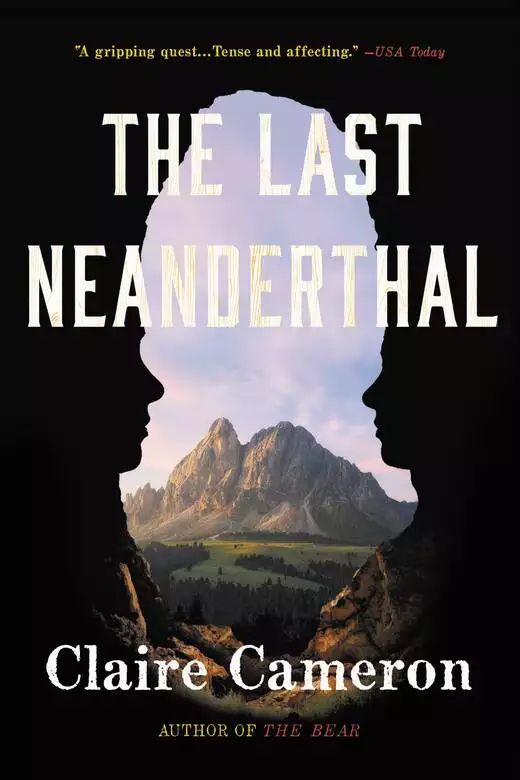
From the author of The Bear, the enthralling story of two women separated by millennia, but linked by an epic journey that will transform them both
40,000 years in the past, the last family of Neanderthals roams the earth. After a crushingly hard winter, their numbers are low, but Girl, the oldest daughter, is just coming of age and her family is determined to travel to the annual meeting place and find her a mate.
But the unforgiving landscape takes its toll, and Girl is left alone to care for Runt, a foundling of unknown origin. As Girl and Runt face the coming winter storms, Girl realizes she has one final chance to save her people, even if it means sacrificing part of herself.
In the modern day, archaeologist Rosamund Gale works well into her pregnancy, racing to excavate newly found Neanderthal artifacts before her baby comes. Linked across the ages by the shared experience of early motherhood, both stories examine the often taboo corners of women's lives.
Haunting, suspenseful, and profoundly moving, THE LAST NEANDERTHAL asks us to reconsider all we think we know about what it means to be human.
Release date:
April 25, 2017
Publisher:
Little, Brown and Company
Print pages:
288
* BingeBooks earns revenue from qualifying purchases as an Amazon Associate as well as from other retail partners.
It was the warmth that Girl would remember. The night, the specific one she often thought about later, the one that turned out to be among the last they had together, had been filled with warmth. Spring was in the night air, though the ground was still hard with frost. Cold nipped at exposed skin.
When they slept, they were the body of the family. That is how they thought of themselves together, as one body that lived and breathed. The forms curled into one another in a tangle; the curve of a belly rested up against the small of a back, a leg draped over a hip, and a cold set of toes found heat in the crook of an arm.
As the sun had turned its face away, they were all exhausted from the work that came with spring. For once, there had been no nighttime shadow stories, talk, or laughs—though when they had all settled, Him, the oldest brother, issued a tremendous fart. He could have split a log with the force. Runt replied with a messy blow of his lips to the back of his hand. Bent laughed, just once, and Girl let a smile curl her lips but was too tired for more. Big Mother said, “Hum.”
And then it was quiet in the hut; heavy breathing, slow.
Deep in the middle of the pile of bodies lay Girl and Wildcat. Girl usually slept soundly, but that night she woke too early and pulled her cramped arm out from under the large cat. Earlier Big Mother had shooed him away to the edge of the nest. The sneaky cat had waited and, once he heard a whistle of air running evenly through Big Mother’s large nose, crawled back in. Wildcat was gray with pointed black tips on his ears. He was thick-boned and robust and had a dense mat of fur. A set of black rings ran the length of his tail. He had made a single chirp, a sound he had trained Girl to know, and moved in to cuddle up to her. He rubbed his head and ears against hers. She made a faint chirp in reply. They were good friends and Wildcat was the softest thing she knew.
Girl scratched at a flea that was attempting an escape from her armpit. She ran her sleepy fingers across the skin to try to flick it off. A shift and a slight grunt and she couldn’t reach. A moment later a thick finger pressed on her back. It skimmed across the shoulder blade and pushed. It was her brother Him, she knew from the feel of the rough skin on the tip of his finger. A pinch and a pop and the bug body crushed between his teeth. Girl didn’t say thank you. There was no need. It was built into all the times that she would pick a flea or louse for Him. Words could be empty. It was the return of a gesture that held meaning.
And then it was quiet. Girl sighed and fell back and became part of the tangle of bodies again. The protective layer of bone and muscle blurred. The edges of their shapes melted into the warmth. Thick lashes hit cheeks, breaths came slower, and the weight of long limbs fell away. When one had a dream, the others saw the same pictures in their heads, whether they were remembered in the morning or not. It wasn’t just their bodies that connected in sleep; it was also their minds.
The family lay in a pile on top of two thick, stretched bison hides. Under those hides was a bed of fresh pine boughs, crisscrossed to lift the nest away from the cold dirt floor. Girl and Runt had just changed the boughs that day, so the air was heavy with the scent of pine. Over the bodies were hides that had been cured and chewed until they felt soft against the skin. A layer of furs was spread on top to keep the family cozy. This nest lay inside a hut that was tucked into the side of a granite cliff, a carefully chosen position, as it was perched on a ledge with steep rock above and a sharp slope below. They had to slink along a narrow trail to get to the hut. While not convenient, it limited the routes that a predator could use to approach.
When going to sleep, the family imagined that they were crawling into the belly of a bison. The hut was roughly the same shape as the bison they ate. It had a low, tight back end to hold the heat in close. The front was stronger and made with more support, horned and watching. A long tree limb formed the spine of the structure. It was propped up at one end with a forked branch and wrapped in place with twine made from strips of the inner bark of a cedar tree. Once these main supports were up, long sticks were laid across the center pole, like ribs. Thicker branches were secured with stones at the front and back to form legs for stability. A first skin, cured with brain oil, was pulled tight enough over the frame to quiver. Dead pine boughs were then placed on the skeleton, like a thick slab of fat. The outermost layer was rough hides made of the densest fur from the backs of two old male bison, thrown over and tied on with cured tendons.
With body heat, it was snug inside the hut. The strength of the animals remained in their parts and gave the family a special kind of protection. In a land full of peril, protection of any kind was precious. What comforted the body was also solace for the mind.
When Girl was inside the hut, she had a habit of murmuring a word: “Warm.” She craved the feeling of being connected to so many beating hearts, to ears that listened, and to all those pairs of eyes that would watch to ensure that something wasn’t sneaking up behind another body. It was how her blood spread heat to the bodies she loved. It was how she stayed alive.
And much later, when the family was all gone and Girl was alone, the warmth was what she would remember about that night. She would let her longing out in a lonely moan: “Warm.”
2.
When Girl peeked her head out of the hut that morning, she could smell the struggle of spring. It was the first day of the hunt and the land had come alive. The sun worked hard to peel the winter ice away from the earth. As it did, it uncovered a deep hunger in the land. The same kind of craving lived in the bellies of all the beasts who roamed the valley of the mountain. Girl watched as the trees below swayed with worry. They could feel the vibrations from the growling bellies through the soil around their roots. Cold air clung to the pine needles and each sprouting cone at the end of each branch quivered in anticipation. The ground shifted in discomfort as the ice let it go. Spring brought life for some, but it brought death for others.
Down the slope at the hearth, Big Mother stirred the coals to rouse the morning fire. The old woman wore her bison horns, which were secured in a soft hide and tied onto her head. The two horns protruded straight out at the spot where her short forehead met a thick hairline. With only a glance, any beast could tell that Big Mother was in charge. She was old by then, which meant that there were more than thirty springs she could remember. She had lost count of them all, but her milky eyes could still pick out shape, light, and movement. Her nose could still catch the scent of a fresh green shoot from a hundred strides away.
As the head of the family, Big Mother would decide on the particular beast they would try to kill that day. Though her hunting days were over, she would still make the trip to the bison crossing with the rest of the family. Girl wouldn’t risk leaving Big Mother, or any of the other weaker-bodied ones, alone at that time in the spring. A young leopard had recently come slinking around near their hearth. He was new to their land and unsettled. In earlier times the family could have driven him away easily, but that spring their numbers were especially low. They didn’t dare allow the leopard a chance. Only some meat got to eat.
As Him, Girl’s brother, walked over to the fire, Big Mother started to laugh. It took Girl a moment to see why. Him often had an erection and, given the loose arrangement of his cloak, she could see that this morning was no different. Big Mother laughed with joy, as an erect penis signaled good health. It was happiness.
Many things had dropped away from Big Mother’s body by then, but not her smile. Her laugh came out as a sharp cackle and showed her missing teeth, all gone except for a few mid-teeth in her upper left jaw and two molars on the right. When she laughed, she put a hand to her cheek, and Girl knew the old woman wished those teeth would also fall to the dirt. The pain made her body feel like dry meat. A clutch of wiry gray hairs lifted from her chin, and large breasts lay proud and flat over her belly. The thick skin on her face showed the trail of a tear. Big Mother believed that the measure of a life could be reduced to such small things, a count of the wrinkles to see how many laughs versus how many frowns a body had produced. Because of this, Girl knew that the old woman made sure to laugh often.
The smells of spring and her aging mother mixed together in a way that caused Girl some unease. Realistically, she knew that Big Mother could drop dead at any moment. She often said her breath smelled like the hindquarters of a bison after so many years of eating just that. While the back end of a bison had a distinct smell, it wasn’t necessarily bad. Shit came out of it and stank of life in a sweet way. If mixed with sand, bison shit could be stuck around the pine poles of a hut to fill up the cracks and keep out the wind. There was nothing bad about stopping a damp wind from blowing down your neck, just as there was nothing bad about aging. If Girl was wise enough to live so long, she would also earn that breath.
Big Mother’s wisdom was needed. Only the best instincts could get a body to reach old age and she had taught Girl that living a life, riding the back of the churning seasons, meant that change was constant. Everything around them sprouted, grew, and, at some point, reached its peak. Its strength would start to recede when the thing was no longer able to renew itself. It would then die—be deadwood. A leaf that falls starts to decompose. It soon becomes nutrients for the soil. The rich soil will take in rain and become food for the tree. And in that way, in time, things didn’t really die. They only changed. But all changes came with discomfort and unease. And Big Mother did her best to give comfort to the family by keeping what she could the same. Over all her years, she made her tools with the same source of rock, ate the same kind of foods at close to the same time of year, and built huts in the same way again and again.
Girl looked at Him and admired the shiny brown hair on his head. Its glossiness was a sign of health. Raked back above his ears, the hair was pulled away from his sloped brow and tied with a lash. His back was broad and flared out wide from his waist. He had gone through a change of his own. It came later than it had for some, as the years before had been lean and his fat stores were low. The change included moods that alerted Girl to what might be happening. Given the close quarters, moods were endured in a fairly stoic way. Though she pretended not to notice, she knew he might catch the eye of a woman at the fish run that summer.
Just thinking of the bright colors of the fish run was enough to make Girl’s heart quicken. Saliva flooded her mouth. Her hunger deepened. She thought of the soft fish eggs in her fingers. The year before she had held one up close to her eye and it looked like the river was trapped inside. That small river held the next generation of fish and so she wanted their strength inside her body. She had put the eggs between her back teeth, crunched down, and listened to them pop. She imagined the slippery skin of the fish in her hands and eating the soft, orange flesh underneath, and her blood felt as though it boiled under her skin.
When the spring sun climbed high enough to kiss the cliff that stood behind their hut, the family would start moving toward the meeting place. Other families who lived on separate forks of the river would also make the journey. It was by a broad stretch of the water that flattened into a series of shallow rapids where the river’s branches came together.
At that time of year, it was also the meeting place for the fish. As they flung their bodies up rocky steps, some were smashed on the rocks, some found themselves in the waiting reed nets of the family, and some fell into the jaws of bears. And a few of the fish made it through. Each was as long as an arm and as thick and muscled as a thigh, with two fangs that protruded up from the lower jaw. They were as smart as crows and as quick as snakes. Their scales were speckled gray, but the tastiest ones wore a blaze of orange across their backs to show they were ripe. The family believed that those were the best fish. They were not necessarily the strongest, but their traits—cunning, strength, size, or eyesight—were best matched to the conditions of that particular year. They were the ones who continued on to lay their orange eggs in the shallows higher upriver. The new generation of fish would come from them.
Girl’s mind was full of inward thoughts of the meeting place, but she knew she shouldn’t be distracted. She quickly snapped back to the present as she looked at her family by the hearth—Big Mother, Him, Bent, and Runt. They were a small group and some of them looked weaker than other beasts. She knew from their previous visits to the meeting place that they might not be the most attractive of the bunch. But she didn’t let worry about their chances flood her then. Like the skills of hunting, repairing, and building, learning to hold some of her worries back was part of growing up. She had to focus on the hunt. She shouldn’t divert the attention of her body from the present moment; it could put them all at risk. The world was so easily lost.
Him had been the first to climb down the steep slope from the hut to their hearth that morning. The land of the family was still in the grip of the ice, but he didn’t mind the cold. He was driven by his urge to mate. He knew that he would mate only if he looked in good health at the meeting place, and health lay in the food he ate. In the spring, it was only bison meat that could fill the needs of his dense muscles and large frame.
Him didn’t stop working when Big Mother laughed. His erection stood for the desire to eat and mate and it only drove him harder. He smiled, kicked the embers of the fire to extinguish the flame, and scraped the ashes to the side with a stick. Using a hide to protect his hands from the heat, he lifted a slab of stone with a concave surface that was used for making sticky pitch from birch bark. Someone in the family long before had found the slab and it had since been passed down from one body to another. As they moved frequently to find or follow food, it wasn’t a practical thing to carry. They cached the slab each year near where the spring hut was likely to be. Him handled it like a treasure. It was one of the few objects that many generations of the family had used. That was how a thing was made precious, by how many hands of the family had touched it before. The work he did linked him to the family through time.
The day before, Him had put layers of bark from a birch tree into the concave slab of stone and let the heat of the fire coax black ooze from the bark. Once hot embers were added, he used this sticky pitch to seal a triangular flake of stone onto the end of a wooden thrusting spear. Him quickly worked the pitch before it set. He licked his fingers often. He pressed and molded the pitch to get it just right. Once happy with the shape, he dipped the new tip in cool water.
As Him waited for the tip to set, he watched his younger brother Bent, who had a forearm that was curved like the horn of a bison. The thumb pointed away from Bent’s body, and his wrist was fixed. He was attempting to tie a hardened hide onto his shin for protection in the hunt, and the guard was difficult to get in place with his crooked arm. He could turn his hand only by twisting his elbow. It looked like Bent’s arm was aching too, as it often did when the weather changed. Bent spat in frustration.
“Runt.” Him let out the word in a loud, piercing bark. His larynx was short, which gave his voice a high pitch. This shrill sound shot through his broad nose cavity with a nasal quality. At the same time, it resonated through his deep, muscled rib cage. When he spoke, his voice came out loud and it tired his throat.
But Him didn’t need to stress his throat with words very often. Big Mother had set the quiet tone of their social customs, and living in such a small group meant that many things didn’t need to be said. Big Mother’s throat was even more prone to strain and she discouraged too much chatter, though those who witnessed her occasional flashes of rage might question her commitment to quiet. She called a body that talked too much a crowthroat; with a hand out, she would flap her fingers against her thumb, a gesture that stood for the beak of the bird she despised the most. The crows squawked and shit with no regard for what lay around them.
Runt heard his name and followed Him’s eyes to see Bent’s struggle. Runt had lived through six or seven winters by then, though no one knew his true age. It was difficult to tell, given his frail appearance. Him was glad to see that the boy had started to look for ways to be useful. Runt scampered over and put a skinny finger on the middle of Bent’s knot and used the other hand to pull one strand through. Together they tied the hardened hide to Bent’s shin.
Him thought that Runt’s position in the family was still uncertain. The boy had been found along the river before the fish run began. Another family had brought him to the meeting place, but they had not treated him well and barely fed him. Soon they had kicked him out of their hut and he had been left to wander around like a stray wildcat begging for scraps. Big Mother had finally taken pity on Runt and given him a nice piece of fish. The boy had attached himself to her side and had managed to hold his position ever since.
But Runt wasn’t growing up and out like he should. Him often suspected that the boy was sick. The morning before, Him had made the boy stand in front of Big Mother so that she could sniff his breath. He was worried about sunbite. The family knew it started with a particular kind of stench on the breath. Soon after came a deep fatigue, pain in the joints and back, and vomiting. The next and often fatal signs were flat red spots that appeared on the face, hands, and forearms and filled with pus, then turned to blisters. The sunbite burned the body and consumed it—the body had got too close to the sun. But Big Mother didn’t think Runt showed any signs. There was nothing obviously wrong with him.
Still, Him wondered. Even this spring, the boy wasn’t taking on muscle. Bulbs of knees and elbows stuck out from thin limbs, his eyes bulged, and his skin was darker than it should be. Him did not know why Runt was so small or if more meat would help him grow. He knew that the boy was a risk to feed. Each piece of food they tossed his way might compound the loss. Life was a moving set of decisions. Even reaching to pinch a flea had to be worth the saved blood.
Him sensed that the balance of the family was off. Perhaps it was his strong urge to mate that made him feel it more acutely than the others, a constant pressure on his skin.
3.
When Girl was ready, she made her way down the narrow path toward the hearth. She walked up just as Him was admiring their new spear. They all had a role in most of the things they made, and constructing this spear was no different. Bent had collected and shaped the shaft, Runt had prepared the tendon that was used to wrap around the spearhead before the pitch seal, Girl had made the pointed stone flake, and Him had assembled the parts into a tool. None of them could conceive of themselves as separate from the others.
Girl reached out her hand to touch Him’s shoulder. Him didn’t look back and didn’t need to, as Girl’s scent was so familiar. She felt his heart throb. All of them could feel the physical reaction of another body on the soft parts of their skin, the inside of the wrist, a cheek, the base of the neck. Girl noticed that Him’s penis stood up again. One whiff of her was all it took. She knew how she looked, dressed for the hunt with hardened hides strapped tight to her shins and forearms. The black ocher paint on her face showed the two streaks of the family on each cheek. A shock of red hair stood up from her head. She wore a single shell on a thin lash around her neck. Her skin smoothed over muscles and gleamed with hazel oil. She could feel the effect of her strength on him. He made her teeth want to sink in. But she kept her eyes down and pointing away. If Big Mother caught her looking, there would be trouble.
In the years before, after a hunt, they would spend time eating and digesting in the protection of the cave that was tucked into the side of the cliff near their spring hut. They would build up the fire so that the flames licked up into the dark. Big Mother would stand in front of it so that her shadow cast shapes on the stone wall and, with shadows and singsong yowls, she would tell them stories. She felt it was worth straining her voice.
The story she told most, the one they loved to see, was one that Big Mother meant as a warning. It was about a brother and sister who had developed a taste for each other. It was a time when there were many families at the meeting place. When the brother and sister wouldn’t leave each other alone and one man in the family was chosen to kill them. They managed to escape, but the only way they could get away was to follow the fish.
The brother and sister traveled out toward the sea, to a part of the land where the families did not go. There were no bison, and the water was not fresh. They drank only salted water and ate only creatures with pinching claws. All the salt poisoned their minds and they went crazy. They had babies that became the sum of their experience. The children grew with eyes that stayed open in their heads like the fish in the sea. Their lips became crusted with the salt water that they drank. They grew claws for their hands and started to look like the creatures they ate. Big Mother would crouch over and pinch her fingers to show their ghastly shapes in the shadow. It was a story they all loved, the horror and the delight twisted together tightly.
To reinforce the message, Big Mother had given Girl a shell from the sea the size of a walnut. Girl strung it on a lash and wore it around her neck. But passed down for generations, the story changed in texture through time. The telling of a story using shadows was not as precise as Big Mother might have wished.
Girl understood t. . .
We hope you are enjoying the book so far. To continue reading...

 Please log in to recommend or discuss...
