'I can't say I'm sorry. It had to happen. I've written to my mum and dad. Maybe they'll care. I don't know.'
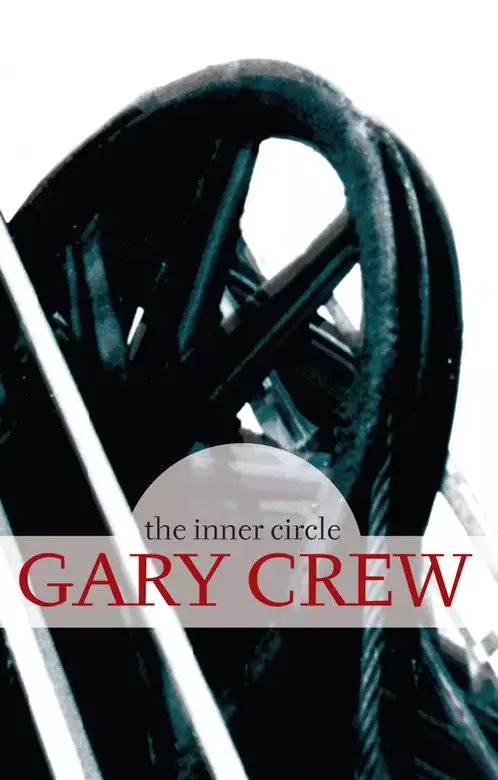
THE INNER CIRCLE is the unforgettable story of two teenage boys' struggle for personal identity - against the odds of prejudice and the indifference of the world.
Release date:
August 1, 2011
Publisher:
Hachette Australia
Print pages:
113
* BingeBooks earns revenue from qualifying purchases as an Amazon Associate as well as from other retail partners.
I heard a story once about a little kid who came home from school and found his mother dead on the kitchen floor. A screwdriver
was lying next to her and the electric toaster was still on. At least he found her. The day I came home there was only a note
for my Dad:
Stan,
I’ve had enough. It’s all over. You know where I am. Give me some time then Tony can come.
You’ll cope.
Angie.
I was eight. Until then I had lived like any other kid; Mum and Dad, three bedroom weatherboard house with a brick base and
tiled roof, an above-ground pool up the backyard. A Holden, Australia’s own car, was in the garage. I was given a BMX bike
for my seventh birthday. Dad was a sales rep for a pump company and Mum was always on the phone, making appointments to demonstrate
cosmetics. Everything was normal. There was something nice about that; maybe too nice, even claustrophobic.
I wasn’t too worried when I read the note. Angie was my mother but I had a father too. He’d be home soon. I sat on the back
steps and waited. I supposed Mum was just fed up. She’d be back. When you’re eight, things don’t change because they can’t,
they aren’t allowed to. Like her wedding ring, sitting on top of the note; it couldn’t change. She could take it off, but it was still a ring made of gold. Nothing would change.
About six-thirty I heard the Holden pull into the garage and went down to meet Dad. He went into the kitchen and grabbed the
note but it was stuck to the laminex servery. When he ripped it off, I saw a little semicircle of silvery blue; Mum had been
doing her nails just before she left. Some of the polish had dribbled down the bottle. I remember that polish; it was called
‘Hollywood Sheen’ and I guess it made her feel like a star. She was very proud of her nails but I never thought she needed
polish. She was the moon and stars to me anyway.
My Dad took the note into their bedroom. When I went in he was sitting on the bed looking out the window, the crumpled note
in one hand and the ring in the other. Outside it was dark but by the street light I could see he was crying. I waited but
he ignored me. After a while he turned, walked right past, then I heard him flush the loo. I never saw the note or the ring
again.
That night we ate at a hamburger place. I waited for Dad to open up, to say something about it all. He never did. He just
said, ‘Eat your burger, son’ and twirled his coffee while a steakburger went to waste. He was thinking a lot. When we finally
drove home and put the car in the garage he said, ‘Come on, you can sleep with me if you like.’
That night I remembered things, times better forgotten even now, if I could — a Christmas when the three of us assembled my
Scalectrix track on the lounge floor; the time when I had measles and she sat beside my bed all day reading me stories; shopping
in town, going to a cafeteria and buying Coke and a plate of chips; her smell after a shower when she came to tuck me in.
Those things could never change, never go, but they did.
The next morning Dad took me to the Wilsons, next door. Mrs Wilson packed my lunch. It was a normal school day and he came home to find me sitting on the back steps.
‘I’ve fixed it up, son,’ he said. ‘I found her. I knew who she’d be with. Come on, let’s eat Chinese and I’ll sort you out.’
Over the chow mein Dad told me where Mum was. There were no deep explanations, it was all simple and matter of fact. She’d
shot through with her boss. To me, he was just a voice on the phone, reading out lists of lipsticks, perfumes and night cream.
He was never to be anything else, always Phone Voice. She had gone to live with him in a unit at New Farm. It wasn’t far away,
I knew that because we used to go to a park there on Sundays, before.
When Dad had finished he started twirling his coffee again, gazing into it as if it held the meaning of life. I learnt then
there was only me. Years later, I still remember that little kid, legs dangling beneath the tablecloth, the noodle crumbs
breaking in his fingers, saying, ‘It’s OK, Dad, there’s still us.’ But there wasn’t. Dad picked up his coffee in both hands
and said quite calmly, staring into its depths, ‘No, son, I travel.’ And that was that. A week later Dad took me to the New
Farm unit. Mum cried a lot and hugged me, she said she was sorry but she’d make it up to me. She never did. She was a different
person, a stranger, not my mother. It was all over.
Mum and Dad became Angie and Stan, two people I stayed with, when they were home, on a divided week basis. Three days with
one, four with the other; sometimes more, sometimes less; it depended. To an outside observer, if there had been one, it would
have been difficult to tell which of them cared the least. Angie became the lady about town, spending most of her time at
fashion and hair dressing conventions; Stan seemed to avoid me, preferring the company of his mates at the pub. I learnt to
adjust, to take what was given, especially in cash to keep me quiet, and observe. I watched my parents as a kid watches an
ants’ nest that’s been kicked. I watched as they tried to hide from, or rebuild, or destroy whatever life had to offer them. But most of all
I learnt to be hard, to close in on myself, trusting only Number One, me, Tony Landon, who at eight had become a man.
Things went on that way for years, until one night, when I was seventeen, I left Angie’s apartment during a cocktail party.
The nauseating combination of Herb Alpert records, cigarette smoke and underarm deodorant got the better of me. It was ten
o’clock and I was due at Stan’s for the next three days. Angie wouldn’t miss me. Chucking my school books, razor and wallet
in a back pack, I slipped out through a window and down the fire escape. A cool blast of air from the river nearby hit me
hard. I stood on the landing and breathed in. Freedom. Without other people — Angie, Stan, Phone Voice — the world was good.
It was going to be mine. As I walked down I thought of the long ride to Stan’s through the same old suburbs, the grunts over
breakfast, then three days of nothing. I wanted to hang on to how I felt, it would pass soon enough. Unlocking my bike in
the garage, I knew it was a night for the park. I had done it before when I felt like this. So I rode, curiously high, feeling
my body pushing against the fresh air, feeling my freedom, myself.
Angie was OK. She left me alone. I had my own room, desk, stereo, money. She never interfered. As for her boyfriend, he didn’t
exist. Phone Voice was hardly more than a shop dummy in a downtown window. Perfectly dressed, always ‘right’, smelling of
aftershave with a whiff of motel sex; sanitized. He spoke sometimes: ‘Morning,’ he would say over a croissant on the patio.
Nothing more. That’s all he was really, a fake, dressed for others, never himself. I don’t think he had a ‘self’. Angie, she’d
changed; she seemed taller, more elegant, thin to the point of emaciation, but impersonal. Not my mother. She smoked slender,
whispy cigarettes tipped lipstick scarlet on the white menthol filter. With long, enamel nails, still ‘Hollywood Sheen’, she
would pluck a smoke from her silver case and say, ‘Morning, Tony’, or ‘Night, Tony’, depending on whether I was coming or
going. She left money on my desk. Conscience money, I knew, but I was entitled and it made her feel clean. No worries, who
was Tony anyway?
That night the air was crisper than usual, its bite sharper, filling me with a kind of excitement, a promise of something.
The white fluorescent street lights seemed to catch the air too, colder, brighter, leading me on. I wheeled right towards
the park and the river. There in the darkness, riding slowly through the winding maze of bikeways between trees and rose beds,
I could lose myself in the night, alone where nobody knew.
In five minutes I had ridden through the gates. The park never closed. On weekdays it was quiet, lunchtime trade only: commercial
travellers, lovers sitting in cars or on benches, the trees screening out the street world for an hour. Weekends drew more
people but never many, the great days of parks were over. A Victorian band rotunda, a work of art in fretted timber and galvanized
iron, stood elegantly useless in the centre. Kids played in it mostly, giving mock orations to the pigeons until their parents
called them down, or they got splinters. I had seen it all. But at night, the glare of roses and poincianas mellowed and died.
Only then, for me, was the park truly alive. To some it may have been sinister. The quiet was deafening for a city kid, but
as I rode the hum of my gears, the muted crunching of leaves under the tyres and the dark shadows of the great trees, especially
the figs, welcomed me, hiding me from the glaring reality of life beyond the gates. Here alone I was myself; complete.
For no particular reason I rode through the maze of paths towards the river. Maybe the sharp breeze called me down, . . .
We hope you are enjoying the book so far. To continue reading...

 Please log in to recommend or discuss...
