The Inheritance
1831
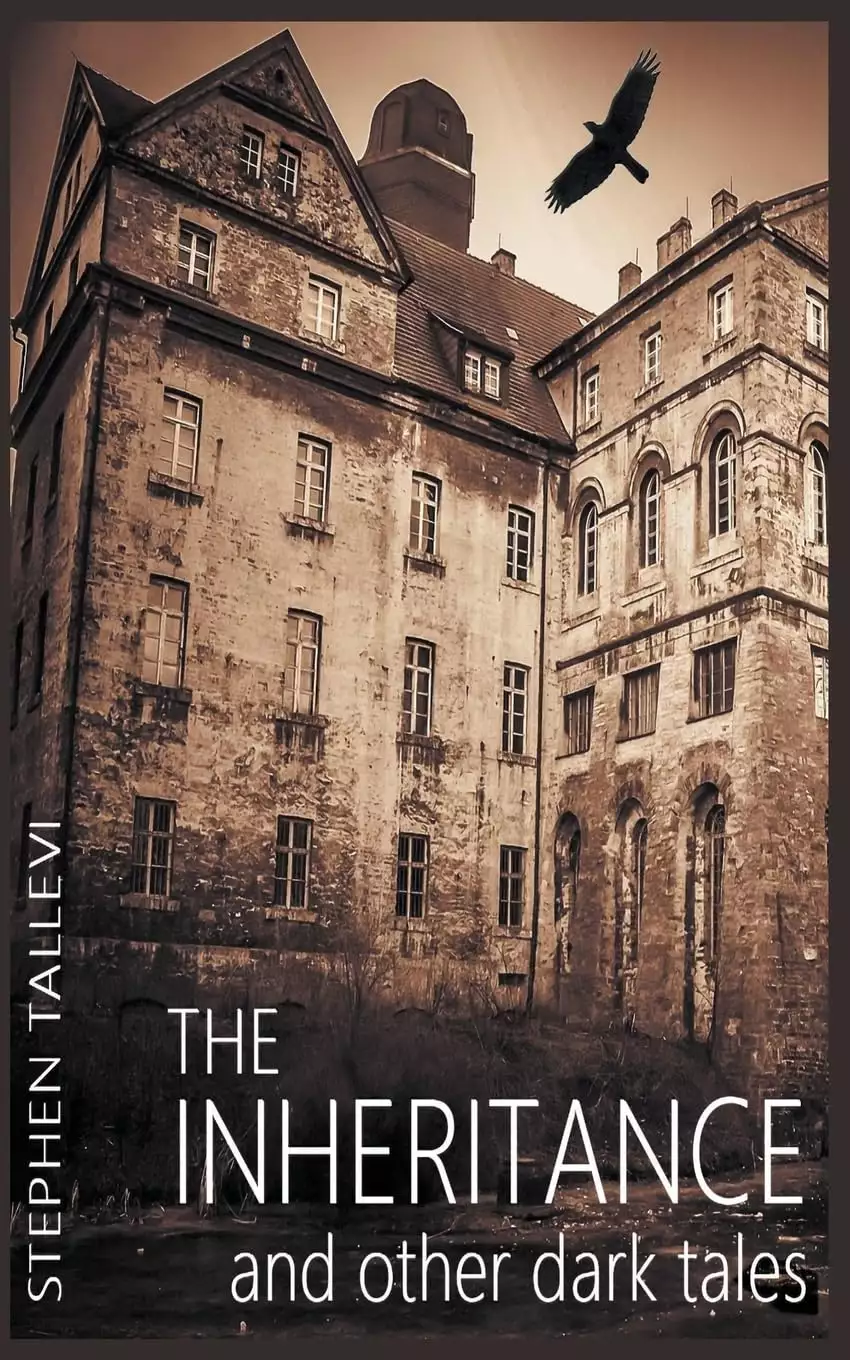
Richard Hartley, twenty-seven years of age, good-looking with light blue eyes and wavy brown hair, stood just inside the entrance gate, the shade of a large elm providing some relief from the heat of the midday sun. He was admiring the imposing facade of Elliot House, a stately manor surrounded by ten acres of land and bordered by dense woodland to the north and east. The estate was built upon a prominent hill at the outskirts of Easby village, and until recently, belonged to Sir Elliot, Richard’s great uncle. Sir Elliot fell victim to a persistent cough after returning from a short excursion foxhunting in the vicinity of Barnard Castle and passed away of consumption several weeks later. As a childless widower, Sir Elliot had named Richard, his only surviving relative, as heir and executor of his estate.
Sir Elliot’s solicitors, Henwood & Thomson, had communicated with Richard a fortnight ago, informing him of his uncle’s demise and that Richard was the sole beneficiary of his last will and testament. Upon the news, Richard sold his few possessions, gave notice to his employer (he worked as a clerk at Sheffield and Hallamshire Bank) and hired a private chaise to transport him to Elliot House, as he could now afford such luxury. The distance was less than eighty miles, but the journey proved unexpectedly long. A severe thunderstorm hampered the journey early on, and an outbreak of equine influenza earlier that summer meant that the coaching inns had no horses to let for the subsequent stages of Richard’s journey. The entire trip had to be completed by the original pair of horses, necessitating frequent and prolonged stops so that the animals could feed and rest. Richard had planned to arrive at Elliot House on Saturday morning, but it was not until noon of the following day that the chaise drew up to the front gate, leaving Richard at the spot where he now stood.
Reaching for the suitcase by his side, he proceeded, somewhat hesitantly, along the wide gravel path leading to the front entrance.
Steady on, he thought to himself. This is all yours now, no need to be shy.
He picked-up his pace, soon reaching the front steps which he took two at a time, managing not to knock the bottom of his heavy suitcase as he did so. He paused at the front entrance to catch his breath, then removed the latch key provided by Henwood & Thomson from the bill compartment of his wallet. He tapped the key a few times on his palm while studying the door—a solid oak, six-panel affair bordered on each side by white columns, across the top of which ran a classically engraved frieze.
“Well Richard,” he said pensively to himself, “a new life awaits you beyond this door. A life of leisure and, let us hope, much happiness. I guess it would be appropriate to say a few words of thanks to Sir Elliot before entering.” He was silent for a moment, then said:
“Thank you kindly uncle…I will be forever grateful…”
Not knowing what more to say, he looked down at his feet while stroking his chin for a minute, then lifted his head and with a slight shrug of his shoulders added:
“Forgive me uncle, I’m not very good with speeches, but know that I am truly thankful…” Pausing to reflect once more on his own life, Richard went on, “I presume the servants will address me as ‘Master Richard’—I can hear my manservant now, greeting me with ‘I understand Master Richard was a most accomplished bank clerk in Sheffield…’” He chuckled at this before continuing, “Doesn’t quite compare to uncle’s adventurous life, making his fortune in India as an exporter of raw goods. Well, not something I have to concern myself with today, as there are no servants about—I’m sure they are happy enough to have the weekend off. I’m certainly glad they are not here—it grants me the time to explore the house on my own.” At this point he gently shook his head disapprovingly and said, “But come now Richard, this will never do—enough of this idle chatter, it’s time to enter your house.”
The entrance hall was elegantly but sparsely decorated, as were many of the other rooms in the house. The second floor had six bedrooms, including a very large master suite which Richard believed to be the size of his previous flat (no doubt an exaggeration on Richard’s part). On the ground floor was the kitchen, sitting room, conservatory, dinning and drawing rooms, as well as the study.
Now this is interesting, thought Richard as he stepped into the study. The character of the room was in keeping with the general decor of the house—Wedgwood blue walls with a few large portraits in gilded frames. A mahogany, leather-top desk faced two large windows, and waist-high barrister bookcases lined one wall. It was the incongruous item standing alone on the opposite wall that had caught Richard’s attention—a large vitrine cabinet. The display unit rested on square tapered legs that ended in brass cloven feet. The woodwork was accented with a finely carved, ophidian design, and two glass doors enclosed four shelves against a mirrored back. The shelves themselves were filled with an odd assortment of strange and exotic objects.
“Why, this is a curio cabinet,” said Richard excitedly. “I had no idea uncle was such an avid collector.”
Swinging the doors open, Richard proceeded to examine the items, each of which was identified by a neatly scripted museum label, each describing the object. A shrunken head on the bottom shelf was the first item to catch his attention.
“Ghastly object,” he said, removing it from the shelf gingerly. He reached for its label and read, “Head of Captain Antonio de Herrera, Shipwrecked, Ecuador Expedition, 1699.”
So, such things really do exist, he thought, I was skeptical when Charles told me about them years ago—he was always telling tall tales to his classmates. If I remember his gruesome account correctly, the flesh is peeled back from the skull, then the bones and brain are removed and replaced with sand as the skin is stitched back together. What a frightful way to end one’s life. May his soul rest in peace. He carefully returned the head to its spot. Next to it was a pair of Hindu fakir’s sandals. They were studded with dozens of rusty iron spikes that projected up through the soles. Richard tapped the spikes cautiously with his forefinger. They really are quite sharp—amazing how these fakirs were able to conquer physical pain.
Other items Richard examined included a preserved specimen in a jar that looked like a monstrous worm, at least three feet in length, an Egyptian mummified cat, and a clockwork automaton of a singing bird in a lovely gilded cage, its tune and head movements extremely lifelike. He had just started to shut the cabinet doors when he spotted a section of a skull on the far corner of the top shelf.
What do we have here? The bone was from the front of a skull, the portion surrounding the ocular sockets and nasal cavity. Resembles a mask one would wear to a masquerade ball—far more gruesome, of course. Let’s see what the label tells us. The label was in a different penmanship than the others, and simply read: ‘See through the eyes of a witch.’
Richard gave a short laugh upon reading this and exclaimed, “Oh come now uncle, this really is going too far!”
He took the bone mask off the shelf, turned towards the window and held it at arm’s length, aligned with his sightline. The view through the eye sockets was blurred, he could not make out either the desk or windows that were but twenty feet in front. His first reaction was to thrust his finger through the eye holes to see if there was a lens present—there was not.
Queer, thought Richard, must be a trick of the light.
He repeated his action, but this time he brought the bone slowly towards his face.
How curious, the room is coming slowly into focus, as if I were adjusting the eyepiece on a spyglass…
Richard continued this movement until the skull came in contact with his own face.
Unbelievable, everything is so crisp and clear, superior to my own eyesight.
He was still holding the skull piece to his face when he felt a slight pressure against his forehead. His hands moved instinctively to remove the bone mask, but they came away empty. The mask remained attached to his face. There was a tightening in his throat as panic slowly overtook him—the pressure of the bone against his face was beginning to increase. He turned towards the cabinet and saw his reflection in the mirror. The bone mask was being absorbed into his face. He could feel and hear his own flesh sucking the bone in, folding over it as it sunk deeper into his flesh, driving the bone ever closer to his own skull. He let out an agonizing scream, falling to his knees as he clutched at his face. His head spun violently, and a moment later he collapsed.
We hope you are enjoying the book so far. To continue reading...
Copyright © 2026 All Rights Reserved

 Please log in to recommend or discuss...
