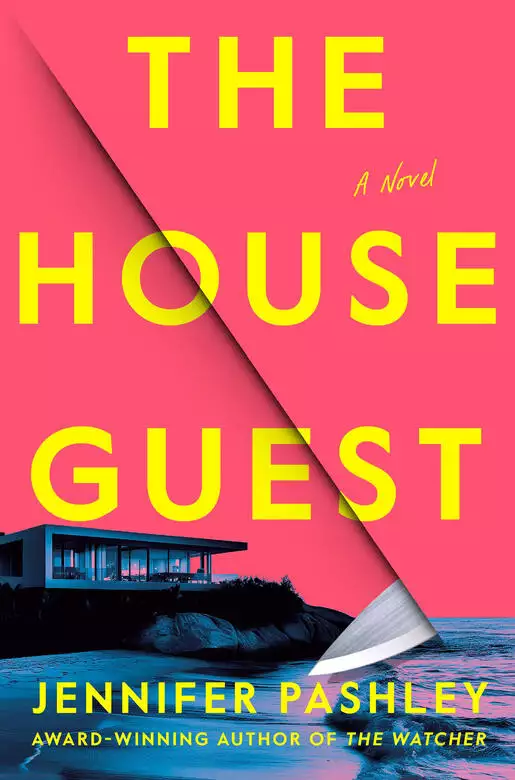
An aspiring chef finds she has bitten off more than she can chew when her gig as a private cook to a bestselling author turns deadly in this propulsive, whip-smart suspense novel.
Brett Novak is a young upstart chef, with real, raw talent—if only she could catch a break. After getting dumped by her married girlfriend and losing the perfect job offer, Brett accepts a temporary position as a live-in, personal chef of a reclusive, bestselling author, Carson Smart, who resides in a mansion on a secluded beach in Cape Cod.
Carson immediately seduces her, but things get complicated when Carson's wife, Vera, arrives home from her trip, and the love/hate relationship between the two spouses erupts, leaving Brett caught in the middle. Brett, starved for attention, craves Carson's affection and yet is oddly drawn to Vera's seductive and destructive charms.
As Brett becomes an unwitting pawn and weapon, she questions how far husband and wife will go to wound the other. With nowhere else to turn, she has no choice but to stay—even as her hold on reality begins to slip. Can she survive her employers’ dark appetites?
Release date:
July 7, 2026
Publisher:
Little, Brown and Company
Print pages:
320
* BingeBooks earns revenue from qualifying purchases as an Amazon Associate as well as from other retail partners.
I leave everything behind. My phone, wallet. No identification. Just my body in today’s clothes. If he shoots me, I want it to be a mystery. If I bleed out in their backyard, I want them to have to hash out who the fuck I am. Because she will know.
She blocked me. And now I have no choice except to scale over her security fence in the rain, the idiot main character scrambling to get the girl. To prove a point. To beg her to leave him, to move on with me. Take a leap. See what happens.
It’s a bad idea.
It takes me a minute to hoist myself up. The outside of the fence is a smooth surface, not the easiest for a short girl to get a grip on. But I jump and curl my fingers over the top, my feet like a tiptoed ballerina’s on a decorative boulder, ornamental grass tickling my thighs, and by the sheer strength of my arms—and craziness—I manage to swing one ankle over, the blunt top of the fence scraping between my legs before I drop down to the other side. The sharp plastic edge drags along the inside of my arm, burning as I fall, and then beading up with blood.
A bright light comes on, shining in my face, over the perfect landscaping, the pool. I hear her dog’s deep bark but know that he’s just a big, shaggy golden retriever. The kind of dog that always looks like he’s smiling.
What I’m afraid of is her husband.
And she should be too, but she won’t listen to me.
I had tried her phone again before it came to this. She has me in her contacts as Book Club. She panicked when I had a man’s name. Getting texts from a woman doesn’t raise any red flags—it’s just a girlfriend texting about books, about getting a glass of wine. But now when I call, it just rings. Which I know means she blocked me. It doesn’t even go to voicemail. It would ring forever into an unknown void if I let it.
I spot shadows in the kitchen, in the window above the sink. The dog comes to the sliding door and offers several more exuberant barks. I see Nan inside wave her hand to dismiss him. She opens the slider to let the dog out.
“It’s probably a deer,” she says over her shoulder.
And the dog bounds out straight at me as I creep closer to the house. And then she sees me.
“What the fuck are you doing?” Nan jeers at me from the covered back porch. The dog is wet. He noses my crotch, jumps up and leaves big muddy paw prints on my shoulders because he knows me. I’ve been here. He finds the scratch along my arm, his soft muzzle lapping at the blood.
“Come with me,” I say to her. I rough up the dog’s head and coo at him.
It’s raining straight down, a heavy summer downpour, warm and fragrant. Cut grass. Chives. Sweet magnolia.
“You’re fucking insane,” she says in a whisper that is somehow a shout.
“You are,” I shoot back. “For staying.”
She reaches inside for an umbrella and I push my way into the kitchen. Sammy’s big wet body squeezes through with me. Nan goes after the dog, who bounds into the living room, and I go after her through the pretty dining room, a bowl of fresh-cut hydrangeas on the table. Past the wall of built-in shelves with the mysteries she loves so much, all of them marked SMART, labeled conveniently in a bold yellow font.
The dog has muddied the linen sofa. I wonder where her husband is. My stomach is tight and my ribs feel like there’s a bird caged in there, beating its way out. I hear the water run upstairs, the hard close of a door.
Wall punchers, I think. I know the type. They punch the wall inches from your head, and then the next time, it’s your head. Then they drag you out of the house, and you don’t get to come back. I know he has a gun. So does she.
“Why did you block me?” I say.
Her house is all soft focus. Warm light. Fuzzed edges. It’s like looking through a lens. She works hard at the feminine touch. But I know her, I’ve felt her hands, hard and knowing, everywhere. I know her insistence. Her swagger. I know she’s pretending.
“You can’t keep calling me,” she says through her teeth and motions with her hand across her throat, glancing up the stairs. I can feel the way her body is tensed, waiting for his footsteps.
I want to tell her about the job. That I’m going up the Cape for a head chef position, that we can spend the summer up there. It’s a perfect getaway for her, close enough for work but away from him, from her home’s Ring camera, her ten p.m. curfews, her screened calls.
I never even texted her anything salacious. Just times, places. Books, because she needed to keep up the charade that she was meeting her girlfriends for book club. There was no group of women getting together at a wine bar to talk about the latest thriller.
It’s me. I’m Book Club.
We’d meet in her car, just the two of us, where we couldn’t keep our hands off each other. Or here, only once, in the white and gray bedroom, the only place there wasn’t a camera.
I try to imagine us in another place, her on a windy beach, her hair wild. Outdoor dinners with cold wine and burning sunsets. What she’s like when she finally lets her guard down, when what’s left is the two of us without the contexts of our real lives, her career and my job or lack thereof. When it’s just our bodies together, soft, unafraid.
“Sammy, no,” she says to the dog, who rubs his face into the couch. She needs to keep her story straight: The commotion is nothing more than a wet dog, not a jilted lover coming to claim what’s hers. She looks at me. Soft yellow light on every curve, every eyelash, every freckle. The peaks of her lips. Flat with determination.
“I got the promotion,” she says then, her voice just out of register to any other room. Her hands press together.
“Babe, that’s great,” I say, encouraged. My heart swells a little. I know how hard she tried and how much she wanted it. And she did it.
“I have to put all my focus there,” she says, her hand up, ushering me toward the front door.
“Of course,” I say.
Her body, her face, is closed to me. Upstairs, the creak-stop of the shower, heavy footsteps. Her shoulders tighten. She has made up her mind. “I can’t keep doing this—”
“Nan,” I interrupt. I stand stock-still in the foyer under another dimmed light.
“I’m not leaving him. Not now. I need to put all my energy into this new role. It’s—” she starts. “It’s all I ever wanted,” she whispers.
Not me. I am not all she ever wanted.
She reaches onto a side table for her purse, a shiny new paperback underneath, as her husband rounds the corner of the stairs, wet, fresh, red in the face, his hair a gingery slick.
My vision of the future narrows. I’d been picturing myself in a chef’s coat at an upscale bistro, coming home to a cute little apartment and Nan, curled on the couch. But now I see only me. Alone on an empty beach, the wind chapping my face. The chef’s coat is gone. It’s just my bare shoulders in the wind, the salt against my lips.
I fill in the blanks in my head: It’s too much to leave your husband for another woman when nobody knows you’re gay. Too much scandal on top of a new job. Too dangerous to tell a man who likes to leave holes the shape of his fist in the drywall.
“Here it is,” she says, fake relief flooding her voice, hiding the tremble. She gives me the book, and I set my jaw.
“Got it,” I say, the book loose in my hands.
He gives me one suspicious sweep with his eyes and lingers in the open space between living room and dining room.
“Thursday, right,” she says to me, playing a game, extending the lie. She looks over her shoulder at him. He is twice the size of me, in every direction.
“Britt,” she says to him, feminizing my name. “From book club.” Her voice has a sunny edge. I turn the book, cover out, over my chest, playing along. For now.
It has all been leading up to this, how she was going to end it. All the weeks of meeting up and then the slow pullback, all the times she was “busy,” with no other offer, no suggestion for a different night we could see each other. And then my text messages went undelivered. And my calls unanswered.
But I stay quiet. I want her to feel it, the weight of this moment, of her choice. I don’t even tell her about the job, about how great it’s going to be, about how it will change everything for me, the money, the experience. I’ll be able to go anywhere after that.
“I don’t want to keep you,” I say finally, and nod to her husband, when keeping her is exactly what I want to do. My clothes are stuck to me, my cutoff shorts heavy from the rain and hanging on my hips.
She opens the front door and gives my shoulder a push.
“Thanks for stopping by!” she chirps as I make my way down the sidewalk, past the other neat hedges, family vehicles, locked garages, and security lights. I hear the door click closed behind me, the beep of the security panel. I walk out to the middle of the street, right under the lights, looking back, looking in the frame of their big front window glowing with inner light, the shadow shapes of their bodies moving around: Hers, quick and nervous, picking up. His, large and looming, following, asking. I’m having a moment. I hope he looks down at me, this soaked stranger in the street who walked right into their house. I hope he wonders what the fuck is going on.
I walk home in the rain. It doesn’t even thin out, it just beats down, slicking my arms and legs, and the book expands with wavy, wet pages fanning out. I rake my hair out of my face and wipe the water from my eyes. The good thing, in the rain, no one notices if you’re crying.
I probably look strung out. And the closer I get to home, the less suspicious that is. There are often people nodding out outside of CVS, in a parking lot, on a bench at the park that no one uses because it’s full of needles and trash. Mill Street is a sad little side road that no one drives down unless they live there. The dirt yard has turned into one giant mud puddle. My dad is still not home. The car sits at the back of the gravel drive, crooked.
The job on the Cape came up fast. My friend Will called me two days ago and said, “Put in for this right now,” and helped me cobble together a résumé that made it look like I knew what I was doing.
“It’s not lying,” Will said. “It’s self-promotion.”
We’d met five years ago at a busy restaurant where he was the head waiter, and I was the expediter who was too short to see over the shelves into the kitchen. It made it easy for the chefs to ignore me calling out orders, for them to pretend they didn’t hear me say, “Sauce on side,” and then they’d yell and call the delays my fault. Until Will walked in with an empty produce crate and turned it upside down for me to stand on. I looked them all in the eye. Three men, most of them covered in tattoos, all of them older than me. Once they took me seriously, it was barely a week before one of them asked me out. Fucking restaurants. But it’s all I know.
Will knew I was looking for work, and he knew about Nan, which was why he pushed this on me so quickly.
“Married people are the worst,” he droned. I think his ideas about me coming to the Cape are different than mine. I was really hoping to bring Nan with me.
I got a call to come in to talk over the terms, the menu, cook a sample dish. My credentials are sketchy at best. I didn’t go to culinary school. I barely went to high school. I learned to cook in a group home for a bunch of girls like me, girls without mothers whose fathers were in jail, or worse.
But Will knows how much I want to move up to chef instead of line cook, fry cook, prep. I cook for him whenever I get the chance. My talent is on the plate.
“This is fucking brilliant,” Will always says, and he snaps pictures of my plates, a swoosh of fig glaze, a delicate gastronomic foam, a perfectly seared sea bass.
I never take pictures of food, even when the composition is dead-on. Which it always is. I like accidental beauty. The fanned-out wing of a dead bird, feather tips dipped in a drying puddle. A small skull. A bare tree, abstract against the sky.
I wanted to cook for Nan. She has a big, beautiful kitchen in French yellow, an island, matching dishes. At the house on Mill Street, we have an apartment-size electric stove with four burners that sits crooked on the floor and that’s shimmed up with matchbooks, which will probably light the whole thing on fire someday. I didn’t want Nan to see our house or even know what neighborhood it was in. We had enough working against us. Her, a professional with a husband. Me, a scrappy little trash panda working gig jobs at minimum wage, a product of the system.
The heavy rain has come through the sheets I tacked up on the porch for privacy, and they sag, saturated. The house has two bedrooms, one that my dad uses for his bed and one that is floor-to-ceiling with stuff: an old TV, a stereo, empty, crushed-in suitcases, a bicycle, piles of clothing, and on top of them bags of trash. When I came to live with my dad ten years ago after leaving the group home, having declared that I did in fact have a parent, the room was already too full to empty out for me, and I was planning on staying only a few months, just enough to start working, and then get my own place, even if I was still under eighteen. There’s nothing official about me being here, even after all this time. We live like strangers. I sleep on the porch.
The floor is wet against the windows, and the head of the bed is soaked. I take whatever clothes I have scattered there on the floor, some work shoes, some decent blacks I had from my last gig, one okay knife. I check inside for signs of my dad, and everything is the same as it has been for the past few days. The TV off, the ceiling fan wobbling on high. The range hood, the only light in the kitchen. On the table, a full ashtray and a pile of mail he hasn’t gone through. My mom’s camera. It’s a Pentax from the eighties, small and metal, heavy as hell. I glance at the number of shots left. The roll is three-quarters full. A box of finished rolls, tucked in their plastic cans, never developed, is on the porch. I took the camera and the film from group home to group home, the only real belongings I had.
My dad’s house, closed up and hot, dark, and quiet. The ticking of the clock on the stove loud and ominous.
It’s not the first time he’s disappeared for a few days.
I shove what I need into a backpack along with my wet clothes in a plastic grocery bag and leave the camera behind. I won’t have time. Instead, I grab the keys to my dad’s car.
Maybe that’ll get his attention, I think.
The Cape is bright in the morning, hot, white, full sun, endless sky. Tall grasses, that weird mix of shabby roadside stands selling forty-dollar lobster rolls with chic boutiques and art galleries, ice cream trucks, luxury SUVs. I roll my windows down—by hand, because this car is fucking ancient—and let in the sea air, warm and salty.
I drove while it was still dark, when the roads were empty, and pulled the car around the side of a Shaw’s. The store was closed. Nobody is open twenty-four hours anymore, and I could have gone for a snack and something to drink that wasn’t tepid tap water from home. I parked and slept for a little bit till the sun reached the side of the building, hot and beaming into my eye. I woke with a jolt, unsure of where I was or why.
It’s not the first time I’ve slept outside or in a car or woken up with a banging in my chest, my mind frantic. I reach for my phone, and it’s dead, so I look at the sky, the way the sun cuts across the top of the building. Midmorning. The clock in this car stopped working years ago. And all it has is a tape deck. I drive the rest of the way up, hoping the flow of traffic is heavy enough that the cops won’t notice the expired registration.
Or the fact that I don’t have a license.
I stop at a Target to buy better work clothes, and it costs me the rest of my last paycheck. I have half a tank of gas left. With any luck, I’ll get to Will’s, park the car, and work for a week so I can buy the other things I need.
I meet Will outside of this year’s flat. He rents a different one every summer, a cute apartment close to wherever he’s working. He makes his best money up here in just a few short weeks, waiting tables at high-end bistros. And spends his days off on the beach, in Provincetown, or on dates. I can always count on Will to have a date lined up.
“There she is!” Will calls from his balcony. “My tiny twin!” And then disappears inside to run down the stairs. Even though Will is taller than me, we have the same dark hair and the same cut, and Will is pretty, so in slim blacks, we look alike.
He pushes my face into his chest and wraps his arms around my back.
“Um, you smell a little like wet dog,” he says, and laughs.
Fuck, I think. I hope the smell hasn’t spread to the new things I got. Smelling okay might be more important than looking okay for a job interview. Line cooks often look and smell bad. Chefs do not. “I got caught in a rainstorm,” I say.
“Inside the car?” He backs up, holds my shoulders.
“Have you seen my car?” I crack. Heat radiates from the road, where we stand with no shade. Apparently, I mistook Will’s shout from the balcony as exuberance. He furrows his brow.
“Come inside,” he says with just a slight wrinkle of his nose. Disappointment. I know his tells.
The flat is dark but cool with a balcony that faces the bay. He pulls out an ice tray and a small bottle of fresh-pressed lemonade, a handle of vodka. I sip and think, This drink is going to save me… or kill me. My stomach is empty.
“Do you mind if I crash on your couch for a bit?” I ask. I assumed this was implied in the job offer—that I would stay with Will until I could find my own place. Or, worst case, that we’d live together for the few short weeks of summer. I need to get a footing. I need this job to be a rave success that leads to the next one. It doesn’t even matter where.
He’s on his phone. Like, deep in a text conversation. I see him start to smile, watch the hot color bloom across his cheeks, and then he suddenly snaps up, puts the phone face down.
“Sorry,” he says.
“Date?” I ask.
He waves his hand. “Trying to work it out.” I can tell by the way his eyes rove that Will likes this guy, that he’s hopeful.
“Sorry, the couch,” Will says then, focusing. He sits on the edge of a modern chair. The place came furnished. The furniture is minimal and not quite comfortable. “Of course,” he says. “You’re always welcome. But,” he says, and takes a long drink, the ice cubes clinking against his teeth. “I tried to call you,” he says.
“Oh, shit,” I say. My phone died before I even left, and the car is too old to have a charger. “Can I?” I ask, and look around for a plug.
Of course his charger is plugged in on the counter, where it probably always is, because Will takes care of his things, because Will has his shit together. He grabs my phone and connects it. Then he turns back to me on the couch with my vodka lemonade.
“The job is gone,” he says.
Instead of a refreshing drink, I feel a lead sinker fall to the bottom of my gut. Cold, heavy. I purse my lips in disbelief but drink again before I say anything.
“How?” I manage to croak out.
Will hunches his shoulders to his ears, apologetic. “I told you to act fast,” he says. “What were you doing until now?”
I flash on my wet legs scaling over Nan’s security fence. The house. Her husband. The book she thrust at me. I left that behind too.
“It was only three days ago,” I argue.
“You should have called them right away.”
“I did!” I say. “They asked me to come in to talk.”
Will presses his lips together. “They got someone immediately,” he says.
“It’s just gone?” I say, winded. “There’s no job at all? I’m not auditioning for head chef at your bistro?” I say.
“They filled it yesterday,” Will says, his eyes downcast.
“It was just three days,” I say.
“We’re packed every single night,” Will says. “We’ve had a skeleton crew for the past week. They were desperate.”
“I’m desperate,” I say.
I put the drink down on the coffee table and then pick it back up and go out to the balcony. I don’t want to be seen. Don’t want Will to watch my face as I try to process everything that’s happening. I just want to get back in my car and drive, but I don’t have enough gas to get very far, and I don’t even want to go home. For what? I think. A minimum-wage job making chicken wings at a bar? My chest buzzes with anger, my breath shallow. And no Nan, I think. There’s a literal, physical pain between my ribs, radiating. A deep ache.
I hear Will come out the slider, a plastic whisper snapping shut. I don’t even know what to say to him, and I’m sure he doesn’t know either. I wonder if he’ll lend me a hundred dollars. Enough to put gas in the car, to get a few groceries. I’ll scrounge around the house for enough change to hit the laundromat, and then I’ll hit the pavement, put in applications wherever I can. The last thing I want to do is run into Nan at home, jobless, back on the search again, back on my dad’s porch, sweating through the summer on a permanently damp mattress.
“Look,” Will says, and fans out his fingers, waving his hands to get my attention. I think when I look up at him my eyes must be black with rage and despair. Or shooting flames. I’m not mad at him. I’m mad at myself for screwing it all up. Again. For needing money from him, again. When? I think. When does it get easier? I think about Nan and her degree, her good job. It’s easier when you have a solid footing to begin with. When you aren’t born a mistake.
“There is another job,” Will says.
“Great,” I say, and fake a laugh that actually makes me start laughing. I can’t wait to hear it. Dishwasher? Ice cream scooper? Honestly, I’ll bag fucking groceries if I can just stay for a bit.
“It’s… weird,” he offers. He leans on the balcony railing, and with the light behind him, his head is aglow, his face in shadow. He looks like an angel.
“Hit me,” I say. “I literally have no options.”
“It’s private,” he says. “A private live-in position on the beach. Amazing house. But it’s limited. It’s, like, two weeks.” He shakes his head a little.
“Weird,” I repeat. Then, “How do you know about this?” I ask.
“Well,” he says. “The guy who took the chef position turned it down when we hired him. Because it was so short term,” Will explains. “He needed something more stable.”
“So do I,” I say.
“It’s better than nothing,” Will says.
Behind him, seagulls caw, loud, circling above the water or above some trash. I squinch my eyes together, see red shoot through my lids, taste blood from biting my lip.
“I know it’s not the answer to everything,” Will says, leaning forward. “But I think it’s really good money. And experience. And who knows, it might lead to something else.”
I finish the vodka lemonade in one long drink.
“It can’t get any worse,” I say, and force a half-hearted laugh. A temporary gig. I wonder if it’s enough to get me going. But mostly, I wonder if this is what bottom feels like.
Will has the contact for the personal-chef gig, but he doesn’t know any details about it.
“Not even a name?” I ask.
“Just the number. I think they’re very private. It might be someone famous?” Will arches an eyebrow. He knows I don’t give a shit about celebrities. But he does.
I stand there in his living room, arms crossed, scratching my forearms, rubbing my fingers over the hot, tender scrape. It’s a nervous habit. I used to scratch my hands raw as a kid.
“Here,” Will says. He takes my phone from the counter and types in the number, starts a new text message. Then he hands it back to me. “Just be like, ‘Hi, I’m inquiring about the private-chef position.’”
“This better not be sex trafficking,” I say, and . . .
We hope you are enjoying the book so far. To continue reading...

 Please log in to recommend or discuss...
