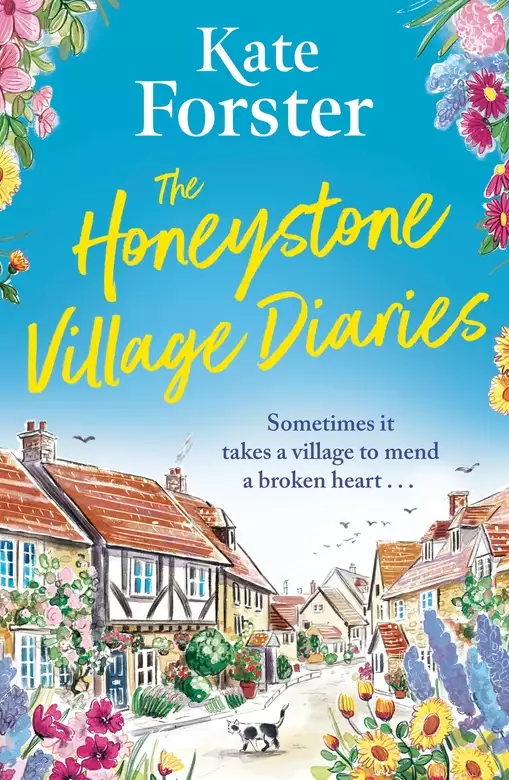
A mile outside the Cotswolds, everyone knows everyone in Honeystone, and for many years the villagers have lived quiet, steady lives. But a wind of change is here...
Anthea is the new owner of Spindle Hall. A renowned perfumer who lost her sense of smell, she's not interested in making new friends. Yet somehow that seems impossible in this idyllic village.
Years ago, Peony left Honeystone with a broken heart, and now she has returned with it freshly bruised. Her single father, Robert, is struggling with slow business at the Hare and Thistle pub. Perhaps this time they can help each other?
Izzy has never known what she wants to do in life other than be at Raspberry Hill Farm and care for her little niece, Clover. But when a new doctor shows up in town, she starts to wonder... A story about the magic of ordinary people, no one does heartwarming stories like Kate Forster. Welcome to Honeystone, you can rest here.
Release date:
July 18, 2024
Publisher:
Orion
Print pages:
288
* BingeBooks earns revenue from qualifying purchases as an Amazon Associate as well as from other retail partners.
The people of the small village of Honeystone should have known that change was coming when a once in a lifetime wind blew through their streets in early March, causing chaos and conversation for at least two weeks.
The event was even shown on the local news, where weather experts proclaimed it as a mini tornado, previously unheard of for the area.
Thankfully, evidence of the uncommon event was provided to the local news station by Barry Mundy’s dashboard camera from his beloved Audi. This remarkable footage showed the vortex that carried Jenn Carruthers’s clothes horse, still pegged with her unmentionables, and the recycling bins from the church hall, filled with empty wine bottles that shattered on the road. No one in Honeystone has yet owned up to hiding their wine bottle collection in the church hall bins but since the tornado, the bins were no longer used for hiding their sins.
Selling the video footage was the smartest thing Barry Mundy had done in the last ten years. After selling the footage to the news station, he promptly bought new seat covers for his Audi and a new tennis racket for his upcoming tennis party. It was a party he had yet to receive any RSVPs for, but this story isn’t completely about Barry’s tennis party.
This story starts with Spindle Hall. The old house in the valley, once a grand country pile, had been empty – aside from a flock of pigeons living in the roof – for fifty-five years. This was the same number of years its new owner, Anthea McGregor, had turned around the sun. If this was of any importance, no one could tell the residents of Honeystone because the wise women in the area had been burned centuries ago. The only harbingers of change were the unusual wind and new signs on the fence telling people to stay out of the grounds of Spindle Hall.
There was a drawing done of the wind arriving at the village the day before it arrived, but that was done by a small child named Clover Hinch who people dismissed because she was a child, and everyone knows that grown-ups don’t listen to children enough. If they had noticed her drawing in her notebook, they would have seen the bottles flying through the air along with a pair of M&S cotton knickers and a single sock.
The signs around Spindle Hall were not welcomed by the locals, as the grounds had been used by the villagers for half a century as a place to walk their dogs and to collect chestnuts from the trees, grown from the seeds of the seeds of the Romans eons before.
Now there were ugly coloured signs in neon colours that read – Keep Out.
Jenn Carruthers had taken photos of the angry-looking signs and sent them to the village WhatsApp group with an angry face emoji to show her feelings about the matter.
Barry Mundy said he would take it up with the council and to stay tuned. No one wanted to tune into anything Barry was broadcasting but Jenn sent him a thumbs up emoji just to let him know his message had been received.
And now, exactly one month after the wind came through the village, on the first Tuesday in April, the large oak door of Spindle Hall, carved with three hares in a circle, was flung open by Anthea McGregor herself, who was breathing in the country air and filled with hope after eighteen months of despair.
Anthea had arrived at Spindle Hall bringing with her potions and tinctures and a reputation and bank balance as the most successful perfumer in England, and an assumption that the villagers of Honeystone would leave her alone.
But change doesn’t come alone, and with Anthea came plans for Spindle Hall, its grounds and an ambition that Honeystone hadn’t seen the likes of since Barry ran for Mayor, which was a bit misleading as it was a token role, mostly for tourism reasons, and Barry didn’t want tourists. He liked Honeystone exactly as it was, claiming tourists would bring in all sorts of issues, from crime to the black plague. Imagine his consternation when the final vote went to Robert Grayling who owned The Hare and Thistle, the three-hundred-year-old pub positioned slap bang in the middle of the small village.
Barry took the news of his defeat as well as Jenn Carruthers took to seeing her knickers on the news. There was a tantrum, a letter to the Honeystone Herald, and a petition left at the doctor’s surgery asking for a recount. The only person who signed it was Dora, his wife, and by the looks of the shaky signature, it wouldn’t have been unreasonable to assume it was signed under duress.
But back to Honeystone, which people might have said was slow on the uptake of anything. They were the last to get fibre optic cable and the new bus route from Cirencester, and while it looked like time had stopped with the centuries old honey-walled houses that gave the village its name, the narrow streets and the small stream that ran through the village with a bridge that took one car at a time across the flowing water, it wasn’t a complete backwater. It simply needed time to adjust to new ideas.
It was situated outside of the Cotswolds by a mere mile, and purists over the years had insisted Honeystone was hard done by in the original cartography of the area. But many of the villagers were glad to not be included in travels of the tourists on the large air-conditioned coaches that stopped for photos at the Castle Combe bridge, dreaming of being the newest members of the Crawley family from Downton Abbey.
They didn’t mind Honeystone being looked over by the interlopers who wore bumbags and sneakers and asked if there was dairy-free clotted cream at Mabel’s Table, the small tea rooms that only opened on the weekends, where the scones were the size of saucers and the height of teapots according to the guidebook she had picked up at the pub (written by Jenn Carruthers with illustrations by Dora Mundy).
It was exactly these reasons why Anthea had chosen Honeystone as the place for her next dream. On her first trip to Honeystone, she had said to her business team – two English pointers, Rupert and Taggie – that it would be perfect for her plans. She had tea at Mabel’s Table and felt comforted by the lack of interested in her.
On her second trip to Honeystone, she had noticed the small doctor’s surgery, with a vacant sign on the front with Doctor Wanted written on it in a stern-looking font.
There was a church hall but no church, as it had burned down twenty years before according to the small guidebook.
The third time she came to Honeystone, she had stopped at a small grocery shop called Biddy’s Bits and Bites. The sign read that the store sold organic wine and when she peered through the window, she could see cane baskets and expensive chocolates and nougats with edible flowers on top and a lack of customers but it was always closed with a sign in the window reading Back Soon.
Anthea had decided Honeystone was the perfect place to recover from two years of illness and find out who she really was without her gift, and Spindle Hall was a fine old house to hide in. She didn’t want to meet anyone, become friends with anyone, do anything to become a part of the community of Honeystone. She would be more than happy sitting in her house in the valley, plotting and planning the potions she would create that would bring her ex-husband to his knees.
Peony Grayling assumed she had been robbed when she first arrived home to the flat in Islington that she shared with her boyfriend of ten years, Fergus.
The door slammed behind her as Peony hefted the bags of shopping through the door.
‘Any help?’ she called out as she walked into the small kitchen. She was planning on making beef bourguignon and then crêpes for dessert, with a little array of toppings including her favourite lemon and sugar and Fergus’s favourite of Nutella and banana. Peony had a gift for knowing what food people needed to get through the worst and the best of life.
There was her wonderful chicken Marbella filled with garlic and red wine vinegar and oregano and bay leaves that she made for people who were moving into a new home, or for those friends who needed a little bit of nurturing. If Peony had bothered to look into why the food resonated so, she would have learned that ingredients in the dish all had a meaning. Everything has a meaning in life but Peony cooked without knowing that bay leaves were once used for protection, salt for purification, vinegar for health, plums for love and apricot for reviving the spirit.
That the Egyptians used pumpkins as a symbol of good luck and fortune, and the Greeks as a symbol of fertility, was lost on Peony yet she always made her delicious pumpkin soup for friends who were trying to become pregnant, served with her beautiful olive focaccia with extra salt on top.
But Peony didn’t know anything about such malarkey, she just did what her soul told her to do, and sometimes that’s more than enough knowledge to have. It was simply a shame that Peony didn’t listen to her soul in other areas of her life.
In the kitchen the cupboards were open and she saw a few plates and cups on the bench.
‘Ferge?’ She called again, putting the bags on the floor.
There was no answer as she walked to the living room and saw the PlayStation was gone, and the stereo, and the Kill Bill poster above their sofa.
‘Oh no,’ she said aloud and she pulled her phone from the pocket of her coat and dialled Fergus’s number.
She went to the bedroom, where the door was ajar. She kicked the door open, her throat in her stomach and made what she hoped was a threatening karate pose.
The bedroom was empty, but the wardrobe’s door was open.
She looked and saw Fergus’s shirts were gone, along with his shoes.
‘Peony?’ She heard Fergus’s voice on the end of the phone.
‘We’ve been robbed,’ she said. ‘They took all your underwear, that’s so odd, like a reverse snowdropper – that’s the name for a man who steals women’s underwear. What do they call a man or a woman who steals male underwear? Brown dropper?’
She laughed at her own joke, despite a gnawing feeling this wasn’t a normal robbery.
She had pulled open his bedside table and saw his cufflinks and old watch were gone and left were an old condom wrapper and some coins.
‘Fergus?’ She walked to the wardrobe and saw the empty hangers.
‘Peony,’ he said again and she sat on the edge of the bed.
‘We haven’t been robbed?’ she asked.
‘No.’
There was silence.
‘Peony,’ he said again.
‘Stop saying my name and tell me what you’ve done.’
‘I’ve left,’ he said.
‘You’ve gone?’ Her stomach rolled and bile was in her throat.
‘It was time, we both knew it,’ he said in his thick Scottish accent. It was at its most smooth when he was trying to convince Peony of anything.
‘No, we didn’t know it. Why didn’t you talk to me?’
‘Peony, you know you’re terrible at endings.’
He always did this.
‘Don’t make this about my failings, Fergus.’ God, she hated it when he turned it around on her.
‘I was going to leave you anyway,’ she said and felt petty but better for being honest.
‘You weren’t, Peony, you just asked a lot of people and didn’t do anything about it, like you always do. I know because the man at the off-licence asked if you’d gone yet, and Gerald at the football club told me you had asked his wife what to do when you were watching me play a game for feck’s sake. You knew what you had to do and you couldn’t do it. Neither of us could for a long time, until now.’
Peony was silent. If there was one thing in life that Peony knew it was that you needed to make the change in your life before life made the change for you. Because if you didn’t make your own move then the outcome was brutal, unflinchingly cruel and often, with a sense of humour that would make you shake your head in ten years and say, I should have known.
Peony knew what she had to do except she was avoiding the issue, the discomfort of change, like wearing too tight pants during a job interview, knowing you had to go a size up but feeling uneasy at the new number on the label. Denial wasn’t just a river in Egypt.
Peony had seen it in the hospital where she worked as a social worker. The man who knew he hated the job he was in, talking about leaving for the past ten years and then one day being diagnosed with a cancer that was probably preventable if he had listened to his body and been kinder to himself.
The woman who put off having a baby even though her arms ached to hold a child until it was too late and her eggs were no longer viable and her hopes dashed after expensive and failed fertility treatment.
Peony knew all this and yet she couldn’t make the move. She dithered and went back and forth in her decision, even asking strangers their opinion of her options, including a lady in the brown raincoat in Asda who was only checking to see if the avocados were ripe and didn’t want to have to advise a stranger on her future. She was simply looking for a nice avocado.
So while Peony was still collating the data and opinions from her random vox pop surveys, the decision had been made for her. And this is where we find Peony on the worst day of her life so far in her thirty-four years.
‘I had to be brave enough for both of us,’ he said.
She rolled her eyes. ‘You’re not a live organ donor, Fergus, come down off the cross.’ The line went dead. He had hung up on her.
She opened the drawer in his bedside table and saw an empty condom wrapper. They never used condoms.
Who had he cheated on her with? Probably Roxy from the football club. She was always hanging around and asking him to say things in his Glaswegian accent, which he dialled up for her benefit. Roxy with the big boobs and hair extensions. Fergus was such a cliché, she thought. She squeezed her eyes tightly, trying to make tears fall but nothing came out. She tried again, thinking about the good times but they were so long ago, vague, like ideas more than memories.
Maybe this was shock, she thought. This was why she couldn’t feel anything.
And why wouldn’t he choose Roxy over her. Peony with her dishwater blonde hair, thin from straightening it too much in her twenties.
Peony had no place to go, and no money and no prospects. She felt like a supporting character in an Austen book, but it was worse for her, because she didn’t have a chance of marrying for convenience. She was alone on a shitty social worker wage, in a city where the price of everything was going up, while her wage wasn’t, and she hated her job. She was burned out and on her last nerve.
There was only one place she could go.
For the record, the lady in the brown raincoat had told her in no uncertain terms, if you’re not married after ten years it’s bad luck to marry. ‘No point,’ she had said, ‘everyone knows that.’ Peony hadn’t known that but she did now.
The power of planting a seed and watching it grow and unfurl into a healthy plant never failed to amaze Izzy Hinch, which was a hard task because Izzy was born under a balsamic moon and thus, she was slightly vinegary for a woman of twenty-five. Izzy hated more than she liked. She suffered no fools, and the only thing she truly loved was her niece, Clover June, and her garden at the house on her parents’ orchard, named Raspberry Hill Farm although it primarily grew apples. Nothing made much sense in Honeystone so no one bothered to correct it, but Izzy capitulated to the house’s moniker and had large areas of raspberry canes growing. Her niece Clover would pick and eat them, her hands and mouth stained with the crimson juice while claiming to Izzy she hadn’t taken a single one from the canes.
Everything seemed easier when Izzy was in the garden. She would rise in the morning before Clover woke, and she would slip into her gardening clogs, taking her strong cup of tea out into the garden, surveying the beds and the growth and any damage from animals or slugs overnight.
There was nothing quite so satisfying as growing your own food, Izzy would say to anyone who would listen, and eating something that you grew, well that came with a sense of freedom that was hard to explain and also a sense of smugness that if the apocalypse came, Izzy would be prepared to feed her brother and her niece and anyone else that she thought was worthy of survival in Honeystone.
To date, the list of survivors who would receive cabbages and tomatoes from Izzy’s garden was small but Izzy had not yet learned that forgiveness was as liberating to a person as growing food from tiny seeds is.
After a day in the garden, Izzy would stand under a hot shower and let it wash the dirt from her and she would think about how everything made sense in the garden. The scent of the tomato leaves on her hand in the summer and the scent of woodfire from burning the leaves in winter were her anchors in a world where everything seemed a little unknown outside of Honeystone.
And yet, she hated Honeystone and its smallness. The everydayness of the same routines, the same people, the same shops, nothing ever happened in Honeystone. Even when the strange wind came through, the only thing that had happened to Raspberry Hill Farm was the roof of the potting shed lifted up and dropped down again.
Thankfully her garden had remained untouched. There were six raised beds filled with vegetables and herbs, beautifully planted with flowers for pollinators and everything with a companion plant to support the other. And while Izzy didn’t have any friends in the village, or nearby, she found friends in the garden. The lace-winged bugs that ate the thrip on the roses, the damsel bugs that ate the destructive caterpillars on her lettuces and the elegant praying mantis, who coolly and calmly ate the crickets and moths like a garden ninja.
Nothing in the garden asked her about what she wanted to do next with her life, like people did with their nosy questions. Had she thought about travelling? Had she considered finishing her university degree? Had she thought about what she would do when Clover was at a mainstream school every day? What then? But Izzy didn’t know what she wanted to do in life other than be in the garden and care for Clover.
The sense of comfort Izzy had when she was holding Clover, explaining to her how the tiny buds would turn into peppers or tomatoes, when she showed her the bee looking like it had slippers made of pollen, and when she put her hands into the earth and excused herself to the worms that wriggled away, that’s when Izzy felt important and special.
This particular morning, her brother Connor was outside drinking tea when Izzy opened the kitchen door as the sun was rising. He was tall and had messy curly hair that he didn’t like to cut often as he said it was a waste of time and money. His face was tired and he was wearing his usual garden outfit of blue work trousers, boots, a warm cream jumper that Clary had knitted him and a gilet with many pockets in it to store his knives, string, grafting tape and mints. Connor always had a mint in his mouth when he was working, and when he wasn’t, he was sipping on a cup of tea or a cider after work.
‘You’re up earlier than usual,’ he said.
‘Couldn’t sleep,’ she answered. She went inside and poured herself a mug of tea from the pot that Connor had brewed.
‘Why couldn’t you sleep?’ Connor was back inside now, leaning against the bench.
Izzy didn’t answer the question. ‘Do you think the school will cope with the wheelchair if she needs it?’
‘Yes, they have already said they will, and she’s becoming stronger so she won’t need it as often, the physiotherapist said.’
Izzy sniffed her disdain.
‘I don’t like that new physio,’ she said.
‘That’s because she’s encouraging Clover to be more independent. I know you want to protect her forever but at some stage you have to untie the stake and let her strengthen on her own. A few little gusts of wind might knock her over a bit but we won’t let her uproot, you know that, don’t you?’
It wasn’t lost on Izzy that Connor. . .
We hope you are enjoying the book so far. To continue reading...

 Please log in to recommend or discuss...
