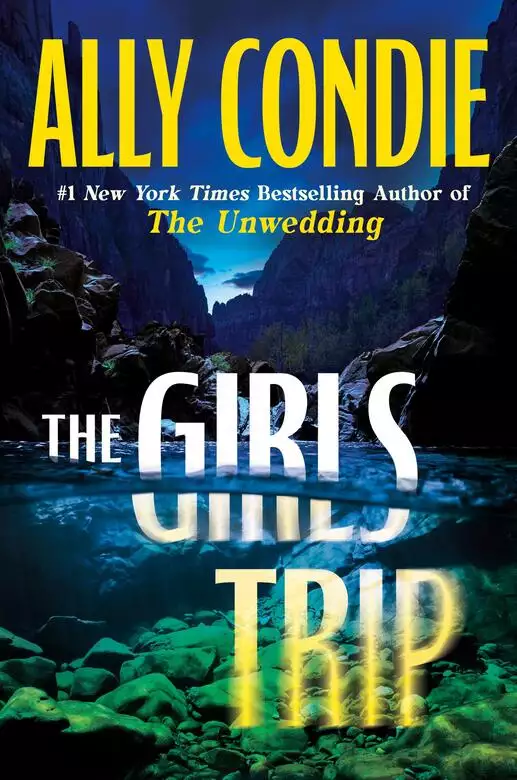
From the author of Reese's Book Club Pick and instant USA Today bestseller The Unwedding, a novel of suspense and friendship about three friends who decide to disappear from their lives for a few days while on a trip to a national park—only to have one of them vanish.
Hope, Ash, and Caro met at an online book club. Over the past two years, they’ve been there for each other in every way—except in person. When each of their lives reach a crossroads, they decide to meet in real life at the gorgeous Sonnet Resort at Eden National Park.
Hope, an actress, has become entirely too famous and needs to get away from it all. Ash, a successful online entrepreneur, isn’t sure what has happened to her marriage. Caro, a doctor, has lost a patient and doesn’t know if she wants to carry on or start all over. None of them are telling each other the full story…
Release date:
April 7, 2026
Publisher:
Grand Central Publishing
Print pages:
1
* BingeBooks earns revenue from qualifying purchases as an Amazon Associate as well as from other retail partners.
“IS THIS THING ON?” Ash asks, her face popping up on-screen.
“It’s always on, Ash,” Carolina says patiently.
“Hi, Ash,” Hope says from the screen. The stunning backdrop behind her—blue pool, bright sky, waving palm trees—isn’t fake. It’s her home in Santa Monica.
“Hope!” Ash says. “You came! I thought you said you might not be able to make it!” Her brown eyes widen in delight and she scoots closer to her computer. She’s forgotten to take off her work apron, the sturdy blue canvas one that ties around her neck. Summer freckles scatter across her nose, and there is a dab of sunscreen near her jawline that hasn’t been rubbed in all the way.
“I’m here,” Hope confirms. “It was my turn to choose the book, so I figured I’d better show up.” She’s makeup-free, her long brown hair in a topknot, and even though they’ve all been friends for almost two years now, the other two still can’t quite believe that they are friends with Hope Hanover. Hope’s a rich and famous actress who is also still one of them—three friends who met under unlikely circumstances and who now text and talk constantly and get together once a month online for their book club.
“I couldn’t put it down,” Carolina rakes a hand through her chin-length dark hair. “I read it in a day and a half.”
“What about you, Ash?” Hope asks, though Ash always likes the book, because Ash finds the good in everything.
Ash bites her lip. “I didn’t read it.” The other two gasp, because Ash always reads the book.
“This month has been bananas,” Ash says.
“What’s been going on?” Hope asks. “I know wedding season is coming up, but is it more than that?” Ash runs her own flower business, which has become more consuming and successful than she’d ever anticipated. She tells the others all the time that it’s gotten out of hand.
“Basically,” Ash says. “It’s not interesting. Let’s talk about the book. Don’t worry about spoiling it for me. And I can’t wait to hear the latest in your lives.”
Carolina’s giant black Lab, Howie, has popped up into the frame and stares at them all cheerfully, wagging his tail. She leans down to scratch him behind the ears. “The twist was great. I didn’t see it coming.”
“Did you guess the murderer?” Hope asks.
“I didn’t!” Caro says, and Ash and Hope sit back in surprise. Caro always guesses the murderer.
“Seriously, say whatever you want about the book,” Ash says. “I won’t listen. Even if I do, I’ll forget. My brain is mush lately.”
“We can talk more about the book later, when you’ve read it,” Hope says. “I have to admit that I have something else I want to discuss with you guys.”
“This has to be a record.” Caro feigns a look at her watch. “We didn’t even spend five minutes on the book.”
“What I have to say has to do with books.” Hope’s voice holds an earnest, hopeful note. Behind her, a single white cloud has edged its way into the blue sky. “And the woman who brought us all together.”
“Agatha,” they say in unison. Two years ago, during the pandemic, an independent bookstore in San Francisco held a virtual book club for one of Agatha Christie’s novels (A Murder Is Announced). Somehow, of all the people across the country during that time with nothing to do, Ash, Caro, and Hope were the only three who showed up.
It was early days of online events during the outbreak, so perhaps it was that other people weren’t yet used to virtual meetups. Each of the three women had wanted to leave but hadn’t been able to bring themselves to do it, thinking it would be too rude to the host, a kind and frazzled bookseller. And then, ten minutes in, when the host had vanished (her screen going inexplicably dark midsentence), Ash, Caro, and Hope had somehow remained connected. They’d sat in stunned silence for a moment before starting to laugh. A warm and funny conversation about Agatha Christie and life and the disaster that was the pandemic ensued. At the end of the call, the three of them had decided to reread Christie’s The Murder of Roger Ackroyd and discuss it the next month. They’d exchanged phone numbers, and during the month they texted about the book and their lives, and and and…
… here they are.
For the first couple of meetings, Hope hadn’t appeared live on-screen. Instead, she’d used a photo that showed her with her back turned and her hair a different color. And she’d continued to go by the fake name she’d entered for the meeting (Grace Hartwell—she always used virtue names when she didn’t want to reveal her true one). Carolina and Ash had both felt (but hadn’t said out loud) that Hope’s voice seemed somewhat familiar, though neither of them could place where they might have heard it before. It wasn’t until later that Hope had revealed her identity. Ash and Caro had both tried to keep their cool, with varying degrees of success.
“Remember,” Hope says now, “how when Agatha Christie’s husband told her he was leaving her for his secretary, Agatha disappeared for eleven days, and no one could figure out where she was? Remember how even Scotland Yard couldn’t find her?”
“Of course we do,” Carolina says. “We talk about it literally all the time.”
“And about how nice it would be to disappear from our lives for a minute,” Ash says dreamily.
“Because work is stressful,” Carolina says.
“And the people in our lives can be a lot,” Ash says.
“I love how she got bad news and got the hell out of there.” Hope’s tone is longing. “Can you imagine anyone—let alone anyone famous—being able to do that in this day and age?”
“Oh, Hope,” Ash says. “I bet you want to get away.”
“I do.” Hope leans forward, her gorgeous green eyes wide. Ash and Caro lean in, too. Hope Hanover can pull in whoever she wants, whenever she wants. It’s to her credit that she doesn’t wield this power as often as she could. “And that’s what I want to talk to both of you about. I think it’s time we met in person.”
“Yes,” Ash and Caro answer in unison, because the three of them have been saying this for ages now.
“I mean for real,” Hope says. “Let’s do it this time. My movie got canceled. I have three months with no filming.”
“Your movie got canceled?” Ash asks. “Are you okay? Is that okay?”
“Honestly, it’s amazing.” Hope folds her arms and sits back, a beatific expression on her face. “I said yes to it because it’s total Oscar bait, but it would have been so grim. I would have had to walk through endless mud wearing a period costume. Maybe while having my actual period. And everyone knows the guy they cast as a lead is an absolute narcissist.”
“Really?” Ash is momentarily diverted. “Aidan Stone? I thought he was a nice guy.”
“Oh no,” Hope says. “Total jerk.”
But even Ash doesn’t linger long on Aidan Stone, because a thrill is running through her at the thought of the three of them finally meeting in person. This might really happen. If Hope, who is actually famous, can come, then what excuses do the rest of them really have?
“I am so, so serious about this,” Hope says. “I’ll pay.”
“We’re not going to let you do that,” says Carolina.
“Absolutely not,” Ash agrees.
But Hope’s still going. “And another thing. I think we should disappear.”
Ash and Carolina look at her, waiting.
“Like Agatha did,” Hope says. “We won’t tell anyone where we’re going. We’ll just go.”
“Hope,” Ash says, in a tone of great severity. “Have you become embroiled in a scandal? Is that what this is about? Are you trying to lie low while something blows over?”
“No scandal.” Hope smiles at them. “Can you imagine it, though?”
“Being in a scandal?” Ash says wistfully. “I mean, maybe.”
“Not that.” And now it’s Hope’s turn to sound wistful. “Disappearing from our lives for a while?”
“I can’t.” Ash is rueful.
“None of us can,” Caro says, but there’s something in her voice that sounds like she’s opening the door to the possibility.
There’s a silence. Could they?
“Every single one of us deserves a break,” Hope says. “We’ve all had the world pulled out from under us the past few years.”
This is inarguable. There was the pandemic, of course. The way things have been going in the world, in general, and for them, specifically. Ash is juggling her business and her family. Caro has been swamped at work for years. Hope is an actress in her thirties in the most ageist career in the world.
And these are only the things they’ve told each other about.
“We won’t completely disappear,” Hope says. “We’ll tell our people—families, work, whatever—that we’re going on a trip. But we don’t have to tell them where we’re going. We clear our calendars and get the hell out.”
“Do we tell them where we were when we get back?” Caro asks.
“If we want,” Hope says. “I don’t see why not.”
“If we do it,” Ash asks tentatively, “when would we go?”
“How about next week?” Hope asks.
Ash blinks. Caro folds her arms across her chest.
“We can’t—” Ash begins.
“Let’s try,” Hope says. “Maybe doing this kind of last-minute is how we actually get it done. Every time we’ve tried to plan something in advance, it’s always fallen through.” She’s right. The first time, Ash’s youngest daughter was rushed to the hospital for an appendectomy the day before they were set to meet up in LA. Another time, Hope had to cancel at the last minute because of work. A third time, Caro had to go and take care of her father, who’s been struggling with Alzheimer’s.
“We might as well discuss it,” Ash says, almost in a whisper.
“Might as well,” Caro agrees.
Later, they can’t remember who or what tipped the balance. They sorted it all out, thought about the ways they could, hypothetically, move heaven and earth, and they realized that they could manage a few days in June. They would walk away. They would vanish.
Later, the ones who were left asked the same thing over and over again—who decided?
All of us, they had to agree.
It was all of us.
THE KIND OF RICH people I hate the most are the ones who say they aren’t rich.
Oh really? I want to ask them. Do you have enough food for the whole week sitting in your cupboard all the time? Do you pay your utilities without even thinking about it? Do you have more than one pair of shoes? Did you lift the sleeve of that $70 sweatshirt in the gift shop to check the price tag and not rule it out immediately? Then you have more money than most people. More money than me, that’s for damn sure.
Sometimes it’s hard for me to make eye contact with the guests when I’m giving them the Welcome to Sonnet spiel, the one where I talk up the amenities of the resort and the natural beauty of the nearby national park. I tell them about our restaurant, our food truck, the gourmet s’more kits on offer, the gift shop, the drive-in movie theater where you can sit in vintage cars eating popcorn and watching classic movies after a long day of hiking. You know, like all the other un-rich people in the world.
Yes, yes, they say as they nod, we’ve seen pictures online, the drive-in is so charming, we are so delighted to be here, oh, that’s wonderful that you have a farm-to-table menu, we expect nothing less, even though we also want authenticity (but not the wrong type of authenticity). Oh really, sometimes the hot water runs out during the busy times of day? Um, okay. No, no, that’s quite all right, yes, yes. We do understand we are right at the edge of a national park. But the thread count on the sheets? Could you tell us about that? Wonderful. Oh, we’re very outdoorsy, can’t wait to get out on those hikes / go canyoneering / see the stars / bathe in nature.
You should see their faces when I tell them there’s a wood-burning stove in each of their tents and that that’s what they’ll need to use if they get cold at night. At first, they wear expressions of total shock, because they didn’t think glamping would be quite that close to actual camping and they didn’t read the website description all the way through. Or, if they did, they thought the wood-burning stoves were for charm, not the primary source of heat.
Most guests rally, though, and pretend like they know how to light a fire. This cracks me up and pisses me off at the same time. I watch them leave for their tents, knowing we’ll get front desk calls later. The guests will say that their stoves “don’t work.” They’ll never admit that it’s for sure and one hundred percent user error. One of the staff will take care of it. If it’s my shift, it might be me. I’m great at lighting fires. I’ve been doing it all my life.
It only really gets to me if they don’t say thanks or don’t bother keeping their personal lives out of the way for the few minutes it takes me to get the fire going. I don’t need to hear your argument or how much you love each other or how horny you are right now. I’m a person. You don’t have to talk to me the whole time, but don’t act like I’m not here when I am.
I also hate it when they refer to the park as Edens National Park. I’ve been corrected by guests when I say it right. I have to grit my teeth when I respond. Actually, I say, there’s no s.
Really? they ask. Are you sure?
Oh, I’m sure.
And now and then they like to point out that I’m spelling my name “wrong.” “Did they forget to put the i on your nametag?” they’ll ask. Or, “What an unusual spelling!” That second one’s more subtle, but the subtext is still crystal clear: We are smarter than you. We know more than you do. We can tell you the right way to spell your name.
Anyway. Rich people.
I have my eye on that group of women right from the moment they duck inside the main tent. You don’t have to duck—the ceilings are high and the door is tall and wide—but people seem to have that tendency with tents, even when they’re enormous and multi-peaked, like this one. The main tent houses a restaurant, a reception area, a gift-and-snack shop, restrooms, and a sporting-goods outfitter. One of the women puts her hand up to touch the side of the tent, which is also something a lot of people do. From a distance, it looks smooth, like ceramic or porcelain, maybe, but up close you can tell that it’s made of extremely sturdy fabric. The floors are weathered wood, and we have electricity and running water. Of course. And Wi-Fi.
There are a few reasons why the three women catch my eye.
First, they have the right gear and they brought their own, which means at least one of them knows what they’re doing.
Second, they seem so happy. Like, actually, genuinely happy and delighted to be with each other. They’re laughing and talking like they’re getting away with or from something. “Should we sign our real names in the guest log?” the one with the long blond braid asks.
“No,” says the one with the orange Patagonia baseball cap. “That defeats the whole purpose.”
“Wait,” says the most serious-looking one. She glances at me. “Do we actually have to sign in here?”
“No,” I say. “You don’t.” The leather-bound guest log is largely for show, so people feel like they’re having an authentic wilderness-adjacent experience. They can ooh and aah over how far other guests have come to be here. Sometimes they take pictures of their own signatures to post on social media.
They all seem pleased with my answer. “Let’s not sign, then,” Patagonia Hat says.
I think about reminding them that they should sign the logs at the trailheads when they hike, but that info’s on the park website and what they do in Eden isn’t my responsibility.
The last reason that I have my eye on that group, the biggest reason, is that the one in the hat is famous. An actress. She’s friendly, super low-key. That’s what makes the other guests milling around miss who she is. They might glance over and think she’s pretty and that she looks a tiny bit familiar, but the fact that she’s not trying to hide makes it seem impossible that she could be who they think she is. Plus, this resort isn’t Amangiri or anything. We’re fancy, but no Kardashians or Biebers have ever stayed here. Can you imagine one of them having to light their own fires?
But I still know right away who she is, even though her credit card and driver’s license have a different name than the one she’s famous for.
Well hello, I think. So you’re my ticket out of here.
“IS THIS HOW YOU pictured it?” Caro asks the other two. Her voice is almost reverential.
“Yes,” Ash says. “No.”
Caro’s heart is full. The three of them are standing on a plateau, red dirt at their feet, an enormous evening-blue sky above. Earlier they were talking and laughing, breathless and giddy to be together in person, in the flesh, but now they’ve quieted.
The landscape stretches out before them like a living thing, like many living things. The colors and the view shift, according to the weather and the light. The mesas turn red, pink, purple, orange, white. The sky changes—it can be vast, calm, empty, swept with clouds. It’s blue, gray, black as obsidian, spotted with diamond-bright stars. Sage, rabbit brush, cactus, and ephedra grow green, gray, silver. Only those who didn’t know the desert could ever call it barren. It’s ripe with life, particular with geography both large-scale and minute. The others are staring in wonder.
Caro grew up less than an hour away from here, in the desert town of St. John. Although she now lives several hours away, she visits home often. It always comes back to her quickly: the desert, the way it feels. How dry the air is here, how beautiful the bones.
“What about all of us?” Hope turns away from the view to smile at the other two. She’s wearing a faded orange hat and sunglasses that offer the right amount of concealment without being obvious. Ash smiles back, her freckled nose wrinkling, looking younger than the mom of three teenage girls has any right to look. What do they see when they look at me? Caro wonders.
“Gorgeous,” Ash says, with the sincerity Caro has come to know so well, even at a distance, even through a screen. “You’re both so gorgeous. I love you two so much!” She throws her arms around Caro and Hope, herding them into a group hug. “I cannot believe this is happening!”
“Thanks for suggesting that we come here, Caro,” Hope says as they draw apart. She pulls off her sunglasses and Caro is faced with the full effect of her Hope Hanover green eyes. “It’s perfect.”
“I don’t know that I can take the credit,” Caro says. “It was your idea to come to southern Utah.”
“But you found this resort,” Hope reminds her.
“It’s so beautiful out here, I can’t believe it’s real,” Ash says. “It’s so different from Oregon.”
“Film directors love this part of the country,” Hope says. “It’s cheap to shoot here, and the landscape is ridiculous.” She takes a deep breath, and everyone else follows suit, Caro included. It’s a pleasure to inhale the clean air of this place, the smells of pines and sage and rivers carving their way through rock. Hope glances at Caro. “I’m not telling you anything you don’t know, I’m sure.”
“Hollywood does like to film Westerns here,” Caro agrees. “And use Utah as Mars or Generic Desert Planet.”
“I get that,” Ash says. “It’s so… otherworldly.”
“But it’s our world.” Hope’s voice is warm, and so is her arm around Caro’s shoulders. “How lucky are we?”
THEY MAKE THEIR WAY toward the food truck, passing firepits and groups gathering to play horseshoes and Ping-Pong in the resort’s super-chill and ultra-hip recreation area. The drive-in movie theater stops them momentarily in their tracks. It’s adorable—a big screen set up in front of rows of cherry-red and cotton-candy-pink and powder-blue ’57 Chevys and vintage Mustangs. A staff member is handing out red-and-white-striped bags of popcorn.
“Should we?” Ash asks, catching Hope’s eye. “I mean, it’s Robert Redford and Paul Newman. In their prime.” The two men race across the screen on horseback, practically gilded with 1960s sunset light.
“Another night,” Hope says. “I promise. Tonight, we have to get ready for the hike.” To kick off their trip, they’re hiking through a famous slot canyon called the Underground. They’ll start early the next morning and camp in two different places in the canyon before hiking out. The Underground is gorgeous—a pristine turquoise creek running through high red rock walls, green trees growing, impossibly, here and there. It’s in the backcountry, with no cell phone coverage. They will truly be unreachable.
Hope can’t wait to get started.
“And I’m starving,” Caro says. Caro is always starving. It’s one of Hope’s favorite things about her. When they’re online, Caro is forever snacking on something or wandering off to the kitchen and returning with a plate of food. She never sits entirely still, either, and almost every time she shows up on-screen, she’s either in her scrubs, fresh off a shift at work, or still wearing athletic clothes after having some outdoorsy adventure with her husband, Dan.
The food truck is painted pink, mint green, and white, clearly intended as a pastelized riff on the National Parks logo. Hope saw it on the website when Caro sent along the link. The other two had balked at the price of the resort Hope had originally chosen and refused to let her foot the bill. So they’d had to find somewhere else that would work. Hope swears she’s not a diva, but when you’re in any way famous, you’ve got to be conscious of certain things, like privacy and security.
She has to admit that she loves that Ash and Caro wouldn’t let her pay their way. It’s sweet. So many of Hope’s other friends aren’t even putting up the most desultory of protests anymore. But what Hope’s book club friends don’t know yet is. . .
We hope you are enjoying the book so far. To continue reading...

 Please log in to recommend or discuss...
