'Heartbreaking, beautiful, epic. I loved it' KIRAN MILLWOOD HARGRAVE Author of The Mercies
'Blindingly brilliant . . . I cannot wait to read everything she writes' DAISY JOHNSON Author of Everything Under and Sisters
She was never meant to be an ordinary woman, reading out her history as if it belonged to us. She was more than that. She was the way of learning the world.
It was the last time most of us would see her but we didn't know that then.
Aida is the defining rock star of her age; her every move observed, examined and owned by a devoted, cultish fanbase. When she disappears without a trace into a complicated love affair they are determined to find her, uncover her truths and own her once more.
Aida and Ehsan reconnect after a decade apart, hoping to recapture the innocent, lost love of their youth. Before long, their connection is strained by secrets and jealousies and the past begins to blur with their present as they follow in the footsteps of mythic lovers before them.
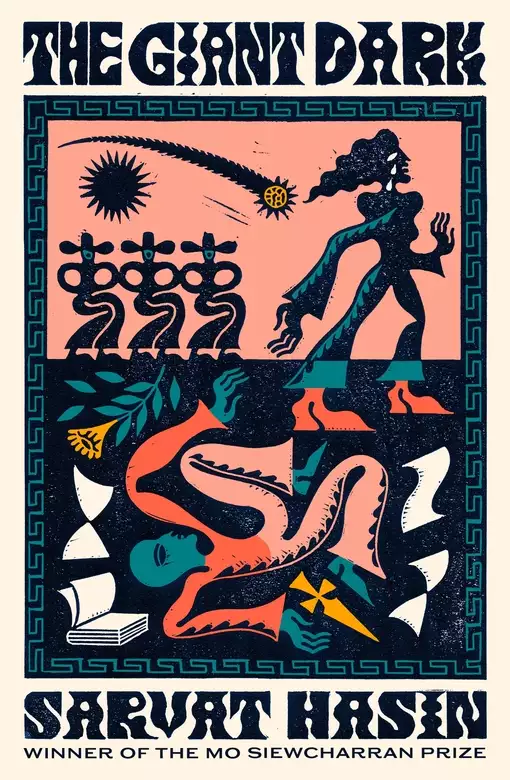
The Giant Dark is an award-winning debut novel about love and fame. Inspired by the myth of Orpheus and Eurydice, it explores the consuming and devastating effects of using a lover as a muse.
'Rich and immersive . . . A book to lose yourself in' JULIA ARMFIELD Author of Salt Slow
'A brilliant, intoxicating reimagining. A heady brew of art, love and its cataclysmic impact' IRENOSEN OKOJIE Author of Nudibranch
Release date:
July 8, 2021
Publisher:
Little, Brown Book Group
Print pages:
368
* BingeBooks earns revenue from qualifying purchases as an Amazon Associate as well as from other retail partners.
Many people would love Aida. Years after her death, her music would survive. It would play on the radio, find itself on lists of the greatest hits of the decade, at parties fifty years into the future where people who weren’t born when she began would try to remember what it was like to be us. Anniversary albums would be released ten, twenty and thirty years after they first came out. Cover songs of varying quality would cycle in and out of existence. New droves of youth, cracking out from their eggshells, baby ducklings dancing to her tunes; they would continue to fall in love with her, again and again, but we were the first.
We loved her best of all.
There are memories of discovering her that ring in us still, like eating good food for the first time. Aida was our first lick of adulthood, no longer craving sugary music but something that hit the back of your throat instead, thrummed all the way through you. We didn’t feel embarrassed listening to her in our parents’ car, swaying to her in the shower; we could be proud of her, of ourselves for our evolved tastes.
At first, loving her was a small club, a private smattering of people – beginning in New York, where she played at places like Luna Lounge or the Gaslight Cafe; she began to appear on the lists of people whose taste we were learning to ape. Her first EP was only four songs long. We gorged on it, instantly hungry for more. Started to record her in bars, spy work on our phones, smuggling them onto the internet to share with each other. Not quite piracy; we did it for love, not profit, noble Robin Hoods, shaking out bags of jewels to the poor. Eventually, it stopped mattering if they were new songs; we hankered after every live version, variations in her voice, the languor with which she could stretch out a vowel that was so different from the recording studio version, its sleeker polished sound.
Many of us in love with her already, even without having seen her face. In the videos from the club, she was half shadowed. We got a sketchy view at best, the moon of her cheekbone cutting through her shaggy hair, the long fringe. The tiny thumbnail on her studio’s website was similarly curtained, huge eyes and red mouth glowing like the poster for a horror film. We were hooked on the sexiness of her, the thousand-cigarette voice, the low swoop of her hip as she got up to the mic. Many of us pledged our virginities to her, refusing dates, eschewing the possible love of mortals out of fidelity to her.
Listening parties, streaming her live performances into our living rooms. Often ramshackle, last-minute affairs: her schedule was unpredictable and she never played more than three songs in one go. Still, we gathered in basements to listen together. Hushed breaths and drinks smuggled out of our parents’ liquor cabinets. Dressing for the occasion, mouths sticky with lipstick, lace and black suits, the swish of long dresses. All to sit together in the dark, lit only by candles and the white glow of a phone in the middle of the table, creaking out her voice. The way it bounced off walls, wooden floorboards and blankets stored in basements for winter. Every cough from the audience was met with the arched eyebrow of chastisement: our unforgiving love could not allow for these flaws in the human body. When it was over, our reverent hush lifted slowly, not all at once. We’d straighten our backs, wiggle our toes and stand a little unsteadily as if rising from a sleep. The clearing of throats, cracking of knuckles. We’d make awkward conversation, unable to look each other directly in the eye. It felt intimate to listen together, like all of us slipping naked into a bath, but soon we were addicted to this too; it was as much a part of it as the candles, the smuggled music, the way we had to hear everything first, as soon as it came out; any distortion of time was unthinkable. Waiting between songs was like waiting between breaths. There was never enough of her for us until she exploded. And even then, we held on. Our teeth sunk into the myth of her.
By the time her first album came out, we were fevered for it. Swore we’d wait to hear it together, lying through our combined teeth. Most of us even bought physical copies, a nostalgic rarity – we needed something physical to build our altar around, something of hers to hold in our fingers. The extent of this devotion was a shock to our parents. Glistening plastic of discarded packaging curling on our floors as we fumbled with it; the artwork, a painting of Salome hoisting the head of St John the Baptist as she swivelled her hips towards us, the title HYMNS splattered under her breasts in gold. We had been hoping for a picture of Aida herself, had already imagined her looking right at us, our first full glimpse of her face. The disappointment rocking through us even as the opening bars turned us drowsy and drunk.
By the time we gathered to listen to it together, we already knew all the words. All over the country, it was happening, the music melting us to the floor, strewn out in seas of limbs. Each song thrumming through our body collective, wired up and breathing over and under each other, and the settling in of her voice in our bones. Over and over again. Each note was gold. We slurped it up so long we felt sick after. Leaving the garage legless, forgetting where we lived, where we’d parked our cars. She rang in our ears everywhere, scrambling books into our bags before classes or running on the track or during lunch, low behind the chatter of the cafeteria, the chewing of a hundred jaws.
You couldn’t dance to her music but we tried anyway. Our awkward jerking bodies moving as newborn colts might. In the summer before college, we played her everywhere. Lake water and stolen whiskey, bonfires all through July and the crackling of Aida over the flames. Her lyrics were the ones we wrote in each other’s notebooks for the purposes of seduction. Most of us holding her in our ear the first time we ever fucked someone, Aida guiding our hands as we unbuttoned someone else’s jeans and slipped into their skin. Humming us through break-ups, parents’ divorces and bad test scores, into the swimming holes and sleeping outside before sneaking home the next morning with our clothes and hair still damp, crawling into our beds and waking up with the smells of forest and dirt rubbed into our sheets and our brains cleaned out, softly buzzing.
Soon, we were packing off to colleges and taking her with us. We scattered over the country; no more listening parties every time she put out a new piece of music. Her sound got glossier and more moneyed but we didn’t care; our devotion rose and swelled, a tide on a moonlit night. We crammed the stadiums with our swaying bodies, glossy with sweat, shivering like leaves in the wind until she appeared. Shaking hair out of her face, squaring up in front of the mic at the start of every song. How she bounced back and forth like a boxer as she warmed up. This was the Aida we loved best of all, the Aida we felt was ours, the glint of her teeth in a grin right before she made us cry.
She toured constantly to placate our thickening numbers, to slake our thirst between albums. In Milan, we stormed her secret show in a small bar and the police had to be called to shut it down. Aida, leaving the venue with a beanie pulled down over her cloud of hair, grinned at a camera phone as a block-shaped security guard bundled her away. I’m just glad people showed up, she drawled, and winked at us.
The tattoos began appearing when we were about eighteen. Song lyrics and titles, her name, the album art that meant so much to us because she chose it. Copycats of her own tattoos: we studied the glossy pictures to get a better read on her skin, magnifying them on our computers till she was larger than life. Determining a bee on the outside of her left wrist, a vine of leaves following the veins on her right inner arm. On wilder members of our tribe, there were frescoes of her face, outlines of her nose, that famous mouth.
Later, we would forget about them, slyly tucked under the collars and sleeves of our work clothes and relegated to our private bodies. Sometimes, stood in front of the coffee machine or the elevator, they would twinge, our fingers feeling for and scratching at the ink, this physical scar of our love. We thought we would always remember how deep it went, how Aida was carved into those years like a madness, but our grown-up selves, now busy with the humdrum we’d sworn to avoid, could not even dream of it.
When Aida disappeared, it brought that love swelling back up against our skins, back to the forefront of our mind. What had lain dormant in the comfortable knowledge that she would always be there – another show, a new album to listen to, some collaboration for us to casually go over – came flooding back, a violent surge in the temperature of our adoration. We seized up, a force to find her.
Finally, we had a chance to become part of her story. Her rescuers, her saviours. She played a gig in San Francisco and then she was gone. We who had been studying her for years, learning her every habit, breathing in her tastes – of course we would be the ones to find her. Our noses attuned to her like hounds.
We set out for the search.
Waking up in London as if it is any other city, as anonymous as Nice where she has just been or Dublin where she is next to go. What will you do in Dublin? the man next to her on the plane asked because she hadn’t been quick enough to put her headphones on. Drink Guinness and read Joyce, she said. And he suggested Edna O’Brien to prove he was a feminist and then Aida put her headphones on and stared out at the black night, cloudless and starless, that she wished she were swimming in, moving untethered from one city to the other instead of strapped next to a man who wouldn’t shut up in a large metal can. But this is London, not Dublin, and she has brought no books with her, only a copy of the first Bloodbitten book she’s already read several times. Pages dog-eared, smeared with hot sauce, battered but precious, a saint’s relic. It is the first thing she packs, from the list taped to the inside of her suitcase:
Bloodbitten
earplugs
headphones
2 pairs of jeans
6 T-shirts (no white!!)
dresses (assortment)
toothpaste
guitar
laptop, laptop charger, phone charger
passport
cigarettes
bourbon
moisturiser
Everything else is usually easily replaceable on the road but she doesn’t like the new cover for the book – it is a glossy, photographic version of the film poster, the beautiful young Lover wilting with the words ‘now a major motion picture’ wrapped around her front. There is something about the dark Gothic patina of the original that soothes her, even if the book is only there to sit unopened on her nightstand, radiating familiarity. But usually, she does open it, reads known passages in bed to fall asleep to. Her mother calls her obsessive, says she has always been this way – read another book, any book. Here in the privacy of her hotel room there is no one to judge, not even Mama. The book sits on her nightstand under a glass of water, as calming as a crystal.
The hotel television buzzing softly in the background, switched on when she got in to a channel that only plays reruns of American sitcoms, as comforting and bland as thick slices of milk bread. When she lived here, it was the only thing on in the house, the sort of tall, ramshackle rental where no one could agree on anything other than the cultural perseverance of Friends.
Getting in the night before, she’d only taken her boots off before dragging her body over to the bed and collapsing into the first half of her sleep. Halfway through the night, she undressed lying down, shimmying off her jeans and socks, unhooking her bra and slipping it off under her T-shirt. She slithered up the bed and under the duvet using as little energy as possible, dragging her body over the sheets like a seal on land. The room is hot, the bed a dark meringue. Mama will call soon and she will say things like Get out of bed and Explore. Sometimes, Mama looks up where she is going on tour and suggests activities that Aida has neither time nor inclination for: in Prague, she insisted that Aida go to the opera or to see Kafka’s house. When Aida went to Rome the first time, she mourned the lack of pictures taken in front of the Colosseum. She has visions of a refrigerator populated with pictures of Aida, homey candids, not pictures cut out of magazines. In all their family photos, Aida is flinching. It is a great tragedy, considering what she does for a living, that Aida hates to be looked at.
In London, Mama would probably suggest a trip to Stratford-upon-Avon because she has an outsized idea of how much her daughter appreciates Shakespeare. She will forget that Aida lived here once, spent twelve long months in this country and never went to Anne Hathaway’s house, so it was unlikely she would make the trip now. There was always a wistful note in her voice when she suggested these things and said how much she too would like to do them – to eat crab off a fishing boat in Bangkok or see Notre-Dame in Paris. In Mama’s opinion, this life of Aida’s is a waste – all this time spent in the sky, country-hopping and seeing so little of the world.
‘People tour with their families all the time, you know,’ she’d often say when she got tired of more subtle ways of suggesting she could come along.
‘Not really. You’d be so bored, Mama.’
‘Your drummer! Doesn’t his wife come on tour with you? I could be with her. Elena, her name is, no? We could go shopping together.’
‘Elena only comes sometimes in the summer. And it’s not very fun for her, I promise you.’
Elena actually stopped travelling with them after their last tour, when she’d had to spend a week on a bus that smelled entirely like broccoli and weed, a vegetal stench that no amount of open windows seemed to cure. It even lingered in Aida’s clothes for two washes and caused more than one screeching fight ending in tears, fights that every member of the band could hear but pretended not to, turning their headphones up to full volume, pretending to be engrossed in their magazines or phones when Elena came down from their bunk, eyes red with tears and nose dripping, building conversations around trivial things: the rain, whose turn it was to make coffee, where all the whiskey had gone. For the sake of their relationship, Raj never brought her again. It is not that travelling this way isn’t glamorous, only that it makes very little sense to anyone who isn’t a part of it; if you move inside a machine without anything to do, it can be lonely. Elena always looked as if she was drifting, unable to latch on to anything. It gave Aida visions of what it might be like if her mother joined them: offers of cups of tea every ten minutes, unsolicited advice on everyone’s relationships and when they should begin procreating, concern spilling out of her like a kettle left too long on the hob.
‘Just say you’re embarrassed of me. What’s the point in pretending?’
‘I’m not embarrassed of you. If you want to come, you can come. Just don’t be surprised if it’s a lot of waiting in hotel rooms and lobbies and not us taking selfies in front of the Eiffel Tower.’
‘You know your cousins have moved back to be closer to their mothers? And my daughter would rather be halfway around the world alone than with me.’
They have conversations of this nature every week and every time, it wrenches her. There is a way her mother has of making every wound seem fresh, so they have to walk through the fire again as if it has never been done before. Sometimes, it will go on longer – Mama will remind her of everything she’s given up for Aida. This is true. There is almost nothing Mama has done in her life that doesn’t belong to her. Every hour of work, every penny saved, it all went into Aida. For years, she wore the same shoes, the worn-out sandals that callused her feet in the summer, forest-green boots in the winter, so Aida could have new ones. At the end of summer, they would hit the back-to-school sales, her mother in trousers mended so many times that they were stiff when they moved, the seams worked over and over. Now these things hang around Aida’s throat, a chain of endless guilt. They hang up, each stewing in their hurt. Later, they will usually speak again, another phone call after her show, especially if it was a good one. Aida sat backstage with her legs crossed on some uncomfortable chair and a glass of bourbon cupped in her thighs. In those moments, she felt her most tender, tired as if whatever held her bones together was being stretched thinly, but full too, the fizzy thrill still popping inside her. Impossible to speak to anyone but Mama then, even if she just sits silently with the phone clutched to her face listening as Mama tells her what is happening at home, which aunties are feuding and who is getting married to whom. The slow, familiar drone of her voice as Aida rests hers, stirs honey through her whiskey and sips at it. She wishes she could have a phone call like that now but her body is pancaked out on the bed and it would be early in New York, too early to speak.
Her only other correspondent on the road is Iris. They write each other emails, a communication that has been long and unbroken for twenty-three years. Scrolling through their messages, it seems they are at cross purposes, their letters ending up in the wrong place. Iris sends a lot of pictures – the new house and the picture window with her girlfriend, Midge, sitting in it posing artfully with their dog. Aida knows every inch of that house without ever having been in it: the Edward Gorey sketch hanging in the study, the cut-glass bowl that holds lemons in their kitchen. She knows the way they’ve organised their shelves (alphabetically for Iris and by colour for Midge, who likes the way it looks) and how much the sheets on their bed cost. Last week, she’d landed to a voice note from Iris saying that she and Midge would be getting married in the autumn and Aida couldn’t help her happiness being tinged with the sourness of not being there to receive the news in person, or to help them paint their walls, or pick out a venue. Everything in her life operates at a distance, as if she is swooping around over it in a helicopter, craning her neck out the window with binoculars. Her own missives to her friend are cultural postcards, emails filled with links to think pieces, journalistic deep dives into the Donner Party or the election, asking Iris to explain the world to her, which she refuses to do. ‘You’re always on airplanes,’ Iris says, ‘Read a magazine. Read Twitter! I’m not a political podcast.’
Sometimes they speak on the phone, when their schedules allow, and it is nice, though that helicopter feeling never quite ends – she is three weeks late to every bit of news, catching up constantly. Holding the phone up to her face and beginning a response but her eyes are too tired to look at the screen for long enough to type it out.
The room is streaked through with light – a crisp, spring glow. From the windows, she can look into the courtyard of the hotel, cherry blossom snowing on the stone, the city mockingly beckoning her out.
Unearthing her clothes, shaking them out on the bed. Nothing has been washed since three cities ago, the cleanest item a yellow shirtdress she’d bought in Barcelona, full-skirted and radiant. She steps into it and rolls up her hair. Dresses are a disguise; on stage, she is always in suits or jeans, oversized T-shirts, pillowy white blouses and velvet trousers purchased from vintage shops and tailored to sit better on her body. Even in interviews, it is always jeans, a sweater, carefully sloppy, hair shaggy and long, draped around as much of her face as she can hide. The more layers she can disappear beneath, the better; she bought a jacket with winged sleeves from a vintage shop in San Francisco on her last trip and wore it to every show since, usually stripping off around the third song when the lights and movement and the heat of the crowd melted her make-up off, sweat stains streaking her sides. It’s become part of the act, the shrug-off midway through her first ballad, squaring closer up to the mic. Even when photographed, she is never too feminine – the closest was a corset under a red jacket for an issue of Vogue on female magic. The coat was large and studded – something between what a circus ringmaster and a military commander would wear – and she posed with it wrapped around her but hated the picture anyway, the curve of her breasts swooning upwards in black lace.
And so this way it still belongs to her, her woman-ness. Lipstick and heels and skirts so wide they can barely get through doors, all elaborate trappings of her private body. Today, leaving her phone on her nightstand, the first time in months she will not need it to navigate herself. In the pockets of her coat are only cash and cigarettes. She lights one on the street outside the hotel. Colder than it looks, as ever. It is the middle of a Sunday, a hush around the centre – she walks to Soho, watchful for the unfamiliar quiet, but outside the coffee shops people still sit and talk and smoke, even though they are in their winter coats.
Leathery old Italian men watching the football with their espressos and beers play tricks on her, seeming impossibly familiar, the same ones she’d walked past many years ago. She picks up a newspaper as a prop before descending into one of the basement bars and orders a cocktail to calm her nerves. She has been staring into people’s faces since she left the hotel. Everywhere else she worries about being seen; London alone holds ghosts for her. Despite the sheer size, it seems impossible that in the twelve hours she’s been here, she has not yet run into anyone she knew. She used to come here all the time, in her previous life, her life in London, as brief as it was.
They drank martinis in this bar she is sitting in, at least when things were going well, but things were rarely going well (especially in their pockets) so usually they’d go to the pub instead, the one down the road. Soho the meeting point between north London and south, the compromise that prevented people from having to schlep too far from their front doors. One Sunday so hungover and desolate that they ordered a plate of chips that sat untouched, cheese congealing on them, drenched in mayonnaise, and shared a pint between three of them. This is only the second or third time she has been in this bar alone; she remembers the first – late December and everyone else gone home for the holidays and Aida, who couldn’t afford the plane ticket, left to her own devices. The city, a giant playground. Strolling through the centre in the days between Christmas and New Year’s, lights still glittering in Piccadilly Circus but emptied out like a purse shaken out, feeling like the final girl in a horror movie where some apocalyptic plague had cleared the city but no one had thought to switch the lights off before they fled.
On New Year’s Eve, she’d taken herself out for a drink, squeezed in beside people with large packages of presents and ordered a whiskey sour. It felt impossibly grown-up and glamorous to go out for a drink alone. There was a copy of Beloved with her which she was reading for a remote book club with Iris but she’d been too lonely to read, instead texting all her friends: it’s so strange you’re not here! They sent her love hearts in response and pictures of themselves languishing in boredom in their family homes and when they returned, they came back together, all of them. Joined at the hip in glossy, untouchable youth. London in her memory was small, all these places joined up together by the glittering thread of other people: the Turkish restaurants down the road from her friend Greer’s house; the park near Johnson’s flat where they would descend when his housemates complained of the weeknight noise, huddling in the grass under blankets and coats and jumpers, drinking whiskey; the hill they’d walked up on bonfire night, eating sticky chocolates. All this seems close and possible now, the memories near enough for her to touch them with her fingers, pull them out in gossamer swathes and wear them. Most of these people melted into the background. She doesn’t know where they live, what they do, who they speak to. Other than Greer, she has lost touch with every Londoner who was important to her.
She stares down at her hands, the martini glass with a lipstick kiss around the rim, the unopened newspaper. Almost ten years since she’d last been in London.
Nothing and everything has changed.
Ehsan hands in his notice on a Thursday afternoon, in a quiet, almost empty office. His boss takes the news well and tells him not to bother about the rest of his notice period. When he’d gone into the meeting, his stomach was coiled in knots so tight he th. . .
We hope you are enjoying the book so far. To continue reading...

 Please log in to recommend or discuss...
