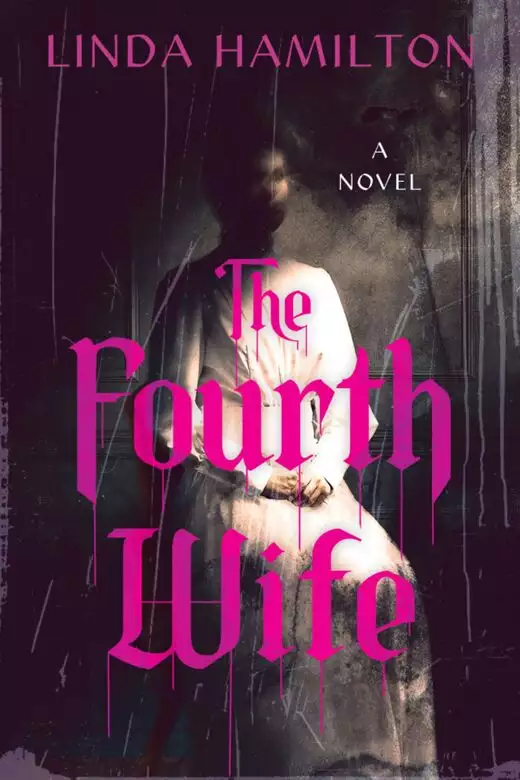
The Hacienda by Isabel Cañas meets “Sister Wives” in a deliciously chilling, darkly romantic, historical gothic horror with a feminist slant, as a young Mormon woman is haunted by a malevolent presence in the decrepit Salt Lake City mansion she shares with her new husband and his other wives…
Hazel Russon’s life in 1882 Utah territory is defined by three things: the Mormon church, polygamy, and the men who control both. She knows she’s supposed to suppress her sinful dreams of a monogamous life with her sweetheart, and her desire for the freedom to play her beloved piano. Every Mormon woman’s duty is to live obediently and meekly, devoted to her husband and her calling as a sister wife. Her eternal salvation depends upon it.
Commanded to become the fourth wife of a man she’s never met, Hazel is relieved that Jacob Manwaring is attentive and handsome. However, she is shocked to discover that instead of living separately as is custom, all of Jacob’s wives and children live in the same house—a large, dilapidated manor that inexplicably fills Hazel with dread.
Despite Jacob’s tenderness, Hazel senses dark secrets and resentments among her sister wives. She hears strange music, sees blood oozing from the very walls, and glimpses apparitions that grow more terrifying every day. And as her nightmares worsen, Hazel can’t be sure if she has more to fear from the living—including her mysterious husband—or from a sinister presence that seems to animate the house itself . . .
Drawing on little-known Mormon folklore and the author’s own polygamous ancestors, this fascinating, suspense-filled historical novel debut is by turns darkly romantic, spine-tingling, and wholly unforgettable.
Release date:
March 31, 2026
Publisher:
Kensington Books
Print pages:
320
* BingeBooks earns revenue from qualifying purchases as an Amazon Associate as well as from other retail partners.
A loud crash followed by a screech cut through the walls of the house, startling me on the piano bench. My fingers hit a sour note and I scowled at the sheet music in front of me. Even at this early-morning hour there was rarely a moment of quiet in the home of a large plural family. Echoes of the baby’s screams reverberated through the papered walls from a room above as I straightened my shoulders to continue my practice over the noise.
With my fingers stretched out across the keys, my body melted into the instrument until we were conjoined as one. My hands moved and the music swelled around the parlor. My heart lightened as the notes rose from my fingertips. I disappeared into the music I alone controlled. Perhaps the only thing in my life I controlled—the only place I felt safe to be myself.
Behind me, Aunt Emma clicked her tongue. “Hazel,” she demanded. My music slowed but didn’t stop. “Must you make such a racket right after breakfast? You’ve disturbed your sister.”
I couldn’t help the leap of guilt in my chest. It was always there, like another force pumping through my veins. My hands stilled on the keyboard. But a piece of my defiance struggled through.
“It’s music,” I responded in a quiet voice. “I wouldn’t call it a racket.”
“It’s selfish to play at all hours of the day.”
Selfish. Once again, I was told I was sinful. Part of me wanted to roll my eyes, but another part was racked with shame. I swiveled around on the bench, my dark blue skirt swishing against the piano legs. No amount of proper petticoats ever made me feel that I was much older than a child, even after my twenty years of life. A pulse of frustration hit me again and I bit my lip to stay quiet. Good Mormon women were never cross or disrespectful. Silence beat between us as I stared up at Aunt Emma’s serious face, her baby balanced on her hip.
“But how am I to improve if I don’t practice?” The words leaked out though I knew arguing would only lead to trouble.
Aunt Emma’s cheeks lit up at my impertinence. “You play well enough already, Hazel. You can play all the hymns and entertain just fine. What more could you possibly be practicing for?”
Her words stung like a physical blow.
“Yes, Aunt Emma,” I replied quietly. She was right. I already knew almost every hymn by heart, and I could play easily when called upon for gatherings. Nothing more would come of my music, no matter how much I loved it. Mothers and wives in Zion had other duties far more important.
A part of me held, unrelenting, to my silent desires. My head swam night after night with colorful dreams of my hands on the magnificent Tabernacle organ, my music bringing audiences to tears. And Elijah in the front row watching me with adoration. I wanted more from life than I was allotted—but this was a sin. So I shamefully pushed the dreams back again and again.
My sister squawked again from Aunt Emma’s hip.
Aunt Emma let out a sigh. “Don’t you have somewhere else to be?”
“Yes.” I stood, towering over her even in my shortest heeled boots but feeling small as a mouse. “Father needs me at the printing office.”
She clicked her tongue again in obvious disapproval. “Then hurry off. There’s no place for idleness.” With that, she spun on her heel and marched away, her hips swinging back and forth, uneven with the weight of her daughter.
“Good day, Aunt Emma,” I called after her. She made no move to acknowledge me as she disappeared around the corner to the kitchen. “And don’t stop there,” I murmured under my breath. “Walk right on out the door and down the street and never return.”
A mixture of shame and terrifying pleasure at the thought warmed through me. The last year had become almost unbearable with that woman and her growing brood of children under Mother’s roof. If only Father wasn’t so distracted with his newspaper these days, then maybe he could finally find them a new home after circumstances forced them out of theirs, and Mother and I could go back to pretending he didn’t spend half his nights with another family.
Our family. My siblings.
I shook away the thought. I’d barely had breakfast and already too many emotions swarmed through me. I balanced on a tightrope knowing one jolt would send me plummeting over the side. The emotion I feared most buzzed in my chest—panic. I drew in a long breath, staring around the parlor, trying to calm myself.
Like any sensible Mormon woman, Mother kept her house in perfect order. It was a sign of our industry and refinement despite the harsh conditions of the valley. Matching maroon chairs and sofa surrounded the hearth in a warming circle. Embroidered stools welcomed the younger children beside the wooden table where Mother placed the family Bible and an intricate box that she kept stocked with tiny molasses sweets. The walnut grand piano tucked against the far wall beneath a family portrait and my framed sampler from childhood bearing the words Home Sweet Home.
And one day, Mother hoped, my own home would look much the same. My life was already laid out—become a plural wife and mother with little else to occupy my energies than the cause of the church and family.
Across the room on the mantel sat Mother’s favorite blue dish. My heartbeat pounded quicker. Attempting to stamp out the growing panic—a panic I couldn’t justify—I crossed the room on silent feet, my full skirts bobbing around me. Gingerly, I reached out and touched the beloved blue plate. Father had given Mother this set for their wedding many years ago and though the other pieces had been lost or broken, this one plate remained—the last physical evidence that once my father had loved his first wife before all others. Now it sat proudly displayed on the mantel as if she needed the daily reminder.
Someone cleared their throat, interrupting my thoughts, and I pulled my hands back as if the plate had scalded me. Another sin, distraction, to add to my list for the day. Slowly, I turned to find Mother standing in front of me, her fingers clutching a white envelope. She didn’t smile.
“I have news.” Mother’s unusually stern voice matched her perfectly set hair, drawn back on her head in a tight bun, not a single strand out of place. “From Elder Crowther.”
“Elder Crowther?” My heartbeat ratcheted. One of the apostles, the most powerful men in the church and entire Territory.
“He wishes to speak with you this morning.”
At once, the air seemed to disappear from the room.
“Now?” My voice cracked. Elder Crowther was Elijah’s father. Elijah, the boy I’d spent my childhood with, the boy who grew into the man I loved.
But Elijah was gone. My Elijah. For years he’d been away serving the church as a missionary in England, reduced to nothing but letters and memories. Did Elder Crowther have news of him? Of our future plan for our happiness together? The thought of Elijah with me once again was exhilarating, almost to the point of physical pain.
“You must hurry to the Council House to meet with him.” Mother didn’t move from her spot, but the envelope wrinkled as her grip on it tightened.
I tensed with the movement. Mother never acted this stiff and severe.
“What’s wrong?” I asked.
“There’s no indication that anything is wrong.” She didn’t meet my eyes. “Only a call to come at once.”
I nodded, but I wasn’t persuaded. Worry gripped my stomach. “There’s something wrong, isn’t there? What happened? Did he get hurt on his mission?” The invisible tightrope beneath my feet drew tighter, my pulse rushing faster. My mind took off, too many thoughts zipping through it to settle on any one.
Elijah’s handsome face. His last letter tucked away in my trunk upstairs. His fingers intertwined with mine. His body broken and bleeding on the cobbled streets of London. Oh no, had he died? The image sparked a tiny yelp that I tried my best to swallow. He was dead, surely, killed by dark-cloaked street thieves or …
“Hazel.” Mother snapped her fingers.
I had always been like this—unable to suppress my thoughts and stay focused, no matter how hard I prayed for relief from this burden. Everything distracted me, and often I found myself elsewhere entirely without ever having moved my feet, frequently assaulted with images and worries that weren’t true but somehow felt so keenly real.
Panic swelled in my chest, outpacing my lungs. I opened my mouth gasping for air as dread overtook me. Was I dying? Squeezing my hands together as tight as I could, I pushed back the rush of tears.
“Hazel, what’s happening?” Mother studied me with concern.
“N-nothing,” I protested, the words barely coming out.
“The Devil is trying to overtake you again. You must fight him.”
I nodded, my heart beating like it attempted to leave my chest. “I am, I promise.”
I could feel his wicked claws around me trying to tear me apart. Why was I so weak? Why did I have to always fight this battle? I lived with my head drowning in a sea of worries I couldn’t drag myself from, and then all at once, this raging panic would overcome me—Satan and his legion ripping through me. I was nothing but an abominable young woman and these attacks only proved it.
“I need to go,” I said, and stumbled toward the doorway. My world was suddenly a pinprick of vision, but if I kept moving and fought through this, the assault would end. And then I could pray for forgiveness for my weakness, my ineptitude, my failings.
“Hazel, are you sure?” At last, her voice had softened to her typical kindness.
I forced air into my lungs, dampening my unreleased sobs. “Yes, I’m fine. I’m not giving in to this weakness of the flesh.” I slid back through the doorway to the entry, where our neat row of hats hung along the narrow wall. “I’ll find my hat and be off.”
As I moved, I sensed the Devil hanging on my chest like a millstone. Each breath in felt unworthy, but I forced myself through it. I had to prove I was capable of the perfection God demanded of me. At last, my heart slowed some.
Aunt Emma strode back into the entry, her eyebrow raised at the remnants of my display.
“Elder Crowther’s office?”
Of course, she would be listening in. I busied my fingers with retrieving my hat and tried to focus on more air, the only solution to lessening the weight pressing down on me.
“That’s over ten blocks. She shouldn’t go alone in this pathetic disposition. I’ll fetch Ammon.”
“I don’t need him to accompany me. I’m strong enough.”
“Are you truly, Hazel?” Her eyes shot accusations at me, ones I knew were all too true. I was pitiful. “You need your brother to escort you for your own good.” She looked over at Mother, who reluctantly met her gaze. “Don’t you agree it’s proper, Sister Mary?”
Mother’s eye twitched but she otherwise maintained her calm demeanor, unable to defend even her own daughter if it meant causing disagreement. “Thank you, Sister Emma. How generous of you to loan us your son.”
Aunt Emma smiled in triumph. “Ammon! Ammon, come down here now to escort your sister.” She climbed up the stairs two at a time to fetch him.
I gave my mother an expectant look, ignoring the dizzying in my head that often accompanied one of my panics. “This isn’t necessary. He’s only sixteen, not exactly a chaperone. And I need to hurry.”
“He’s your oldest brother,” she said.
“Living brother,” I whispered to myself.
I often imagined my brother Heber and I would’ve been great friends if he had lived past our childhood. If he and the other lost babies had lived, then perhaps Father would never have needed to marry Aunt Emma and produce more children for Zion. I shifted my weight between my feet, forcing a damper on thoughts of things I couldn’t change, and continued. “Please, I can’t delay and I’m not required to have a chaperone. She’s only trying to rub it in—”
“It’s best not to argue with Sister Emma,” Mother cut me off but gently touched my shoulder. “Contention is a tool of the Adversary. A proper Mormon woman doesn’t cause arguments or disputes. If you learn nothing else from me, Hazel, remember that it is your calling as a future wife and mother to be a help-meet and a source of peace. Don’t waste your time trying to be right. It’s better to simply be quiet. …” She trailed off, biting her lip as she looked away.
As always, Mother was right. I needed to improve, even with my wicked panics. Better yet, I needed to be smaller, less of a person to worry about. And yet, I couldn’t resist the undercurrent within me, to be more and find a life unfettered. But such desires were only my sinful nature—something to be squashed and scorched away.
Ammon slouched down the stairs, dutifully shoving his arms into his worn brown coat. Spring in Salt Lake was a constant seesaw between threats of snow and blazing heat, and today the sun was hidden behind a thick layer of gray clouds. With a forced smile, I fixed my hat over my pulled-back curls and threw open the door.
Our house was a fine two-storied brick home, much like the others stretching down the street. Father’s occupation at the newspaper made us stable enough to never want, though we were far from the wealthiest of the Saints in Salt Lake. Ammon clamored behind me down the wooden porch steps and onto the sidewalk lining the dirt street.
I pivoted sharply without saying a word to him, headed toward the center of our bustling Deseret—the true Mormon name of our territory. Despite the itch of guilt at my pride, I didn’t bother to wait for Ammon, but his lanky legs caught up with me in a flash.
“You don’t have to walk me,” I said, allowing my fizzling worries to morph into frustration. “You can run off to see your girl and I won’t tell your mother.” Out of the corner of my eye, I saw a bright flush of pink overtake his face at my teasing.
“No, I’ll mind my task.”
I bumped him with my elbow as he passed, the tension between us simmering. He was already taller than me and would probably grow even more by the end of summer. His golden-brown hair matched mine, as well as his chestnut eyes. We’d both inherited our father’s nose, and he, Aunt Emma’s stiff chin, while I favored our father’s soft features around the mouth. In any other city in America, a gentile passerby would’ve easily taken us for full siblings and left it at that, but here everyone knew we were truly two out of thousands of children in families throughout the Territory, all mixed up and gathered in the crucible of plural marriage.
Ammon slowed his steps again as we crossed the block. “You worried about Elder Crowther’s summon? Bet you an extra dessert helping you’re in trouble.”
“Betting, little brother? Then perhaps we should skip this excursion altogether and go to a gambling den. I’m sure the bishop would love to hear about that adventure.”
His mischievous smile dimmed. “I’m sure he’d also love to hear about the book I found under your pillow.”
My boot slipped on an uneven edge of the sidewalk, and I caught myself by grabbing the edge of his sleeve.
No one was supposed to know about the hidden dime novel I kept with its story of daring romance. “Promise me you’ll never tell anyone about it, especially not the bishop. I swear, I’ll throw it away. I meant to, that is. I didn’t mean to—I wasn’t planning to—”
“Golly, Hazel, you’re always so dramatic. I was only joking.”
Certainly, to him it was only a lark. Though only sixteen, Ammon was still a man and as such, entitled to the priesthood—God’s power given to men on earth to pronounce blessings and to govern over the church. All men deemed worthy were given the priesthood through religious rite, regardless of their occupation. That priesthood allowed them to rule not only over the church in all positions of authority but also over their families, wives, children, and eventually, eternal kingdoms in the life after death where they would become gods.
Ammon would never understand what position he held over me and my whole sex simply by virtue of being born male. A man reported with a scandalous book was worth a stern talking-to at most. A woman was branded a whore.
I immediately buried the weight of that reality. My church and my God demanded that I be more than I was, and I hated myself for my failures. A good Mormon woman was submissive, faithful, and always joyful. She never complained or caused contention, and she certainly never questioned the authority of those over her. She read books of the highest virtue and spoke in the sweetest tones. She obeyed her husband’s command and reared children to do the same. And only then was she acceptable.
It had to be this way. God willed it so, and I had to obey or risk losing my eternal soul. I shoved down the possibility that there was another way, another life. My hand fiddled in my pocket searching for something it’d never find as we walked on in silence. Mormonism was all I knew. I had to be this remarkable woman. I had no other choice, surely.
A trolley bell dinged as it ambled down the center of the road on its metal rails, toward the heart of Salt Lake. The noises of the city center were picking up now: horses braying, carts rolling against the dust of the street, the distant din of hammers and chisels from the Temple builders. I relished in the familiarity. This was home.
Everything in Salt Lake spread out from the center square of the rising granite Temple like appendages, every block neat and organized into exact squares across the city. Carts and horses drove past tall, redbrick buildings and shops lining the road. Between all the bustle, women walked in their long, simple dresses with baskets for errands, and men in their starch suits or dirt-covered clothes for a day of labor.
The prophet Brigham Young’s particular vision for his beehive oasis in the desert lived on past him. His imposing fingerprints were all over every nook and cranny of the great Utah Territory, from its cooperative enterprises to far-flung towns to hardly secular governments. This spider’s web was his creation—a home for Mormons in the toiling hard soils of the west, far from the persecutions and influences of the hostile gentiles.
I’d heard many visitors who came to Salt Lake were surprised to find a hustling, modern city, despite its curious residents and our peculiar polygamist way of life. But to myself, Ammon, and many other Mormons milling in and out of the houses and stores surrounding us, it was the only way of life—the uncompromising bastion of our religion worth bleeding for when we were told. No threats of Eastern sensitives or federal government interference would wrangle this beast from our hands. Plural marriage was God’s principle and command, and our people would rather lie down in death than surrender to man’s laws.
Ammon took the last block almost at a jog. The Council House appeared ahead of us as we passed the Lion and Beehive Houses, where Brother Brigham used to live. As a child, I would try and peek in the windows of these magnificent homes hoping to catch a glimpse of the prophet’s many elegant wives. But the family had moved out since his death, leaving only the ghosts of their past refinement behind.
I looked up at the house and a shiver rolled down my spine. The curtains covering the upper far-left window rustled and parted open. I paused, uncertain for a moment about what I saw.
A woman’s face, her expression long and mournful.
I blinked and the figure was gone, the window as empty as it was before, the drapes shut up tight.
I shook the image from my head. My mind was too much in a whirl this morning for sense, a remnant of my earlier panic. But Elder Crowther was waiting for me and I couldn’t delay any longer to ponder on it.
We arrived at Council House and I motioned for Ammon to wait as I pushed open the white picket gate of the church’s headquarters. The two-story brick building was nothing particularly grand, but its position directly across from the growing Temple marked its importance.
Ammon collapsed onto the bench near the road. “I’ll be waiting here.” Like his ancient scriptural namesake, he was ever dutiful. With one last glance over at the Temple, the pumping center of my world, I walked silently toward the door.
Elder Crowther opened his door halfway through my knock, as if he’d been standing right there waiting for me. The apostle’s smile was even, if a little severe, when he motioned me inside and clicked the lock shut behind me. His eyes looked painfully like Elijah’s.
“Sister Russon, please have a seat.” He took his place across from me at the expansive oak-painted desk.
“Thank you.” I sat back into the surprisingly stiff seat. Its plush padding had long since lost its comfort—or perhaps the lack of reassurance was by design.
The office was both orderly and devoid of personal touches, save for the photograph of his sizable family hung on the wall behind him. Even the air tasted stale. Books of Mormon and other sacred volumes lined the brown shelves, but everything in the office pointed your attention back toward the man occupying the desk.
Elder Crowther propped his fingers beneath his long, peppered beard and stared as if drinking me in. His penetrating gaze never wavered.
I hated this part of interviews. Church leaders gave me the distinct impression they could see into the very essence of my soul. It was as if I’d been stripped naked while he probed the depths of my mind and spirit. A bead of sweat dripped down the small of my back.
“Do you wish to speak about Elijah?” I blurted out. “I mean, is my friend all right? Or is he hurt, or—or—” The image of Elijah’s broken body crumpled and blood-soaked in a dingy London alley conjured again in my mind.
“No, nothing is amiss.” Elder Crowther finally blinked. “Elijah is still faithfully serving the Lord.”
A wave of relief pulsed inside me. Elijah was safe. “Yes, of course. How silly of me.”
Silence beat for more excruciating moments. I wished he would cast his eyes somewhere, anywhere else.
“May I ask why you called me here?” I asked.
“To deliver a message.”
“From Elijah?”
“And the Lord.”
God had a message for me? Only apostles and prophets could speak for Him, and I never imagined a high priesthood leader would ever deliver such an important call to unimportant me.
Elder Crowther went on in his solemn tone. “It’s come to my attention that you and my son had a private attachment to each other.”
Heat burned in my chest. “We’ve always been the closest of friends, as you know.”
“Yes, bu. . .
We hope you are enjoying the book so far. To continue reading...

 Please log in to recommend or discuss...
