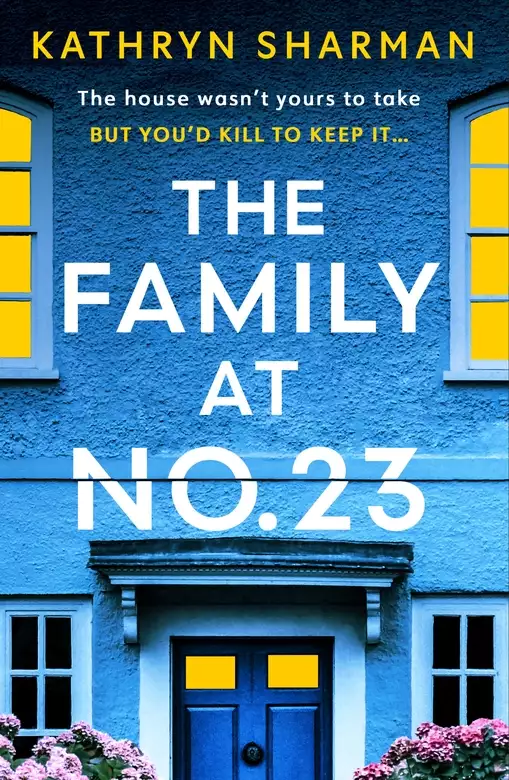
On Riddleston Road each house reaches three storeys high, with smart gabled roofs and neat garden paths unfurling from pastel coloured front doors. Wide, sash windows stare outwards from the brick facades, revealing a glimpse of beautiful interiors. And concealing dark secrets.
Today a new family has moved into number twenty-three. A family who shouldn't be there.
As Iris stacks boxes in the hallway, she knows she has made a mistake in coming here. This house will mean her son will get the future he deserves. That will make everything she's done worth it.
But someone knows Iris's secret and what she did to get her dream home... Would she kill to keep it?
Release date:
August 28, 2025
Publisher:
Hodder & Stoughton
Print pages:
320
* BingeBooks earns revenue from qualifying purchases as an Amazon Associate as well as from other retail partners.
The café is crowded this morning and Iris has to raise her voice to be heard above the scourge of the coffee machine and the shouts of the baristas. One of them wears a leather apron, his hair caught neatly in a topknot. A scroll of brown paper hangs from the wall with words such as ‘cortado’ and ‘macchiato’ handwritten on it. She sighs, remembering when she used to be able to buy her entire lunch for the same price as a cup of coffee. But it’s Laura’s favourite, located on her side of town, so this is where they arrange to meet. They’ve known each other since the NCT days when they bonded over mugs of tea and Elle Deco, preferring to discuss paint swatches rather than the colour of their kids’ poo.
‘I’ll have to get back soon,’ says Laura, checking her smartwatch. ‘Sofa delivery.’ She stirs sugar into her flat white and foam slops around the sides of the cup.
‘So, are you all settled in now?’ Iris asks, dutifully. She’d hoped to avoid house talk today.
Laura rolls her eyes.
‘Oh, you know. It’s like the bloody Forth Bridge. Never-ending.’
‘I’m not sure why you had to move in the first place. Your old house was amazing.’
There is an uncomfortable pause as her friend takes a sip of her coffee and shrugs.
Iris will never forget the day Laura had told her they were moving. Having shared school runs and nights out, she had thought their lives were following parallel lines. Their sons, Freddie and Ben, were the best of friends too. Thrown together during CBeebies benders and soft play sessions, they’d clung to each other like driftwood on their first day at school. By the time they were entering their final year at Grove Park Primary, they were walking themselves to school; dark-blonde heads drawn together to discuss Pokémon cards. She had taken it for granted that the boys would continue on to the local comp together. It wasn’t the best – a recent Ofsted inspection had seen its rating downgraded from ‘Good’ to ‘Requires improvement’ – but she and Laura had always joked that a decent salt-of-the-earth secondary school had never done anyone any harm.
But then, about a year ago, Laura had announced that she and her husband, Ivo, had put their house up for rent. A ‘recent windfall’ from a deceased relative, combined with their ‘dream house’ becoming available on the other side of town meant they’d snapped up their ‘forever home’ in a chain-free sale. With every pat phrase it felt like another domino had fallen. ‘And it means we’ll be in the catchment area for Toppingham.’ Crash. The final blow. Iris had been floored, her imagined future rewriting itself before her eyes.
‘So, is Ben definitely going to the high school?’ asks Laura, as though reading her thoughts. She knows this is a bone of contention between them now. Conversations about school have become terse and difficult.
‘Well, it didn’t feel like we had much option.’ Iris pauses to sip her coffee, which is too bitter and strong for her taste. ‘Ben’s still a bit worried about who he’s going to hang around with, now that Freddie’s not going to be there.’
Laura looks down into her coffee but then leans forward across the table and gives her hand a squeeze.
‘Look, why don’t you just have another stab at Topps? You can appeal, you know. Or put Ben’s name down on the waiting list, see what happens. I know a couple whose daughter got in the other year and they live even further out than you guys.’
Iris feels her jaw clench reflexively. She hates the way Laura talks like this, as though she thinks they live in some wasteland now, beyond county lines. But it might as well be true. This town is your typical middle-class commuter haven – leafy, rich, privileged – but like most places, it’s divided into the ‘haves’ and the ‘have-nots’.
Iris takes another look around the café, at its pale reclaimed wooden floorboards and the chalky grey walls. It’s mainly greasy spoons, chemists and vape shops on her side of town.
‘Yeah, maybe,’ she replies. ‘I’ll talk to Steve tonight, see what he says.’
‘Worth a try,’ says Laura and gives her another encouraging smile before she downs her coffee and stands to leave. ‘Got to go. I mustn’t miss my delivery slot.’
Iris watches her friend through the window, her bouncy ponytail and designer trainers disappearing down the tree-lined street with purpose. Laura always looks so well, as though nothing could ever cause her harm. Smooth-skinned, sparkly-eyed, dark hair like a mirror. It makes Iris think of a shiny new coin. Lucky.
Reaching for her coffee again, she tries another mouthful and winces. But she can’t leave it. That would be even more of a waste of money. And they have to watch every penny. So she swallows it down and thinks of her son, Ben. He’s a bright boy, or so his teachers say. Sensitive too. But then she’s always known that. Even now he knows when she’s sad or tired. He will pick her a flower or make her a cup of tea, unasked. An only child, it’s not surprising that he’s the centre of her world. But he’s different to other boys. A boy like Ben doesn’t belong at the local comp. He might not survive. He certainly won’t thrive, that’s for sure.
She gives her coffee one more sip before pushing it away. Perhaps she’s being unfair. After all, she and her husband, Steve, went to similar schools and they turned out all right … didn’t they? But the thought of Laura and Ivo in that beautiful new house. Their son going to the best school; it has curdled something in her recently.
The coffee machine lets out another high-pitched screech. It sounds like an alarm bell ringing in her head, the whistle blow of a train about to leave the station. A young woman with headphones and a hoodie approaches the table and Iris is brought back to the moment.
‘Are you going to be much longer?’ she asks. ‘It’s just that I’d like to plug in my laptop.’ She gestures to the power socket beneath the table and Iris apologises, gathering her coat and bag.
Outside, the street is quieter. The pavement is sun-dappled today, a gift for April. There is no grind of traffic to dull the sound of birdsong in the nearby trees and Iris decides to let herself wander. She admires the local independent shops that line the street with their striped awnings. A man emerges from the nearby florist holding two enormous bouquets. As she wonders who the lucky recipients might be, an inquisitive cockapoo crosses her path. She stops and crouches down to stroke the dog, reading Barney on the name tag before the owner continues onwards. She and Steve have never indulged the idea of pets. Ben has allergies and they have to be careful. But the feel of the dog’s silken pelt and its warm tongue remains on her fingertips.
She walks on and the shops give way to larger stretches of pavement punctuated by tall, established trees. By autumn, these streets will seem paved with gold as yellow and orange leaves line the walkways.
Her eyes are downcast, contemplating this thought, when she hears a muffled cry and the dull clang of metal banging to the ground. A satsuma rolls along the pavement towards her feet and Iris looks up to see an old woman lying prone on the path ahead. A shopping trolley lies beside her, up-skittled.
‘Are you okay?’ she calls.
There is no answer. She’s unsure what to do, so picks up the spilled fruits – apples, pears – and deposits them back in the basket. ‘Can you hear me?’ Iris tries again. ‘I think you’ve had a little fall.’
‘You don’t fucking say,’ comes a voice from within the pile of grey curly hair and faded navy mac. The old woman lifts her head to regard Iris and a drop of blood leaks from her temple.
‘You’re hurt. Perhaps you should lie still?’ Iris says, looking up and down the street. In the past, when she has seen someone taken ill like this, she’s always been relieved when the victim is receiving assistance from passers-by and she can carry on. But the street looks deserted. Not a soul is around.
‘Just give me a minute,’ the old woman says breathlessly. ‘I’ll be all right.’ She pulls herself up to a sitting position and brushes down the lapels of her coat. ‘These bloody pavements will be the death of me. I’ve written to the council but do they do anything?’
Iris blushes at the colourful language.
‘You’re bleeding,’ she says, pointing.
The old woman puts a hand to her head and looks with mild interest at the blood, smearing it between her fingers.
‘Oh well, could be worse. Give me a hand, will you? Set me right on my feet.’
‘I really think you should wait until we’ve had you checked over for any broken bones.’
‘I’ll be the judge of that, missy.’
She heaves herself upwards and Iris is forced to lend an arm in support. Testing her legs, the old woman shifts her weight from one foot to the other. She gestures towards her shopping trolley. Her hands are grazed like a toddler’s.
‘At least let me help you home,’ offers Iris. ‘Do you live far?’
‘Just around the corner.’ She nods, setting her mouth in grim determination.
As they walk side by side, the old woman leans heavily on her trolley, using it as a walking aid. Slowing her gait to match, Iris considers the rows of Victorian terraced houses. They are on Riddleston Road, she realises, not far from Laura’s new place. This street is spoken of in hushed tones of reverence, one of the most prestigious addresses in the area. Each house reaches three storeys high, the smart gabled roofs painted in black and white. Tiled garden paths unfurl from pastel-painted front doors. Wide sash windows stare outwards from the brick facades revealing a hint of the salubrious interiors within.
‘This is me,’ says the old woman eventually. They have nearly reached the end of the street when Iris catches sight of a thickly overgrown privet hedge and a gate that hangs loosely on its hinges. She tries not to stare but the disparity is obvious. The front garden is a tangle of weeds, obscuring a path of crazy paving. The window frames, once painted blue, are weather-beaten and peeling. Grey, dust-laden net curtains conceal the rooms inside. There is no tantalising glimpse of fashionable middle-class decor. The house looks uninhabited, dead. A rotten tooth in an otherwise gleaming smile.
‘I’ve let the old place go a bit,’ she mumbles.
‘Let’s get you inside, shall we?’ Iris says. She is wishing, not for the first time, that someone else was on hand to deal with the situation but the street is empty. ‘I’m Iris, by the way.’
‘Rosemary,’ comes the reply as a key is fitted to the door of number 23 and the blistered wood gives way to reveal a dark hallway and a musty smell.
‘Oh, two flowers,’ Iris says, trying a smile, but the old woman moves past her into the house and the door closes behind them.
Piles of mail, mainly takeaway flyers and local papers, lie strewn underfoot but not so much that Iris can’t appreciate the original tiled porch, its tessellating colours of white, blue and terracotta still beautiful. The hallway leads to a chink of light towards the back of the house. She looks up at the high ceilings and corniced walls. Once white, they are now yellowed and dusty like a piece of old wedding cake. Ahead is a wide staircase, the wooden ribbon of a banister winding up and up, and she can’t help wondering at the rooms above, sealed with ages of dust and paint. The place is a mess; cluttered, grimy but as they say, good bones.
‘I know what you’re thinking,’ Rosemary says, following her gaze. ‘How can someone live like this?’
‘No. Not at all,’ Iris demurs. ‘I was just thinking what beautiful old houses these are.’
Rosemary shrugs and purses her lips.
‘I’ve lived here most of my life. You get used to the same old walls. I really should have moved on when my parents died but didn’t have the heart to sell up.’
‘You had no family of your own to pass it on to?’
She’s being nosy, but she can’t help asking. So much of property is inherited now, passed down from generation to generation. It’s one of her and Steve’s bugbears. The fact that honest, hardworking people like themselves don’t stand a chance of getting on the property ladder, but carry on paying all their wages to wealthy landlords.
‘Never married,’ confirms Rosemary. ‘Why would I want to saddle myself to a man and brats?’
The tone takes Iris by surprise, as though the old woman has looked into her own life for a moment and sneered at her choices.
‘It’s such a big house for just one person though.’
‘Says who?’
‘Well, I just mean—’
‘I can still manage the stairs perfectly well.’
Iris catches sight of the blood on Rosemary’s forehead again and reaches for a tissue in her bag. The old woman takes it from her silently and presses it to the skin above her temple, which is beginning to bruise.
‘I’m sorry. I meant no offence.’
Rosemary reaches out a hand towards the newel post as if to steady herself but the gesture appears proprietorial.
‘You know, Iris, it’s just a house. This one has been a blessing and a curse.’
Easy for you to say, Iris thinks, but she smiles and nods.
‘I’ll just rest in my chair for a bit,’ says Rosemary, taking off her mac and wincing at some ache or pain. She seems a bit unsure on her feet suddenly and Iris reaches out a hand to help her but it is shrugged off.
‘Is there anyone I can call for you? A relative or friend, perhaps?’
Rosemary gives a bitter laugh at this and shakes her head. ‘I don’t have any. There is no family. They’re all long gone.’
‘What about next door? Your neighbours?’
She tuts at this. ‘Never set eyes on them. I don’t even know their names. Foreigners, most of them. Always coming or going. I think one spends half the year in another country. They couldn’t give two hoots.’
‘But surely there must be someone?’
Rosemary turns to look at Iris then. Her eyes might have been a deep chocolate brown once but they now appear faded.
‘No. There is no one.’
Iris pauses. ‘Look, I really think we should get you checked over. That bang to your head … maybe I should call an ambulance—’
‘No!’ declares Rosemary with a force that takes Iris aback. ‘I don’t want all that circus. People, strangers coming in here. They’ll only want to put me in hospital. A home. I won’t go. I want to stay here. In my own house.’
And with that she moves off in the direction of the front room.
Iris finds herself alone, dithering in the hallway, wondering what to do. Perhaps she should just go. Steve has a work trip tomorrow, will need clean laundry, and Ben will be home from school soon. She likes to be there when he gets back. But something makes her pause. She is loath to leave, it feels churlish. And besides, a part of her wants to stay a little longer. Call it morbid curiosity but this house intrigues her.
‘Why don’t I make you a cup of tea then, while you put your feet up?’ she calls. ‘It’s the least I can do.’
She hears Rosemary make a grunt of assent so she wanders down the hallway, looking for the kitchen.
It’s as bad as she expected. The kitchen cabinets look like they were fitted sometime around the Seventies but most of the fixtures are original; the same high ceilings and corniced walls, albeit papered with faded roses and covered in a layer of greasy grime. The dirty lino flooring covers what she suspects might be lovely quarry tiles underneath and a wooden dresser resides along one wall, filled with china.
As she stands at the sink filling the kettle, Iris looks through the window onto the garden beyond and considers the jungle of trees and plants. The lawn stretches out behind the house, bordered mainly with grasses and wildflowers and some long-established shrubs in desperate need of pruning. Tall trees stand looming, blocking out much of the natural light; a haven for birds.
She puts the kettle on to boil and leans against the work surface. Next to canisters named ‘tea’ and ‘coffee’, a calendar is nailed to a wall. Each page has a painting of a different bird and the RSPB logo. Few engagements are marked, the dates of the month empty. Surely there must be doctor’s appointments, a WI meeting or something like that? She peers closer and lifts a page of the calendar but nothing is planned, just a couple of odd reminders such as ‘visit cemetery’, ‘buy corn plasters’, ‘water plants’. There is a date the following month marked ‘birthday’ but it doesn’t say whose it is.
Iris drops a teabag into a mug she’s found in the cupboard overhead. In the fridge is a carton of milk as well as individually wrapped cheese slices, an iceberg lettuce and some pickled vegetables in jars plus a half-empty tin of tuna, turning brown and crusted. She sniffs the milk and looks around the kitchen again and that’s when she sees two small bowls on the floor; one for food, one for water. They are close to the back door, in which there is a cat flap. So there is someone, Iris thinks, splashing milk into the mug.
‘Here’s your tea,’ she says, opening the door to the lounge but there is no response. Within this room there are more florals, spilling out over the fireside rug onto the curtains and the cushions. It’s as if the inside of the house, like the exterior, has been left to grow wild, untamed. Iris briefly thinks of Sleeping Beauty’s castle and its forest of thorns, the enchantment that lay over it all. And in a way, a strange spell has been cast over her too. As every minute passes she is fascinated and appalled in equal measure, at this house, this woman, which seem to not quite exist in the real, everyday world.
‘Rosemary,’ she tries again, in a stage whisper.
Perhaps she’s nodded off so Iris places the tea on the nest of tables beside her chair and gently touches her arm. The old woman’s mouth falls open, as though in shock at such an act of kindness, but no sound passes her lips. Moving further around to face her, she realises Rosemary’s eyes are open. They stare into the middle distance, at something far beyond. There is a stillness, a finality to her body.
This is what a dead person looks like, Iris thinks. She takes a step backwards and looks away. But her eyes are irresistibly drawn back to Rosemary’s face; the fine down on her cheeks, the way her eyebrows have settled into a look of slight surprise. Should she feel for a pulse, press her fingers to the fine delta of blue veins at the wrist? Or even try mouth-to-mouth or CPR? But the look of acceptance, almost serene amusement, on Rosemary’s face won’t allow her to consider such a disturbance. Not that Iris has really got the stomach for it, if she’s honest.
She walks out into the hallway to locate her handbag where she left it earlier, but also because she doesn’t want to be in the same room as a dead body. The hairs are standing up on her neck and she feels suffocated by the musty, airless atmosphere of the house. She reaches into her bag for her phone. She should call someone. Who would that be? Not 999, that’s for emergencies and this situation is no longer urgent. Is it the police to whom she must report a death? Should she run outside and start banging on doors to locate a neighbour? But then Rosemary’s words come back to her: ‘There is no one’.
And that’s when she leans on the newel post, just as its owner did a little while earlier. She runs her hand over the smooth dark honey-coloured wood. It would only need a little buffing to bring it up to a high shine again. Iris looks down at the phone in her hand and then up and around at the gaping hallway. There is no one, she thinks. No one would ever know.
2
SIX MONTHS LATER
Iris steps back to admire her handiwork. She has just finished giving the hallway a second coat of paint – a soft grey – which makes the white skirting boards and cornicing really pop. Her gaze travels upwards where all is newly decorated, pristine. Beneath her feet, the mosaic of tiles spreads out in a chorus of colours. There weren’t too many that needed replacing in the end and the rest have cleaned up nicely. The turquoise winks at her amid the terracotta, black and white and she wonders whose feet have stood here before over the years. Who lived in this house? Who died in it? Pushing the thought away, as she must always do, she lifts the paint roller and tray and takes them to the kitchen to rinse them out.
She looks out of the window. It is there again. The tortoiseshell cat that haunts the garden despite the fact she has sealed up the door and removed any traces of food. She hates cats and while Ben is still allergic to animal hair she’s not taking any risks. When they first moved in, it could be heard mewing plaintively on the doorstep at various times of the day and night, but whenever she opened the back door to shoo it away, it would already be gone. Steve had questioned its persistence to begin with but she had passed it off as just another neighbourhood moggy. ‘Probably tries it with everyone on the street,’ she’d joked.
The cat stalks the lawn now before settling on a patch of grass – always the same place by the laburnum tree that overhangs from next door’s garden. Why does it have to choose that very spot? It sits there and stares out towards the kitchen window, its eyes blinking in slow motion, watching the house. Iris stares back for a moment, willing herself to face up to this presence, wondering who might break first. The cat wins. Cursing, she fills a jug of water, opens the back door and strides out, opening her arms to make herself appear larger.
‘Get away,’ she shouts, emptying the jug, water leaping from her hand like a lasso. At the last moment, the cat hisses and dives through a gap in the fence, disappearing. Iris finds herself standing on the new patch of grass by the tree, staring at the spot where the cat was just sitting, its absence like a negative in a photo.
When Iris opens the door, Laura is standing on the front porch, her arms filled with flowers and a bottle of Prosecco. Her hair is caught up off her face, with a pair of large sunglasses acting as a makeshift hairband, and she is wearing a pair of colourful dungarees with a discreet label on the front pocket. Iris makes a mental note to google the brand name later.
‘Ta-dah!’ says her friend. ‘I thought you lot had been in the new place long enough so I’m inv. . .
We hope you are enjoying the book so far. To continue reading...

 Please log in to recommend or discuss...
