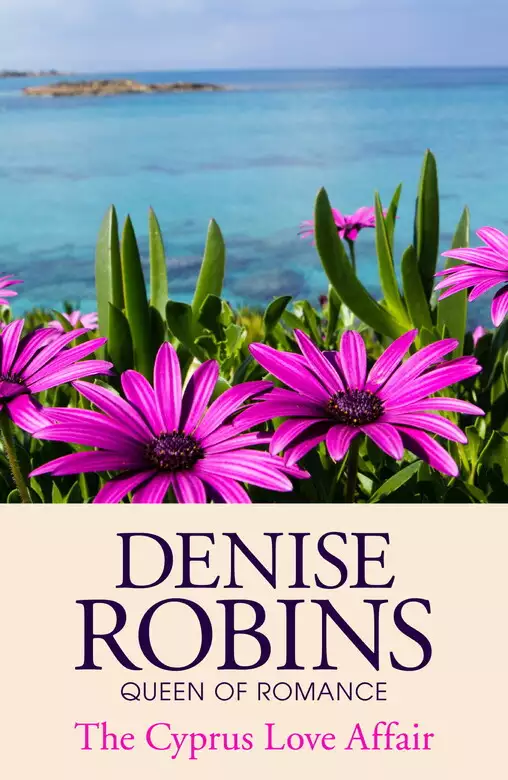
A sweeping sun-drenched love story from the original Queen of Romance first published in 1969 and now available for the first time in eBook. When pretty young Lucie Gresham takes a job as companion to the mother of rich shipping magnate Adrian Ollivent she also realises her long-held wish to visit the beautiful island of Cyprus. Lucie finds the island as enchanting as she had hoped and Mrs Ollivent a pleasant and kindly old lady but also finds herself falling in love with Adrian. He is not a happy man and displays little affection towards her so Lucie determines to discover what has made him this way. She finds much pain and unhappiness has to be endured before the complete truth is finally exposed.
Release date:
October 24, 2013
Publisher:
Hodder & Stoughton
Print pages:
192
* BingeBooks earns revenue from qualifying purchases as an Amazon Associate as well as from other retail partners.
LUCIE GRESHAM walked down Kasr El-Nil Street in Cairo on that hot dusty morning in May, looked through her dark glasses at the familiar sight of the cosmopolitan crowds thronging the streets; at the white turbans and gallabiehs of native suffragis; at the sleek high-powered cars carrying wealthy Egyptians wearing the scarlet tarboosh; at everything which spelt Cairo … and felt profoundly depressed.
She was having to say good-bye to it all. Good-bye to Egypt and the Middle East … to all the fascination which had got under her skin … and the work she had done at the Embassy as a stenographer for the last eighteen months.
It was all over. That last visit to the oculist had settled the question. The blinding glare of last summer and too much concentrated typing had resulted in severe eyestrain. She simply must relinquish her post.
Yesterday she had gone to the Embassy for the last time. And now she was supposed to be waiting for a boat to take her back to England.
Dejectedly, Lucie strolled along the fine boulevard. She did not mind the heat of the sun. She was drenched with it, bare legs and arms tanned to a deep gold, fair hair bleached almost to silver. She loved the sun, just as she loved Egypt. She had never been homesick out there, like so many of the other girls. Perhaps that was because she had no family ties, no home to pull at her heartstrings.
Her father, a doctor with a one-time practice in the Lake District, had died in harness two years ago. Her mother had died when Lucie was born. She had been trained both in shorthand typing and languages and been only too glad to go out to the Foreign Office clerical job in Cairo, when it was offered her.
There were a number of secretaries living in one of the many quiet English pensions which abound in Cairo. For Lucie it had been a year and a half of interest and happiness—in her own quiet way. She was a shy girl who found it difficult to make friends, and little of the capacity of her associates to rush around with any young man who wanted to take them out. Lucie suffered perhaps by being too fastidious, and the only boy who had begun to interest her in the Embassy had been transferred to Ankara. So Lucie’s little romance had been nipped in the bud.
She had not minded. It was not serious. What she really enjoyed was all the colour and glamour of life abroad; the exciting change after ‘austerity England’. She adored the desert, the trips they made down the Nile, the beauties of sunrise and sunset, the imperishable mysteries, the historical tradition of ancient Egypt.
This summer she had planned to go to Cyprus. Cyprus, which they called ‘Love’s Island’. Some of her girl-friends had been on holiday there and came back telling rapturous stories of its beauty and fascination. Lucie had heard so much about it that she was filled with a tremendous desire to go to Cyprus. She had saved for that purpose. She read books about it; studied photographs, steeped herself in all the charm of its atmosphere.
And now it seemed that her great ambition would never be realized. She had to save every penny in order to keep herself once she got back to London, until her eyes recovered sufficiently for her to resume work.
This morning her irresistible longing to see Kyrenia returned in full force, and drew her to a certain Travel Agency which was in this very boulevard and wherein bookings could be made for Cyprus, by sea or air. They had already supplied her with pamphlets about the Island.
Of course it was just a waste of her time … and yet … supposing there were some way of getting back to England through Cyprus, without spending too much money, Lucie asked herself. She looked at a big coloured poster of the famous Castle in Kyrenia … at the radiant sea which was like lapis lazuli … the olive trees on the green slopes leading down to the small white harbour.
She would always feel that she had missed something in life now that she would never set foot upon its enchanted shores!
It was quiet, dark and cool in the little office after the blinding heat outside. The clerk was busy. Lucie sat down, took off her sun-glasses, blinked and began to dab her damp young face with a handkerchief. How sore her eyes were, she thought, looking in a mirror. And how plain she looked. Those light coloured golden hazel eyes with their long lashes, were the only good feature in her face. Today they were red-rimmed and tired. She had grown very thin out here … her face was too drawn. The fine-cut delicate lips had a weary droop to them. With her bleached hair drawn into a knot at the nape of her neck she looked drained of vitality, even austere. Yet, she felt full of enthusiasm, courage—the spirit of adventure. … It was all there still behind that colourless exterior.
She sighed, returned her mirror to her bag and looked up at a tall, broad-shouldered man who was having a serious discussion with the booking clerk. His back was arresting … like his rather massive head, with thick dark brown hair. He wore a light-coloured garbardine suit. He was saying:
‘I don’t care what the bookings are, my dear Wilson, you’ve got to get me on to that ’plane. I want to be in Kyrenia the day after tomorrow.’
‘I’ll do my best for you, Mr. Ollivent,’ said the clerk.
‘It’s an infernal nuisance,’ the tall man with his back to Lucie spoke again. ‘I really meant to get up to Khartoum this weekend—I’ve got so much to do. But my mother isn’t fit to be left alone. Her health these days is such that she’s tied hand and foot to the Villa. She must have someone with her.’
The clerk sympathized.
‘Very trying for you, Mr. Ollivent, and I can remember you telling me you were so pleased with that Miss Little, who lived with Mrs. Ollivent.’
The man called ‘Ollivent’ shrugged his shoulders.
‘Miss Little was an excellent companion, but my mother’s letter says they had to fly her home at a moment’s notice for this wretched operation, and that she is never likely to return.’
‘And how are you going to replace her, Mr. Ollivent?’
‘That’s the devil of it. I’ve got about twenty-four hours in which to find somebody suitable. I won’t manage it of course. She has to get just the right person. Not easy. So I’ll have to advertise, and arrange for my mother to be looked after meanwhile. Fortunately, she has a good staff.’
Lucie sat still. She found herself an unwitting eavesdropper. It was interesting, to say the least of it. Kyrenia! … that haunting name!
What a wonderful chance for somebody … somebody who would fill the shoes of the departed Miss Little, as companion to the old lady in her Kyrenian villa!
‘Mr. Ollivent’ turned and walked out of the office. He cast a brief disinterested glance at Lucie. Her small figure was inconspicuous, and her face in shadow, but the light from the door fell upon Mr. Ollivent’s face and showed it up clearly to the girl. Like his back, it was remarkable. What a strong, proud, bitter sort of face, she thought, with a granite strength of mouth and jaw, and curiously light-coloured blue eyes.
There was something unusual about him. Lucie walked to the desk.
‘Who was that?’
‘Mr. Adrian Ollivent,’ the clerk answered, and being an affable and garrulous young man who liked to air his knowledge, added: ‘Everybody knows him. Big shipping interests in the Middle East, and has a villa in Cyprus.’
‘Yes,’ said Lucie slowly, ‘I … couldn’t help hearing.’
The clerk tapped his pencil on the desk.
‘If anyone can get on a ’plane to Cyprus at a moment’s notice, he can. It’s wonderful what money and position can do. But I’m not quite sure how he’s going to find a companion to suit his mother, in a hurry.’
It was then that Lucie Gresham had what she afterwards described to herself as ‘a rush of blood to the head’.
Breathlessly she said:
‘Oh, I wish I could apply for the job!’
Mr. Wilson gazed a trifle coldly at the slim English girl, with her bare brown legs and sandals. …
‘You!’ he exclaimed.
Lucie felt herself growing hot. That heart of hers was pounding now. She said:
‘Well, why not? I want to go to Cyprus. I’m dying to see it and I need a new job. I’ve got excellent references. I worked at the Foreign Office in London for a year, and I’ve been at the Embassy here for a year and a half.’
The clerk pricked up his ears. Of course, if the young lady was from the Embassy … he looked at her with new respect. She was a very ladylike girl, and had a sympathetic voice. She might turn out to be a godsend to Mr. Ollivent. She was a bit young … Mr. Ollivent wanted an elderly companion for his mother … but there would be no harm in him seeing this young lady. She could call at Mr. Ollivent’s apartment in Gezira.
Lucie left that office with a slip of paper bearing Adrian Ollivent’s address in her bag, conscious of a wild hope that she might yet see Cyprus—and settle her future into the bargain.
THE first few moments of Lucie’s interview with Adrian Ollivent were disappointing.
When he found her in his flat and heard how and why she had come, he seemed annoyed.
‘Ridiculous of Wilson to have sent you all this way, Miss—er——’
‘Gresham.’ Forlornly, Lucie supplied the name. ‘Lucie Gresham.’
‘Well, I’m sorry, Miss Gresham, you’re much too young. My mother’s recent companion was a woman of fifty, and I’m looking for somebody about the same age. My mother is over seventy. She doesn’t want a teenager in the house.’
Lucie gave an indignant gasp.
‘I’m twenty-four and I’ve been earning my own living for the last four years. I assure you, the Embassy will give me the highest references.’
Adrian Ollivent stared down at her. He had not thought her as old as twenty-four. Now she had taken off her sun-glasses and was looking up at him. He could see that she had beautiful, weak-looking eyes, and slender expressive hands, but otherwise was unimpressive. She was telling him about her job in Cairo, her eyestrain, and the necessity for her to return to England.
‘I don’t want to go!’ she ended. ‘I’ve nothing to go back for. Nobody … and I’m terribly anxious to see Cyprus. Believe me, I’m ready to devote all my time to your mother. I don’t care much for parties or anything. I love books and music. I play the piano—by ear. People say that it’s quite pleasant to listen to. Your mother might like me to play to her.’
That was the point at which Adrian Ollivent hesitated. He was tired and disgruntled by excess of work in these troubled times, and by the necessity to go to Cyprus just now, which he deplored—much as he loved his mother. His first instinct was to get rid of this girl as soon as possible. She wasn’t what he wanted; but he loved music. His mother loved it too. There was a grand piano in the villa in Kyrenia: rarely played upon now. He had often heard his mother say she had wished Gertrude Little could play. She disliked gramophones or radio.
This little girl said she was a pianist. …
Yes, but was she a good one, or just a ‘thumper’ whose second-rate improvising would drive his mother mad?
Lucie’s voice pleased him:
‘Mr. Ollivent, I know you think this is very unorthodox and that perhaps I had no right to listen to your conversation, but I couldn’t help it. I’d gone into that office to see if I couldn’t possibly get to Cyprus somehow. You don’t know what it means to me to have to go back to England. I’ve nothing … no ties. I could devote my whole time to your mother. Please do consider me, if only as a temporary measure until you find somebody else. Please give me a chance. You can ring my chief at the Embassy. … Look, he gave me this. …’
She thrust a note into his hand. A persistent young woman, Adrian Ollivent reflected, and half amused, half nettled, read what had been written about her.
Certainly it was all to the good. First rate secretary … intelligent and reliable … tactful … very sorry to lose her … etc. …
Tactful! That was a word that caught Adrian Ollivent’s Fancy. Gertrude Little had often annoyed his mother because she lacked tact. He walked to the window and stared out. The sun had gone down. The first evening star hung glittering in the hot blue sky. His thoughts winged from Cairo to Cyprus … to Villa Venetia, his mother’s home. How would his mother like a companion as young as this girl? Maybe it would be a change for her to have something fresh and youthful in the house. There was something curiously old-fashioned about this little creature. She had a gentle voice.
‘I may regret this decision, and I still think you’re too young. But I’m a busy man, and I’m anxious to get my mother settled as soon as possible. I’ll ring up the Embassy, and if what they tell me is as satisfactory as this written reference, I’ll suggest to my mother that she gives you a month’s trial.’
Lucie caught her breath. The colour rushed to her thin young face which held that look of anxious strain which had first roused his pity.
‘Oh, thank you, thank you very much!’ she breathed.
Her rapture seemed to annoy him. He had no charm, she afterwards told herself. He was curt to the point of rudeness.
‘Your way of thanking me will be by doing your absolute best for my mother, whose happiness is of extreme importance to me. I hope you meant what you said about not wanting to rush round to parties. My mother won’t want you to make a lot of friends and fill the Villa with noise. Naturally, you’ll have your time off, but my mother needs concentrated attention. She is almost helpless with arthritis, and walks slowly on two sticks. You will need to be with her everywhere. If you think it’s going to be too dull and exacting, you had better say so now.’
Lucie’s hazel eyes met his gaze squarely.
‘I shan’t find it dull, or exacting. When do you want me to start?’
‘Are you free now?’
‘Absolutely.’
‘Then we’ll fly the day after tomorrow. Ring my office in the morning and I’ll tell you the time. My chauffeur will pick you up and take you to the airport.’
A little gasp from Lucie. This was getting what she had set out for, in no uncertain manner. Adrian Ollivent was certainly a man who acted quickly once he made up his mind. The day after tomorrow she would be flying to Cyprus. What stupendous luck!
Adrian Ollivent’s curt voice broke in on her ecstatic reflections.
‘Not too much luggage, please. A couple of suitcases only in the ’plane. I’ll have your heavy stuff shipped to the Island later.’
‘Very well,’ said Lucie meekly.
Then suddenly a thought struck her … a shrewd and practical thought. It did not do for any girl to be too impulsive. And if she was going to be flown out of Egypt so suddenly, away from all her friends … she ought, surely, to make a few enquiries from her angle.
Stammering a little, she said:
‘You won’t mind if I ask a few things about … about you and … and …’ she broke off, scarlet with confusion, half afraid that she might so annoy him that he would cancel the wonderful offer then and there.
He stared down at the young flushed face, noting the nervous way she clasped and unclasped her hands. Suddenly he understood and a look of ironic amusement shot into his light blue eyes. He gave a short laugh.
‘I see. You want to make quite sure that I’m not a wolf in sheep’s clothing about to lure you into a trap. How comic. But of course you’re quite justified. You took rather a chance offering your services to an unknown gentleman in Cairo. But by all means make full enquiries. My name and the name of my firm are well known throughout the Middle East. I have offices here, in Alex, in the Sudan, in Greece. And I think my personal character can be vouched for by the gentleman for whom you have recently been typing. I worked with him when I was a liaison officer in the war. You really need not bother about my character.’
This speech did little to ease Lucie’s embarrassment. She felt slightly resentful. He really was a most difficult, unfriendly person! Before she could reply, his mood changed and, less harshly, he added:
‘However you were justified. All being well, we’ll meet at the airport the day after tomorrow. Thank you for offering your services.’
Now he gave her the faintest possible smile, and it seemed to Lucie to transform him into a human being. In a rugged, massive way he really was very good-looking. And quite young—surely in his early thirties.
Had he a wife? Presumably not … he spoke only of his mother. Had he had an unhappy love-affair?
Lucie, with her incurable sense of romance, found herself speculating about him. But the most important thing in her mind at the moment was the wonderful knowledge that, after all, she was going to Cyprus.
Her friends listened to her amazing news and were in turn envious, full of congratulations, astonished, and some of them dubious.
When her recent employer heard the name Adrian Ollivent, he said at once:
‘Oh, Ollivent! Fine type. Did a damned good job in the war. Full of money. Inherited that shipping business from his father. In spite of all the cash, he’s a very simple sort of chap. A more generous fellow I’ve never met. Adores his old mother. I think you’ve been very lucky falling into that job, my dear Lucie.’
When Lucie intimated that she thought Mr. Ollivent rather ‘terrifying’, her one-time employer laughed at her.
Oh yes, Ollivent had no time for females, he admitted. Wrapped up in his job. Very much a ‘man’s man’. He believed there had been some disastrous love-affair, but he didn’t know anything about it.
More than that Lucie did not learn about Adrian Ollivent. She was still in a daze when thirty-six hours later she found herself on the aircraft beside Ollivent.
She looked down at the Nile which threaded like a ribbon of blue silk beneath them … at the fast-disappearing mosques and minarets and the tortuous streets of Cairo. Good-bye to Egypt.
Lucie peered downwards, her heart racing with excitement. Cyprus … Cyprus at last! The enchanted Island lying down there like a jewel set in a blue sea.
‘Oh, we’re here!’ she cried. ‘Nicosia is the capital of Cyprus, isn’t it?’
He grunted a ‘Yes’.
Lucie simmered down. Mr. Ollivent had a horrid way of crushing enthusiasm.
She lapsed into silence.
He folded his arms and stared down at the Island which was fast coming into focus as they circled it.
Lucie decided not to speak to Mr. Ollivent again unless he spoke to her
It was a perfect May morning; hot, yet cool after the scorching heat of Cairo. And green … so exquisitely green.
A car with chauffeur met them. She had never seen anything more inspiring than the distant mountains, purple against the blue sky; the fascinating road that wound through the mountain-pass along the coastal range. The nut trees, the pines, the glorious flowers, the radiant freshness of it all after Egypt.
They passed an old coaching house, rounded a bend in the road, and came within sight of the Kyrenian coast and the old Castle. It was a picture she would never forget. As they drove quickly down the steep road and she caught a glimpse of the white town, the tiny harbour, the picturesque cottages, she could not resist turning to Adrian Ollivent and exclaiming:
‘Oh, it’s all just as I imagined. It’s be. . .
We hope you are enjoying the book so far. To continue reading...

 Please log in to recommend or discuss...
