THE MOST EXPLOSIVE BOOK OF THE YEAR The year's most explosive, dangerous novel from the point of view of Lolita.
"When I was 13 I knew nothing about anything. I only cared about love. I was a lovebug, just like my useless Dad. That was why my boobs were smaller than an A cup. And the older man, who I thought I fell in love with, never told me he was divorced. I made that up on my own."
Chichirim is a plain, 13 yr old girl. An ordinary, misunderstood, lonely seventh grade girl. A girl with a terrible secret.
Her dad is worse than useless. And her mum spends all her days tattooing thick ugly eyebrows on old women. Her parents forget her birthday and her sister hates them so much she wishes they were dead. Chichirim does bad things at school. And still, no one cares.
Until, one day, an older man picks her up on the side of the road. He tells her she is pretty. Her tells her what to do.
Underneath her hard outer shell - her softness is being exploited and destroyed by - the people she trusts and loves the most - the adults.
"I want to come back as a crab. A crab's skin is made of bone and the flesh is inside the bone. But we're the opposite. We have bone inside flesh."
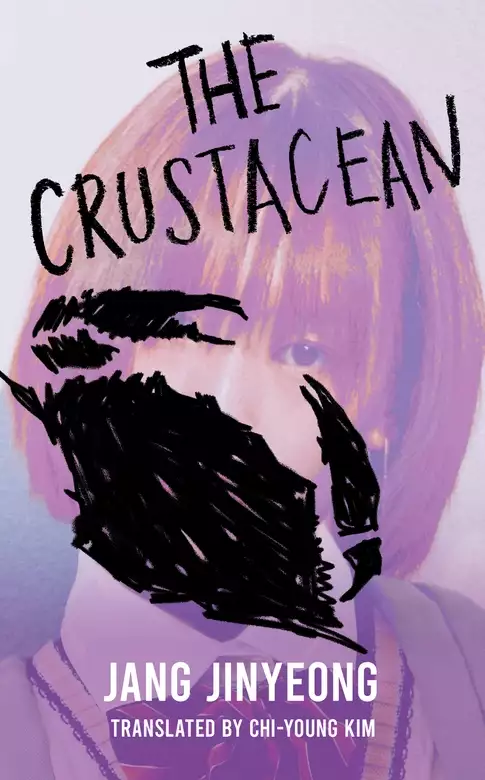
THE CRUSTACEAN is an intricately-crafted novel exploring memory, exploitation, and the lasting effects of adult abuse and betrayal for readers of My Dark Vanessa and Vladimir.
Release date:
September 4, 2025
Publisher:
Octopus
Print pages:
192
* BingeBooks earns revenue from qualifying purchases as an Amazon Associate as well as from other retail partners.
My name is Chichirim. Which means the woods where the chichibird lives. A chichibird is an incredibly rare, priceless creature; nobody is certain that it really exists. Only someone with a pure heart can see this bird. A chichibird is a harbinger of good luck.
I was called Hongikingan when I was young. Which means humanitarian. Not because my surname is Hong, not because I am a benefit to the world, but because my face was always flushed. Hong: red. Ik: ripe. Ingan: person. A ripe-red person. I like to delude myself that my red face was the reason I was an outcast in elementary school. That spring, when I was twelve, I wasn’t Chichirim yet. But she was who I would become in the span of a month.
That was the year I was assigned to the absolute worst junior high, thanks to the lottery system that people referred to as the ‘wheel of fortune’. To phrase it more elegantly, they were aiming for standardization. We still sat for placement tests, though, to ensure that each classroom was more or less homogenous, in an attempt to avoid all different levels being mashed together. That era was obsessed with standardization. I remember the general mood of the time as one that vilified the act of dividing and lining up and comparing. Which meant, ironically, that we longed for it. Everyone studied hard for the placement test; some of us listened to our sixth-grade teacher’s plea to do well while others felt pressured to make a good first impression in junior high. None of it mattered, though. Because the lottery was what determined everything.
Onjo Junior High was seven or eight stops away on the bus. Onjo had been my third and last choice not just because it was far away but also because of its awful uniforms, the colours morose and ominous. Those uniforms played a big part in our hatred for Onjo. Actually that was the sole reason all of us hated it. Their winter uniform was the dull hue of red-bean porridge and their summer uniform was the pallid colour of green peas. Colours that were hard to define, colours that were depressing and made you feel a tickle in your nose, which made you laugh. The uniform was unfortunate but it was someone else’s misfortune. Until, of course, I was assigned there. Just a few months earlier I was laughing at Onjo students, saying they looked like criminals locked up in prison. Because I sure wasn’t going there. It never occurred to me that it would end up being my school. I was no criminal! I never spat gum on the sidewalk. I never jaywalked. So why was this happening to me?
Almost everyone else was assigned to their first or second choices. I was one of the only ones thrown into the school I never wanted to go to. It was my third and last choice, which I’d written down only as a formality so as to fill the box. Was it because my grades were worse than theirs? Hell no. Although it had only been a brief moment of glory, I had ranked number two in my entire grade. Was it because I didn’t cheer for South Korea during the World Cup? Was it that I didn’t rush out to buy a Red Devils t-shirt? Even though I didn’t buy one, they won. I still didn’t buy one and they still won. I gritted my teeth and held firm but then they won yet again. In the end, I gave in to the collective madness. I let an art student paint a soccer ball on my cheek and bought a red t-shirt from the back of a pickup. I joined the masses, I became a drop of water swept along with the tide. I felt safe but ashamed. I felt weird and helpless. The paint dried and shrivelled on my cheekbone, pulling my skin tight. By the time the game started, the soccer ball on my face had cracked open like an ancient fresco and had begun to flake. The words Be the Reds! printed on my belatedly purchased t-shirt were bound to meet a similar fate after a few washes. Though, as it turned out, I would only wear it that one time. They lost to Germany that day.
When Onjo students sang their school song, they changed ‘Junior High’ to ‘Prison’, the way they had done in each of their elementary schools. I’m sure kids are changing the lyrics in all the schools, even now. This happens organically, even if the idea isn’t discussed among the kids first. This phenomenon always amazed me. Maybe that urge was stored in our DNA, like how the word for ‘Mum’ in most languages contains the ‘m’ sound.
‘Such and such mountain, such and such river, clear spirit, strong and brave and resolute and courageous, blah blah blah, Onjo Prison.’
Whenever I sang the revised lyrics, I felt a stab of guilt – because I was now wearing a prison uniform. Not in the way some people talked about school. For the crime of being a student, they’d say, you’re locked up in school, in a classroom, your name on the roll, wearing a uniform, and your punishment is to study until graduation. But Onjo Junior High wasn’t metaphorically a prison. It was a brutal fact. Why did I have to go to Onjo? Why?
‘Why is this happening to me?’ I asked the doctor.
‘Not everything has a root cause,’ the doctor replied.
That sounded somewhat romantic. Not something a dermatologist should say. If she were a psychiatrist, maybe. It wouldn’t be out of the ordinary to hear something like this while lying on a soft couch, sipping chamomile tea. The fabric covering the sofa would have some kind of special coating on it that made it easy to wipe away spillages. Because the patient would always be drinking tea lying down. Anyway, I digress; her answer wasn’t right. A dermatologist shouldn’t say something like that. Dermatologists are fundamentally car mechanics. They have to know what causes a problem. Imagine going to a garage because something’s wrong with your car and the mechanic says that to you – Not everything has a root cause? The only way to reply to him would be to say, What the fuck.
As a teen my only skin problems were a few zits on my chin, but once I became an adult – in fact, years into adulthood – I had developed sensitive, itchy skin. Perhaps it was because I’d binned my shampoo and body wash and begun using an all-in-one product in an attempt at minimalism. The very same kind that men who can’t be bothered to tote around various specialized products used at the gym. The bottle was blue and had a typical ‘cool water’ scent. The onset of my skin problems coincided with when I began to use this product. The itchiness started at my scalp and quickly spread all over my body. I was unbearably itchy; when I looked in the mirror, I looked dirty.
It had to be that all-in-one product. I was confident with my deduction. But, even when I stopped using it, I was still itchy. I began frequenting doctors’ offices, moving to increasingly larger practices where it became increasingly more difficult to get an appointment, and I submitted myself for every possible test. One practice said that a test I’d done at another practice was pointless. ‘Why is this happening to me?’ I asked at the last doctor’s office I visited – I think it was at Boramae Medical Centre – and that dermatologist was the one who told me that not everything has a root cause.
I called my sister to tell her this, and she was infuriated. ‘But isn’t it her job to figure out what the cause is?’
‘Eonni,’ I said, my tone surprising me; it was much warmer than I’d intended, perhaps I had been moved by her fury on my behalf. ‘If you could be reborn, what would you want to be?’
‘I don’t want to be reborn.’
I had nothing to say to the fact she didn’t want to be reborn. Honestly I wasn’t even interested. I just wanted her to ask me the question back. So I stayed quiet.
‘What about you?’ she asked begrudgingly.
‘I want to come back as a crab.’
‘As crap?’
‘Crab.’ I put my forefinger and middle finger together like a claw and clacked them together. But then I remembered we weren’t on a video call and quickly shoved my claw between my thighs. ‘The crustacean.’
My sister let out a long sigh which lasted ten seconds. She was clearly thinking, Grow up already, why don’t you.
‘Why?’
‘A crab’s skin is made of bone and its flesh is under the bone. But we’re the opposite. We have bone under flesh.’
I scratched myself, my skin festering like an overripe persimmon. That doctor had also said: ‘Don’t scratch yourself mindlessly. You can scratch if it’s unbearable. I understand that’s not something you can force yourself to stop doing altogether, but at least be aware that you’re scratching.’ What difference would it make if I recognized that I was scratching myself? It wasn’t like my skin would be any less irritated if I scratched myself while being cognizant that I was scratching myself. She was ridiculously wrong. I didn’t like her. I wasn’t satisfied.
‘I want skin made of steel.’
‘Want to know how you can become a crab?’ She suddenly sounded like she was right next to me. I almost looked around to see if she had walked over. ‘You don’t have to wait until your next life.’
Was she telling me I should die?
‘How?’ I asked.
‘Scratch yourself. Just keep scratching away. Scratch everything all over. Then you’ll scab all over,’ my sister said coolly, ‘like a crab.’
‘That’s cute.’
My sister snort-laughed, then cleared her throat, embarrassed.
The magical phrase that’s cute always made us laugh regardless of what we were talking about. It was even funnier if it had nothing to do with the topic at hand. Long ago we had laughed over an internet meme, and afterwards we’d started adding that’s cute after everything.
‘I’m going to the bathroom.’ ‘That’s cute.’
‘My pants are too small.’ ‘That’s cute.’
‘I got dumped.’ ‘That’s cute.’
‘Have some broth, too.’ ‘That’s cute.’
‘What time is it?’ ‘That’s cute.’
‘Grandma passed away.’ ‘That’s cute.’
‘Why did you do that to me back then?’ ‘That’s cute.’
The effect of that’s cute was cute.
In other words, wrong.
Since we didn’t have much in common or share many childhood memories, stupid jokes like that’s cute were useful, even priceless. See, my sister was much older than me. So much so that when we were young, the neighbourhood women would wink at our parents and joke, ‘You must have great chemistry.’ Here, ‘chemistry’ meant sex life. Dad hinted at his virility by moving his body in a suggestive way while Mum pretended to try to get him to stop, feigning embarrassment while still being boastful. The reason I know all this is because my parents weren’t careful about what I saw or heard them say. They thought I was a random lump of flesh that was entirely ignorant of sex. Or they just didn’t care. They clearly didn’t care. Our house was always overrun with women because Mum worked from home, tattooing eyebrows.
And, somewhat ridiculously, Dad was also always home, too. Dad sometimes went out for this or that job, but he never really revealed exactly what he did. When he got work, he did it, and when he didn’t, he didn’t. He never went looking for work. Dad and work were forced into an unrequited relationship; work had a crush on Dad but Dad loved Mum more than work.
He brought numbing cream over to Mum when her hands were encased in gloves, he served clients barley tea and he helped out with whatever else was needed during a tattoo se. . .
We hope you are enjoying the book so far. To continue reading...

 Please log in to recommend or discuss...
