
The Child at the Window
- eBook
- Paperback
- Audiobook
- Book info
- Sample
- Media
- Author updates
- Lists
Synopsis
Inspired by the true story of two sisters who helped Jewish people escape fascist Germany, a powerful, compelling novel of love, courage and sacrifice.
Her hands tremble as she tightens her grip on the letter, taking in the familiar script that is scratched into the fading parchment. For more than fifty years, she has carried this testimony - these secrets - with her. It's time her story was told.
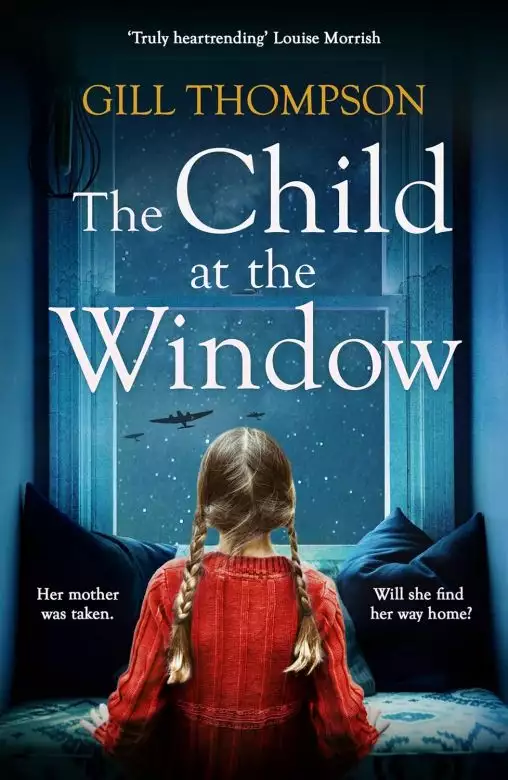
1937. As fascism rises across Europe and the threat turns to very real danger for their Jewish friends in Berlin, sisters Josephine and Constance smuggle out possessions to help to finance their friends' new lives as refugees in London - if they make it out. Then, one day, they're asked to rescue something much more precious: a little girl. Her mother, Ilse, has been imprisoned for her journalism and her father, Daniel, knows he must do all he can to protect their child - even if that means letting her go...
1939. When war breaks out, the sisters are tortured by thoughts of those they couldn't save and commit to doing all they can on the Home Front - Jo, at the Ministry of Information, where she becomes part of a network of intelligence workers, and Constance as an air raid warden during the Blitz. Meanwhile in Germany, Ilse is moved to Ravensbrück, where she bands together with other women in the camp to expose the atrocities they face every day. But can Ilse find a way to connect with her daughter?
Release date: April 23, 2026
Publisher: Headline
Print pages: 400
* BingeBooks earns revenue from qualifying purchases as an Amazon Associate as well as from other retail partners.
Reader buzz
 Please log in to recommend or discuss...
Author updates
The Child at the Window
Gill Thompson
Jo raised her hands from the typewriter perched on the drop-down desk of the bureau and attempted to summon a long-buried sensation. She always struggled writing these intimate scenes. Ridiculous calling herself a romantic novelist really. Most of her readers were doubtless more experienced than she.
She stared into the middle distance. What did men’s mouths feel like? She tried to recall the pressure of James’s lips on hers, the heady scent of his skin. The way her stomach swooped every time he cupped her face with his hands. But it was so long ago now. Had his mouth been soft? Or rubbery? She had to get this right. Girls today were so much more forward, with their confident gestures and flirtatious ways. Her mother would have called them hussies. No better than they ought to be. But times had changed and she had to move with them. Her readers were bound to know if she got things wrong.
‘What on earth are you doing, puckering your mouth up as if you’re sucking on a lemon?’ Con stood in the attic doorway, hands on hips, her mouth a curl of droll amusement.
Jo swivelled round. ‘I’m trying to remember what it feels like to kiss a man.’
Something halfway between a snort and a guffaw travelled across the room. ‘Well, that’s been a good few years! Honestly, I don’t know why you bother with all that stuff. How on earth can you write love scenes when you’re a spinster?’
Jo flinched inwardly. She hated being called a spinster. There was something about the word that conjured up a spidery old hag spinning yarn. Why was it that single women were objects of pity or derision, whereas a bachelor – the male equivalent – just sounded like a man about town? And anyway, she and Con were only in their thirties. Far too young to give up on romance, despite the newspapers dubbing singletons like them surplus women. Such a horrible expression.
Con glanced meaningfully at the place where Jo’s tweed skirt flattened after the material bulged across her stomach. The secret part Mother had told them never to reveal except on their wedding night. ‘Face it, Jo, you’re little more than a prune down there. We both are.’
Jo smoothed her palm over her lap. ‘Not this again.’
‘Well, it’s ridiculous, a thirty-six-year-old woman writing soppy love stories.’ Con snatched up a cup and saucer from the desk, huffing at the volume of cold tea, with its milky scum, that remained. She’d plonked it down earlier when Jo had been wrestling with another difficult scene.
Drat. She must have got carried away writing and forgotten to drink it. Another black mark. Really, she couldn’t do anything right these days.
She stood up and gave her sister a hug. ‘You know those soppy love stories are what keep us in food.’
Con pursed her lips, clearly about to frame a peremptory retort, then wiped her forehead with the back of her hand. ‘I know. I’m sorry. It just seems so ridiculous you bashing out all this sentimental rubbish when you have such a gift for writing. You could produce something wonderful like – er – Pride and Prejudice or something.’
Jo took off her glasses and rubbed her eyes. ‘Do you know how much money Jane Austen earned for that novel?’
‘Of course not. Whyever would I?’
‘She sold the copyright for just over one hundred pounds.’
‘Goodness! I’d have imagined thousands, even for those times.’
Jo smiled. Con managed the household budget with admirable efficiency, but really she was so naïve when it came to publishing matters.
‘She was never a rich woman.’
The retort was swift. ‘Nor are you.’
Jo gestured towards a pile of typed sheets teetering beside her typewriter. ‘I make a tidy living from this sentimental rubbish. Although of course we couldn’t do without your secretarial salary. Or your efficient housekeeping.’
A tight smile appeared on Con’s face, then disappeared just as quickly. ‘I wish people knew how talented you really are.’
‘It takes a lot of skill to write romance stories, you know.’ Jo stared out of the small attic window. Far below, on the pavement, a woman in an elegant coat was walking a pristine poodle, ridiculously dressed in a miniature version of the woman’s own attire. Was the woman likely to be one of her readers? Probably not. She imagined she was the kind of person who’d spend hours at the hairdresser’s leafing through copies of Vogue or Harper’s Bazaar.
No, her readers were housewives and mothers, squeezing in a few pages between their chores. She pulled out a small drawer in the bureau. ‘I don’t think you’ve ever seen these, Con, have you?’ She held out a sheaf of letters. Some were written on crisp Basildon Bond in immaculate copperplate; others were scrawled on cheap, thin paper and barely legible. She opened each one privately in the attic after she’d taken the envelopes upstairs, claiming to Con that they were ‘business correspondence’. In reality, each one was precious. They kept her going.
‘Ethel Lawley from Hammersmith says His Kind Eyes helped her through the trauma of her husband’s death. Apparently, her Leonard was the spitting image of Clark Andrews in my novel.’ She tried to mimic a West London accent. ‘It was as though I’d known him personally. Such a comfort.’
She drew out another sheet. ‘And here’s one from Mavis Adams in Somerset. She’s a farmer’s wife. Works from dawn to dusk on the farm as well as bringing up six children. But she still manages a quick sit down after lunch to read a couple of chapters. She keeps a copy of Under Stormy Skies behind the bread crock and whisks it out when no one’s around. Gets her through the day it does.’
She pointed to the next letter. ‘Mrs Smithson, suffering from cancer. My Brave Heart is giving her hope.’ Her eyes prickled and she blinked rapidly.
‘I see,’ said Con. ‘A healer as well as a writer.’
Jo shrugged. ‘We both try to be the best at what we do. Anyway . . .’ She pretended to be absorbed unscrewing the top of her fountain pen. Long ago, when they were children, she’d learned that the best way to get Con talking was to avoid looking at her. ‘What about Mr Fawley? It’s obvious he values you hugely.’
Con’s smile lingered this time. She took such a pride in her work, and positively glowed when her employer praised her. Jo knew that reminding Con of his esteem always won her round.
‘Oh, I forgot to tell you.’ Con reached into the pocket at the front of her pinny. ‘He gave me two tickets for the opera on Friday. Apparently, his wife is very unwell with this pregnancy and he feels he should stay and look after her. Didn’t ask a penny for them, either.’
‘Opera? Whatever was he thinking?’
Con sniffed. ‘Not for the likes of us, you mean?’
‘Well, I’d be happier in the ninepenny seats at the Granada watching Show Boat.’
‘So would I, truth be told.’ Con glanced down at the two pieces of expensive-looking cardboard in her hand, which glittered with gold swirly writing.
‘Do you have any idea what the opera’s about?’
‘Something about a soldier who falls in love with a gypsy girl.’
An image of James just before he left for France darted into Jo’s mind. A tall figure in his khaki uniform with its gleaming buttons and buckle, his expression a mixture of pride in fighting for his country and anguish at leaving her. She felt again the roughness of his jacket as she wound her arms round his neck, inhaling the scent of cologne and gun oil. Would she have done or said anything different if she’d known she was never to see him again? She blinked away the memory. Most of the time she managed to blot James out, concentrating on writing her stories and keeping busy in the house and garden. It was only in unguarded moments that the sadness returned. It was muted and softened by time, but even after two decades, the grief never really went away.
And there was another sorrow too. Not only had she lost a future husband but she and James would never be parents. There’d be no little souls appearing in the fullness of time, the miraculous embodiment of their love. Sometimes, at night, she had to forcibly shut out the memories of James’s death, and suppress the hope of those future children: the feel of a little hand in hers, a sweet voice calling for ‘Mummy’. With every year that passed, the more remote that joyful possibility became.
‘What on earth are we going to wear?’ Con’s forehead was furrowed with anxiety. ‘I doubt our old suits would do.’
Thoughts of James receded at the prospect of herself and Con arriving at the Royal Opera house in their Sunday best tweed – appropriate for church but completely unsuitable for such a lavish occasion. ‘Oh lordy, we’ll need opera gowns.’
‘How on earth can we afford those?’
‘I don’t suppose Mr Fawley would run to a clothes account at Harrods for us?’
‘Of course not!’ Con ran her hands through her hair, then stood stock still. ‘But I might be able to rework a couple of Mother’s old ball dresses. I think they’re still at the back of the wardrobe. We decided to keep them, just in case, when we sorted out her stuff, remember?’
‘Yes, I do.’ Jo jumped up. ‘Come on, let’s take a look.’
They clattered down the attic stairs, suddenly girlish again in their excitement.
Three days later, they were on their way to the opera. They’d decided they should arrive by taxi, so they’d gone without lunch to save for the fare. Jo stared out of the window as they were driven through the darkening streets. Lamp posts drizzled golden light on rain-slicked pavements, and the shop windows were opalescent through the blurred glass. She reached for Con’s hand. Mother’s old ball gowns had turned out well. Poor Mother, she’d bought them for her trousseau, never suspecting she’d barely wear them. Father had burned through her money in the clubs and casinos until there was scarcely a penny left. No wonder Jo had fallen for honourable James, such a contrast to her unreliable father. And no wonder she and Con scrimped and saved, haunted by their childhood poverty. But Mother would have been delighted to see them in new versions of her old gowns, Jo resplendent in scarlet and Con dazzling in pink and silver. Constance had run up the dresses from patterns published in Mabs Fashions, even creating opera cloaks from some old brocade curtains. It felt as though they were arriving in disguise, pretending to be titled ladies rather than unmarried women who worked for a living. They had no idea whether they’d pass muster amongst the wealthy operagoers, but they’d certainly convinced the taxi driver, who’d opened the door to usher them into his vehicle, bestowing upon them what might have been a charming smile were it not for two crooked front teeth.
‘Not long now,’ Jo whispered, as the taxi crossed Waterloo Bridge.
Con waved the tickets in acknowledgement, her white-gloved fingers gripping the embossed cardboard. ‘Are you excited?’
‘Of course.’ Jo didn’t really know why they were whispering, except she imagined the taxi driver would be less impressed if he realised they weren’t Covent Garden’s regular clientele. If he knew they normally travelled by bus in their Woolworths’ blouses, sensible skirts and paste jewellery he might treat them differently.
The taxi slowed for traffic and Jo glimpsed the sign for Bow Street. ‘Ah, the Bow Street Runners,’ she murmured.
‘Eh?’
‘It was in that book I got from the library.’
Con rolled her eyes.
Jo had read up on the Royal Opera House before they went, so she knew its history. She loved finding out about the background to historic buildings.
‘Are you going to listen?’
Con nudged her ankle with her shoe and Jo realised she’d spoken more loudly in her excitement. Heaven forbid the taxi driver would hear them. She edged closer to her sister. ‘The Bow Street Runners were the forerunners to the police. They were formed to protect opera and theatregoers in Covent Garden from pickpockets.’
‘Thank you, teacher.’
Jo smiled through gritted teeth.
The taxi drew up outside a huge white building with tall pillars and ornate balconies. The driver came round to Con’s side and helped her out, before extending a hand to Jo. Con fumbled in her purse to hand him the fare. They’d spent a long time the evening before discussing whether to tip him and decided that sixpence would be ample. He took the proffered coin with a bow of his head, his expression inscrutable, then climbed back into the cab and drove off into the night.
‘Come on,’ Con said lifting her chin and sweeping into the foyer.
Jo did her best to sweep after her.
They’d decided not to buy programmes, or ices in the interval, as they needed to leave enough money for the journey home. So they joined the press of people making their way across the entrance hall, their senses heightened by expensive perfume, the distinctive hum of cut-glass voices and the bright jewel-like colours of the women’s clothes. A world away from the cigarette-and-cheap-scent fug of the Granada cinema in Tooting.
They climbed a steep staircase, then showed their tickets to the usher who pointed out their seats. The foyer had been opulent enough, but their first view of the auditorium was breathtaking. Next to her, Con froze, her mouth slack with wonder. Jo put a hand to the wall to steady herself.
‘It’s so beautiful,’ whispered Con.
Jo nodded, not able to trust her voice.
They made their way to the seats, trying not to step on anyone’s toes or crush any dresses, whilst gazing in awe at the majestic velvet curtains with their huge coat of arms, the line of red-shaded lamps that bordered the room, lights flickering and dancing in their stands, and the vast domed ceiling vibrant with blue and gold. There was a line of frescoes above the curtain, which, Jo had read, depicted the nine muses – believed to inspire creativity. It was strange how the ancient Greeks believed mythical figures could help them write, dance or act. But was it any different to her using James as her muse? In one way or another, he’d inspired all her novels. In various guises he was every hero, and she was every heroine. Only in her imagination could their story have the happy ending the war had denied them.
Thanks to Con’s Mr Fawley, their seats were good: at the front of the balcony with an excellent view of the stage.
They spent the time before the curtain went up stealing covert glances at the occupants of the boxes, yet trying to appear nonchalant, as though they went to the opera every day. Men in evening dress, with starched shirt fronts and white ties, were a monochrome foil to the extravagant silks and furs of the ladies. Jo glanced down at her own red dress, then across at Con’s outfit. Would anyone notice their clothes were home-made? And anyway, what if they did? They were unlikely to come here again. Best to stop worrying and enjoy the evening.
At length the lights dimmed, and the curtain was raised to reveal groups of Spanish soldiers, some sitting round tables talking, drinking and smoking; others leaning against the wall, watching the passers-by. Jo thought with a pang of the real Spanish soldiers across the Channel, fighting for their cause in the civil war. Was it wise to remind people of the bloodshed abroad? But no one looked anxious. Instead, they seemed transported by the spectacle and the glorious music. Perhaps that’s what opera did, allowed people to encounter real-life drama from the safety of their own seats, knowing they would return home to their comfortable houses and soft beds, immune from the horrors depicted.
Jo had read about the composer Georges Bizet too. The unfortunate man was so convinced Carmen would be a failure that he died of a heart attack three months after its first performance. He never knew that he’d created a score so memorable that people would still be listening to it over sixty years later. She imagined him writing a line, striking it out, striving for better until he was satisfied, only to consign it to the bin the next day. Nothing worthwhile is ever produced with ease, she thought. But it didn’t stop people trying. Even as she and Con listened to the opera, someone was sitting in an attic or a garret or maybe even on a sunny terrace, wrestling a story into shape. There were story makers all round the world. Just like she, either through words or music, they were creating characters who lived the lives of the readers or audience members but who were a little bit braver, or more tragic or terrified or deeply in love than themselves. Writers entranced and entertained and delighted and instructed and shocked and maybe – if they were talented enough – they communicated something so important it transcended time.
Jo smiled to herself. Was she becoming pretentious? She darted a look at her sister. The normally down-to-earth Constance was transfixed, transported by the music and the theatre, oblivious to anyone but the characters on stage. But even Con’s attention intensified when Maria Cordona appeared as the mercurial Carmen. The singer strutted, danced and flirted, at once bold and fragile, determined and alluring. And her voice! Jo didn’t think she had ever heard such an amazing tone – rich, mellow, soft, harsh and forbidding. She held the soldiers and the audience spellbound and kept them enchanted as she tempted, seduced, then betrayed her soldier-lover José, and was finally killed by him in a jealous rage.
She was glad to be watching the performance with Con. They’d have something to talk about on the way home other than whether someone needed to buy more potatoes and was there enough milk for their bedtime cocoa. But a little part of her wished it was James next to her. It would be so much more romantic: him threading his fingers through hers, her body tingling in response. Being caught up together in the excitement of the drama. James would never grow old. He’d always be twenty-one; the age he’d been when a German bullet had punctured his chest and consigned her to a life of grief and longing. She alone would weather the years, her skin becoming lined and papery, her fingers gnarled like tree roots, her back stooped . . . the memories of James receding through time until she could no longer summon the sound of his voice or the colour of his hair.
By the time the opera finished, Jo felt simultaneously wrung-out by grief and fear for the characters, compounded by the memory of James, and exhilarated by the passion and glamour she’d witnessed for the past three hours. She and Con jumped to their feet, joining the other audience members to give the cast a standing ovation, while the singers bowed and curtseyed and extended their hands to thank the conductor and orchestra. Then the chorus retired, leaving the principals to acknowledge their acclaim individually before exiting one by one, until only Cordona remained, a tiny figure on the huge stage, yet filling the space with charisma as she smiled and curtseyed again and again. Con and Jo clapped and cheered until their palms reddened and their throats became raw. When the curtain came down for the last time, Con turned to Jo, her cheeks glistening under the lights, her eyes wide with excitement.
‘How can we bear to go home?’
But they had to go home of course. This time they travelled by bus, not having saved enough for a return taxi fare. It was of no consequence now. The operagoers had either departed in their chauffeur-driven cars or lingered in the bar for a nightcap. There was no one to see them trudging to the bus stop, their hair dampened by drizzle and their dainty shoes (Mother’s again) scuffed by the long walk. Jo doubted if they’d ever have occasion to deck themselves in such finery again, so it didn’t matter if their dresses were soiled by the grimy seats. The bus jolted along through the empty streets, past drab houses and darkened shops. Carmen had been full of colour and vibrancy, now the prospect of their narrow house that smelled of coal dust was depressing.
Next to her, Con’s eyes were dull and her mouth turned down. This must be particularly hard for her. The Royal Opera House was a world away from her usual office work: typing, taking shorthand and filing. She often rushed round the shops in her lunch hour, then came home to cook for them both. At least Jo got to escape into the world of her imagination. Through her books she could travel the high seas, escape to exotic locations and experience romance on a daily basis, even if it was only vicariously.
But she suspected ordinary life would be more humdrum for them both now they’d experienced their first opera.
Berlin, 1937
Daniel locked the office door behind him and set off down Markgrafenstrasse. After a long day at his desk, it was a relief to leave the stuffy room behind and fill his lungs with fresh evening air. He hadn’t been out of the building all day, having worked through his lunch hour as usual. It was much cooler outside. The rain he’d heard drumming on the roof earlier had stopped, and the gunmetal clouds were backlit with gold. Soon it would be dark – the sun was already low in the sky. He turned up the collar of his coat and clamped his briefcase under his arm.
He could have taken the tram home – quicker and less tiring. But he was happy to walk. It felt good to stretch his legs, his muscles flexing and easing, his limbs infused with warmth. There was a routine to his journey. For the first few minutes he’d revisit the decisions of the day. A book cover approved, a manuscript declined, a testy call to the printers. An editor’s job was never dull but sometimes the responsibilities lay heavy. He chewed the conversations over in his mind for a while, then pushed them aside. In reality, he was lucky to have a job at all. His friend Adam had been forced to resign from his teaching post last year. And Josef couldn’t practise as a lawyer, or Kurt as a vet. All highly skilled men who loved their jobs but who were no longer allowed to work. Compared to them, the worries of his day were superficial. But the deeper anxiety, the one that constantly gouged his chest and stifled his breath, wasn’t so easily shrugged off. The Reich was systematically crushing their occupations with every law it passed. Would publishing be next?
Thank goodness his parents and in-laws had left Germany back in ’35. ‘If I’m going to die, I’ll do so in our promised land,’ his mother had said. The others had agreed. It was a wrench, all four of them leaving at once, but at least they were safe there.
He headed towards the canal, always the most scenic route home, away from the busy main roads. In the distance, the last of the sun’s rays were gilding the elegant roof of the Prussian Opera House. His parents had brought him to several performances there when he was growing up. But since Göring had taken over, Jewish musicians and singers had been forced out, another suppression of talent. He was grateful for the little group of creative people he belonged to: writers, publishers, artists, performers. They supported each other in these uncertain times, inspired by their different gifts, drawing comfort from their mutual anxieties.
He steered his mind away from his fears, not wanting to take them home with him. At the thought of the little apartment on the Auguststrasse, his heart lifted. Ilse would be bathing Esther and, if he was lucky, their dinner might be simmering in the oven, filling the kitchen with delicious aromas. He pictured his five-year-old daughter kneeling in the bath as she lined a row of little cups along the edge, then dipped her toy jug into the water and poured out its contents. Sometimes he arrived back in time for the ritual and would be offered some ‘coffee’, which he pretended to sip from the tiny cup, trying not to grimace as he drank. Ilse would laugh at his indulgence. ‘That child has you round her little finger.’ It was true. He adored her. In truth, his relationship with his daughter was far simpler than with his wife. For a while now, Ilse had been distracted and offhand. And sometimes she neglected to cook dinner at all. Once he came home to find Mrs Rubenstein, their obliging elderly neighbour, looking after Esther whilst Ilse was out at a restaurant chatting to her journalist friends. Perhaps it was all this anxiety about the increasingly frequent anti-Jewish laws that made her so restless. He put his head down and quickened his pace.
The streets were darker now, long shadows stretching out from buildings, and stars pinpricking the sky. He shifted his briefcase to the other arm, trying to ignore the bulge of papers that awaited him when Esther was asleep and the meal over. He and Ilse often worked in the evenings, she at the typewriter, he in an armchair with a pile of proofs on his lap. In their different ways, they both wrangled words – she creating, and he editing them. A neat balance. Unlike their marriage, which had been feeling increasingly one sided lately.
As he turned his key in the lock and pushed open the door, his senses were immediately alarmed. The apartment was cold, the hall unlit. Something wasn’t right.
‘Ilse!’
Silence.
‘Liebling?’
He dropped his briefcase, shrugged off his coat, and darted into the kitchen. The room was in darkness. No enticing cooking smells. No Ilse smiling at him as she set the table. No jaunty tunes coming from the wireless. Nothing.
Perhaps she was in the bathroom with Esther. But when he entered, that too was empty, just a stale smell lingering. Where were they? Had she spoken to him that morning of a visit to a friend’s or an event at the kindergarten? She often accused him of not listening when she described their plans. But it was nearly seven now – far too late to be out. Bile churned in his belly, and he clutched at the door handle to steady himself. Surely they couldn’t both be missing? His wife and his beloved daughter. For a second, he wondered if Ilse had left him. She could be so dramatic sometimes. Perhaps she’d had enough of the marriage and taken Esther away. But Ilse was passionate and daring, not cruel.
‘Ilse!’ he shouted again, his voice cracking. ‘Esther!’ Where the hell were they?
He froze. Was that a sound? He tiptoed down the hallway, his heart hammering. ‘Is anyone there?’
A tiny noise came from Esther’s room.
He flew in, hoping against hope he’d find her already in bed, her little arm encircling her teddy bear, her face glowing at the sight of him. But again there was nothing. The counterpane was unruffled, the teddy and her dolls in a neat row on the pillow. He must have imagined the noise. Perhaps a curtain had fluttered against the window, or one of the ancient pipes had creaked. But as he turned to go, a muted sob escaped from the cupboard. He lunged across the room and flung open the door.
A small figure lay curled up under a quivering rail of clothes, their wire coat hangers jangling percussively. ‘My darling girl.’ He reached in, scooped her up tenderly and carried her over to the bed. As he drew her onto his lap, she nestled into him and he caught the reek of fear.
‘What’s happened? Where’s Mutti?’ He tried to keep his voice gentle despite the ice creeping up his spine.
She wriggled out of his arms and pressed her fists to the side of her head.
‘You can tell me,’ he murmured, reaching forward to gently prise her fingers away. Anything to re-establish contact, to reassure her with love. ‘What’s happened?’ he asked again.
‘They took Mutti,’ she whispered, her eyes dark. He couldn’t begin to imagine what memories they held.
‘Who did?’ he asked, trying to keep his tone mild.
‘Some bad men.’
He rocked her backwards and forwards, pressing her face to his shirt so she wouldn’t see his expression as he gulped down a surge of nausea and tried to breathe through the crushing pressure in his chest.
Berlin, 1937
A thundering at the front door had Daniel’s heart racing again. Was this Ilse’s kidnappers returning to seize him and Esther too? Esther must be protected at all costs.
‘Get back in the cupboard,’ he hissed. He hated to think what further distress it would cause, but he couldn’t risk her being seen.
He hurried down the hallway and opened the door a crack, then widened it at the sight of a familiar figure.
‘Mrs Rubenstein!’
‘Mr Goldberg, I’m so sorry.’ Their neighbour’s face was bleached with sympathy.
‘What happened?’ he asked. ‘Did you see anything? I’ve just returned from work to find Ilse gone and Esther in an awful state.’
‘I’ve been waiting for you to come back, to tell you what I saw.’
Daniel ran his hands through his hair. He was desperate to find out what had happened to his wife, but his daughter needed him badly. ‘Can you come in? I need to settle Esther first.’
‘Of course, the poor little mite. What that child must have seen . . .’
What had she seen? Had Ilse been attacked in front of her? Tortured? Raped? What appalling events had Esther witnessed? He gulped down the acid that flooded his mouth.
‘I’ll go and sit down, dear. You take care of your little girl. I’m here if you need me.’ Her kind tone made him blink back the tears as he returned to the bedroom.
‘It’s all right, Liebling, it’s just Mrs Rubenstein.’ He crouched down and held out his arms. ‘Come to Papi.’
Esther stumbled towards him and he held her tightly, stroking her back and kissing the top of her head again and again. Eventually she let him go long enough
We hope you are enjoying the book so far. To continue reading...
