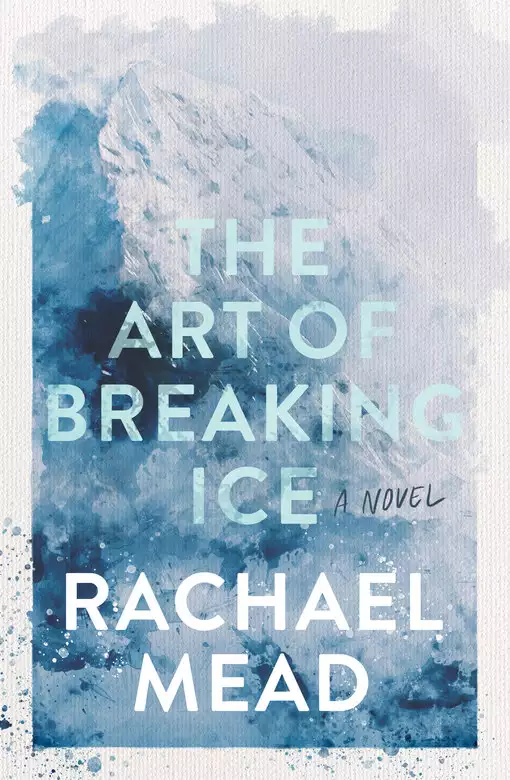
In 1960, when the legendary icebreaker Magga Dan set sail for Antarctica, it contained a secret. Hiding on board was Nel Law, wife of expedition leader Phillip Law. She would make history by becoming the first Australian woman to set foot on the icy continent, but it was her art that would change everything. Though a talented artist, Nel has always been defined by her role as ‘the explorer's wife', but in the clear expanse of the Southern Ocean, her true self is finally allowed to emerge. Despite misogyny from the all-male crew and increasing resentment from her mercurial husband, Nel's art begins to flourish. Her new friend, a gentle ornithologist, encourages her to explore, but as the ship ploughs on towards Antarctica, rumours swirl, threatening her marriage and the tenuous peace between the controlling Phillip and his crew. In the clear, white light of the south, Nel will be forced to confront the truth of herself and the man to whom she has dedicated her life. This stunning reimagining of Nel Law's life reveals a ground-breaking artist searching for freedom in a world where women's lives were still defined by their husbands.
Release date:
June 27, 2023
Publisher:
Affirm Press
Print pages:
320
* BingeBooks earns revenue from qualifying purchases as an Amazon Associate as well as from other retail partners.
The south-westerly sliced across Cass’s cheekbones in the slim gap between her goggles and the neck gaiter she’d pulled up to protect the tip of her nose. Her view was rimmed by the edge of her hood; icy gusts buffeted the grey fur and cracked the Australian flag planted beside the cairn. This was not the place to go bareheaded as a sign of respect.
The winterers stood in a shallow curve in front of the pile of grey stones, their backs to Mawson Station’s metal sheds, which squatted like bright biscuit tins on the far side of the ice coating Horseshoe Bay. The sun had dipped below the horizon a fortnight ago and would stay there another month yet. It was beautiful, though, the dim polar dusk, the ceiling of cloud glowing like the inside of an abalone shell in the low-angled light.
The slope-sided cairn matched the three other memorials sitting side by side along the granite stretch of West Arm. Although only just completed, all it needed was a tall white cross to be indistinguishable from the older memorials.
Graves, Cass corrected herself. The crosses marked the burial sites of expeditioners who’d died in the 60s and 70s, before the ‘leave nothing behind’ rules of the Madrid Protocol. Back then, dying down here had meant never going home.
Cass shuffled her boots, trying to force blood into her toes. Snow had fallen since the cairn was finished, dusting the top and gathering in a drift around the base. The wind whipped ice into the air, pitting sharp as sand on her Ventile parka.
Mark stepped forward, pushing back his hood to expose a cobalt beanie, cheeks ruddy with cold. Gloved fingers fumbling to unfold a sheet of paper, he cleared his throat. Gomble moved behind the cairn, camera in one hand, the other cupped to shield the mic from wind-roar.
‘We are gathered today to lay to rest Nellie Isabel Law and Dr Phillip Garth Law.’ Mark paused, glancing at the camera. Carefully, so as not to move the lens, Gomble jerked his thickly bearded chin. Mark straightened and kept reading, pitching his voice to carry and somehow managing to sound even more formal.
‘We pay homage to Phillip Garth Law – truly one of the great men in the rich history of Australian Antarctic exploration. His indomitable will, humorous disposition and adventurous spirit set high standards for those of us who follow him. A minute’s silence, please.’
Cass lowered her head, but not her eyes, surveying the uncharacteristically sober figures of her companions. For a memorial service, there was very little black. The bright and bulky department-issue parkas disguised all shape, leaving only height and her familiarity with her colleagues’ taste in beanies and gaiters to tell everyone apart. Too much room between us all, Cass thought. If we were smart, we’d be huddling like male emperor penguins.
No one was timing the silence, so when someone cleared their throat and Sorels began to shuffle in the snow, Mark got on with the speech. The wind wrestled with the paper and he gripped it with both hands.
‘Phil Law spent his life in the pursuit and promotion of many scientific fields.’
As the long list of the man’s polar achievements whisked from Mark’s mouth, Cass’s attention drifted back to the research paper she’d been trying to work on that morning, her lips tightening as she thought about the white screen and the judgemental flash of the cursor.
A wind gust slammed into her, thumping her back into the moment. Mark almost lost his grip on the notes. ‘As testimony to his extraordinary service, he will always be remembered as Phil Law – our man in Antarctica.’
Our man in Antarctica. Cass rolled her eyes and shot a look at Rory. She was hunkered deep in her fur-rimmed hood, but Cass glimpsed the arch of an eyebrow. There wasn’t much at the crux of language and feminism that slipped past her friend.
Cass hadn’t taken to Rory when she’d first encountered her in the ship’s dining saloon, only a couple of days into the voyage to Antarctica. One of the people Cass was sitting with had pointed out a short brunette reading by the light of the window beside her. She was a writer – a poet, in fact – accompanying them to Mawson as part of the department’s Artists in Antarctica program, the expeditioner said.
One of the men in their group, a young physicist, had tried to spark a conversation with the poet. ‘So – you’re a doctor?’ he asked, leaning across the aisle with a wave. ‘Of what?’
‘Literature.’
He murmured something to the guy sitting beside him, who ducked his head to hide a chuckle.
‘Sorry. Missed that,’ the poet said.
He hesitated. ‘Just complimenting your fabulous earrings.’
She barked a laugh, cold and sharp as an icicle. ‘Fellas, you disappoint me. Resurrecting the old arts/science binary? With jewellery shaming?’ She shook her head. ‘That’s just intellectually lazy. And outdated. Honestly, I expected a bit more. Aren’t you meant to be cutting-edge thinkers?’ She pinned them with a steely look. ‘I’m happy to debate the hierarchy of knowledge with you. But next time, please, bring your A game.’ Then she turned back to her book, leaving the men shifting uncomfortably in their seats.
Cass had been impressed by the takedown, but it’d left her wary. She’d never met a poet, and wasn’t quite sure one belonged down here, getting in the way of the real work.
Thank Christ she’d never let that slip. They’d ended up sharing a Googie, a field accommodation module resembling a huge scarlet egg, for several weeks. Rory had managed to finagle some time out in the field with the Adélie penguin team doing ecosystem monitoring on Béchervaise Island and proved a natural at bird-tagging, dodging pebble nests and shepherding penguins over the weigh bridge. In a backflip worthy of a rom-com, Cass had gone from eyeing Rory with wary suspicion to counting her among her dearest friends. It was almost a cliché of life down here that close-quarter living pressure-cooked a level of intimacy that would otherwise take years to forge.
Shoving the paper into his pocket, Mark stepped up to the cairn. Reaching over, he removed the lid of a neat wooden box set into the top of the monument. The shape reminded Cass of those old microscope cases from high-school biology. Appropriate, she thought, given Phil Law’s significance to Antarctic science.
Cradling the lid, Mark stepped back, making room for two men who were each carrying a square bronze canister, the ashes of Nellie and Phil Law sealed inside. They placed the pair of urns side by side within the wooden box and Mark clipped the lid back on.
Picking up a stone from the small pile of rocks at the base of the cairn, Mark gently placed it on top of the box. The urn bearers followed his lead, then stepped aside for the other winterers to do the same. One by one, they added to the cairn, burying the honey-toned box in grey.
Last in line, Cass clinked her stone down, its mica glittering in the watery light. Behind her neck gaiter, her nose was starting to run.
Duty done, the winterers turned for whisky and warmth, trudging back across the iced-over bay, chins tucked against the wind.
Cass let them go, lingering before the two brass plaques on the face of the cairn.
Here lie the ashes of Nellie Isabel Law 1914–1990 and Phillip Garth Law 1912–2010 of Melbourne, Victoria, Australia.
The second plaque was larger and packed with words. In memory of Dr Phillip Garth Law. Explorer. Scientist. Polar Medal Recipient. Director of ANARE. Founder of Mawson Station.
Beyond the pale arms of the three crosses, a full moon sat like a muted sun in the western sky.
Cass brushed her gloved fingertips over the raised line at the bottom of the plaque, as if reading braille. May he rest peacefully with his beloved wife Nel.
There must’ve been more to her life than this, she thought. She ran her fingers across the brass letters one last time before turning to follow her colleagues. The rippled cloud over the station was now ablaze with orange and pink.
Quickening her pace, Cass drew alongside Rory, and the pair linked arms.
Cass elbowed her friend where her ribs would be under her thickly insulated jacket. ‘Our man in Antarctica. Wonder how the wife feels about spending eternity down here. She didn’t get much airtime.’
Rory shot her a sideways glance. ‘Surprised?’
Cass snorted. ‘Curious. Just made me wonder who she was – other than Australia’s longest-suffering Antarctic widow.’
Rory shoulder-bumped her with a chuckle.
‘What?’ Cass looked at her blankly. ‘My guess is a housewife who lived in the shadow cast by her “Antarctic hero” husband.’
‘Spent the years of her life in her husband’s shadow, then the years of her death in six months of darkness. Nice image. I’m definitely using that.’ Rory grinned at Cass. ‘Now get a move on, woman. I’m fucking freezing.’
Stepping into the airlock of the Red Shed, the women stripped away layers, stomping ice from their boots, stuffing gloves and beanies into pockets and hooking up parkas. Rory grabbed Cass’s arm, tugging her through the inner door and across the rec room before jerking to a halt where the library merged with the lounge. The space next to the shelves was crammed with photos – breathtaking icescapes, auroras, sled dogs, hairy-faced explorers. Cass had examined the photos when she first arrived, scanning for her grandfather’s face, hoping his career as a ship’s captain ferrying Australians to and from the ice had earned him a place in the gallery. Failing to spot her Farfar’s beloved face, she hadn’t paid it any more attention. Rory jabbed her finger at a portrait high on the wall.
‘There she is. Your woman of mystery. Don’t say I never give you anything. If you’d like to reciprocate, there’s always whisky. Double. Speaking of which …?’ Rory raised her eyebrows, but when her friend failed to respond she moved away, towards the light and laughter of the bar.
Cass stared at the black-and-white photograph. She’d been here for three months, passing the photo countless times without noticing it once.
A man and a woman smiled down from the wall, both in the hazy zone where late middle age bleeds into old. They looked formal yet stylish, as if at an official event, with the governor and several heads of industry just out of frame. The man was short and bearded, with a sharp-witted air, while the woman beside him smiled as if well accustomed to cameras.
Cass leaned in to read the caption.
Phil Law, founder of Mawson Station, and his wife Nel, the first Australian woman in Antarctica.
Aureolin Yellow
Camberwell, MelbourneNovember 1960
Nel stabbed the roasting penguin breasts with a skewer, feeling a jab of satisfaction as they bled thin juice into the tray. You could always count on scientists to be punctual. To the minute. She slammed the oven door, its hot breath sighing into the kitchen, and blotted her forehead with the edge of the oven mitt, trying not to smudge her foundation. As a firm advocate of fashionable lateness, Nel found this scientific compulsion for punctuality infuriating. These men may have devoted their lives to studying the laws of space and time, but surely the world would not halt on its axis due to giving their hostess a few minutes’ grace between the kitchen and the arrival of guests?
Nel stretched her back with a half groan, half sigh. Lying in bed that morning, she’d felt crushed by the thought of tonight, as though the dawn air had the weight of several atmospheres. It wasn’t as if Phil had sprung the dinner on her. She’d had plenty of notice. But on days when getting out of bed was a major achievement, pulling together one of her husband’s ‘Antarctic Feasts’ made her feel as though she deserved to find herself on the Queen’s Birthday Honours List.
These evenings weren’t necessarily boring affairs. Usually, she relished entertaining, and being the wife of the man responsible for Australia’s presence in Antarctica meant she was usually just as well informed about the next expedition as her guests – sometimes more so. But this didn’t change the fact that these meals ended with her alone in the kitchen scrubbing penguin fat from saucepans while the men held court in the lounge, drinking whisky and trying to outdo each other with tales of polar exploits. Every year she noticed it more. The slow greying out – as if with each dinner she was fading, painted into the scene with watercolour rather than oils, and never quite able to hold her visitors’ focus. At first she’d found it enraging. Now, she was surprised how draining invisibility could be.
The doorbell chimed. Catching her reflection in the kitchen cabinet, she grimaced at the exhaustion in her eyes, the weariness held deep in the bones of her face. No time to fix her melting makeup now.
Today had been touch and go. That morning, after Phil delivered her cup of tea in bed, she’d scrawled out her list of tasks for the day. The length of it had made her limbs leaden. But she’d done it, with barely a second to spare. Nel patted the heat-frizzed waves of her hair back into a semblance of the style her hairdresser had achieved that morning and slipped into the hall.
Phil was shaking hands with their two guests, a couple, as she joined him at the front door. Both were tall, making her husband’s lithe body seem even more compact.
‘Darling, this is Andy and Pamela Gressett. Andy’s the entomologist heading down to Macquarie Island with me next week,’ Phil said as he ushered the pair inside. ‘Let me fix some drinks. Gin and tonic?’
‘Ooh, please.’ Pamela looked relieved as she stepped out of the evening sun, fanning herself and patting the base of her modest beehive, her brow damp with sweat. ‘Just Pam,’ she said to Nel with a smile, handing her a bottle of white wine, the green glass slick with condensation.
Andy’s freshly shaven cheeks were shining, his skin ruddy where it bulged slightly above his tie. ‘This heat feels specifically designed to protect Australians from us New Englanders. I’m amazed I convinced Pam to leave the hotel lobby.’ The vowels of his Boston drawl sounded oddly Australian.
Nel closed the door behind them, keeping her surprise at Pam’s presence from showing on her face. Phil must have told her dinner for four meant a married couple rather than the usual guest ratio of three male scientists to one hostess. It wasn’t the first time her memory had failed her lately.
Nel trailed the group into the lounge room, her eyes lingering on Pam’s back, trying to guess the younger woman’s age from the presence of any silver hairs and the texture of the skin on her elbows. Late thirties, maybe? Despite the merciless heat, her guest looked fresh from the pages of Vogue. Her light cotton shift and dark upswept hair seemed futuristic compared to what passed for fashion in this staid Melbournian suburb. Only last Sunday, Nel had seen women stepping from the shaded entry of the local church wearing gloves, despite the state being in the grip of a heatwave. She looked down at her house dress and sighed. It had been fine for the hairdresser and grocer, but she’d run out of time. Her sleeveless coral sheath was still laid flat on her bed, matching shoes waiting for her feet.
In the lounge, Phil gestured for the Gressetts to sit while he poured a round of drinks at the trolley in front of the picture window. The low sun through the crystal decanters threw rainbows against the walls. Backlit, Phil’s Brylcreemed hair gleamed, and with his sharp widow’s peak and dark goatee he looked to Nel like a cool, calm devil mixing himself a drink in front of a fresh batch of over-heated souls arriving in hell.
Pam positioned herself directly in front of the fan, the fluttering geometric pattern on her dress roiling like an optical illusion. She took the glass Phil offered with barely a glance, her attention focused on the paintings hung against the white walls.
‘I love this room,’ Pam said. Nel wasn’t sure if it was her American accent or her tone that made the statement feel more judgemental than complimentary. Pam was looking at the abstract landscape – her landscape – stretched above the pale blue couch. Nel’s gut tightened as she tried to read Pam’s face.
‘It felt as if the temperature dipped several degrees the moment I stepped through the door and saw this,’ Pam said as she leaned closer to the large canvas, a jagged geometry of blue and white representing a birds-eye view of an ice sheet. ‘Who is the artist?’
‘Forgive my wife,’ Andy said with a grin, stretching to place his glass on the coffee table. ‘She’s an art history professor who can’t turn it off, even when she’s meant to be on sabbatical.’
An academic. In art. Assessing her paintings. The muscles around Nel’s rib cage froze. Phil often laughed at her, saying how ridiculous it was to be so nervous of others’ judgement, but she’d flip his argument back on him. Wasn’t he more concerned about the opinions of his peers in Antarctic science than of those who asked him about encounters with polar bears?
Pam snorted indulgently at her husband. ‘Like you’ve ever met a bug you didn’t immediately befriend.’ Drawn once more to the artwork on the walls, she stepped back as if she was standing in the National Gallery of Victoria instead of the Laws’ living room. ‘These oils are interesting. A little O’Keeffe in style but cooler. More crystalline than organic.’
‘They’re all Nel’s,’ Phil said, the sweep of his hand taking in the room. Every wall was hung with canvases, polar icescapes slashed with deep blue crevasses and black nunataks knuckling out of vast expanses of white.
Pam and Andy turned to Nel, who blinked in the beam of their attention. She stiffened. If this professional critic called her work a hobby, Nel felt she might fold in on herself so completely she’d compress down to a grain of sand – tiny, yet incalculably dense.
‘You’ve been to Antarctica?’ Pam’s eyes were wide.
Nel shook her head. ‘I paint from Phil’s photographs.’ She was about to go on when Phil stepped in front of her to collect Pam’s glass for a refill.
‘After twelve expeditions, I’ve got a trunkful of photos in my office. Nel’s spoiled for choice when it comes to subject matter.’ Phil smiled as he moved to the drinks trolley. Nel compressed her lips, swirling her glass to create a tiny whirlpool, the tinkling ice loud in the room.
‘Well, I can only imagine what you’d produce if you were actually there – seeing it with your own eyes, framing your own scenes.’ Pam sipped her drink, eyeing the painting.
Blood rushed through Nel’s body in a flood of heat, self-consciousness pricking her skin, her cheekbones burning like the bars of tiny radiators.
Andy grinned apologetically at Phil. ‘Look out. It sounds like my wife is about to climb on her soapbox.’
Pam huffed, keeping her back to her husband.
Turning to Phil, Andy continued in a conspiratorial tone, ‘Sorry to inflict our domestic squabbles on you, but Pam is constantly incensed about a vast array of subjects. The latest is women not being allowed down South. Not that she wants to go herself. She’s just outraged on behalf of all those women lining up to be included on polar expeditions. You know, that unruly crowd of female scientists on the dock, all clamouring to spend six months trapped in the dark with our body odour and smelly socks and swearing. And God forbid all the toilet seats left up.’
‘Sarcasm is the last refuge of the defeated wit.’ Pam shot an affectionately scornful look at her husband. ‘The Heroic Age is over, darling. Women are making names for themselves in all fields of science. There’s no rational reason they can’t do the same in Antarctica. Just because something has always been a certain way doesn’t make it right.’ She waved her glass, clearly covering well-traversed territory. ‘Look at slavery. Civil rights. The time will come when society looks back at us, unable to believe how stupidly conservative we were.’ She glared at Andy in mock exasperation, then addressed Phil with a conciliatory expression. ‘What is the Australian position on women in Antarctica?’
‘No Australian women there yet. I think six ladies in total have been down so far, and only three of those actually landed. A Norwegian and two Americans.’ Phil counted them off on his fingers. ‘Mikkelsen’s wife in ’34, then Ronne and his chief pilot wintered over on Stonington Island with their wives in ’47. That’s it.’
‘It looks like there’s a precedent for the wives of expedition leaders, doesn’t it? Bodes well for you.’ Pam fixed Nel with a pointed look. ‘Imagine what you’d paint,’ she murmured and turned again to the art-lined walls.
∼
Nel backed through the door into the pale blue dining room, four plates balanced on her arms.
‘Penguins on horseback,’ Phil announced from the head of the table, rubbing his palms together.
The penguin breasts, wrapped in shawls of bacon secured with toothpicks, crouched in their red wine marinade, looking lonely and forlorn on the large white plates. The first time she’d cooked them, Nel had felt her own chest compress with sympathy. Poor little things. How unimaginable, to live your life blissfully unaware of humans, only to end up as the exotic centrepiece of an Antarctic-themed dinner. She glanced at Pam. In her experience, scientists were likely to greet the dish with enthusiasm. Dissection was part of their training, after all. Wives, when in attendance, were harder to impress.
Phil topped up glasses. ‘Mawson invented this dish himself on his 1911–14 expedition. Apparently, penguin was a menu staple on Mondays and Thursdays. Tuesdays and Fridays were seal.’
‘Emperor?’ asked Andy, poking his entree cautiously with a fork. Pam had yet to pick up her cutlery.
‘Adélie.’ Phil’s tone implied this was an upgrade. ‘Tastes like duck breast, but closer-grained. They can be a bit tough – like little hearts – but over the years Nel’s developed a red wine marinade. Leaves them wonderfully tender.’ Phil picked up his knife and fork and cut a piece off the breast, popping it into his mouth and chewing with evident enjoyment. He swallowed and continued, ‘Weddell seal liver is actually my favourite. Nel cooks it up like lamb’s fry. Delicious.’
Their guests exchanged a glance, before Andy took a deep breath and picked up his knife. He sawed into the pale meat, red wine oozing out to puddle on the white plate like diluted blood. Stabbing his fork into a bite-sized morsel, he raised it to his mouth, chewed thoughtfully, then swallowed. ‘Not bad.’
Nel watched as Pam ate a wafer-thin slice of meat, immediately washing it down with a mouthful of wine. It was a little deflating. But Nel imagined she’d feel just as much trepidation were the situation reversed, with Pam serving her a drumstick of bald eagle.
Pam glanced at Nel, then down at her plate with an apologetic smile. Nel grinned back and put down her own cutlery in a gesture of solidarity. Andy sawed another chunk off the hard little breast.
‘Who knows when I’ll have my next home-cooked meal?’ he said through his mouthful. ‘Now that’s a great argument for women in Antarctica.’ He raised his eyebrows and pointed his knife at his wife. ‘The food would improve out of sight.’
Pam fixed her husband with a level expression, leaning back as Phil topped up her glass again.
‘What?’ Andy said. ‘It’s true. In fact, I think the improvement to morale would make an excellent case for your side.’
Pam took a long swallow of wine then shook her head. She turned to Nel. ‘Unwitting condescension is my least favourite flavour of chauvinism.’ Nel gave a snort of surprise and Pam grinned. ‘Forgive me. Of course, the only reasons women would consider travelling South would be to cook and warm beds.’
‘Hang on. That’s not what I meant.’ The bantering tone dropped from Andy’s voice, but before he could mount a defence, Phil cut in.
‘It’s not a particularly pleasant environment down there, even for us.’
‘Really? So hard it’s physically impossible for a woman to survive?’
‘Not physically impossible but—’
Pam was relentless. ‘It’s a social barrier, then? Maybe the answer is to allow some women down there. Let the men deal with it. Surely getting used to a few women on the base couldn’t be as hard as doing all that terribly complicated science?’ Pam laughed, raising her eyebrows.
Andy grinned around the table in a valiant attempt at restoring lightness. ‘From my time on Macquarie Island, I’ve always felt some of the blokes want to be down there because there aren’t any women.’ Andy laughed. ‘But not me, of course, darling. I can’t get enough of you. What man doesn’t enjoy his every sentence being raked over for accidental misogyny.’
‘As long as it’s accidental, darling. It’s when I suspect it’s deliberate, I start cold-calling divorce attorneys.’ Pam grinned back at her husband.
Phil said no more, but Nel knew that if there was one thing guaranteed to raise his hackles, it was people who’d not been to Antarctica having opinions about it. She took the opportunity to slip away to the kitchen.
Ignoring the seal-liver pastries waiting in the oven, Nel leaned into the open refrigerator, plucking the front of her dress away from her damp torso and wondering if anyone would notice if she slipped off her stockings. She looked down at her feet and felt a punch of grief at the absence of Nefertiti’s melancholic yowl and pale fur slinking around her ankles. Her beloved cat would never have missed an opportunity to emotionally blackmail her for a saucer of milk in front of an o. . .
We hope you are enjoying the book so far. To continue reading...

 Please log in to recommend or discuss...
