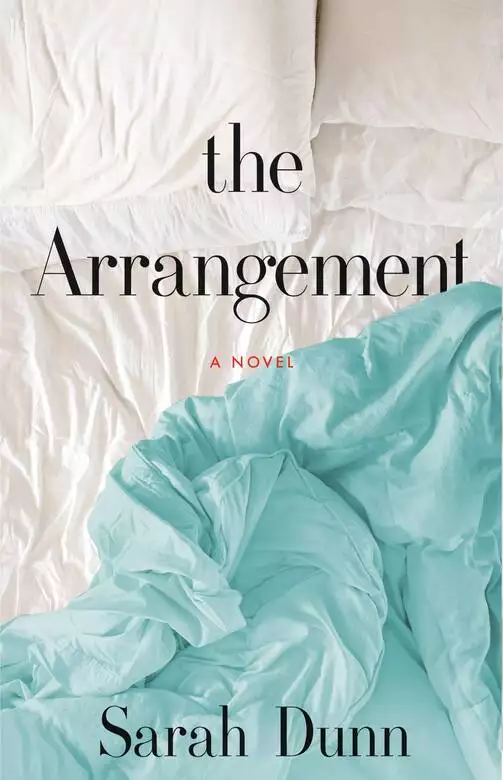
Lucy and Owen, ambitious, thoroughly therapized New Yorkers, have taken the plunge, trading in their crazy life in a cramped apartment for Beekman, a bucolic Hudson Valley exurb. They’ve got a two hundred year-old house, an autistic son obsessed with the Titanic, and seventeen chickens, at last count. It’s the kind of paradise where stay-at-home moms team up to cook the school’s “hot lunch,” dads grill grass-fed burgers, and, as Lucy observes, “chopping kale has become a certain kind of American housewife’s version of chopping wood.”
When friends at a wine-soaked dinner party reveal they’ve made their marriage open, sensible Lucy balks. There’s a part of her, though—the part that worries she’s become too comfortable being invisible—that’s intrigued. Why not try a short marital experiment? Six months, clear ground rules, zero questions asked. When an affair with a man in the city begins to seem more enticing than the happily-ever-after she’s known for the past nine years, Lucy must decide what truly makes her happy—“real life,” or the “experiment?”
Release date:
March 21, 2017
Publisher:
Little, Brown and Company
Print pages:
368
* BingeBooks earns revenue from qualifying purchases as an Amazon Associate as well as from other retail partners.
After it was over, all of it, Lucy found herself making the point again and again that it had been a mutual decision. To her aunt Nancy, who was disgusted by the entire business and decided to pretend it never happened. To her sister, Anna, who was fascinated and demanded all the details. To the ladies of Beekman—the quiet few who envied her freedom and her daring, and the bigger, more vocal contingent who would have nothing more to do with her, who wanted her to Stay Away from Their Husbands—Lucy always said it had been a fully conscious and completely mutual decision. Nobody believed her, of course. These things are never mutual. One person always wants it more than the other, one of you is keeping a secret, somebody has a plan. But Lucy always said this about the Arrangement: it was a mutual decision, she and Owen both went into it with eyes wide open, and it had brought certain unfortunate things to light.
It was a Saturday evening early that July. The leaves were bright green and the fireflies were out in force. Lucy and her old friend Victoria were in Lucy’s kitchen prepping food for the grill while their husbands were out on the deck drinking wine, but it could have just as easily been the other way around. Beekman was a town where men cooked at dinner parties. The men of Beekman not only cooked, they made things like pickles and cheese and beer and sauerkraut. They ground their own spices to rub on their pork tenderloins and made their own mayonnaise, just to see if it was worth it (it wasn’t). Even inside Lucy’s head it sounded affected and awful, worse in a lot of ways than the Brooklyn so many of them had lived in before, the Brooklyn they’d either been priced out of or willingly fled, the Brooklyn that Victoria and Thom still called home.
Victoria was painfully thin, and her skin was pale and already crepey under her blue eyes. She teetered around on her trademark vintage heels, which made her look like she might trip and fall straight into late middle age. Thom, with his wild dark curls and two-day stubble that sparkled with flecks of gray, still looked good.
“I called Frank the other day to see if he wanted to go hear this new band with us,” Thom said to Owen—Thom and Victoria still had new bands they went to see, even though they had a five-year-old—“and he couldn’t, because he was going out to Hoboken to learn Japanese rope tying.”
“All I heard was ‘Japanese rope tying,’” Lucy said as she pushed the screen door open with the plate of cheese and grapes she was carrying.
Victoria followed with two bottles of wine. “Oh my God, Thom, are you telling him about Frank and Jim?”
“Frank and Jim?” Lucy asked.
“You met them at our wedding.”
“Your fabulous gay friends.”
“They’re a little less fabulous these days,” said Victoria. “They got married and had two kids and moved to the suburbs.”
“They’re still pretty fabulous,” said Thom.
“I just mean they’re not jetting off to Milan for the weekend anymore. They coach peewee soccer together instead.”
“That’s sweet,” said Lucy.
“Yeah, it is sweet,” said Thom. “What they have is sweet.”
Victoria looked across the table at her husband and rolled her eyes.
“What?” Thom said to her. “What did I say?”
“Thom is a little obsessed with this ‘arrangement’ Frank and Jim have.”
“I wouldn’t call it obsessed,” said Thom. “Okay, yes, I am a little obsessed. I just find it fascinating.”
“Tell us,” said Owen.
Thom reached for the wine and refilled glasses as he spoke. “Okay, so, they’ve been married for about six years. They have two little girls, a cozy house in Larchmont, and a place up in Vermont. Frank is a stay-at-home dad, while Jim commutes into the city every day. Frank is the president of the PTA, Jim is a deacon in their church. It’s like a fifties marriage, really. Dinner is on the table every night, they argue about how much money Frank spends and whether the girls should be forced to learn Mandarin or take violin lessons—”
Victoria cut him off and said, “Except…”
“Except they’re both allowed to sleep with other people.”
“You mean they’re swingers?” asked Lucy.
“I don’t know the terminology,” said Thom. “They call it an open marriage.”
“Swinging implies, I think, participation,” said Victoria. “Like, watching each other do it or swapping or something. An open marriage is more, um, furtive?”
“Frank told me they don’t talk about it,” said Thom. “He said they each give each other a realm of privacy. He says it works out great.”
“We saw them a few weeks ago. They’re happy. The girls are happy. They’re the most stable couple we know.”
“How can that be stable?” asked Lucy.
“They’ve got rules,” said Thom. “They don’t let things get emotional. I think they’re only allowed to sleep with a given person a certain number of times. And some people are off-limits. Exes, mutual friends, coworkers, like that. ‘Out of town’ seems to be a bit of a free-for-all. The whole thing is pretty clearly hammered out.”
“Like Elton John and his husband,” said Victoria.
“That was a threesome in a paddling pool filled with olive oil,” Lucy pointed out.
Owen lifted his wineglass. “Allegedly.”
“You gotta hand it to gay men,” Thom said. “They’ve cracked the code.”
“Yeah,” said Lucy. “I bet their kids don’t destroy their furniture either. Or throw up in the middle of the night.”
“They get all this”—and here Thom gestured big, taking in the entire scene: the house, the yard, the wine, the friends, the coziness of domesticity, and the comfort of long, familiar love—“and sex too.”
“Hey,” Lucy said. “I’ve known Victoria for a long time. You get sex.”
“Not the kind of sex those guys get.”
“He’s right,” said Victoria. “He doesn’t.”
“We have sex,” said Thom.
“But it’s always with each other,” Victoria said, laughing. She and Thom clinked glasses and kissed.
The deck extended out from the house, resting on boulders and who knew what else. The bleached wooden planks were beginning to show signs of rot, and there were three areas that sagged if you walked over them. Owen would tell male dinner guests from the city that the deck had “at least two, maybe three winters to go before we have to replace it,” and they would sip their beers and nod, a khaki-clad conspiracy of cluelessness. Still, Lucy found herself thinking, the backyard was beautiful. An acre of rolling grass rose to a jagged (and thus authentic) rock wall, likely erected by cow farmers over a hundred years ago. In Lucy’s mind, the stones held back the dense woods, offering both protection and temptation. It was one of the reasons they’d bought the house.
“Can you please start the coals, Owen?” Lucy said.
“It’s too early.”
“It’s not too early.”
“What’s the rush? We’re conversing. Have some cheese.”
Lucy reached for one of the cheeses, a Rogue River Blue that Thom and Victoria had brought that clocked in at thirteen bucks for a quarter of a pound. Lucy had taken it out of the paper and was reminded of her life in New York, her life before Beekman, a life of paying fifty-two dollars a pound for Oregon cheese.
“It works for them for one reason,” said Owen. “There are no women involved. They’re not married to women, and they don’t step out of their marriage and have sex with women. There’s no craziness. Sex can be just sex.”
“I can have sex be just sex. I used to be able to, at least,” said Victoria. “When I was younger.”
“Me too,” said Lucy.
“I think it’s a huge myth that women can’t have meaningless sex,” said Victoria. “You should see these millennials in my office. All they do is have sex, all the time. The girls, the guys. They’re not worried about getting AIDS or getting pregnant or being called a slut. They’re all vociferously opposed to slut-shaming in any form.”
“Slut-shaming?” Owen asked, rotating the cheese plate and slicing off a hunk of Jasper Hill cheddar.
“Yeah,” said Victoria. “It’s a thing.”
“How many people did you have sex with before you got married?” Victoria asked Lucy.
“I’m not drunk enough to answer that question at a dinner party.”
“This isn’t a dinner party,” said Victoria. “It’s the four of us having dinner on your deck because you couldn’t get a babysitter. How is Wyatt, by the way.”
“Wyatt is Wyatt,” said Lucy. “He’s in our bed with the iPad while we violate all the rules of good parenting.”
“Is he still…” Victoria wrinkled her brow with sympathy.
“It’s not going away, Victoria. Wyatt is who he is,” said Lucy. “How is Flannery?”
“Fine,” said Victoria. “Good.”
“He got into St. Ann’s,” said Thom.
“Have you cut his hair yet?” Owen asked.
“Nope,” said Victoria.
“You gotta cut that kid’s hair,” said Owen. “We put your holiday card on the fridge and Wyatt would not believe me when I said Flannery was a boy. He kept laughing every time I said it.”
“We’re your friends,” said Lucy. “We wouldn’t bring it up otherwise.”
“I love Flannery’s hair,” said Victoria.
“I’m starting to think we should cut it,” said Thom.
“We’re not going to cut it.”
“He has a girl’s name and girl’s hair,” said Lucy. “Don’t you think that’s gonna be hard for him?”
“Nobody ever forgets him,” said Victoria. “It’s his thing.”
“It’s your thing,” said Thom.
“It’s my thing that is now his thing and that’s how motherhood works.”
“Could you please start the coals, honey?” Lucy asked.
“The coals heat up very fast.”
“People come to our house for dinner, they want to eat before eleven o’clock at night. It makes it hard to sleep.”
“I’m the grill master. I know my coals,” Owen said.
Lucy pointed at Victoria and said, “You are my witness. I am on record as saying that we should have started the coals already.”
“The coals take ten minutes to heat up, tops,” Owen said.
“That is not true, but I’m silent on this subject from here on out,” Lucy said, and then she reached across the table and helped herself to more wine.
“You want the truth?” Lucy said, leaning against the avocado-colored kitchen cabinet. Lucy and Owen had planned on installing new cabinets since the day they set eyes on the house. Instead, they’d pretended for each other that they’d grown used to them.
“Yes,” Victoria said.
“I’ll only say if you will too.”
“I’ll say, I don’t mind,” said Victoria. She was dressing the salad while Lucy watched. “Fourteen.”
“That’s a good number,” said Lucy.
“I feel pretty happy with it,” said Victoria.
Lucy pointed both of her thumbs at herself and announced, “Twenty-seven.”
“Twenty-seven?” said Victoria. “Seriously?”
“I was a bit promiscuous. In college,” said Lucy. “And after college.”
“She whored it up, my wife did,” said Owen, who was kneeling in front of his wine fridge and studying the bottles.
“Don’t slut-shame me,” said Lucy.
“No slut-shaming!” agreed Victoria. “What about you, Owen? How many women did you sleep with before you met dear Lucy here.”
“I don’t know,” said Owen, getting to his feet with two bottles of Ridge zinfandel.
“You don’t know?” said Victoria.
“Nope,” said Owen. “No idea.”
“It was a lot,” said Lucy. “A lot a lot.”
“Yeah,” said Victoria. “Thom too.”
“I think I’ll start the coals.”
“I’m not sure it’s safe for you to be around fire, honey.”
“I’ll help him.”
“Great,” said Victoria. “Now they’ll both go up in flames.”
Everyone loved Owen’s marinade. There were lots and lots of compliments on the marinade as they sat on the deck and ate dinner with linen napkins and the Laguiole steak knives with rosewood handles Lucy’s cousin had given them as a wedding present. God, men and their marinades, thought Lucy. You’d think they’d figured out how to split the atom when all they did was put some Worcestershire and soy sauce into a Ziploc bag.
“I’m at the age when women start to go crazy,” said Victoria. “My girlfriends are all going nuts. If their husbands knew half of what was going on, their heads would never stop spinning.”
“Why?” Owen asked. “What’s going on?”
“I can’t tell you. This is a secret all of us are keeping from all of you.”
“Give us one example,” said Owen.
“Okay, I have a friend, who I will not name, who is married,” said Victoria. “And she makes out with people.”
“What do you mean?”
“Like at a bar, she’ll make out with someone,” said Victoria. “She does it at least once a week.”
“Who goes to bars?” asked Lucy. “Who has time for things like that?”
“She makes the time,” said Victoria.
“Do I know her?”
“I can’t tell you.”
“That means I know her.”
“You do.”
“Spill it.”
“Perfect Jen.”
“Perfect Jen makes out with strangers at bars?”
“She does.”
“Who is Perfect Jen?” Owen asked.
“This annoying mother I used to know when Wyatt was little,” explained Lucy. “She made her own organic baby food and she ate it herself for dinner every night so she could stay super-skinny.”
“I shouldn’t have told you who it was, but I did it to make a very particular point,” Victoria said, “which is that this woman who we know and who appears to be happy and perfect and has two kids and seems normal—”
“She’s not normal—”
“She’s reasonably normal on the surface,” Victoria said. “This semi-normal woman is, in fact, like a grenade with the pin pulled out.”
“Do you think she’d make out with me?” asked Owen.
“Probably! She probably would! She’s not picky.”
“I read somewhere that women tend to have affairs before their children are born, and men have them after,” Owen said. “Men are like, My work here is done.”
“Then it’s too late for us,” Lucy said to Victoria.
“But not for us!” Thom said to Owen.
Owen opened another bottle of wine.
There was no coffee served that night. Nobody asked for it, and Lucy didn’t offer any. Caffeine seemed altogether beside the point. Instead, Owen brought out a bottle of locally made bourbon after the last bite of steak was eaten and the marinade was commented upon one final time, and even though the bourbon tasted like tree bark, everybody just kept on drinking.
“Suppose I found out that Thom cheated on me on a business trip,” Victoria said. “He had a one-night stand, met someone at his hotel bar and slept with her. Everyone would understand if I kicked him out of the house or even filed for divorce, but if I told people I let him have sex with women on his business trips, that we had an arrangement, I’d be a social pariah.”
“How is it that as a culture we’ve decided that it’s completely rational to break up a nuclear family because one of the parents has sex with somebody else, even if it’s only one time, or a minor fling, or whatever,” Thom said, “but it’s shameful and perverted to make some temporary accommodations inside a marriage so all parties can get their needs met while doing their primary job, which is staying together and raising their kids as an intact family unit?”
“I’m not arguing with you,” said Owen.
“Marriage is about kids,” said Thom. “It’s about having kids and raising them together and not leaving them no matter what.” He gestured toward his wife. “Both of our parents got divorced while we were young and it was the single biggest force that shaped our lives.”
“Yeah, but I’m not sure marriage should be like dating,” said Lucy. “Where you’re always looking for someone to hook up with.”
“Not looking for it, necessarily. Just, not having to shut it down if it happens,” said Victoria. “Being able to feel like a sexual person walking through the world again.”
“I barely feel like a sexual person when I’m actually having sex,” Lucy said, and then she laughed at her own joke.
“It’s almost over for us, Lucy,” Victoria said. “I have a friend, she’s ten years older than I am, and she says it’s like one day, everything changes. It’s like someone flips a switch.”
“That’s really depressing,” said Lucy.
“The other day, I was dropping Flannery off at Life Drawing, and a kid in his class asked me if I was his grandmother.”
“No way.”
“It’s true,” said Victoria. “And let me tell you, you don’t bounce back from that one overnight. You stop thinking you’ve got all the time in the world pretty quick.”
“Are those crickets?” Thom asked.
“They’re frogs,” said Lucy.
“They’re really loud.”
“They croak until they find a mate for the night, and then they shut up,” explained Owen. “If you wake up in the middle of the night, there are four sad horny frogs still out there croaking.”
“I can’t believe you live someplace that has frogs,” said Victoria.
“We also have chickens,” said Lucy.
“I saw your chickens on Facebook,” Victoria said. “I refuse to discuss them. You have gone full-on Green Acres on me and I’m not sure how much longer we can be friends.”
“I’ll send you home with some eggs,” said Lucy.
“I won’t take them. That would only encourage you.”
“I need something. And Thom needs something. We’re both tired of this persistent, I don’t know…low-grade dissatisfaction with life, I guess,” Victoria said. “Do you know how often we have sex?”
“Never,” said Thom as he served himself a narrow slice of the fruit tart Victoria had picked up at Pain Quotidien that morning.
“Not never never,” said Victoria. “But it might as well be never.”
“And the weird thing is, we’re both fine with it,” said Thom. “That’s the scariest part.”
“We can feel ourselves slipping into that kind of stale marriage where you are both fine not having sex, letting that part of you sort of wither up and die, and as we talked about it we realized we didn’t want that, but we didn’t want to split up either.”
“This is officially the strangest conversation that has ever taken place on our deck,” said Owen.
“I don’t get it,” said Lucy. “Do you still love each other?”
“Yes!” said Thom.
“Of course we do.”
“Then why are you even talking about this?”
“Let me try to explain,” said Victoria. She took a big, dramatic pause and then reached over and held on to Thom’s hand. “I want to grow old with this man. I love him, and he loves me. He’s my best friend and my favorite person in the world and the only person I want sleeping in my bed with me at night. I want to go on vacations together and have a life together and have Flannery come home with his kids at Christmas when we’re seventy. I just don’t, at the moment and, if I’m totally honest, for a while now, really, feel like having sex with him.”
“Maybe it’s your hormones,” Lucy said helpfully. “Maybe you need a patch or something.”
“Our therapist has ruled that out.”
“You’ve talked about this with a therapist?” said Lucy.
“He’s a bit unconventional, but he’s interested in finding ways to make long-term marriages work,” said Thom. “Marriages where you don’t have to disown a big part of yourself in order to stay in the relationship.”
“My father cheated on my mother for their entire marriage,” said Victoria. “It completely destroyed her. I don’t want that for myself. I don’t want to give up all my power.”
“This is the way nobody gets hurt. Not Victoria or me, not Flannery.”
“Has it started yet?” Lucy asked. “Do you guys both have other people on the side?”
“It hasn’t started yet,” Victoria said. “But we’re doing it.”
“We are,” said Thom.
“Wow,” said Lucy. “Just, wow.”
Why is there poop on the wall again?” Lucy yelled.
She didn’t expect an answer. She just wanted the universe to hear her. To hear that this was her life, a life of discovering poop on the wall. Again.
Because, really, is there any good answer to that question? Why was there poop on the wall? Because Lucy was a mommy. Because she had a five-year-old son with some challenges. Just because, really. Because, full stop.
Actually, not full stop. This is why there was poop on the wall: Because sometimes, when Wyatt went to the bathroom, he accidentally got some poop on his hand. And then he did what he considered the most efficient thing. He wiped his hand on the wall next to the toilet. Apparently, with his sensory issues, having poop on his hand was the equivalent of a neurotypical person having, say, acid on his hand. Think about it, Wyatt’s occupational therapist had said to Lucy. If you had acid on your hand, your brain might stop working normally. You might forget what your mother had told you a million times. You’d get rid of it the quickest way possible.
Which was all well and good, but for some reason, Wyatt never thought to tell her about it when it happened, so she was frequently surprised to find poop on the wall. She would sit down, intent on enjoying a rare moment of solitude, trying to eke out the most possible enjoyment she could get from a few minutes alone on the toilet, armed with a Real Simple or a Pottery Barn catalog or the free local newspaper, grabbing the tiniest of tiny pleasures for herself, a pleasure so tiny even calling it a pleasure was pathetic, and she would turn her head and find herself staring at a smear of drying-out shit.
Shoes that tied were the first thing to go.
Lucy needed shoes she could put on without using her hands, with a writhing, screaming, occasionally biting child in her arms, shoes she could tip up with her toes and slide her feet into without so much as bending a knee. Flip-flops when at all possible, clogs or Merrells the rest of the time.
Then it was earrings. Earrings were so long gone, the holes in her ears had closed up. Next it was eyeliner, then mascara, then returning phone calls, then going to the dentist, then looking in a full-length mirror before she left the house, then lip gloss, unless she found some in the bottom of her purse while she was stopped at a red light. There was more, of course. Pedicures, thank-you notes, RSVPs, Christmas cards, flossing, stretching, remembering birthdays, exfoliation. Basically, Lucy was down to nothing but deodorant, toothpaste, and a ponytail five days out of seven. She was lucky she was thin and had cheekbones and good skin.
Lucy had planned to move to Chicago after college, because that was where her friends were all headed, but her father had pronounced in that way of his, “If you’re going to move to Chicago, you might as well move to New York.”
It was good advice. The only time to move to New York City is when you’re fresh out of college, unless you happen to be rich. If you’re rich, you can move to New York whenever you want.
Lucy could still remember the moment she met Owen like it was yesterday. It was one of those disgusting East Coast summer days, where everyone was sweating and midtown Manhattan was perversely heaped with piles of garbage everywhere you looked. Lucy had just turned twenty-six and she’d gotten an interview for the job of her dreams. She arrived at Rockefeller Center on time, but there was a hang-up at security and her pass wasn’t there. She waited. And she waited some more.
By the time she finally got into the elevator, it was two minutes to one. The elevator was slow and hot and seemed to stop on every floor. Lucy was sweating—a combination of nervous sweat and residual city sweat—and she kept looking up at the elevator numbers and then down at her watch. All of a sudden, she felt a strong, cool breeze coming from her right. She turned her head and saw a tall man in a gray suit fanning her with the Metro section of his New York Times. He fanned her, wordlessly, while the elevator made its way up the next eighteen floors.
“Don’t worry,” the man said to Lucy as she stepped out of the elevator. “Whatever you’re doing, you’re going to be great.”
Lucy got the job.
She started out as a junior line producer for a morning network news show. It was a great job, but it was challenging. It wasn’t just making the trains run on time, it was making the trains run on time in a world where there were no tracks, no trains, no trial runs, no do-overs, and no excuses. She remembered the time she was covering a protest against the war in Iraq and one of the lazier grips told her he couldn’t manage the setup she wanted because the power cord couldn’t reach the outlet. “Anything can reach anywhere,” Lucy pronounced, and she marched across the street and bought three extension cords. Her boss, witness to this all, immediately gave her a promotion and a raise.
She lived in a world of concrete, solvable problems: Get a camera and the weatherman and a backup power source to a safe-but-seemingly-dangerous spot to cover the hurricane. It was difficult, it was stressful, and it was prestigious and relatively well paying, but it wasn’t particularly creative. Lucy thought about that, often, after she quit her job and moved up to Beekman. If she had been a writer or an artist, a photographer o. . .
We hope you are enjoying the book so far. To continue reading...

 Please log in to recommend or discuss...
