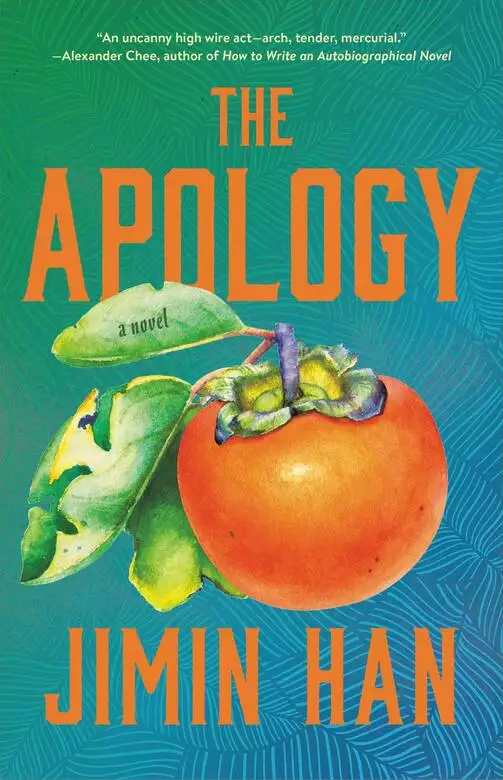
This “sweeping intergenerational saga" tells the story of a pampered and defiant South Korean matriarch thrust into the afterlife from which she seeks a second chance to make amends (Kirstin Chen)—and fights off a tragic curse that could devastate generations to come.
In South Korea, a 105-year-old woman receives a letter. Ten days later, she has been thrust into the afterlife, fighting to head off a curse that will otherwise devastate generations to come.
Jeonga Cha has always shouldered the burden of upholding the family name. When she sent her daughter-in-law to America to cover up an illegitimate birth, she was simply doing what was needed to preserve the reputations of her loved ones. How could she have known that decades later, this decision would return to haunt her—threatening to tear apart her bond with her beloved son, her relationship with her infuriatingly insolent sisters, and the future of the family she has worked so hard to protect?
Part ghost story and part family epic, The Apology is an incisive tale of sisterhood and diaspora, reaching back to the days of Japanese colonialism and the Korean War, and told through the singular voice of a defiant, funny, and unforgettable centenarian.
Lit Hub's Most Anticipated Books of 2023
Release date:
August 1, 2023
Publisher:
Little, Brown and Company
Print pages:
304
* BingeBooks earns revenue from qualifying purchases as an Amazon Associate as well as from other retail partners.
Fleeing in a panic is not recommended. A week ago, on my last day alive, I was at my grandson’s house in Chicago, America. I was frantic. I got myself to my feet and ran. The heavy cypress door of the stocky house couldn’t keep me in. Outside, I hurried as fast as I could along the sidewalk, head down. Chill seeping into my skin, through my taupe linen suit jacket over my white blouse, cotton undershirt, and wide-legged linen slacks. This was what it was to be old: no protections despite layers of clothing. It was summer, for goodness’ sake. To my left, houses and houses and trees, vicious large trees, and across the street to my right more trees, as if I were inside a large endless cavern of trees that blocked the sun. In the very periphery of my vision, they crowded me. Judged me. What gave them the right? I raised a fist at them and then hurried on to increase the distance between me and the house I’d left, increase the distance between me and my family in that house. Judge me? Yes, they were judging me. I suppressed a sob that rose in my throat. Ignore them, Jeonga, I told myself. Breathe and get oxygen to these old-woman legs of yours. Breathe and hurry.
Finally, the trees disappeared and then there were traffic lights and tall buildings and American people and too bright of a sun. I was at the mercy of an onslaught of screeching car tires and belching truck exhausts. The stench of rotten wet vegetables, gasoline, and grease assaulted my nose. I swerved right and then left. Where could I find a place to rest a moment away from everyone? I meant everyone. I was sick to death of the world. I needed to think. Think, think.
People swarmed around me, so close I thought at first it had started to rain but it was sweat from a stranger that had landed on me. I flinched. Too close. Everyone was too close. Hot air; actually, hot breath: “What the hell, lady,” someone shouted in my face. Right in my face. How dare he. I wrenched my arms out of my jacket and dumped it in a trash container on the side of a building. I assumed it was a trash container; who cared. A stranger’s perspiration, no, thank you.
I’d resented the trees and wished for warmth, but now I was in a worse place than before. Was it always going to be like this? Something worse around the corner?
“Foolish Jeonga,” my sister had called me many times. Really, everyone had. They were right. They’d all been right. What could I do now?
Long, long time ago I had a sister, and now this fact was returning to snatch the future away. Who would have thought my great-granddaughter and my sister’s great-grandson would have found each other on this huge foreign continent and fallen in love, not knowing they were related?
I picked up my pace. Across the wide American street was a bench flecked in gold. It beckoned. I could sit there. An answer would arrive if I could only sit. I’d come up with plans to cover up my secrets before. All I had to do was make it past these crowds of people who had no respect for personal space, this stream of relentless machines on wheels, on this cruel, cruel day.
I hated people. They had always been terrible. In the neighborhood I grew up in, people spread rumors about my family. My parents stuck to their version no matter the consequences. Never give in to them, they told me. Cut your losses. Even if the gossip is true. My father was especially adamant about this. Our family had a reputation to uphold, a household to protect. Save what you can. Save who you can, especially for the family’s reputation. Posterity. Upholding traditions would ensure that future generations would survive. What didn’t help the health of the family was removed, like a branch of a tree for pruning. It had been done before. That was the way it had always been done. But now I had doubts.
What if I had chopped the branch that would bring down the family tree? Why had I followed my family, our traditions, so blindly? Was there anything left to do now? Decision after decision had led to this moment. Foolish Jeonga. I wrapped my arms around myself as I walked. I raised my chin to encourage myself to stay strong. Don’t let them know they hurt you, Jeonga. I didn’t want anyone to see me like this. My cheeks were cold when the wind hit my face. I let go of the present as I searched. I hurried along in this life as I walked but memory pulled me to the past. Where was the mistake? What could I have done differently? I’d protected our family’s reputation. I had hidden my son’s indiscretion from society. I had banished the woman he had impregnated. All I had done, I had done to save us. That was my duty, wasn’t it? But now, any day now, the secret would be exposed. In fact, it had to be exposed or the family would be cursed for generations. What to do, what to do? I was being squeezed from both sides. To tell or not to tell. I didn’t want to tell; so help me, I didn’t.
Step by step through that busy intersection, my body traveled while my mind crossed into the past. I remembered my son’s face as he bent his head down all those years ago. I’d feared he’d never raise his chin again, the despondency weighing him down. All I could do was stare at the beautiful thickness of the hair on his head, the hair that the midwife said was responsible for the heartburn I’d experienced when I’d been pregnant with him. I didn’t care. I’d held him tight to me, infant with a full head of hair, and I wished I could do the same now. I extended my arms but he shrank from me. We were in the courtyard in front of our house in Seoul. He was collapsed in the dirt. “Why, Eomma? Why?” he asked.
“My boy, my foolish boy, I’ve fixed your mistake,” I’d grumbled at him, but I was swallowing my own guilt for allowing him to spend as much time as he had with a young woman in our employ. It was my fault I’d overlooked how grown he was by then. A young man old enough to be a father.
How I wished the entire episode had never taken place. I gasped and held on to that memory for a moment too long and that is why what happened next was the end of me. I relinquished my grip on the here and now.
People were shouting, “Bus, bus,” and I was glad to be able to make out that one English word. Bus. I imagined they were late to catch it. I pitied them. Maybe the man who had shouted in my face was one of those who had missed the bus. Serves you right, I thought with satisfaction. Some of my misery eased. Bus drivers never stopped to let people on after they closed the door. Korea, America, all the same. I heard the wheeze of the hydraulic system as the bus rose from its kneeling position. Off it went. “Watch out.” People gasped and the rest was garbled speech, the beginnings and endings of English words run together. I couldn’t understand. But it didn’t concern me; I was almost across the street, nearly upon the glittering bench that was my destination. You think old ladies can’t run? We certainly can.
My first thought as I was struck was that someone had slapped me across the face, and I was astonished anyone would want to do that to me. And I found it curious that I was on the pavement because of it — a simple slap by someone, and I was horizontal on the street? But then I couldn’t breathe and it seemed that a huge metal blanket had collapsed on me. It was swift after that. The dawning realization that the slap was much more than something a person could have done to me. A flash of excruciating pain and then — blissful reprieve, which carried the price of blindness, dense and complete.
A bus was my undoing. Simple fact. I died in Chicago, America. If I had only paid attention to what was around me. That could be inscribed on my headstone: IF SHE HAD ONLY WATCHED WHAT WAS COMING. Ha!
I can find some humor in it now, but in the moment the metal made contact with me, I wasn’t laughing, I was astonished. A bus crushed my flesh and bones. Agony and then nothing. No feeling at all. With relief came reluctance to give up the pain — isn’t that curious? Hand in hand, the relief and the pain. As if pain was familiar because a blank forgetting arrived that frightened me more than anything I’d ever experienced before. I was scattering outward. Who was I? What did I want? What had I cared about? I wrapped my arms around myself, but they swept through without resistance. I could see nothing when I looked down — was I looking down? I reached for my face and felt nothing.
Like in a dream, I felt all around me the vastness of a solar system in outer space but with no pinpoints of stars. The first sense to return was touch. Prickles of damp against my skin. Skin in the afterlife? My outer layer tingled. A mist enveloped me. Slowly the feeling beneath me solidified, a hard surface; moment by moment my body claimed me again.
Smell seeped into my being; that was next. The dampest whiff of an orchard of persimmons. I inhaled and the soft texture of a ripe persimmon slid in my mouth — a faint taste memory. Next was sight. I opened my eyes to an orange mist — the shade of a persimmon. In front of me, the outline of a town square.
Then, under my hands, the edges of myself formed, fingers and toes. I was sitting in a crouched position, my chin on my knees — I was hunched over, shielding my head with my arms. When I lowered my hands, I saw that my legs were covered by the skirt of a white hemp hanbok. I touched the cloth, a rough and simple cross-hatching of thread from the crudest loom. Why was I dressed in this old-fashioned funeral garb? My feet were in white sneakers, the only material item that had carried over from my life — that and my white socks. My travel socks and shoes. I flexed my toes. New clothes but old shoes. Why?
I was doomed; this knowledge descended on my shoulders. Remorse in waves washed over me. I was sorry, wasn’t I? But for what? Orange dust scattered beneath my feet. I alternately flailed my arms at the air around me and covered my head with them in fear.
And then a whisper. “We were sisters.”
I raised my head. A memory was crystallizing in my mind. My touchstone. My sister Seona. I had a sister named Seona. She was two years older than me. Old enough to tower over me and yet be my playmate. “Jeonga, Jeonga, your turn,” my sister’s voice called to me.
Long, long time ago we were sisters.
I remembered even though I was dead and in the afterlife. I knew this as surely as I knew I had once been alive. There were songs about where I was right then. The five-hundred-years one, my favorite, though I didn’t know then what I know now. Consider that: How can a person live for five hundred years? I was most interested in love. How it bound us together, how it ripped us apart. There were four children in our family. The two older ones and then Seona and me. Seona and I were a team. I looked up to her. She was brave.
Jeonga was my name. The relief to know this. When I was a child, Seona and I used to play in a dusty town square waiting for our mother, who was at the market. The town square, where I remembered being happiest, even if boys would come and snatch our tea set made of hollowed and dried gourds. A cup taken once, a teapot another time. We’d huddled over what remained, our backs to the thieves.
Old women used to gather in threes and fours in the corner farthest from us, under the shade of a straw shelter. Crouched down like us, they sang the five-hundred-years song: Why does he ask for five hundred years and then leave me behind? We can’t go on. Nobody would ever love him as much as I loved him. Nobody would ever love me as much as I loved him.
I remembered we were two little girls in a big, empty, dusty square in summer. The boys would come and steal our play set and run. The other girls, our older sisters, would walk by, talking about us, leaving us behind. We would become old women with empty hands singing songs like this. Was this the lesson?
“No worry, no worry,” Seona used to say after the marauding boys left us. “See?” She held up a cracked gourd. “We still have this one.” Her small hands scooped up dirt, let it funnel into the cup. She raised her chin and sang the song, and I tried to follow along.
“Remember the song,” a voice sounded now in the orange mist. Was that Seona’s voice?
I looked about. Before me was such an expanse of emptiness. I remembered the song of the old women: My love has gone, who asked me to live together for five hundred years, compassion nowhere. I cannot go on. Geureochi, amuryeom geureochi. Five hundred years. I was a child with my sister in the town square in Korea long, long ago.
The song essentially said, “You remember the love. That remains, the feeling of love; everything else you forget.” I remembered my sister’s love.
I had a sister.
Maybe I could stand up. I pushed off the ground with my hands. At least the ground was solid. I flexed one knee, then the other. I stretched my arms above my head. Not easy. I felt as old and creaky as I’d been in life on my last day. One hundred five years old. If I was dead, why didn’t I have the litheness of a gwisin? Ghosts were free from their bodies, weren’t they?
I took a deep breath. Focus, Jeonga, I told myself. You heard Seona’s voice. There must be a reason. Korean folklore said everyone was assigned a guardian to traverse the afterlife. Seona as my guardian — the thought gave me hope. I had lived more years without her than with her, but I remembered her every day. I swallowed and called to her, “Seona, big sister, help me.” I waited for a response, but none came. The mist drifted around me and still nothing else in the great expanse. No voice replied, but I wasn’t discouraged. My memory was returning. I recalled the faces of my family. I remembered I’d had a problem in Chicago, America. I had to do something; I couldn’t just wait in this empty town square. I was not one to give up, not ever. I chose a direction and walked forward.
I was looking for a second chance even in death. It shouldn’t have been a surprise, but we get comfortable in our modern age with what we hold on to. We become attached to who we think we are. I had to go on, had to try, in hopes that something, anything, would give me a clue as to how to save the living. Love was my way back.
Ten days ago, I was in my sitting room in my apartment in Seoul. When you’re one hundred five years old you know your life is near its end, but that didn’t make me use my time wisely. I complained about having nothing to do. I thought my secrets were safe, my losses behind me, permanently in the past. How content I was in my arrogance. The room faced south with windows through which I could see the garden one story below. If I didn’t look too carefully, I could imagine I was in my childhood home. If I concentrated on the purple and pink hibiscus that bloomed in late summer, I could forget how much the city had changed. Selective memory — isn’t that what it’s called? I was an expert at it.
I sat in my favorite chair. A Finn Juhl Pelican in gray cashmere. Say what you want, but the chair was not a hug from a person in its soft curving form as it’s marketed to be, simply a chair I liked for its proximity to the floor. How I miss it now. I was short, even for an old Korean woman. On the wall to my right was a painting, an abstract of the Golden Gate Bridge in the United States: a streak of uncanny orangish red over a blue expanse.
Both the chair and the painting were gifts from many years ago. I added other Finn Juhl pieces of furniture over time. All original. Sleek and simple. Some would say the modern imitations were even better with their low prices, but I say who needs so much? Buy a few. Less to clean. More space in a room to breathe. This is what I thought back then. I thought I was wise.
I wore my short hair in a bob, easy to care for, hid the thinning that happened in your advanced years. That day I must have been wearing a pair of my simple, loose wide lounge slacks and a lilac tunic. The tunic was tied at the side of my chest in a new interpretation of a jeogori by a Korean designer. Skirts were preferable but wide-legged pants were comfortable and modern, and I wanted to match my furniture in case anyone was watching. From wherever. I suspected even then, but how little I knew.
Those days, I felt like I was always waiting. How I hated waiting. That’s where I was that day. It was closing on noon, and I was reading a book. Not an exceptional book, domestic drama that it was. Not much thought required, which was a blessing. Some people — my sister Seona, for one, and a man I used to love, for another — would have scoffed at it. But I admit I wanted to escape my reality more often than not. That particular day I was close to that back-cover closing. I was dismayed that the story would be over and I still had the entire day before me; not even lunch, and I’d be finished.
What else could I do? The menu for the week had already been planned; the grocer had come and gone; the doctor had examined me yesterday; I’d been to the acupuncturist the day before that. A walk would take an hour at the most, and it was summer, so the afternoons would be a sauna. I liked a day to clear my head between reading books. I couldn’t bear to start another story after being deeply immersed in one. It seemed to lessen the experience, or, more to the point, it felt like a betrayal somehow. I was reputed to count loyalty among the highest attributes one could have. I was not unlike my parents in that way, especially my father, whose respect I had always longed to have.
So there I was, reading this fine novel. I relished each word, knowing I was near the end and hoping some pages were stuck together so there would be one more and another and another. There I was, the last three, four, maybe five pages until I would have to close the book, and then the author gave me a gift. The gift of an epilogue.
I’d seen them before, but I’d never allowed myself to expect them. They were rare. And here it was, a few short pages that encapsulated years that the author wouldn’t cover in his novel but that would give me a sense of what would come, and I could savor every sentence. Each bit about the main character’s life, the children he would never see grow up, the generations who would move to remote corners of the world, and I could picture it: The spoiled one, the youngest in the family, would find work in Amsterdam; the tender one, my favorite, would strike out for Peru and become a mayor (imagine that — a Korean-immigrant politician. I knew it happened, but it surprised me how far we could venture into the world); and the middle child would become a doctor, saving children’s lives in America. Just before the main character died, he said, “You can’t control love. You can’t conceal it from each other. The world is too small to hide in.”
In all my years, I’d seen it happen several times. People losing control, throwing away their futures for what they thought was love. He was right — you can’t control it — but I didn’t agree you couldn’t do anything about it.
I reread that line about love several times, then finally closed the book and held my hands folded on the back cover in my lap.
An epilogue was what I wanted in my own life, it occurred to me then. Greedy to live longer as a centenarian? It was not unusual in my family or even among Koreans. My grandmother had lived to one hundred eleven. I wanted more, and the more that I wanted didn’t have to have me in those pages. I wanted a summary. I wanted an overview. I wanted to see what happened.
Reading books helped me push away a habit I’d had as a little girl. I used to have visions when I was awake of people walking through our stone walls into our yard, sometimes beckoning for me to follow, sometimes not aware I could see them.
My mother used to say, “Ignore them; they’re in pain and will pull you into their sorrow if they can. Put your attention on something else, like reading books.”
She was right. Reading books directed my mind to focus on stories in a disciplined, contained, safe way. That’s how I learned to cope in life. The scenes I saw of gwisin used to be debilitating. The anguish in their faces, how they wailed; they were as vivid as if I were watching a movie — I didn’t know this at the time, but later when I went to the cinema, suddenly it was as if the world saw what I’d been seeing for years. My own private film — though I hadn’t been able to choose what I saw. And it seemed I had not been the only one who saw things many others could not.
As a senior citizen, I kept my life simple and quiet. Part of my secret to longevity was to do so. Unlike others who had large staffs, I had one trusted aide, named Chohui, who cooked, cleaned, shopped, replaced batteries, drove the car, had remarkable insights to ease my day. I tried not to express to her how much I enjoyed her company beyond the day-to-day tasks. In retrospect, I should have shown her how much I appreciated her.
“Ready for lunch, samonim?” Chohui said that day I was finishing the novel. Samonim was the word a respectful person used for someone as old as I was. It irked me, though I had no reason to object. She walked into the sitting room with my cell phone held out in front of her.
“Food again? Is this all we have to talk about?” I snapped at her. “Why did you bring me that phone? Did someone call?”
“You’re always hungry,” she said. “It was charging on the kitchen table where you put it. Remember, I’m going to the park this afternoon, so you should have it by your side.”
“Well, I have no use for it. Go ahead with your friends; I can manage lunch,” I replied.
“Samonim, I know you like to have it in case someone calls,” she said.
“All the errands are done, who would call?” I shot back. She was right — I often checked to see if I’d missed calls, though there never were any.
My irritating criticisms seemed to roll right off her, but I know they must have hurt. Thinking about my actions now makes me cringe. Chohui didn’t know what was in store for us that day. Neither did I.
She proved to be tougher than she appeared.
In practical terms, I appreciated that she was exactly my height of 153 centimeters, which had been a benefit over the years, as I did not ever have to peer up or down at her. On occasion she offered me her arm when we walked up steps or she’d go ahead to see if I’d have trouble with the steepness of the terrain based on her stature relative to it. Compared to me at her age — twenty-four — or at any age, she was lovely. While I had a narrow face, she had a broad forehead; she also had pleasant eyes, which she squinted when she was nervous. We’d been to several ophthalmologists, all of whom claimed she had perfect vision. She wasn’t squinting now, simply waiting for me to agree to lunch. As usual, she had talked me out of my bad mood.
Chohui had been working for me for the past twelve years and was an adequate housekeeper. I knew I was fortunate but not how much so. The first time I saw her, I noticed right away that she was unusual. She was standing outside a pharmacy, a child half the size of the adults around her, her head tilted upward, staring off into space. My watch told me it was an odd time to see a child in this part of town. In her plain navy and white school uniform, she was out of place on this busy street with shops. Adults walked past her as if she weren’t there. Admittedly, my first emotion was fear. Maybe she was a gwisin, and I had let down my guard.
I had not seen one in years, but still, I was relieved when I saw an old man stop short to avoid colliding with her. She was real after all. I approached, my heart relaxing from its clenched state. As I neared, something about her reminded me of myself at that age.
I walked right up to her, and I said, “What’s wrong?”
“Everything,” she said. . .
We hope you are enjoying the book so far. To continue reading...

 Please log in to recommend or discuss...
