ONE
Spofford
Greyness, all grey.
The walls, the windows, the sky, the roaches, the rats, the guards’ batons, the matrons’ matted hair. A sea of grey on dry land. That’s what Spofford was like. The Bronx’s own juvenile jail. And I had to laugh, even if my jaw was swollen from the bashings I got. Spofford was run by New York City’s Department of Juvenile Justice. But the only justice I ever saw at Spofford was a kick in the can.
Every delinquent was supposed to have a savior. Mine was Mr. Milbank. He visited once a month from Juvenile Justice. He had a walrus mustache, Mr. Milbank. He looked ancient to a kid of fifteen, with a forest of hair in his nostrils. But he couldn’t have been older than forty. He had a brown vest, a brown suit that stank of mothballs, brown socks, and brown sandals. It was a relief from all the grey.
Milbank wasn’t unkind. But he didn’t have much of a wallop in a detention center where all the bosses were brigands and thieves, including the warden. They stole from us, they beat us up, and when one of the guards hit me too hard, I bit his hand. My reward was the “hole” for two weeks, solitary confinement in a box made for animals to crawl on their knees. But I didn’t tattle to Milbank or I would have been rewarded with another visit to the hole.
“How are you, Salt?” he asked.
My name was Jonah Salt. But Mr. Juvenile Justice never called me by my given name. I was Salt, always Salt.
“I’m fine, Mr. Milbank. I could field a baseball team with all the fleas in my prisoner’s pajamas.”
He looked at me with horror in his liquid eyes. “You’re not a prisoner, Salt. You’re in protective custody. This correction center will keep you from committing more crimes.”
It was just my luck that a truant officer caught me with stolen merchandise. Me and Martin Peck, another member of our gang, the Silver Wolves, had broken into the basement of Miller’s sporting goods store on Boston Road. It wasn’t a burglary. It was revenge. Miller had his annual sale with a Willie Mays glove advertised for ten bucks. I wanted that glove. I was nuts about Willie ever since I saw him on the tube in ’51, when he’d left the Birmingham Black Barons to play centerfield for the New York Giants. There had never been a centerfielder like Mays, at least not in my life as a baseball fanatic. He could cover the entire turf of the Polo Grounds, the Giants’ stadium on the far side of the Harlem River. I’d been through the turnstiles on several occasions. It wasn’t that hard to sneak in. I watched Willie lope across the grass, catch a fly ball behind his back or pluck it off the strings of his shoes.
And I wanted a glove with his signature engraved on it. But the moment I walked into Miller’s store wearing a Silver Wolves jersey, he took my Willie Mays out of the display window and said the sale was off. He didn’t like the Silver Wolves, called us hooligans, though we kept other gangs from smashing his windows. We would always be outlaws to him no matter what we did.
I hadn’t gone to school in a month. What was the point?
ONE
Spofford
Greyness, all grey.
The walls, the windows, the sky, the roaches, the rats, the guards’ batons, the matrons’ matted hair. A sea of grey on dry land. That’s what Spofford was like. The Bronx’s own juvenile jail. And I had to laugh, even if my jaw was swollen from the bashings I got. Spofford was run by New York City’s Department of Juvenile Justice. But the only justice I ever saw at Spofford was a kick in the can.
Every delinquent was supposed to have a savior. Mine was Mr. Milbank. He visited once a month from Juvenile Justice. He had a walrus mustache, Mr. Milbank. He looked ancient to a kid of fifteen, with a forest of hair in his nostrils. But he couldn’t have been older than forty. He had a brown vest, a brown suit that stank of mothballs, brown socks, and brown sandals. It was a relief from all the grey.
Milbank wasn’t unkind. But he didn’t have much of a wallop in a detention center where all the bosses were brigands and thieves, including the warden. They stole from us, they beat us up, and when one of the guards hit me too hard, I bit his hand. My reward was the “hole” for two weeks, solitary confinement in a box made for animals to crawl on their knees. But I didn’t tattle to Milbank or I would have been rewarded with another visit to the hole.
“How are you, Salt?” he asked.
My name was Jonah Salt. But Mr. Juvenile Justice never called me by my given name. I was Salt, always Salt.
“I’m fine, Mr. Milbank. I could field a baseball team with all the fleas in my prisoner’s pajamas.”
He looked at me with horror in his liquid eyes. “You’re not a prisoner, Salt. You’re in protective custody. This correction center will keep you from committing more crimes.”
It was just my luck that a truant officer caught me with stolen merchandise. Me and Martin Peck, another member of our gang, the Silver Wolves, had broken into the basement of Miller’s sporting goods store on Boston Road. It wasn’t a burglary. It was revenge. Miller had his annual sale with a Willie Mays glove advertised for ten bucks. I wanted that glove. I was nuts about Willie ever since I saw him on the tube in ’51, when he’d left the Birmingham Black Barons to play centerfield for the New York Giants. There had never been a centerfielder like Mays, at least not in my life as a baseball fanatic. He could cover the entire turf of the Polo Grounds, the Giants’ stadium on the far side of the Harlem River. I’d been through the turnstiles on several occasions. It wasn’t that hard to sneak in. I watched Willie lope across the grass, catch a fly ball behind his back or pluck it off the strings of his shoes.
And I wanted a glove with his signature engraved on it. But the moment I walked into Miller’s store wearing a Silver Wolves jersey, he took my Willie Mays out of the display window and said the sale was off. He didn’t like the Silver Wolves, called us hooligans, though we kept other gangs from smashing his windows. We would always be outlaws to him no matter what we did.
I hadn’t gone to school in a month. What was the point?
ONE
Spofford
Greyness, all grey.
The walls, the windows, the sky, the roaches, the rats, the guards’ batons, the matrons’ matted hair. A sea of grey on dry land. That’s what Spofford was like. The Bronx’s own juvenile jail. And I had to laugh, even if my jaw was swollen from the bashings I got. Spofford was run by New York City’s Department of Juvenile Justice. But the only justice I ever saw at Spofford was a kick in the can.
Every delinquent was supposed to have a savior. Mine was Mr. Milbank. He visited once a month from Juvenile Justice. He had a walrus mustache, Mr. Milbank. He looked ancient to a kid of fifteen, with a forest of hair in his nostrils. But he couldn’t have been older than forty. He had a brown vest, a brown suit that stank of mothballs, brown socks, and brown sandals. It was a relief from all the grey.
Milbank wasn’t unkind. But he didn’t have much of a wallop in a detention center where all the bosses were brigands and thieves, including the warden. They stole from us, they beat us up, and when one of the guards hit me too hard, I bit his hand. My reward was the “hole” for two weeks, solitary confinement in a box made for animals to crawl on their knees. But I didn’t tattle to Milbank or I would have been rewarded with another visit to the hole.
“How are you, Salt?” he asked.
My name was Jonah Salt. But Mr. Juvenile Justice never called me by my given name. I was Salt, always Salt.
“I’m fine, Mr. Milbank. I could field a baseball team with all the fleas in my prisoner’s pajamas.”
He looked at me with horror in his liquid eyes. “You’re not a prisoner, Salt. You’re in protective custody. This correction center will keep you from committing more crimes.”
It was just my luck that a truant officer caught me with stolen merchandise. Me and Martin Peck, another member of our gang, the Silver Wolves, had broken into the basement of Miller’s sporting goods store on Boston Road. It wasn’t a burglary. It was revenge. Miller had his annual sale with a Willie Mays glove advertised for ten bucks. I wanted that glove. I was nuts about Willie ever since I saw him on the tube in ’51, when he’d left the Birmingham Black Barons to play centerfield for the New York Giants. There had never been a centerfielder like Mays, at least not in my life as a baseball fanatic. He could cover the entire turf of the Polo Grounds, the Giants’ stadium on the far side of the Harlem River. I’d been through the turnstiles on several occasions. It wasn’t that hard to sneak in. I watched Willie lope across the grass, catch a fly ball behind his back or pluck it off the strings of his shoes.
And I wanted a glove with his signature engraved on it. But the moment I walked into Miller’s store wearing a Silver Wolves jersey, he took my Willie Mays out of the display window and said the sale was off. He didn’t like the Silver Wolves, called us hooligans, though we kept other gangs from smashing his windows. We would always be outlaws to him no matter what we did.
I hadn’t gone to school in a month. What was the point?
I had to hold the Wolves together. The gang was without a general. And the truant officer happened to bump into me while I was in possession of Willie’s glove with the price tag still on it. And he caught Martin Peck with a couple of Louisville Sluggers. The cops arrived and took Martin away to the precinct. Martin was seventeen and a candidate for Rikers Island, the biggest penal colony in the world. But I was too young for Rikers. That’s why I was sent to Spofford, a holding pen for juveniles under sixteen. Kids were known to get lost in the system for years and end up with a grey beard before they were let out into the sunless streets. But I had my champion, Mr. Milbank.
He looked at the sketches I had tacked on the walls of my cell. The matrons always removed them and kept my art for themselves. But I had a box of Crayolas, a sketch pad, and a supply of thumb tacks that I hid under the sink.
“Quite the artist,” Milbank said, scribbling in his notebook. “Our own little Picasso.”
“Who’s that?”
“The master of masters,” Milbank said. “He lives in France, in a chateau. Whenever he fills that chateau with paintings, he locks the door, and moves on to another. Each chateau is priceless, because of the paintings.” Milbank scratched his ear. “You’re a savage, Salt. Haven’t you ever been to a museum?”
“No.”
“Then how do you learn, how do you decide what to draw?”
I didn’t really know. I drew whatever appeared inside my head—each image would come in a flash, like a lightning bolt in my brain, and I would have to get that image onto my pad before it went away
“Young man, you have a wall of wolves.”
Milbank wouldn’t understand. I was drawing the creature
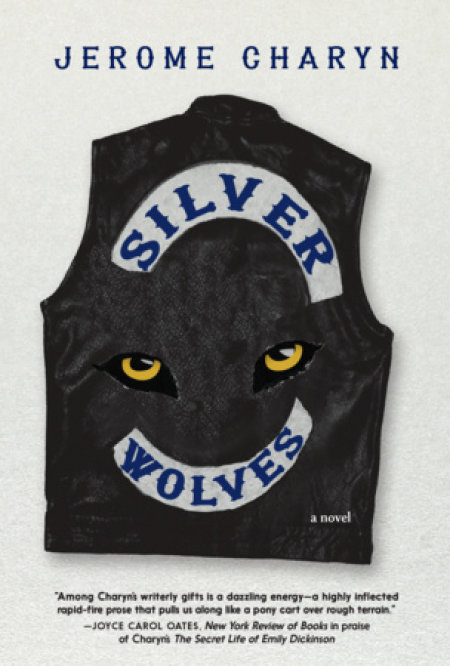
that inspired our gang, the wounded wolf that wandered onto Longfellow Avenue in the middle of the night with blood on its paws, its coat covered in filth, its yellow eyes looking at us with kinship, as if me and my brother were also wild animals. We’d heard the wolf howling. That’s why we went downstairs in our pajamas and bare feet. I was just a kid—maybe five and Michael was maybe eleven. “Wait here,” Michael said. “And don’t frighten the wolf.” My brother went back upstairs in his bare feet. I didn’t know what to do. I was riveted to the wolf’s yellow eyes. Michael returned with some kosher salami, a container of cottage cheese, an open can of chicken soup, a pail of hot soapy water, and a washcloth.
He fed the wolf first. The wolf gobbled the salami out of Michael’s hand, dug its snout into the container of cottage cheese, and lapped the chicken soup with its long pink tongue. Then Michael wiped the blood from the wolf’s paws with a wet handkerchief, and bathed both paws in mercurochrome from our medicine chest. He walked around the wolf after that with the washcloth and scrubbed its entire coat. The wolf never flinched once as Michael scrubbed for half an hour, until the pail of soapy water turned black with clots of dried blood and grime.
I witnessed a miracle right on Longfellow Avenue, in the middle of the night.
All the wolf’s greyness was gone. Its coat was streaked with silvery fur. I didn’t know much about anatomy, but I was certain that we had found a rare wolf. I’d seen the grey wolves and the brown-coated timber wolves at the Bronx Zoo, but never a silver wolf. It must have come from a forest in Connecticut. It had battled with a wild buck, I suppose, or another wolf, crossed the Bronx River, and landed all alone on Longfellow Avenue. The wolf stared at Michael with its yellow eyes, pawed my brother once, and loped back into the dark, its silver coat shining like a silent song.
A week later, Michael met with friends of his to start the
Silver Wolves, with me as the gang’s mascot. My first drawing tumbled out of a dream. I wasn’t duplicating what I saw, a wounded wolf coming out of nowhere. The form of that wolf flashed inside my head. That’s what I drew, with a pencil. I hadn’t mastered the art of crayons yet. But I told none of this to Milbank.
“And how is that criminal brother of yours?” he asked.
“Michael’s not a criminal,” I said.
My brother was the only general the Silver Wolves would ever have, and he was always getting into trouble with the cops. The captain of the 48th precinct advised Michael to enlist, or the cops would keep hounding him until he ended up on Rikers Island. Michael was ready to take on the entire precinct, but he would have destroyed the Silver Wolves in a rumble like that. So he signed up and served in Alaska, driving heavy-duty trucks on thousand mile runs. But he disabled his commanding officer in a drunken brawl at a bar in Anchorage, and was now at Castle Williams military prison on Governors Island, serving twenty years. Michael couldn’t keep out of trouble. He scrapped with all the prison guards—years were added to his sentence. I knew that he would never leave “Castle Billy” alive.
I couldn’t visit Michael while I was sitting in my cell. Governors Island was only 800 yards off the edge of lower Manhattan. I could see half the island and the circular fortifications of Castle Billy from the ferry slip. It was a ten minute ride to the island on the South Street Ferry, but it was an unpleasant ride because there were military policeman patrolling the upper and lower decks with pistols and pump guns. And I never saw one of them smile.
Mr. Milbank kept hitting a single target. “Michael Salt is the only reason you are at Spofford. His gang has brought you here. Will you resign
from the Silver Wolves? I can build a stronger case for you at Juvenile Justice.”
I knew I would be with the Wolves for life. I might not wear the gang’s colors if I ever reached forty, but I wouldn’t wear a brown vest and brown socks, like Mr. Milbank.
“May I?” he asked, and he removed a drawing from the wall of the wolf’s yellow eyes. “I’ll keep it as a souvenir and show it to my colleagues at Juvenile Justice. It will build a stronger case for an early release from protective custody. Don’t lose your courage, Salt. I’m on your side.”
Mr. Milbank was fiddling. But he wasn’t much of a fiddler. I was in the system now and I’d never get free of it. That police captain was right. Michael would be sitting in Rikers if he hadn’t joined the Armed Services. But it wasn’t much of a trade-off. He was at Castle Billy. And he’d never leave that island fort and ride the ferry into Manhattan.
our cell doors were rarely locked. No one had ever escaped from Spofford. The main building was surrounded by rolls of razor wire, the windows were barred, and the front and rear doors were built with armor plate. Alvin James, a lieutenant of the Boston Road Black Barons, visited my cell with a hatbox. The Wolves had never had any rumbles with the Barons. They had their territory and we had ours. His eyes were swollen. The guards must have hassled him for pocket money. None of us in custody could get a candy bar without some loose change.
Alvin was awaiting a court appearance. He was accused of stealing groceries for his sisters and his mother, who was going blind. His father was a sign painter. He’d fallen off a ladder and was in the hospital. And here was Alvin James in my cell with a hatbox.
“Open it, little brother,” he said.
I removed the cover. A Willie Mays glove was sitting
inside. Alvin watched my eyes pop with wonder, and he smiled.
“Take out the glove, juvie. I know you have the hots for the Say Hey Kid. He shouldn’t have quit the Birmingham Barons.”
“But Willie’s in the majors now,” I said.
“The Birmingham Barons have their own major leagues. Willie was their star attraction.
You don’t know a thing about Black baseball. We had our own stars until the rich white clubs raided our leagues and ripped the heart out of whatever baseball we have left.”
“But I couldn’t have gone down to Birmingham to watch Willie.”
“Well,” Alvin said, “Willie would have come up here with the Birmingham Barons and beat the tar out of the Giants. But I’m glad I got you that glove. I know it’s why you’re at Spofford. Stealing a glove and getting caught. So I got you another one.”
It was a puzzle. “How did you manage that?”
Alvin laughed and ruffled his head with pride. “We’re the Boston Road Barons, juvie. We have our own warehouse. And we must have a dozen Willie Mays gloves. I borrowed one. I have the receipt. But that ain’t the problem. How are you gonna hold onto your Willie? Henshaw will grab it the first chance he gets.”
Henshaw was in charge of our cellblock. He was an ex-hockey player. He’d been with the New York Rangers for a season as a utility man who had been knocked around and had to quit. Both his eyebrows had been scarred from the blades of opposing teams’ hockey sticks. One of his eyes was in peril. He wore an eye patch. But that didn’t stop him from getting promoted at Spofford. Henshaw was an assistant warden. He was also an anteater. He could scoop up whatever piece of property you
had in your cell.
Alvin oiled my glove with a tiny tube of linseed oil.
“You don’t want the leather to crack,” he said. He handed the glove to me, and I kept digging into its pocket with my fist. He could smuggle in a glove, but there wasn’t a baseball to be found at Spofford. Baseballs were on the warden’s weapon list. There were only spaldeens in the sports chest. And those pink rubber balls disappeared after a day. Henshaw did organize punchball games on the roof, which was covered over with a razor-sharp net. Alvin played sometimes. I never did. I loved punchball, but not on that roof. The netting made me feel even more like a prisoner in Henshaw’s prison.
Alvin stayed with me for half an hour while I deepened the pocket of the glove with my fist. We never talked about our gangs or the colors we wore on the street. We were rivals, but not at Spofford, where those of us inside had to band together to survive. The loners didn’t last. They grew very sad, stopped talking, and were taken to Creedmoor, the city’s own psych ward. Some even killed themselves. That’s why there was always a suicide watch at Spofford. Henshaw didn’t want a stain on his résumé.
There was a good reason why Alvin gifted me with that glove. Michael did some research while he was at Castle Billy. He met with the military prison’s eye doctor. He talked about the eye disease Alvin’s mother had: glaucoma. He was able to locate special eye drops that would slow down his mother’s blindness. He had the Army eye doctor write out a prescription and I delivered it to our local pharmacist, Mr. Swann. The eye drops cost over a hundred dollars, but Michael paid for it. And the Barons and the Wolves had a temporary truce, so I could hand over the eye drops to a Baron in Baron territory. Alvin was in Spofford at the time.
We didn’t talk about the eye drops or the favor Michael did. But that’s why there was no other general like my brother, ...
We hope you are enjoying the book so far. To continue reading...
Copyright © 2026 All Rights Reserved

 Please log in to recommend or discuss...
