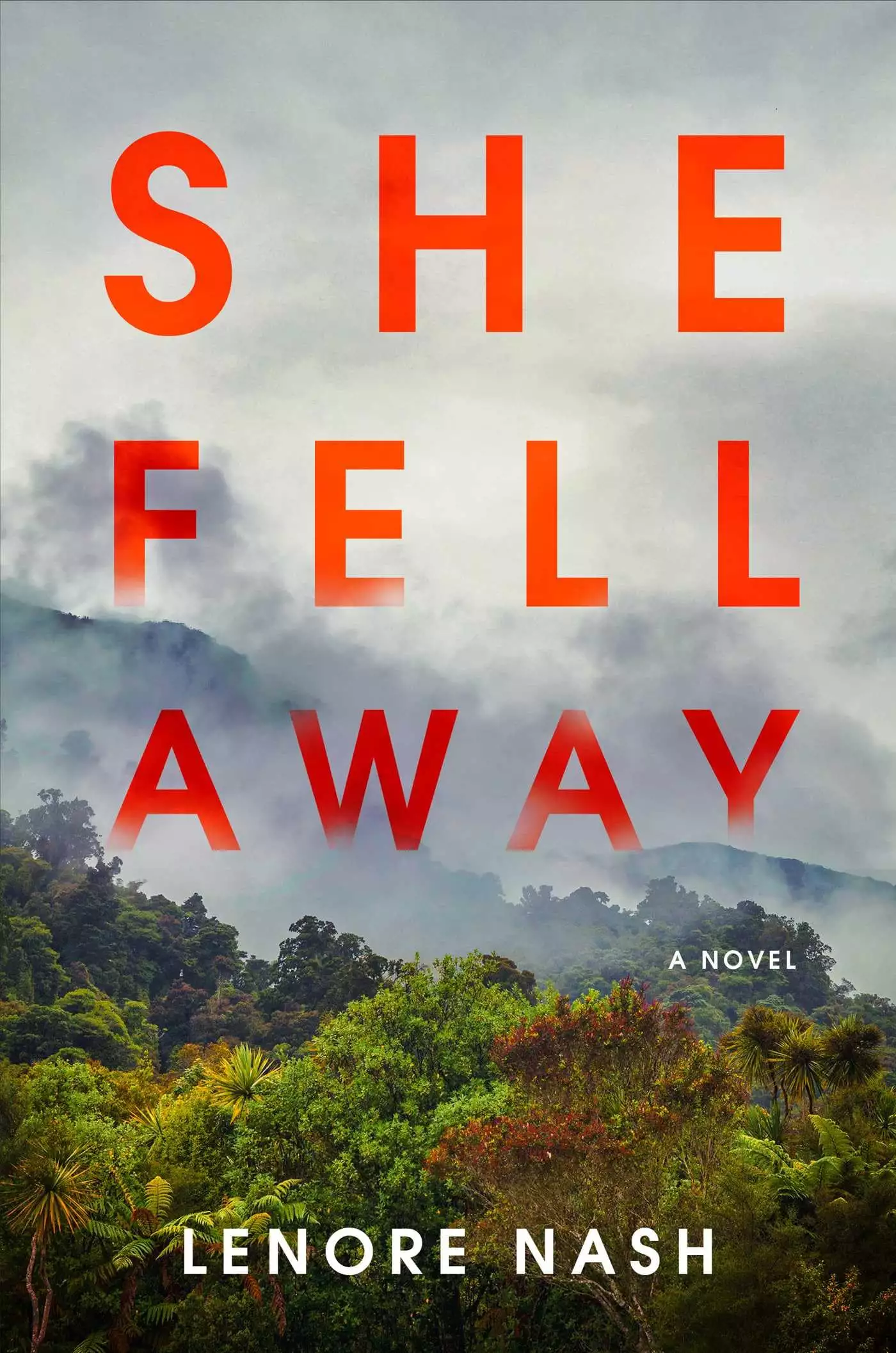
A State Department diplomat must confront the ghosts of her past as she searches for a missing American woman in New Zealand in this pulse-pounding and unputdownable thriller.
Lake Harlowe may not appear to be your typical State Department diplomat. With the number of skeletons in her closet exceeding the tattoos on her skin, she moves to a new country every few years to keep one step ahead of her personal demons. After two grueling years working in Cambodia, Lake’s desperate for a break and a new posting to sleepy Wellington, New Zealand, seems like a dream come true.
That is, until eighteen-year-old singer-songwriter Bowie Bishop mysteriously vanishes shortly after American NFL player Bruce Walter is found dead in his hotel room. An exchange student from Las Vegas, Bowie was a world away from her possessive, washed-up stage mom who won’t stop calling until Lake finds her superstar daughter.
All at once, Lake finds herself ensnared in a network of deception involving Bowie’s high-profile host family, a shadowy music producer, a casino magnate, and the US ambassador—her boss. Obsessed with finding the truth, Lake soon realizes that to find the missing girl, she must confront her own dark past in this unputdownable thriller that will keep you guessing until the final page.
Release date:
March 10, 2026
Publisher:
Atria/Emily Bestler Books
Print pages:
352
* BingeBooks earns revenue from qualifying purchases as an Amazon Associate as well as from other retail partners.
Chapter 1: Lake 1 LAKE Dead bodies in lonely rooms are the worst part of my job.
This one’s splayed on the beige bathroom tiles, limbs frozen in a sprinting position, as if he tried to outrun death. He has the soulless features of an Oscar statue—pronounced brow, straight nose, blunt jaw, linebacker shoulders.
Bloody fingerprints stain the front of his white performance hoodie. Designer Swiss watch. Flashy sneakers. He looks like he lives in a lakefront mansion with a double-wide boathouse.
A snail trail of vomit the mottled color of bruised bananas winds from his open mouth along the tiles, up the side of the toilet, and into the bowl.
A tall police officer in the Wellington uniform of dark blue vest over a light blue polo shirt approaches me as I stand just outside the door of the bathroom. “You must be Lake Harlowe?”
I nod. “I’m the American Citizen Services officer.”
“Sergeant Mason Yates. Have you had any luck locating the deceased’s next of kin?”
“Not yet. I’ve left several messages.” I’d done a quick LexisNexis search on my cell phone after I received the death notification call from the New Zealand police, but the contact number listed rang through to voicemail.
“Sad business. Such a young lad. The Airbnb has an optional daily cleaning service, and the housekeeper discovered him. Do we have a cause of death yet?” he asks Dr. Charlotte Grayson, the soft-spoken forensic medical examiner. She’s bending over the body, not much of her visible beneath a white protective suit, coverall with hood, face mask, and safety glasses.
“Pulmonary aspiration, inhalation of vomit into the lungs causing asphyxiation. Could have been caused by mixing pills and alcohol. He has a prescription for hydrocodone—the pills are on the shelf there.” She clicks her tongue. “Americans and their painkillers.” She glances at me. “No offense, Ms. Harlowe.”
“None taken. Why is there blood on his shirt?”
Dr. Grayson nods at a razor sitting on the edge of the sink. “He might have decided to shave while intoxicated. There are nicks on his jawline here”—she points—“and blood on his fingertips. We won’t know for certain until after the postmortem.”
The three of us share a disturbing secret. We know what this person looks like freshly dead. He’s not a person anymore—he’s a specimen to be examined, a case to solve, paperwork to file.
I reverse the footage of his last moments in my mind. Vomit flows backward from the toilet into his throat, down his esophagus, and back into his roiling stomach. He takes a gasping breath. Sits up. Walks backward to whatever Wellington harbor tourist bar he was drinking at last night. He orders one less Jägerbomb. Never knows how close he came to this.
We roll out of bed in the morning and move through our day making choices as if we’re in control. We notice the invisible spider’s web connecting survival and tragedy only after it’s too late, after beads of blood paint the threads crimson.
I’ve witnessed death too often to walk through life easily. I’ve had to be wary. To tread softly, keep my eyes open. If I sinned, I was punished.
When I was a child, I imagined that hell was a root cellar lined with jars containing all my sins. Rows and rows of pickled sins. Falsehoods. Rebelliousness. Envy. Preserved in vinegar, coated with dust and mouse droppings. In hell I only had my sins to eat. Every bite corrosive.
“You all right, love?” Sergeant Yates asks, turning to look at me.
It throws me for a moment, this casual endearment, though it’s normal. Even the grocery store clerks call me lovely, or love.
“I’m fine.”
“Not your first death case, I hope?”
“No.” I’ve seen death before. I close my eyes and corpses wash across the darkness like nightmare northern lights.
Blood soaks the sweat-stained shirt of an expat sex offender in a shoddy hotel room in Phnom Penh. A young flight attendant in Lisbon wears a necklace of purple and yellow bruises, her wrists tied to the bedposts.
The reel spins faster, back to Alaska. A hazy memory—ink dropped into water, a cloud spreading through my mind. Smell of chanterelle mushrooms, of moss, a wet growing odor that feeds on decay. Gnarled tree roots. No, not tree roots… fingers, cramped into a claw, nails black and rotting. Holes where eyes should be.
Don’t think—breathe. That was a mistake. The room is saturated with the scent of bile and booze. My stomach heaves.
“Steady on.” Sergeant Yates crosses the room in two long strides and takes hold of my arm. “You need some air.”
My face heats up, and I’m sure my cheeks are as red as my lipstick. I’m not some easily spooked newbie. He tightens his grip when I attempt to pull away, leading me into the large bedroom with floor-to-ceiling windows and an expansive view of Wellington harbor.
He’s around six feet three, thickly muscled, with a rugby player neck. His nose is barroom-brawl crooked, and his knuckles show faint bruising. He’s rough enough to give me splinters. The intensity in his brown eyes is as bone-crushing as his grip.
There’s the urge to lean against the solid wall of his chest, to catch my breath, but I stiffen and put distance between us instead.
I know danger when I see it.
“I’m fine, really.”
“You almost fainted back there.”
“Low blood sugar. Where’s the passport?”
“On top of the valise there.”
“Do you know why he was in Wellington?”
“Not a clue. We can’t find his mobile phone.”
October is spring in New Zealand. The weather is still chilly, but the kowhai trees are blooming, their vibrant golden blooms attracting tui and bellbird.
I open the passport. I already know his name: Bruce Bartholomew Walter II. Twenty-one years old. Born in Las Vegas. His passport photo is better than most. He has a confident, almost aggressive stare. He traveled light. One silver hard-sided carry-on spinner. The police have been through it, but his clothes are still folded. Everything is designer. The Cartier sunglasses alone probably cost more than I make in a paycheck.
It always feels wrong sifting through a stranger’s luggage while they lie dead nearby. The secrets I’ve found have sometimes been difficult to forget. There’s nothing out of the ordinary here, though: clothes, noise-canceling headphones, high-end deodorant, swim trunks with a shark print.
“There’s nothing here to indicate why he’s in Wellington,” I agree. “But he’s no ordinary tourist. Did you do a search on him?”
“He’s an American football player, right?”
“A quarterback. I did some research. He was selected tenth overall in the draft this year by the Jacksonville Jaguars, but he tore the meniscus in his left knee during a preseason game. He was going to miss his entire rookie season. Now he’ll never have a career. He’s the son of Glen Walter, son of Bruce Walter the first. They’re a famous American football dynasty. The grandfather opened The Trophy sports-themed casino in Las Vegas in the 1970s. They’re seriously wealthy. This is going to be big—it’ll make national news in the States.”
“Damn,” he mumbles under his breath. “Just what I need. A rabid pack of American reporters in Wellington. I’ve had a run-in or two with your journalists. Inventive bunch. They don’t let the truth get in the way of a sensational story.”
“The Public Affairs section at the embassy will help you. They’ll want to know about this ASAP. I’d better contact his parents soon because it will be difficult to keep a lid on this.”
Making death notifications is the second worst part of my job.
“What’s happened to the other ACS officer—Jordan Singer?” Mason asks. “Thought he had a year left in Welly.”
“He curtailed abruptly and unexpectedly.” My colleague, Sara, told me that Jordan supposedly curtailed for family reasons, but she thinks he might have had a falling out with U.S. Ambassador Lyndon Hunt, a Texas billionaire political appointee who wears cowboy boots to work and hangs antique pistols over his desk. Whatever the reason, the position was an urgent vacancy, so I applied to leave my grueling job in Phnom Penh early and fill the position on a temporary basis.
“Did you work with Jordan often?”
“We covered a domestic violence case involving an American citizen. Surprised to hear he left. He was keen on dirt biking and was always going on about how epic the trails were here. How are you finding our Aotearoa so far?”
“It’s incredibly beautiful here.”
My plane landed in Wellington next to a crescent of yellow sand hugging turbulent blue water. I walked through the small airport, between red carved pillars with iridescent abalone shell eyes, and under a giant sculpture of Gandalf riding an eagle. Outside the air was crystalline with a salt tang, so pure it tasted as though they should be charging Swiss Alps bottled water prices to breathe it.
It was as though the sea and the jagged rocks, the dense green beyond the shore, had accidentally grown an airport that could be reclaimed at any time, returned to wilderness. I’d had the thought that here was a country that could steal my heart and never let it go.
“Done much exploring yet? Made it to the South Island?”
“Not yet. I’ve only been here a few weeks. I hear Milford Sound will remind me of the fjords in Alaska.”
“You’re from Alaska?” His gaze roams my body. “You don’t look like you’d last long on those reality TV shows.”
He’s judging my petite stature, my nipped-waist vintage tweed blazer and matte-red lips. He thinks I look like a hothouse flower, a woman who requires silk scarves and rose petal moisturizer to survive. He doesn’t know my past. The rough spun wool. Homegrown vegetables for breakfast, lunch, dinner. Hauling firewood until my back ached.
I judge him right back. He’s a medieval fortress. Built to withstand battles. Massive arms folded and lips quirked dismissively. He looks like the quintessential tough guy. But I could be wrong. Maybe he cries during animal shelter commercials. Maybe he memorizes Emily Dickinson poetry.
He doesn’t know me. I throw my shoulders back. “Looks can be deceiving. I’ve made my own crossbow and shot a moose with it. Field dressed it with my own hunting knife, too.” Why would I tell him that? He’s put me on the defensive. I need to prove myself.
His lip quirks higher. “Did you now? I’d pay good money to see that. I’m imagining you wielding a big sharp knife. Maybe we’ll go hunting for wild boar sometime. I’ll take you for protection.”
The glint in his eyes says he’s laughing at me.
“I don’t hunt anymore.” Although I do still carry my hunting knife. It’s a reminder of my past. I left Alaska when I was eighteen, and I’ve never been back.
Alaska is the hoarse voice of a raven, a frozen crust of snow crunching under my boots, the sweet-tart scent of boiling strawberry-rhubarb jam, snowy mountain ranges bathed in rosy alpenglow.
Alaska is darkness. Fear. Rules that had to be followed. Lies that had to be told.
“So where were you posted before this?” he asks.
“Phnom Penh.”
He smirks. “Now that must have been a rough tour. I’d imagine Americans get up to all sorts of mischief in Cambodia, eh?”
“Regrettably. I was hoping this would be a quieter tour. At least this isn’t a crime scene?”
“No signs of foul play.”
“I should be getting back to the embassy. When you’re finished with the luggage I’ll take it for his family.”
He pulls a card out of his vest pocket. “We’ll try to keep it quiet for now, keep it out of the press until you notify the parents and we know more details. Call me if your team has any questions.”
“I will. Nice to meet you, Sergeant Yates.”
“Wish it had been better circumstances. And call me Mason? We don’t take ourselves too seriously around here, if you haven’t noticed.”
“Thanks, Mason. And I’m Lake.”
“My pleasure, Lake.”
I’m halfway out the door when I overhear Dr. Grayson teasing him.
“Call me Mason. My pleasure, Lake. Fancy her, do we?”
“I like gingers. And I didn’t see a wedding band.”
Interesting. Not that I’ll do anything about it. He’s attractive, but I’m not in the market for a lover. It’s only been six months since Lucas cheated and tried to blame me for being emotionally unavailable. You’re a closed book. You never let me in. I don’t think you’re capable of love.
The accusatory refrain rings through my mind as I walk up the steep hill to the embassy. My shoulders hunch against a rising wind. They don’t call it Windy Welly for nothing. This gale holds a grudge. It scours my cheeks, stings my eyes, deliberately messes my hair like a schoolyard bully.
I wish it could scrub my mind clean of the last hour. I can’t stop seeing Bruce being zipped into a body bag, darkness closing over him forever.
And now it’s time to call his family and ruin their lives.
We hope you are enjoying the book so far. To continue reading...

 Please log in to recommend or discuss...
