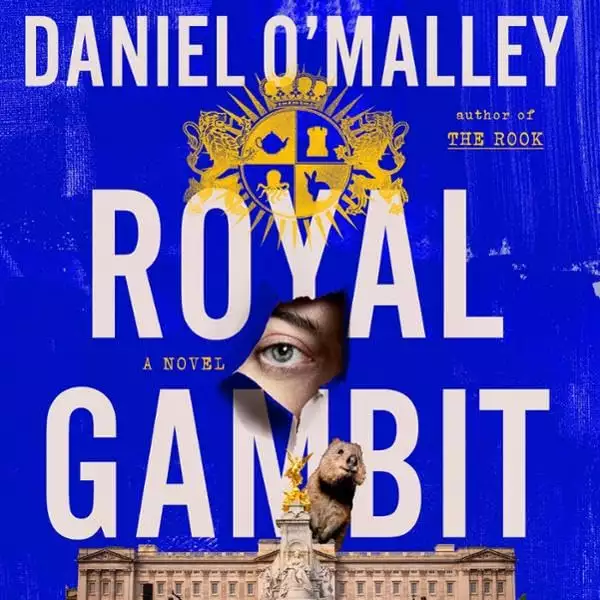
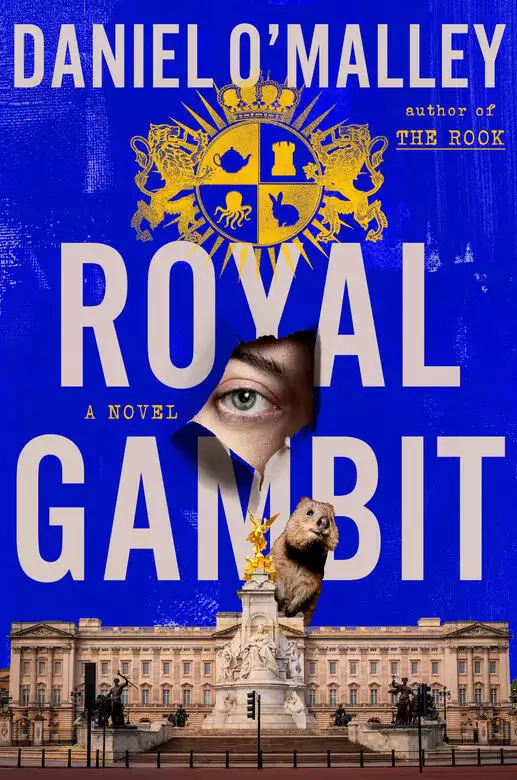
From the brilliant and hilarious author of The Rook, a delightful new supernatural adventure: When the heir to the British throne suddenly dies under mysterious circumstances, Checquy operative and reluctant aristocrat Alix is assigned to be lady-in-waiting/personal bodyguard to the new Crown Princess, and must navigate the halls of power and privilege while investigating the supernatural murder of the Prince of Wales.
Alexandra "Alix" Dennis-Palmer-Hudson-Gilmore-Garnsey, the twelfth Lady Mondegreen, has never had any control of her life. Her supernatural ability to shatter bones with a touch made her the automatic property of the Checquy, the secret British government agency that deals with the supernatural. Her aristocratic ancestry made Alix the perfect asset for the Checquy to deploy close to the royal family. Since childhood, Alix has been coached to befriend Princess Louise, second in line to the throne, but despite all machinations, the two have never been close. Now an adult and a full Pawn of the Checquy, Alix is a skilled investigator unravelling supernatural manifestations for the security of the nation.
Everything changes when Louise's brother, the Prince of Wales, dies abruptly, and all signs point to an unnatural assassination. To protect Louise, the new and unwilling heir apparent, Alix is assigned to be her lady-in-waiting. Thrust into the limelight overnight—both in the everyday world and in the underground world of the Checquy—Alix must juggle her responsibilities and her loyalties as she attempts to unravel the murder, keep Louise safe, and learn how to smile graciously while eerie threats loom around every corner.
Release date:
July 15, 2025
Publisher:
Little, Brown and Company
Print pages:
480
* BingeBooks earns revenue from qualifying purchases as an Amazon Associate as well as from other retail partners.
For the rest of her life, whenever Louise remembered that moment, she would feel a horrendous stab of shame through her heart. Shame because her first thought was not for the well-being of her brother Edmund lying sprawled on the floor but because, in a flash of selfish insight, she thought only of the implications for her, what it might mean for the rest of her life.
She was moving forward before that thought left her. For all that her horrible egocentric mind was screaming about the future, everything else was focused on her brother.
“Oh, Jesus, Ed! Please! Please!” She fell to her knees by him, afraid to touch him. He was on his back, an expression of pain frozen on his face. His blond hair, usually parted meticulously, was all awry. One of his eyes was slightly open, and the sight of the blank, unfocused pupil turned her stomach. She hesitantly took his arm. It was horribly heavy. She felt his hand and thought it was warm. But he was not breathing.
“Fa!” she screamed. It was instinct, not thought. Her father would know what to do. He always knew what to do. But for all the things her father was, he was not a doctor. He must have learned some first aid, surely, during his time in the army, she thought frantically. She tried to remember her own training from the Girl Guides. She had vague memories of a little her and Alix and Imogen giggling while they contemplated giving the kiss of life to a limbless mannequin.
I don’t think any of us ever did get that badge in the end.
But now she was looking down at her brother’s graying face and wondering if she should be breathing into his mouth or pounding on his chest.
“FA!”
And her father was there, but for the first time in her life, she saw fright on his face.
“Oh, my boy,” he said weakly. “Oh, no.” He knelt and took Edmund’s hand, feeling at his wrist.
“Fa,” she said, “should I—should I get them to call for—”
“Yes—no, wait!” he said sharply. “Where is Odette? Is she here?”
“Odette?” repeated Louise blankly. Odette Leliefeld was the girlfriend of her younger brother Nicholas. She was pleasant enough, from Belgium. “Yes, she’s here, I saw her earlier. She came to watch a film with Nicky.”
“Get her,” Fa said in his military commanding voice. “Now. Not a word to anyone else.”
“But why?”
“Go!”
Bewildered, Louise ran out of the room and down the hallway. She flung open the door to Nicholas’s bedroom, but it was empty, and she ran on. With every step, she was aware of time wasted. Time that might make all the difference. They should be calling for a doctor. Why was she chasing about after this girl? Edmund was… was… She flinched away from the thought.
Finally, she burst into the lounge, and the girl was there, seated on a sofa and paging through a book. She looked up in surprise.
“Louise?” she said, and Louise bit back a moment of irritation.
“Where’s Nicky?”
“In the garden,” Odette said. Her Belgian accent was noticeable, but she spoke English fluently. “He had to take a call, so we paused the movie.” Her eyes narrowed. “Something is wrong. What has happened?”
“It’s Edmund, something’s… I found him, and—” Louise wanted to weep. “Fa said to get you, but I don’t understand why.”
“Where is he?” said the girl. She stood, so smoothly that the motion was almost alien, and Louise took an uncertain step back. Odette’s usual calm mien had been replaced by something sharper, focused.
“The library,” Louise said. “He wanted to borrow a book.” As if that were an important detail.
The girl was already moving swiftly. She was past Louise and running down the hallway before Louise could get to the door. By the time Louise caught up, Odette was already on her knees by Edmund’s sprawled figure. She had peeled open his eyelids, and her face was close to his. Then she placed two fingers against his neck, feeling for a pulse.
“We’ve already done that,” said Louise impatiently. Odette ignored her, and a faint line appeared between her brows. For a single, crazy moment, it seemed to Louise as if the veins in the girl’s two fingers swelled up and then shrank. Her head was tilted, as if she was listening intently. She shook her head and took her fingers away, and Louise caught a glimpse of something glistening on her brother’s throat, like a spot of liquid.
“Odette?” said Louise’s father, and she held up a hand to quiet him. She leaned forward and, to Louise’s shock, kissed her brother full on the lips, and then on the brow. As she drew back, she licked her lips a little, and made a sound of frustration. Then she tore open Edmund’s shirt and carefully placed her hands on his chest.
All right, good, she’s doing CPR. Finally, it’s making a bit of sense. Except that Odette was not pushing on Edmund’s chest in any sort of rhythm. Instead, she pressed down firmly and held her hands there. The muscles in her wrists jerked, there was an odd squelching sound, and Odette drew her hands back quickly, clearly braced for something to happen.
But nothing did. Edmund just lay there.
“Fuck,” the Belgian girl said quietly. Louise noticed that her palms were red and swollen. Odette wiped her hands on her skirt and then slapped Edmund’s face hard. “Edmund! Edmund, wake up!”
Odette took a deep breath and placed her hands on Edmund’s chest again. Louise could see her straining, and then her shoulders slumped. She was breathing heavily, and when she looked up at Louise and her father, she was pale, and dark patches had appeared under her eyes. There was a look of immense sadness on her face.
“Anything?” her father asked in a small voice. Odette shook her head.
“I am so sorry, sir,” she said. “He’s gone.”
“Oh!” exclaimed her father in pain. “Oh, my boy!”
“What are you talking about?” demanded Louise. “We have to call a doctor! I don’t understand why we even brought you.” She broke off as her father closed his hand tightly on her shoulder. “Fa?”
“Nothing more could have been done,” he said. There was an inexplicable air of finality in the way he said it, as if Edmund had just been worked over for hours by a team of experts, instead of getting pawed and kissed and slapped by his brother’s unemployed girlfriend.
“What?” exclaimed Louise.
“Thank you for your efforts, Odette.”
“Sir.”
“What?” repeated Louise. “What do you mean?” It was as if they had all gone mad.
“Oh, my darling,” he said to her, and pulled her close. “I’m so sorry. I am so, so sorry.” The defeat in his voice was what broke Louise, and she began to weep against his chest. Only distantly did she hear him speaking.
“Odette, you’ll need to call someone. We’ll have to…” He broke off, and with her cheek against his chest, she felt it as he swallowed. “We’ll have to tell them that the Prince of Wales has died.”
Alexandra “Alix” Victoria Dennis-Palmer-Hudson-Gilmore-Garnsey, twelfth Lady Mondegreen, lay limply in her bedroom in the east wing of Wyndham Towers, sweating in the horrendous summer heat, and asked herself yet again why she’d come home.
And why has no one, in a dynasty that stretches back to the time of Good Queen Bess, ever bothered to have air conditioning installed here?
Her trip to the Towers really was an extremely poor idea. She had a perfectly nice, painfully expensive flat in London, one with air conditioning and her stuff and easy access to entertainment and, most importantly, a complete lack of family members. She had two weeks’ leave that she’d been told it would be wise for her to take, she had a goodly amount of money in the bank that would have enabled her to stay in comfort in any part of the UK or Ireland (she was not permitted to go anywhere else without written permission from the Home Secretary), and she had no boyfriend to object to her taking off.
So why had she felt compelled to come to the most isolated part of the Scottish-English border and be awkward and uncomfortable among her family while dying of heat exhaustion in a sweltering ancestral pile?
Admittedly, Wyndham Towers did come furnished with a pack of absolutely lovable dogs, four of whom had realized that Alix had one of the house’s few fans in her room. Accordingly, she was currently framed entirely by panting dogs.
On each side, she was boxed in by a Scottish deerhound, John on the left and Lulu on the right, while a border collie named Wompus had ensconced himself between her knees, his fur slowly welding itself to her skin. Finally, a dense little nugget of a Cairn terrier, Poppy, had inserted herself between Alix’s pillow and the wall, so it looked as if she were wearing an amiable brindle fur hat.
And the house was lovely. All pillars, porches, and parapets, it was the brainchild of the eighth Lord Mondegreen. He had engaged some genius of an architect in the late 1820s to produce a family seat worthy of a centuries-old family who’d just made an astounding amount of money through something cunning involving copper mines in some other part of the world.
The previous version of Wyndham Towers, which had accreted over the centuries, had reflected a mishmash of period styles, with an emphasis on being able to retreat into it and hold off the most immediate threat, ranging from border reivers to salesmen. It had served its purpose, insofar as the Mondegreen line had survived, but it wasn’t what you might call gracious.
The new house, however, was one of the nation’s foremost examples of “Jacobethan” architecture. It would have received far more attention if it hadn’t been so remote that even the most dedicated of architectural historians couldn’t bring themselves to visit. The nearest town was an hour and a half away and always gave the impression of being in the last stages of some terminal disease.
Of course, it was entirely fitting that Alix be there. As the Right Honourable the Lady of Mondegreen, she was a Laird o Pairlament in the Scottish peerage. Wyndham Towers was her ancestral manse, and it was proper that she spend at least part of the year there. Especially, she reflected grimly, since the family had only been able to avoid selling the place off by selling her off.
“Alix!” She opened her eyes and found her mother standing in the doorway. Charlotte, the dowager Lady Mondegreen, was tall, slim, beautiful, and convinced that the world existed entirely for her convenience. “I’ve been calling you! Telephone!”
“Who is it?”
“It came in to the library phone.”
Oh, thank God. Some sort of supernatural emergency that will take me away from here. She felt a little guilty about her relief at the prospect of escape from the bosom of her family, but not terribly so. She hauled herself off the bed, peeling her legs away from Wompus, who opened his eyes, regarded her balefully, and then rolled over onto his back, letting the breeze from the fan play across his belly. John and Lulu sighed heavily and spread out a little more so that they resembled piles of extremely regal laundry.
Because of the house’s remoteness and the surrounding hills, the mobile phone reception was shit. There were two landlines: one that anyone could (and did) pick up an extension for and eavesdrop, and one in the library that the government had installed at substantial expense and from which the entire household was forbidden to make outgoing calls. Alix had a sneaking suspicion that her younger sisters, desperate for privacy, violated that prohibition fairly regularly, which meant that every personal conversation with a boyfriend or bitchy gossip-fest with a schoolmate that Cecily, Lillian, or Frances had conducted on that line had been recorded and analyzed by government agents, with transcripts that would reside in secret archives until the end of time.
Alix closed the library doors. The telephone was waiting, off the cradle.
“Hello?” she said when she picked it up.
“Identify.”
“Pawn Alexandra Mondegreen. ID code 45 Fatalistic Aureate 85 Zulu.” There was a pause as the listening computers analyzed her fricatives, labials, coronals, dorsals, pharyngeals, laryngeals, and accent and decided that it was indeed her.
“Hold for Lady Farrier.”
Oh, hell. If it was the Lady calling, rather than the Rookery, then it was a political rather than operational matter.
“Alexandra?”
“My lady.”
“You’re needed in London.” There was no expression of regret for disturbing her compulsory vacation leave. Any such expression would have been patently insincere anyway. Alix was there to be summoned.
“I’ll leave right away,” said Alix. She looked at the clock. If I call British Rail now and ask them to stop at the halt, I’ll be able to catch the train in half an hour. The estate had its own little platform on the rail line that the trains would stop at if given sufficient notice. “I’ll call once the train is approaching London, if the office could send a car to Euston.”
“No, we need you immediately,” the Lady said. “A helicopter will be there in… twenty minutes.”
“A helicopter?” repeated Alix. “Coming here? All right, ask them to land on the south lawn. Will there be room for luggage?”
“It’ll be just you, so yes, but there won’t be time to change once you arrive. You’ll come straight to the palace.” Alix winced. It was that kind of emergency.
“A formal event?” Experience had taught her that trying to put on makeup and do her hair in a helicopter inevitably led to a look best described as “electrocuted clown.”
“No,” Lady Farrier said. “But dress… soberly.”
What does that mean?
“I’ll be ready, my lady.” When she opened the door, her mother was standing right there, and she flinched back. “Mummy!”
“Hello, darling,” her mother said brightly. “Was that the office?”
“On the official office phone?” asked Alix. “Yes, it was.”
“Going back to London?”
She hesitated. “Yes. Sort of official emergency.”
“Of course.” Her mother smiled. “Did I hear they’re sending a helicopter?”
“Mummy, you really shouldn’t be listening in on these calls.”
“Do you think there might be a spare seat?”
Cecily, Lillian, and Frances greeted the news of their sister and mother’s departure with no expression at all. It was apparently no more than they expected. They didn’t even come to the windows to watch the helicopter land or see their sister rush across the lawn in a dark gray suit while their mother teetered behind her in heels and a bright summer dress, her bag in one hand while the other held her hat on against the downwash. To Alix’s mortification, the pilot did not seem surprised by the addition of her mother to the passenger manifest. Indeed, he seemed almost to have been anticipating it.
Apparently, word about the dowager Lady Mondegreen has gotten around the office. The Checquy had confronted the greatest supernatural horrors of history head-on, without giving an inch, but when it came to her mother, it was just easier to pre-capitulate.
The journey was tedious. There was no briefing packet to read, and so she had to sit and watch her mother blithely reading glossy magazines she’d brought with her and drinking her favorite melon-flavored bottled water, which, to Alix’s horror, had been waiting for her in the helicopter. Alix then cringed when they arrived at the heliport at Battersea to find two cars waiting for them.
“Oh, isn’t that nice,” said her mother. “They could have just dropped me off at the flat on the way.” The possibility that this detour might have been out of the way did not occur to her. “Well, bye, darling.” She gave an air-kiss out of the side of her mouth without bothering to turn her gaze away from the car.
“I’m over here, Mum.”
“Hmm?”
“Never mind,” sighed Alix, as her mother got into the car and was whisked away without a backward glance. “I suppose we’d better go,” she said to the driver of the other car.
“The Lady is waiting, Lady Mondegreen,” he agreed.
“Lady,” not “Pawn.” Alix felt the familiar stab of embarrassment, anger, and sadness but didn’t try to correct him. She would have just gotten the usual blank stare.
“You know I’ll have to sit in the back, right?” she said.
“Of course.”
“It’s just for the look of the thing.”
“It’s fine, my lady.”
There was no briefing packet in the car. Alix turned on her phone, but there were no coded texts from the Rookery masquerading as messages from friends. She resorted to checking the mainstream media, but the big news was all happening elsewhere in the world.
Not even a hint of something that might be a cover-up. So perhaps this isn’t a heightened alert situation where they want subtle protection for the royal family. Is something going on at the palace?
She had the royal diary and the court circular bookmarked on her phone, and neither mentioned any specific engagements that evening. In fact, the royal diary revealed that there was nothing scheduled that day except the Princess of Wales opening a women’s shelter in York.
“Do you have any idea why I’ve been called in?” she asked the driver. “Has there been some major manifestation?”
“No, it’s been quiet all ’round the country, far as I know.”
Then what the hell is going on?
Feeling increasingly uneasy, Alix decided to keep busy. She drafted a breezy social media update announcing to her civilian friends that she had returned to London and sent it off to an email address belonging to the Tactical Deception Communications section, known in-house as the Liars. Her draft would be reviewed by no fewer than five people, including at least one former journalist, one political scientist, one social media expert, the duty chief for the media watch room, and one manager. They had been known to call in additional experts as necessary.
It prevented any form of spontaneity, but since she was one of the few Checquy operatives who was permitted to use social media—in fact, was obliged to use social media—she had to do it. Sometimes they merely altered a word or two or added a strategic emoji. Sometimes, however, they changed large portions of her posts. On one occasion, to her irritation, the best photograph she’d ever taken—a magnificent shot of an electrical storm above the hills around Wyndham Towers—was replaced by an enthusiastic update about the pastries in a café that she’d never visited. Presumably, the change had been made for purposes of national security.
In any case, she would eventually receive the approved text and then have to post it herself, just to mesh with GPS expectations.
There were no members of the press at the gates of Buckingham Palace. The building reared above her, a cliff of windows and white stone, and despite herself, she felt a shiver of awe. She’d been there a thousand times. She’d spent hours wandering its hallways and even more studying its blueprints. She knew all 775 rooms, including the staff bedrooms, the principal bedrooms, the staterooms, the cinema, the post office, the jeweler’s workshop, and the doctor’s surgery. She knew the forty acres of grounds. And yet it was still impossible to take it for granted.
As the car turned in to a courtyard, a man was waiting to open her door. She recognized him as Pawn Anthony Whomsley, a fellow operative of the Checquy who was currently attached to the King’s protection detail. He ushered her into the palace but stopped her when she went for the usual stairs.
“This way.” He led her down corridors that became less and less grand and more and more utilitarian. She could remember running through them as a child, giggling madly with Louise. Locked doors opened at a swipe of Whomsley’s pass as they moved out of the service areas, through the public and reception spaces, and up deserted staircases to a higher floor.
Just before they came to the royal family’s private quarters, he opened a door that she recalled led to a conference room. Inside, seated at the table were the only two other people in the Checquy to have their own Wikipedia pages.
The first, Linda, the Right Honourable the Viscountess of Farrier, had the smallest page, and it really only existed because there were apparently people out there who felt compelled to catalog every member of the British aristocracy. It recorded her parentage (daughter of an earl), her spouse (the Right Honourable the Viscount of Farrier, obviously), and her two children. It noted that she had been a lady-in-waiting two queens ago; that her entry in Who’s Who listed her charity work, including her position as chairwoman of the Foundation for Juhász-Koodiaroff-Grassigli Syndrome; and that her pastimes included quilting, dogs, and archery.
Unsurprisingly, it did not mention her ability to enter and manipulate other people’s dreams, or that she was co-leader of the Checquy Group, a covert agency within the British government that dealt with, and was partially staffed by, the supernatural. Nor did it mention any of the accomplishments that had made her legendary within the Checquy: how she had tracked down an oneiric parasite that had been stalking through the sleeping psyches of the British populace for months. Over the course of seventeen weeks, it had driven thirty-eight people to commit suicide by self-immolation and left fifteen people in a state of permanent insanity. Then-Pawn Farrier had finally cornered the entity in the erotic dream of some fourteen-year-old boy in a suburb of Canterbury and, while dream women with improbable breasts looked on in bewilderment, she had torn the parasite apart with such force that everyone in the house developed epilepsy.
Nor did Wikipedia mention how, as Lady of the Checquy, she had accomplished the unprecedented and stupendous feat of gaining a budgetary supplement for the Checquy Group from the Exchequer in a recession year—not once, but twice! In consecutive years!
Alix had known Lady Farrier since she was six, and the two had been collaborating on responsibilities surrounding the royal family since Alix was ten. Yet she still regarded the older woman with a feeling of nervous reverence. Although they were both ladies, Linda Farrier was the Lady.
The Checquy had existed for centuries, and one of the quaint cultural elements that it had retained into the modern day was the nomenclature for its people. If you had supernatural capabilities, you received a chess-based title. The vast bulk of such operatives were pawns. A pawn could be a manager, a clerk, a soldier, a scholar, a maintenance worker.
Above them was the Court—the executives—consisting of rooks, chevaliers, and bishops. And at the very top, in charge of the entire organization, were the Lord and Lady (the chess theme having been strategically ignored at this point because referring to oneself as a “king” or a “queen” in the British Isles sent a very specific message).
It was archaic, and faintly ridiculous, but the terminology served as a reminder. You were special, yes. You were elite. But you were also a piece in a vast, important game, and you could be sacrificed at any time. People regarded the position with a grim pride. And this was the reason that Alix winced whenever one of her fellows addressed her as “Lady.” It said that as far as they were concerned, she was not a real pawn and enjoyed unfair privileges.
The Wikipedia entry for the second woman, Odette Leliefeld, was much longer than Lady Farrier’s because she was currently dating the dishy third in line to the throne, Prince Nicholas, and so was the subject of much public attention. The entry had some things right: it identified her as being twenty-one years old, born to parents who were academics in Belgium. There was palpable agony on the part of the page’s editors over the fact that the circumstances in which Odette and Nicholas met was not publicly known.
In fact, the circumstances were highly classified. They hadn’t sat next to each other at an officer’s ball or some party, or been introduced by mutual friends. Instead, they had gotten to talking during a secret ceremony at Balmoral in which Odette’s centuries-old ancestor had sworn his allegiance and that of his brotherhood of flesh-crafting alchemists—the Grafters—to the United Kingdom and the Republic of Ireland.
It had been an occasion of profound significance, and not just because two attractive young people had started chatting and arranged to go out on a date. The Checquy and the Grafters had loathed each other for centuries. For the two groups to bury the hatchet anywhere other than in each other’s faces was momentous.
Alix had been present at the ceremony, about two horrified meters away from Nicholas and Odette’s initial flirting, and she had been hard-pressed not to intervene with some extremely strong objections. She had known Nicholas pretty much his whole life and felt a sort of big sisterly protectiveness. Meanwhile, Odette was not only herself a Grafter with impossible surgical abilities, but her files indicated that she had a fair amount of biological weaponry tucked away inside her. Alix, like all members of the Checquy, had been brought up to despise the memory of the Grafters. It was bad enough knowing they’d be comrades without having one of them date her honorary little brother.
Now, in the conference room, the Grafter did not look like number four on the list of the World’s Most Glamorous Women as voted by the millions of dedicated readers of www.elitegossip.goss.co.uk. Her clothes were rumpled, her eyes were bloodshot, and there were some odd blue streaks across her forehead, as if she’d wiped her brow with inky hands.
“Thank you, Whomsley,” said Lady Farrier. “Resume your position outside the apartments.” He bowed his head slightly and withdrew.
“My lady,” Alix greeted Lady Farrier. “Pawn Leliefeld.”
“Alexandra,” said Farrier. “I’m afraid that there has been a great tragedy.” Alix shot a look at the distraught Leliefeld.
“Has something happened to Nicky?”
“No,” said the Grafter. “His brother.”
“Edmund?” gasped Alix.
“Yes,” said Lady Farrier. “The Prince of Wales has died.”
“No!” exclaimed Alix. “Oh, God, what happened?” Her hands fluttered to her hair, and then she found that she was holding them hard to her chest, clutching at her blouse.
“We don’t know, precisely,” Farrier said. Her gaze was steely and her voice calm, but there was a sheen of tears across her eyes.
“Princess Louise found her brother on the floor of the library,” Odette said. “I was here, visiting Nicholas, and the King summoned me to administer first aid.” Alix nodded. The Grafters were the premier medical experts in the world, and the King knew that. “I did everything I could, but the prince did not respond. At all.”
“So he was dead by the time you got there?” Alix said.
“Even if he was dead, the treatments I administered should have elicited some reaction. But there was nothing. It just seemed so wrong. I advised the King of the possibility that it might be Checquy-relevant, and then called Lady Farrier.”
“I came immediately,” Lady Farrier said. “Odette explained her concerns, and I authorized her to conduct an immediate autopsy.”
“What?” said Alix. “Where?”
“In the library, where he was found,” the Lady said.
“Are you serious?”
“We couldn’t move him,” said Odette. “The staff might have seen. And we couldn’t bring in anyone else.”
“You cut Prince Edmund up in the library? Aren’t autopsies incredibly messy? Liquids coming out of people, and smells.”
“I had a specially bred surgical sheet in my handbag. It absorbs any spilled blood and other body fluids,” Odette said.
“Yes, but don’t you need tools? Tell me you didn’t do it with cutlery from the dining room.”
“I always have tools,” said Odette. “And it was just a basic examination. I didn’t leave any marks for a surgeon to see.”
“We needed to know if an autopsy by a normal doctor would reveal anything supernatural,” Farrier said.
“So what did you find?”
“There were no obvious wounds to his body, so I began by examining his brain.” Alix choked a little at this, but Odette proceeded undaunted. “I removed his skullcap and identified an immediate anomaly. There was a small gray pyramid emerging a few inches from the top of his brain. Three-sided, perfectly smooth.”
“What the hell does that mean?”
“I don’t know! I’ve never seen anything like it!” snapped Odette. She took a breath. “I decided not to proceed any further. I left the thing untouched, replaced the top of the skull, and welded it back together. I moved the face and scalp back into position and sealed everything in place.”
“Bloody hell.”
“A routine autopsy will not identify a trace of my examination,” Odette said. “But any doctor will identify the anomaly that I found.”
“A thorough examination will be needed,” said Lady Farrier, “in a secure facility where more precautions can be taken. But the object in the prince’s brain was undeniably unnatural, which places this within the jurisdiction of the Checquy.”
“Who knows about this?” asked Alix.
“The only people to know about the prince’s death are we three, Sir Henry, Pawn Clements, the King, Prince Nicholas, and Princess Louise.” Alix nodded, dazed. Sir Henry Wattleman was the other leader of the Checquy. Who was Pawn Clements? The sorrow at Edmund’s loss, her sy
We hope you are enjoying the book so far. To continue reading...

 Please log in to recommend or discuss...