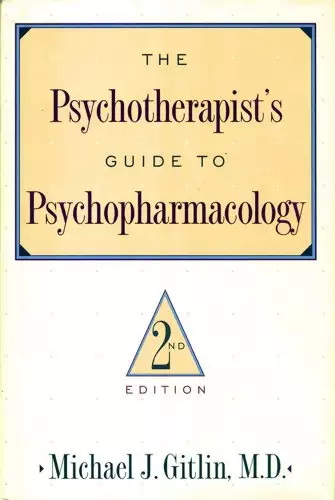
The last twenty-five years have witnessed an explosion of knowledge about the influence of brain biochemistry on mood and behavior and about pharmacological approaches to treating mental and emotional disorders. A substantial portion of patients seen in clinical practice are taking some medication or might usefully be advised to do so. But many clinical psychologists, social workers, and counselors need additional information in order to better treat patients already on medication, know when and to whom to refer new patients for psychiatric consultation, and work collaboratively with psychiatrists when appropriate. Michael J. Gitlin's indispensable first edition of The Psychotherapists Guide to Psychopharmacology has now been updated and revised -- this new second edition now reflects major changes that have influenced the clinical arena in the last five years such as the recent release of DSM-IV and the domination of the psychopharmacological field by the selective serotonin reuptake inhibitors, such as fluoxetine (Prozac). The Psychotherapists Guide to Psychopharmacology, Second Edition also now includes coverage of attention deficit/hyperactivity disorder and contains updated sections on the new antipsychotics for schizophrenia and the increased use of anticonvulsant mood stabilizers for bipolar disorder. The book also includes other significant changes that have influenced the field over the last few years, such as brain imaging studies, research in obsessive compulsive disorder and social phobia, and such prominent topics in women's health as pregnancy, PMS, postpartum disorders, and breast feeding. This revision of an already established guide will again be an essential reference for all nonmedical professionals involved in treating mental and emotional disorders.
Release date:
June 30, 2008
Publisher:
Free Press
Print pages:
432
* BingeBooks earns revenue from qualifying purchases as an Amazon Associate as well as from other retail partners.
In the last thirty years, we in the mental health field have witnessed a veritable explosion of new information that has shifted the emphasis from the more psychoanalytically based models and treatments that dominated psychiatry and psychology for the preceding thirty years to descriptive and biological ones. The new approach is based on a number of assumptions, three of which are relevant to this book. The first is that psychiatric disorders can be reliably classified according to diagnostic methods used in medicine before the introduction of laboratory tests. The second is that pharmacological treatments -- medications -- are effective in treating a variety of psychiatric disorders. The third is that the efficacy of psychiatric therapies can be evaluated by empirical studies. Not surprisingly, the bulk of these treatment studies have involved medications. In this chapter, these three assumptions -- that psychopathology can be usefully described by symptom-based terms, that medications effectively treat psychiatric disorders, and that scientific methods can be applied to evaluate treatments -- will be discussed. The goals of medication treatment, some general principles of psychopharmacological treatment, and criteria for the selection of appropriate patients for psychopharmacological evaluation will then be presented.
DESCRIPTIVE PSYCHIATRY AND DSM-IV
Although the introduction of a descriptive, diagnosis-based approach to psychopathology was a radical shift from the etiologically based language of psychoanalysis, it was far from new. During the late nineteenth and early twentieth centuries, descriptive approaches dominated European psychiatry and resulted in the first diagnostic distinction between manic-depressive illness and schizophrenia (then called dementia praecox) on the basis of their differing clinical pictures. However, the descriptive approach fell into disfavor in this country for many decades, resurfacing only with the emergence of the Diagnostic and Statistical Manual of Mental Disorders, Third Edition (DSM-III) in 1980, the revised edition (DSM-III-R) in 1987, and DSM-IV in 1994. The goal of DSM-IV, as for any other diagnostic classification scheme is "to provide a helpful guide to clinical practice,...to improve communication among clinicians and researchers...,for improving the collection of clinical information and as an educational tool for teaching psychopathology" (DSM-IV, p. xv). By defining disorders consistently, both clinicians and researchers may better agree on what is meant by terms such as depression, thereby allowing better prediction of important clinical variables such as prognosis and treatment response.
Because the first half of this book is organized according to the DSM's classifications, it is worth reviewing their essential components.
The most important question in the descriptive approach used by DSM-IV is "what," in contrast to the centrality of "why" in psychoanalysis. It attempts (with only varying degrees of success) to be atheoretical with regard to etiology. Thus, when a 37-year-old man goes through a period of depressed mood with alterations in sleep, appetite, energy, and concentrating ability, the reason why is irrelevant for making the diagnosis of depression. Whether this patient's depression is best understood by his poor introject of a maternal object, depressogenic assumptions (using a cognitive framework), or by an alteration in the regulation of norepinephrine or serotonin in certain parts of the brain does not alter the diagnosis.
Among the objections to the descriptive approach is that patients are pigeonholed into diagnostic boxes and not understood for the unique constellation of intrapsychic, historical, and environmental variables that set each one apart from others. This objection is valid if clinicians view the patient's identity as synonymous with his diagnosis. Is the patient viewed as a person with manic-depressive disorder or is he a manic-depressive? The difference is far from semantic. Although the descriptive approach can be misused to objectify and distance patients, that is neither its purpose nor its proper use. DSM-IV classifies disorders, not individuals.
The second essential feature of the DSMs is their mulfiaxial approach. Patients are rated along five axes simultaneously, each of which utilizes different types of information. Psychiatric disorders are listed on Axes I and II while Axes III, IV, and V describe associated medical conditions, psychosocial and environmental stressors, and level of functioning. Axis I disorders comprise all clinical syndromes except for personality disorders and developmental disorders arising in childhood, which are listed on Axis II. Thus, Axis II disorders are, in general, more stable and long lasting. When a clinician describes a patient as having an Axis I disorder, he is referring to the presence of a symptombased disorder, such as depression, phobias, or schizophrenia. Describing an adult patient as having an Axis II disorder is equivalent to saying he has a personality disorder. Among the goals of separating Axis I from Axis II is to encourage clinicians to conceptualize coexistent disorders. Instead of deciding whether the patient suffers from major depression or narcissistic personality disorder, the clinician can diagnose both disorders. This approach makes evaluation more difficult, but also more accurate. In this way, either/or formulations can be replaced by richer, more complex models.
It is in the evaluation and diagnosis of personality disorders that the descriptive approach of DSM-IV is most problematic. Inherently, personality features are difficult to describe using the language of symptoms and signs. As an example, criteria used to diagnose personality disorders such as lack of empathy or persistent identity disturbance simply do not fit well into a classification system that is defined as atheoretical and descriptive. Compounding the problem of classifying personality disorders in the DSMs is the use of a categorical system in which patients either meet criteria for a diagnosis (a category) or they don't. Another type of diagnostic system describes patients along a number of dimensions without specific cutoffs demarcating normal from abnormal (or having a disorder vs. not having it). It is especially in the diagnosis and description of personality disorders that a dimensional system has the strongest and most persuasive proponents -- and that the categorical system has the most difficulties (see chapter 7 for more details about dimensional approaches to personality).
It is rather easy to criticize, with merit, the entire DSM system. Three different manuals -- DSM-III, III-R, and IV -- have been published over the short span of fourteen years, an insufficient time to gather enough new data to warrant many of the diagnostic definitions and changes in the new editions (Zimmerman, 1990). Disorders are defined and undefined in successive DSM editions without obvious justification. As an example, a manic episode precipitated by an antidepressant was diagnosed as bipolar disorder in DSM-III-R. In DSM-IV, that same episode would be called substance-induced mood disorder and specifically prohibited from contributing to a diagnosis of bipolar disorder, despite a lack of published data supporting or refuting either definition in the last six years. Furthermore, it continues to be difficult to use DSM-IV to describe patients with milder disorders, such as those with low self-esteem or heightened rejection sensitivity without significant depressive symptoms.
Additionally, the DSMs have done a better job at defining disorders reliably (can three clinicians agree that a certain patient has these specific symptoms and therefore meets specified criteria for a diagnosis?) than in demonstrating validity (do these diagnostic criteria have practical value with regard to prognosis, family history, treatment responsiveness, and so on?). Since for clinicians reliability is far less important than validity, the utility of the diagnostic system is not always apparent.
Despite these valid criticisms, the DSMs have accomplished a great deal and fill a vital need for mental health professionals. They have forced us to become more precise in our terminology, fostering both clearer thinking and clearer communication between ourselves and with those governing the finances of health care. Each succeeding DSM edition has been increasingly based on data and changes have often been made in response to feedback from the clinical community. If mental health professionals are to be taken seriously in our chaotic, rapidly changing system of health care (whatever its ultimate form), it is mandatory that we have clear definitions of disorders -- even if those definitions change somewhat over time -- and that we be able to perform the large-scale studies demonstrating both the prevalence and morbidity of these disorders. The DSMs foster these goals in ways that other systems might not.
Another major stumbling block for the acceptance of the descriptive approach as used in DSM-IV has been an understandable concern that this new model would replace and discount all other ways of understanding psychopathology. Descriptive models, however, should never preclude other ways of understanding psychological phenomena. For any clinical disorder, for any individual patient, different models will each have advantages and disadvantages in explaining the psychopathology. The clinical phenomenon of acute mania may be best viewed using the descriptive model, while adjustment disorders or narcissistic personalities will be better understood by an interpersonal or psychoanalytic perspective. A patient with a mild to moderate depression triggered by a loss, however, might be best understood using both descriptive and psychological concepts, with each model clarifying only a piece of the puzzle. It would be redundant and disruptive to point out continually in this text that other ways of understanding patients are helpful and, at times, mandatory. The use of multiple conceptual models should be considered a basic prerequisite for the full understanding of patients.
PHARMACOTHERAPY AND ITS IMPLICATIONS FOR OTHER THERAPIES
The second assumption of the medical model in psychiatry, that some psychiatric disorders are effectively treated by medications, has been established through the astonishing amount of research over the last forty years devoted to the discovery, development, and documentation of psychopharmacologically active drugs. Initially used for severe depressions and psychotic disorders, medications have now been demonstrated to be useful for at least some patients with a wide variety of disorders. The simple existence of two editions of this book is testimony to the extent to which medications have been established as a treatment modality for psychiatric disorders. Despite the dramatic effect of medications in reducing or preventing psychopathology, however, their limitations have tempered some of the early, unrealistic hopes of the more biologically oriented clinicians. In a variety of disorders, medications are profoundly effective, yet still leave untouched some core aspects of the disorder which must be treated with other modalities. These limitations are most obvious in schizophrenia (see chapter 5), but are apparent also in panic disorder, bipolar disorder, and others.
Since 1987, with the release of fluoxetine (Prozac) as the first of the powerfully serotonergic antidepressants with fewer side effects than the older antidepressants, an increasing number of individuals with relatively mild psychiatric disorders and difficulties have taken one of these new medications. As an example, through early 1995, approximately 16 million patients had taken fiuoxetine alone (Dista, 1995). The rapid proliferation of these medications in psychiatric treatment has led many therapists and interested laypeople to be concerned that prescribed drugs would soon become the quick fix for all problems, that a patient suffering distress would be given a medication to feel better at the risk of ignoring psychological and psychosocial factors. ("I just want to be more assertive with my girlfriend" or "I want to be bolder and more creative.") The explosion of media interest in these new medications has only exacerbated the problem, as exemplified by one Newsweek cover that pictured a Prozac capsule (labeled by its trade name and not its generic name) and by the controversy surrounding Peter Kramer's book Listening to Prozac (1993). (See chapters 3 and 7 for more detailed discussions of the serotonergic antidepressants for mild depressions and personality disorders.)
It is likely that some individuals have been prescribed one of the serotonergic antidepressants with little clinical justification. However, a great number of people with mild psychiatric disorders, many of whom have worked hard in psychotherapy but are still symptomatic, have greatly benefited from one of these newer medications. Moreover, in the treatment of the more serious psychiatric disorders, extraordinary numbers of patients continue to go untreated. In the most recent epidemiological study, only 42 percent of those with a psychiatric disorder had ever sought treatment for that disorder (Kessler et al., 1994). Of those with an active psychiatric disorder within the last year, less than 30 percent had received any type of treatment (Regier et al., 1993; Kessler et al., 1994). There is even evidence that only one quarter of chronically anxious patients use tranquilizers (Uhlenhuth, Balter, Mellinger, Cisin, and Clinthorne, 1983). Finally, of those patients with a severe mental illness as defined by psychosis or marked functional impairment, almost 40 percent sought no treatment within a one-year period (National Advisory Mental Health Council, 1993). Together, these studies suggest that, even now, we continue to be more of an undertreated than an overtreated society.
Another concern of psychotherapists about the advent of medications was their implication for the etiology of psychiatric disorders. There is a natural assumption that if medications are helpful, they must be correcting some biochemical abnormality which would then be viewed as the sole cause of the disorder. With the simplistic information promulgated in the press, patients come to their primary care physicians claiming that they know they have a serotonin deficiency and that they want a medication to fix this problem! Despite a remarkable amount of research over the last twenty-five years, however, there is still no definitive biological explanation for any psychiatric disorder (see chapter 2). Furthermore, even if a biological cause might be found for one or a number of disorders, it would not, by itself, imply the proper or effective methods of treatment. For example, coronary artery disease culminating in heart attacks has genetic and biological causes. Yet its course and outcome can be altered by life-style changes, such as diet, smoking, exercise, and the like. Similarly, even if depression or rejection sensitivity were shown to be caused by a specific neurotransmitter abnormality, this would have no necessary implication for the efficacy of psychotherapy in treating it.
In summary, just as descriptive models of psychopathology, as exemplified by DSM-IV, must be supplemented by other models to best understand our patients' problems, pharmacotherapy never precludes other methods of treatment. For some disorders, such as mild to moderate depression or obsessive compulsive disorder, there may be a variety of different, valid therapeutic approaches. As discussed in more detail in chapter 14, even with those disorders for which medications are the most effective treatments available, such as bipolar disorder, psychotherapy is likely to enhance the treatment and help patients in ways not measured in research studies. Moreover, since there is no evidence that, when utilized together, medication and psychotherapy interfere with the efficacy of each other, combination treatment should always be considered. Because this book focuses on pharmacological therapies, it will often not discuss the use of other valid treatments. Nonetheless, it should be assumed that other approaches do exist and may at times be preferable to medications for specific patients with certain disorders.
EVALUATING TREATMENTS: THE MEANING OF THE WORD EFFECTIVE
The application of scientific methods of evaluating treatment is the third important assumption inherent in the medical model approach to psychiatric disorders. An in-depth discussion of statistics is hardly necessary or relevant for this book. What is important, however, is a clarification of the use of the word "effective," since throughout the book statements will be made referring to a medication's effectiveness in treating a psychiatric disorder. At first glance, the meaning of the word "effective" seems clear -- that the medication is useful in diminishing the manifestations of the disorder being treated. However, a number of questions about the use of this word must be addressed.
First and most important, how does this treatment compare to others? As already noted, the effectiveness of a medication does not bear on that of another type of treatment. For instance, the efficacy of certain antidepressants in diminishing the symptoms of obsessive compulsive disorder (see chapter 4) does not, in any way, negate the well-documented efficacy of behavior therapy for the same disorder. Similarly, the effectiveness of a medication does not bear on the potential value of other treatments administered simultaneously. In the treatment of schizophrenia, for instance, antipsychotics, although vital, are rarely sufficient for maximal response. A combination of medication with psychotherapy is likely to be the best treatment.
Another important question is that of assessment: how is effectiveness evaluated? During the twentieth century, and increasingly over the last thirty years, the hallmark of efficacy is that the medication has been shown to be effective in research studies using a double-blind, placebo-controlled design. In these studies, patients are randomly assigned to receive either the medication or an identical looking placebo. Patients and investigators are unaware of (i.e., blind to) the identity of the treatment actually received. In this way, the enthusiasm of the investigator as well as that of the patient ("I'm receiving a new pill that will make me all better") is similar for both the real medication and the placebo. If a drug is consistently associated with more improvement than a placebo in these studies, it is considered an effective treatment. For new drugs to be released in the United States, efficacy in double-blind studies (along with numerous other requirements) must be demonstrated.
A third important question is that of relativity: what is meant when one active treatment is described as more effective than another? As a generalization, this means that a larger percentage of patients responded (or improved to a greater degree) to one treatment compared to another. The magnitude of this difference may be relatively small (e.g., 60 percent vs. 50 percent) or large (70 percent vs. 30 percent). In both examples, however, some patients responded to the less effective treatment. (The inclusion of a placebo group would help evaluate whether the less effective treatment was superior to a placebo.) In a number of clinical situations, it is entirely appropriate to use the less effective treatment. If the more effective of two treatments has significantly more side effects, the less effective medication might be preferable. Furthermore, statements of comparative efficacy do not predict the response of an individual patient to either treatment since studies refer to groups, not individuals. Thus, a number of individual patients may respond better to the less effective treatment. The comparison statement simply states that a greater number of patients will respond to one medication than another.
Furthermore, even if a methodologically careful study demonstrates the effectiveness of a medication (compared to a placebo or to another drug), it should never be accepted as conclusive or proven. The recent history of medicine in general, and psychiatry specifically, is filled with carefully executed initial studies, the results of which are never replicated. There are a variety of explanations for this phenomenon, including subtle biases in the study design or selection of unusual patients (for instance, depressed patients seen at a university medical school may not be representative of the types of patients seen in the community and might respond to treatment differently). Despite the occasional story in the press, fraud is rarely responsible for contradictory findings in research. In general, any finding that is valid will be demonstrated in a number of different studies. Unfortunately, in their zeal for "hot" news, television and newspapers quote single studies as if they discovered the revealed truth. Patients who read these reports often look for this new magic. Therapists as well as psychopharmacologists need to help keep our patients from being swayed by these distortions.
A more recent consideration in clinical psychopharmacology distinguishes between efficacy and effectiveness, two terms that are typically used synonymously. For this distinction, efficacy refers to the percent of patients responding to a medication in a controlled study. Although controlled studies are vital for comparing treatments and for describing the percent of patients who respond under optimal conditions, patients in these studies tend to be highly motivated and physically healthy and typically do not suffer from any of a host of other concomitant psychiatric disorders common in the community. Thus, efficacy in controlled studies bears an uncertain relationship to the usefulness of a medication for the majority of more complicated patients seen in everyday clinical practice. The more clinically relevant variable is effectiveness, which takes into account ease of administration, side effects, and rates of noncompliance, and examines the utility of a medication for real patients who frequently suffer from multiple disorders, both psychiatric and medical. Using these definitions, it is effectiveness, not efficacy, that ultimately dictates which medications are prescribed in the community. As recently acknowledged (Klein, 1993b), almost no research studies have explored the types of practical questions confronted in everyday practice. Thus, from research studies we know very little on topics such as how quickly to raise the dose of a medication, what dose schedule should be used (once daily vs. twice daily), how to treat side effects, how long to keep patients on medications once they are better, and the optimal time to discontinue medications. By necessity, there is much accumulated experience and wisdom in these matters, but surprisingly little data. Therefore, much of what will be presented in the rest of the book will rely heavily on this wisdom, with the results of studies quoted when available.
Finally, the relationship between starting an individual patient on a medication (or any new treatment) and the resulting clinical response is not always as clear as it may seem. A patient's improvement may be due to one of three variables. First, the medication itself may have a pharmacological effect. Second, a placebo response may occur, defined here as improvement from any and all aspects of treatment that have no specific value for the condition being treated. Thus, a patient who is given a medication may improve because of increased hope, the magic of taking a pill administered by a societally sanctioned healer, or positive transference to a parental figure. This would be described as a placebo response insofar as the clinical change was unrelated to the pharmacological effects of the specific medication. A third variable is spontaneous remission. A variety of psychiatric disorders for which medications are prescribed are self-limited by nature, with or without treatment. As an example, major depressive disorder lasts an average of six to eight months. Thus, if a medication is started during the eighth month, it might be difficult to know whether the improvement seen was due to the treatment or the lifting of the depression that would have occurred anyway at that time.
GOALS OF PHARMACOTHERAPY
Pharmacological treatments can be considered to have more than one goal. Specifically, medications may be prescribed to (1) treat an acute disorder, (2) prevent a relapse soon after clinical improvement, or (3) prevent future episodes of the disorder. These three goals or phases are termed acute, continuation, and maintenance treatment.
Acute treatment is used to alleviate the symptoms of an actively occurring disorder. When most people think of treatment as necessary, they are referring to acute treatment. A depressed patient is given antidepressants to alleviate the active symptoms of the disorder; lithium is prescribed to diminish the symptoms of an acute manic episode.
The goal of continuation treatment is to prevent a relapse into the same episode for which treatment was begun. As an example, the depressed patient who is given an antidepressant may improve over four weeks. Once the symptoms of the disorder have remitted, acute treatment ends and continuation treatment begins. If the antidepressant is stopped at this point, when the patient has only recently become asymptomatic, the risk of relapse is high. The analogy in general medicine is the standard recommendation to continue antibiotics after the cough of a respiratory infection has stopped. The cough may remit after three to four days, but the antibiotics are typically prescribed for an additional seven to ten days as a continuation treatment. For psychiatric disorders, continuation treatment is typically extended for many months. Recommendations as to the length of continuation treatment are slightly different for each disorder. These will be covered in the chapters on the individual disorders. Unfortunately, there is an astonishing paucity of research regarding the appropriate length of continuation treatment. Thus, as with many of the practical issues noted above, the recommendations given will reflect clinical wisdom more than validated research findings.
Maintenance treatment is synonymous with preventive treatment. Because many psychiatric disorders occur in episodes throughout a person's lifetime, a decision can be made whether to treat each episode only when it arises (acute treatment), or to prevent recurrences by the ongoing, maintenance use of a medication. The two most common examples of medication maintenance treatment in psychiatry are lithium for bipolar disorder and antipsychotics for schizophrenia. In both disorders, there is an overwhelming likelihood of repeated recurrences. The decision to institute a psychopharmacological maintenance treatment is based on a judgment that takes into account such factors as the length of time between episodes, the severity and destructiveness of the episodes, the ease of treating acute episodes, the rapidity with which the episodes begin, patients' capacity for insight into the beginning of an episode (that is, can they recognize the warning signs so that acute treatment can begin quickly?), the potential toxicity of the treatment, and alternative preventive therapies. Thus, for each patient and for each disorder, somewhat different considerations apply. Maintenance treatment is discussed further in the chapters covering individual disorders.
SOME GENERAL ISSUES IN PSYCHOPHARMACOLOGICAL TREATMENT
A number of issues pertinent to all psychopharmacological treatments are relevant for any mental health professional seeing patients taking medications.
FDA Approval and PDR Doses
One series of concerns sometimes expressed by both patients and mental health professionals surrounds the regulation of medications by the Food and Drug Administration (FDA). New medications are approved by the FDA and then released based on their safety and efficacy for a specific disorder (or disorders) as demonstrated by rigorous double-blind studies. The medication is then described as being indicated or approved for the treatment of that disorder. This information is listed in the Physicians' Desk Reference (PDR), along with the dosage range that was tested during the research trials. The specific language and information given in the PDR is negotiated and ultimately approved by the FDA. As such, the PDR should be considered as providing information for marketing purposes and medicolegal protection for the pharmaceutical firms. It specifies what pharmaceutical firms may claim for their products, and gives warnings and notes side effects in order to avoid a later charge of not informing physicians about their products.
Often, medications are prescribed for nonapproved uses -- that is, for disorders or uses other than those evaluated and accepted by the FDA. Similarly, medications may be prescribed at doses higher than those recommended in the PDR or in the package insert given at pharmacies. This is acceptable and appropriate clinical practice (assuming the doses used are not dangerous and the rationale for the medication's use is reasonable). Neither the FDA indicatio
We hope you are enjoying the book so far. To continue reading...

 Please log in to recommend or discuss...
