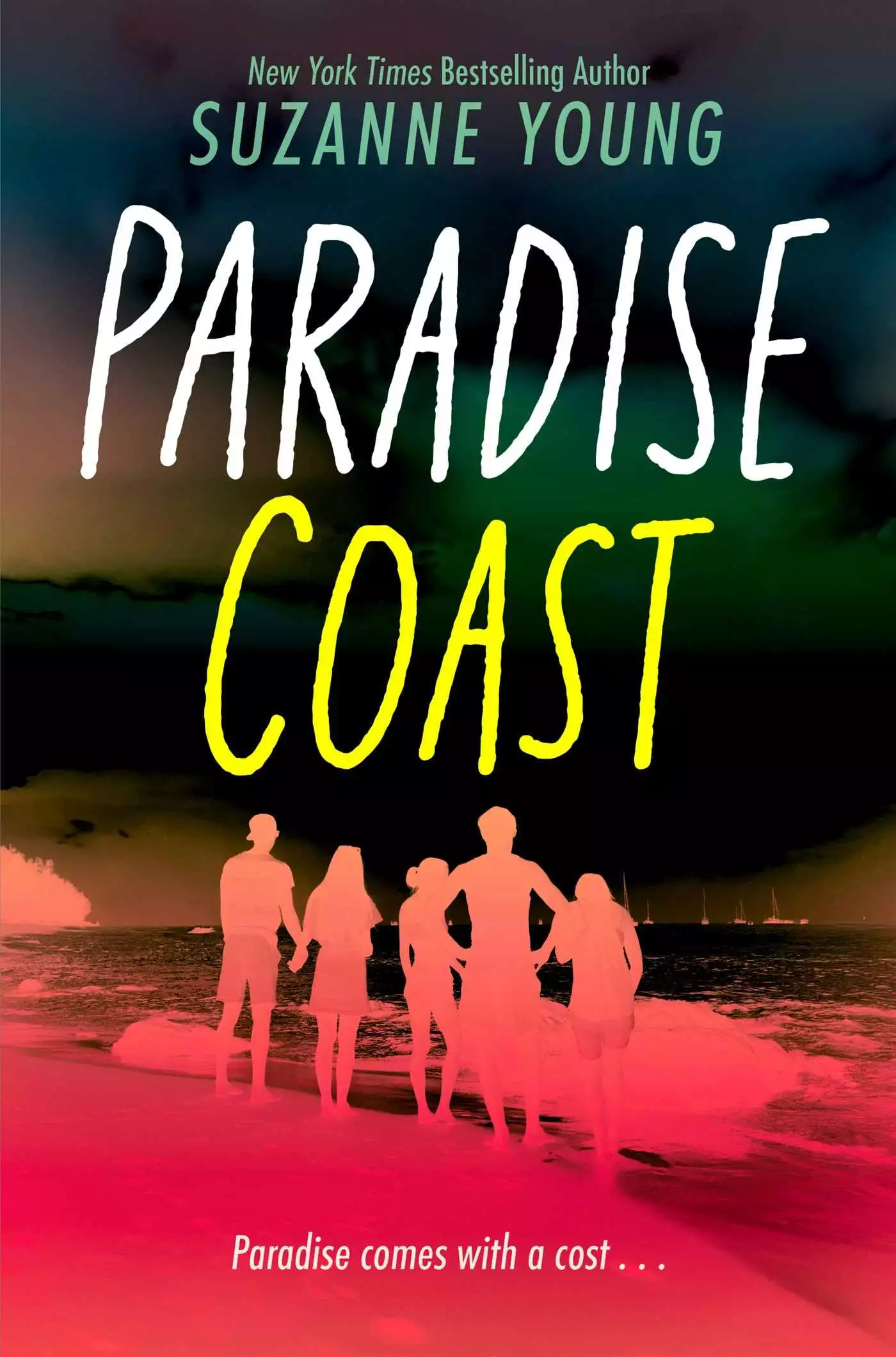
Rival groups of local and wealthy teens in a small Everglades town confront the secrets that rise from the waters in the wake of a hurricane in this sizzling and suspenseful thriller from New York Times bestselling author Suzanne Young—perfect for fans of Outer Banks and The White Lotus.
Some secrets won’t stay buried. Not even in the Everglades.
Deep in the Everglades, there was once a luxurious and legendary hotel enjoyed by the wealthy elite. Until one mysterious night when a fire tore through the building, killing a young socialite and casting blame on a local dock worker. Soon after, the hotel vanished, swallowed up by the wetlands like it never existed at all.
Until now.
When a powerful hurricane unearths the ruins of the long-forgotten hotel, the past is dragged back to the surface as clues to the devasting truth about the night of the fire are revealed.
It’s the truth that die-hard local Noa and her friends have been chasing for years in the hopes of clearing their ancestor’s name and pushing back against the rich families trying to force them out. With the help of Jamie, the rebellious son of a wealthy businessman, Noa and her crew begin a desperate fight for the justice they deserve.
It won’t be easy. Because the wealthy control just about everything on Paradise Coast—including the truth. And they will do whatever it takes, even kill, to make sure the past stays buried.
Release date:
February 24, 2026
Publisher:
Simon & Schuster Books for Young Readers
Print pages:
368
* BingeBooks earns revenue from qualifying purchases as an Amazon Associate as well as from other retail partners.
The storm is almost here. I feel it in the air, heavy as it coats my skin in that sticky kind of dampness. The sky has already started to darken, even though it’s barely past noon—which means we’re running out of time. As I look along the beach, the ocean churns, the waves rising in jagged bursts, thrashing against the shore in warning.
It’s true that living in Cape Hope—living in the Florida Everglades—isn’t like being anywhere else. Sure, it’s beautiful, even with the humidity settling into our bones. But it’s also a constant struggle to stay ahead of everything nature throws at us. Hurricanes, flooding, wildfires… tourists—it’s all part of the rhythm of this place.
Then again, there are also those perfect moments. Moments where everything feels suspended in time. On my days off, I’ll take a kayak out into the mangroves, letting the quiet settle around me. There the water is still, perfumed with the smell of salt and fresh mud. In those perfect moments, I can pretend that everything’s okay.
“Pretend” being the key word. Sooner or later, I’m interrupted by the distant roar of an engine from one of the tour boats or I see a helicopter heading toward the resort, and the illusion shatters. The line between us is drawn.
As the wind starts to whip around me on the sand, I glance at the Grand Augustus Resort perched high on the hill above the beach. There, the rich won’t have to lift a finger. No shutters to close, no sandbags to move. Instead, they’ll watch the storm roll in from the safety of their hurricane-proof windows, commenting on the danger and how lucky they are that they have people for this kind of thing.
That’s us. We’re the people. We’re the ones out here protecting their livelihoods as much as our own.
“Hey, Noa, grab that line!” my best friend Shawn yells, her voice faint under the rising wind. Her long blond hair lashes at her face, her inner arms dotted with bruises from carrying in loose boat equipment. She pulls me back into the chaos of the approaching storm.
“Got it,” I say, jogging onto the dock to grab the rope for one of the rowboats so she can secure it to the dock. I’m already exhausted; we all are, but this is just what we do.
I look down to the other end of the dock and see my father balancing near the edge, the wooden slats swaying with the waves. His green rain slicker blows in the wind, his hat lost somewhere in the ocean. He’s barking orders at my friend Tech, trying to get the boats secured before the winds get worse.
Tech’s not wearing his glasses, blinking quickly in the blowing wind. He tightens down the ropes, winching the line closer to the dock. He moves along the edge methodically, stopping at each boat. His muscles flex with each pull, visible rope burns across his dark skin. Although Tech’s a pro, his movements are jerky. Panicked. The water’s rougher than we expected.
I hate this. I hate feeling so small, so helpless. Every storm is different, but they all feel the same in the end. We fight like hell to protect what’s ours, and the storm doesn’t care. It’s coming no matter how many lines we tie, no matter how many boats we pull up, no matter how many hours we spend running back and forth on the dock, soaking wet, bruised, and exhausted.
“Dad! You good?” I shout over the wind. I don’t know if he hears me. He’s working on the boat closest to open water. The small yacht belongs to one of the tourists, and it’s worth more than all the other boats combined.
My father winces when he grabs a fresh section of rope. His left hand is bleeding, his fingers slick with it, and I can’t tell if it’s from the ropes or if he cut himself on something sharp.
“Dad!” I try again, but my voice is swallowed by the rising winds. My heart is pounding wildly.
I know my father is tough. He’s been through worse. But right now he looks all alone, framed by a writhing ocean and ominous clouds. I wish my brother were here. Ellis was always the one who could keep his cool, the one who knew what to do without needing anyone to tell him. My whole world would be better if he were still here. But he’s not. He’s gone. And right now his absence is a gaping hole in my chest, an open wound.
The wind howls like something alive, tugging at the boats, shaking the dock. The first real raindrops start to fall, sharp as needles, and soak through my Surf Shack sweatshirt. I pull up my hood, but a wind gust forcefully pushes it back down.
The waves slam against the dock, lifting the boats higher and higher. We don’t have enough time. We have to move faster. I dash toward my father to help him.
“Dad, please—” I start, but then I see him stumble on the shaky dock, trying to retie a line. His left hand slips on the wet rope—his palm shredded.
Blood drips onto the dock, and for a split second, everything feels like it’s frozen. Yet, despite his horrific-looking injury, my father grabs the rope again, determined.
“Dad, stop,” I shout.
But he won’t. He’s still trying to do it all by himself.
Tech and Shawn run over to help, knowing that if we don’t get everything tied down now, we’re going to lose it all. And I’m overwhelmed—devastated at the thought.
I need my brother. The sudden anger at the thought gives me a boost of adrenaline. I grab the rope from my father’s hands.
“Dad, sit down!” I order. “You’re going to make it worse.”
He shakes his head in refusal and grabs another rope. He’s always been stubborn, pushing through pain and exhaustion. Pushing through death and disappearances.
The wind howls relentlessly, the sound jarring me. The boats rock violently, their lines straining and groaning against the pressure, and every gust of wind feels like it’s trying to rip the dock from its moorings. It’s all happening so fast.
Shawn pulls a tarp over one of the boats, but the wind rips it right out of her hands and out into the ocean. She curses, throwing up her arms in defeat.
Determined, I grab the last rope and try to secure it to the dock, but the waves are rising faster than I can work. The water washes over the dock, making the wood slick. We need to hurry or we could get knocked off and pulled out to sea. But if we don’t finish, if we don’t secure everything, it’ll be gone by the morning.
“Tech!” I scream. He looks up, eyes wide, and rushes over to help me. The pressure’s so intense now, I can hardly keep my footing, but we finally manage to tie down the last line, the ropes as tight as we can get them. I sag with the momentarily relief.
The rain has turned into a full-on downpour, washing over my face. The world is just wind and rain, and I can barely breathe with the salt and dampness pressing against my chest.
My father stumbles again, this time falling to his knees on the dock. I don’t know if it’s the pain or the exhaustion, but his face is pale, his breath ragged. I rush to him and kneel beside him, worried he’s gone too far this time.
“I’m fine,” he grunts, but his voice is strained and weak.
“No you’re not, old man,” I reply, taking his arm. “We have to get inside. The storm’s just—”
A deafening crack of thunder booms around us, and for a moment, the whole world seems to hold its breath. It’s apocalyptic. The next wave crashes into the dock with a force that nearly knocks me off my feet. The boat beside us lurches, its ropes snapping, and it drifts away, free from its mooring.
“No!” I scream, but my voice is swallowed by the storm. I look around desperately, but there is nothing more we can do. “Come on,” I tell my father, yanking him forward as he watches the boat disappear into the storm-tossed sea.
“Not yet,” he mutters, almost to himself. But he’s wrong. The storm’s here. It’s here, and it’s taking everything.
The realization hits me like a punch to the gut. We can’t win. All we can do now is hold on and hope that when it’s over, there’s something left to rebuild.
“Tech, Shawn,” I shout. “We need to get inside.”
They nod, and together, we pull my father down the dock, away from the last traces of our fight. We have to make it to shelter. Luckily, our beach cabin is above the tide line, and we make a dash for it.
We move fast, slipping and sliding on the dock until our feet sink into the wet sand. I glance back, just for a second, at the empty boats that are still tied to the dock. I wonder how many of them will make it through this. If our business will survive the damage.
I’m suddenly aware of being watched. In the middle of a hurricane, I lift my gaze again toward the Augustus Resort. Its windows glint in the storm’s darkening light. The whole resort looks untouched; the electricity is even still on. Not only that, there are people gathered on the enclosed balcony of one of the resort’s restaurants. Sitting there comfortably, watching the storm. Watching us race to save their belongings.
Even from here, I know it’s the Collective, what we call the rich resort investors and their kids, the ones who truly run Cape Hope. What a joke—the Collective? They sound like a secret society of vampires, and none of them are cool enough for that. They’re opportunists. While we’re hustling just to stay afloat, they buy up whatever they want. For them, living in Cape Hope is easy.
For us? Every day is a struggle, even with my family owning our own business for the last twenty years. It’s the same for all the local families. Every time the Augustus Resort expands, they push more of us into the margins. They call it the price of progress, but it doesn’t feel like progress. It feels like they’re squeezing us out, carving up the land until there’s nothing left.
I hate the Collective. I hate that they don’t have to be out here with us in the storm, tying down boats and risking their lives alongside ours. They don’t have to work for their piece of paradise. It’s handed to them. The beach, the dock, the water—it’s all just something they buy up, package, and sell to the highest bidder.
I grip my father’s arm tighter, my eyes still locked on the Augustus Resort. “Let’s go,” I whisper, finally pulling my gaze away from the resort.
This rivalry will never end. The Collective call us Chasers—locals who have stuck around this long. They gave us that name because they think we’re always chasing what they have, as if we dream about polo shirts and boring business meetings. Not even close.
We’re Chasers, sure. We’re chasing the sun, chasing our dreams. But we’re also chasing our chance to pay them back for everything they’ve done to Cape Hope. Now, that’s a dream we’ll chase until the day we die.
We hope you are enjoying the book so far. To continue reading...

 Please log in to recommend or discuss...
