Amazon Best Book of the Month (Literature and Fiction)
Recommended New Books/A Guide to the End of Summer's Hottest Books, Salon
"Weisman has written a tragedy of rare power and richness...If lately you've been shuffling through too many novels that feel a little unambitious, vaguely sentimental, even adolescent, NO. 4 IMPERIAL LANE could give your summer reading some real depth." -Ron Charles, The Washington Post
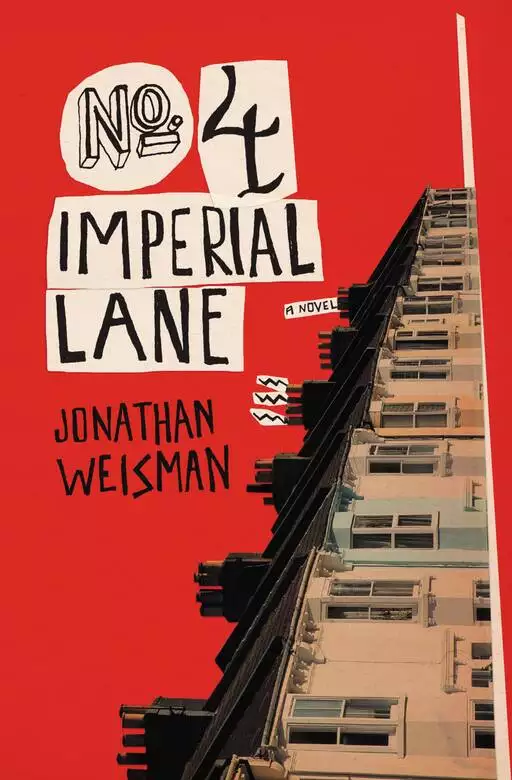
From post-punk Brighton to revolutionary Angola, an incredible coming-of-age story that stretches across nations and decades, reminding us what it really means to come home.
It's 1988 at the University of Sussex, where kids sport Mohawks and light up to the otherworldly sounds of the Cocteau Twins, as conversation drifts from structuralism to Thatcher to the bloody Labour Students. Hailing from Atlanta, Georgia, David Heller has taken a job as a live-in aide to current quadriplegic and former playboy, Hans Bromwell-in part to extend his stay studying abroad, but in truth, he's looking to escape his own family still paralyzed by the death of his younger sister ten years on.
When David moves into the Bromwell house, his life becomes quickly entwined with those of Hans, his alcoholic sister, Elizabeth, and her beautiful fatherless daughter, as they navigate their new role as fallen aristocracy. As David befriends the Bromwells, the details behind the family's staggering fall from grace are slowly revealed: How Elizabeth's love affair with a Portuguese physician carried the young English girl right into the bloody battlefields of colonial Africa, where an entire continent bellowed for independence, and a single event left a family broken forever.
A sweeping debut by a seasoned political reporter, written in prose as lush and evocative as it is deeply funny, NO. 4 IMPERIAL LANE artfully shifts through time, from the high politics of embassy backrooms and the bloody events of a ground war to the budding romance found in pot-filled dorm rooms, and those unforgettable moments when childhood gives way to becoming an adult.
Reminiscent of Nick Hornby and Alan Hollinghurst, here is a book about the intersection of damaged lives; a book that asks whether it is possible for an unexpected stranger to piece a family back together again.
Release date:
August 4, 2015
Publisher:
Grand Central Publishing
Print pages:
320
* BingeBooks earns revenue from qualifying purchases as an Amazon Associate as well as from other retail partners.
In 1988 I fell in love with an English girl from Leighton Buzzard. She majored in sociology and cultural studies, a combination with great resonance at the University of Sussex, where all things cultural were studied greatly and sociologically, and she bought henna in little paper packets from the Body Shop to make her hair flame-red. She talked about structuralism after a few drinks, a better topic than most in those days. She could have pontificated on that wicked witch Margaret Thatcher or the Socialist Workers Party or the bloody Labour Students and their maddening fealty to that wanker leader of theirs, Neil Kinnock. But that was not her thing.
There were other weighty matters of the day to ponder: how much soap to apply to make your Mohawk (“Mohican” in British parlance) stand boldly erect even in the sweaty heat of Brighton’s seaside clubs; the proper amount of eyeliner to prevent tripping from brooding goth to pure poseur, from Robert Smith to A Flock of Seagulls; whether Ian Curtis had been dead long enough to accept New Order as a respectable-if-inferior successor to Joy Division; if overturning Minis in the car park after the student pub closed for the night was an act of political defiance or simple drunken stupidity.
We went to London one weekend to mass in the streets of Piccadilly, protest the latest round of budget cuts, and sing “All We Are Saying Is Give Us Our Grants,” then were back the next to toss Molotov cocktails and demand the removal of short-range nuclear missiles from the Continent. “Hey hey, ho ho, Ronald Reagan’s got to go.” In between, there was Moroccan black hash, the cheap intoxication of a snakebite—half lager, half cider—and the occasional weekend lost to magic mushrooms, when again the conversation would drift from structuralism to Thatcher to the bloody Labour Students, this time with uproarious effect.
Maggie didn’t go in for all that political theater. I remember one particularly self-indulgent discussion of the broken miners’ strike, when other students lingered on the role of the scabs, the heartlessness of Mrs. Thatcher, the death of unionism, the fate of the now-laid-off miners.
“I just think it’s sad that there are miners,” Maggie mourned. “To think that they want to go down in those holes.”
For me, Maggie was a respite from the societal battles that animated Thatcher’s Britain, condensed and amplified like the outskirts of a black hole at the unlovely but serviceable University of Sussex. That I was there at all stemmed from a sophomoric brew of restlessness and dilatoriness; I couldn’t pass a language test to study in a country that spoke a language other than my own, and I had neither the time nor the inclination to correct that. My Midwestern university had an exchange program with Sussex. It was that easy.
I didn’t have much preconception of British life when I applied to study abroad; I knew there was an amusing monarchy, and fog, perhaps. I knew nothing at all about the university on the south coast. As it turned out, I enjoyed the cauldron I unwittingly threw myself into, at least at first—the politics, the music, the semiotics and Marxist professors and their minions, the British women with uncombed hair and hemp ponchos or thick, dark eyeliner, who proved endlessly alluring.
I had a “flatmate,” Mick, that first year in England, from Yorkshire. He wore battered motorcycle leather and pencil-thin black jeans over his sparrow legs—and talked tough about his working-class upbringing in Sheffield, especially to Richard from Greenwich, who wore buttoned-down shirts, sweaters over his shoulders—never actually over his torso—and played an expensive synthesizer. At a battle of the bands that winter, Richard and some other son of privilege teamed up with a phalanx of lovely backup singers—two synthesizers and ethereal cooing through heavy reverb. They aimed at Depeche Mode cum Dead Can Dance and ended up being booed off the stage.
“That’s alright,” Richard confided to me, another suburban son of something akin to affluence. “There was a scout from the Zap Club. He said we could play there anytime. I’ll have the last laugh.”
Not many weeks later, Mick pushed Richard too far in his class-warfare goading.
“Ya li’tle prat, Richard. Richard the Third, right?” Mick taunted, drunk out of his mind. “We’re all here ’cuz we earned our grants and escaped our drunk dads. You’re here ’cuz ya couldn’t manage to get into Oxbridge.”
Richard beat the shit out of him. For all Mick’s tough talk, it was Richard who was actually fit—played rugby and squash and Ultimate Frisbee when he was feeling a mite free-spirited. Mick’s snooker was no match for a childhood at boarding school, synthesizers or not.
It was one of those episodes when I felt my Americanness, the strangeness of the society I had awoken in. We all spoke the same language. Yet somehow I felt like I was living in a foreign film without subtitles or Cliffs Notes. I was beginning to have enough. I needed an out.
Then came Maggie. A friend had introduced me to her months before, and I suppose I counted Maggie as a friend by then. But one night, sitting in the student pub, pondering my escape with a sixty-pence pint of nameless bitter ale, I looked up to the sound of laughter—not so much uproarious as tinkling, a wind chime in the fall.
I saw a girl whose nose crinkled when she smiled, and suddenly I noticed she smiled a lot. She wore the skimpiest of woolen miniskirts, not really sexy, more practical, and had the slightest plump in her thighs. When she turned her smile to me, I drew to her light.
Falling in love with Maggie was easy because she was supremely loving, something I had yet to experience in my years of pursuit of girls slightly out of my league.
She listened to my stories about growing up in the American South—which had sparked polite disdain from the girls I knew in college—with rapt fascination. I provided a window into a continent she would never see. She gently turned my musical world on its head, dismissing my canon and replacing it with her affectless, post-punk British cool: lush, sweeping synthesizers, unrecognizable guitars, elegiac voices full of ennui. She bought me thrift-shop shirts, supervised my haircuts, and cooed, “Oooh, David, you look so hard.”
She said “I-Kie” instead of “OK,” and she had this way of leaning in to me spontaneously, as if for a kiss, then pulling back with a squinty smile and laughing out, “You’re lovely.”
She’d tuck her head against my chest, wrap her arms around me, and squeeze, her feet rising just slightly to press the crown of her head against my chin. I’d breathe deep to take her in. She smelled of citrus shampoo. No one had ever told me that I was lovely before. I guess Leighton Buzzard girls do such things, but I knew only one, Maggie. Early in our relationship, we hitched home. Maggie wanted to show me off, an oddity, I suppose, but one she was smitten with. That was alright. I was good with other people’s parents. What my friends found annoying, even excruciating, I always managed to manage my way around with something like charm. Maggie’s “mum,” matronly and eternally worried, did not say “I-Kie.” She was not a girl at all. It was hard to imagine she had ever been one. And I was pretty sure her two brothers, younger but harder, never crinkled.
And so, because I was convinced I didn’t want to lose Maggie, I found myself standing outside No. 4 Imperial Lane on a wet October morning. I was meant to be back in Chicago. My year abroad was over, and I was supposed to be finishing a degree that would throw me into the workforce of fin-de-Reagan America: sink or swim. But I just couldn’t leave Maggie.
No. 4 was two doors up from the end of Imperial Lane, three blocks above Brighton’s ridiculous stone beach and two blocks below the Royal Sussex County Hospital, a Victorian institution if there ever was one. I had been in and around Brighton for a year now, but never to this end of the city, Kemptown, as it was called. It was a far more respectable area than I was used to, and far from the student hangouts, the clubs on the waterfront, and the tourist destinations on the Grand Parade. I stood in the road for a while looking at the street number, a single digit that appeared too short for the space and hung crookedly. A couple of cheap terra-cotta planters held desiccated plants. Yellowed flyers visible out of a mailbox attached tenuously to the brick.
There was a quadriplegic inside—at least that’s what I had been told. His name, the agency that sent me said, was Hans, Hans Bromwell, which must have made his parents British and German—and cruel. The deal was, I would live here and help the old man out in exchange for room, board, eighteen pounds a week, and a residency permit that would allow me to stay in England. I had never even known anyone in a wheelchair; my only notion of quadriplegia came from the movies: noble invalids painstakingly painting with their teeth or spelling out impenetrable theories about the origins of the universe one letter at a time with their eyes on an electronic board. That would be Hans—heroic, wise, glad to have a set of American arms and legs to help him. He’d be intrigued by my story, ready for my help, and I would be his trusty valet, a less-than-heroic role, for sure, but indispensable to his quest. I took a deep breath and climbed the four steps to the door.
“Are you going to come in, then?”
The door had opened before I could knock, and a cheerful woman appeared. The quadriplegic’s nurse, perhaps, or maybe a housekeeper. She looked like a caregiver, frumpy and apprehensive.
“It’s David, right? David Heller? Please, come in.”
Without any more small talk, she guided me forward and led me to a corpse. Shriveled almost into a fetal position by the contractures of its withered muscles, it shifted ever so slightly and a head peeked out over a pile of thin, wool blankets. I could see the skeletal contours of a human body underneath. The head was a shock—papery skin stretched over protruding cheekbones. Fine, thin wisps of hair were extruded from a scalp in random thatches, gray or blond, I couldn’t really tell. It was so sparse. Two blue eyes, once vibrant maybe, now faded toward gray, peered out from deep within their well-defined sockets.
“Ah, Mr. Heller. An American Jew, no doubt,” Hans Bromwell said faintly. The woman who had let me in rolled her eyes as she trudged over to Hans and propped up his skull with two overstuffed pillows. “I suppose I’m glad to see you,” he continued. “Do you like Woody Allen? Or Maria Callas?”
He interrupted before I could stammer out an answer. His hand, bent stiffly at the wrist, moved haltingly toward a button propped next to the bed. A stick attached to a wristband, with a rubber tip that looked like an oversized thimble, made contact with the button, and a record dropped on a turntable in the corner. The voice of an opera singer drifted from four speakers, one in each corner, to the center of the room.
Fear came rushing in like a hot blast. It watered my eyes and turned my stomach. Clearly, I had made a terrible mistake. The room smelled like a combination of vapor rub and shit. A bag of urine hung off the bed, the catheter tube snaking up from it and under the blanket. The room must at one time have been a parlor, probably the house’s main living room, but for obvious reasons, Hans now occupied the first accessible chamber with a door on it. His enormous hospital bed backed into a bay window that overlooked the street, but the heavy drapes looked like they hadn’t been opened in decades, and dust bunnies clung to their hems. An open space, maybe five feet wide, separated the foot of the bed from a row of stainless-steel cabinets and a sink straight out of hospital surplus.
The music might have been impressive, but I had no appreciation for opera. My Led Zeppelin phase had given way to seventies art rock: Genesis, Yes, ELO. From there, I had moved on to what passed for avant-garde back home—R.E.M., U2, some Psychedelic Furs—only to get to Britain and find out what a drip I was. Adapting to New Order, the Cure, and the Cocteau Twins had been leap enough. Maria Callas was beyond my abilities.
“Are you coming for a visit or are you moving in, David?” Hans said. You could call the question impatient, but it was wearier than that somehow, more resigned, and it made me feel sorry for him.
“I, I’m moving in,” I replied, trying for resolute.
“My brother can be a bit abrupt,” the woman said behind me. She was a little peculiar for sure. At maybe five foot eight, she was about my height, her hair a mousy brown, thick but cut into a bob to tame it, which only made it flare outward like a mane. Her head was narrow, putting her gray-blue eyes on either side of her face, where they watched me intently. Her nose was just slightly too large, rising from soft cheeks. Under those cheeks was a weak chin that receded into her neck. She wore her weight in her hips, just enough to make her look too light on top, too thick on bottom, but if there was a time before the padding, I’m sure she had looked alright, all things considered.
“I’m Elizabeth. I live here too. We’re going to be friends, whether Hans likes it or not,” she said, looking past me, an eyebrow arched toward the body on the bedstead.
The quiet of the Bromwells was a long, long way from the end-of-days tumult of the times. Four months before, I had pulled myself away from a riot in East London, taken the Tube the long way to avoid a bombing in Brixton, and found myself in a muddy field on Glastonbury plain watching a stranger on an ecstatic acid trip, Echo and the Bunnymen thrumming in my ears from a stage not a hundred yards behind me.
“Just one little dot, one little dot,” the guy repeated over and over, squinting at the imaginary acid tab between the thumb and forefinger he held an inch from his face, alternately laughing and weeping, weeping and laughing. I stood over him, watching in my own bemused haze of ganja and shrooms. Big Steve, one of Maggie’s housemates, had invited me to the grandest of Britain’s summer music festivals that June. We hitched from the downtrodden outskirts of North London to Worthy Farm in a village called Pilton, Steve and his blue Mohawk, his friends from Luton, an assortment of working-class toughs and soccer hooligans, and me, a suburban American kid born into casual, upper-middle-class ease.
“It’ll be brilliant, spectacular,” Steve had assured me from a pub in Luton, a town known best for its airport and football riots. “The Cure, Echo and the Bunnymen, the Mighty Lemon Drops. Have you heard them, the Mighty Lemon Drops? They’re like the Teardrop Explodes. You know them, right? And Marillion, they’re from around here.”
“Marillion? Fuck ’em,” a friend jumped in. “Bunch of poseurs.”
“Ah, fuck off, you,” Steve threatened.
I stared at them, utterly lost, but the tickets were only twenty quid. Steve had tents to sleep in, and the hitching would be free. If we left early enough, we could make it easily in a day.
And we did. Big Steve had the resourcefulness you’d expect from the son of an airport worker who had somehow made it, full ride, to the University of Sussex to study chemistry in combat boots. We pitched our tents, and he and his mates went foraging for bulky, still-green tree branches, which they stripped of their bark, adorned with rudimentary carvings, and traded to the Rastafarians for huge handfuls of oily marijuana, some to smoke, some to trade for food, drink, or harder drugs when the mood came over us.
“Yah, mon, dis walkin’ stick is brilliant. Make anoder. My friend will be by for it with da good ganja.”
“We’ll be ready,” Steve said in feigned seriousness, suppressing his glee.
The highlight of those three addled days should have been the Cure’s set, with its laser lights and morbid previews of the band’s upcoming and last great gothic album, Disintegration, before Robert Smith somehow found happiness and went all crap on us. I don’t remember a thing, though—just some odd, incomprehensible conversation I had with Big Steve about home, how to get there, when to get there, whether to get there at all.
“Home, David,” he was shouting over the music, his voice coming to my ears through some long, distorted echo chamber formed by the toxins clotting my hammers, anvils, and stirrups. “You have to go home.”
I wish I could say I was driven by some ambition or some particular reason to be at Sussex. The fact is, I was hardly an adventurer. I was average, from an affluent suburb in the south, but not the real south—Atlanta. I took honors classes in high school, but not too many, kept my grades in the B-plus to A-minus range, got pretty good test scores, had a handful of friends but wasn’t super popular. I tried for nice and did alright with it.
Sussex was the Berkeley of Britain at the time, which was a good thing and gave me a little edge. I wore my hair close-cropped and tried to spike it with stiff gel, but a poorly trimmed beard, curly and uneven, probably ruined the effect. I was going for post-punk New Wave: black jeans and weathered shirts, half-unbuttoned over a white tee. In due time I would come to see that the messages were mixed—the beard was all wrong, more George Michael than Che, and I probably came off looking like a hungover Kenny Loggins on a bad hair day.
My cultural confusion was honest, though. It came with the times: punks, goths, New Wave wankers, old-guard metalheads, deadly serious communists plotting their putsches against Whitehall while the real communists across the English Channel teetered toward extinction. The kids seemed more intent on achieving fashion supremacy at Camden Market than any real societal change. The trade unionists of East London, Manchester, and Liverpool were driving the Labour Party further into socialism while their comrades in Solidarność were launching vanguard strikes in Poland that would, in short order, extinguish the Eastern Bloc. And what was a modestly well-adjusted American from a good home supposed to do in the midst of all this? Was your hair supposed to stand up in fluorescent spikes or swoop over your eyes in greasy, jet-black curtains? Were you supposed to be swept up in the protest movements or give in to studied ennui? Did antinuclear peaceniks really wear Iron Crosses and Bundeswehr tank tops over combat fatigues and Doc Martens? What about the vegans in soiled ponchos who firebombed the biology labs at the universities? Didn’t the poor, unrescued rabbits and rats just end up flambéed in the name of animal rights?
To those questions came my answer, Maggie. To her, none of it mattered.
When I finally asked her out for a drink, casually, she said yes. We went to the student pub near her place on the back side of campus, Park Village, it was called, an unsightly cluster of brick cubes sticking out of the South Downs that had been farmland in the 1960s, before the British government decided to build the country’s “new universities,” of which Sussex was one. Maggie and I sat across from each other at a heavy picnic table and proceeded to get into a way-too-animated argument over Jacques Derrida, fueled by lager and cider. It was midweek, and the pub was half-empty. I was enjoying myself watching her. She was cute and had this way of lolling her head and looking at me sideways in mock-hostile appraisal. I hadn’t noticed it before.
“C’mon Maggie, what does that even mean, ‘There is nothing outside the text’? You don’t know. It’s just gibberish.” I leaned in toward her provocatively. “Deconstructionist gibberish.”
“Gibberish, maybe.” She laughed, stabbing the air with an index finger and a long red nail. “But the French accent helps.”
Four weeks after Maggie and I had eased our way into my narrow bed on East Slope, my brother arrived, ready for all the trips on the Continent we had planned. I surprised myself with my misery on that long European excursion. I lay in physical agony one night in a seedy guesthouse in Amsterdam, missing her. I could think of nothing else.
I carried a vision of Maggie with me, locked in from two weeks before. She was sitting up in bed, propped up by a huge red pillow wedged against the wall, mulling structuration while reading Anthony Giddens’s Capitalism and Modern Social Theory. I lay beside her, Dickens’s Bleak House taunting me, only a quarter read, and watched her work from behind the pages. She looked over, took off her glasses, and smiled. I reached for her, and we kissed.
“In a bit, David, I’ve got to get through this chapter.”
It was an odd image to linger over, stoned, in a room full of cheap metal bunk beds above a bar in Amsterdam. House music rumbled beneath me, its bass line crushing my skull with its monomaniacal thudding. My brother was off somewhere exploring the debauched wonders of a city that only a twenty-four-year-old could love so much. My affections were completely elsewhere. It must be love, I moaned.
Maggie didn’t seem to wonder. She was sure. As the end of the school year came into view, she grew to dread my return to Chicago. I contacted my school; if I were to want to take, say, a year off, how exactly would I go about requesting that? The letter from Illinois came back quickly.
Dear David,
We are in receipt of your request for a year off from your studies. We are happy to oblige and hope you have a grand adventure.
Besides, the letter didn’t say, tuition would be higher the following year.
That summer had been the leanest time of my life. We traveled for a while, Maggie and me, mostly on an ill-fated trip to Africa. Maggie indulged me on that one, even when I drove us far beyond our physical and financial capacity.
“If we can get through Sine Saloum, we can make it to Gambia,” I assured her in Senegal.
“Just a little further south is Ziguinchor. There’s a beach town, Cap Skirring, I swear, and maybe from there, Guinea-Bissau,” I told her in Gambia. “It’ll be amazing.”
We didn’t get that far, and I kept that failure to myself, even when that oddest of Shangri-las, the benighted little country of Guinea-Bissau, entered my consciousness in a big way. We returned flat broke, having accomplished nothing beyond wrecking my gastrointestinal system. Unwilling to ask my parents for money after forsaking them for another year away, I looked for work, illegal without a permit and scarce to begin with in Thatcher’s England. We sold junk out of the “boot” of Maggie’s mom’s car, until finally I signed on with Community Service Volunteers, a wage-slave organization that apparently took all comers, and it was CSV that found Hans. All that was expected of me was to muddle through until June, when his friends would come take him to Tuscany, as they did every summer. Nigel at the volunteer agency was encouraging. He wore a cardigan sweater with holes at the elbows that clung tightly to his bony frame. His teeth were crooked, and he looked at me earnestly.
“I twust, David, that you will find the Bwomwell household to be a warm and wonderful place to spend a few months,” he said.
Hans’s white, two-story row house was nice by Brighton standards, small and tidy with a pub down the street called the Imperial Arms. Maggie was two bus rides away in a grungier part of town. The furniture in Hans’s house was strangely spectacular—grand armoires too large for their cozy spaces, bowed chests of drawers carved exquisitely, gilded bookcases with fine gilt grilles, commodes of the antique British sort—and decorated incongruously with African objets, carvings, masks, delicately inscribed gourds, and musical instruments. I felt like I was in a museum.
Before our adventure in Africa that summer, Maggie and I had hitched to her cousin’s farm in north Devon. He had some camping equipment to lend, and he wanted to show me how to use his old army Primus stove. While we were visiting, he took us to a manor nearby. It was something an American was supposed to enjoy. Maggie had mocked the opulence of the place, preserved in state by the National Trust. I didn’t think much of it one way or another at the time, but it came back to me as I toured the Bromwells’ home. I was no expert, but this furniture seemed to have a pedigree.
Hans asked nothing about me that morning, nothing in the vein of an interview at all. I asked him what he thought of my girlfriend spending the night every once in a while, to which he replied:
“Fuck like bunnies, for all I care, just as long as you come when I call.”
The panic that had overcome me that first moment with Hans was overwhelmed by my inability to think up an alternative living arrangement. I could hurry back to Nigel and ask for a different assignment, but I saw little chance of getting a better one in or near Brighton. I could cut the cord, say “That’s it. I’m done. I’m going home.” But I was no closer to that than I had been when I let myself stay in the first place. My resignation snuffed out my panic like a heavy, damp blanket. So I did what I told the volunteer agency I would do. I moved out of Maggie’s overcrowded group house, away from Big Steve the punk and Little Steve the rocker, Astrid the hippie and Suzy the normal one, and in with Hans and Elizabeth Bromwell.
A week later, complaining already of my absences, Maggie came to visit for the first time. I went to meet her at the bus stop on the Grand Parade and saw her tumbling down the steps and out the door, lugging an overstuffed overnight bag. I didn’t know she had planned to spend the night.
“How long did you say this was going to last?” Maggie asked, slightly winded and laughing as she pulled down her skirt. Leighton Buzzard girls, even those who read sociology and cultural studies, didn’t talk like Hans and Elizabeth Bromwell. They said “dunno” a lot and called people “prats” and “wankers” and “willies.” They got their knickers in a twist. They didn’t dress like them either. An overstretched sweater—a jumper, in English English—draped over Maggie’s torso and obscured most of her tartan skirt. She wore round, steel-framed glasses that might have been called cool-chick glasses in the States had they not come from the National Health Service. Here, they were just cheap, free actually.
I assumed in ignorance that all of Britain would be more or less the same, not some Merchant Ivory fantasy of posh accents and white trousers but without the variations of region, race, and wealth that I grew up with. Maggie taught me about class, the true working class, Brits living north of London, warehoused in row after row of identical houses, with a pub, a cup, and a Sainsbury’s to get them by. Her mom, Maryanne, had a harelip, mended badly, and a boyfriend, Alf, who traveled the Midlands selling stuffed animals—“plush toys,” he called them—out of a suitcase. When Alf asked for butter at the table, he’d say, “Would you pass the fat, love?” Her father had abandoned them, first for a construction job in Abu Dhabi, then for a younger sheila, who dressed like Maggie but grew fat on chocolate digestive biscuits. In ways I could never, Maggie would have understood Hans’s sarcastic greeting for me, the implications of Woody Allen and Maria Callas. The British grasped class stratification at a visceral level. They were born to it.
“You know, David, you can’t be fooled by that old blanket on what’s-his-face’s bed,” she said, walking up the steps to the front door.
“Hans,” I said.
“Hans isn’t like your friends at Sussex. He’s not from Luton or Sheffield. He already hates you.”
She turned in time to see my face droop, and gave me an encouraging smile.
“Alright then, ‘hate’ might be a bit much. He just doesn’t like you, love. But I do,” she added, kissing me on the cheek. “It won’t be for too long anyway, right?”
“Until May.” I dropped her suitcase on the stoop with a thud and fished out my keys. The summer had long given way to the grayness of an English autumn. The air was dampening but not yet cold. “Then he goes to a villa or something in Italy for the summer. I guess he goes there every year.”
“You’re joking,” she gasped. “May?”
“That’s what I promised the agency.”
“It’s October. You’ll never make it.”
“It hasn’t been a good start,” I agreed.
Elizabeth opened the door with a smile. She beamed in fact, not at me but at Maggie. A girl I had not yet seen, only a few years younger than us, sixteen or seventeen, but tall and dark-complexioned for a Brit, came out of the kitchen and smiled. Her black hair streamed down her back, over a tight-fitting T-shirt that clung to her lovely breasts. “I’m Cristina,” she said with a wink, then dashed upstairs, leaving Maggie to glare, first at her, then at me as my eyes followed Cristina’s breathtaking backside.
“My daughter, David. Remember I said she’d be coming back from her uncle’s farm this week?” Elizabeth said to me, catching my gaze and bailing me out. “Got back just now, while you were out fetching your girlfriend. Maggie, right?”
She smiled at me.
“Come into the kitchen, both of you. Hans is listening to Die Fledermaus. His beloved Maria,” Elizabeth said. “You don’t want to disturb him.”
She whirled around the little kitchen in great excitement, not doing much but doing it quickly. S
We hope you are enjoying the book so far. To continue reading...

 Please log in to recommend or discuss...
