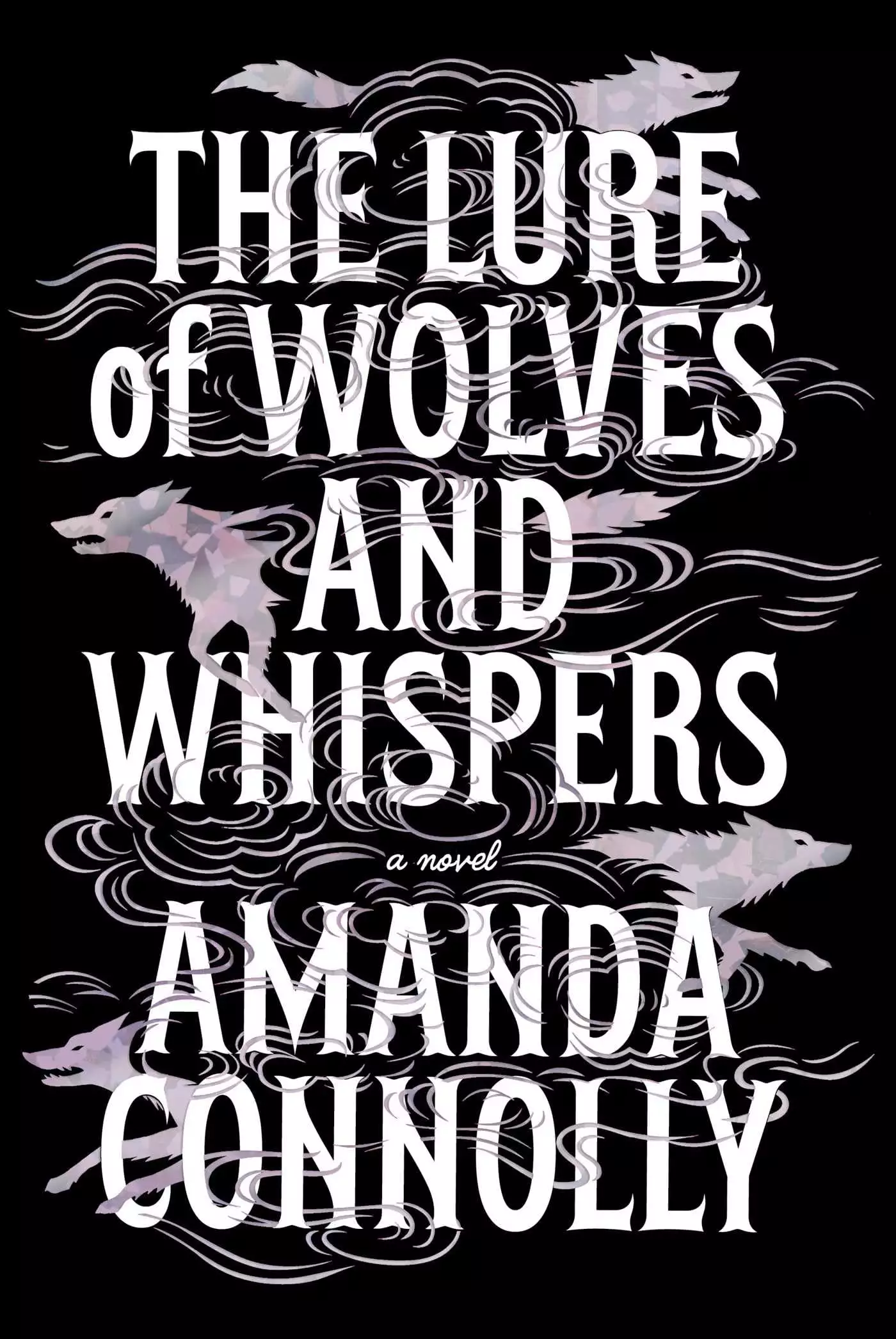
A darkly addictive romantasy debut about a girl who sacrifices everything to buy the dangerous magic that could save her sister—the first in a trilogy perfect for fans of Powerless and Throne of Glass.
On the mist-shrouded Isle of Eireann, buying magic comes with a horrific price.
But when her beloved older sister is gravely injured, Maeve risks everything to buy the forbidden magic that might save her. In exchange, Maeve promises her loyalty to a ruthless and dangerously alluring rebel leader. Bound to do his bidding, Maeve finds herself thrown into a deadly competition to become the next queen and stand beside a prince rumored to be more brutal than his father. But the prince isn’t what Maeve expected, and he may be her only chance of survival.
With the isle on the brink of war, trust and survival come at a terrible cost—one that will tear Maeve’s world, and her heart, in two.
What would you sacrifice to survive?
Release date:
July 7, 2026
Publisher:
Sarah Barley Books / Simon & Schuster Books for Young Readers
Print pages:
416
* BingeBooks earns revenue from qualifying purchases as an Amazon Associate as well as from other retail partners.
Chapter One ONE The traitor stuck up on the Black Quay still isn’t dead.
I think I hate him for it, even if my mother would’ve despised me for the thought.
His screams faded to heaving groans hours ago, not long after the fresh flush of dawn bled across the city. That was after we all woke up to the sounds of his shrieks. Now the reek of him up on his blackened pike beside all the other people the High King deems traitors is enough to make my eyes burn.
Just in case any of us dared to go a day without remembering the cost of bartering magic.
You’d think we’d all be used to it by now—the way the mist that never seems to ease carries the stench across the slums of Quayside, downwind from the merchant quarter and Castle Mount looming on the rugged sea cliffs to the east. If I had to, I’d bet all the coin I never seem to have that the mist carries away the screaming, too.
Of course, the nobles and merchants don’t hear the shrieks of the High King’s justice.
We do, though—every peasant walking alongside me to the marketplace. We live on the knife’s edge of that justice, with the silhouettes of traitors impaled along the way.
The sight of them stuck up there even in death is a warning, as clear as the skies used to be five years ago before magic dried up and never-ending mists began rolling in from the north across the isle of Eireann and all over our city—Dyfflin. And though the mists are as gray as bone, it’s the snap of the High King’s black-and-red banners in the wind that weighs most heavily on my mind.
The gusts clawing off the sea rip at them, tearing so fiercely that I can barely staunch the hope that one will go tumbling into the churning water past the docks. But even waving over the wattle-and-daub trading post, even nailed through the ribs of a long-dead traitor impaled on the Black Quay, the banners refuse to yield to the wind.
Each stubborn snap is a reminder that the High King answers to no one, let alone the sea and the wind. Not to the mages he banished five years ago, or to the goddesses who once walked this isle. And certainly not to a peasant like me.
My stomach twists, and I knot my hands into fists inside my too-big threadbare cloak as I pass the Black Quay. Like almost everything else on me, the cloak once belonged to my older sister, Finnola.
Now it’s her voice that trembles through me at the sight of the bannered traitor.
Even death is no escape from the High King.
My palms go slick. If Finn were here, she’d be brave enough to rip the High King’s colors off the traitor. Snatch the banner, and bolt before anyone could call for the gardai—then tell the tale over a drink later tonight. She might be just five years older than me, but she’s got the kind of reckless, wild courage I’ve never felt.
She embraces danger—trusts herself enough to fight and conquer it.
Me? I’m pretty sure no fight is worth dying over.
Especially without magic to even the odds.
That might not be the lesson our mother meant to teach us, but it’s the one I learned from her execution, anyway. Survival is the only thing that matters now.
Surviving together.
A cold breeze howls off the sea, tearing at the mist clinging to the market edge. For a moment the landscape brightens and I imagine the city the way my mother swore it used to be.
Magic shimmering in the waves beneath the docks, in every blade of swirling green grass beyond the city, every leaf fluttering violently green in a soft, warm breeze. She always told us, you could hold a shimmering black pool of magic in your palms after visiting the mages in their temples and make a wish—and it just might come true.
Now the isle only ever gets colder.
And no one’s seen a mage in the open since the High King banished them and razed the temples five years ago, killing anyone who sided with their failed uprising during weeks of executions on the Black Quay.
I pull the cloak’s heavy hood from my head and draw in a breath. The chilled air makes my teeth ache, even though it should almost be the middle of summer.
I pass more than a few worried glances between families lining up at the grain stalls for bread and flour. One look at the merchants’ tables tells me why: The heaps of rye and spelt and oats are far smaller than they should be at this time of year.
The prices are triple what they should be too.
We’ve all heard the excuses the merchants give us. Nothing will grow in this cold. Raiders are burning the fields and the crops. Then the trading caravans go missing.
There’s an undercurrent of fear rippling across their faces. Everything is riding on the harvest in four months.
The only thing keeping food on our table with these prices is my father’s weapons stall—but the second my eyes find it in the chaos of the market, ice floods my veins.
There isn’t a single person in it—including my sister.
Shit.
The lock rattles under my shaking hands. Finn was meant to be here at dawn. Our father’s drilled it into us enough times: The customers looking for his bargain weapons don’t want to be seen when the market is full and gardai trawl the edges of the crowds. We serve criminals and smugglers, poisoners with a price on their heads, and would-be rebels.
If Finn isn’t here, though, and she wasn’t at home this morning either…
My ribs tighten around my lungs.
Where is she?
The stall shutters clatter as I shove them back, fighting my rising fear. Rows of gleaming steel knives and short swords and axes with deadly, enticing curves are all that greet me in the cool darkness of the stall.
There’s not even a note from Finn.
One hand skims the edge of the stall’s counter, just in case she tucked any clues along its carved lip. The other trails the thin silver chain hanging around my neck, disappearing beneath the cloak’s cracking leather buckle and the laces of my worn green tunic. The charm hiding against my breast band is a tiny thing, a triple knot wrought in delicate silver, slightly bigger than my thumbnail. But if I close my eyes and focus, I can just barely feel the fading tingle of magic.
Never take this off, my mother made me promise. Not until you choose.
In Quayside, the last thing anyone needs is another mouth to feed. I’m nineteen, and the charm’s come in handy precisely twice, when sour tavern wine got the better of me.
Fear tears my gaze beyond the market back to the pikes of the Black Quay looming in the shadow of Castle Mount far above. I try to never look at their faces, never let myself think too much about who they were or how desperate they must’ve been to try buying what scraps of magic are smuggled into Eireann.
Now I force myself to search each face, to pray to whatever is left of the Old Ones—the ancient goddesses and their first mages—that none of them are my sister.
Losing anyone else—losing Finn—isn’t an option.
But if she’s there… if the gardai got her—
My eyes lock on the frame of a figure in all black, wearing boots just like the heavy, laced ones my sister likes best.
No.
I barely feel the wood beneath my fingernails as I claw the counter.
The body’s hair, though… It’s blond instead of auburn, and longer than the cut Finn keeps blunt at her jaw. This one’s frame is smaller too. My sister is all broad shoulders and muscle, yet somehow still quick enough to outrun the gardai.
She has to be, smuggling our father’s weapons and money all over town.
I’ve lost track of how many fake names she’s given to the bankers in the merchant quarter. She can tally sums all in her head, while I’m still counting on my fingers so the numbers don’t blend and dance in my mind.
All to keep the money away from our father, who would waste the coin on drinking. Money for our future, she always says. Finn’s always been better than me at imagining a bigger picture, a life where we aren’t trapped here inside the city walls.
Cold air fills my lungs. I check, again and again—Finn isn’t on the Black Quay. None of the bodies rotting up there are her. Wherever she is, whatever she’s doing, she’s okay. I refuse to let myself imagine anything else.
Any world without Finn is unthinkable.
I tear my gaze away and focus on the most important thing right now: drawing in customers. The low groan of the so-called traitor refusing to die lingers in my mind as I work, a haunting reminder that I’ve survived this long because I’m careful. I keep my head down.
And above all, I stay away from the rebel Whisperers.
The dying man on the Black Quay knew what he was risking, buying magic from them.
The whispers—perhaps too fittingly—crawled out from the shadows not long after the stubborn mist settled over the isle from the north. They tell tales of the lingering coals of the uprising, of a man with eyes like green fire—a man the whispers claim once vanished like a breath from Castle Mount’s dungeons.
The warnings about him twine through the mist along with the name of every traitor caught and tortured by the gardai and their spymaster, the Lady of Shadows.
But no one here dares tempt fate by talking about her. Even the wind seems to carry our secrets to the High Queen’s spy-master, and all it would take is one whisper making its way to Castle Mount for the Crown to send the gardai out to hunt down would-be rebels.
The smuggled magic the Whisperers offer might work—but I’m not reckless enough to risk getting close, or finding out.
As morning creeps toward noon, the mist lightens but never fully lifts.
And still there’s no sign of Finn.
In the distance, from where the King’s Road winds behind Quayside toward the merchant quarter, the faint blast of trumpets echoes.
I scowl.
Along with the snapping banners and the massive flag billowing on top of Castle Mount, they’re signs of what’s coming for us, what the whispers in the shadows of every alley say has already claimed one peasant woman, snatched from her home in the night to take part.
Even the Cymreans are here for the display, all the way from their empire across the Sapphire Sea to the east. Poisoners and imperialists, all of them. They’ve been licking their lips at Eireann for two centuries, ever since our first High King betrayed the Old Ones to seize power and held off a Cymrean invasion in the aftermath.
Now, five years after the uprising, every betting hall in Quay-side has odds on how long before the Cymreans move to annex us for the metals locked deep in our western hills.
Go figure—an empire built on war doesn’t have the mines to supply its own forges.
None of the Cymreans would bat an eye at the Black Quay. To be fair, they’ve probably seen worse. Their nobles are notorious for poisoning each other for every petty grievance and sticking the putrefying corpses of rivals onto newly seized forts.
“There’ll be more up there soon,” mutters one grizzled woman as she wanders up to our stall, eyes flitting over the groaning figure up on the Black Quay before settling on our wares. “ ’Specially with so many nobles here.”
Right. My stomach twists.
The Assay—the contest where the daughters of the noble families on Eireann fight to the death to be the next High Queen—is about to begin.
I keep my face neutral and lay out a selection of blades—a couple of daggers, some knives small enough to fit into your palm, another the length of my forearm. The steel shines, but it won’t for long. My father uses cheap alloys to make his weapons, but no untrained eye will catch that.
The man behind her agrees, coughing. “Treason’s contagious. Spreads like a fever. Last thing we need is to remind the nobles and the High King of how close we got last time.”
The woman smirks, a hungry light in her watery eyes. There’s longing there too, enough to draw a ripple of tension up my throat as she tuts softly. “All those noblewomen, tearing each other to shreds for power and a prince.”
“What do you expect when they’ve got to give up their inheritances to compete?” The man shakes his balding head. “Heirs to the counties with the Seven Wells. Not that those are worth anything now, with magic drained dry. But all that land, the harvests, the trade? You wouldn’t catch me giving it all up to risk my life for a crown.”
“Eh, you never had the stomach for a good gamble,” the woman barks with a laugh.
Bitterness bites deep in my chest.
Once, ours was an isle ruled by goddesses—warriors, poets, mothers, and scribes—and the land was steeped in shimmering black tendrils of magic, flowing through the Seven Wells into the very earth beneath us. If there was a chance to bring that back, to revive the Seven Wells and magic itself, would anyone be brave enough to take that risk?
The nobles had let the High King drain the Seven Wells after the uprising five years ago, and execute all the mages the gardai could find. Before that—twenty years ago, not long before I was born—they’d let him banish the Martyr, the leader of the mages across the isle.
Needless to say, any mages still alive after both the Martyr’s banishment and the uprising executions had the good sense to flee five years ago. They took their caoranachs with them too—the winged serpents fed off magic, drawing from the Seven Wells for centuries, and had bound themselves to the strongest of the mages.
Now there’s nothing left in any of the Wells, the source of all magic on the isle.
All we can do is hope that one day the Martyr will return to save us.
If she’s even still alive, after twenty years of exile.
Does anyone know where she went?
I draw in a chilled breath as the pair walks away. At the next stall over, threads of silver-gray mist weave between satchels of sage and rosemary bundled into little charms against heartbreak and trickery.
The hopeful lilt of a pipe grabs at my attention. It’s so persistent, so stubborn despite the chill in the midsummer air, that focusing on work feels impossible. I lock up the stall and follow the sound. With every step, I search the crowds, looking for my sister.
In the bustling market, bodies dance and weave to the tune. Someone picks up a beat with a wooden spoon while a pair of feet stomp out a rhythm, and a singer weaves a tale of some foreign land with dark pools and a long-lost heir. Couples join in the dance—men and women, women and women, men and men. Defiant laughter and stubborn joy rise beneath the weak sunlight struggling to break through the mist, and my throat tightens.
My mother loved to dance too.
At the edge of the crowd where the stalls thin out, a small boy in patched brown trousers huddles under a thin cloak. He keeps his face down to where a tin cup sits empty on the damp ground. At his side, a girl with hollow eyes begs.
An ache flares in my chest like a wound, one only half healed. I flick a thin bronze coin their way, and the girl almost leaps to catch it.
My eyes flit to the boy still hunched over in the dirt. He lifts his chin to meet my stare, and a shudder trails down my spine.
Both his eye sockets are empty, the hollows carved with twisting scars—the mark of a thief.
The scars are so pink, they can only be recent—and probably came from the gardai.
The boy tilts his head, then snaps it toward the slums at the edge of the market.
Fear grabs me then.
Most days, the market is a riot for the senses, with shepherds from Eireann’s inland valleys milling around with grain farmers from the north and miners from the western cliffs with their minerals and ores; herbalists and artisans come from the south and its wild sea coves.
But now—now the bodies move through the lanes not in a swell but in a swarm.
A horde.
A mob.
Pottery tumbles from stall shelves, shattering on the ground. I hear boots slap on mud and voices rising, not haggling or cursing but shouting as the mob surges past the Black Quay, all the bodies moving as one as they scream and run into the thick of the market around us.
We all scatter, but the panicked horde moves impossibly fast toward and around all of us in the market. Something hot and as solid as an ox slams into my back, and I fly forward. A sharp knee to my gut knocks me flat; the hilt of the short blade at my waist digs into my ribs.
I gasp at the pain, tasting thick mud. A heel collides with my mouth, and my blood spatters across the dirt. Another heel lands at the base of my spine. A third blow to my head punctuates the pain, and ringing explodes in my ears.
Through it all, a single word rises above the shrieks of the crowd as I fight my way upright—
Gardai.
The High King’s brutal royal guards. Not two or three or four of them, the normal patrols we see. Instead a thick sea of crimson-and-black uniforms clashes with the crowd beneath the shadow of the Black Quay. There are dozens of them, descending on us all.
I hear the clash of steel on steel and the dull thump of metal on wood—or on human bone. Terror lights in my gut, courses in my veins.
Another body slams into me, and I go flying. Trampling feet crush me down into the dirt once more. Pain beats in my every muscle, but something sparks inside me then. Something fierce—and desperate.
I refuse to be another name lost to the haze coating every inch of this city.
I have to survive this.
My muscles shake, but I shove myself up heavily. I fight against the weight of the crowd, ears ringing with the din of screams, just as a guard in menacing red and black brings his sword swinging down straight for my head.
Instinct seizes every nerve. One hand finds the hilt of the dagger at my side, and I drop, sliding to slice the back of the guard’s knee with my blade before he brings his down on me.
He crumples to one knee with a roar. The guard’s violent glare jerks to me. “You’re dead,” he vows with a savage grimace, struggling to rise.
I hurl the knife from my belt before he can make another move, and it embeds deep in his left lung.
The guard wheezes, hands clutching at his front. He rips my knife out, but it falls into the mud, too close to him for me to risk grabbing it, even when his gasps turn to whistles and his skin begins to gray. Even as he coughs up blood, the crowd is surging again.
Shit.
Suddenly a long knife slashes across the front of the guard’s throat, crimson spraying over the mud. A cloaked arm snaps back as the guard falls, hands grasping at the gash, then going still.
Green eyes, as fierce as fire, lock on mine from beneath a heavy hood. Dark hair falls across a man’s shadowed face, no more than a few years older than me. Stubble covers his jaw, and I catch a haunting, branching scar—like a fork of lightning. There’s a spray of blood across his cheeks, but it’s flaking and dry, as if it’s been there for hours.
“Go for the throat next time. Kills them quicker.” He glares from beneath the cover of the heavy hood and black cloak—
Just as another hand whirls me around into a sweaty mess of leather and auburn hair.
“Maeve!” Finn heaves me up with one arm, her other gripped tight around the hilt of her favorite sword, Macha—named after one of the Old Ones, the goddess of war. Shock twists her face into a mask, as if she’s the one in pain.
I must look as bad as I feel.
A wave of nausea rolls through me at the stink of blood, and I press a bruising hand to my mouth as my sister ducks down to grab my blade from the dead gardai’s side and slides it into the sheath at my hip.
Finn takes the brunt of my weight and looks behind me. “Come on, we’ve got to move,” she says.
When I look back, the man is gone.
Vanished, quicker than a whisper in the wind.
I squeeze my eyes shut and cling tighter to my sister.
I don’t want to see any of it. The blood. The death. The brutality. And with Finn I don’t have to.
I lock my eyes on the dirt under my boots just as a flash of steel slices into the edge of my vision. I hear the whistle of the sword before Finn’s sharp gasp, and her hands slam into my shoulders, shoving me back into a wall of hard stone. A crack rings through my skull at the impact, pain exploding as a sword slashes down right where I’d been a second ago.
Brilliant lights pop inside my head; even the roots of my teeth shriek. I see double, and the guard towering over us with his sword raising for another blow splits as my vision flickers.
Finn slashes her sword up, arcing it over her head with a roar and bringing it crashing down into the guard’s shoulder. He collapses, clawing at the vicious gash.
She heaves her blade from the guard’s flesh, wipes the steel on the fallen body behind her, and pulls me after her into the slums behind the market.
I almost think I see the snap of a black cloak along the rooftop just ahead.
I blink, and the shape vanishes just as Finn shakes her head and grins. “I see trouble’s finally found you.”
We hope you are enjoying the book so far. To continue reading...

 Please log in to recommend or discuss...
