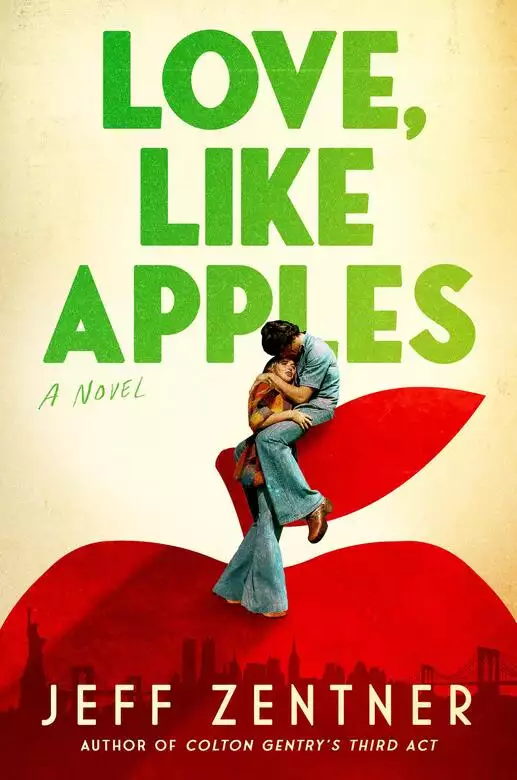
For readers of Taylor Jenkins Reid and Kristin Hannah, the lyrical, deeply felt story of an artist and the great love that defined his life, set against the electric, delirious backdrop of 1970s New York City and the tumultuous years prior.
Growing up motherless and under the cruel eye of his alcoholic, emotionally distant father, Tiller Loomis seemed destined for a hardscrabble life. In the 1960s, the small Appalachian town of Sawyer, Tennessee offered few opportunities outside of working arduous hours on his family’s apple orchard. The one ray of light was his older brother Smith, a compassionate and gentle boy who salvages what might have otherwise been a brutal childhood. Kindness, he teaches Tiller, is a choice.
But when Smith is drafted into the Vietnam War, Tiller’s world collapses. Directionless and grief-stricken, he stumbles into a children’s puppet show at his church and ultimately finds purpose and joy through the strange, tender art of puppetry. Chasing his dream of puppeteering full time, Tiller lands in the gritty, graffitied, bohemian hothouse of 1977 New York City, where experimental artists and misfit idealists are using puppets to try to reach teens with a message of hope on a PBS show called Imagine Nation.
In Imagine Nation’s cast, Tiller finds a chosen family of dreamers and creators who will change his life forever, chief among whom is the beautiful Julie DiFrancesca, a fiercely vivacious woman who offers Tiller a chance at a life he never thought possible.
Narratively framed as a present-day documentary production about Imagine Nation, LOVE, LIKE APPLES takes us from the 1970s into the modern era, tracing how the ripples from one controversial but forgotten TV show and a complicated love affair continue outward over decades, while also exploring the indelible power of radical empathy and the lives of the artists who carry its flame in their hearts.
Release date:
November 3, 2026
Publisher:
Grand Central Publishing
Print pages:
416
* BingeBooks earns revenue from qualifying purchases as an Amazon Associate as well as from other retail partners.
I’m a poet now and a worker of wood, and I live quietly.
So it startles me when my phone interrupts the usual reverie of my labor, coming alive and humming insistently across my workshop’s steel tabletop.
I turn off my sander and answer. “Hey, Vincent.”
“Hey, Dad, got a sec?”
“For my favorite son? What’s up?”
“I have a weird one for you.”
“Color me intrigued.”
“So you know how that Imagine Nation clip went modestly viral a little while back?”
“Yeah.” I remove my safety glasses, set them on the table, and massage the bridge of my nose.
“Well, Darwin Hoang, one of my classmates from USC film school, was responsible for that. He posted the clip on his socials, like ‘Who can tell me anything about this show? How did this air on PBS in 1978 alongside Sesame Street and Mister Rogers’ Neighborhood?’ And I comment, ‘Buddy, I hope you’re sitting down right now.’”
“Darwin Hoang…”
“I showed you his doc about the American helicopter pilot who tried to stop the My Lai massacre. Lost the Oscar to Werner Herzog.”
“Ah, right.” I’m doing the math. I rub my forehead. “Anyway.”
“Anyway, he’s obsessed and wants to make a doc about Imagine Nation. And guess who’d be his first stop?”
“Mmmm” is all I manage, a long-dormant wellspring of emotion suddenly brimming in my quickening heart, shortening my breath.
“I know this is out of the blue and—”
I clear my throat against the tightness gathering in it. “It’s a lot to think about, kiddo. You’re a creator. You know that creative endeavors come with complicated baggage.”
“No, absolutely, Dad. I tried to manage expectations. Just, if you’d consider it and let me know so I can tell him?”
“I’ll mull it over, okay?”
“Hope you’re not mad.”
“What did I always say about anger?”
“I know, but people change.”
“And I’ve become a rageaholic in my dotage?”
“People change.”
“Not that way, God willing. Took me unaware is all.”
“You wondering if Darwin’s on the level?”
“Now I am.”
“On the level and then some,” Vincent says. “You’ve seen his work.”
“So you don’t think he’s after anything sensational or exploitative.” I rub at a rough patch on the live-edge cherrywood tabletop I was finishing as though the ridges of my thumbprint could smooth it.
“No, no, that’s not Darwin at all. He’s achingly sincere. He’s alluded to some personal connection to the show, but I can’t drag it out of him.”
Quiet prevails for a few moments on both our ends. Finally, Vincent says, “So?”
I draw a deep breath. “Pondering it.” Outside my workshop, a crow caws faintly, weighing in. In which direction, I can’t say.
“I think you should.”
“And I think you should go get Sy and Junebug. Put my grandbabies on the phone this minute.”
“I’m afraid Silas and June are currently hiking Laurel Canyon with Gemma.”
“Gemma’s back from Berlin?”
“Arrived Saturday.”
“How’d her exhibition go?”
“Smashingly.”
“Did she get to London while she was over there?”
“No, but her parents are visiting here in a couple months.”
“Gem and my grandbabies are watching for mountain lions while they hike, I hope?”
“And tigers and bears, oh my. I’ll have them call you later.”
“You owe me that for springing this on me. And I want to hear from your lovely wife about her exhibition.”
“She enjoys talking to you even more than she likes talking to me.”
“Tell Sy and Junebug this summer I want them to come out and spend a whole month with Papaw, living barefoot and stained purple with wild blackberry juice. We’ll cool off every day in the swimming hole or hike at Big South Fork and then get grilled baloney sandwiches and peanut butter milkshakes at R. M. Brooks. We’ll project Pixar movies onto the side of my workshop and lie under the stars on blankets, with fireflies all around us. Oh, and every night before bed, a new performance from Lulu Von Moosewood and Ranger Porkchop. You know I don’t have many more years where a puppet show is magic to them.”
“Jeez, can I come?”
“I’m sure Chris Nolan would love his DP taking a month off during shooting to go lead the life of Riley.”
“I look forward to you spoiling my kids into utter ungovernability. They already behave like tiny potentates after hours with you. Lord, what a whole month would do to them.”
“That’s my job. Tell them my plan.”
“We’ll see. Maybe we can fit it around summer camp.”
“Love you, kiddo. I’ll get back to you with my answer.”
“Love you, Dad. Take care.”
We hang up, and I sit dazed with the stillness. I guess Mr. Crow already had his say and flew on because the only sounds are the faint electric hum of my midcentury workshop clock and the snoring of my geriatric beagle, Piglet, dozing nose-to-tail in his bed near my feet.
What we bury. Our treasure of loves and scars, our harvests of ruin and rapture. Hope soured like leaf fall gone to rot. Put in your spade and turn the soil. Harrow it up for the sun to see. Weep for it all, the bad and the good.
There’s no more work for me today, not after that call. Only reflecting. I’ve found that I think best next to waters. I’ve heard it has something to do with negatively charged ions wafting around moving waters—the product of sun, fresh oxygen, and churn. Who knows. I love being audience to something ancient that will keep its course after I’ve faded from memory.
I set out down to the trail to the Clear Fork River, with Piglet shambling at my heel, stopping occasionally to root at the understory. His eyes are rheumy, and he sniffs longer at things than he once did, so I imagine nature’s rich bouquet has become muted and distant to him. I wonder if he remembers the wild, fecund scents of puppyhood.
When we reach the river, the light is graying, surrendering to night. It’s late September on the highlands of the Cumberland Plateau. The afternoons are warm and the nights are brisk and the day tips into cool. A few frogs still sing their slow nocturne among the rushes. A great horned owl calls down from its perch of darkened limbs. Upriver is a blue heron, body the color of chimney smoke, wings hued of blue ink bleeding into water. He stalks regally through the shallows like a cavalier with an invisible partner.
I sit on a fallen ash, hoisting Piglet onto my lap, and with my thumb I stroke the narrow channel of coarse fur between his eyes, which he closes in pleasure. Then I walk in memory’s torchlit marble hall. Is it better to tell a story or wear it hidden, next to your skin like a sacred talisman you protect from the world’s eyes?
By the time I think I’m halfway to an answer, Venus has pierced a silver hole through the indigo sky next to the waning crescent moon. I pull out my phone.
“Dad,” Vincent says.
“Tell Darwin I’ll do it.”
A long silence from Vincent. “Yeah? I know a little of Darwin’s process, and he digs deep.”
“That’s okay.”
“I think this story deserves to be told. And Darwin’s as good as they come.”
“I hope I’m doing the right thing.”
Vincent’s voice turns somber. “You know who’d want you to do this, don’t you?”
The constriction in my throat from earlier returns instantly and with greater force than before. “Yeah, kiddo, I do.”
In the ensuing month, no fewer than three times I picked up my phone, poised to call Darwin and back out. Each time, something deep inside stayed my hand. It felt like a force entirely outside myself.
So, on a cool, overcast October afternoon, I greet Darwin and his small crew at my front door. “Welcome to Rugby, Tennessee, friends. Any trouble finding the place?”
“No,” Darwin says. “The drive from Nashville was gorgeous.”
“Aren’t the autumn colors spectacular?”
“I grew up in Michigan and I miss it, living in LA.”
“Thanks for coming here. I have photo albums and fragile puppets and other mementos I’d not entrust to baggage handlers.” I lead them back to my workshop. “I feel comfortable in here. There’s decent lighting, and you can augment as necessary.”
“That’s right, you know something about lighting a set, huh?” Darwin says.
“Enough to be dangerous, as they say.”
“Mr. Loomis?”
“Please, Tiller.”
“Tiller, thank you again for agreeing to do this. I can’t remember the last time I was as excited about a project. The first time I saw a clip from Imagine Nation, I was like ‘Wow, this is some next-level, innovative stuff. It’s punk rock and irreverent and queer, and it’s doing cutting-edge anticomedy, but it’s got heart and compassion and radical empathy.’ I couldn’t stop thinking about this show. And I only got more intrigued the less I could dig up about it. There’s almost nothing out there. But some random account put twelve episodes on YouTube. They’re grainy and low-res, the sound is bad—episode five looks like it might have been filmed off a TV monitor—but they’re there. Imagine Nation moved me like no other children’s show ever has. It’s dripping with heart. It’s tangible, the love it exudes. I think—” Darwin’s voice begins to break. “I know it would have saved a lot of lives if it’d had a chance to reach more kids. I want the world to know it existed. Sorry—I’m not being very dignified.”
“We both know that show business means checking your dignity at the door.”
“I can sense there’s an amazing story behind it.”
“Well, I hope I can help you tell it. Vincent tells me you may have some connection to the show.”
Darwin shuffles his feet and looks down, rubbing the side of his face awkwardly. “Ah, yeah. Although I’d rather keep that under my hat for now, if that’s all right.”
“Vincent also led me to believe you might say that. So, it remains a mystery for now.”
“I promise I’ll tell you eventually. Just part of my process. Did Vincent tell you much about that?”
“Only that you dig deep.”
“That’s fair. I’m drawn to human stories. Which hinge on human experience. Which means that I want to know your experience of Imagine Nation, including all that led you there. We want to know the people who made the show, and the world that made them. Include the details you might think would be irrelevant to a finished, edited documentary if they’re important parts of your experience and journey. I’ve found that often the true magic of a story hides in what seems immaterial. We’re here as long as it takes. The full story of what Imagine Nation meant to you and your life.”
I smile wistfully. “The whole story, huh? Well. All right. I don’t know what your angle is for this documentary, but the story I have to tell is one about the limits of creative endeavors and how they can shape us and save us and break our hearts. It’s about what you get when you bring together hopeful, hungry artists who want to find and fix what’s broken in this world. But above all that, it’s a love story. Where should I start?”
“From the beginning,” Darwin says.
You don’t become a puppeteer the way you can fall into music or acting or writing. There’s no ancillary motivation that exists outside the art itself, no pretext, no social capital to be had. Generations of teenage boys have picked up guitars or tried out for high school musicals in the hope of wooing girls (or boys). Not one has ever picked up a puppet with the same end. This isn’t to say that puppeteers lead celibate lives—they assuredly don’t. Only that puppetry is a considered choice one makes.
My theory is that the ubiquity of puppets in children’s entertainment actually makes children not want to see what’s behind the curtain. There’s disillusion and disappointment in learning that Big Bird and Elmo are inanimate husks. Also, to make art for children is to never receive the esteem you would if you made “serious” art for “serious” people (read: grownups, as though every grownup wasn’t once a child, or as though grownups are inherently serious people).
Enough preamble. I was born on May 26, 1954, in Sawyer, Tennessee. I turned seventy-one this year. Feels strange saying that. Sawyer’s a small town on the Pigeon River in the mountains of East Tennessee, not far from Dolly Parton’s birthplace. That same day, my mother, Hazel Loomis, died. I don’t know if she ever held me. She gave me my name, though. Tiller James Loomis. My brother, born in July 1949, was named Smith Henry Loomis. She named one of us for the maker and one of us for the tiller of soil, but we were both makers and tillers of soil.
We lived on a fifty-three-acre apple orchard a few miles south of Sawyer. It had been in our family since the early 1800s. We grew other things—pumpkins, a handful of peach trees that never yielded much—but mostly apples. Red Delicious (when they still lived up to the “delicious” part of their name), Winesaps, and Black Twigs. We were called Loomis and Sons Orchard, a name that had been passed down, but had become temporarily inaccurate until I came along—at least the “sons” part.
I wasn’t a planned child. The doctor had told my mother she couldn’t get pregnant again after Smith. I was supposed to be a blessing, but when my arrival into the world took my mother from it, I became a curse, and my father, Hank Loomis, treated me as such. Smith would tell me that he wasn’t always cruel and hard and prone to drink. Smith, at least, remembered the days when there was some tenderness in our father, perhaps outsourced from our mother. Her death scourged it from him and left his heart a wasteland. Smith must have gathered up all the goodness he discarded.
I loved Smith. God, how I loved him. He gave me everything I needed from my father but didn’t get, taught me all I had to learn. I’ll never forget one afternoon the summer when I was six—the same age as my grandbaby Silas—he found me where our land abutted the Pigeon River, the place I spent most of my free time. I’d corralled a tiny frog and was tormenting it with a stick, poking at him, flipping him over, thwarting his escape attempts, entertaining myself with his distress.
“Tillie?” Smith approached behind me. He moved stealthily in the woods, as though to avoid visiting the violence of noise on its inhabitants.
I jumped and tried to discreetly block what I was doing. I felt like Cain must have after the Lord discovered that he had slain Abel. Stick still in my hand, behind my back.
“What you doing?” Smith asked.
“Nothing.”
Smith peered around me. “You hurting that frog?” he asked softly.
“I’m just having fun.”
“Is the frog having fun?” His voice was so gentle and even. My father would have already hit me upside the head if cruelty to animals were something that bothered him.
I started to answer no but caved in on myself, sobbing. I couldn’t bear Smith’s plain disappointment. He hugged me, and I buried my face in his chest and cried. I remember his white Fruit of the Loom T-shirt smelled like line-dried cotton and Fab detergent. When I stilled, he allowed me to gingerly pick up my small captive and release him. It meant everything to me that he offered me that redemption.
Then, he led me to a shady spot under a tree and we sat and he put his arm around me. Even at eleven he had a working man’s hands—broad, strong, and sun-bronzed with dirt under the nails. He was on his way to having hands like our father’s. Brown, thick at the joints, and scarred as if outgrowths of the trees he tended.
“That frog just wants to live and lay out in the sun and eat his flies and sing his songs at night. He gets one chance on this Earth, same as you. God made him like he made you. Even little things deserve to be treated kind.”
I nodded and wiped my eyes with my palms and sniffled, and he handed me his faded red bandanna. I balled it up in my fist and clenched it like I was trying to wring the color from it. It was how my heart felt. “You think I’m bad now?” Asking this made me break down again.
“I think you’re an awful good kid. This don’t change that a bit. But you got to remember that you’re good and you can always pick being good if you want. You choose who you are.” He patted my chest over my heart for emphasis and looked me in the eyes. “I love you.” Ever seen a close-up of the eyes of a tortoise or a whale? Some creature that’s moved gently on this Earth for many years? His eyes were like that.
I might have perished of disappointment in that moment if he’d said anything but what he said.
We sat there for what felt like hours by a child’s reckoning, but was probably a half hour. I breathed my shuddering breaths and my crying headache subsided while Smith told me about our mother’s love for little creatures, how she would scoop fallen baby birds into their nest. How she had once fed an injured squirrel cow’s milk from an eyedropper and nursed it back to wellness.
I knew even then—not in retrospect—that my life turned on that moment. That was when I learned that I was not foreordained for cruelty. I didn’t have to be my father. I could be like Smith. I had my mother’s blood like him. I was born to an inheritance of goodness.
Some people never learn they have a choice in this life about who they’ll be. They never get the chance to see that there are no rails laid for them and they can elect for decency even if circumstance didn’t ordain them to it.
That’s a damn shame. I learned when I was six. My brother taught me.
Farm work prepared me well for puppeteering, strangely enough. Both are intensely physical endeavors. Both enlist your hands as implements of creation, of bringing life to things. In both, you seek to nourish people. Both are subject to larger forces outside your control, weather that can ruin your entire enterprise.
I started laboring in our orchard as soon as I was old enough to wield pruning shears and climb a ladder with a bushel basket slung over my shoulder. We were constantly pruning and raking and thinning out scab apples and harvesting fruit—you think of apples as an autumn crop, but different varieties grow at different times of year.
We never had enough help. We could only afford to hire a few hands, and we didn’t pay well. I think minimum wage then was about a buck an hour, and I couldn’t say for sure that we paid that. No one stuck around long, but for one notable exception I’m going to introduce in a bit. It might sound like I’m about to say that I hated the work—the long, hard hours. I didn’t. Sure, we could have used more helpers, but were it not for some chance occurrences, I could have happily ended up owner and proprietor of Loomis and Sons Orchard.
I delighted in being on the ladders in the heat of the afternoon, feeling my bushel barrel grow heavy as I plucked one perfect, slick, red apple after another. I’d imagine where each would end up. This one dipped in caramel and eaten off a stick. This one in a pie to follow Sunday dinner. This one on a beloved teacher’s desk.
I’d work alongside Smith, and we’d make up jokes and stories and silly little ditties. We’d sing Oh I’d love to be a dirty apple picker, that is what I’d truly like to be to the tune of the Oscar Mayer wiener jingle. We’d fall into this hypnotic rhythm where we’d repeat the same phrase and response to each other over and over for hours. We’d say It’s a living in the voice of one of the put-upon bird characters from The Flintstones, a favorite of ours.
Other times, we’d have serious discussions. We’d ruminate on whether trees could feel and think or what we’d do if the Reds finally took a notion to nuke us. Smith would recount memories of our mother. He was only five when she died, so there were a lot of retellings from his limited portfolio. Knowing what I know now about memory, I suspect much of what he related was embellished or outright false even as he strained to be faithful.
When our arms ached and our shirts soaked through, we rested in the shade of a tree and Smith would select a flawless apple and portion it with his Barlow knife, offering me slices. You’d think I’d be sick of apples, but I adore them still. Their smooth, firm, waxy skins and crisp white flesh that’s never cloying. Even the smell of them—delicate, sheer, maybe a hint of rose wafting along the top. Nothing beats the brisk tang of ice-cold apple cider in the waning summer. Ever had a perfect Red Delicious straight off the tree, before the flavor was bred out of it in favor of uniformity of color and durability of transport? It’s a marvel deserving of its name.
Once, while Smith and I sat in the shade, eating the literal fruit of our labors, he spoke in wonder of the natural world, as was his wont, about how trees could summon honeyed red apples from the unlikely elements of dirt, wind, rain, wood, and sunlight. I thought about it often after that. I would sit with my brother, whom I loved so dearly, and eat and reflect on my life and how love, like apples, is a sweetness that emerges from improbable circumstances.
A Saturday night in late August 1965, one more consequential than I could’ve known. I was eleven and an arcing livewire of excitement. It was the final night of the county fair. Thing you gotta understand is Sawyer, Tennessee, didn’t have a lot going on. And even less when you were farmers struggling to make ends meet. Our worldly pleasures were few: the occasional cherry Coke at the soda fountain on Main Street, Superman comics, and Western and World War II matinees at the Ritz, Sawyer’s decidedly unritzy downtown theater. Nights in front of our black-and-white Zenith watching Andy Griffith and The Beverly Hillbillies. So the county fair was a highlight of the year. Rides, games, live music, fried food. And I was going with Smith, his best buddy Pep, and Pep’s sister Betsy.
Pep was short for Phillip Earl Pruitt. He was my brother’s age. I’m not sure whether they met at school or when Pep hired on at our orchard. They weren’t a likely match. Where Smith was gentle and quiet, Pep was imposing, boisterous, rough, and tough.
Where Smith and I wore simple, durable, inexpensive, unstylish farm kid clothes good for work, Pep dressed like a greaser—cuffed 501s, beat-up black engineer boots, black T-shirts, and a wash-faded denim jacket. Think Patrick Swayze’s character in The Outsiders, and just as appealing to the girls. He was tall, muscular, handsome, and charming. He buckled his belt on the side so it wouldn’t scratch up his car when he worked on it. An omnipresent pack of Pall Malls rolled up in his sleeve, he smoked like his lungs could only absorb oxygen if tobacco pulled back a velvet rope.
He drove a rusty aquamarine 1956 Chevy Bel Air coupe that he’d fixed up himself with junkyard parts and a glasspack muffler. A coon tail streamed from the antenna and an 8-ball spinner knob was clamped to the steering wheel.
Folks in town considered Pep a hoodlum without evidence other than his mode of dress and that he was from a bad family. His mom ran off with an encyclopedia salesman. Pep constantly sported shiners and fat lips from tangling with his souse of a daddy to prevent him from beating on Pep’s younger sister, Betsy. He served his role of protector well.
Pep was also always kind to me. When he’d see me, he’d grin wide, extend his calloused, perpetually motor-oil-and-nicotine-stained hand, and say, Slap me some skin, daddy-o. Sometimes he’d pick me up and toss me over his shoulder and go, Sack o’ taters! and spin me around until I was dizzy. He called me Bugs Bunny after I mentioned loving the character.
They say that water finds its own level, and that was Pep and Smith. For all of Pep’s roughneckedness, he had a huge heart and he’d made the same decision Smith had—that his own meager circumstances would not corrupt him into meanness. Together, they were the rarest of things: a pair of teenage boys who made each better through association.
Smith and I stood on our creaking, 1800s-vintage porch, the two of us freshly bathed and smelling of Lifebuoy soap, Vitalis, and, in Smith’s case, Aqua Velva. Above it all was the elegant, slender note of honeysuckle from the bush that grew at the northwest corner of the porch.
The stiflingly muggy summer heat enrobed us like we were dangling over a simmering stockpot. Cicadas whined like a failing transmission in the trees. I couldn’t stop running at the mouth in anticipation of gorging myself on cotton candy and freshly churned ice cream and riding the Ferris wheel and tilt-a-whirl and playing the ring toss and shooting gallery and tasting of whatever other sundry delights the fair had to offer. Smith was excited for all that plus the prospect of running into Patty Ogle, a tawny-eyed, pretty Melungeon brunette from school and church.
We heard the feral growl of Pep’s Chevy long before we spotted it barreling up the road in a dust plume. He skidded to a stop out front and cut the engine. He and Betsy hopped out. The one place Pep was strangely fussy about smoking was inside his car.
He leaned against his car door, pulled a Pall Mall from behind his ear with one hand, stuck it between his lips, and in a single practiced motion with the other hand raised his tarnished Zippo and lit it. “She’s running a smidge rough,” he said around his cigarette to no one in particular. “Might could have a fouled plug.”
“We’ll tear into it later,” Smith said. “Maybe your carb needs cleaned.”
I locked eyes with Betsy, smiled shyly, and looked away. At the time I would have preferred death by manure avalanche before admitting my crush on her, but that’s exactly what it was. She knew it.
She was a year younger than Pep and Smith and had a dusting of freckles across the bridge of her nose and wavy strawberry blond hair that she kept perpetually in a ponytail. Her voice was scratchy in a way that tickled your eardrums, like a cat licking the inside of your wrist. Her blue eyes luminesced when she smiled. She dressed in plain and inexpensive clothes, but every article bore her mark—a heart-shaped calico patch she’d sewn over a hole in the knee of her jeans, the sleeves of her white cotton blouse rolled up to bare freckled forearms. A wash-faded cornflower-blue bandanna knotted around her neck like a kerchief. A Borden Elsie the Cow button pinned to her blouse.
“Hey, Tillie!” Betsy called. “You gonna win me a teddy bear at the shooting gallery? I asked Pep here, but he said if he wins one he’s giving it to Donna Byrd ’cause he’s sweet on her.” Betsy kissed at the air. Smith and Betsy spent the next several minutes gleefully ribbing Pep about his torch for Donna.
Pep dragged on his cigarette until the cherry gleamed. “Ain’t we got nothing else to chat about? Goodness’ sake.”
“Can’t blame us enjoying watching you squirm,” Smith said.
“Fun, ain’t it, Tillie?” Betsy said to me. “Better than the Ferris wheel.”
My grin spilled off the sides of my face. Eleven years old and being treated like one of the gang.
Pep drew his cigarette down to the filter, stubbed it out on his bootheel, and flicked it underneath our porch. “What say we make a trail? Or are you hens too busy gossiping?” He nodded at Smith and Betsy, winked at me, and plucked a crumb of tobacco from the tip of his tongue with his thumb and ring finger.
My heart revved like someone had floored an accelerator in me. I could already feel the g-forces pressing me back in my seat as Pep hit straightaways going full-tilt boogie, then pinning me to the wall. . .
We hope you are enjoying the book so far. To continue reading...

 Please log in to recommend or discuss...
