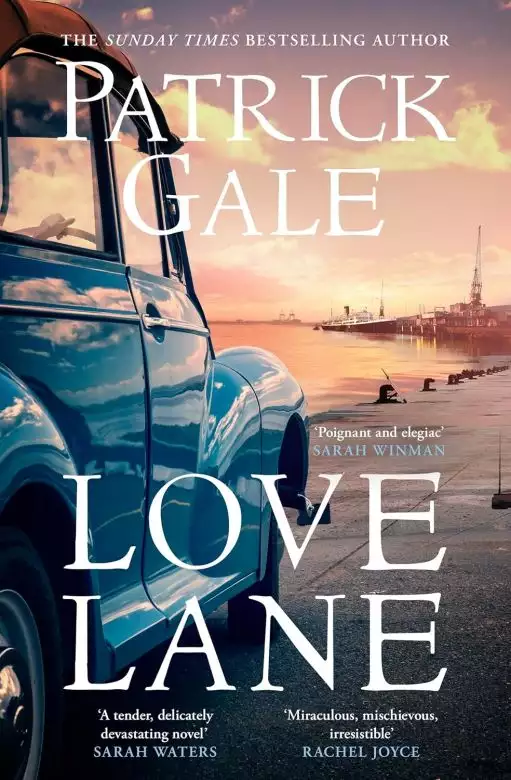
'Five threads of storytelling interweave to form the braid of a novel both poignant and elegiac. A story of missed opportunities and, ultimately, a memorable story of forgiveness' Sarah Winman 'Love Lane is the story of a family, told beautifully and with deep understanding. There is no judgement here, only humanity. A joy and a lesson for our time'Ann Cleeves A reunion. A journey. A longing for a place called home...
When veteran Canadian wheat farmer, Harry Cane is obliged to sell up and sail home to an England transformed by two world wars, his arrival triggers unwelcome self-examination for the family he abandoned, and for whom he has never been more than a distant myth.
His daughter feels duty bound to take him in but is riven with doubt and ambushed by a long buried anger she has never before expressed. Harry's effect on the next generation is less predictable, and enables his granddaughter to deal with an unspeakable trauma, while her gentle husband feels seen for who he truly is.
Can Harry stay and make a new life before it's too late, or will he find himself cast out again, punished for having witnessed and understood too much?
LOVE LANE is a searing portrayal of escape and entrapment, and a powerful exploration of what home and family can really be.
'An involving story of reconciliation, secrets and compromises, rich in emotional truth and evocative historical detail' Clare Chambers
'I adored it. One of the most atmospheric and subtly realised novels I've read in a long while. It has the feel of a small-scale epic, filtered through distinct voices, about family and memory, estrangement and homecoming' James Cahill
'He makes you care about the characters who feel real, and you so badly want the world to treat them with the respect, kindness and attention they deserve. A deep, moving novel' Georgina Moore What readers say about Patrick Gale:
'The gift of Patrick Gale is to tell a story with such poise and grace of prose that you are wound deeply around every step of the unfolding tale' ⭐ ⭐ ⭐ ⭐ ⭐
'Gale is one of those skilled writers who makes you forget you're reading a book' ⭐ ⭐ ⭐ ⭐ ⭐
'Gale is a wonderful writer' ⭐ ⭐ ⭐ ⭐ ⭐
'A gifted storyteller' ⭐ ⭐ ⭐ ⭐ ⭐
Release date:
March 26, 2026
Publisher:
Headline
Print pages:
352
* BingeBooks earns revenue from qualifying purchases as an Amazon Associate as well as from other retail partners.
For many years, Harry Cane and Paul Slaymaker were able to live the life they did, not only through scrupulous discretion, but because they never gave what they had a name or even put it into words. They owned adjoining farms a couple of miles outside the tiny settlement of Winter, Saskatchewan, and, because Harry had been married to Paul’s sister and raised a child with her – until losing both wife and daughter to the Spanish flu in 1918 – it was generally accepted that the two men were effectively brothers as well as friends. It was known that, being sonless, each regularly helped the other out with tasks needing more than one pair of hardened hands, and not just during the wheat harvest, as many neighbours did, but throughout the farming year. This was accepted too, as it was known that Paul had lost a foot in the Great War, although he still rode as one born to it and managed his prosthesis so well his limp was barely discernible.
What nobody knew, not even the all-seeing postmistress, was that they were lovers and rarely spent a night apart, unless one of them was ill or more than usually exhausted. As with most long-married couples, youthful passion had burned itself down to a steady tenderness and the big bed Paul had built them from his own land’s timber in their early months together was witness more often to conversation, yawning and quiet companionship than to any outlawed practice. Yet each remained the other’s private lodestone, the one he would name in extremity, or in prayers, had they been praying men.
Their road to one another had been so beset with sorrow and obstruction that neither envisaged their future as holding anything but more of the peaceable same. Old age was a frightening prospect, as it was to any solitary person in such a remote and comfortless spot, but Paul chose not to think of it, just as he chose never to acknowledge in words the rare happiness they shared. Harry, if pressed, and being more of a worrier and planner, would have said they would surely find some solution in North Battleford, the nearest town: adjoining houses with a discreetly knocked-through attic, perhaps.
The decades after the Great War were no kinder to Canadian prairie farmers than to anyone else. It was a wonder that either Paul or Harry’s farm survived. Wheat prices tumbled in the long recession that followed the war and a searing drought in 1924 drove several of their neighbours to abandon hard-won land to the savage rainlessness. All around them, families quit their homesteads, often driven out by crippling debts to banks, for whom emptied-out farms were surely of less worth than mortgages. It became common to meet whole households stacked up on ramshackle carts, mattresses and all. Most poignant were those who had acquired a car or tractor in better times and, no longer able to afford fuel, were now reduced to having the vehicle towed by a horse. Work camps and soup kitchens were set up by way of poor relief. Teams of desperate men were set to building bridges, repairing roads and, further north, felling trees.
Then rose a false dawn – a succession of record harvests that saw the rail network expanded further and brought fresh settlers in, many moving onto farmsteads not long reclaimed by the banks. The price of wheat rose and fell alarmingly, so that farmers formed cooperatives, the better to negotiate a stable price for their grain and plan ahead.
Harry fell into the habit of cooking double quantities of food so there might be something to offer the skeletal women and children who regularly walked wearily up his track. Paul and he were lucky in having an orchard, chickens and a cow between them, but, such were the wants of the hungry and desperate, the henhouse had to be kept padlocked by night, the cow led into a shed and locked in, even on the hottest nights. Regardless, they were reduced to cooking the gophers they would once have paid village children to catch and drown as vermin. These tasted not unlike rabbit, especially if the gravy was sweetened with fresh chunks of ripe apple.
It was at the bleakest point of the early 1930s, when the dust storms off the blasted land were leaving little drifts of earth under every door and heaped on every windowsill, turning the windowpanes brown, that the woman and her boy showed up. Paul and Harry had just finished a punishing day of harvesting. Paul and the labourers hired for the day headed off to bathe and sleep. They were entirely caked in dust and dirt, resembling so many pitted, kerchief-masked statues, the reddish grime emphasising their lines and sweat runnels.
They were sitting in the shade of an apple tree, she and the boy, both thin as wire and so deeply tanned that their blond hair looked almost white. She stood as they approached, and Harry saw she had been sitting on a stuffed old carpet bag he guessed contained all her worldly possessions.
‘Are you hungry?’ he asked, as he always did. Paul thought he was soft. ‘I’ll be eating soon and could spare some.’
‘I don’t want charity,’ she said. ‘I want to work.’
Harry began to demur. ‘Harvest is finished,’ he said. ‘Such as it was.’
‘I trained as a dairymaid,’ she said, ‘back east. I can milk and make cream and cheese. The boy can look after hens, knows how to spot the rooster chicks: it’s a gift he has.’
Harry gave his usual, honest answer, that he couldn’t afford to hire anyone permanently but that they were welcome to eat something with him and bed down in the barn, provided they didn’t smoke out there.
He had made a pie, more vegetable than meat, and there were stewed apples and cream. They ate together on Harry’s veranda, talking little as the autumn sun dropped below the horizon and a chill stole out with the shadows. She fed the child before she ate herself and he soon fell asleep with his head in her lap.
‘He’s seen more in his short life than I hoped to in my long one,’ she said. ‘I hope it hasn’t marked him.’
‘Your husband . . .?’ Harry began.
‘Dead,’ she said. ‘He was helping us into a goods train and fell. It was quick but horrible and the boy saw it all. He’d thrown the boy aboard before jumping himself and falling. The worst of it was not being able to stop the train – box car riders are lower than vermin – so we were just carried away into the night, leaving him where he lay.’
It occurred to Harry later that her terrible tale didn’t quite hold together, that there was nothing to have stopped her and her boy climbing down when the train next stopped and riding back the way they had come, to reclaim the body.
She and the boy duly bedded down in the barn. Harry woke to the smell of baking and found she had not only taken the padlock key off its hook in the kitchen to fetch the eggs and let the hens out, but had swept and mopped the house’s ground floor and made soda bread for breakfast. The boy had been set to curry-combing the two horses, then to gathering up windfalls in a log basket.
‘You didn’t need to do this,’ he said, ashamed of his momentary fear that his exhaustion the night before had made him forget to lock the house.
‘We always sing for our supper,’ she said.
The soda bread was better than anything Harry ever made himself. She said the trick was to use soured milk, of which thundery weather gave them no lack. She introduced herself as Dimpy O’Connor. Her child, older than his hungry frame, was Davy. He raced over to accept a slice of warm, buttered bread and a glass of milk then hurried back to the horses, having asked their names.
‘He loves the countryside,’ she said. ‘Never happier than with a horse to care for or a lamb to nurse. It’s been tough for him, living on the road like this. And without a father, of course, he protects me, so he’s growing up too fast.’
She was pretty, Harry saw then, for all her hardened manner. When people spoke of women with heart-shaped faces, he had always dismissed it as a sentimental figure of speech, but her face, he saw, truly was heart-shaped, with broad, smooth cheeks, a delicately stubborn chin and even a widow’s peak where she had tugged back her pale hair under a cotton scarf. She gazed admiringly over at the boy, Davy, and her eyes caught the morning sun so that their grey looked almost blue.
Just then Paul came riding across from his place, unrecognisably clean after the grimy figure she might have glimpsed the night before and no longer masked against the harvesting dust. Even after all this time, with his hair shot through with silver and his habitual frown making his expression sombre, Harry’s blood sang a little on seeing him, especially in the saddle, where his limp wasn’t evident. Harry raised a mug of coffee in greeting and saw Dimpy’s careworn face similarly lit from within.
‘This is my brother-in-law, Paul Slaymaker,’ he said. ‘Now I’m sure he could use a dairymaid.’
Paul’s utter lack of small talk, accompanied by a tendency to gruffness around women, was undoubtedly what had kept the mothers of the parish from pushing unmarried daughters his way over the years. Far from being off-putting, the knowledge that he slaved on heroically, despite having lost a foot to the war, would otherwise have made him all the more appealing to cosset and cherish.
True to form, he fairly interrogated Dimpy O’Connor, but she made her answers calmly, using a low tone, as if with a skittery horse. Then the boy, Davy, emerged from the barn, wanting to know every detail of Paul’s mare. Since the all-too-brief joyful years before the war, when he had doted on the little niece, Grace, who now lay with her mother, Petra, in a grave at the edge of Harry’s orchard, Paul had been even shyer of children than he was of women, guarding his heart from further hurt. Now, he not only answered the boy’s questions but, with a nod of assent from the mother, lifted him onto the saddle, climbed up behind him then trotted up the track to the boundary line before cantering back to the house. At a stroke, the boy was his to command, the mother, grateful.
Paul was appalled by her story, as Harry knew he would be, but it was the boy and the thought of what he had witnessed and been put through that made him offer them a cabin behind his home. It had been designed by his late sister as a summer kitchen, so was equipped with a stove and a sink, but had long fallen into being used as a store for everything from apples to rat traps.
Harry had not been a party to the conversation so assumed money had been discussed, that she and the boy were getting a roof over their heads, but were also to be paid a wage for helping out around the place as a dairywoman, cook and housekeeper. But there had been no such conversation – she was invited, not hired – and that ambiguity paved the way for what followed.
All that autumn they lived in the cabin and Paul continued his routine of visiting Harry after dark several times a week. Then winter descended with unusual ferocity, confining each man to his house, and, when the weather relented a little, Paul’s visits did not resume. Concerned he might be ill, or have had an accident, Harry rode over and discovered that Dimpy and the boy had taken refuge in the house as the water supply to the cabin had frozen. So of course, with witnesses living in, the nightly visits had to cease.
Just as he had never discussed or even acknowledged in speech the fact of his visits, now Paul made no direct reference to their having so abruptly come to an end. The mother’s and son’s change of address was announced as part of their usual agricultural small talk – between grain prices and weather. Lunch was pressed on Harry, lunch during which Dimpy and the boy sat at the table like family, not hired help, and she corrected the boy’s table manners with the quiet confidence of a woman entirely at home. Harry did not know if she was sleeping in the spare room, where Paul and his sister Petra had long ago nursed him back to health from pneumonia; in Petra’s room, which had long assumed the unhappy character of an undusted shrine; or in Paul’s own bed. The mere fact of her arrival in the house signalled a drastic alteration. With the spring thaw, Paul rode over – with a gift of one of her delicious apple cakes and some tasty soft cheeses – to announce that he was marrying her, and to invite Harry to be his best man. Harry had guessed enough to appear to accept the news with equanimity. Paul had evidently been worried Harry would raise objections, as his relief at his friend’s calm made him positively talkative.
For years, Paul now admitted, he had been under constant pressure from the women of the parish to take a wife, having none of Harry’s immunity as a widower whose tragedy still caused them to drop their voices and men to sigh.
They walked, as they tended to, talking intermittently of drainage and fences, pests and the wheat cooperative of which Harry was chairman, while Harry thought of the weight and musk of Paul’s body and of how he liked to be kissed on the neck, while Paul, he suspected, was thinking only of drainage and fences, pests and the wheat cooperative. When Paul rode home again, with Harry’s warm congratulations, Harry stepped quietly back inside his house before being assailed by a storm of grief that made his knees buckle and left him rolling on the floor before the stove like a dog in pain.
He knew the change was irrevocable, as Paul’s decisions tended to be, that he must get up off the floor eventually, get the hens in, feed the horses and accept that life would continue, but differently. Yet the change felled him as news of a death would, and he lay there, crying at intervals, with the licence of a man bereaved.
And, of course, he did all a best man should: stood at Paul’s side, handed him the ring from a little pocket in his waistcoat, kept silent when asked if there was any cause or impediment et cetera, and raised a toast to the bride over the awkward little lunch afterwards. Duty done, he retreated into living the life he had gone to great lengths to appear to be leading for years, that of a respected widower. He steered meetings of the wheat growers, he attended those of the school governors, and he acquired and trained a handsome pointer like the one he and Paul had briefly adopted back in 1914, as so many English settlers abandoned dogs when they sailed off to enlist.
His house had always been isolated. The plots on two sides of it had never been taken on, thanks to rumours that the Cree – who had been displaced from them – had cursed their earth on being forced to leave it. The isolation had never affected him except, sometimes, in the winter months, because Paul was only a short ride away. With Paul no longer slipping over at night, Harry’s house felt as remote as his rain-sodden tent had done when he was first breaking and fencing his acres and regretting his madness in thinking he could survive in such a spot. Now, as then, he talked to his horses a lot as he worked. He talked to his dog incessantly.
He was no longer a letter writer, since he had fewer and fewer people to write to as his years in Canada progressed. One or two friends and acquaintances who had lived in Winter or North Battleford before moving away might write occasionally and he always wrote back, politely, within a day. Posting or receiving letters involved a trip into town to the post office and he found he didn’t often have the time to go expressly, so post-office trips tended to be combined with his weekly trip into Winter with a horse and cart for provisions. There were rarely letters for him, but there were sometimes things he had sent off for through catalogues – seed, spare parts, the warmer socks and underwear he liked. Everybody shopped from catalogues so these deliveries the postmistress would leave, ready to be called for, but personal letters aroused her interest and, if she saw Harry tying up his horse on the street, she might leave her position to call out to him from her door, waving an envelope for all to see.
On this occasion, there was even colour in her sallow cheeks.
‘Mr Cane!’ she called. ‘A letter from England. A woman’s hand, I think.’
She clearly hoped he would open it on the spot, but it was so long since he had heard from anyone back home, as he still thought of it, that he was frightened of what it might contain. He thanked her, tucked it into his breast pocket without even glancing at the handwriting, and went swiftly about his other business, freshly aware of it whenever he reached for his wallet.
Back home, he set the horse in its paddock with the others, untied the dog, put the kettle on the stove then sat at the kitchen table to take the thing out at last.
The navy-blue handwriting was unfamiliar and extraordinary. It was florid, with deep loops and emphatic dots and crosses, a decorative, emphatic hand so far removed from the dutiful copperplate taught in schools that it spoke equally of flair and independence. He flipped the envelope and saw the return address was from a mansion block in Battersea – not a place anyone he knew would have ventured – but perhaps the war had altered London drastically. He had read an article somewhere about the crisis it had caused in finding servants and how unmarried women so greatly outnumbered the surviving eligible men that they no longer felt obliged to stay at home but were striking out on their own, taking jobs, renting flats and living with a freedom that was almost masculine.
He knew his first wife, Winnie, had long since moved on. He had barely arrived in Winter than her lawyer sent through divorce papers for him to sign, and he hoped she had found lasting happiness with the department-store owner her bullying brothers had forbidden her from marrying initially. But, once settled, he had persisted in sending their daughter, Phyllis, a birthday card every year so she would not think he had forgotten her. He sent them to the only address he had for her: her formidable grandmother’s Thames-side villa in Strawberry Hill. He heard nothing back. Assuming Mrs Wells had not died or moved away, he hoped that little Phyllis got to see the cards even if she was forbidden from writing back or had no wish to. He always wrote her new age in brackets beside her birthday in the year’s seed merchant calendar, so as to keep tabs and not persist in sending her anything too childish as she grew up. The general stores and post office did not offer a sophisticated range and, once he had calculated that she had progressed beyond the age when he could satisfy her with a donkey in a bonnet or kittens in a basket, he took to buying the smallest possible watercolours in the arts and crafts tent at the annual North Battleford show. These he would fix by their corners to a piece of folding card in which he would write her a birthday greeting.
Once Grace was born, and he had a wife and daughter in the house again, he kept the practice up from a kind of guilt and, after Grace and Petra were dead, he persisted from a kind of fear. But still he heard nothing back.
He heard nothing from his brother, Jack, either. Jack’s wife, George, had obliged them to break off contact, but Jack had promised to look after Phyllis and Harry knew he’d have been in touch had anything happened. As a horse vet, Jack would have gone to the front to care for the countless horses wounded on the battlefields. H. . .
We hope you are enjoying the book so far. To continue reading...

 Please log in to recommend or discuss...
