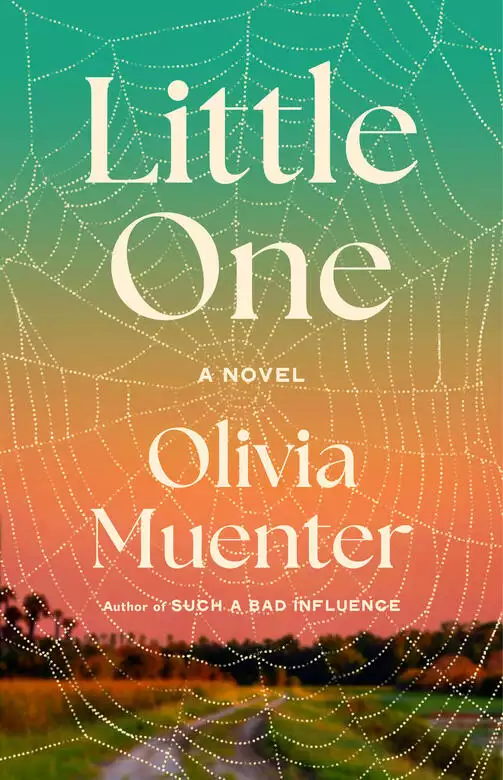
A searing new novel from the USA Today bestselling author of Such a Bad Influence,about a young woman whose life is upended when a journalist uncovers her hidden past as the daughter of an insidious cult leader.
From the outside, Catharine West’s childhood sounds idyllic—balmy days spent running barefoot through the gardens, plucking ripe tomatoes straight from the vine as sunlight warmed her skin. Her parents built a life that was simple and community-focused, an ethos that soon attracted others in need of a change. For a time, Catharine’s magnetic father was enough to keep the farm thriving, and temptation outside its gates. But as she grew older, the farm and family she was raised to love faded into something darker, forcing Catharine to evolve with it.
It’s now been a decade since Catharine abandoned the farm and has done her best to reinvent her life, until an email from a charismatic journalist interrupts her peace. Her first instinct is to ignore the stranger’s prying questions—whether she knew about a mysterious “cult” in central Florida, whether she is the same “Catharine-with-an-A” who lived there for a time. But when she realizes the journalist knows far more than he’s letting on, she reconsiders. If Catharine can stay one step ahead of him, she may be able to find the one thing she never wanted to leave behind—her sister, Linna—and make sure her own secrets remain buried too.
Sharp-eyed and sweltering, Little One masterfully captures the dread of facing your deepest desires, when the hunger to become your best self threatens to drown out everything else. An achingly astute look at modern womanhood and wellness culture, it tackles the enduring question: How far would you go to be good?
Release date:
February 3, 2026
Publisher:
Little, Brown and Company
Print pages:
320
* BingeBooks earns revenue from qualifying purchases as an Amazon Associate as well as from other retail partners.
Push, yells the virtual trainer’s voice as it spills out of my headphones and into the center of my skull. Push forward. Now. Go. One more mile. Feel your feet hit the pavement.
I try to concentrate on the rhythm of my stride, the repetition of my toe-heel strike against the concrete, but my stomach gurgles with hunger instead. The eight-mile run to pick up the cake had seemed like a good idea this morning, something that would make me feel better about the sugar, the day itself. I had pictured myself on the cab ride back, eyes closed in satisfaction, hands carefully clutching the thing I had earned. But seven miles in, all I feel is empty and weak, like the center of me has been carved out with a spoon. I’m caving in on myself.
Come on, the virtual trainer shouts again, one more mile now. It’s going to be so worth it. I promise you. That’s right. Give me one deep breath through your nose.
I don’t have to look at my phone to picture the trainer. I know her well enough by now. I can close my eyes and see her bouncing on the treadmill, her two space buns perched carefully atop her head, her forehead seeming to glow with effort instead of actual perspiration. I imagine the giant fan that’s probably just out of frame, the one that keeps her cool enough to find the energy to keep yelling things like: This is what self-love looks like.
Is it?
And if you need to take a break, that’s self-love too, y’all. I promise it is.
I almost laugh.
And yet, I’m so close to being done that I figure it can’t hurt. I try it. I search for that kind of affection for myself, that kind of care. Anything to make this easier, to keep pushing. Instead, all I find is a gnawing, angry scream inside my chest, my lungs burning, begging me to stop, to breathe, to eat. Maybe, I think, Space Buns is right. Maybe taking a break is the answer, just this once. And it’s that easy. Just like that, I’ve entertained the option of giving up.
You’ve given weakness a seat at the table, says another voice, one that seems to come from somewhere behind my eyes, trickling over the ridges of my frontal lobe. And now you need to ask it to leave.
I realize now that I’ve stopped moving, that I’m doubled over in the middle of the sidewalk, pedestrians grumbling as I block their path, slow their pace. A cramp rips through my side. My face is burning, my skin raw and bitten from the wind. I want to go home and run a bath, sit in it until the water goes cold. It sounds nice.
You know it’s always going to feel easier to stop, the familiar voice says again. It will feel so easy that you’ll be convinced it must be right, that you really are supposed to give in, to take the easy way out, to do the one thing that everyone else is doing. The feeling makes you think that giving up is normal. But we’re better than that, aren’t we, Catharine?
A high-tempo EDM song starts playing, synchronizing with the last big push of the guided run. The sound suddenly feels garish and wrong, the motivational messages childish.
Self-love. Please.
I rip my earbuds out and stuff them in the pocket of my leggings, silencing the virtual coach, the uselessness of it all. And then I keep moving.
Suddenly all that pain from before is something sturdy and knotted, a rope that works its way between my ribs. I reach down into the center of myself, find the thing I know I can always control, that ache I know so well, and I grab hold. I pull myself up out of the place where giving up is an option, and I push forward.
Later, I drag my finger along the edge of the cake, admiring it. I watch as I indent the soft icing just above the circular base and study the writing on the top. Congrats on 10!, it says, barely legible, the letters and numbers drawn on in chunks of thick, goopy icing. Lazy work, really. Like a child did it. I sigh. It will have to do.
Besides, I’ve seen worse. I can still picture the first one: a discounted, week-old carrot cake, the only thing I could afford. I remember sitting in my speck of a kitchen on the first anniversary, elbows scrunched together on a table that folded down from the wall because that was all there was room for. I had stared at the cake, sweating beneath a dented plastic cover. The messy, neon orange blob of a carrot drawn on top seemed to say, “This is your idea of a celebration? Really?” No, I wanted to respond as I stabbed a single candle into the icing. This is something else. A ritual. An assurance that I will not be sad on this day. I will not be angry. I will not be that person. A reminder of just how far I’ve come. Not a celebration, but an acknowledgment of how hard I worked to create this life.
This year, I splurged on one of those Instagrammable birthday cakes, the Funfetti-turned-cool types that cost the equivalent of a week’s worth of groceries and are always more aesthetically pleasing than they are delicious.
“We don’t usually do custom messages,” the twenty-year-old working at the bakery had insisted earlier when I picked it up, seemingly exasperated at my request. “It’s kind of basic.”
I had smoothed down my baby hairs, all of them sweat-soaked and wild from the run. I knew my face was beet red, that I looked flustered, out of breath, and old to them, probably.
“I get it. I totally do,” I started, then lowered my voice. “It’s just… I’m ten years sober today.”
A lie, sure, but why shouldn’t I get something shiny and special for a decade of survival? I gave up something all those years ago, too.
The twenty-year-old sighed. “All right… but it won’t be pretty.”
I thanked them effusively and gave them a big tip. I’m not a monster.
“Ten years,” I say out loud to myself in my apartment, staring at the cake. My mind charts all the things that have changed in that time. The career I have built. The apartments I have tolerated in order to find this place, a building with a doorman and a gym, a trash chute instead of a utility room full of garbage and mice. I should feel proud of myself, relieved to have another year of distance between me and before, but I don’t. This year, it all feels harder.
It’s just the number, I tell myself. The weight of it. Double digits. I’m twenty-eight now, and it feels impossible that a whole decade has passed. I close my eyes and picture the Scandinavian-accented voice from my running app guiding me through the moment. Sit with your feelings. Listen to them. Meet them with curiosity, if you must. But never judgment. Breathe through the—
Fuck it.
I finally lick the dollop of icing that’s been resting on my finger, and my cheeks pucker at the sweetness. Already, I know what comes next. First, a thin tendril of an idea: What if I plunge my open hand into the cake? What if I shovel it into my mouth in giant gulps? I follow the thought down deeper. I imagine I eat it all, then clock how much time it would take to throw out all the evidence, buy a new cake, emulate the writing in just the right way and pretend the first one never happened. I am well practiced in reengineering the truth of things like this.
I push away the impulse as I reach into the cabinet for a plate, but I can already feel a panic attack building in my joints. My mind feels slippery, every thought sliding through its grip, instantly replaced by another only for that one to slither away, too. I picture a train barreling toward me, my shoe stuck between the tracks.
We don’t do this anymore, Catharine, I whisper out loud, following the advice that a kickboxing instructor once screamed through ragged, exhausted breaths as Miley Cyrus’s “Party in the USA” blared in the background.
“Talk to your anxiety like it’s a two-year-old,” they yelled. “A toddler throwing a tantrum. It might not listen to you, but it doesn’t matter. You are in charge. You are calling the shots, ladies.”
The whole class had erupted in cheers.
Occasionally, this strategy had actually worked for me. I would crouch down and meet my anxiety, note how small it was, how stupid. Couldn’t it see that everything was fine? That I was as safe as I have been for the last decade? Safer than ever, maybe. But today, it doesn’t work. I need a different strategy.
I force myself to move to the bathroom and splash water on my face, then dab it dry with a towel. I stare at myself in the mirror, gradually moving closer until my nose is nearly touching my reflection.
“Now?” I cock my head to the side, my strawberry-blond hair glued to my forehead with sweat. I know there is no point getting angry at myself for a panic attack, especially not when I can understand what caused it. This day is always a minefield. Still, there is something about the rage that feels good. “Really?”
For a moment, all I see is my mother.
I sigh, steadying myself on the sink beneath the mirror, my shoulders hunched toward my ears. My mind scrolls through what I do now. How I take care of myself. I close my eyes and picture a ten-slide infographic on Instagram, each one an example of an effective form of self-care. A bubble bath. An audiobook read by a narrator with a vaguely European-sounding accent. Light stretching. A long call with a friend. None of it sounds good to me. I have no interest in being gentle with myself. I want to push myself around, to bully whatever weak part of me I need to until it eventually makes life easier. I owe myself that. Tough love. A discipline.
I look back up, meet my own stare.
“Fucking pathetic.”
Finally, I feel myself start to relax.
I throw the towel in the hamper and start to make my way back to the kitchen, remembering the cake still sitting there on the counter, sad and sweating.
I let my left hand drag along the exposed brick wall as I go, trying to feel the microscopic ridges of my fingers as they travel across each bump and groove. I’ve always loved the feeling of something rough in the city, something that could scratch you or catch on your shirt. So many of the apartments I looked at before this one were all clean lines. Shining, smooth elevator banks. Long stretches of seamless sheets of gray. Perfectly straight lines going up, up, up. But I liked the bricks here, the friction. Friction keeps you on your toes.
I take a knife from a drawer and look down at the cake again. It should feel good, like a reward. Instead, it feels like a challenge. I slice into it but hesitate before making the next cut, gauging the size of my portion. Before I can decide between a wedge or a sliver, my phone lights up with a new email. I put the knife down and scroll through my inbox.
There are dozens of new messages from editors and other freelancers, even more from publicists, all of them jockeying for my attention. Each of them is another reminder that I built this life myself pitch by pitch, story by story, byline by byline. Lie by lie.
It wasn’t as difficult as you’d imagine. Sure, I know all about search engine optimization, I’d say in our ten-minute phone interviews. Obviously, I have a journalism degree from a respected, but not flashy, university. It’s not like anyone was checking any of this, not for a freelancer.
I learned to fill whatever role someone needed me to fill. I could be the lightning-fast copywriter. I could be an expert interviewer, no deadline too daunting. I could be the no-strings-attached, mysterious one-night stand who lets you do that thing you secretly love, who doesn’t expect you to stay the night or even want you to. I could be the friend who watches The Bachelor with you every week, who holds your hair back when you throw up after a night out, who listens to your secrets. It’s not that I didn’t enjoy the work, the sex, the camaraderie. I respected it, even, the steadfast vulnerability of these people. I would look at them during yet another interview or birthday dinner and marvel at it, the way they trusted me. I just didn’t delude myself into thinking that it wasn’t all transactional.
They needed someone who would turn in clean copy, meet deadlines, not complain about writing yet another story about the Best Fucking Amazon Finds Under $25. They needed good sex, no commitment, to feel wanted but not needed—never needed. They wanted to pretend that having brunch and paying $70 for bottomless, watery mimosas once in a while means we’re really close. Best pals. That’s okay. I needed things, too. Money. Sex. The kind of social life that doesn’t make people wonder if something’s wrong with me.
At first, the assignments paid almost nothing, but once editors saw how much money they could make from an optimized story about the best dog toys/mascaras/vitamins/vibrators? Then things started to change. And by that point, I could do that shit in my sleep. I’ve made a nice little career of it now, offering pristine copy on tight turnarounds as well as consulting services on editorial strategy. And most importantly, I can do it all on my terms.
I am about to put my phone down when I see the subject line.
Story about your childhood?
I feel a dampness start to settle on my forehead again, my stomach slowly cranking beneath my shirt. I open it.
Hi Catharine,
I’m a journalist who’s writing a story about a little-known, now-defunct cult in central Florida—big in the early aughts, I think. Does this sound familiar to you? I’d love to talk.
Reese Campbell
Immediately, I lift my elbows from where they’re resting on the counter. I stand up straight. I have the familiar sense that I need to leave everything right where it is, that I saw something I shouldn’t have and in order for me to be rational about this I have to move carefully. I have to find the things I can control and sink my fingers into them.
I set my phone aside gently, then assess the mess in front of me. The drooping cake. The knife. I can smell the frosting now, the air thick with sugar. My stomach rolls again. And then I am moving.
I grab a black trash bag from under the sink and hold it open near the edge of the countertop, then use my forearm to slide the entire cake into the bag. I want it away from me. I need it gone. In minutes, it’s out of my apartment, then down the trash chute. There is no possibility of changing my mind. I take the knife to the sink, pausing before I run it under the tap. I want to lick the icing, but know I won’t. I let the discipline fill me up instead, the voice from my run echoing inside me again. It doesn’t erase the email, the panic, the reminder of everything before, but it’s something. It is solid and within my grasp. I’m grateful that after all this time, it’s still as true as ever, maybe the most honest thing my father ever taught me: Hunger is a thing you can hold.
—
Then
Even the hottest mornings were mine. The mornings with fog so thick it felt like mud, like each gasp of air might fill your lungs with a steaming, invisible sludge. The mornings where every plant was connected by spiderwebs as intricate as lace, sticky wedding veils thrown over everything at night. The mornings that felt so obviously built for tougher creatures, things with skin like armor, blood chilled. I made them all mine. I liked mornings like these the most though, hot before the sun had even crept over the horizon. The entire world set to a low, silent simmer and me, in the very center of it.
I walked through the tomato garden until it swallowed me up, parallel rows of scraggly, ruby-studded green stretching out on either side of me as far as I could see. I ran my hand over the leaves, fingertips brushing swollen drops of dew, then looked up. The sky had ripened with color, sapphire now instead of deep navy. People would start waking up soon. The farm would come to life, pulsing with chores and routine. I closed my eyes and inhaled, taking the deepest breath I could imagine, just like my mother had taught me.
“Imagine all that air filling you up,” she used to say. “From your toes to the tippy top of your head.”
I remembered being a child, maybe four, her standing next to me with her hands on her hips, elbows bent outward, face toward the sky. I had mirrored her stance, opening my mouth wide and gulping the air down, hungry for it. The tomato plants were still small that year, but the air was sharp with their fragrance. My father stood from where he was crouched next to us, weeding, and did the same.
“What do you smell, Catharine?” I heard him ask. “What do you taste?”
I considered the question seriously, eyes still closed. Even then, I knew the importance of getting these details right.
“Green,” I finally answered, confident. It all tasted like green. This was exactly what the farm felt like to me, from the very beginning. So bright and vibrant that even when you closed your eyes, the color of it was there dancing.
I looked up at him, searching for approval. He nodded, face still turned toward the sun.
“Nothing is this good,” he said, stretching an arm out and pulling my mother into him. She smiled.
“Everybody wants this, and then they forget. They lose sight of what matters. But not us,” he finished. “Never us.”
It was this memory I returned to almost every time I found myself in the tomato gardens in the years after, the image of myself next to those young plants seared into me, a measuring stick. It was a reference point for the way the garden had slowly spread around us year after year, until garden wasn’t really the right word at all. It was a field, a forest of life. My mind would whir through all of these memories, the way the farm had flourished and grown exactly as he said it would and know he was right. Nothing is as good as this.
The words echoed through my memory to the present as I pulled a tomato from the vine and brought it to my nose, comforted by its familiar smell, sharp and summer-warmed. Instant comfort.
A sound from behind me then, someone walking through the garden. I spun around and saw my mother there, her forehead already shining with sweat, her face framed by a soft halo of red wisps of hair, courtesy of the humidity.
“You know,” she started, a cup of tea cradled between her hands. “I always thought that teenagers were supposed to sleep in all day. Isn’t that what everyone says?”
I shrugged. “I don’t know.”
I didn’t bother stating the obvious—that sleeping all day was never an option at the farm, for any of us. If it were, how would anything get done?
She took a sip and studied me. She had been doing this more and more lately, looking at me like she was monitoring something. I hated it. Finally, she went on. “Early start today, remember?”
In fairness to her, I had forgotten. Sometimes, on the hottest days, we started classes early, when the sun had barely risen. It meant we could avoid having to sit in the stifling schoolroom during the warmest part of the afternoon.
“Right,” I said, wiping my hands on the sides of my denim shorts, starting back toward the school trailer. “Thanks.”
I had just stepped around her when she spoke again.
“You really love it out here, don’t you?” she said, her tone neutral, like she had peeled the emotion from the sentence word by word.
“It reminds me of how much there is to be grateful for,” I responded, forcing confidence into my voice.
“Ah,” my mother said. “Right. I see.”
I could tell by how her voice carried that she was still facing away from me, her gaze focused down the endless row of plants. I continued walking without looking back, the whole way imagining how things would have gone if I had answered her honestly and admitted the whole complicated truth. If I told her that I was beginning to suspect I had given myself too much space. Sometime during all those quiet mornings, my mind had begun to wander, questions building and sticking to my skin like dew. I knew they were wrong, but I found I couldn’t silence them completely. I was that weak. I comforted myself with the commitment that they would remain safely within myself, but this only lasted so long.
My father stood in front of all of us, his hands gripping each side of a podium, a dry-erase board covered with scribbles behind him. I could still see the faded remnants of a thousand other lessons if I squinted, layers upon layers of his messy, cursive scrawl. Despite the early hour, the room was as hot as ever, the door propped open in a way that felt almost comical given the utter lack of breeze. But I never minded school, not even back when there were so many of us, everyone sharing desks, sweat-sticky elbows wedged together.
One-room schoolhouses had been a staple of rural communities for centuries, my father had told us. They fostered community and collaboration. Bonding. I had seen it firsthand, my sister, Linna, and I working out hours of math and geography and spelling questions side by side, puzzling through it all, laughing about everything. School came easily to me. I excelled in most subjects and beamed in the glow of my father’s approval, a place where I felt safest. Maybe that’s why I felt compelled to ask the question that morning. I had let myself get too comfortable, too soft. I forgot that there was still more for me to learn.
“What did you say?” my father said, eyes fixed on me, his voice light, but a half-note sharper than usual.
I took in his imposing figure as it moved closer to my desk. His long, freckled arms were perched at his sides like wings, his hands on his hips. His armpits were stained with sweat.
“Just wanted to make sure I heard you correctly, Catharine,” he said, a sweetness in his tone. His voice was almost singsongy now.
What had I said? It was as if the words had been born out of my mouth instead of my brain, that they had fallen out like loose teeth, as natural as it was horrifying. This had been happening more and more lately, cravings and questions and actions springing forth without my permission.
Think, Catharine.
“I just don’t get it,” I repeated, my brain moving on autopilot, recalling my last utterance. “The beans. The same food, every day. There are so many other options…”
I heard Linna swallow loudly next to me. When I looked at her, her eyes were so wide, eyebrows so high, that the entire proportions of her face had shifted.
“I don’t mean, like, anything crazy,” I explained, attempting to course correct. I felt my shoulders inch upward in a shrug. I was trying so hard to convince myself that if I was light and easy about this, then maybe he would be, too. “Just something different. Like how it used to be.”
He had to remember, too, I thought, that things weren’t so bad when there were fewer rules. That we were happy.
A chair squeaked behind me, and I turned to find the rest of the class frozen and silent. Only Jessie had a small smirk on her face, like she was enjoying this. Of course she was.
When I shifted forward again, I realized my father had moved closer while I had been facing the other way. Now, he was standing right in front of my desk, so close that I had to sink down in the seat and angle my neck upward to see him.
“When things were easier, right?” he corrected. “That’s what you want?”
I considered the question for too long. I could feel myself digging a hole.
“No.” I focused my eyes on my hands. My fingers were swollen from the heat. It was the kind of humidity with no mercy, the air still and suffocating. I glanced toward the door, tr. . .
We hope you are enjoying the book so far. To continue reading...

 Please log in to recommend or discuss...
