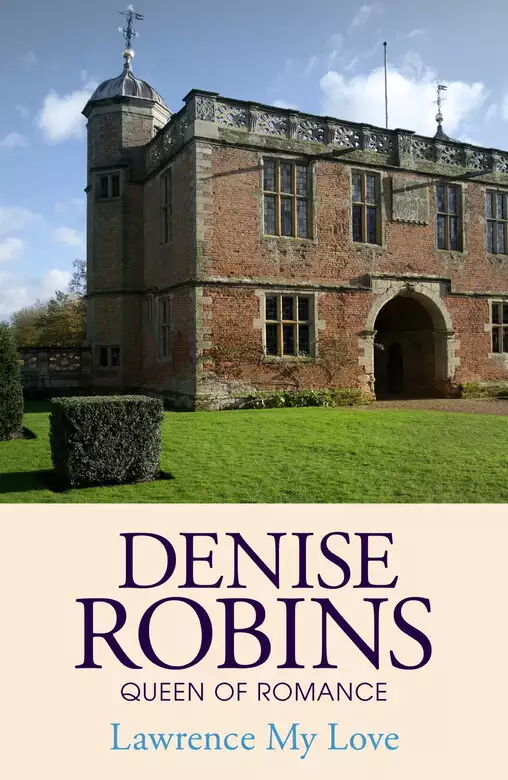
What dark secret shrouded her homecoming? After twelve years within the confines of a Belgian convent, Vere Rowland returns to England--to the magnificent Halbertson estate where her mother is housekeeper. On the return trip Vere meets darkly handsome Laurence Braeknell, it was as pleasant as unexpected. It transpired that Laurence lived within a short distance of the Great Gatehouse, it was a wonderful and strange coincidence. But Vere's hopes of future meetings are clouded by her mother's concern and the distress of the Halbertson household. Why should her love for Laurence stir up such a whirlwind of trouble? And what is the secret of the deep mystery buried in the Halbertson history--a history of which no one dares speak...? It led to some troublesome questions. Before the answers to these questions were known, there was much to be borne and much to be suffered - but then, life is never easy when you're in love
Release date:
June 26, 2014
Publisher:
Hodder & Stoughton
Print pages:
400
* BingeBooks earns revenue from qualifying purchases as an Amazon Associate as well as from other retail partners.
I LIE AWAKE at night sometimes and see a vivid picture of myself stealing along the gallery, looking at that curving staircase with the beautiful ‘barley-sugar’ walnut balustrade that leads from the minstrels’ gallery down to the huge entrance hall of the old house.
Only the dim light of a single lamp – the electrically-lit torch held by a bronze statue of a nymph, on the newel at the foot of the staircase – was burning in that unforgettable moment in the home of the ill-fated Halbertsons. Only through a dimness did I see the white rose carving of the plaster in the high vaulted ceiling; and the gilt-framed painting of Lady Halbertson over the grey carved stone fireplace. Grace Halbertson, who had been dead for many years before I returned to the house. Beautiful, proud, with a grief in her eyes that the artist had captured, but too selfish and bitter to arouse pity.
One day she had been brought back to this house on a stretcher – with an injured spine that had paralysed her till the end of her embittered, loveless life. For her husband had not understood her, and Hugh, their son and only child, died tragically after bringing them immeasurable distress.
There was so much pain and sorrow in The Great Gatehouse, I don’t see how anybody could have escaped those poisonous vapours that hung like a miasma over everything and everybody – except the one man I loved so much. The only one.
Eventually it was he, Laurence, who hurt me more than anyone else in the world, although possibly he was not aware at the time of what he did.
I recall so vividly a succession of frightening, mysterious nights in The Gatehouse, once I left school and returned to Wasdale Head: the night that the Legend of the Black Dog materialised for me as grim reality; the night when I first saw Rachel Forrester with her strikingly handsome face and red hair – heard her speaking on the telephone to Laurence – and suspected that they were lovers; and finally the never-to-be-forgotten night when Rachel, not content with having poisoned his life, tried to put an end to mine.
I shall never forget the moment when I stood at the head of that staircase and felt her long, thin fingers gripping my shoulders, pushing me down, down … screaming as I fell.
Oh, Laurence, my love, now when I look back I can still feel the horror of it all!
So unforgettable … and unforgotten …
I WAS JUST nineteen – too old still to be in a Convent School. Most of my friends in the senior form had left over a year ago. Everybody seemed sorry for me.
Why aren’t you going home? Why aren’t you going on to a University or something? Why doesn’t anybody ever come and see you, you poor thing? …
I had no answers for the questioners but I fancied I read pity on all their faces. It infuriated rather than consoled me.
I was not a Catholic but I had been in the Convent in Brussels since I was seven. I had assimilated some of the religious atmosphere. At one period, feeling myself unloved and unwanted, I had even thrown myself at the foot of the Cross and begged our priest, Père Lachasse, to let me take the veil. His reply had been unsatisfactory: “We shall see. Your destiny is in the hands of Our Lord, my child.”
Always the same: people putting me off.
I began to read about life in the outside world in as many books as I could get hold of, both in French and English. I was a good French scholar by then. I listened avidly to the stories my companions told me when they came back from their holidays; I heard about their happy home lives; their parties; their boy-friends. I listened and wondered. I knew this other life existed outside my school. But all I could do was walk daily with my friends in a long ‘crocodile’ through the streets of Brussels – looking at the shops, the cafés, the crowds. I judged for myself that there was most certainly another much fuller and more exciting existence beyond the Convent walls. But year after year went by, and only once annually – sometimes twice – did my mother visit me. Generally, for a fortnight in the summer, she and I went together to a little Pension in Zoote. I was allowed the thrill of seeing a film, eating out. I swam, I lay in the sun on the gay beach and grew brown. I went shopping. But my mother remained almost a stranger to me. She never seemed like my mother at all. Still, I looked forward passionately to her visits and those breaks from the Convent routine. During the twelve years I was there, Mother sometimes came over to see me and stayed a long week-end. But she was always so quiet, so withdrawn, so unwilling to talk to me about my family and her own past; I rarely felt happier after she left. Those holidays seemed to plunge me into a fresh state of confusion and insecurity from which it took me ages to recover. Then I would begin to want my mother – to be with her again; so the cycle continued.
But love, tenderness – the wonderful warmth and affection the other girls’ parents bestowed upon them when they came to the school – were missing. Maud Rowland, my mother, appeared to be incapable of doing more than giving me a brief hug and kiss – a rather wintry smile – and that perpetual maddening refusal to satisfy my curiosity about myself – who I really was – what was going to happen to me in the future. At times I felt quite disembodied – not really Vere Rowland at all.
I wrote to Mother every week. I heard from her in reply and those letters were the only contact I had with the outer world. They were like herself – cool and negative. She never gave me news about the house in which she lived. Only occasional anecdotes from the village or the Lake District generally, or about her plants – she was an ardent grower of indoor plants, my mother, and one of my chief recollections was of the variegated leaves of her many plants in their little pots, ranged along the sitting-room window-sills.
Only on rare occasions she mentioned the old gentleman, Sir James Halbertson, who was her employer and whom I vaguely remembered. His health was deteriorating in his old age. And one day mother told me a Miss Forrester had been installed as his permanent nurse. His malady was a lingering one, and he had grown too ill and old to be without constant attention from a trained attendant.
As I grew older, I tried at times to piece together the puzzle that had haunted me for the last few years.
I tried to build up the picture of my background when I was a small child. I was no longer content to be fobbed off by Mother’s lack of communication.
I certainly knew that she had been housekeeper for many years in the Halbertson family, who lived at The Great Gatehouse near Wastwater – one of the wildest and most beautiful of all the lakes in Cumberland.
I was seven when I left The Gatehouse. An age of some intelligence, and I had always been an observant child, quick to assimilate an atmosphere. I had an excellent memory. In fact I think I often alarmed my mother by alluding to people and things which she imagined I had long since forgotten. But I remembered best of all the Halbertson home. The vast fourteenth-century stone building – grim yet beautiful – with a façade that had been restored during the Georgian period. I remembered the ancient round tower. A flag used to fly from the turret in old days, rippling proudly in the wind to tell the village that the Halbertsons were in residence. A touch of royalty – perhaps snobbery. Lady Halbertson in particular used to be a snob – the hunting, shooting, fishing type – always entertaining ‘the best people’.
The house looked on to a tree-fringed sheet of water known as the Bitter Lake – a name which intrigued me as I grew older – although nobody told me why it should ever have been called this, for it was fantastically beautiful. Why then Bitter?
As a small child, I used to roam at will through the grounds, although never allowed to go too near the water’s edge. Sometimes I played in the little garden of the lodge occupied by the Teasdales – the head-gardener and his wife Alice – close to the big wrought-iron gates at the entrance to the drive.
My mother and I lived up in the big house, in a ground-floor flat, sequestered behind the kitchen wing, cut off from the family. I was absolutely forbidden to go through the green baize-covered door that led into the big hall, and I could hardly remember ever being spoken to by her ladyship. But I used to see her galloping through the Park and think how beautiful and brilliant she was. Sir James, on the other hand, sometimes stopped if he met me in the drive and gave me ten shillings, or a present for Christmas. But not so Lady Halbertson. It was only when I had left England and begun to grow up, that I started to attach any importance to the extraordinary way in which I was treated by her.
Why, I used to ask myself? What had I done? I only knew that I had been born in Wasdale Head. But I hadn’t the slightest idea who my father was, nor did I understand why I had been banished to Brussels – nor who had paid for my education. Surely not my mother alone. She was a widow and only had her housekeeper’s salary, and the Convent was no Charity School. It was one of the best private schools on the Continent.
By the age of eighteen, I could rightfully be proud of my culture. I could play the piano tolerably well. I loved music and history, both English and French. But there seemed no hope of my going on to University.
During my mother’s last visit, she said that very soon now I would be returning to the Lake District, to live with her at The Gatehouse again. I looked forward to that.
It was a bright cold morning in early March when the precious letter of release arrived. I called my best friend, Christine, who slept in my room, and read it to her. I was flushed with joy.
“My dear Verry, (Mother had given me that nickname when I was a little girl and never dropped it.)
I am sending Rev. Mother a cheque to cover your expenses for your return home. I want you to come back to Wasdale Head this Easter. This means you will leave Brussels altogether, so bring all your things. You will fly by Sabena on the Wednesday before Easter and then take a taxi straight to the house of a Mrs. Collins who is an elderly cousin of mine. She has a little flat in Cheshire House, Ryder Street, Bayswater. She will put you up for the night. The next morning you will catch the 11.5 train from Euston which arrives at Seascale at 5.37. There Mr. Unsworth will meet you with Sir James’s Rolls-Royce. I cannot get away at that time but I shall be ready and waiting for you and greatly looking forward to having my daughter home at last. Please do not ask Mrs. Collins to tell you anything as she knows absolutely nothing about us.
Your affectionate Mother.”
“Isn’t it wonderful!” I exclaimed. “Oh, Christine, I’m going home at last.”
I could see that Christine wasn’t very impressed by my mother’s letter, although she smiled and congratulated me, adding that she thought it ‘high time’. Of course I knew that there was all the world of difference between Christine’s life and mine. She came from a normal happy home in London, went back for every holiday, and was adored by her parents. In addition to this she already, at eighteen, had a boy-friend who took her out to parties, etc. She must have thought my mother’s letter very cold. But for me it was warmer than usual. For the rest of that day I was madly excited.
During supper Christine asked me what that line meant ‘she knows nothing about us’.
“What’s the mystery?” she asked.
I said I didn’t know. And I didn’t. Except that it was always the same whenever I wanted to know anything. My mother avoided answering all my questions.
However, at last, after twelve endless years, I was going to see The Great Gatehouse again, and surely now all the mysteries would be unravelled.
* * *
I felt that life really had begun for me on that Maundy Thursday when I caught the northbound express and found myself comfortably settled in a window-seat which had been reserved. Goodness, I thought, fancy travelling First Class! My mother, housekeeper or not, always seemed to have a bit of money to spend on me, which was something in my rather arid monotonous life.
I had found no gaiety in the elderly cousin’s flat. She was a good deal older than my mother, rather deaf, and to my way of thinking, a bit simple. She talked and talked and never listened to anything I said. So even if I had disobeyed my mother and tried to question her about my family, I don’t think I would have learned much.
But the next day was different. I was alone and actually on my way home. It didn’t matter that at Euston Station it had seemed cold, dark and dreary. The holiday crowds thrilled me. I had never travelled alone before. It was so long ago since I had been in England that I felt it to be a stranger country than Belgium. In fact, to one porter I had started talking French and had to correct myself.
There were four people with me in the carriage. A youngish couple with a small child; they looked well-dressed and prosperous. And a very tall young man who got in at the last moment. He was rather spectacular – wearing a shortish camel-hair coat with a collar half muffling his chin, and he carried a slim black leather case. He sat down, with a gasp, and unbuttoned his coat, and I must say, to my way of thinking, he was terribly handsome. Sun-browned, as though he had been abroad for a long time, and with a fine head; thick dark waving hair. He immediately unfolded a paper and began to read it. This hid him from me, but I caught a quick glimpse of a square, rather strong face and large eyes of a darkish hazel colour. Very compelling eyes which seemed to look right through one. But he gave me only a cursory glance – quite disinterested, I thought. Suddenly some of my high spirits evaporated. I became conscious of my somewhat unattractive appearance.
My mother used to buy me good clothes but she had no taste. Christine, as tactfully as possible, once commented on my need for a more ‘mod’ outfit. I knew that the dress I wore today – a grey and blue tweed – was much too long. They were all wearing such short skirts in England these days. My stockings were ugly and my shoes the brown leather brogues of a school-girl.
Christine had tried to do something with my hair and begged me not to wear the awful felt hat Mother had bought for me when she was last over in Brussels. So I had tied a scarf over my head hoping that it would make me look a little more up-to-date.
Most women today wore scarves. Christine used to say that it was a shame I couldn’t be well-dressed because everyone thought me so attractive. But I was never vain and rather laughed at her flattery. At the same time, Christine often said how much she admired my ‘marvellous skin’ and large grey eyes, and long black lashes. I had thick ash-blonde hair, which I wore with a fringe, and rather long. But I reckoned I was too thin and not very tall, which made me feel insignificant.
The northbound train moved off, right on time, despite the Easter rush. Outside the station, one could see that the weather was indeed poor, and sleet was driving against the window panes. I was glad when the heating came on in the carriage.
I had bought myself a newspaper. That was quite an event. They did not allow national newspapers at the Convent. I began to read about a ‘Robbery with violence’ and it quite startled me. I had really been so sheltered from what went on in the outside world, I had never come in contact with stories of crime and violence. It made me feel slightly uneasy.
That uneasiness was intensified when we reached Rugby and the couple with the child got out, leaving me alone with the tall man. He was still hidden behind one of the many papers he had brought with him. I fingered my leather gloves a trifle nervously. The nuns had warned me never to stay in a carriage alone with any man. Of course I knew why. I might be innocent but I was certainly not ignorant. The sophisticated Christine had supplied any information I needed about sex. So I might well start to wonder if this man was the sort who would make a sudden attack upon a young girl, all alone. Then I laughed at my own fears. This was a corridor-train. The inspector would come in about tickets, and a waiter had just put his head in and asked who wanted tickets for lunch. The young man had taken one. He certainly did not look like the sort who might make an attack on me.
The suddenly he dropped his paper and smiled.
“Well!” he said. “It looks as though we might have this carriage to ourselves for the rest of the journey. I expected more of a crush in Easter weekend, didn’t you?”
“Y-yes,” I stammered in reply.
“Not a very good day, and the forecast. . .
We hope you are enjoying the book so far. To continue reading...

 Please log in to recommend or discuss...
