- Book info
- Sample
- Media
- Author updates
- Lists
Synopsis
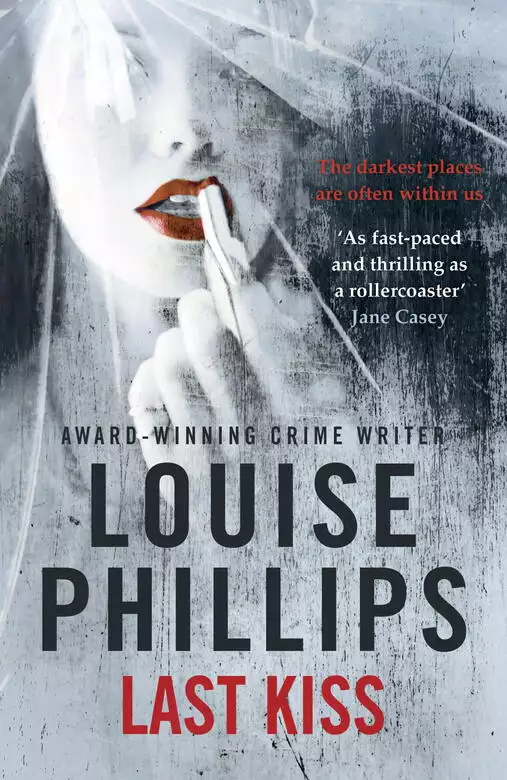
He thought he was in control. But he was wrong. And after the final blows of the knife, she stole his last breath with a kiss... Will criminal psychologist Dr Kate Pearson uncover the identity of this vicious killer before it is too late? At a hotel room in Dublin, the butchered body of art dealer Rick Shevlin, arranged with artistic precision like the Hanged Man from a Tarot card, is found. Meanwhile, in a quiet suburb, Sandra Regan clings to her sanity as a shadowy presence moves through her home. What connects them? Criminal psychologist Dr Kate Pearson is sure that the killer has struck before and will again - soon. As Kate and DI O'Connor are plunged into an investigation which spreads to Rome and Paris, they uncover a vicious trail of sexual power and evil. But will they uncover the killer's identity before she claims another victim?
Release date: August 7, 2014
Publisher: Hachette Ireland
Print pages: 400
* BingeBooks earns revenue from qualifying purchases as an Amazon Associate as well as from other retail partners.
Reader buzz
 Please log in to recommend or discuss...
Author updates
Last Kiss
Louise Phillips
As she reached the outskirts of the woodland, the ground underfoot became slimy, laden with fallen twigs and leaves. Early light sprinkled between the overhead branches, but she didn’t look up, not once. When the first droplet slid down her inner thigh, it touched her kneecap with the gentleness of a moth. She had felt the back pains a few hours earlier, and even though they had eased, she knew it was her time.
Amid the creaking and rustling of the trees, she heard something move in the undergrowth. For a brief moment she stood still, a cold chill spreading through her body as another bead of the amniotic fluid reached her swollen ankle. She swallowed hard, looking all around her, knowing she needed to find somewhere safe, and that the life she had hidden inside her for so long would soon have to leave. Placing a hand beneath her coat, she held the underside of her engorged belly. A sharp breeze from the valley tossed her hair rebelliously in the wind, as if it was the only part of her still free to choose.
She had left the house when all inside were sleeping, sneaking around, no longer feeling she was part of it. The village, too, looked strange with its empty streets, and the moon still visible, hanging low in the early-morning sky. When she passed her old school, she imagined the sound of young voices in the yard, and felt utterly alone.
Now deeper into the forest, again she heard something move behind her, but when she turned, she saw nothing. A surge of amniotic fluid flooded between her legs, drenching her undergarments, the veil of liquid glistening in the flickering sunlight, before it soaked into the earth.
A sharp pain, like an iron rod, shot through her. She held her belly, more fearful than she had ever been. She wanted to cry out, but stopped herself. With her wet garments stuck to her skin, she continued walking once the pain had passed, faster than before, like a scared animal scurrying further into the dark.
The next contraction grabbed her insides like a twisted fist, shooting through her lower abdomen, before ramming her spine with the might of an iron bar. She placed both arms around her swollen belly, her stomach heaving, her dry retches fighting hard against the nothingness inside. For months she had barely eaten, needing to keep her secret safe, but now she knew that the child inside, briefly quiet, would not remain so for long.
It was with her back to a fallen tree trunk that she laboured alone for hours, before the pain became so strong that the urge to push defied everything else. Her screams came back at her through the forest walls, long piercing wails, until finally she heard the cries of another. She stared at the baby girl lying between her legs, covered with blood and mucus, relieved that that part at least was over.
Placing the baby in the large grey coat, she cut the cord with the carving knife she had taken from the house, then wiped the tiny face, clearing the mucus from its nostrils.
After delivering the child, she felt so cold, her eyelids barely able to stay open as the blood leaving her body formed a black circle around her. Ellen didn’t know she would die that day, nobody knew, but when she closed her eyes for the last time, she could still hear the baby crying, a shrill sound, calling for a mother unable to answer, almost as if she knew that part of her had been taken.
If there had been an inquest into her death, it would have found she died because of irreversible shock, brought on by haemorrhage and exposure during childbirth. The woman who burned her body didn’t care about that, taking the baby into her arms as if it were her own. It was a miracle the child survived. Questions would be asked, but none that she couldn’t answer. Everyone knew Ellen was never quite right, soft in the head, a creature more to be pitied than scorned. Her disappearance, like her life, would soon be forgotten.
Walking back towards the village, she kissed the baby’s forehead. The child wailed, scrunching its face like a piece of shrivelled rotten fruit, a primal instinct kicking in, telling it that something wasn’t right.
The woman thought about killing the infant then, but decided against it. Instead, she held her hand tight over the baby’s face while she smiled down at it. When she finally released her grip, the infant spluttered, then wailed even louder than before.
‘Now,’ the woman said to the child, ‘I’ve given you something to cry about.’
2014
I HAVE REASONS for doing what I do. You may not know them yet, because I haven’t told you, but that doesn’t mean they don’t exist. It’s too early for judgement calls, far too early for that.
I’m considered attractive. I was described by an ex-lover as having an elegant face. Like everyone else, I have minor aesthetic flaws, which I’m keenly aware of. They are rarely commented upon; usually only the good bits are. I’m thirty-two. Not too young and not too old – but for what? I kill people. I could dress it up, say all kinds of stuff about it, but for now, all you need to know is that I do.
I stabbed a man recently, slit his throat and left him dead in a hotel bedroom. I tied his body up with ropes. If I told you I positioned him picture perfect, you wouldn’t understand what I mean, but soon you will.
My online tag name is Cassie4Casanova. The first time I used it was nine years ago in Paris. I was twenty-three then. I thought I knew things about the world. I guess we’re all guilty of that kind of stupidity. The man I was with had a darker side, but his badness was far easier to manage than the rest. That last afternoon, I met him at the Hôtel du Maurier. I took a photograph of myself beforehand. I was standing at a bookstore window. I gave the glass a sideways glance, checking out my appearance. It was a clear reflection. I could see the shine at the end of my nose. I thought it made the image more realistic. I often do that sideways-glance thing. Sometimes my face looks questioning; other times the glance is accompanied by a smirk. That day, I seemed bemused. The reason is unimportant.
In the photograph you can see the reflection of the flowers from the florist opposite, and a partial window display of Les Belles Boulangerie Pâtisserie. They both added a nice balance. I was wearing a cream raincoat. The collar was up, as if I had walked out of a Dick Tracy comic strip. I can see all of this as if it happened yesterday. I remember slowing the exposure on the camera lens to catch the movement of people walking by, each of them unaware of my thoughts. I take a lot of photographs, self-portraits. The camera is the eye. See how the picture is building up?
Less than an hour after I left the bookstore window, I stood outside the hotel. It was on a narrow street, set between the Latin Quarter and Saint-Germain-des-Prés. The small wrought-iron balconies were charming, with their fleur-de-lis design, the red and pink geraniums plummeting through the bars. Inside, the hotel was very different. It had more grandeur, with greater sex appeal.
On the top floor, the glimmer of an overhead chandelier shone down the gold and ruby hallway that led me to him. After I’d tapped on the door, I heard his footsteps. Opening the door, he looked angry. He liked to drink mid-afternoon. But that day, his eyes seemed sharper than normal, piercing, the whites of them almost dazzling. He had wickedness on his mind.
All he wore was a pair of faded jeans, and I could see the tightening of his chest muscles, the curled blond hair on his chest, his tanned feet. He was quite extraordinary in his way, that dangerous mix of fulfilment and disaster, beauty and ugliness so close they almost sparkled. ‘You’re late, slut,’ were his first endearing words, as he held the door ajar, waiting for me to go inside. I walked past him. I heard the click, click, click of my red stilettos, his favourite, on the shiny marble floor as he locked the door.
Even with my back to him I knew his eyes were on me, taking without touching. It wasn’t long before he yanked my hair, kissing me feverishly, as if his life depended on it. My lipstick smeared his face and mine, like a stamp of ownership. I usually wear Carmine, a purplish red.
I saw the champagne cooling on a side table. He popped the cork, then handed me a glass. I swallowed fast. The bubbles felt cold, the tiny droplets teasing my face, mixing with the smudged lipstick.
I had a role to play. I looked chastised, the way he sometimes liked it. I was still standing in my raincoat as he talked about one of his favourite artists, Degas, and all his many masks. I balanced on my red high heels, him pretending a lack of interest, engrossed in his own clever conversation. I reached out, opened the top button of his jeans.
‘My little whore.’ He smiled.
I’m not a whore. If men pay, they believe they own more than your sexual favours, they think they own YOU. It’s not money I seek. It’s not that simple.
I removed my coat, slipping out of my dress. His right hand yanked my hair again. ‘I want you,’ he whispered, his tongue swirling in my ear as he pulled off my underwear. I caught a glimpse of myself in the mirror, and thought of the woman in the bookstore window. My nakedness changed me, but like Degas, I still wore my mask, one embroiled with lies and deceit. He groped me, as if I was some fiendish plaything, and again I stared at my reflection, seeing a stranger looking back.
He often took me from behind. I played my role with well-rehearsed modesty, pleading with him to stop. Afterwards he asked if I despised him. He was gentle then, crying big boyish tears, which I relished.
It was only in the tears that he was of any consequence. The killing didn’t come easy – endings are like beginnings: they change things. I DO CARE.
I’ve told you about this man because I need you to know something else about me. I will put myself in danger for what I want. Killing Pierre was risky. Others knew of my connection to him. But the truth isn’t always simple. It has its own concealments, and I have plenty of those.
KATE PEARSON TAPPED her fingers on the steering wheel, lost in thought, the sight and sound of the windscreen wipers swishing back and forth her only distraction. It was one of those damp mornings in the city when the relentless rain caused everything to look grey and dirty. She wore a small silver locket around her neck. In it were photographs of her late mother, and her son, six-year-old Charlie. Without thinking, she reached up to stroke it between her index finger and thumb.
Ahead of her, Christchurch Cathedral stood witness over the lanes of bumper-to-bumper traffic. She had already planned her day: she would review last month’s case files. Other psychologists at Ocean House teased her about having obsessive-compulsive disorder, but she knew the more times she examined something, the more she usually saw. It was her tried and tested method, and had stood her well, the forensic examination, raising fresh questions, leading to a greater understanding of a client and their mental well-being.
When her mobile phone rang, she cursed herself for leaving it in her handbag rather than putting it in the hands-free set. She rummaged through the bag, with an eye on the stationary traffic in case it decided to move. The caller hung up as she grabbed the phone, but she recognised the number: the Special Detective Unit at Harcourt Street. Pulling the car into a side street, she pressed speed dial, and within moments she was talking to Mark Lynch, a detective who delivered information with equal efficiency and brevity. ‘Mark, I assume this isn’t a social call.’ She took a pen and notebook out of her bag. ‘What do we have?’
‘Murdered male, Rick Shevlin, married, mid-forties. He worked as an art dealer in the city.’
‘How was he killed?’
‘Multiple stab wounds – frenzied attack. The body was discovered by Housekeeping this morning.’
‘Housekeeping?’
‘He booked into the Earlbrook Hotel last night. According to his wife, he had a late meeting in town, but I can fill you in when you get here.’
His last comment sounded at worst like an order and at best an irritant. ‘I’m sure I don’t need to remind you, Mark, that I work with you, not for you. But it’s not far. I can take a short detour.’ She emphasised ‘short’.
‘Appreciated.’
Duly clipped, she thought. A male-dominated environment presented its challenges, but she was up to them, and at the back of Lynch’s minor power struggle, a man had lost his life.
Twenty minutes later, she was in the car park at the Earlbrook. If Mark Lynch was there, the technical squad would be in situ and, most probably, Ian Morrison, the state pathologist. Seeing the crime scene first hand was crucial, an opportunity she couldn’t afford to miss.
It had been two years since she had begun profiling killers for the Irish police. The first case had brought her into contact with Detective Inspector O’Connor, the investigation of the murdered schoolgirl, Caroline Devine. The last time she and O’Connor had crossed paths was six months earlier, during the canal-murder inquiry, prior to his suspension. She had heard he was due back within weeks, but that didn’t necessarily mean he would pick up where he had left off – covering up evidence wasn’t something easily brushed aside. She had felt guilty about not being in touch, especially as she had played her own part in him coming clean, but she’d had her reasons for keeping her distance, complicated ones.
On entering the lobby of the Earlbrook Hotel, the first thing that struck her was its opulence. Large crystal chandeliers hung from beautifully carved ceilings and Romanesque archways. Two stone pillars led the eye directly towards the marbled staircase where a uniformed officer was stationed either side at the top. Management wouldn’t be happy with police activity interfering with daily procedure, but a dead man took precedence, especially a murdered one.
After one of the techies had helped her into a white body suit, Kate braced herself, then walked into Room 122. Despite the police activity in the room, as at any other crime scene, time was somehow standing still. Every contact leaves a trace: a statement drummed into every police officer during training. In the preservation of the crime scene, they were all attempting to stop time, gathering information that would hopefully lead them to the killer.
The bulky, bullish frame of Ian Morrison stood on the opposite side of the four-poster bed to the lanky Mark Lynch. Between them on the blood-stained white sheets lay the naked corpse. Not for the first time Kate thought there was little dignity in death. Neither man turned to acknowledge her, giving her the opportunity to take in as much about the scene as she could before she was briefed.
The murdered man lay face up with his feet at the top of the bed, his right ankle tied to the brass bedpost with what looked like a one-inch double-knotted rope. The left leg was bent at the knee, set at a perfect ninety-degree angle to the one opposite. Lynch had been correct when he described the attack as frenzied. Even without Morrison’s autopsy report the body was a mess. The victim’s throat had been slit, a hideous gaping wound with blood coagulating down his neck. The multiple stab wounds formed gorges of congealed blood across his chest. There was so much blood on the bed it looked weighted down by it. Slash wounds to the face, legs and arms were too numerous to quantify. The victim’s eyes were wide open, his head turned in the direction of the two windows opposite, as if they had seen Hell in all its anguish.
She moved closer to Morrison and Lynch, remaining fixated on the dead man’s eyes. What had they seen before death? She swallowed hard, working to maintain her composure. She imagined the killer in the room – what were his or her last movements? Had guilt, ecstasy or both run through their mind during the attack? Had they felt fear? How well had they known the victim? What role had Shevlin played in his own demise?
As she stared at the dead man, another image was forming in her mind, that of a crucifixion. The room, suddenly, felt clammy. She could smell the Luminol kit that the techies were using on the blood spatters, and in her mind, it was as if everything was overlapping, different images criss-crossing with endless possibilities.
It was the tying of the ankle that had first made her think of a crucifixion, but if it had been a crucifixion, the ankles would have been tied together; the left leg had been left free. The positioning of the arms was important too, both bent at the elbow joints, each hand under the body at the midpoint of the back.
‘Are the hands tied behind his back?’ she asked Morrison, keeping her voice even.
‘Yes. The same as the ankle, a double overhand knot.’
‘It’s certainly frenzied,’ she said, moving even closer, her eyes studying the wounds on the dead man’s torso.
‘We always seem to get the cut-and-slash ones, don’t we, Kate?’ Lynch smiled.
The smile didn’t impress her. At first, she had warmed to Mark Lynch, liking his efficiency and attention to detail, but during the last investigation she had noted a darker side to the young detective. It had slipped out while he was interviewing a vagrant, and once she had witnessed it, she had felt that something not so sweet teetered below the surface. She let his last remark go unanswered.
‘The body has been purposely positioned,’ she continued. ‘It’s more than the use of ropes. The killer has something to say.’
Ian Morrison leaned over to examine the victim’s fingernails, but Lynch’s interest was spiked by her last comment. ‘Which is what?’ he asked.
‘At first I thought of a crucifixion, but then …’ She paused, as if contemplating the value of her next point.
‘Go on.’
‘Look at the positioning. It’s very specific.’ She tilted her head to the side, again staring into the dead man’s face. ‘Mark, do you know anything about Tarot cards?’
‘I’m not into fortune-telling, if that’s what you mean.’
‘The body …’ once more, she hesitated ‘… is laid out like the Hangman card from a Tarot deck.’
‘Meaning?’
‘It’s one of the higher Arcana cards. I profiled a case in the UK a few years back. The killer believed the cards had powers. He thought they were guiding him. The Hangman,’ she continued, ‘depicts a man hanging upside-down by one foot, usually suspended from a wooden beam or a tree. The gallows he’s suspended from forms a tau cross, while the position of the legs,’ she pointed to the body, ‘forms a fylfot cross. You can see how one leg is bent under the other with the hands tied behind the back.’
‘So what does it tell us?’ A slight impatience had entered the detective’s voice.
Morrison looked up, his interest, too, aroused.
‘It’s associated with a god called Odin from Norse mythology,’ she replied. ‘Odin hung from a world-tree, an Yggdrasil, for nine days. He wanted to obtain wisdom and retrieve the runes, or words, from the Well of Wyrd.’
‘The Well of what?’ Lynch raised his eyebrows.
‘Wyrd,’ she repeated. ‘It was regarded as the source of mystery and knowledge. The moment Odin glimpsed the runes, he died, but the knowledge was so strong that he immediately regained life.’
‘I don’t think there’s much chance of that happening here,’ interjected Morrison, in his deadpan style.
‘No, I agree,’ Kate said, matter-of-fact. ‘What are your observations, Ian?’
‘Our guy was tied up after death. Although the ropes are secured tightly, the blood vessels haven’t reacted as I would have expected them to if they had been active.’
‘Go on.’ Lynch looked down at the body as if it had taken on a whole new meaning.
‘Blood vessels leak, imparting a blue-black colour to the tissues. There’s no sign of that here.’ Morrison pointed to the area around the ankle, before moving further down the body. ‘There are whip marks on the buttocks, but judging by the skin, they were probably made prior to death.’
‘If the ropes were applied after death, Ian,’ Kate stood back from the bed, ‘then the scene was stage-managed by the killer.’
‘That’s not my area of expertise. I’ll know more later on, but for now, all three of us can see the obvious. His throat has been cut. If it turns out to be the cause of death, the most likely scenario is exsanguination, with the external jugular vein and carotid artery severed.’
‘And the other possibilities?’ Lynch asked, pushing the pathologist while he still had him in his sights.
‘It’s possible he choked to death on his blood or an embolism occurred, air entering the jugular vein.’
‘Was the same knife used throughout?’ Kate, like Lynch, was keen to get as many answers as possible.
Morrison let out a deep breath, as if it helped him to concentrate. ‘It’s impossible to say, but we’re talking about a large blade, capable of deep penetration.’
‘How large?’ Lynch wasn’t letting go.
‘Too soon to tell exact dimensions, but I’ll give you what I can once I’ve done a full examination.’
‘And the trajectory of the wounds?’
Morrison gazed at the detective, contemplating, Kate thought, whether or not he should reveal any more at this point. Finally he said, ‘The puncture wounds are relatively straight, possibly coming from above with the victim lying down.’
‘Any idea of time of death?’ Kate quizzed.
‘At least seven hours.’ Morrison pointed to the victim’s face. ‘The corneas, the clear covering over the pupils, are cloudy and opaque. If the eyes were closed, this could take up to twenty-four hours. The process speeds up when the eyes are open.’
‘Placing the time of death at around two a.m.,’ Lynch said.
Kate again looked at the victim’s eyes. ‘What are those dark marks around the pupils?’
Morrison appeared pleased with her question, replying with enthusiasm: ‘It’s called tache noir, one of the most important post-mortem changes in the eye. If the eyes are open after death, the area of the sclera exposed to the air dries out, which results in a yellowish, then brownish-blackish band, which is what we have here. This level of discoloration will appear around the seven-hour mark.’
Kate walked over to the windows, which looked out onto the hotel car park, then turned to face both men. ‘Ian, were the eyes forced open?’
‘I can’t be sure. As soon as death occurs, the muscles in the eye stop functioning. He could have died with his eyes open or they could have been opened afterwards.’
‘What about DNA?’ Lynch looked up from his notebook.
‘It would be tricky. Even if we could pull a sample, it’s unlikely we’d get enough to produce an adequate profile.’
‘Anything else?’ Lynch asked.
‘Yes, the concentration of potassium within the vitreous humour—’
‘The what?’ Lynch sounded irritated again.
‘If you didn’t keep interrupting me, Detective, I might be able tell you.’ It was Morrison’s turn to be irked. Kate smiled to herself.
‘It’s the thick jelly-like substance that fills your eyeballs. It increases slowly after death, but is already clearly visible here. Understandably, the body temperature has dropped too, from the normal temperature of 98.6 degrees Fahrenheit. The body loses heat at a rate of 1.5 degrees per hour, but in a heat-assisted room like this one, it loses it a lot slower, yet our man’s has dropped over four degrees.’
‘I see,’ Lynch replied.
‘You’ll have to wait for the full autopsy report if you want any more than that from me. The only other obvious detail is a series of older tears in the skin, especially on the upper thighs and arms.’
‘And the cause?’ Kate asked.
‘They could be self-inflicted, but again, I’ll know more once I’ve had a chance to examine the body in detail.’
Kate turned to Lynch. ‘Were the room lights on or off?’
‘Off. Why?’
‘The curtains are open. I assume they were that way when you arrived.’
‘Correct.’
‘There’s plenty of lighting in the car park outside. It would have lit up the room if the drapes were pulled. The buildings opposite are at a lower level, so the killer may have felt they couldn’t be seen.’
‘What are you getting at, Kate?’
‘Perhaps he or she used the exterior light to prepare the victim, and there’s something else.’ Both men looked at her. ‘The lack of blood spatters and pooling beyond the vicinity of the bed is odd. It doesn’t look as if our victim put up much of a fight. Ian, did you find any notable signs of a struggle on the body?’
‘No obvious ones. I’ll be running full pathology tests for possible drug intake prior to death. We’ll pull fluid from the eyes too. It’s the last fluid in the body to peak. If the victim was drinking prior to death, the vitreous alcohol level will tell us if our dead friend was on his way up or on his way down.’ Morrison pointed to the eyes again. ‘We can also look to the vitreous for any signs of Fentanyl or 6-Mam, both derivatives of heroin, as we won’t find these or their metabolites in the blood samples.’
‘What about cocaine?’ Lynch pointed to the corpse. ‘As well as increasing aggression, it’s used as a sexual stimulant. Our friend here hired an escort before he snuffed it.’
‘Thank you for your scientific observations, Detective.’ Morrison didn’t sound appreciative. ‘That will all come out in the toxicology reports.’ He turned to Kate. ‘If the victim was compromised prior to death, in other words, if he was drugged with any form of sedative substance, and wasn’t physically able to defend himself, it would explain the localisation of the blood spatters. It would certainly have made him more susceptible to having his throat slit. After that,’ the pathologist looked cheerfully from Kate to Lynch, ‘he was a dead man one way or another.’
I use the Rider-Waite Tarot cards, not because they are popular. They chose me. Some people think the cards are evil, but fear. . .
We hope you are enjoying the book so far. To continue reading...