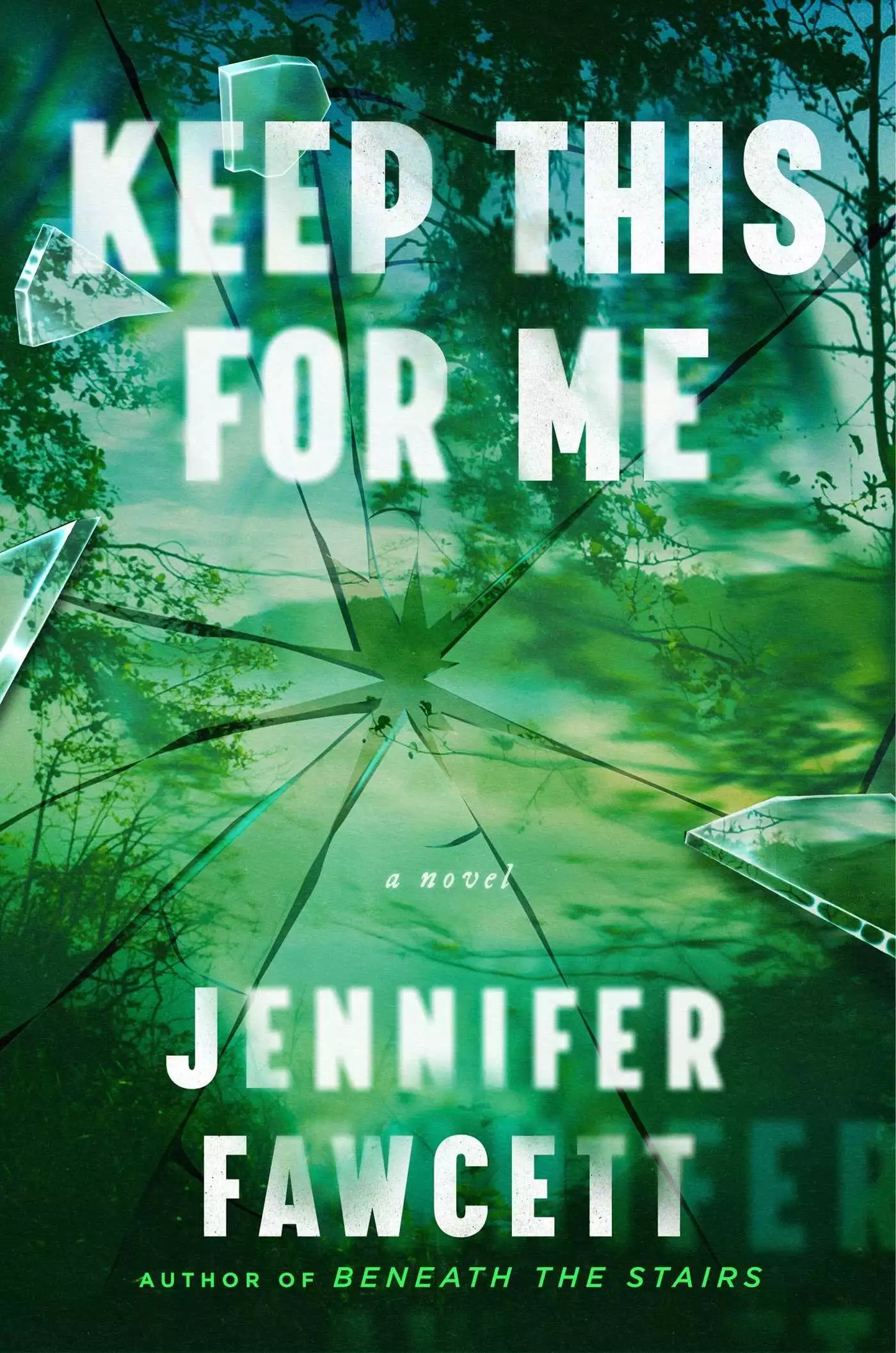
The acclaimed author of the “chilling, mesmerizing debut” (Rachel Harrison, author of The Return) Beneath the Stairs returns with a gripping, atmospheric suspense novel about a woman investigating a serial killer’s connection to her mother’s disappearance—for fans of I Have Some Questions for You and Notes on an Execution.
One hot August night in 1993, a young couple go to a party. When their car breaks down, they are picked up by a truck driver who attacks the man and abducts the woman. She is never seen again.
That woman was Fiona Green’s mother.
When the trucker, Eddie Ward, is caught, a mass grave of bodies is discovered in his backyard but Fiona’s mother isn’t there. Thirty years later, on his prison deathbed, Ward insists that he didn’t kill her, so Fiona finds herself back in the small town where her mother disappeared. Fighting demons of her own, she’s shocked when history repeats itself: another woman, another roadside breakdown, and another disappearance. Only this time the primary suspect is Jason Ward, Eddie’s son. Desperate, Fiona hunts down answers, unaware that she is being drawn into a dangerous trap.
With Jennifer Fawcett’s signature “suspenseful and immersive” (Library Journal) prose, Keep This for Me is a fresh, spellbinding exploration of what we unwillingly inherit from our parents and how one random act can send ripples years into the future.
Release date:
October 7, 2025
Publisher:
Atria Books
Print pages:
352
* BingeBooks earns revenue from qualifying purchases as an Amazon Associate as well as from other retail partners.
The lake was a promise. As soon as it started to peek through the trees, no matter what book I had been lost in or what thought had been tumbling on repeat in my mind—the ever-shifting politics of kids in my class, my current crush—all of it disappeared with that first sighting of the water. I’d roll the window down all the way and stick my nose out like a dog. Any other time, my dad’s rule was windows up on the highway, but the lake affected him too, and soon all the windows would be down, the radio volume up, and the car would fill with the smell of summer.
Every summer, my father and I went to my grandparents’ cottage on the southeast shore of Lake Ontario, just outside a little town called St. Rose. The minute the final school bell rang, Dad would be outside the school, car packed to the roof. My aunts and uncles would arrive at the cottage soon after we did, each bringing their own growing pack of kids, and all summer long there would be a steady flow of cousins, friends of cousins, family members many times removed, the cottage full to bursting but we could always fit more.
My dad had been going to that cottage every summer of his life. My grandparents bought it the year he was born and as the family grew, they kept adding to it, so by the time I was twelve, it looked nothing like the humble shack it had once been. Instead, it was a patched-together hodgepodge forever decorated with drying beach towels and bathing suits like a chorus of flags. On the other side of the peninsula, the cottages were concrete-and-glass monoliths, but on our side, they were old and worn, paint faded from summer sun and winter storms, the walls and roofs held together with love and duct tape. Each cottage told the story of morning swims and evening bonfires; of dayslong games of Monopoly and multifamily beach volleyball tournaments, of sand in your sheets and your hair and between the pages of your book, and always the joyful yells of kids who knew the true freedom of the lake in summer.
As soon as we pulled into the shared parking area, my best friend, David, would sprint up the stairs to the car. His family’s cottage was next to mine, and we’d spent our summers together since we were babies. The two of us would fly down those worn wood stairs, across the lawn, and over the sand, shedding school clothes for the swimsuits we wore underneath like a secret identity that could only be revealed when summer officially began. We would grab the bag my grandma left for us at the water’s edge—Grape Crush in glass bottles, peanut butter sandwiches, and homemade cookies—and we’d wade out to the floating dock, the bag of food and comic books held high over our heads, and stay out there until the adults called us in for supper. On that first evening, the summer stretched as endlessly before us as the water.
“Did you ever think about not coming back because of Mom?” I asked my dad once.
“No, never,” he said. My mom grew up in St. Rose and had loved the lake just as much as he did. She’d been a long-distance swimmer and had swum across the entire thing when she was only fifteen. “She wouldn’t want us to stop coming here.” I had believed him. He said we’d never stop going to the lake.
Until we did.
Until he felt he had no other choice to keep us safe.
I lean my head against the airplane window and look down. Now, the lake is a vast expanse of freezing darkness thousands of feet below me. It’s waiting for me, calling to me, even after twenty years.
Instinctually, my hand goes to my necklace. I can feel the small bumps under my sweater. Two halves of a heart, broken apart in a zigzag, one new and one old. The older half used to be gold-colored but the cheap metal tarnished years ago. I’ve had to replace the chain twice, but I always wear it. My mother had the other half. My dad told me she wasn’t a sentimental person, but I like to imagine her, young, pregnant, and broke, finding it in some little trinket store. Maybe she was with a girlfriend, or maybe she was by herself, but on a whim, she bought it and had it engraved with our names: Ana & Fiona. I picture her tucking one half into the old dresser, daydreaming about when she would give it to me.
Of course, I can’t be sure of any of this. Like so much about my mother, any ideas of her are gauzy and insubstantial, made more of dreams than memory. All I do know is that my father found my half and gave it to me when I turned six, and I’ve created stories about it—about her—ever since.
Everything I know about my mother has come through stories. Stories from my dad; stories from my paternal grandparents, the Greens; a precious few from my mother’s parents; and the stories I’ve found in newspaper articles, crime blogs, and the police and court transcripts. Those ones make up what I know of my mother’s final night. It goes like this:
On August 28, 1993, my parents went to a party, leaving me in the care of my grandparents at the cottage where we had all spent the summer. I was two and a half years old. The party was a long way away and on the drive home, their car broke down and they were picked up by a truck driver named Eddie Ward. He said he’d take them to a pay phone, but instead he attacked my dad, left him for dead on the side of the road, and took off with my mother. My dad was found unconscious the next morning and when he woke up in the hospital two days later, he was able to tell the police enough that they eventually tracked down Eddie Ward and his truck many states away. He lived in the next town, St. Thomas, and had been almost back home when he’d picked my parents up. The police searched his house and discovered seven bodies buried in his backyard, but my mother wasn’t one of them. All he told the cops was that he took her to the lake, to the state park that’s just a few miles past St. Rose; only a few miles past our cottage. Dogs found her shoe half buried on the beach and her purse tossed into the long grass. Hundreds of people searched, but her body was never found, which means her story has no ending.
When I was pregnant with my daughter, Zoe, I bought a necklace just like the one my mom had chosen and now I wear two halved hearts. I thought becoming a mother would be a chance to start a new story, one that didn’t hold all the loss of my past. I envisioned giving my daughter her half heart when she was old enough to understand it. Maybe on her sixth birthday, like me. But after she was born, everything changed.
No, I changed. Or maybe, becoming a mother revealed what had been broken all along.
When David’s name came up on my call display yesterday, I had two reactions at once. One was that sudden leap of joy to see his name, the boy I’d once thought I might marry in that hazy way you think about the future when you’re young. To my twelve-year-old mind, it was a way to make every day like summer. But the sick nervous feeling came just as quickly: David was still in St. Rose and now on the police force, just like his dad had been. That meant he was calling from the place of my mother’s murder, a place I have not been back to in twenty years since my dad moved us far away. David and I always communicate by text or email. A phone call meant urgency. I let it ring four times but then, just before it went to voicemail, I picked up.
As soon as I answered, I could hear the noises of the police station behind him.
“Eddie Ward is dying,” he said.
Eddie Ward.
A name my family never says. Eddie Ward has been rotting in a prison cell for over thirty years, but despite being locked away, his name unspoken, he is still with us, while each year my mother fades further into the past.
“But,” David continued, “he’s started talking. And he’s talking about your mother.”
“Talking—?”
“This guy I know, Jory, is a CO at Grady State. He overheard Ward talking to his son about your mom and—”
He paused, and in that half-second silence, I knew everything was about to change. What had been memory, history, the fabric of my mother’s unfinished story, was about to unravel.
“—and he said he didn’t kill her.”
“What?”
“Fi, you have to understand, he’s doped up on morphine. It might not be real.”
“But it’s real enough that you’re calling me.”
“Yeah.” He sighed, acknowledging this. “Ward’s a braggart—you know that. But Jory said he didn’t sound like he was bragging.”
It was like a hand was wrapped around my throat. “But then what happened to her?”
“He took her to the lake, that part happened. But then—”
“But then what? Where is she?”
“She went into the water but then she disappeared. Ward said she disappeared in the water.”
“But he didn’t kill her.”
“No.”
What happens when the world cracks open? It seems like there should be some kind of a shift. Your heart should beat faster or stop altogether. Your skin should feel different. David’s call came when I was at the ocean conservancy office where I work. The people around me continued what they’d been doing a moment before; the November drizzle continued to fall, my heart continued to beat.
David was still talking. “He’s still living in St. Thomas, if you can believe that.”
“Wait, who lives in St. Thomas?” I asked.
“His son, Jason. That’s who he was talking to. Jason Ward’s never visited, as far as my buddy knows. He must have gone in because his old man’s dying.”
My mother’s shoe and purse were found in a part of the sprawling state park that no one ever went to. The police had scoured the park with dogs, helicopters, and hundreds of volunteers. Partial tire treads found on the park service road matched the ones they’d pulled from where my parents’ car had broken down, and the ones from where my dad was found. Enough evidence to tell part of a story, but one without an end. The only explanation, for all these years, has been that Eddie Ward had drowned her and carried her out to bury her somewhere else. During the trial, he refused to say what he’d done with her. It was assumed he thought the lack of a body would throw off the prosecution, but there was enough other evidence against him that he’s been serving multiple life sentences. My family thought it was his sick way of holding something over us.
“I need to talk to him.”
“He’s barely coherent,” David said. “He doesn’t have much time left.”
“I don’t care. If he can talk to his son, he can talk to me.”
“Are you sure you’re up for that?”
“Yes. I don’t know what the process is for a visit but can you—?”
“He’ll have to agree to it.”
The thought of Eddie Ward getting to decide if I can come and speak to him was enough to push the nervous feelings away with anger.
“There’s a security process but I’ll see if I can get things moving quickly, given the circumstances,” David said, and then his voice lost the official cop sound and I could hear the boy he’d once been. “So, you’re really coming back to St. Rose?”
“I’m coming back. I’ll be there tomorrow.”
We’ve moved over land again and I can feel the plane starting its descent. Far below, I see the lights of a single car moving along the winding road that connects the lakeside towns.
My mother got away.
My mother got away, but she didn’t come back.
These two thoughts now run in a continuous loop in my mind.
Somewhere in the vast darkness below is the ending to the story that has defined my life. My hand goes back to my necklace, those two half hearts, connected by a thin chain. It’s enough to bring me back, back to St. Rose, to my grandparents’ cottage. Back to the lake.
We hope you are enjoying the book so far. To continue reading...

 Please log in to recommend or discuss...
