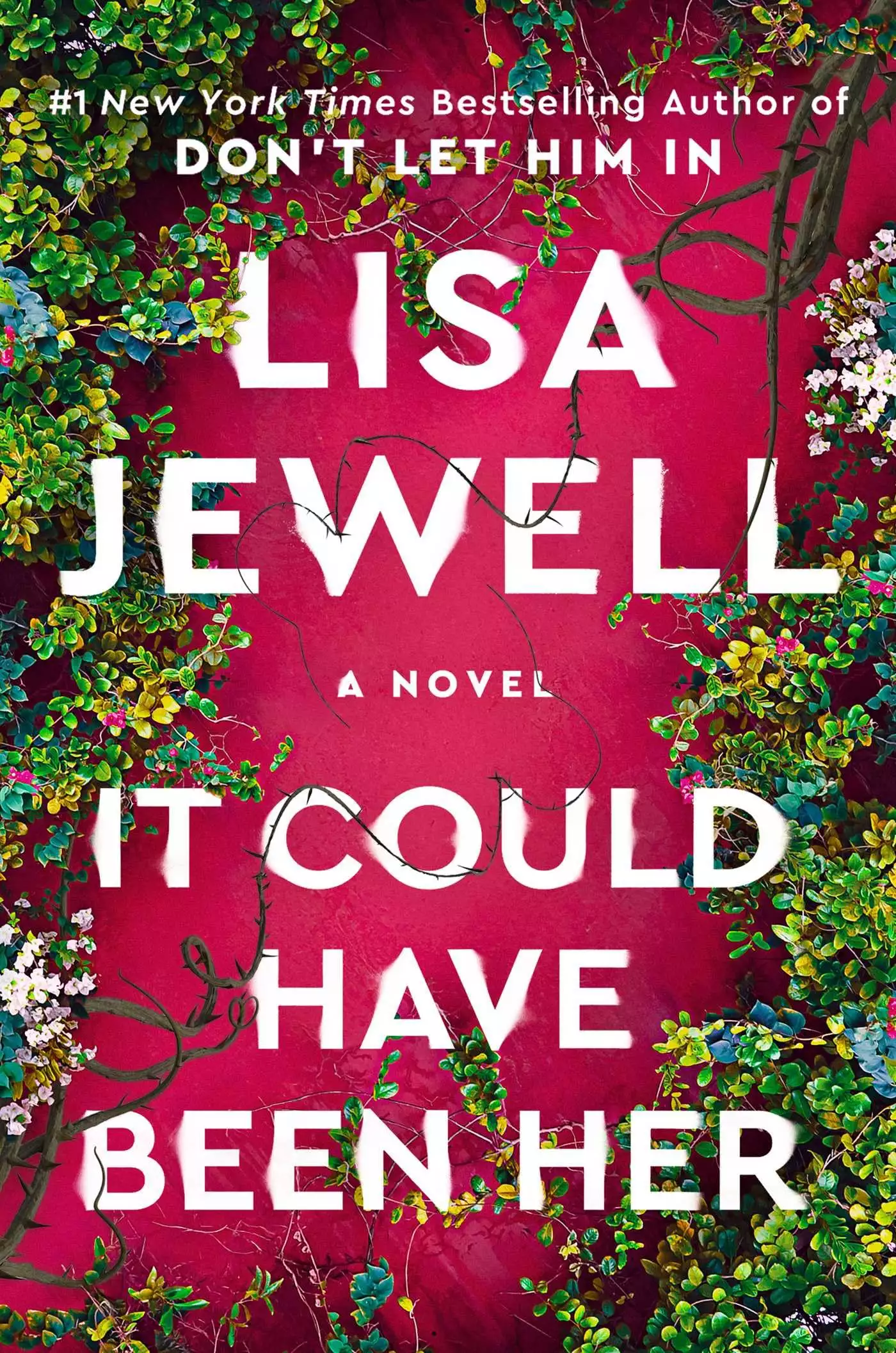
#1 New York Times bestselling author Lisa Jewell brings her signature dark, atmospheric suspense and sharp acuity to this new psychological thriller about a lost dog, a missing woman, and a mysterious house.
Jane Trevally is walking her dogs on her country estate one May afternoon when a small white dog appears. The teenaged girl that had been staying nearby with the dog is nowhere to be found, and Jane decides to return the dog to his registered owner hours away in London, in the deepest backwaters of Hampstead. But when Jane arrives, she is immediately unsettled—because Jane has a dark history with this house
The man who answers the door tells her the dog, Hugo, must have been stolen from the Heath, but Jane very much doubts that is true. Through the window, she catches a glimpse of a haunted-looking woman, not the missing girl she’d hoped to find.
Facing a crossroads similar to the one that first led her to this home twenty-five years ago, Jane knows that the house holds the key—to the missing teenager, to the lost dog, and to dark secrets they’d all rather leave buried
Release date:
June 23, 2026
Publisher:
Atria Books
Print pages:
384
* BingeBooks earns revenue from qualifying purchases as an Amazon Associate as well as from other retail partners.
Chapter One chapter one On the eighth day of May 2026, Jane Trevally does something terrifying.
She invites an estate agent into her home.
Jane’s home is a ramshackle Georgian pile called Rosebery Hall left to her by her mother and father, who both died of alcohol-related illnesses within eight months of each other when Jane was just nineteen. Her younger brother died ten years later of a drug-induced stroke and now Jane Trevally is the sole owner of this sprawling, ridiculous country pile that needs a million pounds to be spent on it just to keep it from falling down.
The main house itself has ten bedrooms upstairs and, downstairs, eight huge rooms all linked together so you could, in theory, roller-skate from one end of the ground floor to the other if there weren’t so many ratty Persian rugs strewn all over the ageing floorboards. At the back of the property there is a row of three small cottages that Jane has been planning to turn into Airbnbs for years but that are currently moldering and on the verge of becoming tumbledown, and there is land, too, five acres of lawns and woods, and a wild meadow, which, when Jane was a child, had been home to five donkeys and three llamas. She’d never got around to replacing them after they died, and now the meadow is overgrown and tangled up with blackberry and hawthorn.
She must sell it all, cash it in, let someone with time and love and money bring it back to its former glory. Her parents started the downward spiral of the property by not spending a penny on it, plugging leaks and filling gaps and covering things over with cheap wallpaper and cheap rugs, but Jane has done little to reverse the spiral.
Over the past three decades Jane has entered and left two marriages to two wealthy men who had already had their families, both of whom made her sign prenuptial agreements, and she has spent most of the settlements from both of those ill-fated marriages, given it to dog sanctuaries and builders and scaffolders and roofers and now, this pile of bricks and mortar and memories and damp and piss-stained mattresses and cheap Persian rugs, this little corner of Dorset, is all that is truly hers. This, and her dogs.
Jane’s heart beats hard under her ribs as a glamorous young woman called Chloe Flint walks around the house that Jane hates and loves in equal measure and talks of different types of buyers, talks of other, similar places she has sold, talks of Crittall windows and holiday lets and the perfect spot in the lawn for a swimming pool, and Jane nods and smiles, is utterly charming, lets the nice girl believe that she really, really does intend to sell this place, that she really is quite, quite normal thank you very much, every bit as normal and as lovely as she looks, a normal woman selling a scruffy house that is no longer what she wants or needs, when all the while she is silently screaming, Leave, now, please please leave, and her heart races and her breath hurts and the moment that Chloe departs the house with more cheery talk of valuations and emails and I’ll-be-in-touches, Jane shuts the door behind her and cries.
An hour later, once she has pulled herself back together, Jane takes the dogs for a walk through the last of the spring bluebells. Overhead the sun shines crisply through a green canopy of leaves, and her dogs run on the path ahead of her. Jane has four dogs, they are all boys, and in the absence of any children of her own, they are the center of her universe—though she suspects they would still have been even if she’d got around to having children. She has enough stepchildren—five, plus a grand-stepchild—to be aware of the gulf between the pure, unconditional love of a dog and the messy, ever-changing, often brutal love between a parent and a child.
She pulls her phone out of her pocket and turns it to camera, wanting to capture the glory of the contrast between the dark dying bluebells, the black soil, the green leaves, and the rich rust of the coat of Brian, her fox-red Labrador. “Brian!” she calls to her dog. “Look at me!” Brian turns just once to face the camera, Jane gets the shot, and then Brian is gone again, catching up with the others.
Jane puts her AirPods in and finds the podcast she was listening to earlier—true crime, always true crime—and follows the muted rustle and thump of her dogs’ paws on the path before her. But a moment later she presses pause and pulls out her AirPods at the sound of one of the dogs barking—Bluto? She catches up with the dogs and is surprised to see in their midst a small white dog. Her dogs are all large and earthy colors and the small white dog at the center of the group looks like an unexpected blast of light.
The dog seems comfortable in the heart of the band of bigger dogs, looks as if he wants to play, but Jane knows that Reggie, her oldest and best dog, won’t take kindly to the suggestion, so she calls them all away and crouches by the small dog.
“Well then, who the hell are you?” she asks, feeling its collar for a tag and not finding one. She sniffs the dog’s fur, trying to discern the scent of a warm and loving home, but she gets a hit of damp earth. She feels his ribs and his belly, looking for his last meal, but his belly is empty, his ribs slightly pronounced.
He looks like a West Highland terrier—not the sort of dog that you would normally find lost in the countryside, and he is incredibly friendly and licky.
Jane stands up and turns 360 degrees, looking for the owner of this sweet errant dog.
“Hello!” she calls out. “Person with small white dog! I have him here!”
She waits a moment for her calls to reach somebody, but all around is silent, in the way that this place is always so silent. It’s one of the reasons why she is still here, fifty-five years after she was born in that huge, awful, beautiful, cold house, in her parents’ bed, a private midwife on hand, her birth leaving a bloodstain on the mattress that is still there to this day. It’s this—this silence. And she knows already that there is nobody else in the bluebell woods with her today; she knows that this dog has not eaten for at least a day, maybe longer; she knows that this dog is now her responsibility. She sighs and pulls a spare lead from her pocket and clips it to the dog’s collar.
“Well,” she says, leaning down to scratch him behind his ears, “I guess we need to take you home and get some food in you.”
She enters through the side door into the boot room, where she takes off all the dogs’ harnesses and leads, pulls off her own Wellingtons and puffa coat, pulls on the thick, fur-lined thermal socks she wears around the house, and then lets the dogs lead her into the kitchen, toward their bowls, which she fills from vats of incredibly expensive raw sludge she has delivered every month and stores in the freezer. She finds a smaller bowl for the new arrival, fills it with a few biscuits, and sets it down around the corner so that he is not disturbed.
She watches him eat and she looks at the time. Three fifty-eight. Still time to take him to the vet, find out if he’s chipped, find out who is missing him.
An old person, she imagines, maybe an old person who has died and nobody is aware. But she knows all the elderly people in the nearest village—and more than that, she knows all the dogs, and she has definitely never seen this dog before.
The local vet is called Hester. She is, uncharacteristically for a country vet, very sentimental about animals, and now she puts her nose up against the white dog’s snout and ruffles his ear.
“Poor baby,” she whispers up his nostrils. “Poor, poor stinky baby.”
Then she takes her scanner and runs it over his scrawny body and says, “Aha, bingo.”
On the screen of her computer, the dog’s details pop up.
“Well, hello, Hugo!”
“Hugo?” says Jane.
“Yes. Hugo Tucker to be precise. Of…” She scrolls through the details with a mouse. “Well, according to this, Hugo Tucker belongs to a Mr. Tucker who lives in London NW3.”
“Really?”
“Yes,” says Hester. “What on earth are you doing bang, slap in the middle of nowhere, Mr. Hugo Tucker?”
“Maybe he’s been stolen?”
“Quite likely. They do like nicking people’s dogs in London, don’t they? I keep reading about it. Or he’s been adopted, and the new owner didn’t reregister the chip? Anyway, let me give them a call.”
The call rings out after a while and Hester sighs and presses end. “Ah well,” she says. “I guess one of us will be taking him home tonight.”
“Wait,” says Jane. “My stepson Dexter lives near Hampstead. Let me take Hugo. I can go and see him while I’m there.”
“Well,” Hester says. “If you’re sure that’s OK?”
Jane nods.
Hester writes the address on a piece of paper and hands it to Jane, who puts it straight into her pocket without looking at it. “I’ll give him some fluids,” Hester says, “and then he should be good to go. Just keep me posted, will you?”
That night Hugo Tucker shares Jane’s bed with her. He settles quickly and neatly, squashed between Reggie and Bluto. It’s as if, Jane thinks, he’s always been here, and she decides that if she can’t find Mr. Tucker tomorrow in Hampstead, then Hugo can stay with her forever.
We hope you are enjoying the book so far. To continue reading...

 Please log in to recommend or discuss...
