Sworn to protect a scenic island meant to be far from the evils of the mainland, Detective Sergeant Stilwell can feel danger closing in.
Detective Sergeant Stilwell knows that his posting on Catalina Island is no paradise, but to most residents, it seems blissfully separated—by twenty-two miles of ocean—from the troubles of Los Angeles County. But now a threat is coming to his safe haven.
Acting on a tip from a confidential informant, Stilwell and his deputies watch a plane land in the middle of the night at the Airport in the Sky, a remote airstrip in the mountains. A duffel bag of drugs is dropped and the deputies move in, but things quickly go sideways. While Stilwell chases the fleeing pickup man into the mountainside brush, shots are fired on the runway and the plane flies off.
An internal inquiry follows, putting Stilwell on the bench until he is cleared of responsibility for the disastrous operation. But he is determined to find out who brought deadly violence to his island, and begins his own secret investigation into the drug deal gone wrong.
While under orders to remain in the sheriff’s substation, he finds in the lost and found a valuable backpack that was never claimed. He traces it to a woman who disappeared while hiking on the island four years ago. But then why was the pack only turned in two months back? Now thoroughly intrigued, he follows the mystery all the way to the LAPD’s Open-Unsolved Unit and Detective Renée Ballard.
Stilwell and Ballard work the case from both sides of the channel, and soon realize they are on the trail of a criminal who revels in taunting the authorities. Meanwhile, frustrated at being shut out of an investigation on his own island, Stilwell risks his already shaky standing in the department to pursue a case whose reach is wider than he ever imagined.
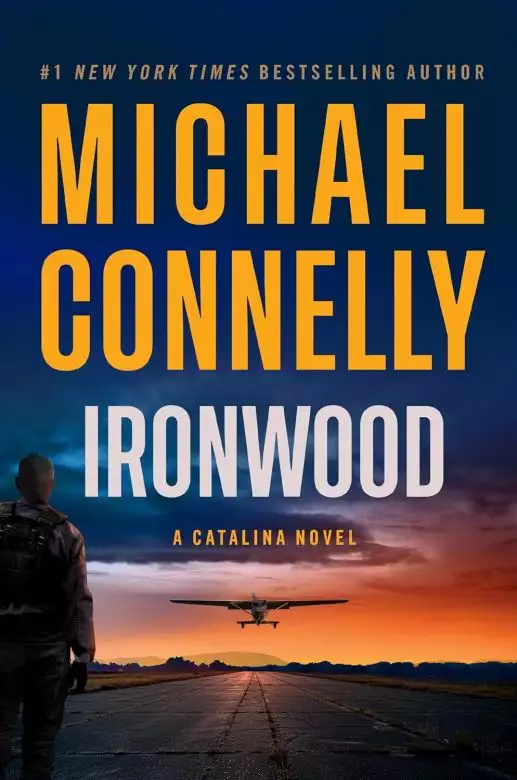
Page-turning, packed with intrigue, and bringing together an unstoppable investigative team, Ironwood continues the Catalina series with all of Michael Connelly’s signature “relentless narrative drive…evocative atmosphere, realistic dialogue, and well-developed characters” (Washington Review of Books).
Release date:
May 19, 2026
Publisher:
Little, Brown and Company
Print pages:
400
Reader says this book is...: entertaining story (1) realistic characters (1) unexpected twists (1) unputdownable (1)
* BingeBooks earns revenue from qualifying purchases as an Amazon Associate as well as from other retail partners.
STILWELL COULD HEAR the plane but couldn’t see it. The moon and stars were behind cloud cover, and the plane was no doubt running without lights as it circled above the island. The radio crackled and Quigley’s voice came through.
“Boss, you hear that?”
Stilwell brought his rover up to his mouth and keyed his two-way.
“Affirmative,” he said. “Hold your position. Be ready.”
He stopped looking up at the sky and used the binoculars to look down from his position toward Airport Road. He picked up an approaching vehicle, also running without lights, as it ascended to the mountaintop airstrip. He keyed the two-way again.
“Ground vehicle on approach,” he said. “No lights.”
“Copy,” Quigley said.
It was an ATV. It entered through the open gate and drove directly out to the airstrip. It sped down to the runway’s threshold, turned around, and backed into the brush. Then its lights came on—high beams from the front of the ATV and a powerful set of halogens across the top of its roll bar. The first third of the eighteen-hundred-foot runway was sufficiently lit for the plane circling above. Stilwell went back to the radio.
“Okay, we go as planned,” he said. “Move on my call.”
“Copy that,” Quigley said.
This would be Alton Quigley’s first test. He was two months new to the island, and Stilwell didn’t know what he had in him yet. But he believed that pairing him with Ilsa Ramirez was the right move. She was Stilwell’s most dependable deputy, something he could not have said a year ago. But now, after almost two years under Stilwell’s command, Ramirez had turned into a solid member of the Catalina substation’s team.
The drone of the plane’s single engine grew louder and Stilwell knew the pilot was bringing it down. He felt his pulse quicken with anticipation and the electric sense of possible danger.
Quigley and Ramirez were in an SUV parked in the shadows at the rear of an open hangar, out of sight from the air. Stilwell was in an unmarked hardtop ATV parked next to an equipment shed. There was nobody else. There hadn’t been time. The tip came in too late to recruit backup from the mainland. He had to make do with what he had while also keeping one deputy on post in Avalon should the tip be an effort to draw all law enforcement away from the town.
The plane’s engine throttled back as it floated down out of the dark sky to the partially lit runway. It landed softly, a testament to the pilot’s skill, and coasted toward the southern terminus of the airfield. The ATV pulled out of the brush behind it and followed it down the strip, its lights still blazing.
“Should we go?” Quigley said over the radio.
Stilwell shook his head in annoyance. Quigley was so hyped on adrenaline that he had either forgotten or was ignoring the plan.
“No,” Stilwell radioed back. “Stick to the plan, Deputy. We need to see the drop first.”
Stilwell had the binoculars to his eyes, watching what played out in the lights of the ATV on the airstrip. The plane had turned around at the terminus and was now in position to take off again. The pilot did not kill the engine; the plan was obviously to spend as little time on the ground as possible.
The cockpit door opened and an orange duffel bag was dropped to the tarmac. Someone wearing a black safety helmet with a smoked face shield got out of the ATV and approached the plane, staying clear of the still-spinning prop.
The man in the helmet came in under the overhead wing and grabbed the duffel bag. Stilwell keyed the mic.
“Okay, go,” he said. “Block that plane!”
Stilwell pinned the pedal down, and the electric ATV leaped from its position by the shed blind, and soon he was racing toward the lights on the airstrip. He could see the deputies’ SUV break from the hangar with its lights flashing. It moved down the center of the runway, making it impossible for the plane to take off.
Stilwell saw the man in the helmet drop the duffel bag and sprint back to his ATV. He then did something Stilwell had not expected when he had hastily drawn up plans for the surveillance. He drove the ATV off the airstrip and into the brush that ran down the side of the mountain.
As the ATV plowed through the manzanita bushes that lined the airstrip, its lights went out and it disappeared into the darkness.
“Shit!” Stilwell said.
He followed, keeping his vehicle’s lights on. As soon as he was in the brush, the terrain dropped off and he went bouncing down the mountain at a forty-five-degree angle. He followed the sound of the fleeing ATV and the dust kicked up into his lights. He almost lost control on a sharp left turn when his front right wheel caught a rut. He overcompensated by jerking the wheel right, and the back end swung around in a 180 skid before coming to a hard stop. He started up again, and his lights came upon the runaway ATV now on its side next to the thick trunk of a live oak. Stilwell slammed down the brake pedal, skidded to another stop, and jumped out, pulling his weapon and flashlight from his belt holsters as he moved.
Gun up and wrist braced over the hand holding the flashlight, Stilwell approached the back of the upturned ATV.
“Sheriff’s department,” he called out. “Put your weapons down and your hands in the air!”
There was no response. He kept moving. Realizing that the flashlight made him an easy target, he flicked it off as he came around the end of the ATV and then turned it back on and focused the beam on the two seats. The driver was gone.
Stilwell swept the light across the thick brush but saw no sign of the man in the safety helmet. He knew it would be impossible for him to adequately search the mountainside for a runner on his own. As he stood there, annoyed with himself for not catching the man, he heard the rising sound of a plane’s engine and instinctively knew it was running down the airstrip to take off. He ran back to his ATV and grabbed the two-way out of the charging mount.
“Quigley, what is—”
His voice was drowned out as the plane flew about seventy-five feet overhead.
There was no response on the radio.
“Quigley, Ramirez, copy me on your status.”
He waited. Nothing.
Stilwell jumped behind the wheel of the ATV and pointed it up the mountain. But the angle was steep and its wheels spun on the loose soil. It slowly made its way up, then popped out of the brush onto the tarmac. He saw the SUV with its doors open and lights on. In the beams of its headlights he saw two bodies on the tarmac. Neither was moving.
AS SOON AS the homicide team took control of the crime scene, Stilwell was brought down to the substation and sequestered in the interview room until one of the detectives could get away and begin the first of what would be several debriefings. Stilwell spent the time reviewing as many details of the surveillance operation as he could remember and writing them down on a legal pad. Because a deputy had died and another had been seriously wounded, Stilwell knew he would be on the hook for every decision, good and bad, made at the airstrip. Though still reeling from the loss of life that had occurred, he had to consider his own situation. He had the option to request a representative from the union to advise him and sit in on any interviews, but he’d decided not to go that route and told Captain Corum upon his arrival that he would fully cooperate with the investigation.
After he had written down every salient fact of the past six hours on the yellow pages, he got up and started stacking the boxes that cluttered the interview room. Because the space was so infrequently used for interviews, it had become the unofficial lost-and-found area for the island. There were boxes of lost cell phones, backpacks, purses, and cameras, three full suitcases, fishing rods and reels, camping and diving equipment, and other detritus left behind by tourists. Every three months Stilwell ordered a deputy to sort through the accumulation and either find the owners of the left-behinds or donate the items to St. Catherine’s, which held a quarterly rummage sale to raise money for the island’s struggling families. Organizing things in the room helped Stilwell burn off nervous energy.
He had the room neat and orderly by the time the first investigator came from the crime scene. His name was Ernie Simon. Stilwell knew him from his previous posting in the homicide squad. He knew that Simon was a capable and fair investigator who was methodical in his approach to his work and thus was known as a tortoise—as opposed to a hare—among his colleagues.
“What’s the status on Ramirez?” Stilwell asked as soon as Simon entered.
“Still kicking, at last report,” Simon said. “What’s all this?”
He gestured at the boxes stacked against the wall.
“Lost-and-found stuff,” Stilwell said. “I turned the storage room we used to use for that into a bunk room. It’s made the rest of the sub kind of cramped, but we needed a place for people to sleep.”
Simon took a seat at the table across from Stilwell. He had shaggy white hair and a paunch that came from too much fast food and a fondness for vodka after work. He held a clipboard with a blank sheet of paper on it.
“The captain says you’re okay talking to me,” he said. “That right?”
“Right,” Stilwell said. “Whatever you need.”
“What I like to do is have you tell your story and then we’ll turn on the recorder and you tell it again, the same thing. Seems to work best that way.”
“You can record the whole thing as far as I’m concerned. The story’s not going to change.”
“Let’s do it my way, see how we go.”
“Sure.”
Simon pulled a mini-recorder out of his pocket and put it on the table but did not turn it on.
“The room’s wired too,” Stilwell said. “I can turn that on if you want.”
Simon ignored the suggestion and dove into the interview.
“Let’s start at the start,” he said. “How did tonight’s operation begin?”
“It began with Quigley getting a tip from one of his mainland CIs,” Stilwell said. “The guy knew Quigley was working out here now and he said that there was a plane coming in tonight. Coming up from Mexicali. They make the drop out here where nobody’s watching and in the morning it’s on the first ferry to overtown.”
“Overtown?”
“What they call the mainland over here.”
“This confidential informant, did Quigley give you a name?”
“Wouldn’t be confidential if he did. He did say the guy was a one-hundred-percenter. All his tips were money.”
“And this was a guy he knew when he worked the narco unit?”
“That’s what he said. You guys make the notification to his family yet?”
“They’re handling that from… overtown.”
“He had a wife and kids.”
“So I hear. When did Deputy Quigley get the transfer out here?”
“A little over two months ago.”
“And this CI calls him out of the blue and says a plane’s coming in and it happens to be landing on the island where Quigley now works. That sound a little convenient to you?”
“Maybe.”
“Do you know why Quigley was transferred out here?”
“I only know what he told me. I’m allowed access to basic personnel records on the people they move out here, but I don’t see the disciplinary files.”
What Stilwell knew but didn’t need to say was that the Catalina substation was a transfer destination for deputies who had somehow run afoul of the department’s command staff. This could be due to anything from a political misstep to an improper show of force to accepting a free meal to getting your shirts pressed for free. It was a form of punishment and everyone in the LASD knew it. If you were transferred to Catalina, you had fucked up. That was how Stilwell got here.
“What did he tell you?” Simon asked.
“He said it was because he was working a nightclub in West Hollywood and busted a guy selling coke in the restroom who turned out to be the sheriff’s nephew. Whether that was a true story or not, I don’t know.”
“The story might be true but it wasn’t the reason he was transferred out of narcotics.”
Stilwell didn’t respond. He hoped his silence would lead Simon to reveal more, but it didn’t.
“So, you get this tip,” Simon said. “It’s short notice and not enough time to get anybody from narcotics out to handle it, so that leaves you, Quigley, and Ramirez.”
“Correct,” Stilwell said. “Quigley said his CI was a hundred-percenter but what’s that mean to me? Nothing. So I also left a deputy in the sub to handle calls in case this whole thing was a decoy op.”
“You mean to draw you up the mountain to the airstrip while they hit a target down here?”
“Exactly.”
“Very smart.”
“SOP.”
“Maybe, but still a good move. When did this tip come in?”
“Deputies out here work twelves, changing on the sixes. Quigley worked three days on, four off. He stayed in the bunk room because he thought he’d be a short-timer out here and his family was embedded with schools and a house and all of that in Gardena. He had clocked out but was hanging around the sub because I guess he had nowhere else to go. His CI called him and he came to me at seven twenty with it—I wrote it down. His guy didn’t have an ETA but said the plane was already in the air.”
“From Mexicali, that’s, what, about three hours?”
“Depends on the plane and the flight path, I guess. I don’t know planes but it was a single prop with an overhead wing and a blue stripe down its side. No tail number. And judging by the sound, it came in from the west, probably flying outside the twelve-mile limit till it got up here.”
“Did you call the narco unit after this tip came in?”
“I did. They were running an op in Compton last night. They said they couldn’t get anybody out here but they’d follow up on it in the morning. But by then it would be too late, so I told Quigley to suit up and I took Ramirez off the second shift to make three of us.”
“What happened up there?”
Referring to his legal pad, Stilwell began to give a detailed account of the events up at the airstrip.
STILWELL SPENT FOUR hours in the interview room repeating his story to Simon and then two other investigators on the team. The windowless room was rank with bad breath and body odor by the time Captain Corum came in. He left the door open.
“Let’s air this place out,” he said. “What’s all this?”
Like Simon, he was looking at the collection of stacked boxes and other belongings lining the wall. The captain was tall and thin. He always dressed in a sharp black suit to match his unnaturally black hair. He completed the ensemble with a white shirt and a colorful tie. He was in his mid-fifties and had a two-tone face—deeply tanned from his eyes down, his forehead a hat-protected pearl white. He spent much of his weekends on a golf course.
“Lost-and-found,” Stilwell said.
“You sure there isn’t something dead in there someplace?” Corum said.
“Maybe. Am I clear?”
“You’re clear. For now. But you’re grounded until we see how this shakes out. I want you staying in the sub.”
“Twiddling my thumbs?”
“You know how it works. Give us a few days to put the package together and send it up to the boss.”
Stilwell knew that the elected sheriff would need to sign off on any after-action discipline.
“Am I getting thrown under the bus, Cap?” Stilwell asked.
“You, no,” Corum said. “As far as we can tell, they probably didn’t clear the plane properly. There was somebody besides the pilot hiding on board and he got the drop on them.”
Stilwell did not nod, though he was thinking the same thing.
“You really didn’t hear any gunshots?” Corum asked.
Stilwell paused for a moment. Was Corum suggesting he needed to change his story?
“No, I didn’t,” he finally answered. “But like I told everybody, I was chasing a gas-powered ATV and was down the side of the mountain. Not sure I would’ve heard the shots.”
“It’s just that if a suppressor was used…”
“Why would a guy have a suppressor on an airdrop?”
Corum didn’t answer. Stilwell changed the subject.
“What about the guy I chased?” he asked. “He’s probably still on the island. I should be out there looking for him.”
“That’s not happening, Stil,” Corum said. “You’re on the bench.”
“So nobody is looking for him?”
“We’re looking for him. We’re just a little short on manpower at the moment. But in the morning we’ll have people at the docks in Long Beach and San Pedro checking everybody who gets off the boats from here.”
Stilwell thought about that and decided not to criticize the plan. He changed the subject again.
“Did you talk to Quigley’s wife?” he asked.
“I did not,” Corum said. “Notification of the family was handled by Ahearn and Sampedro over there.”
“Great. They’re on this?”
“They’re not. I just needed somebody to make the notification. I know enough now to keep your orbits separate.”
“Thank you.”
There was long-standing enmity between Stilwell and Ahearn, going back to Stilwell’s prior posting in the homicide unit. It was their dislike of each other that had led to Stilwell’s transfer to Catalina. And things had only gotten worse last year when they both worked a murder case on the island.
“They trace the ATV yet?” Stilwell asked.
“They did,” Corum said. “It was reported stolen last night before the shit hit the fan.”
“I didn’t get any report on that.”
“It came in while you were up there on the stakeout. The owner called it in, and the deputy you left down here—who was that?”
“O’Connor.”
“O’Connor went up and took the report.”
Stilwell just nodded. He knew he could get that report and talk to O’Connor for further details. Corum seemed to be able to read him.
“I know what you’re thinking, Stil,” he said. “But you’re staying away from this. You’re a witness, not an investigator. Clear?”
“Yes,” Stilwell said. “Clear.”
“Good. So, let’s talk about media. Same thing. You are not part of this. Direct all inquiries to me or the media unit. I don’t want to see your name in any paper, including that little rag they publish out here. Comprende?”
“Comprendo. What about reporters from the mainland coming out here and poking around?”
“Let them do what they do but don’t help them and don’t talk to them. Like I said, refer all media requests to the mainland.”
“Roger that.”
“Last thing—you have space in your bunk room for Simon? We’re taking the chopper back but he’s going to stay here so he can check out the crime scene when the sun comes up.” Corum looked at his watch. “Which won’t be for a few hours,” he said. “If there’s room, I’ll tell him he can catch some sleep until then.”
“There’s room,” Stilwell said.
“Good. The rest of us are leaving and you’re clear to go home.”
“Okay.”
Corum raised his chin toward the lost-and-found wall.
“And I would use some of your downtime in the sub to clean all this up,” he said. “Make things more professional around here.”
“Good idea,” Stilwell said.
AFTER CORUM AND everybody but Simon left to fly back to the mainland, Stilwell showed Simon the bunk room and the locker where clean sheets, blankets, and pillows were kept. The bunk room was a make-your-own-bed facility. He went to the desk shared by the on-duty deputies and found a copy of O’Connor’s report on the theft of the ATV used the night before in the airdrop.
The ATV was reported stolen by a man named Art Sellers who told O’Connor the vehicle had been taken from the driveway of his home on Clarissa. Coming up on two years since his transfer to the island, Stilwell was familiar with many of the residents, particularly those who lived in Avalon. More than a million people visited the island every year, but there were fewer than six thousand residents, and Stilwell, the lone detective on the island, had done his best to get to know as many of the locals as possible. Art Sellers was not a familiar name to him, but he knew that Clarissa was a street where a lot of long-term and multigenerational families lived in century-old row houses built as close together as teeth in a smile. It seemed to Stilwell that someone on that street would have heard a gas-powered ATV being taken from a driveway.
Sellers told O’Connor that he had had the ATV for two years and usually left the key in it because he had never been worried about it getting stolen. This was the practice of many residents on the island as they tried to cling to the idea of Catalina as a crime-free atoll cleanly separated from the ills of society by twenty-two miles of ocean. There would be a rude awakening for Sellers and others when word of the murder of a deputy spread in the days ahead.
The ATV in question was still lying on its side up on the mountain by the airstrip. Though it had been processed by the criminalist who came with the homicide team, extricating it would have to wait until daylight. The vehicle was clean as far as fingerprints and other evidence went. The driver. . .
We hope you are enjoying the book so far. To continue reading...

 Please log in to recommend or discuss...
