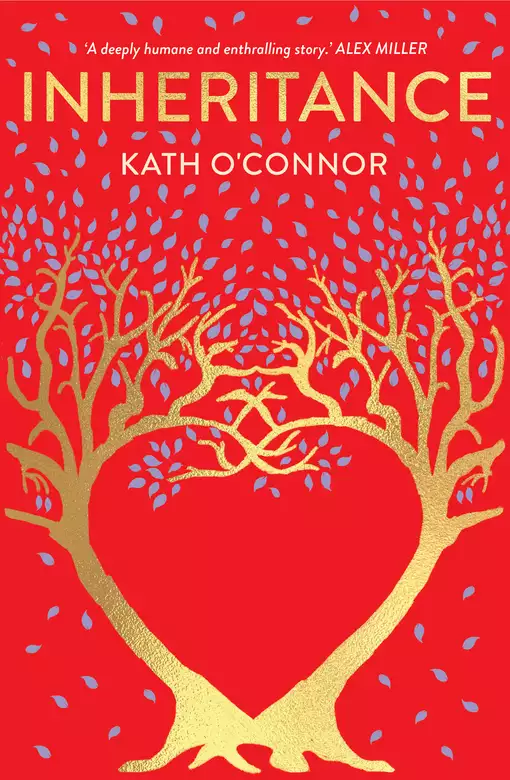
A profoundly moving novel about two women in very different worlds, whose lives are shaped by a single fatal gene. In 2016, while in the early stages of IVF, Rose is shaken by the discovery that she carries a dangerous mutation of the BrCa1 gene. She begins to ask questions about her family history, and particularly her grandmother Nellie, whose early death left a hole in their family that was never quite filled. As the certainties in Rose's life start to crumble around her, she becomes fixated on the shadowy figure of Nellie. Who really was this woman, and could her secrets reveal the way forward for the granddaughter who may share her fatal gene? Inheritance tells the stories of two similar women in very different worlds, exploring how our circumstances – and the time and society we live in – can collide with what we've inherited to shape our lives. It's a breathtaking and profoundly moving exploration of love, death and the dignified beauty of a quiet life. In 2019, writer and General Practitioner Dr Kath O'Connor died from ovarian cancer while working on the final draft of Inheritance. Her partner and family, with Kath's writing mentor, Inga Simpson, completed the manuscript so that Kath's dream of publication could be realised and this beautiful novel could be shared. Royalties from the sale of the book will be donated to WomenCan: Funding Gynaecological Cancer Research.
Release date:
January 31, 2023
Publisher:
Affirm Press
Print pages:
320
* BingeBooks earns revenue from qualifying purchases as an Amazon Associate as well as from other retail partners.
Rose stares at the pulse of the cursor in the box marked ‘cause of death’.
Death certificates are done online these days, all drop-down menus and mandatory fields with a simple ‘submit’ button at the end. Rose thinks this takes the ceremony out of it; she misses the scratch of pen on paper.
She always gets stuck on ‘cause of death’. In the end, everybody dies from cardiac arrest and respiratory failure – the shutting down of the pump and the bellows. But the Coroner’s office needs more detail, and finding the right words always feels more like a philosophical decision than a scientific one. How far back should she go? What weight should she give to one bodily function over another?
Mrs Liu had been eighty-two. Recently, her potassium levels had gone sky-high, and the final event was probably a short-circuiting of the electrical activity in her heart. She’d only had one kidney, and had renal failure, coronary artery disease, a damaged heart from previous heart attacks and scarred lungs from smoking. The renal tumour that had partially blocked the flow of urine from her remaining functioning kidney was the last straw. There was a stent and some chemo but, at some stage, she had simply lost the will to live. She’d instructed Rose to withdraw active treatment – a decision that had seemed reasonable to everyone involved – and she’d died while she was waiting for a hospice bed, under a cloud of morphine and midazolam, turned regularly by the nursing staff to prevent bedsores, and watched over by a line of the German porcelain dolls she’d collected, brought in by her daughter to make the room seem more like home.
The phone rings, sharp and high, and so close to the edge that it vibrates itself off the desk, sending a pile of papers careening after it. She reaches under the desk. A private number.
‘Rosey. It’s Jack.’
‘Hi. Is everything okay? I thought we were seeing you next week.’
‘Everything’s fine. Well. I just wanted to tell you something. I’m going to be away next week so I won’t get the chance to … Nigel will be here of course and it’s supposed to be face to face but—’
‘Jack.’
‘I did want to tell you myself.’
She and Jack were at uni together. She knows the way his mind works – he is constantly sifting through things and weighing them up, looking for the correct thing to do – what is fair, what is right. At uni, he was a vegan. He’s since softened to a vegetarian, but he still reads food labels in great detail and still quizzes waiters at restaurants, wanting to know the origins of every morsel. When faced with a complex diagnostic problem, he’s single-minded. He furrows his brow, and then reads and researches into the small hours. Even if it takes days or weeks, his brow doesn’t soften until he’s cracked it. Rose used to think his perfectionism would make him the perfect doctor but she’s no longer so sure. Living with uncertainty is essential to practising medicine in the real world. His conviction that there is always a right thing to do, a right way to proceed, has made him prone to prevarication, never quite persuaded by his own opinions. He will have sat at his desk this evening, hand hovering over the phone, wondering if he should treat Rose like any other patient and make her wait until her appointment, or let her know the moment he knows something. From the beginning, she’s wondered about the awkward position she might be putting him in by placing herself under his care, and making his mental gymnastics – the possible conundrums – even more complicated. But he’s the best fertility specialist she knows.
‘Spit it out, Jack.’
‘The BRCA was positive.’
‘Really? Wow. I didn’t think …’
‘Neither did I. I actually wondered whether we should bother testing for it. Good thing we did.’
‘I was low risk. I was surprised when you recommended it.’
‘I did wonder if it was worth the cost.’ There was no Medicare rebate for her.
‘Worth it in hindsight. You can weed out the offending gene in the lab before implantation.’
They are already talking shop. It’s easier than discussing what the result means for her beyond the IVF.
‘One or two?’
‘One. An unusual mutation though. More common in Chinese populations.’
Rose tries to focus on what she knows about BRCA1. The information rockets about in her brain too fast to contemplate – like she is flicking through a library card catalogue, the little yellow type-written cards flying out of the drawer and onto the floor before she can read them.
‘Are you still there?’
‘Yes.’ Rose swallows. Her mouth has gone dry.
‘Look, it’s a big shock I know. I think you should let Nigel take you through it next week. Step by step.’
‘Sure. Yes. I will. Are you on holidays?’
‘Just a conference.’
Rose wonders if Jack really is away next week, or whether he is trying to move her sideways to Nigel so she can have the hard conversations with him. She wouldn’t blame him if he did. Treating colleagues is always fraught.
She presses the call end button and stares at her phone. She can feel the pulse in the tips of her fingers. She closes her eyes and pushes a full, quick breath out through her mouth, pressing her belly down and looking for the pause at the end of breath. She tilts herself beyond the precipice of her empty lungs, daring herself to sit in that empty space for five seconds, ten seconds, fifteen. She used to do this when she was a child and bored, or frustrated, or both. She sees the familiar flashes of light in the space in front of her eyes, feels the hunger for breath in the centre of her chest, senses the power of her need to breathe again. To suck on life.
She opens her eyes. Everything is exactly the same. The spilled papers on the floor, the grain in the polished wood of her desk, the neat row of books on the shelf beside her, the harsh central light reflecting off the steel of the sink, the collection of coloured antique pharmacy bottles on the top of the old dresser, the ticking of the clock, the heavy winter coat hanging on the back of the closed door.
The literature describes BRCA1 and BRCA2 as caretaker genes, responsible for DNA repair. A mutation in either increases risk of breast and ovarian cancer. A BRCA2 mutation also increases the risk of prostate and pancreatic cancer (BRCA1 may slightly increase the risk of prostate cancer but it’s inconclusive).
She is struck by the word caretaker – the caretaker is missing. It’s such a gentle word and out of place alongside the rest of the jargon. She finds some recent statistics on the Peter Mac hospital website: BRCA1 carries a 72 per cent lifetime risk of breast cancer and a 44 per cent lifetime risk of ovarian cancer. She can reduce her risk with increased screening, possibly with medication, and with surgery. A total hysterectomy reduces the ovarian cancer risk to almost nothing and halves the breast cancer risk. A bilateral mastectomy reduces breast cancer to less than the general population. Having both reduces the overall cancer risk by 90 per cent.
The phone rings again. Another private number.
‘Jack?’
There is no response. She can hear the bings of monitors and IV pumps.
‘Hello?’
‘Oh, hi. Sorry.’ A young voice. An English accent. ‘Rose King?’
‘Yes.’ She rests the phone under her chin and starts to shuffle her paperwork.
‘Your father is Ernest King? Ernie?’
‘Yes.’
‘Well, he’s here with us at the moment, in the emergency department.’
Rose sighs. Her dad spends half his life in the Castlemaine Health emergency department. His usual doctor has stopped calling her. There’s nothing anyone can do. Ernie just keeps drinking.
‘Where’s Graham? He knows Ernie well, he usually—’
‘I don’t know a Graham. Does he work here? I’m calling from Bendigo Health. I’m Dr Richards, the surgical resident. I’m admitting your dad.’
‘Bendigo?’
‘Ernie fell over at home and fractured his femur. They’re operating tonight, to pin the bone.
‘Ah.’
‘Anyway, the reason I’m calling is … he wasn’t found for a day and a half, we think – he’s not a hundred per cent clear when he actually fell – but now he’s withdrawing and very distressed. We think he’s having some visual hallucinations. He keeps talking about a Ruth someone. We’re managing the withdrawal – he’s soaking up the Valium – but he hasn’t stopped crying. We thought it would be helpful to have some family or friends around. Reorient him a bit. We thought you might be able to speak to him. Or visit perhaps.’ The end of this sentence lilts slightly upwards, like a question.
Rose watches the rhythmic flashing of the cursor in the ‘cause of death’ box. She sighs. The papers she has knocked onto the floor will need sorting and there’s another handful in her inbox.
‘Sure. Do you want to put him on for a minute?’
‘Yes but—’
‘I’m in Melbourne. I’ll get there as soon as I can. Probably not till tomorrow, sorry.’
‘Tomorrow’s great. I’ll get the ward clerk to put you through.’
The hold music is a chipper violin concerto. It stops abruptly, and she hears breathing, short and sharp, and muffled sobs.
‘Dad?’
‘Ruth?’
‘Who’s Ruth? It’s me, Rose.’
‘Hi, Rosey. I’m sorry.’ He speaks in little gasps, little tight sobs.
‘It’s okay, Dad.’
‘Ruth was here. She’s gone now.’
‘I don’t know who Ruth is, Dad. I think your body is struggling a bit. With the pain and the withdrawal – you haven’t tried withdrawing for a while. You’ve forgotten what it’s like.’
‘She was here. In the chair. I know it’s crazy. She’d be long dead by now.’
‘Dad—’
‘I know you don’t believe me.’
‘It’s not that, Dad. It’s just—’
‘I’m sorry.’
‘It’s okay, Dad. Everything is going to be okay.’
‘You would’ve liked her.’
‘Who?’
‘Ruth.’
‘Yes.’
‘She was exactly like I remember her. So thin. With a billowy white shirt tucked in high at the waist. Such a tiny little waist.’
Ernie’s voice grows calmer as he speaks, so Rose lets him continue.
‘That ridiculous purple cravat.’
Rose settles back in her chair. Renal failure secondary to malignancy might work.
‘Like a man.’
‘Who was this Ruth, Dad? Someone you used to know?’
‘She wasn’t really here.’
‘Yes.’
‘Mum’s friend. She used to take me out sometimes. After Mum died. Dad was a bit funny about her. The blue stockings were a bit strange to him I suppose.’
‘You broke your leg.’
‘So they say. They’re going to stick a screw in.’
‘Do you remember what happened?’
‘Not really. I’d had a few drinks.’
‘Yes.’
‘You know what they say.’
‘What’s that, Dad?’
She can hear a rustling sound. He’s speaking but the sound is muffled, as if he is talking to someone else in the room.
‘There you are. A cigarette? You can’t smoke in hospitals anymore you know.’
‘Dad?’
The phone goes dead. She taps at the computer keyboard to fire it up. Her ‘Births, Deaths and Marriages’ website session has timed out. She sighs. If she’s going to Bendigo tomorrow, she will need to make some arrangements. Michelle will cover for her – the ward and any urgent reviews – she only has to ask. Clinic is in the afternoon so Annie can call people in the morning and rebook the non-urgent ones.
It will only take a couple of calls, but she hesitates over the phone. She rarely takes time off. Just the regulation four weeks a year – never more than two at a time – and never any sick leave. She feels the burn of guilt in the back of her throat. Time off will mean extra work for Michelle, extra stress on Annie. This shame is the culture of medicine. Self-sacrifice as a badge of honour. A hangover from the military origins of the profession. Except there is no war on. With all that is known about overwork and burnout and the importance of a balanced life, she should be over this feeling. Still, the guilt burns.
She should call Salima. But what can she say? How would she answer the inevitable questions? About Ernie – and about the gene. No. She will wait until she can rest her hand in Salima’s. Until Salima can hold her in that way she does – like she is holding her upright. Until Salima’s patient eyes are on hers. Her usually patient eyes. Since they started planning for IVF, she’s been more restless, edgy. The pools of her eyes are stirred up, the gusts across the surface stormier every day. Rose understands. Neither of them is getting any younger.
She rests her phone on the desk and starts a text message, then chases the characters with the delete key back to the left-hand corner of the screen – once, twice, three times. She decides to keep it simple.
Hello my love. Hope your day goes well. I’ll be on the way home soonish. Can you pick up some Thai food after pilates?
Can’t get much simpler than that.
Within seconds, three emojis appear on the screen: 👍❤🍜
~
Before she leaves, Rose has to see Mrs Hart, whose haemoglobin has dropped again from the chemo. Rose needs to recommend another transfusion.
Mrs Hart is eighty and on her third round of chemo for an aggressive stage-four renal cancer. The treatment is knocking her about. She now needs to stay in hospital for at least a week after each treatment in order to recover enough to resume the care of her husband. He had a stroke last year and has locked-in syndrome – a brutal, terrifying state. He is aware but cannot speak or move. While his wife is away, he stays in respite at a nursing home and waits for her. There is no one else. Mr and Mrs Hart have no children. Rose imagines Mr Hart staring out of the window, gripping the arms of a vinyl chair as a twenty-two-year-old diversion therapist takes a group of demented patients through some simple songs. This is what ageing is like for some couples, Rose thinks. A trapeze act – swinging from one health crisis to another, holding hands, letting go, gripping tight again. All practice for the final letting go.
Mrs Hart sleeps most of the time she is here, her white hair fanning out around her on the pillow, her usually knotted facial features calming to shallow ripples. Her tiredness is profound, as much from her life caring for her husband as from the cancer and the treatment. The time has come to discuss whether treatment should continue. Rose has had hundreds of these kinds of conversations before, but with patients like Mrs Hart she dreads it. Mrs Hart is not ready to let go. She may never be. But with each chemo hit, her body gets weaker.
Rose’s consulting room is in the same corridor as the shared hospital waiting room. When she is inside, the acoustic panels she fought so hard for keep the room eerily quiet. Sometimes, when a patient falls silent, a deep shush falls around them, the only sound the tick of the clock on the wall, and it’s like they are the only people in the building. When she spends an afternoon inside this room, as she has done today, the only person she sees other than her patients is Annie.
When she steps outside, she is surprised by the thick buzz of patients in the waiting room, all holding their different plastic numbers – yellow for pathology, black for X-ray, green for admissions. They scuff their feet, or roll the wheels of their wheelchairs against the ageing carpet squares. So many different ways to fidget. It’s like a complicated, arrhythmic dance. Even now, at 6.30pm, there is a queue of at least ten patients at different stages of their treatment.
There are the newbies to the club, with full heads of hair and terrified faces, talking quietly with relatives or friends, faces down, not wanting to catch the eye of anyone else in the room. There are the seasoned members, scarved and wigged, staring into the space in front of them with boredom or resignation. There are the sicker ones in wheelchairs, IV fluid bags hanging above them, clutching at plastic-rimmed sick bags. There’s a pecking order here – if you look closely enough you can see it, or feel it – a divide between those who are curable and those who are not. The winners and the losers in this so-called battle. An arbitrary divide, Rose thinks today, as the years close down on all of us.
As Rose picks her way through the bodies, she catches the eye of a young man with thick, black, curly hair. His eyes, in their frame of black plastic glasses, have a hunted, haunted look. She wonders whether her own eyes have something of that look tonight. Just a little. She does feel like she’s had a small shot of adrenaline. But of course, the gene is only a risk – not a diagnosis. It’s nowhere near the same. No need to stare down her mortality just yet.
Today Mrs Hart is sitting up in bed. Her white hair is twisted into a bun at the nape of her neck, and she has a trace of red on her lips and cheeks. She’s lost another kilo by the looks. She always seems genuinely happy to see Rose, and smiles broadly, showing a line of perfect white teeth. They shine out like flashlights against her gaunt face. Rose wonders how Mrs Hart has managed to get to ninety with such perfect teeth. She runs her tongue along her own upper molars, which are still furry after her afternoon snack of sweet biscuits. Must take a toothbrush into work, Rose thinks. Must go to the dentist.
‘I’m feeling better, so I thought I’d give myself a spruce-up.’
‘You look lovely.’
‘I’m all ready for whatever you want to hit me with next. I’ve seen the dietician, and she’s got me on the crumbed fish, short order from the kitchen, so I’m full of omega-3s.’
‘Well, a bag of red blood cells for dessert for starters. Pink you up from the inside.’
‘And then?’
‘I’m afraid to say your CT isn’t looking much different. I’m not sure there’s—’
‘So, there’s no shrinkage at all?’
‘Not much. A tiny little bit.’ Rose often wonders whether she should lie a bit more in these situations, or whether giving a clear signal about what is going on is better. A simple yes or no, no grey areas, good news or bad news … But it’s rarely a single yes/no proposition. So much comes down to the context. And the context in this case is Mrs Hart’s ailing body. Rose is not sure it can take further punishment.
‘Mrs Hart, I’m not sure your body will cope with any more chemo. I’m not sure there’s any point in giving you more. It might do more harm than good.’
Mrs Hart stares at her and her smile fades.
‘You mean …’
‘At this stage.’
Why did she add that? Why is it so hard to be definitive with patients like Mrs Hart who continue to hope and hope and hope? Why does she always feel the need to soften the blow when all it does is confuse things? She needs to be liked – that’s it. She doesn’t want to be the one to put the final dent in that hope. She recognises this is not always a helpful trait in an oncologist.
‘Maybe down the track, when I’ve recovered a little.’
Rose takes a breath. Time to blow out that little flicker of hope. ‘Mrs Hart, I’m not sure you will recover.’
Rose wills herself to sit on the bed, to take Mrs Hart’s hand. It’s what she should do, it’s what Mrs Hart needs. It’s what she would normally do. Some therapeutic empathy. But today she can’t quite manage it. There’s a part of her that feels deeply tired, unable to move the few steps it would take to get from the end of the bed to the bedside. So, they stare at each other, and at the spectre that falls between them. Rose can hear the ticking of the clock, the stubborn beating of her heart. After a full minute, she bends and squeezes Mrs Harts toes.
‘There’s so much we can still do to help you. We just can’t cure you.’
Mrs Hart nods her head.
‘I know that. I can’t leave Bill, though. Not yet. Not if there’s still a chance.’
As she writes up the notes, Rose wishes she had ridden her bike to work today, or that there was time for a run before dinner. She feels the need to move. She wants to shake what she’s heard out of her head and into her body and then out through the pumping of her heart and the puffing of air. The knowledge of this little error. The little fault that is in her every cell.
Rhubarb chutney, 1945
The knife cuts through the fresh rhubarb with a little gush of pink. Fresh from the garden, the stalks are nothing like the withered, week-old rubbish from the fruit and veggie shop. They are fleshy, heavy with liquid, armoured with chook manure. Those chooks are a marvel, in so many ways. I love to watch them scrabble away at the ground, pecking at the veggie scraps and the last of the morning porridge – they’re like fiends for it when it’s hot from the pot after breakfast, the gluey mess sticks to their beaks in lumps. Sometimes I’m thanked with a fresh egg. It’s such a joy to hold a still-warm egg in your hand. It’s like holding the sun. And now I have two big bunches of rhubarb. Enough to make chutney.
The chooks were John’s idea. He grew up on a farm so he is miles ahead of me in this war-time survival business. My mum only planted pretty things in our garden in Essendon and I don’t remember Dad ever going out the back door. Mum taught me to cook, she taught me to keep a house beautifully. But John knows when it’s time to plant the tomatoes to avoid the frost, he knows how to tie the broad beans together so they grow upwards, when to harvest the potatoes. He knows how to sex the chickens with the little stone at the end of the cord, feeling for the swing on the cord as it dances above the egg – backwards and forwards for a boy, in a circle for a girl. I love to watch him do this, he has such patience, he is really able to still his hand and wait.
I’m no bludger. I’m a good worker. I can heap full the copper, load after load, and put some elbow grease behind the cricket stump to stir the clothes. I can turn the roller until my arms burn, making the wrung-out clothes drop into the trough. I can keep the boys’ school pants going, patching them up when they jag on a fence or thin at the seat. But I’d be no good in the Women’s Land Army – no cultivating victory for me. I have to close all the doors and turn up the wireless when John is dispatching a chicken for Christmas. I can’t bear the noise as he grips that tiny throat, the terrible squawk when the poor little bird realises her time is up. I don’t mind the plucking so much: the pop-pop-pop as the feathers give way, the small squirt of blood from the puckered skin. Once dead, they are meat, not birds.
I’m still a little in awe of John. He’s so kind, so patient. His boots are pressed so firmly on the ground. He’s comfortable in the amount of room he takes up in the world and does not feel the need, as I often do, to either take up more space, or shrink away and lay claim to less. In all these years, we’ve never exchanged an angry word. By that measure, you could describe our marriage as a triumphant success – but there is a distance there. We sit side by side, not face to face.
Sometimes I try to walk in the space between us and to bridge it a little. But I’m no good at it; I always end up messing it up. Then I resolve again to leave him be, leave us both be. We are alright as we are. We are happy. In this war so far, we are safe. Why must I wish for more?
Last night when the boys had gone to bed, I took down the wooden oblong box from its new spot on the shelf above the stove. I found it a few weeks ago in a crate of rubbish outside the post office. It was a library card drawer, I think. You can see the little runners down the side where it slotted into its designated spot in the catalogue, and there’s a bigger square of wood down one end, with a small brass frame facing outwards for a label. Over the last week, I have found a few spare minutes each day and turned it into a home budgeting catalogue. I cut up an old cardboard box to make dividers and wrote on the tops in pen – gas, electricity, groceries, wood, shoes, clothes, school, Christmas. I wrote the word ‘Budget’ on another piece of card, which I tucked into the little frame on the front.
John was sitting in the lounge room, head down reading the paper, cup of tea on the arm of the chair, reaching with his fingers for the crumbs of fruitcake on the saucer – just relaxing after work. And couldn’t I have just let him relax? Doesn’t he work hard all day? Doesn’t he deserve some peace? But no. There was me standing in front of him with my box, bursting like a ripe plum with pride at my work.
I thought he would’ve heard me come in, felt my presence there. But he didn’t move or look up. I stood there waiting. Finally, I tapped the floor with my shoe.
‘Need something, Nellie love?’
‘I … just wanted to show you.’
‘What is it?’
I swallowed and smiled. ‘I made a budget box.’
‘What’s that?’
‘I read about it in the paper. You divide your weekly budget up into sections. Then you can divide the money up. See?’
I knelt beside him in the chair and rested the box on the arm of the armchair. As he leaned over to look inside, his hand came up to rest on his hip and he clipped his teacup with his elbow, sending it flying.
‘Oh. I’m sorry.’ We both said it at once.
I scrambled around to the other side of the chair to clean up the mess. The remains of the milky tea had left a grey stain on the carpet, and the cake crumbs were scattered all about. I knelt and began collecting the crumbs into the cup.
‘Seems a great idea, this budget box,’ he said, placing the box down on the floor beside me. He went back to his paper.
I finished cleaning and gathered up the saucer and cup, balancing them on top of the box. In the kitchen, I filed the box back on the shelf above the stove, . . .
We hope you are enjoying the book so far. To continue reading...

 Please log in to recommend or discuss...
