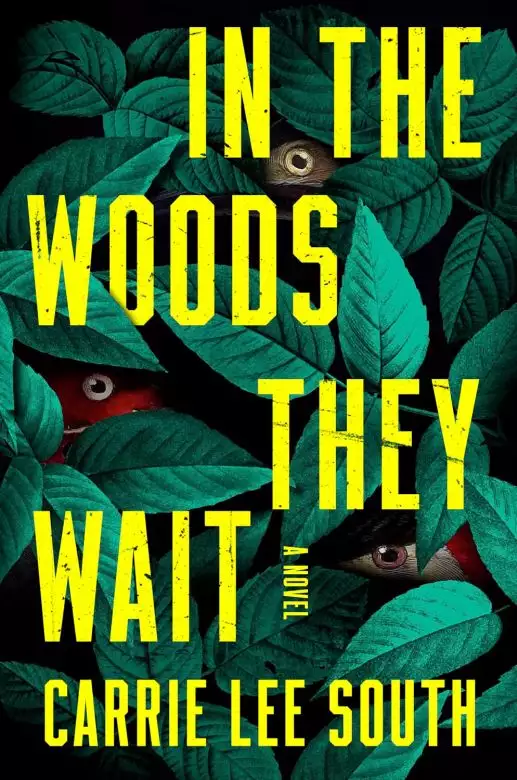
A park ranger in Devil’s Den becomes obsessed with the case of a missing child—a case that mirrors the disappearance of her own brother, whom she lost in the woods many years ago—and the possibility that both were taken by something vicious and unnatural that lives deep in the Ozarks.
Fifteen years ago, Audrey Figg's little brother, Benny, vanished on a family vacation to Devil's Den state park, a day that split her life in two. Now, Audrey is a park ranger in the very same woods with expertise in wilderness search and rescue. Audrey has found a rhythm to her days: training new rangers, tending to injured hikers, protecting the backcountry, and still, searching.
When a little girl, Ivy, suddenly goes missing on the trails, Audrey can’t help but notice the similarities to her own brother’s case. As Audrey widens the scope of her search, she begins to believe Ivy wasn't merely lost; it looks like she was taken by something—and maybe Benny was too. Yet the closer Audrey comes to answers, the more old memories push to the surface. Audrey is haunted not only by her brother's loss, but a terrible secret from that day. A secret she has never shared with anyone.
Utterly absorbing and disquieting, In the Woods They Wait is an enthralling page-turner, one that asks how far you would go for a sense of closure—and what would you be willing to face to get it.
Release date:
September 22, 2026
Publisher:
Little, Brown and Company
Print pages:
304
* BingeBooks earns revenue from qualifying purchases as an Amazon Associate as well as from other retail partners.
That year, in an Arkansas bottomland hardwood forest, someone saw a ghost. A kayaker was gliding through a swamp filled with ancient bald cypress trees, his paddles slipping under surface scum, when an ivory-billed woodpecker, a bird thought to be extinct since the 1940s, darted between the tupelos.
People want to believe that somewhere in that liminal space between seen and unseen, our lost things wait to be found again. Birders heard whispers of the Grail Bird’s rediscovery and flocked to the Cache River. The search radiated out across the state, reaching all the way to the Ozark National Forest, and that’s how the Figg family ended up in Devil’s Den State Park.
Audrey walked heavy-footed along the marked hiking trail with Benny close behind. Their parents were back at the campsite preparing for a day huddled under camouflage gear in the riparian forest along Lee Creek. Joanne and Paul Figg would sit there like that for hours, binoculars at the ready, listening for the ivorybill’s bleating nasal cry.
Audrey was sixteen and overconfident. Tiny rocks skittered on the path ahead as she sped forward. She kept her hair tied back, a deep sable color that caught light, wisps of baby hair flat against the sweat at her temples, her thick eyebrows knitted together in a scowl. She had planned to take a solo hike up to an overlook, but her parents insisted she bring her thirteen-year-old brother, Benny, along so they could spend the day birding in peace.
Behind her, Benny stuffed handfuls of Chex Mix into his mouth, gap-toothed and crunching loudly. Audrey swore he was doing it on purpose to annoy her. They shared the same round hazel eyes, a ring of golden orange in the center. His fawn-colored skin had freckled in the Southern summer. Between large bites he would stick out his tongue full of chewed-up snack food and exhale with a wet “nyah” sound.
“Oh my god, Benny, shut up.”
He laughed. Small stones and dried brush crunched underfoot. The trail wasn’t paved, just worn down and scattered with rocks to keep the forest from encroaching. Benny filled his cheeks with air and squeezed a thin stream through his tight lips, making high-pitched squealing sounds. A loose rock went out from under Audrey and her ankle slid to the left. She stumbled forward and caught herself while Benny laughed harder.
“You look like a dumb giraffe!”
Audrey stopped and clenched her fists. She would teach him a lesson. She kicked out at the tangled mess of mayapple creeping over the path and started bushwhacking her way into the dense overgrowth.
Benny hesitated, eyes wide.
“Audrey! We’re supposed to stay on the trail!”
“Yeah? I’m bored with the trail. I’m going this way. You can come with me or not, I don’t care anymore.”
He whined, “Mom said!”
She ignored the thorns scraping against her thighs as she pushed deeper into the thick woods. She was almost out of Benny’s sight. He whipped his head back and forth, bouncing on his feet like he was waiting for an adult to reprimand her and restore order, but no one came.
“Audrey, wait!”
She could hear him crashing through dead leaves to catch up. They navigated through the trees, beads of sweat striping their dirty calves, buzzing insects drawn to their hot blood. Every sidestep around an obstacle took them in a new direction until they could no longer see the trail.
Benny continued to protest. “This isn’t funny! Let’s go back, please!”
Audrey knew that Benny was terrified of getting lost. They were city kids, visiting from Chicago, a world of high-rises instead of trees, where even the maze of steel architecture had a sense of order. They walked themselves to school in the morning in a place where everything followed predictable grid lines.
Twisted limbs branched out like veins in the stifling humid air. The extent of their experience with natural spaces was limited to city parks and the bird-watching excursions their parents dragged them on every summer.
She spoke low, her voice as fearsome as a flashlight held under the chin in the dark: “Have you heard of the Ozark Howler?”
Benny didn’t answer. He kept his eyes on his feet to avoid tripping on roots.
“They say it lives out here in the mountains. Nobody knows what it looks like for sure, but those who’ve seen it say it’s like a giant black cat with glowing eyes and horns. It’s always hungry. They call it the Howler because of the horrible sounds it makes. Like a knife blade scraping across stone.”
Audrey paused here for effect. Then she started to howl, first quietly, then increasing in volume, until Benny started swatting at her.
“Stop!”
Sensing his panic, she continued, elaborating out of feverish imagination and sibling spite. “It especially loves children. The meat is softer, you see, like veal. It digs its claws into the belly, ripping into the guts and sucking them out like spaghetti—”
“I mean it, stop!”
Audrey flung her arm out in front of him and crouched. She whispered, “Did you hear that?”
Before Benny could reply, she spun on her heel with a shriek and took off running ahead, farther into the dark. Benny’s panic took hold, his chest heaving like a rabbit being chased.
He squealed, “Wait! Wait for me, please!”
Audrey ran harder, excitement welling up and bubbling out in choppy fits of glee. Her heart pounded as she flew over rocky obstacles and brambles, darting through low-hanging branches and laughing as the reckless hysteria took hold. Benny fell farther behind.
Sandstone bluffs began closing in as she bounded up the hillside. Treacherous pits leading into deep winding tunnels opened up every few feet. She noticed a rock wall up ahead with a dark chasm splitting it open. She looked over her shoulder to check whether Benny would see her slip inside.
He cried out of sight in the distance, “Audrey, please!”
Audrey paused to catch her breath, then turned sideways and squeezed into the crevice. The rough walls tugged at the fabric of her shirt as she wriggled farther into the crack. She had to measure her breathing to keep her chest from pressing against the unyielding rock, wedging her in. She rested her cheek against the coarse stone. The grit she’d kicked up from scrabbling into the depths coated her tongue as she peered through the opening.
Moments later, Benny stumbled through the thick foliage, panting. He looked around desperately, craning his neck in all directions, trying to catch a glimpse of her.
“Audrey!” Tears left trails through the dirt on his cheeks now. “Audrey, please, it’s not funny! Where are you? Audrey!”
She could jump out right then, and the joke would be over. Benny’s tears would turn to anger. She’d lead them back to camp and have a good laugh. But something was stopping her—she liked this power she had over him. She didn’t make a sound, watching him strain to find any sign of her, fear dictating his every movement.
He sniffled, breathing heavy, wiped his face on the bottom of his T-shirt, then picked a direction. She watched, unmoving, as he trudged farther and farther until he disappeared forever.
Audrey Figg’s trainee looked like he was about to faint. Hands on his knees, squatting next to an injured hiker, the kid took heaving breaths and his freckled flesh grew paler by the second. Audrey gripped his shoulder and whispered between her teeth, “Get it together, Porter.” They needed to act like they had everything under control in front of the park visitors.
They were about a thousand feet above Lee Creek in the cave-pocked mountainside of Devil’s Den Trail. The injured man lay with his back against the sandstone, sweat beading on his forehead while he took quick, gasping breaths. He kept his eyes squeezed shut to avoid looking at his wound. Audrey knelt next to him and got to work on emergency first response. They might have to call a rescue team to carry him out. Luckily, they were only half a mile in.
“Breathe, you’re going to be OK.” She gently turned his leg to get a better look. He whimpered and leaned his sweaty head back against the rock.
His calf had swelled to twice its size. Veined, purple skin stretched taut over the bloated muscle. There were two red puncture wounds oozing a thick, clear fluid. Leaning closer, Audrey could tell the man had pissed himself at some point during the ordeal. She hissed at the severity of the bite and heard Porter gag behind her.
Silas Porter was new to the interpreter job, which had gone unfilled for months. Audrey had been working double duty in the meantime, giving guided hikes and educational presentations. As her boss, Scott, liked to put it, she didn’t have a great bedside manner. She was more than happy for this kid to take over, though he was fresh out of college and so green he could give you grass stains.
Audrey set down her pack. “Looks like a diamondback. We’re going to get you some help.” Audrey turned to Porter. “Radio Scott and tell him we’re not going to be able to get him out with just the two of us. He’s going to have to take the easy way down.”
With wide eyes, Porter nodded and turned his back, eager to be useful in a way that didn’t involve touching the injured hiker. Audrey shook her head and pulled out her emergency splint kit. Despite the intensity of the situation, she found herself calmest in these moments. Here, in the midst of pain and chaos, she knew exactly what to do.
An hour earlier, a woman had come into the Visitor Center to tell them she had seen an injured man on Devil’s Den Trail. She seemed unsure about whether she was supposed to report this to the rangers, like she thought she was tattling. Audrey could never understand why people hesitated to take responsibility for strangers.
Audrey focused on keeping the hiker calm by distracting him from his injury—an increased heart rate would only quicken the spread of venom.
“What brings you to Devil’s Den?”
The man strained to look at her, taking rapid grunting breaths. “What?” He was on the verge of hyperventilating.
She smiled. “Don’t worry, I’ve done this before. Are you here with your family?” She wrapped the elastic compression band around his leg. Snug, but not entirely restrictive.
“Just me.”
Porter finished contacting Scott and bent down, watching Audrey as she prepared the splint. He was still pale, but it looked like he had regained his composure. He pushed the sweaty strands of his shaggy blond hair back under his Stetson. “Where was the snake?”
The man pointed into a nearby crevice. “I saw a baby one. Wanted a closer look.”
Of course, he provoked it. Audrey tightened the band a little more aggressively than necessary.
Porter’s disgust turned into childlike excitement. “Did you know rattlesnakes actually take care of their young? You probably found her den!”
The man clearly didn’t share Porter’s enthusiasm. “It came out of nowhere.” Audrey fastened the splint rod to the side of his calf and the man doubled over, groaning through his teeth. “What are you doing?”
“Splinting your leg to slow your circulation.”
“Don’t I need a tourniquet?”
“Not if you want to keep your leg.”
Porter went on. “They only stay in the den for about a week after they’re born so she can keep them warm. And did you know rattlesnakes don’t lay eggs? A lot of people think they do but—”
“Are you going to suck the poison out?” the man interrupted.
“Oh, it’s called venom, you see, and actually—”
“We’re just buying time,” Audrey interjected, “until we can get you to a hospital.”
“Are you at least going to find that thing and kill it? I can’t believe you’d let people on the trails knowing they’re snake-infested.”
She resisted the urge to roll her eyes. “No. This is the snake’s home. You’re the houseguest.”
Porter chimed in with some stupid catchphrase the park kept posted at the trailhead. “Remember, always be snake aware!”
Audrey handed the man a bottle of water before he could get belligerent. “Hang tight.” The man grimaced and held the cool bottle up against his head while Porter continued to regale him with snake facts.
She folded her arms and walked to the edge of the trail. A steep rocky incline led to the mouth of Devil’s Den. Like most of the caves in the park, thick, padlocked iron bars prevented park visitors from entering. The park’s superintendent, Scott Rollins, had put them up to protect the bats from white-nose syndrome, a fungal disease brought into their habitats by humans carrying it on their clothes.
It wasn’t the most difficult trail in the park, but the medical team would have a hard time getting in with a stretcher. A summer storm had whipped through and there were too many branches down for Audrey’s liking. In fact, one of the trail-marked trees had fallen across the path just a few feet ahead. Its roots clung desperately to a tangled ball of dirt and the red diamond signaling the way forward lay sideways, affixed to the bark. She was going to have to clean that up later.
It had been Scott’s idea for Audrey to use this as a training opportunity. Audrey knew these trails intimately: the way wisps of steam wafted from the underbrush on a swampy July day; the way the rocks seemed to shift of their own accord, arranging themselves into devious new patterns designed to break ankles; the caves that hid behind rocky outcroppings until you walked by and felt a puff of cool cavern air. Bringing Porter along only slowed her down.
The injured man had come to rest at the mouth of the park’s namesake. Devil’s Den. She couldn’t count the number of visitors who asked her why it was called that. Legends about spirits from the Osage tribes that used to live here? Pioneers who believed Satan lived beneath the mountains? The truth was much less interesting. “Devil” was just folksy slang at the time when nonnative people settled in the Ozarks. A walking stick was “the devil’s darning needle,” a fiddle was “the devil’s box.”
Early settlers feared witches and devils and spirits in the dark hollows of the woods, but there was nothing malicious about the black bears that raided campgrounds, or the maze of trees that swallowed children and lost hikers. Maybe everything happens for a “reason,” but those reasons are often mundane.
She heard voices echoing off the sandstone, then the rescue team bobbed into view with a bright-orange stretcher.
Audrey’s daily reports for Scott were straight to the point. She wrote her observations in clipped sentence fragments. It wasn’t that she couldn’t write something more polished and detailed, she just felt like she had more important ways to use her time. That was half of the job’s appeal: work in the park was life or death. That is, when she wasn’t giving her millionth lecture on parking regulations to another camper.
She was surprised they had many visitors at all, considering how miserably hot this summer had been. Luckily, there had only been a few drunks to deal with. With the trails thick with undergrowth, the bugs swarming, and everyone wearing their sweat like a second skin, Audrey understood the desire to do nothing but suck down a few beers.
It did strike her as insane that anyone wanted to light a campfire at all, so her patience wore thin when visitors argued about the burn ban. Her jaw felt sore from repeating the same spiel over and over: “No wood burning, the risk of forest fire is too high. You’re welcome to use charcoal for grilling, the park is happy to provide some for you. Yes, I understand you’re here with your kids. I’ve tried it myself, I promise the s’mores will taste just as good heated over the charcoal. Yes, I know you paid to rent this campsite. Just trying to keep everyone safe. Have you been to the pool by the Visitor Center? The kids will love that.”
She headed to the back of the Visitor Center to add her incident report to the stack on Scott’s desk. Reams of loose paper spilled from every corner of his too-small office. Once a ranger himself, Scott had been relegated to the tedium of management and paperwork. She dropped the documentation and attempted to spin out of the room before he could stop her to talk.
“Audrey.” Too late. “Sit for a minute.” Scott watched her across his desk, fingers laced beneath his goatee. His gravelly voice sounded as though he had blown out his vocal cords years earlier. “How’s Porter doing?”
“Fine. A little hesitant. He gets queasy.”
“That goes away with time.”
“You might want to talk to him about choosing more appropriate times to start ‘interpreting.’ A rescue isn’t the time for educational programming.”
“He’s eager. Don’t you remember being eager?” Scott rasped.
Audrey’s stomach tightened and she folded her arms across her chest. Being a park ranger was not something she had ever fantasized about. In another lifetime, she’d had other plans. Probably. She couldn’t remember anymore. “No, not really.”
He picked up the incident report and grunted as he scanned the brief contents. Lines creased his leathery frown. He always seemed so tired. “I want you to take him under your wing. We’re short-staffed this summer and you can use the help anyway.”
“Doesn’t he have his own work to do?”
“Yes, but you don’t need to be going off alone every time you do a trail survey. Show him the ropes.”
“I prefer going out alone. It’s easier to notice things when it’s quiet.”
Scott didn’t speak for a moment. He always stressed the importance of bringing someone with you on the trails, especially if you were going bushwhacking.
“Show him how it’s done. Tell him to shut up if you need to. But he needs to ask questions, and I trust you. It’s been a while since we’ve had a dedicated interpreter, and I need this one to stick around.”
Audrey didn’t argue. She could handle Porter during working hours. She didn’t dislike Porter, really, his enthusiasm just seemed foreign to her.
“Well, he can start by helping me with some clearing. I noticed a tree down when we were up there and we need to clean up the markers.”
“That’s fine. You can take care of that first thing in the morning, before the hikers start moving. Just be sure that Porter stays alert. It’s easy to get comfortable thinking you know this place, but he needs to remember that nature’s not interested in our safety.”
Audrey pushed herself up with a dark glare. “You don’t have to tell me.”
By the time Audrey made it home, the sinking sun had started to light up the tops of the trees. She lived in the park’s provided housing, a modest refurbished cabin that was built by the Civilian Conservation Corps in the 1930s. It retained the original look, dark wooden slats with a rock foundation, designed to blend in with the landscape.
The interior was updated with modern amenities like central air. Everything from the walls to the furniture was made of the same hardwood. The only decor she allowed herself was a muted Persian rug, pilfered from the remnants of her family’s home. The walls she kept bare, with the exception of the framed park photos that came with the cabin to make it feel more lived-in. Instead of books, she kept meticulously labeled, folded-up topography maps.
For Audrey, the cabin was the biggest perk of working at the park. It allowed her a modicum of distance from her mother’s hoarded-out mobile home in West Fork. The job didn’t pay well, but that wasn’t her primary concern; she just wanted to stay close by.
After Benny’s trail went cold, Audrey couldn’t see any other path forward. Her parents fell apart while her singular focus became her overwhelming need to bookend the nightmare she’d started that day in the woods. Some part of her felt that if she could find some evidence of Benny’s final whereabouts, if she could prove something, she could rewind the spool of years and start over from the point that she’d ruined everything. Ranger work was the only way she could survive off of her obsession with these woods.
Audrey walked to the freezer and pulled out a package of chicken necks. She filled up a mixing bowl with hot water and dropped them directly into the bath to defrost. The young Cooper’s hawk she was rehabilitating needed warm meat. Audrey went outside to check on the bird while the necks soaked.
She was keeping it in an old kennel that had once housed a former ranger’s trained search and rescue dogs. The rickety ten-foot structure wouldn’t last for any long-term raptor rehab, but it was good enough as a temporary solution. The injured bird just needed warmth, quiet, and most of all a safe place to heal. As Audrey walked around the side of the house where the kennel leaned against her bedroom window, the hawk scuttled as far away from her as it could get in the confined space, wings beating against the sides.
Back when she started as a park ranger, Audrey volunteered for the long, arduous training necessary to obtain the federally required migratory bird rehab permit. Caring for a hawk or an owl was really another full-time job, and she rarely found occasion to put the permit to use.
Audrey tried to calm it with a “Shh-shh-shh.” The creature held its wings away from the sides of its body, feathers slicked down in fear, beak open and panting. It was a foot and a half tall and only weighed about a pound. The crisp speckling of dark-brown teardrops on its chest indicated that it was still a juvenile. That, and its lamp-like yellow eyes that wouldn’t deepen to red until it reached adulthood. It would be easy to look at the hawk and ascribe human qualities to it. Was it eyeing her with contempt? Did it feel anger for the situation it found itself in? Audrey knew better. The hawk’s emotions were simple and uncomplicated: it was terrified and confused. It was not supposed to be here.
Audrey checked its left leg to see if the swelling had gone down. It was hard to tell with the padded splint the vet had wrapped around the scaly flesh. The hawk had snapped its ankle. She found it in the parking lot of Campground B just a few days earlier, surrounded by an excited group of park visitors tossing it pieces of bread as if it were a duck. The bird screamed a nasal “cack-cack-cack-cack,” a pitiful attempt to frighten them off.
Hawks hunt with their talons, and this one no longer could. Its left foot sat splayed out at a miserable angle, and its talons curled inward toward its toes. It was unable to perch and would certainly die quickly if left on its own. Most likely this one had attempted to snatch a small bird, misjudged the landing, and slammed feet first into the concrete parking lot, snapping the bone.
In most cases, Audrey would have left it to its fate. She firmly believed in the National Park Service’s “Leave No Trace” principles. But while most bird injuries are fatal, a broken ankle would be able to heal. Luckily the bone hadn’t pierced through the skin.
Audrey had a soft spot for birds of prey. She saw them as beautiful groundskeepers, keeping the small animal population in check. Any large feathers she found on her surveys were added to the park’s educational collection: the tapered, marbled-brown plume of a goshawk, or the creamy white, black-tipped tail feather of a golden eagle.
“You’re OK,” she murmured. . .
We hope you are enjoying the book so far. To continue reading...

 Please log in to recommend or discuss...
