Oscar is dead because I watched him die and did nothing.
Winner of the Prix de la vocation 2019
Winner of the Prix Femina de lycéens 2019
Translated by Sam Taylor, translator of Lullaby by Leila Slimani, The Truth about the Harry Quebert Affair by Joël Dicker and HHhH by Laurent Binet
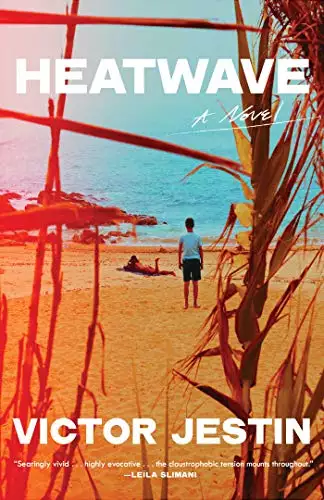
Leonard is an outsider, a seventeen-year-old uncomfortable in his own skin who is forced to endure a family camping holiday in the South of France. Tired of awkwardly creeping out of beach parties after only a couple of beers, he chooses to spend the final Friday night of the trip in bed. However, when he cannot sleep due to the sound of wild carousing outside his tent, he gets up and goes for a walk.
As he wanders among the dunes, he sees Oscar, one of the cooler kids, drunk in a playground, hanging by his neck from the ropes of a swing. Frozen into inaction, he watches Oscar struggle to breathe until finally his body comes loose and falls lifeless to the ground. Unable to think straight, he buries Oscar in the sand and returns to the campsite where, oppressed by the ferocious heat and the weight of what he did and did not do, he will try to spend the remaining hours of the holiday as if nothing had happened.
Told over the space of a long weekend, this intense and brilliant novel is the story of an adolescent struggling to fit in. Heatwave is a gripping psychological thriller that poses the existential question:
Is doing nothing sometimes the very worst thing you can do?
"This is a searingly vivid novel that depicts the torments of adolescence in a sensual, carnal way. But it is also a profound meditation on the mystery of evil, our deadly urges, and the savagery that lies deep within each of us. I loved the writing, which is spare but highly evocative, and I admired the way that the author used the enclosed world of the campsite to fuel the claustrophobic tension that mounts throughout." Leila Slimani, author of Lullaby and Adèle
‘Eerie, propulsive, sexy, and unsettling, Victor Jestin’s Heatwave carries the coming-of-age novel into darkly surprising new territory. With echoes of the films of Francois Ozon, this intense, slim novel is a hot summer read that lingers long after you finish the last page’ Laura Sims, author of Looker
‘A fiery page-turner’ Entertainment Weekly
‘Jestin’s charged and chilling debut turns on a stifling vacation that descends from purgatory into a nightmarish inferno’ Publishers Weekly ? ‘With a searing voice, Victor Jestin captures the stale air of tents, the cheap music, the guys disguised in pink bunny suits who force you to have fun, teenagers as poignant as they are idiotic, rage, desire, absurdity. In effect, scorching’ Grazia
Release date:
June 29, 2021
Publisher:
Scribner
Print pages:
112
* BingeBooks earns revenue from qualifying purchases as an Amazon Associate as well as from other retail partners.
Chapter 1 Oscar is dead because I watched him die and did nothing. He was strangled by the ropes of a swing, like one of those children you read about in newspapers. But Oscar was not a child. At seventeen, you don’t die like that by accident. You tie the rope around your neck because you want to feel something. Maybe he was trying to find a new form of pleasure. After all, that was what we were here for: the pleasure. Anyway, I did nothing. Everything stemmed from that.
***
IT WAS THE last Friday in August. Late at night; the campsite was sleeping. The only ones still up were the teenagers on the beach. I was seventeen, too, but I wasn’t with them. I was trying to sleep, and their music was keeping me awake. It reached me from the dune, along with the sounds of the waves and their laughter. When it stopped, I could hear my parents moving around in their tent. I was restless. I could feel stones under my inflatable mattress. The sand stuck to my skin. Sometimes I would start to fall asleep and then someone on the beach would yell. It was a sort of fierce joy directed against me, a wild, pulsing dance around my tent. I was exhausted. One more day and the vacation would be over.
That night I decided to get up and go for a walk outside. All was calm on this side of the dune. The tents and the bungalows were lost in shadows. The only light came from the condom vending machine. “Protect yourself,” it said. Though what it really meant was: Do it. Every night, proud and ashamed, the teenagers would buy some. Buying a condom was already like doing it a little bit. Often it would end up as a balloon, burst in the air, like a dying hope. I knew all the colors of that campsite. For two weeks I’d been roaming its paths aimlessly, killing time. I’d gone to all the parties. I’d made an effort. And every night, after a few drinks, I’d walked away, pretending to go to the bar for another beer, then walking along the shore and returning unseen to my tent. But I hardly slept. The music didn’t stop. I felt like there was something lodged in my chest that kept me up until dawn.
It was while wandering aimlessly that night that I came upon Oscar. I walked past the playground and saw him on the swing. He was drunk. The ropes were coiled around his neck. First I wondered what he was doing there. I’d seen him earlier, dancing on the beach with the others. I’d seen him kiss Luce and I’d almost vomited, I remember; their bodies, practically naked, had stood out in the darkness. I watched him alone on the swing and I realized he was dying. The ropes were slowly strangling him. He had done that on his own and, to judge from the expression on his face, he might have changed his mind. I didn’t move. Nothing moved on that secluded playground. The moon was hidden behind the tall pine trees. Suddenly Oscar saw me: his eyes met mine and they didn’t let go. He opened his mouth, but no sound came out. He kicked his feet, but his body hung still. We looked at each other like that. It was true that I’d sometimes wished he would die, certain days, seeing him smile in his blue trunks. On the other side of the dune, the music kept playing. I recognized the chorus: Blow a kiss, fire a gun… We need someone to lean on… It took a long time. Strangulation is not a quick way of dying. The moment of his death was drawn out and I didn’t notice when it happened. I just felt more and more alone. After a while his head fell forward, propelling the ropes in the other direction. They started unwinding, faster and faster, until finally they released him. His body slumped lifeless onto the rubberized floor of the playground.
I hadn’t made many stupid mistakes in my seventeen years of life. This one was difficult to understand. It all happened too fast; I felt powerless. I walked up to Oscar and touched his shoulder. I shook him. I hit him. His vacant stare passed over me when I moved his body. I wanted to think, but then I heard sounds coming from the beach. A small group headed toward the campsite. They were talking in loud voices. They were drunk, too. I thought they’d be able to hear me. I called out, but my voice didn’t carry far; it stayed close to me. The others walked away, laughing. “Shut up!” a man shouted from his tent. They disappeared. On the beach, the music stopped. The last teenagers passed by. I remained standing there, on the playground, making no attempt to hide. No one saw me. At last I was absolutely alone, with Oscar, who continued being dead at my feet.
Suddenly it occurred to me that I’d killed him, and this thought crowded out all the others. There was nothing left but his heavy body. And then I had a very clear memory of a large hole that some children had dug in the dune that afternoon. It seemed obvious to me that Oscar had to disappear. I didn’t give it any further thought. I did think that maybe this was the stupidest mistake of all, but I did it anyway, just to do something. I grabbed his legs. He wasn’t that heavy. I dragged him. We advanced slowly, first through the playground and then along a gravel path, across some grass, some sand. The weight of the body varied according to the surface. I concentrated on my movements so I wouldn’t have to think about anything else, wouldn’t understand the significance of those moments. I was just dragging a body, that was all. I took a break in front of the dune. All was calm. Oscar was very calm. The air was cooler now, almost pleasant. It must have been the middle of the night. We climbed even more slowly, sinking into the sand, getting caught on thistles. Many people hurt themselves here, running barefoot. Finally the beach appeared. It was deserted, the sand strewn with trash that would have to be cleaned up the next morning. I thought about leaving Oscar in the water and letting the backwash take him. But the tide was too low. The sea was a long way off and I was already out of breath. I decided to stick with the hole. I left Oscar where he was, walked around the dune, and found it easily, near the lifeguard’s flag. It was too small. I crouched down and made it big enough to fit a teenage boy. I didn’t like the feel of the sand under my fingernails or the rasp it made when I scooped it up, but I forced myself to keep digging anyway. When I was satisfied, I went back to fetch Oscar. I dragged him to the hole and pushed him in, his legs folded to the side. His face was dirty, covered with dust. I wiped it off with my fingertips. Then I threw sand over it, and all over his body, too. This took a long time. I didn’t think about anything. I listened to the waves and the sound of my breathing.
At last the hole was just sand, and Oscar, underground, weighed less heavy. He even disappeared a little. I stood up and looked at the clear sky. Music rose quietly into the air. I realized that the sound was coming from under the sand. I got down on my knees and dug, undoing all my work. He was well buried. The music kept playing, on a loop. At last I reached Oscar—his cell phone was ringing inside his swimming trunks: Luce calling. I turned it off and stuffed it into my pocket. Nobody had heard it. There weren’t any people nearby. I caught my breath and filled in the hole again, just as carefully as I had the first time.
It must have been very late. I was alone and everything seemed in its right place. The beach and the campsite, on either side of the dune, were silent under the stars. I wanted to do something again. On all fours, like a dog, I retraced my path and erased my footsteps. When that was done, I still didn’t dare go back to my tent. I thought about my parents, who were sleeping now, about my sister and my brother, also sleeping. All the parties were over. I decided to go for a walk on the beach. I went along the shore, my feet in the water. The low tide revealed rocks I had never seen before. Little by little, I felt as if my body were going numb, bruised by my exertions. I tried to think about what I’d done and to feel something. But my eyelids were heavy. I staggered toward the sea. The sky was starting to lighten.
I went back to the campsite. On the way, I passed a jogger who went into the forest. Inside my tent, I fell asleep fully clothed. I was about to live through the last day—and the hottest day—of my vacation. In fact, it was the hottest day the country had known in seventeen years. That was what the forecast had said. They’d made the announcement through the loudspeakers attached to the pine trees, one of which was just above my tent. It woke me every morning.
We hope you are enjoying the book so far. To continue reading...

 Please log in to recommend or discuss...
