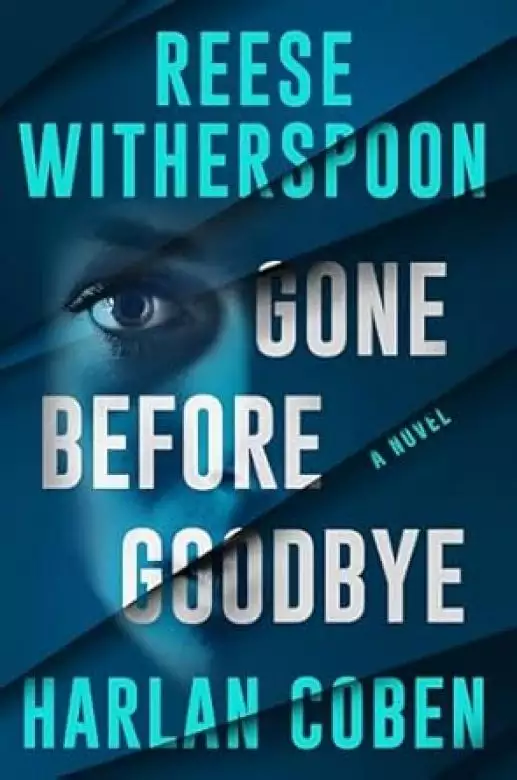
Combining the storytelling talents of Reese Witherspoon and Harlan Coben into one masterpieceof suspense fiction, Gone Before Goodbye is the unforgettable story of an indomitable woman, trapped in a conspiracy she helped create but can’t understand. Her harrowing search for the truth could expose a conspiracy woven throughout the exclusive world of the global ultra elite—but at an unfathomable cost to Maggie herself.
Maggie McCabe is teetering on the brink. A highly skilled and renowned Army combat surgeon, she has always lived life at the edge, where she could make the most impact. And it was all going to plan…until it wasn’t.
Upside down after a devastating series of tragedies leads to her medical license being revoked, Maggie has lost her purpose, but not her nerve or her passion. At her lowest point, she is thrown a lifeline by a former colleague, an elite plastic surgeon whose anonymous clientele demand the best care money can buy, as well as absolute discretion.
Halfway across the globe, sequestered in the lap of luxury and cutting-edge technology, one of the world’s most mysterious men requires unconventional medical assistance. Desperate, and one of the few surgeons in the world skilled enough to take this job, Maggie enters his realm of unspeakable opulence and fulfills her end of the agreement. But when the patient suddenly disappears while still under her care, Maggie must become a fugitive herself—or she will be the next one who is…
Gone Before Goodbye
Release date:
October 14, 2025
Publisher:
Grand Central Publishing
Print pages:
352
* BingeBooks earns revenue from qualifying purchases as an Amazon Associate as well as from other retail partners.
Maggie looks down at her husband’s face on the phone screen. “I told you.”
“Johns Hopkins?”
“Yes.”
“You on the quad?”
“Yes.”
“Where we met,” he says. “Orientation week of medical school. You remember?”
“Of course I remember,” Maggie says.
“I knew you were the one the moment I saw you.”
“Don’t make me gag.”
“I’m trying to boost you up.”
“It’s not working.”
“So what are you doing?”
Maggie flashes back to her first time on campus, all dewy-eyed and fresh-faced, as they say, full of hope and optimism and vim and vigor and all that nonsense. How naive. But then again, when your world falls apart—when you had everything and even understood and appreciated that you had everything and never took any of it for granted, not for a second, knew how lucky you were, and because you were so grateful, you somehow naively expected karma to reward you, or at least leave you be—you learn in the hardest of ways that fate is fickle, that life is chaos and no one gets out unscathed, that you can have everything one moment and have it all snatched away so easily…
“I’m throwing myself a little pity party,” she says.
“Stop. Go inside.”
“I want to go home.”
Marc frowns. “Don’t do that.”
“I’m not ready.”
“Yes, you are. Please? I want you to go. Do it for me.”
“Seriously?”
She looks up at the white cupola sitting atop Shriver Hall and blinks back a tear. An hour ago, she’d reluctantly put on a long-sleeve, navy blue, mid-calf-length formal dress. Not black. That would be too morbid. Navy seems like a safe bet—respectful of the occasion, but not trying to pull attention. In fact, she would rather melt into the floor than be anywhere in the vicinity of conspicuous on this particular night.
“Maggie?”
“I’m here.”
“Go inside. It would mean a lot to me. And your mother.”
“Wow,” Maggie says.
“What?”
“You never used to be this sentimental and manipulative.”
“Sure, I was,” Marc says.
Her voice is soft. “Sure, you were.” Then: “This sucks.”
“What?”
“Nothing, never mind.”
Twenty-two years ago, Maggie had graduated from these esteemed halls with every kind of honor they could bestow upon a medical student. She did her surgical residency at NewYork-Presbyterian, became a renowned reconstructive surgeon, served her country on the front lines in Afghanistan and the Middle East as a Field Surgeon 62B, married Marc, moved with him overseas to heal the underserved.
Marc’s voice from the phone: “Hello?”
“They’ll stare.”
“Of course they’ll stare,” he says. “You’re smoking hot.”
Maggie frowns. Some things never change.
“Go,” he says again.
She nods because he’s right and disconnects the app. Her phone case features two M&M candy characters, the Yellow M&M guy holding flowers to the Green M&M woman. Marc had given her the phone case as a half-serious/half-gag gift. Maggie & Marc. M&M. Marc bought M&M pillowcases. He bought M&M throw pillows. Marc thought it was adorable. Maggie thought it was pure cringe, which, of course, only encouraged him.
“Maggie?”
She startles at the sound of the voice and drops her phone in her purse. She turns and sees her old classmate Larry Magid, a dermatologist. The last time she’d seen Larry was five years ago in Nepal when he’d flown over to help her and Marc with an outbreak of Hansen’s disease, more commonly known as leprosy. They both ended up working out of the same hospital, even working out of the same floor, so he was intimately familiar with her current woes.
“Hey, Larry.”
He squirms. “Are you here for… I mean, uh, are you going…?” He semi-gestures toward the building.
“Sure,” Maggie says.
“Oh.”
“What?”
“Nothing.”
“They’ve named a scholarship in my mother’s memory,” she says.
“Right, I heard.”
“So that’s why I’m here.”
“Right. Gotta go. Mickey will be waiting for me.”
He hurries away as though, Maggie is tempted to shout out loud, she has leprosy. She wants to grab her phone, get Marc on again, and whine, “See what I mean?” but the phone is already in her bag and now she’s a little annoyed so to hell with it.
Maggie hesitantly trudges up the same steps she’d enthusiastically marched up to get her diploma two decades ago. The banner pinned above the door reads:
SCHOLARSHIP RECOGNITION EVENT
WELCOME BACK, JOHNS HOPKINS ALUMS!
The hall is buzzing. The music, a string quartet of current students, plays Mozart’s String Quartet No. 19 in C Major. Her hands at her sides, Maggie can’t help half consciously moving her fingers along with the music, as though there’s a violin in her hand. There are something like five hundred people—physicians and scholarship winners—milling about the esteemed hall. You know it’s a medical event because too many men are wearing bow ties. That’s a big look with doctors, mostly because regular ties hang loosely and get in the way during exams. Her father, an army surgeon who also saw combat as a Field Surgeon 62B—in his case, in Vietnam—always wore bright flowery ones. He claimed it let his patients see him as a bit goofy and thus comfortingly human.
When Maggie finally enters the grand hall, the room doesn’t stop or go silent or any of that, but there is definitely some hesitation in the air.
She stands there for a few long seconds, feeling beyond awkward, as though her hands were suddenly too big. Her face flushes. Why had she come? She looks for a friendly or at least familiar face, but the only one she sees is from the poster on an easel up on the dais.
Mom.
God, her mother had been beautiful.
The photo they’d blown up had been taken for the school directory five years ago, Mom’s last year teaching here. This was right before the diagnosis, something she hid from her two daughters for the next three years, until she finally called Maggie at their new clinic in Ghana and said, “I’m going to tell you something if you promise you won’t come home when I do. Your work is too important.” So Maggie promised and Mom told her and they both cried but Maggie kept her promise until her sister Sharon called and said, “It’s almost time.” Then Maggie kissed Marc goodbye at Dubai International, told him to finish up and come home soon, and flew home to sit vigil with Sharon for her mother’s final days.
Maggie locks eyes with her poster-mother because right now it is the only friendly face in the room. She holds her head high as she walks toward the dais. She hopes that it’s narcissism on her part, but conversations seem to halt or at least quiet as she passes. Murmurs ensue, or again maybe that’s just in her head. Still she does not look away, does not let herself use her peripheral vision. Her eyes stay on her mother’s, but she feels the stares now.
A familiar figure steps in her way and says, “Surprised you’d show your face.”
It’s Steve Schipner, aka Sleazy Steve, another reconstructive surgeon like herself and yet hopefully nothing like herself. He has over a million followers on an Instagram account where he displays “before and after” photos and calls himself the Boob Whisperer. She and Steve graduated in the same class and did a surgical rotation together at NewYork-Presbyterian/Columbia University under the tutelage of Dr. Evan Barlow. Steve is that guy who can’t say good morning without making it sound like a sleazy double entendre, ergo the nickname. He lives in Dubai now and specializes in, to quote his profile bio, “ambitious influencers looking to enhance their social media hits, their lives—and their cup size.”
“Yeah, well, I’m full of surprises,” Maggie says.
He looks around, notices the hostile stares. “At least I’m happy to see you.”
“Thanks, Steve.”
“You seen Barlow?”
“Have you?” she asks.
“Nope.”
“I doubt he’ll be here.”
“I heard he was showing up,” he says. “I want to talk to him about a sweet partnership deal and…” He stops, turns, gives her the full-wattage smile. “Oh, guess where I’m working now.”
She doesn’t want to, but it would be worse not to play along. “I heard Dubai.”
“Yes, but where in Dubai?”
“I don’t know, Steve. Where?”
He leans in and whispers. “Apollo Longevity.”
Maggie tries to keep her face blank. It takes some effort.
Steve continues: “Isn’t that where you and Marc used to—?”
“I’m not involved anymore.”
Maggie tries to process this. Apollo Longevity is still active. Even now. Even after all that’s happened.
That’s not a good thing.
Steve looks her up and down, his gaze crawling all over her like earthworms after a rainstorm. “You look good, Mags.” He arches one eyebrow, before he adds, “Real good. So good.”
Maggie makes a noncommittal noise like “Uh-huh.”
“So toned, so fit,” Steve continues, doing a bicep curl to illustrate the point. “What do you do, free weights? Pilates?” Another eyebrow arch. “Sweaty, hot yoga?”
She shakes her head. “Do these lines ever work, Steve?”
“All the time, Mags. You know why?”
“You don’t have to tell me,” Maggie says, “but I bet you will.”
He leans in toward her ear. “Because I’m a rich, successful forty-seven-year-old surgeon now. I can pull much younger tail than you.”
She makes a face. “Did you just say ‘younger tail’?”
“You’re not too good for me,” he says. Then he adds in a cruel whisper, “Not anymore.”
With that, Steve oozes away.
Steve’s trail of ooze leads to a cluster of their old classmates in the right-hand corner. She knows them all, but when she looks over, they all huddle up and do their best to pretend they don’t see her. Part of Maggie is furious and wants to confront them, but a bigger part—a more honest part—wonders whether she’d be part of that eye-avoidance huddle had another classmate been this shamed instead of her.
Screw it.
Maggie heads straight into the heart of the huddle and says, “Hey, everyone.”
Silence.
She looks from face to face. No one meets her eye.
“Stephanie,” Maggie says to an old friend who is staring at her champagne as though it holds a secret, “how’s Olivia?”
Olivia is Stephanie’s daughter.
“Oh, she’s, uh, she’s doing well.”
“Did my recommendation letter help?”
Maggie knows that it did. She’d written the letter a year ago, when her name opened rather than slammed doors, and she knew of course that Olivia had gotten in, but right now Maggie is not in the mood to let anyone off the hook.
“Stephanie?”
Before Stephanie can answer, another classmate, Bonnie Tillman, takes Maggie’s elbow. “Can we talk privately for a moment, Maggie?”
Bonnie is an ophthalmologist in Washington, DC, and still (and forever) their class president. Her helmet of hair is firmly shellacked into place. She forces up a smile. It’s a big effort to hold it. They say it takes seventeen muscles to smile and forty-three to frown. In Bonnie’s case, it’s clearly the opposite.
They move through a set of old glass doors onto a terrace.
“We all feel bad about your recent troubles,” Bonnie begins in a voice that couldn’t be more condescending without some kind of surgical help, “but it doesn’t excuse what you did.”
Maggie says nothing.
“This event,” Bonnie continues, “is for esteemed physicians.”
“It’s for graduates.”
“You know better.”
Silence.
“Your medical license was revoked,” Bonnie continues.
“Suspended,” Maggie corrects. “Pending a review.”
“Oh, so you’re innocent?”
Maggie says nothing.
“You should leave.”
“I don’t think I will.”
“It’s unfair to your mother’s memory.”
“Excuse me?”
“You don’t own her memory, Maggie. Not on this campus. She meant a lot to many of us students. Your being here? It’s a blemish on her memory.”
“I was asked to present the scholarship,” Maggie says.
“That was before.”
“No one rescinded the invitation.”
“No one thought it was necessary.”
“So who’s doing it?”
Bonnie straightens her spine.
“Wait, you?”
“The administration thought it best.”
“But my mother always thought you were a stuck-up tight-ass bitch, Bonnie.”
Bonnie’s eyes widen as though she’d been slapped. “Well!”
Maggie says nothing. Bonnie recovers.
“Either way,” Bonnie says, “you should leave. Your being here sullies the reputation of our class.”
Bonnie spins to leave. Maggie closes her eyes, opens them, stares out.
“Bonnie?”
Bonnie stops and turns back to Maggie.
“My mother never said that. I’m sorry. That wasn’t fair. She always spoke well of you. You’re a good choice to do this.”
Bonnie swallows. “I’ll do my best. I promise you that.”
She leaves Maggie alone on the terrace. From inside, someone starts clinking their champagne flute with a fork to get people’s attention. The crowd quiets. Someone asks people to gather around so they can begin. Maggie stays out on the terrace.
Bonnie is right. She shouldn’t be here.
She stares out at the foliage. From behind her, someone closes the glass doors so that she no longer hears what’s going on in the room. That’s okay. She is tempted to reach into her purse and contact Marc again, but that’s an awful crutch and just makes her feel worse.
“Hello, Maggie.”
The man wears a bespoke tailored suit of cobalt blue with a tie so perfectly knotted that one assumes he had divine help. His hair is gray, parted perfectly on the left. Maggie knows that he’s in his early seventies—he’d been a classmate of her mother’s and she’d been invited to his seventieth birthday party a few years back, but she’d been overseas and couldn’t attend.
“Hello, Doctor Barlow.”
“You haven’t been my student for a long time, Maggie. Can’t you call me by my first name?”
“I don’t think I can, no.”
Evan Barlow smiles. He has a good smile. He looks, to quote a sleazy classmate, so toned, so fit. She almost asks him if he does sweaty hot yoga. Evan Barlow heads up the Barlow Cosmetic Center, perhaps the most prestigious and discreet cosmetic surgery firm in the country. When celebrities want the work done so that no one knows, they trust Evan Barlow.
They stand now side by side, staring out at the quad. “Do you know this is my first time back on campus since I graduated?” he says.
“Really?”
“Yes.”
“So why are you back?”
“I think you can guess.”
“Mom?”
“I loved her, you know.”
“I didn’t know that.”
“She and your father are both gone, so I can admit it now.”
“I thought you two just dated for a few weeks.”
“We were in our second year. But she broke my heart.”
Maggie frowns. “Haven’t you been married three times?”
“Four,” he says.
“And isn’t your current wife like thirty years old?”
“Thirty-two,” he says, spreading his hands. “See what a broken heart does to a person?”
Maggie can’t help but smile. Barlow does the same.
“Your father was such a good man, a much better choice for her. So I settled for friendship. But…” He shakes his head. “You get old, you get sentimental and philosophical. I’m trying to be glib, but I’m also revealing a truth.” When he smiles at her, she flashes back to surgical rounds at NewYork-Presbyterian, what a generous teacher he’d been to her, how exhausting and exhilarating it was just to be in his presence. Evan Barlow had been a pure hit of crackling energy. You wanted to be around that.
As though reading her mind, Barlow says, “You’re the best student I ever had. You know that. You’re a surgeon, so you have the ego to know that what I’m saying is true.”
“Correction: I was a surgeon.”
She squeezes her eyes shut. She feels his hand on her shoulder.
His voice is so gentle. “Maggie?”
The tears push into her eyes. “I’m so sorry.”
“It’s okay.”
“I let you down.” She opens her eyes. “I let her”—no need to say who her referred to—“down.”
“You didn’t,” he says. “Wait, okay, sorry, that’s condescending. You did. I won’t lie. May I speak frankly? You did mess up. Big-time. That’s why I’m here.”
“I’m not following.”
“I don’t need a scholarship ceremony to honor your mother’s memory. I can do it in a much more concrete way.” Barlow holds up his hand. “Wait, I’m not saying this right. Let me start again. I came tonight to see you.”
“Me? Why?”
“I have a favor to ask.”
When he doesn’t immediately continue, Maggie says, “Go ahead.”
“I’d like you to come by my office on Monday.”
“This Monday?”
“Yes. Ten a.m.”
“You have a Barlow Center in Baltimore now?”
“No, but maybe soon. Right now, they’re in Palm Beach, Los Angeles, and New York City. I’d like you to come up to New York City. I’ll arrange a private car to drive you, and I have a suite reserved at the Aman.”
“I don’t understand. Why do you want me to come to New York?”
“I can’t tell you that.”
“Why not?”
“I just… it’s not my place.”
Maggie makes a face. “Then whose place is it?”
“It’s an intriguing offer. That’s all I can tell you right now.”
“I don’t have a medical license anymore.”
“I know. The offer is a tad”—Barlow looks up as though searching for a better word but finally shrugs—“unusual.”
“Can’t you just tell me now?”
“I can’t, no.”
She thinks about it. “If you don’t mind me saying, Doctor Barlow, this is all a little weird.”
“I know.”
“More than a little weird, in fact.”
“It is, I admit that. Look, I know you and Sharon are having serious financial difficulties—”
“How do you know that?”
“—but I’ll write you a check right now for twenty thousand dollars. Just to show up.”
He reaches into his suit pocket and pulls out a pen and…
“Is that a checkbook?” she asks.
“Yes.”
“What is this, 1987? Who still carries around a checkbook?”
Barlow can’t help but smile. “I wanted to be prepared.”
He starts scribbling on the check.
“You don’t need to do that,” she says.
“No, I do. You should be compensated for your time.”
“Don’t,” she says a little more forcibly. “I’m going to say it again: You’re being weird.”
“I know.” He puts the checkbook back in his pocket. “Do you trust me, Maggie?”
In truth she trusts no one anymore. Well, almost no one.
“One more thing,” he says.
“What?”
“I’d appreciate it if you didn’t tell anyone about this.”
“I have to tell my sister.”
“It would be better if you didn’t.”
“I’m living with her. I just can’t vanish to New York City.”
“Sure, you can.” He hands her a card. “I’ll have someone text you to arrange the car pickup.”
“I’d rather take Amtrak,” Maggie says.
“If that’s what you prefer. There’ll be a reservation under your name at the Aman hotel on Fifty-Seventh Street starting tomorrow night. We’ll be in touch about the details for Monday.”
Maggie takes the embossed business card, looks at it, looks at him. Dr. Evan Barlow runs one of the most successful high-end cosmetic surgery practices in the world. He is worth millions and reeks of it. She tries to read his face. It’s smooth, professional, handsome, full of gravitas.
But does she also see fear?
“What’s really going on, Doctor Barlow?”
“I can’t say more, Maggie. Take it or leave it.”
“And if I leave it?”
He shrugs. “It was nice to see you.”
Barlow kisses her on the cheek and heads to the door.
“How did you know I’d be here?” she asks.
Something crosses his face, something she can’t read. He gives his head a small shake and turns the knob.
“You’ll find out all on Monday,” Barlow says, and then he heads back inside.
Marc says, “You’ll hem and haw, but we both know you’re going to go.”
He’s right. Again.
Maggie is walking across campus. She’d stayed long enough so it would not appear that anyone had run her off, but as soon as the speeches were done and the mingling began again in earnest, Maggie slipped out.
“So,” Marc continues, “what do you think Doctor Barlow wants?”
“I was hoping you’d have an answer,” Maggie says.
“Hmm, let me do a quick search on him… whoa.”
“What?”
“Did you know Evan Barlow is on the Forbes list of richest doctors?”
Maggie makes a face. “Forbes has a list of richest doctors?”
“Top one hundred, yeah.”
“And Barlow is on it?”
“Number forty-two. Net worth estimated at nearly a billion dollars.”
“He makes that as a doctor?”
“Not really, no. He makes it as, I don’t know, I guess you’d call him a medical entrepreneur. Barlow Cosmetics is a major brand. Plastic surgery is still their mainstay, but they’ve gotten into home remedies and beauty products. Ironic.”
“What?”
“None of the richest doctors made their money seeing patients. It’s either from pharmaceuticals or insurance or patents. A few doing biotech, pushing the bounds of medicine, as their slogan says.”
“So what does Doctor Barlow want with me?”
On the too-small screen, Marc shrugs. “He was your favorite teacher, right?”
“Yes.”
“Your mentor. Close to your family.”
Maggie nods. “He told me tonight that he’d always been in love with my mother.”
“So maybe that’s it. Maybe he just wants to help you out.”
“How?”
“Give you a job at Barlow Cosmetics.”
“But I lost my license. I can’t do surgery.”
“You could still do some other kind of work for him.”
“Like what? I’m only good at one thing.” Maggie sees the smirk on Marc’s face. She sighs and rolls her eyes. “Don’t say it.”
Marc smiles. “What?”
“Just don’t.”
“You mean about you only being good at one thing?”
“Stop.”
“Okay, okay,” he says, raising his hand in mock surrender. “But I still think it’s most likely Barlow knows your situation and wants to help.”
Because her head is down and her eyes are on the screen, Maggie nearly bumps into a group of students walking in the other direction. One of them mutters something about watching where she’s going, and she offers a sincere apology because, to be fair, she hates when people are walking with their heads down and eyes on the screen.
“What else do you see?” she asks.
“He opened the first Barlow Cosmetic Center seventeen years ago. Supposedly it’s cutting-edge and state-of-the-art.”
“What’s the difference between those?” Maggie asks.
“What?”
“They always say that in ads. ‘Cutting-edge and state-of-the-art.’ Aren’t they the same thing?”
“Cutting edge refers to the most recent and advanced tools or platforms in a particular field. State of the art refers to the best technology or techniques made up of the most modern methods.”
Maggie makes a face. “You just looked that up.”
“I did, yes.”
“He wasn’t a billionaire when we were at Columbia,” she says. “He did cleft lift and palates, burns, reconstructive surgery. Worked almost exclusively with the underserved.”
“Like you,” Marc says.
Maggie shakes her head. “Like us.”
“I never did a cleft—”
“You know what I mean.”
“I do, yeah. Either way, all that is probably in his past. My guess is, Barlow does mostly breast augmentation and facelifts now. The details on his practice are pretty secretive.”
“He’s got some famous clients,” she says. “They probably demand discretion.”
“Probably.”
She thinks about it and then figures, Why not? “I saw Sleazy Steve.”
“Did he hit on you?”
“Yes, but he can pull younger tail now.”
“Younger tail?”
“Apparently that’s a thing.” Then she says, “He said he works at Apollo Longevity.” When there’s no reply, she says, “I thought it closed down.”
“It still has its original mission: longevity. Blood spinning, ozone therapies, cell regeneration, stem cell, EBOO therapy.” He grins. “All cutting-edge and state-of-the-art.”
“But WorldCures is out?”
“There is no more WorldCures, Maggie.”
Just like that. Matter-of-fact as can be.
“Right,” she says. “I know.”
“So when are you going up to New York?”
“Tomorrow morning,” she says. “I’m going to call your dad at Vipers, see if he’s around.”
“Have you seen him recently?”
“Not since he and the gang road-tripped through here last month.”
“How’s he doing?”
“You know Porkchop,” she says.
Marc doesn’t say anything, just waits.
“He’s good,” she lies.
Maggie turns the final corner. Up ahead is the saltbox colonial she grew up in and where she now resides with her sister Sharon and nephew Cole.
“Maggie?”
“Yes?”
“I have a bad feeling about this.”
She stops. “About the meeting with Barlow?”
“Yes.”
A cold finger traces down her spine. “What makes you say that?”
“Nothing. I mean, no facts or anything.”
“Just a bad feeling?”
“Yes.”
“Except,” Maggie says, “you don’t work off feelings.”
No reply.
When Maggie sees her nephew step out of the house, she hits the red disconnect icon and drops the phone in her pocket. Cole pops on a huge smile when he sees his aunt. It’s been a tough year for the kid—too much death, divorce, and debt for a fifteen-year-old boy—but Cole always manages a smile for his aunt and his mother. Maggie doesn’t know whether the smiles are authentic or not. She suspects not. Cole is so damn kind and perceptive, Maggie suspects that he sees the stress his mother and aunt are under and does his utter be. . .
We hope you are enjoying the book so far. To continue reading...

 Please log in to recommend or discuss...
