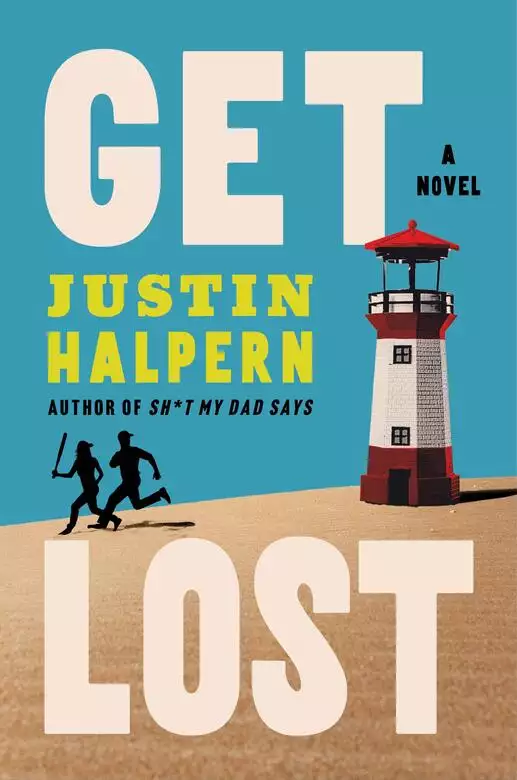
From the author of the #1 New York Times bestseller Sh*t My Dad Says, a fast-paced thriller about a young woman who reluctantly teams up with her deadbeat dad to find her missing mom—perfect for fans of Carl Hiaasen and Elmore Leonard.
When Lila Dixon gets a call that her mother has gone missing, she initially brushes it off—Mattie’s disappearances are a part of life, like earthquakes in their dusty California hometown. But this time the prime suspect is Lila’s larger-than-life father: the one-time baseball star, local hero, and fatal charmer John “Dix” Dixon.
Dix’s main accomplishment as a dad was finding new ways to disappoint his daughter, but even Lila knows he’s not behind this. And when they uncover a $250,000 deposit to Mattie’s bank account, and someone slips a threatening note under Lila’s motel door, they realize Mattie may be in real danger. Now they’re heading down a trail marked by unsavory Russian thugs, fat-cat farmers, and an unseen enemy who’s always a step ahead.
With crackling banter and characters that leap off the page, Get Lost is a thrilling and emotionally layered mystery. Justin Halpern tells a story that’s by turns hilarious and poignant: about fractured families, grudges that last a lifetime, and the unexpected ways we find our way back to the people we thought we’d lost for good.
Release date:
July 7, 2026
Publisher:
Grand Central Publishing
Print pages:
256
* BingeBooks earns revenue from qualifying purchases as an Amazon Associate as well as from other retail partners.
LILA DIXON SAT in the worn-down bleachers behind home plate and considered what she would do if she were ever attacked by a bear. This would of course never happen—she’d never been camping or really done much of anything in the woods. But her fear of bears was fairly pronounced, and she took some perverse enjoyment in imagining scenarios where she was by herself, with little chance of survival. She wondered if bears had soft underbellies like sharks. If they did, maybe she could punch it in that soft underbelly, then run. Or better yet, grab a stick and try to stab it there. She pulled out her phone and typed, “Do bears have a soft underbelly?”
She was interrupted by a voice behind her.
“What do you think?”
She turned to see a man in his early forties in an Oregon State University visor, Oregon State polo, and track sweats.
“What do I think about what?” she replied.
“This kid on the mound. What do you think about him?”
Answering that question was essentially her job, much to her dismay. She’d come here to scout the shaggy-haired teenager who stood on the pitching mound. More specifically, she had been sent to record the pitcher’s velocity and spin rates and enter them in the database for Grand Slam Scouting, her employer. This consisted of setting up the tripod next to her, which held a small tablet that would measure and record all the various analytics. It could be mindless work if you wanted it to be, and Lila did.
“Pretty solid,” she said, without turning around.
She stared at her phone, which struggled to load her search regarding the underbelly of a bear.
“Fastball sits at ninety-two, ninety-three. Good late movement,” the man continued.
She nodded. The search page finally loaded. Bears apparently do not have a soft underbelly and in fact have a strong layer of fat on their underbelly. This was disappointing news. She wondered if maybe she could just outrun a bear. She was thirty-three and in pretty decent shape considering she loved hot Cheetos and hated exercise. She had long athletic legs and the other day she almost chased down a skateboarder who stole a package in front of her apartment. She felt pretty sure if she hadn’t been in jeans she might have caught him. She typed, “How fast does the average bear run,” and hit search.
“Hooo, damn. That slider was nasty. What’s the spin rate on that bad boy?” the man said.
“Not sure,” she said, not looking up from her phone.
“Did you look?”
Lila turned to face the man. “I didn’t.”
She turned back around. She tapped her Converse against the ground. Google search wasn’t loading. Of course. Why couldn’t anyone build a high school baseball field anywhere near a goddamn cell tower?
“Well, if I were you, I’d pay a little better attention, ’cause in my opinion this kid should go top three rounds,” he said.
Lila turned back around.
“Well, that’s why no one gives a solid shit what your opinion is,” she said.
A woman a few seats away caught the man’s eye and his sun-soaked face turned an even darker shade of red. He sat up in his chair.
“I don’t think you know who the hell you’re talking to. That kid on the mound that you’re here scouting is my son,” he said, as if he was a lawyer who’d just triumphantly revealed a surprise piece of evidence that would rock the courtroom. “What the hell’s your uppity ass got to say now?” he added.
“Well, I’d say your son can’t locate his slider, which doesn’t really matter because it’s pretty flat anyway. He doesn’t have a third pitch and won’t ever throw hard enough to get away with two. So he’ll probably spend four or five years in the minors until everyone realizes what it took me about one inning to see.”
The man sat silently. At the plate the batter grounded out softly to the first baseman, who stepped on the bag for the third out.
“Fuck you,” the man said and got up and moved three seats over. Lila looked back at her phone. Her search page was loaded. A bear can run up to thirty-five miles an hour. Damn.
By the time Lila had driven the 160 miles back to her apartment complex it was almost midnight. It was still over ninety-five degrees, which was one of many reasons she hated living in Valencia. When people think of California, they think of the coast, but most of California is a hot, dusty desert that mocks anyone who attempts to live there. Lila’s apartment complex was called Isla Bonita, which translated to “Beautiful Island.” It had twenty-four units that surrounded a pool destined to have a dead body floating in it. She climbed the stairs to the second floor and saw a figure leaning against the door to her apartment. If it hadn’t been for the lit end of his cigarette Lila might not have seen him at all.
“Daniel. What the fuck are you doing?” she asked.
He flinched at the sound of her voice and put out his cigarette.
“Oh, hey, sorry, I was just waiting for you, I wasn’t trying to be creepy,” he said.
“Well, you failed.”
He moved into the light, revealing a mess of curls bordering a cherubic teenaged face losing a battle with acne.
“You can’t lurk around an apartment complex in the middle of the night. Somebody’ll shoot you.”
“I live here,” he said.
“Yeah, and they’ll find that out after they shoot you.”
She took out her keys and unlocked her door.
“My mom kicked me out. She’s pissed at me.”
“So go apologize,” she said.
She entered her apartment and flipped on the lights. She put her bag down on a worn fabric chair and tossed her keys on a wooden coffee table. The apartment was small—just a dated living room that led to an even more dated kitchen, but it was immaculately clean. Daniel followed her inside.
“I did apologize. She’s still pissed,” he said.
“Then apologize again. What do you want from me?”
She went to the fridge and poured herself a glass of water from a Brita water filter.
“I was hoping I could sleep on your couch. Just for tonight.”
She put her glass down.
“I can’t have my fifteen-year-old boy neighbor sleep over at my apartment.”
“It’s one night! Nobody is gonna think anything, and plus, like, even if they do, people are cool with it when it’s like an older lady and a younger guy. They just don’t like it the other way, you know?”
“Daniel. Go back to your mom and say you’re sorry until she lets you back in.”
She walked over to the front door, opened it, and motioned for him to leave.
“That’s fucked up. I’m coming to you in, like, a time of need and shit,” he said.
“You’re absolutely not. Now please get the fuck out of here and have a good night,” she said.
He shook his head and made his way toward the door.
“You know I defend you to people here? People are like, ‘What’s her problem, why she never talk to nobody?’ and I’m like, ‘Nah, she’s aight, she’s just a bitch sometimes.’”
“Wow. Thank you. It’s great to have you in my corner,” she said. He crossed the threshold and turned back toward her, but before he could speak, she closed the door and locked it.
She kicked off her shoes and walked into her bedroom. She unraveled her hair tie, releasing the messy bun atop her head, peeled her tank top off and tossed it in the laundry basket, then turned on the shower in the adjacent bathroom and sat down on her bed as she waited for the water to get hot. Although, to be fair, the shower never got “hot.” She’d called the landlord to come fix it once before. When he came over he turned it on, saw it steam up, and said, “It wouldn’t do that if it wasn’t hot.” Lila countered that it was just “performatively warm.” He said he didn’t know what that meant but that if it stopped steaming then he’d send someone to fix it. She’d lived in worse places—hell, she’d only lived in worse places—this was the nicest dump of the lot.
She had began peeling her socks off when her phone started buzzing. Someone was calling her at 12:27 a.m.… She looked at the screen. Arturo Jimenez. She picked it up.
“It’s the middle of the night,” she said.
“I know,” Arturo said. His voice sounded as if he’d just woken up.
“I fucked something up,” she guessed.
“No. That’s not—”
“You fucked something up?”
“No. I—”
“You’re firing me.”
“Stop guessing, okay. Just let me—let me talk,” he said.
The tenor of his voice changed. There was something wrong. She stopped pulling off her other sock. It hung halfway off her foot.
“Look, I don’t exactly know how to put this, and if you need anything at all, just, whatever you need, let me know—”
“Arturo, what are you trying to tell me?” She braced for impact.
“Your mom has gone missing. Nobody’s heard from her in a week.”
Lila laid her head back on her pillows.
“Oh, Jesus Christ. I thought you were gonna say something worse. She goes missing all the time.” She grabbed a few strands of hair across her shoulder and inspected their frayed ends.
“What?”
“Yeah, she’s got issues. Struggles with her mental health. You didn’t know that?”
“No.”
“She does this shit all the time. She’ll come back. It’s fine. I mean, it’s not fine, but, it’s fine. How’d you even find that out?”
There was a beat of silence.
“Well, that’s the other part,” Arturo said. “Your dad’s the one who told me.”
“How the fuck would he know? They haven’t talked in twenty years.”
“Because he… he called me from jail. He says the cops think he killed her.”
“I NEED SIXTY on pump three,” Lila said, holding out her credit card. The man behind the counter of the ARCO wiped his nose on the sleeve of his T-shirt commemorating the 1997 tour for the band System of a Down.
“You can use a card at the pump,” he replied. He picked up his phone and began texting someone.
“I did that and then it said, ‘See cashier,’ and that’s where we’re at in the story,” she replied.
“It might be your card,” he said, not looking up from his phone.
“It’s not my card. I’m kind of in a hurry, can you just run it here?”
The man begrudgingly took her card and gave it a once-over before running it.
“You related to John Dixon?” he asked.
“Yes.”
She immediately regretted this admission.
“Oh, dang. Dude, Dix was a beast. So fucked up what happened to him. He shoulda been in the big leagues.”
“It’s a chip card so you can’t swipe it,” Lila said.
“My brother actually played ball with him in high school. Just for like a year and then he got thrown out of school for doing meth,” he said, still holding her card. Still not running it.
“Yeah, can’t do meth.”
“Yeah, meth is fucked up,” he said.
“Can you run my card?”
“Yeah, for sure.” He took her credit card and slid it into the device.
“So, are you like his wife?”
Lila stared at him.
“He’s my dad.”
“Oh, damn. My bad. I mean, that’s a compliment. Dude used to pull ass.”
The beeping from the credit card reader broke the silence. He handed her card back to her.
“All right, you’re good to go,” he said.
Lila took her card and made a mental note to sanitize her hands when she returned to her car. She headed for the glass double doors. They swooshed open, blasting her with dry California heat.
“Hey,” the man said.
She stopped and turned around, thinking maybe she forgot something in her rush to get back to her car and scrub all the skin off her body.
“If you see Dix tell him Dave Esterly’s little brother says what’s up,” he said.
“I’m not gonna do that.”
“Okay, cool, have a good one.”
Lila hadn’t lived in Los Armarios in twenty-five years. It was a town of about thirty-five thousand, spread across twenty square miles. Most of it was expansive fields filled with rows upon rows of almond trees. As you entered the city limits, a sign proudly proclaimed, “If you eat an almond in the western United States there’s a 23% chance it was grown in Los Armarios!”
Lila had been forced to come back for a day or two every couple years to deal with her mom, or to obtain a document she might need, but there was nothing in Los Armarios that called to her. Early on she’d tried to pretend as if part of the reason she was there was to catch up with her mother. But Mattie was already too deep in her struggles to play her part in that charade. Sometimes she wasn’t even able to make eye contact with Lila. Other times she darted between topics and ideas with such speed and intensity that Lila had to remind her to breathe. As of the last couple years, Lila had taken to dropping off food at Mattie’s apartment and saying a quick hello in the doorway as she fiddled with her keys. Even that had started to feel too painful.
The past offered nothing as well. There were no close friends or fond memories; no nostalgia that washed over her when she came across some grassy expanse or burger joint or tree-lined street. The only place that registered on any sort of scale was Pin Palace Bowling Alley on Main Street. She’d had every single one of her birthday parties at Pin Palace even though she hated bowling. Every year she’d protest and every year her dad would say, “I tell you what: We get there, and you ain’t having a good time, I’ll tell everybody to pack up their stuff and we’ll go wherever on God’s green earth you wanna go.” Then of course they’d get there and there’d be nachos and free refills of Coke and that was a bird in the hand. Then they’d leave and she’d say, “Next year can we go somewhere else?” He’d say, “Absolutely,” and they wouldn’t. She could never understand why he insisted on going to Pin Palace, until her eighth birthday, which was the last one she celebrated in Los Armarios. It ended like all the others, with her dad going up to the front to pay, pulling out his wallet, only for the owner to say, “Dix, you know your money’s no good here,” and her dad saying, “Are you sure? I gotta pay you something.” The owner always insisted he put his wallet away. But on her eighth birthday, when her dad had pulled out his wallet to pay, Lila was standing just behind him. For the first time she could see into his wallet. It was empty. Even at eight years old she could put the pieces together.
Lila entered the city proper and turned onto Main Street. Pin Palace was gone. In its place was a massive Big Box warehouse. Big Box was Amazon’s latest challenger in the e-sales market, hoping to gain ground by offering lower-quality products but getting them to you even faster. A large billboard next to it said, “Big Box has Big love for Los Armarios!” She was impressed that they found a replacement more depressing than Pin Palace.
Lila’s GPS gave her an ETA of six minutes until she arrived at the Los Armarios County Sheriff’s Department. The route took her through the small downtown, which was an alternating mix of fast-food restaurants, empty lots, and convenience stores. Everything was the color of a newspaper that had been left in the sun for a week. Nothing felt clean or new. The heat and dust were winning the war, and it was clear that efforts to combat them were not a priority. Lila made a right into the parking lot of the sheriff’s department and found a spot up front.
She walked up to the front desk where a heavyset man with a badge and thick square glasses sat behind it. His nametag read “Sgt. Shelby.”
“Hi, can I help you?” he said.
“Yeah, I called earlier about John Dixon?”
“Oh, you’re Dix’s kid,” he said, lighting up.
“Yeah.”
Lila could hear some lively conversation happening in the rooms behind the reception area. Sergeant Shelby turned toward the commotion.
“Hey, Dix’s kid is here!” he shouted.
He turned back around.
“I swear, your dad is the funniest SOB this side of I don’t know where. The man can spin a yarn.” Sergeant Shelby wore the earnest smile of a child watching a magic show.
“Right. So, I’m here because he’s being held on suspicion of killing my mother.”
Shelby corrected the smile on his face and attempted to adopt a more appropriate demeanor.
“Oh. Well, that isn’t—I mean, he is and he isn’t, if you know what I mean.”
“I don’t. That’s why I drove six hours through the night to get here.”
“You know what? Why don’t I just bring you back here to see him.”
“I don’t need to see him.”
“You… don’t want to see him?”
“Not if I don’t have to.”
A cacophony of laughter exploded from the back. A young deputy with a close-cropped mustache and thick neck walked in, still enjoying the tail end of a chuckle.
“Dix, you’re wild, man,” he shouted as he approached Shelby from behind.
Sergeant Shelby quickly turned away from Lila and must have given the deputy some indication that his jovial attitude was inappropriate, because the deputy immediately stopped smiling.
“Hi, ma’am, can I help you?” His voice had the faux gravitas of a teenager pretending to be old enough to buy alcohol.
“This is Dix’s daughter, and also Mattie Wilkerson’s daughter,” Sergeant Shelby said.
The deputy narrowed his eyes and nodded solemnly.
“Ma’am, I can assure you, between you and me, none of us think your dad had anything to do with your mom’s disappearance.”
“Then why is he here?”
“Well, the sheriff brought him in,” Sergeant Shelby said.
“Can I talk to the sheriff?” Lila asked.
Shelby and the deputy shared a quick look before Shelby turned back to Lila.
“Just a fair warning, he’s not a huge fan of your dad. I’m not sure how helpful that’ll be for you,” Shelby said.
“It can’t be less helpful than this.”
Lila stood in the lobby. An older white-haired woman sat on a chair a few feet away.
“You don’t want to sit?” the woman asked.
“Nah,” Lila said. “If you sit, they make you wait all day. You stand it makes them uncomfortable, and they get to you faster.”
The woman considered this, then stood as well. The double doors to the left of Lila opened to reveal Sergeant Shelby.
“All right, sheriff’s ready for you,” he said to Lila. He took a second look at the older woman who was now standing. “We’re, uh, we’re working on your thing. I’ll check on it right now,” he said. The woman turned to Lila and smiled, and Lila offered a smile right back.
Sergeant Shelby led Lila down a long hallway lined with various rules, regulations, and official-looking photos. She’d never been past the lobby of a sheriff’s department before. But she’d spent a lot . . .
We hope you are enjoying the book so far. To continue reading...

 Please log in to recommend or discuss...
