'Beautifully captures the pain of growing into yourself, and the intensity of all-consuming female friendship' ROSE WILDING
You lose your virginity to a boy from your gender theory seminar, and the first person you tell is Ella.
Ella's with you at the party when you first kiss a girl.
And Ella takes you to the hospital the first time you're diagnosed.
Over the next few years you have a string of relationships and jobs, but you can always count on Ella to be there for you - until the drinking and the parties, the hospital visits and late-night calls, blur the lines of your friendship into something unbalanced and fragile, at risk of breaking altogether.
The worst part is you can see it coming. The worst part is you don't know how to stop.
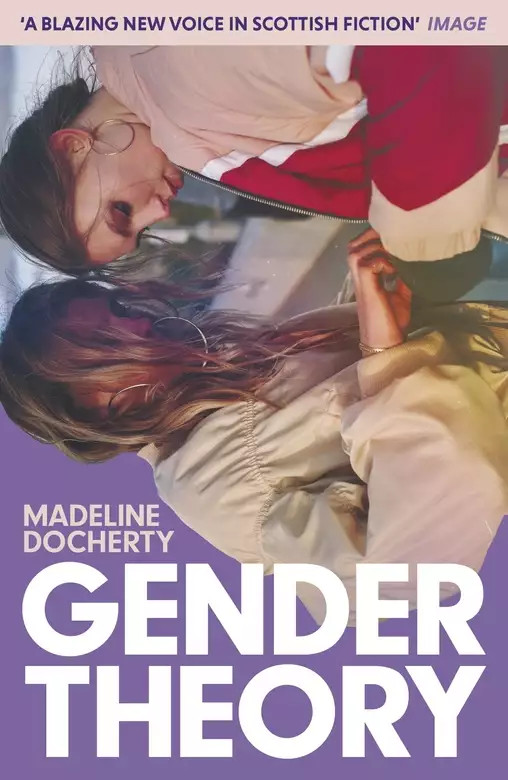
From a blazing new voice in Scottish fiction, Gender Theory is an incisive, affecting debut about illness, identity and how we care for those around us.
Release date:
June 6, 2024
Publisher:
John Murray Press
Print pages:
208
* BingeBooks earns revenue from qualifying purchases as an Amazon Associate as well as from other retail partners.
You drop your takeaway coffee in the doorway of the seminar room and the word fuck! escapes from your mouth before you can stop it. You look up and the room is full because you are a few minutes late, and everyone is looking at you. There are a few chairs stacked in the corner and hardly any space left for you to sit. At the head of the table is, you assume, your tutor. He’s handsome but he’s wearing awful glasses, like the fake ones that come with a moustache and eyebrows. His clothes and face tell you that he was privately educated. He is still wearing his raincoat and the comedy glasses are a little bit steamed up, like he was late too. He jumps up and hurries over to help you, pulling tissues out of his pocket and saying no harm done! I hate that carpet anyway.
Everyone laughs and stops looking at you, busying themselves by pulling laptops and notebooks out of bags. He crouches down and so do you, both of you dabbing ineffectually at the stain. You say, oh my god I am so sorry, and he says, seriously, it’s fine. After a minute you both give up and he sits back down while you unstack one of the chairs and squeeze yourself into a corner. He talks about the course then, checks that everyone has bought the primary texts, asks if anybody has a personal interest in Romantic poetry. The only other boy in the room puts his hand up and your tutor smiles at him, then laughs and says, tough crowd, that’s okay, I know this is a course requirement. He says that he is a year into a PhD, that this is his second ever undergrad class, and his favourite fruit is mango. You all have to introduce yourselves then and say your favourite fruit. It’s excruciating. When it is your turn, you say you love strawberries and he smiles and says, like the Edwin Morgan poem? You know he used to teach here. And you smile back at him and say, yeah, I know.
Three weeks later, he is kissing you for the first time; in his office, against the wall, and you are so turned on your legs are shaking. He keeps saying is this alright, are you okay? against your mouth, stammering like a schoolboy. You nod your head and kiss him back. You have been emailing back and forth since the first class, ignoring Ella, who uses every chance she gets to tell you it’s a cliché and you’re in over your head. You know that she’s right, but the emails break up the mundanity of your daily routine, give you something to think about that isn’t your health. You’re trying a new contraceptive pill that makes you shout and cry and bloats your stomach out like a balloon. You’ve been running the packets together to skip your periods and so far, it’s been working. You aren’t in physical pain anymore, but your moods have become unpredictable and hard to endure.
He doesn’t know about your broken body or your unstable moods. You don’t talk about your lives, your friends, the day-to-day. You talk about language and dead poets and his dreams of being a writer. You know almost nothing concrete about him, but when he touches you, you forget your own name. He pulls away from your kiss and smiles at you, all white teeth and glowing eyes, and for a second you go cold but you aren’t sure why. Then he kisses you again and you’re lost, pulling him closer until your bodies are pressed together, you on your tiptoes, him stooping down a little. He starts kissing your ear, then your neck, and then he groans and whispers to you, her hair was long, and he tugs the end of your ponytail and whispers again, her eyes were wild, and he kisses the side of your eyelids, and murmurs, I made a garland for your head, and he strokes your face and you hear Ella’s voice in your head say come on, but you shake it off and make your eyes wide and look up at him again, like you’re turning your face up to the sun.
As you walk home you keep crossing the road without looking because you are thinking about the smooth skin at the back of his neck. You watch your reflection in shop windows and your face is red with cold and the memory of the kissing. Your mum texts you saying, not heard from you in a while? and you start to reply but then he emails you. The subject line says, I cannot stop, and the body of the email reads, thinking about you. You fall in love with how the email makes you feel, like something desirable, like something worth pursuing. Impulsively, you cancel your gynaecology appointment, thinking you could live like this forever, running pill packets together and never knowing what was wrong. When you get home Ella is watering your dead plants but when she sees you, she abandons the task and starts making tea. She adds almond milk and honey without asking and you take the steaming mugs into your scabby garden to smoke. You sit in silence for a minute, and she stretches her arms above her head and yawns, her jumper riding up so you can see her soft stomach. Then she looks at you innocently and says,
So, how was your sex meeting then?
and you roll your eyes and say, we didn’t have sex.
She stares at you.
But we did kiss.
She keeps staring.
And he quoted a poem to me.
She purses her lips,
What poem? No wait actually let me guess, Bukowski?
You shake your head.
E.E. Cummings?
You shake your head again. She thinks for a second,
Keats?
You start to laugh, and Ella puts her head in her hands and groans. You keep laughing and the noise frightens a crow picking at the rubbish bins. She points at the dark shape flying away and says, bad omen, and then she starts laughing too and the spell is broken.
When you see him in seminars, you communicate in code. When someone delivers a particularly stupid answer, he raises an eyebrow, just for you. You never put your hand up, and only speak once or twice a class, but when you do, you try your best to share astute observations on the text, or to make a joke about one of the poets. You wear his laughter like a badge of honour, his approval sustaining you during the weeks where you cannot meet privately. You do the sem-inar reading every week, sometimes twice, trying to fake a natural intellect that you don’t have, trying to love the things that he loves. You read beyond the compulsory theory, seeking out journal articles and essays analysing the work. They seem to be written in a different language, and you are too afraid to ask anyone else what they mean, afraid of being laughed at. You join the poetry society and sit at the edge of con-versations, pretending to be au fait with the vocabulary, using words like syntax and enjambment. You listen carefully and copy down the opinions of the smartest people in the group, transcribing their observations word for word in your emails to him. When he replies quickly and compliments your remarks, you glow. When he doesn’t reply for days, or sends you a few distracted lines, the circles under your eyes darken into bruises.
Once that semester, he takes one of your lectures, and you spend two hours watching him at the front of the room. Trapped behind your desk, you have to clench your hands into fists to stop yourself reaching out to touch him, to pull his glasses off and trace his jawline with your fingertip.
You try and guess which poems are his personal favourites and whenever you’re proved right, you take it as confirmation that you see straight through him, to the deep hidden parts that even he hasn’t fully uncovered. You try to emulate the easy way that he drops the names of poets into conversation, as if they are old friends, as if they will stand up from their graves, dirt falling off their bodies, and wave. You repeat the names to yourself at night, to help you fall asleep, Keats, Coleridge, Shelley, Wordsworth, Blake. Sometimes they sound like curses, sometimes they sound like prayers.
When you meet him in his office, two or three times a week for thirty or forty minutes at a time, you don’t talk.
You fantasise about moving to the countryside and buying a farmhouse with him. You want to learn how to make bread, you want to own chickens. You imagine inviting his colleagues round for dinner and impressing them with your own deep knowledge of poetry while you serve them grilled peaches and fresh cream. When they leave, he’ll take you to bed and watch you remove your hair pins one by one. Everyone was so impressed by you tonight, he’ll tell you, eyes shining in the candlelight, they thought you were so beautiful, so intelligent. He’ll be so inspired by living amongst nature, and by you, he’ll write his own poems, or maybe a novel, and you’ll help him edit it, and when it comes out, he’ll dedicate it to you, say he could never have done it alone, that you are in every page.
You have never worked this hard before, and Ella has to constantly remind you to leave your room and eat meals. Up until this point, you have both had similar attitudes towards academia; you go to enough classes to not be penalised for attendance and pull frantic all-nighters in the library when deadline season rolls around. You both read for pleasure constantly and finish your course reading rarely. You used to think that clubs and societies were stupid, a vehicle to meet new people to kiss and get drunk with, but now you love meeting in the library and listening to people talk about poems. One evening, when you cancel on a night out to lie in bed and read, Ella asks you why it matters so much,
I don’t get it. You’re already with him. Who are you trying to impress?
You can’t explain to her that it isn’t about impressing him, anymore. It’s about trying to understand.
This version of him that you have created in your head becomes so alive to you, that the next time you see him in his office, he looks dull and tired, saying the wrong thing and holding you too tightly. He puts his hands on your hips and you go numb. You want it to feel the way it felt the first time, forbidden and magic, like you were somebody else and he would do anything to have you. You pull away and say,
I read that article you sent me, the one about Wordsworth’s depiction of childhood and memory? I’ve got loads of thoughts.
And he says,
Of course, but actually – could you just email me about it? I have a meeting in twenty minutes.
That night you spend the whole evening at your desk, writing down your thoughts about the article, and when you read the email back to check for typos, you realise that, for the first time, you haven’t copied anybody else’s writing, that the words are all yours. You lean back in your chair and look at the screen until your eyes blur. Fuck, you think, I get it. He doesn’t reply for days and when he does, it’s only to confirm a time to meet.
You get the flu and stay in bed for a week, shivering and sweating while Ella brings you cups of tea. He doesn’t get in touch to ask why you aren’t in class. You are too sick to read novels, so you fall back into poems, the ones you know by heart. You drift off thinking about nightingales and grassy glades, and dream about him. In these visions, you are connected, intertwined, apparelled in celestial light. You are in sweet smelling meadows, beside streams, beneath trees. The colours are vivid, and everything is fluid and changing. When you are awake, your aching body and heavy head long for those fevered landscapes the way Wordsworth did, aching for the stars and the birds, trapped in the hovel of your bedroom where nothing is beautiful, and the bedsheets smell like sickness.
You wake up on the eighth day and the fever has broken, you throw your window open as far as it goes and gulp air into your lungs like water. You feel like a child again, limitless and happy, the fullness of your bliss, I feel – I feel it all.
You start looking into applying for a master’s in Romanti-cism, and realise the deadline is in a week. The application states that you need to attach an essay on a relevant topic of your choice and enter the details of who will be providing your reference. You open the email you sent him about Wordsworth, copy the text into a document, and start editing and moving some things around. You are surprised to find that you still like the things you wrote, that your sentences haven’t turned into drivel since the last time you checked, which is what usually happens when you reread your own work. You feel proud, you realise, and the unfamiliar feeling spreads around your body and stays there until morning. You wake up smiling and email him to ask if he’ll give you a reference.
He becomes slippery and evasive, and whenever you ask to meet, he brushes you off with, of course, soon, and, I’m sorry things are hectic right now. You are afraid to ask him to clarify what he means by ‘things’. He stops looking at you in seminars.
One day you walk into class and he isn’t there, replaced with a tutor you haven’t seen before. You sit down and email him under the table, are you ill? Several hours go by before he replies, no. family stuff. For the first time, you look him up on Facebook. You don’t recognise him at first, the picture is a few years old and he isn’t wearing his glasses. He’s on the beach, smiling into the lens, looking windswept. The caption says, photo cred: and then a woman’s name. When you look her up on his friends list you find a beautiful woman. You find a photograph of him kissing her on the cheek. You find a small diamond ring on the fourth finger of her left hand. You find out that she did her undergrad at the same university that he did. You feel like you don’t exist, and you have to dig your nails into your palms to check. You draft an email. You delete it. You imagine your future stretching out in front of you like train tracks, the things you are going to do, the people you are going to kiss. You picture him, behind you, getting smaller in the distance. You withdraw your master’s application, and your poetry books begin to gather dust on your bedside table. Whenever you think about picking one up, you think about the farmhouse, the peaches, the life you are never going to have. There are two classes left of the semester and you don’t go to either. You graduate months later in the dry heat of July and after the ceremony you spot him wandering around the cloisters, sweating in an expensive suit. The sky is completely empty of clouds and when Ella makes you throw your cap in the air for a photo you can’t feel a thing.
Aberdeen
The day before you leave, the sky is blue, so you walk to the top of the hill in the park with Ella to look out over the city. You can see right across to the West End and the university. The main building seems small from this far away, but it still towers over most of the other structures. A stone carving in front of you tells you that it’s five kilometres away by air.
That feels like nothing, Ella says, you could run it in half an hour.
Not on the ground, you reply.
You’re acting sulky, you feel like a teenager dragged out for fresh air by your mother. Now you’ve packed and booked your train ticket, you don’t want to go. You turn around and sit on a bench, your back to the view. This way, you can see the hospital, the recreational ground and the beginning of the road you live on. Looking this way feels smaller, safer. You’re both silent for a moment. Ella s. . .
We hope you are enjoying the book so far. To continue reading...

 Please log in to recommend or discuss...
