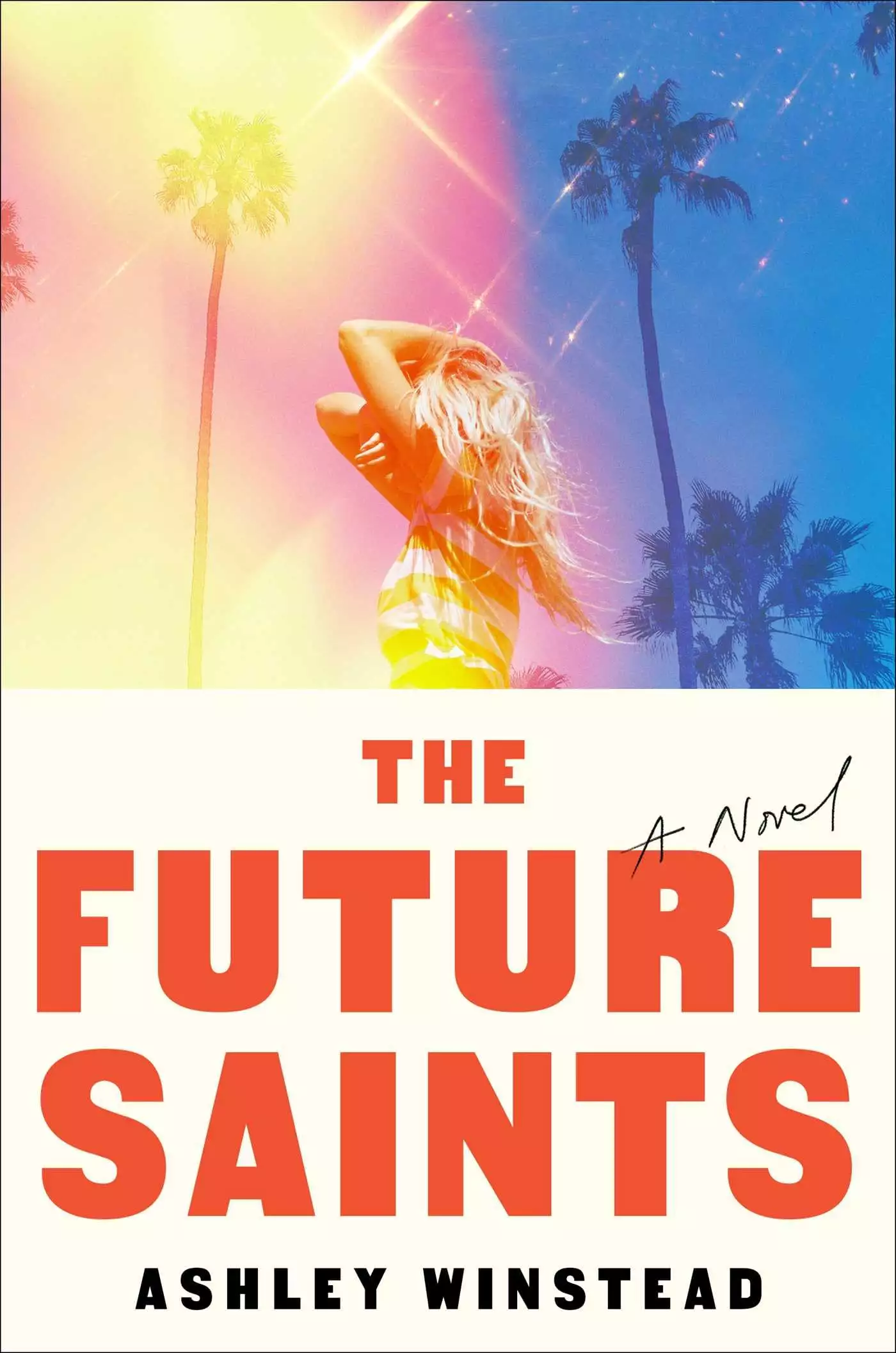
Perfect for fans of Daisy Jones and the Six and In Five Years—a beautiful, powerful, and transportive new novel about a music executive desperately trying to bring a rock band back from the brink, from bestselling author Ashley Winstead.
This is a love story, but not the one you’re expecting.
When record executive Theo meets the Future Saints, they’re bombing at a dive bar in their hometown. Since the tragic death of their manager, the band has been in a downward spiral and Theo has been dispatched to coax a new—and successful—album out of them, or else let them go.
Immediately, Theo is struck by Hannah, the group’s impetuous lead singer, who’s gone off script by debuting a whole new sound, replacing their California pop with gut-wrenching rock. When this new music goes viral, striking an unexpected chord with fans, Theo puts his career on the line to give the Saints one last shot at success with a new tour, new record, and new start.
But Hannah’s grief has larger consequences for the group, and her increasingly destructive antics become a distraction as she and her sister Ginny—her lifelong partner in crime—undermine Theo at every turn. Hannah isn’t ready to move on or prepared for the fame she’s been chasing, and the weight of her problems jeopardize the band, her growing closeness with Theo, and, worst of all, her relationship with her sister—all while the world watches closely. The Future Saints’s big break is here—if only they can survive it.
A novel about sisterhood, friendship, and the ghosts that haunt us, The Future Saints is “a mesmerizing look at grief, love, and the music industry that's so raw and emotional, you’ll want to play it on repeat.” (Laura Hankin, author of One-Star Romance).
Release date:
January 20, 2026
Publisher:
Atria Books
Print pages:
352
* BingeBooks earns revenue from qualifying purchases as an Amazon Associate as well as from other retail partners.
Chapter 1: Theo: Saturday, April 13, 2024 Chapter 1 Theo Saturday, April 13, 2024 The woman on the stage is haunted. I see it the moment she walks out, but no one else in the audience seems to have noticed—they’re all still laughing and joking as if nothing’s wrong. For a second, I forget that my career rests in this woman’s hands. I’m rooted to the floor, mesmerized by how protectively she wears her aloofness, how obvious the vulnerability she’s trying to mask.
I can understand why she wouldn’t want to be here on this worn-out stage at the Hideout, playing a venue well past its prime in a California beach town too far north of Los Angeles to count as relevant. But this is also the only place she knows how to be—under a spotlight, her baby-blue Jazzmaster guitar strapped to her chest, living or dying by what the sound of her voice and the power of her words can do to a bunch of strangers.
It took effort to land in the same room as her. I’d had to cancel my meetings and fly cross-country into LAX, rent a car, and drive two hours north up the 101. But the truth is, it’s nice to be out of the office and back in the scene. The stale beer sticking to my shoes and herbal scent of old weed remind me of the shows I used to crash as a teenager in my own shitty dive bar back in Virginia.
The crowd here skews young, and they’re dressed like the band: baggy pants and hoodies, too warm and oversize for California. They have slender tattoos on their fingers and septum piercings and hair dyed pastel colors. West Coast hipsters: more sun bleached and skateboard friendly than the ones I’m familiar with. There are about fifty people total, which is less than you’d want for a band six years into their career on a major label. But the energy in the room—the low thrum of excitement—reminds me of my glory days, back when I was still only a fan, with a nose for bands that had yet to be discovered. Even though the crowd is small, they’re passionate.
Yet none of the band members have made eye contact with the crowd since they walked onstage. There’s Kenny Lovins on the drums, Tarak “Ripper” Ravishankar on bass, and the haunted Hannah Cortland, lead singer and guitar. Hannah holds a bottle of liquor by the neck—tequila, judging by the color—and sets it near her feet. When she finally takes stock of the audience, she looks through the crowd rather than at us.
I’m starting to wonder if every rumor I’ve heard about her is actually true.
I push past people to get a better look. For months the Future Saints have ignored my calls and emails, forcing me to come in person. Now that I finally have them in front of me, I’m eager to see if the reality matches the lore. I know their origin story, how the band met while freshmen at Cal State Long Beach. I’ve memorized the anecdotes about those early days they recycle in interviews: how they would skip class to write songs, smoke pot, and catch waves. They’re mythmaking stories that tell me the Saints want the world to see them as West Coast chill, a handful of surfer kids who just happened to fall into music. Album art for their past four albums cements the breezy image: pastel colors, hazy lines, palm trees, blue skies.
And maybe they used to live up to their own myths. But not anymore. At this point in my career, I can diagnose most band problems with a quick glance: the musicians who are too drunk or high onstage, whose egos have grown toxic, who are in over their heads. And as soon as the Saints start playing, I see they’re suffering from not one but all of those problems.
Kenny’s long blond hair is held back by a playful floral headband, his T-shirt already starting to soak through with sweat, hands flying as he pounds the drums, a pure workman. Ripper’s a tall, lean guy with a shaved head and finely wrought cheekbones, wearing painted-on jeans. In the middle of Hannah’s guitar solo, he tugs off his rainbow LGBTQ-rights shirt and receives a wave of shouts.
And then there’s Hannah herself. My eyes keep finding her, like she’s the source of gravity in the room, or else my instincts sense she’s the wildcard, a potential danger. She’s lit by the venue’s swirling lights, which catch the dust motes in the air so it looks like she’s singing in a sea of stars. I’ve seen pictures of her, of course, but some people hit different in person, and she’s one of them. I knew she had messy sunshine-blond hair with midnight roots, that she dressed like she just rolled out of bed, with her ripped-up T-shirts, but there’s a rawness to her I find impossible to turn away from.
For a full hour I stand in the crowd, watching the Saints coast through their set list. It’s almost laughable, the light, breezy singles coming from three people who look anything but happy to be here. Their performance is rote. There’s no soul. And as the set goes on, I can feel the crowd growing restless watching Hannah drink from the liquor bottle, her movements increasingly sloppy. When you’re up onstage, no one wants anything less than your whole heart and soul. Audiences are like lovers that way.
When the Saints finally strike the last note, Kenny’s cymbals shimmering, I prepare myself for my own showtime backstage. But then Hannah grips the microphone, and I freeze.
“We’ve got a few new songs for you,” she mumbles, and before the crowd can register this news with disappointment or glee, she squats for her bottle again, tipping her head back and swallowing a quick mouthful. She tries to stand but loses her balance, catching herself on her hands and knees.
A low, embarrassed murmur travels through the crowd.
Some guy behind me yells: “Feed her more alcohol!” and there’s laughter, the kind that says the crowd isn’t with you.
Hannah rights herself and raises her middle finger. Then she says something over her shoulder, talking to thin air.
The rumors are true: the Saints are a disaster. Luckily, although my title at Manifest Records is technically artist relations manager, I’ve developed a niche specialization in disasters. I’m the Fixer of the label (although some musicians call me the Grim Reaper). Whenever Manifest needs to cut ties with an underperforming band, I’m the person our CEO, Roger Braverman, assigns. It’s a job no other manager wants, but I’ve gotten so good at it—at letting musicians down easy, creating minimum stress for the higher-ups—that I’ve built quite a reputation. The double standard goes like this: at twenty-eight, Kenny, Ripper, and Hannah are considered too old to be up-and-comers. At the exact same age, I’m the label’s young rising star.
When Roger signed the Saints six years ago—during the height of the modern California-rock craze—they had promise, all young and shiny and hopeful. I’ve studied dozens of their recordings—bootleg videos from old shows and one low-budget music video Manifest funded for “Head in the Sand,” which everyone thought was going to be their breakout hit—and the gulf between the band in those videos and the one in front of me now is astonishing. Maybe the years of middling sales, of never achieving the success they dreamed of, have finally taken their toll, or maybe it’s something else. The problem is, I need to squeeze one more good record from the Saints before we can cut them loose. Which means I need them shiny and hopeful again, at least temporarily. My promotion hangs in the balance.
More than anything, I need intel. I scan the bar and catch sight of a woman who’s been parked on a stool with the best view of the stage all night. I know her type. Every band, no matter how small, has a superfan. It’s the friend of a friend or random stranger who happened to hear the band play on a day when their heart was wide open, or their needs sky-high, and the music gave form to their feelings. This woman mouthed every word.
I sidle up to the bar, catch the eye of the superfan, and smile. She’s in her early twenties, with lavender hair and an eyebrow ring, perfectly at home in this crowd. “Hey,” I say. “You like the band?”
“Like?” The meager word seems to offend her. “I’ve been to thirty of their shows.”
Thirty? I bite back a question about what the hell she does for a living and instead say, “Wow. I guess you’re the perfect person to ask.”
She cocks her head, intrigued. “About what?”
Onstage, the Saints launch into the first of their new songs. The tone is bleak, a complete departure from their old breezy-rock sound. The bartender, a guy whose thick neck is covered in swirling tattoos, chooses that moment to slope over. “What can I get you?”
I smile at the superfan. “Let me thank you in advance with a drink.”
She doesn’t hesitate. “I’ll have my usual,” she tells the bartender.
“Plus a Jack and Coke, please.” I nod my thanks, then hold out my hand. “I’m Theo.”
She shakes it. “Minnie. Let me guess—you’re in a band too?”
It happens a lot, people mistaking me for a musician. I actually put a lot of effort into blending in. My work uniform consists of expensive jeans and vintage tees I source from all over New York, and I keep my hair on the longer side, the ends falling around my ears, all the better to shake off my forehead like I’ve seen so many rockers do onstage. Looking like I’m with the band allows me to glide more seamlessly through concert crowds and sound crews, none the wiser that I’m actually on the business end of things. It’s my invisibility cloak.
“Nah, I’m just new to the Saints and curious. I love ‘Head in the Sand,’ but I’m not sure what to think about—” I wave at the stage, where Hannah’s still torturing the mic. “This whole show, to be honest.”
Minnie groans. “I wish you’d seen them play a year ago. They were a different band back then. You would’ve shit your pants.”
“That good?”
Her eyes brighten. I was right—that’s some zealous love right there. “They were electric. Oozing talent and tragically underappreciated. I was a freshman at Cal State when they were seniors, and I swear, I knew the first time I saw them play that I was witnessing magic. And no offense, but ‘Head in the Sand’ is for fair-weather fans. You need to go back to College-Educated Idiots, their first album. That’s my favorite.”
Onstage, the band launches into another new song, this one as bleak as the first. Roger was right. He’d told me the sample they’d sent of their new material wasn’t working, and that, on top of their out-of-control behavior, required an emergency intervention.
I nod at Minnie. “Here’s what I want to know. What’s the deal with their new direction? Where’s it coming from?”
A deep voice answers me. “They’ve fallen off the wagon. Literally and figuratively.” The tattooed bartender slides our drinks across the bar. “Minnie’s right. The Saints used to put on a good show. Hannah was born and raised here in Bonita Vista. Kind of a hometown hero. Everyone in town roots for her. That’s why Aki, the owner, still says yes whenever her label reaches out to book them. I warned him if he let the band come back, they’d just crash and burn like the last show. And yet here we are.”
“Any theories on why they’re spiraling?”
“No theories necessary,” Minnie says, sipping her neon-green cocktail. If memory serves, it’s a kamikaze, the drink of choice for nineteen-year-old college girls. Minnie seems to be clinging to her college years in a lot of ways. “It’s obvious, right?”
“It’s not—” A weird thought pops into my head. “Because their manager passed away?”
Minnie’s eyes widen. “Of course it is.”
The timing does line up. I’d read that the Future Saints’ previous manager died unexpectedly around ten months ago. There wasn’t much coverage, just a couple of RIPs on fan pages, and Roger hadn’t even remembered until I asked. Ten months is about the length of time the band has been phoning in their tour gigs and getting wasted and belligerent onstage, according to our venue reps. It’s certainly the length of time the Saints have failed to produce the new album they owe us.
“So they were close to their old manager?”
The tattooed bartender huffs in surprise.
“Uh, yeah,” Minnie says, giving me a strange look.
It’s grief, then: the underlying issue sucking the soul out of the Saints.
“Honestly, I’m worried they’ve lost their magic for good,” Minnie says, cradling her ridiculous drink.
The bartender leans his hip against the bar. “I’m worried Hannah will go the way of Janis Joplin. I’m serious. I see a crazy number of shows working here, and she’s in a league of her own. When Aki asked me to open a bottle of tequila for her, I was tempted to fill an empty with water out of mercy.”
As if on cue, the band’s song stops and Hannah runs a hand over her glistening forehead, pushing back her sweaty hair. Her wrists are layered so thick with bracelets they reach halfway up her forearms. “Last song,” she grunts, and she brings her hand down hard against the guitar strings. The harsh notes ring into the hall.
“What about Kenny and Ripper?” I ask. “What do they think—”
“I’m told my longing is a problem.”
Hannah’s voice, husky and raw, reverberates through the room, silencing me. Instinctively, the three of us turn to look at the stage. She’s standing taut in front of the mic, fingers strumming her guitar, but her eyes are closed.
“You say it makes you sad to see.” There’s something about her voice that makes me set my drink down. It’s a live wire. I notice the audience, even the ones in the back who were inching toward the exit, have stilled.
“But nothing makes sense to me these days.” Her eyes are still closed, but her voice is lifting. The melody is beautiful, haunting. “When people speak, it’s foreign language.” The spotlight finds her, but it’s unnecessary. Everyone in the room’s eyes are on her, waiting in suspense. Her voice turns plaintive. “All I want is to sleep forever. Six feet under would be better.”
“Shit,” Minnie whispers, and I agree, because Hannah’s stripping bare, confessing right in front of us. For the first time, the way she’s singing—eyes closed, face expressionless—makes the song better, playing against the weight of her words.
“You want me to get better,” she sings, and Kenny comes in with the drums, careful tips of the cymbals to accentuate her words, “Be the girl I used to be. Live the life you dreamed for me.”
Ripper joins, his bass making the song richer, more complex, and together they start building a crescendo. Everyone can feel it; the song is climbing, leading us somewhere.
My arms break out in goose bumps. This song is better than good—I’ve never heard anything like it. The way Hannah’s voice sears, growing hungrier and angrier by the second. People lift their phones to record.
“Jesus,” says the bartender, but I don’t spare him a glance, because I can’t take my eyes off her. Unbidden, the memory floats back, what Roger told me the first time we met—that with musicians you usually get one of three things: looks, talent, or presence, and if you have to choose, always go with presence. At the time I’d privately disagreed, thought talent was better, but now, for the first time, I understand. Hannah Cortland is a magnet.
The song climbs higher, and suddenly she breaks into a new guitar riff, harder and faster, and the drums speed up, and she’s singing again, the same words about longing and disassociation, but this time, she opens her eyes and looks at us. This time, her voice isn’t plaintive but hard and unflinching. We’re nervous, the crowd and I. We hold our breath. My heart’s picking up the way it used to when I was thirteen, sitting in front of my dad’s record player, listening to the chorus build in my favorite songs, knowing the climax was coming, waiting to tip over the edge into a sea of feeling.
I see her take a deep breath, filling her lungs, and when she belts, “But I just want to sleep forever.” I swear to God she’s talking to me. I want to put my drink down and cut through the crowd to be by her side. Before our eyes, Hannah Cortland drops to her knees. The audience freezes, shocked to see her this vulnerable, shocked to find her looking back at us for the first time all night. But Ripper and Kenny don’t miss a beat, and the song explodes around her. From down on her knees her powerful voice fills the room, soaring over the guitars: “You want me to get better, be the girl I used to be, live the life you dreamed for me.” The music is unrelenting. “I’ll get better—I’ll get better—I’ll get better.”
Without warning the song cuts out so there’s only the reverberation of the guitars, the fading cymbals. Her voice is a memory. She stands up, lifts her guitar over her shoulders, and walks offstage.
“Good night, Bonita Vista,” says Ripper quickly, and then he and Kenny follow. The crowd is left stunned. People stop recording and turn to each other with wide eyes. The chatter in the room builds back as the stage lights flash.
I turn back to my companions at the bar. The bartender has given up the pretense of working; he stands with his hands braced on the bar, eyes on the empty stage. Minnie’s hand flutters to her chest.
“That was…” Her voice is faint. “I don’t even know what to say.”
The bartender shakes his head. “That was good, is what that was. Fucking tragic, but good.”
I palm through my wallet and peel off a few bills, enough for a generous tip, and place the money on the bar. Backstage, the band will be coming down off their performance high. Postshow moments are a unique window of time when musicians are needy and therefore open to suggestion. I need to get back there.
“Thanks for the conversation,” I say to Minnie and the bartender. “I mean it.”
Minnie shakes her head at me. “Where are you rushing off to? Didn’t that song just kill you?”
“I’ve got to get backstage,” I say, pounding a fist on the bar and spinning away.
“Hey,” the bartender calls. “Who did you say you were again?”
I spin back to face them, but don’t stop jogging. “Theo Ford. The Saints’ new manager.”
We hope you are enjoying the book so far. To continue reading...

 Please log in to recommend or discuss...
