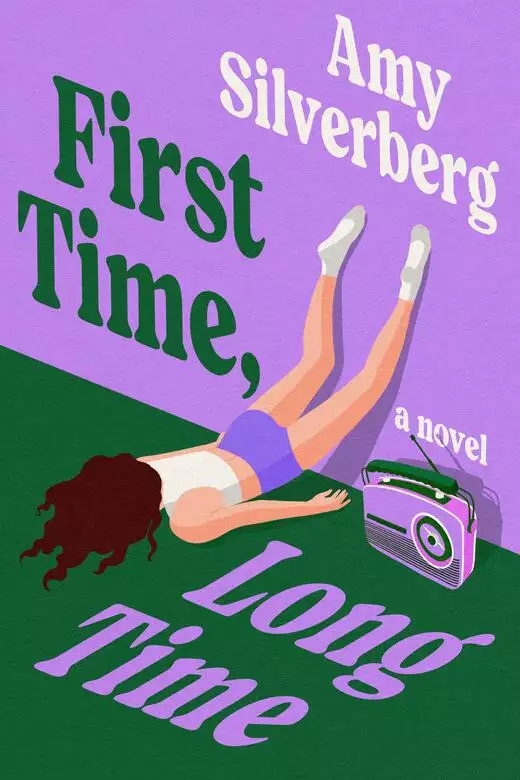
For readers of Emma Cline and Melissa Broder, the story of an untethered, sardonic young woman falling for an older radio host… and then for his daughter.
When aspiring writer Allison moved to L.A., she expected her life to finally take shape. After years of dwelling in grief over her brother's unexpected and untimely death and allowing her mercurial parents' feelings and desires to infect her own, she feels ready become the main character in her own story again. Yet Allison continues to feel inextricably tied to both her parents, particularly her unpredictable father, and weighed down by her the loss of her brother. In L.A., as with anywhere else, she feels lonely and adrift, unable to write and barely scraping by as an English teacher.
After a serendipitous run in with famed radio DJ Reid Steinman, an idol of her father’s and her late brother’s, Allison is rapidly drawn under his spell, while also developing an unanticipated, tangled relationship with his adult daughter, Maddie. She’s forced to balance her romance with Reid with her gnawing desire for the intoxicatingly charming Maddie, as it becomes increasingly evident that she and Allison's late brother share more than a few qualities. As Allison's relationships with the equally self-possessed father and daughter deepens, she struggles to establish the boundaries of her own identity.
Through candid self-awareness, keen observations, and deliciously wry humor, FIRST TIME, LONG TIME asks, what happens to a young woman’s goals when she becomes involved with a famous man whose needs seem so much louder than her own? And how might she move forward when so much in her past remains unresolved?
Release date:
July 22, 2025
Publisher:
Grand Central Publishing
Print pages:
256
* BingeBooks earns revenue from qualifying purchases as an Amazon Associate as well as from other retail partners.
One strange Tuesday evening my mother called and said, “The Problem wants to visit you.” That’s what my mother called my father: The Problem. As far as my mother was concerned, he’d always been a problem. And the worst kind too: one without a solution.
I didn’t want to talk about The Problem. “I’m on a date,” I lied. I thought this would be the fastest way to get my mother off the phone—my mother, who so often worried about her only daughter being alone. That’s what my mother always said: I’m worried you’re all alone.
“You answered the phone on a date?” my mother asked.
“He’s in the bathroom.”
In the pause before my mother, Carrie, spoke, I knew she must be deciding if I’d lied, and then, if she should say, “I know you’re lying.” Maybe it was an act of kindness or only because she was distracted, but my mother moved on. “So your father hasn’t called you?”
“No,” I said. “Why?”
In Arizona where my mother had relocated, I imagined the shadows of the cacti stretching long and ominously across her condo’s sand-colored patio.
“Oh,” she said offhandedly, as if it was suddenly nothing to worry about. “I’m sure he’s fine. But when he came to pick up Peter in the truck, he was acting strange. Your father. Not Peter.”
Peter was the family dog—an elderly standard poodle who loved my father to the point of obsession, and only tolerated my mother. My parents shared haphazard custody.
“What’s wrong with him?” I asked.
“Well, I don’t know. He just said he wasn’t feeling well. Mentally. And that he thought visiting you would help.” She’d become defensive; I could hear the edge of it in her voice. “He’s not my problem anymore, is he?” But that wasn’t really true. He’d be her problem forever, and mine too.
“Well should we call someone? If he’s doing badly.”
“I am calling someone,” my mother said. “I’m calling you.”
My parents had separated as soon as I’d left the house at seventeen—so quickly, in fact, it was as though I’d stepped off the lowly, floating raft the three of us had shared and threw the balance off so completely the two couldn’t keep it steady alone together, without me. One of them had to get off—or they both did. And so they separated. Now, eleven years later, neither one had bothered to file for an official divorce, even though my mother had been living in Mesa, Arizona, with a man named Raj for the last six years.
Who needs the paperwork? my father said. I get home and she isn’t there. Why would I need a paper to prove it? My father had always been a difficult man, but the difficultness had calcified into something else recently, something harder and shinier, with much less give.
In sixth grade, I asked my mother what was wrong with my father and she said, “Nothing,” and then said, “Well. Why do you ask?”
She’d left her job at the clinic early to pick me up from school—a rare treat—because I normally took the school bus, and we’d been on our way to Hot Dog on a Stick at the mall food court, another treat, where I would have her undivided attention, something I wanted so badly at the time it was almost like money, or water even, its own kind of currency or resource.
My mother worked at an inpatient clinic for girls with eating disorders and often came home exhausted from begging other people’s troubled daughters to just swallow the yogurt on the spoon. I tried not to be any trouble.
I’d been picturing it all day, in math class and at recess: the time alone with my mother, sitting across from her in the airy, fluorescent food court, her attention like a spotlight, attention that was normally so hard to come by. In the car, my mother’s face had looked unusually tense (by then, I had a finely tuned antenna for the moods of every member of my family) and I felt acutely disappointed that the lunch wouldn’t be what I pictured. It would be hijacked. My mother would be distracted by other things. My father probably, whom she referred to as The Problem even then, or my older brother, Jack, who had begun to become problematic.
Like some daughters do, I made myself into a miniature of my mother: someone younger and shorter who could help her out—help her “take care of things.” It wasn’t hard to do: I have her same straight, lank hair, the ends of which sometimes break off when it’s cold, and I, like her, have always referred to myself as “a good listener.”
It was then, on our way to the mall, that I asked if there was something wrong with my father.
A simple reason: the night before, a neighbor had come over to play, and we were hiding in the hallway closet from some unknown entity, a game for which neither of us had specified the rules. I thought something might happen between us, a kiss maybe, right there in the mothball-smelling darkness of the closet, beneath the winter coats nobody wore, when my father started yelling. He wasn’t yelling at anyone, more like yelling at the sky, or yelling at the room.
If I could tell you what he was yelling about, trust me, it wouldn’t make a difference: his obsessions were odd and mystifying. Why had my mother bought potato chips he hated? Why did the painting of a farm in the hallway look so ugly, and why hang it there, where everyone could see it on their way in the house? Why were Legos so goddamn hard to put together, and what the hell was Star Wars? Who was going to war? The stars?! And why did they live in this house anyway, in this shit neighborhood? Why was the yard shit brown? Why was his life shit brown? Why?!
His yelling was not scary exactly, but pained, like he could barely take it, and the neighbor, a redheaded boy with freckles even on the backs of his knees, whispered in my ear, “What’s wrong with your dad?”
What was wrong with my dad? I hadn’t known until that moment that other people could see it too.
“I don’t know,” I said. “He just gets overwhelmed.”
He’d gotten “overwhelmed” for as long as I could remember. Sometimes he got “worked up.” Sometimes his nerves were just “frayed.” He was from a different generation! my mother said. Men weren’t allowed to go to therapy. They couldn’t even picture the word “therapy” in their minds.
Somewhere along the line I had inherited my mother’s problems. I’d also inherited her straight, thick eyebrows and squarish jaw. You can get away with it, my mother said, until you turn my age, and everything starts to drag.
Watch out for jowls! she said, as though I would see them arriving in the distance and then duck out of the way.
I’d inherited things from my father too, but they were harder to articulate.
“Maybe The Problem will just show up,” my mother said now.
“Well if he plans on that, he hasn’t told me.”
I talked to my mother almost every other day, though long gone was my pure and unadulterated need for her attention. (When I was a kid, I’d cup her chin in my hand and drag her face toward me, hold it there!) Now, there was something else between us: an understanding that we were cut from the same, stained cloth.
“Hey,” I said, “my date’s back.”
“Oh, right,” my mother said, the joke of it in her voice. “Your date.”
I wasn’t on a date—far from it. I was technically still at work. At a junior college, I taught people who only sometimes wanted to learn. Sometimes they wanted to talk about sports or television or who they’d slept with the night before. Those were the young ones.
Occasionally my classes were filled with busy people tethered to responsibilities—children to raise and rent to pay and sick parents who required care. They just wanted a higher degree that the complications of life had not allowed them to obtain. I taught Intro to Fiction. Plain old “Reading and Writing” was what I called it. Before this, I’d taught English lit at a private high school up north. I’d traveled south—like a bird! my father said—and the junior college was supposed to be a better job. Now I understood that what constituted a better job from a worse job was more complicated the older you became, the more jobs you worked, the more life you lived. In fact, what constituted better or worse in general had become difficult to decipher. Most things were not bad or good at all, but both at the same time.
I didn’t know if writing was teachable. I still don’t. If someone taught me to write, I don’t remember who they were. It had something to do with the lack of novels in my home. There were only ever biographies of famous people and magazines and the Guinness World Records, which my father sometimes read aloud when he was in a good mood (“seventeen corn dogs in one minute!”) and that made novels more interesting, taboo even. Like pornography.
At the junior college, I only tried to sell the students on how a good novel might change their lives, or at least, make their lives easier, more livable. On the first day of class, I always said the same thing: “I’m selling you a new way of seeing the world.” It was corny, and I knew it, but sometimes corny worked. Sometimes they took it as a challenge, turning away from me, or rolling their eyes. They acted as though they wouldn’t be changed by a novel no matter what it was, no matter if I found a writer that spoke so wholly to who they were—some unarticulated version—that they’d wonder if they’d written it themselves. Sometimes I was able to surprise them.
Now, three weeks into the semester, I was trying to unhook myself from my own agenda, to listen to what they actually wanted, and give them that.
Teaching wasn’t my only job, though it was the least excruciating. I also facilitated book clubs for wealthy women in Los Angeles. Some were sweet elderly women who pressed baked goods into my hands when I left, told me how smart I was, how pretty. Did I have a boyfriend? Why not? they wondered.
Others lived in homes as large and secure as fortresses, tall hedges like curtain walls blocking the view from passersby. Men in uniforms brought the women icy martinis on silver trays. These women wanted me to talk quickly, to get on with it, so they could discuss the people they knew. Who was getting ugly, who was getting fat, whose kids were rejected by Princeton and Stanford. Pick something entertaining to read! Not boring. But not sad! And not weird. Too weird—that they didn’t like. We’re busy, they said. They were busy with important lunches they had to attend and charity boards they had to sit on and tennis matches in which their backhand gave them a much needed edge.
When I arrived, one woman shouted, “The book girl is here!” because the woman had never bothered to learn my name. “How’s our book girl?”
“Allison,” I’d say, though nobody was listening.
“They take something from me,” I’d told my mother on the phone, “they take something from me I can’t get back.”
“It’s not their fault,” my mother said when I complained. “Some people are born into it.”
“Money?” I’d asked.
“Selfishness.”
I worked other jobs, too. In Los Angeles, so many jobs were required to cobble a life together. What would my life look like to other people? A disheveled pile, a tattered quilt. If I saw my own life in the window of an antiques shop, I’d turn away from it, disgusted. Who’d buy that thing? I’d say to myself. The patterns, the texture—it all clashes. This life makes no discernible sense.
Sometimes I wrote copy for a high-end lingerie website (Diana waits for her lover by the fire, lounging temptingly in our sheer black Seductress Two-Piece for $265), and before that, I’d written horoscopes for an astrology app (available on both iPhone and Android).
Virgos, I’d write, Mama said there’d be days like this.
Aries: Keep on truckin’.
Unless it was the month my brother died, October, then I’d allow myself something poetic and abstract: Scorpio: Nothing gold can stay. Eventually I got fired for that—too much poetry, not enough fortune-telling.
“Horoscopes aren’t good,” my boss said, “when they only make sense to you.”
I was sitting at the bar with a book in front of me, when a famous man sat next to me. I’d brought a notebook, but I hadn’t taken it out of my purse. I didn’t have writer’s block so much as writer’s dread. I couldn’t face the pages, their hideous blankness.
“What are you reading?” the famous man asked.
I looked at the cover, suddenly unable to answer. It was a book I read about online, something about magical realism: a father turns into a lamp. I showed it to him.
“Haven’t read it,” he said. “I don’t even know why I asked. I’m not much of a reader.”
I knew immediately who he was, of course. I’d known about him for what seemed like my entire life—as long as I’d known about my parents, about myself.
“I wish I were a reader,” he said. “I know it’s something I should be.”
He was more handsome in person, somewhere in the shallow end of his sixties, wearing a soft-looking black sweater and smelling of expensive soap. I could picture the place where the soap was purchased: one of those quiet, ritzy stores that only sells artisan toiletries, a striking woman at the cash register, a handsome gay man in an intimidatingly stylish outfit by the door. Probably this famous man had never set foot in that store; probably someone else did that kind of thing for him. He sort of looked like one of the monied, liberal dads that sometimes showed up at the expensive private high school where I once worked, dads who drove expensive electric cars and wore hats that said The Future Is Female. Still, those dads showed up a lot less than moms. No-Dad’s-Land, the staff called it, joking.
“I think everyone means to read more,” I said.
“Even you?” he asked.
“Okay,” I said, “not me. I already read a lot. I read at stoplights. I read all the time.” I felt his nearness in my pulse now, speeding it up. I’d heard his voice all my life. All my life, he’d been in the background. I couldn’t figure out a way to say this out loud without sounding absolutely demented.
I’ve been listening to you all my life!
He was the most famous radio personality in the world, the most famous radio DJ to have ever lived. How many radio DJs was he competing with? That wasn’t the point. He changed the form, everyone said that. Also, this man served as my father’s conscience, the cricket on his shoulder forever whispering rights and wrongs. The Problem’s hero. The god of my house. Rather, my father was the god of my house, and he was the god of my father. I’d inherited my father’s gods, just like I’d inherited his knobby knees and an allergy to shellfish.
This man, Reid Steinman, was saying something now, and I asked him to repeat it. Goddamn it. I was a bad listener! The membrane between my thoughts and my words was still dangerously thin. My brother died two years ago. The light in every room still looked changed.
“May I ask what you do?” Reid repeated. I felt struck by the “may”—the politeness, the formality. “For work I mean.”
People in this city were always asking what I did for a living! Even famous people wanted to know! I bounce around, was what I wanted to say. No, “bounce” sounded too easy, too fun. I don’t bounce so much as slide down the wall like something splattered or spilled. But I couldn’t say that—it made no sense! I was having trouble accessing what people said when they met someone attractive, what to say when you wanted to win someone over. “Deep down I’m a good person,” maybe. “I have sex enthusiastically.” These things must be conveyed with subtext of course, but I couldn’t figure out what that subtext might be.
Also, I thought he might be waiting for me to impress him—to make him laugh with the strangeness of my small and singular life. Or maybe asking about my life was just a pickup line, to show that he understood women want to be asked this kind of thing—what do you do, what are you interested in—as opposed to just being looked at.
I’d read that in a magazine profile of him once. He’d said, “Yes, I ask women about their sex lives on the radio, but I also want to know what they do every day, and more so, what they do in private. And not even sexually, just what they do when they’re alone.”
Like a writer, I’d thought, when I read that. Turning rocks over and seeing what’s beneath.
“Before you got here, I was sitting next to someone weird,” I said. I didn’t want to talk about what I did every day. Honestly, I didn’t think I could describe it if I tried. The days passed without my consent. I barely got to look at them. One morning, I kept thinking, I should grab one of my days by the shoulders and look it in the eyes and ask, What’s been happening?!
And what I said was true: I had just been sitting next to a weird man. He left only moments before Reid sat down. This man tapped me on the shoulder to show me his phone, more specifically an Instagram account, which depicted an Asian woman grilling what looked like a skewer of hamsters on an outdoor flat top grill. He laughed when I recoiled.
“Isn’t the world crazy?” the man said.
I wasn’t sure what he found crazy: that people grilled hamsters in an Asian country he surely hadn’t bothered to learn the name of? Or the fact that he had access to that knowledge—a video of it!—at a bar?
I’d just said “huh” and looked back at my book. I’d been trying to shut the door on the conversation. I always wished I looked like the kind of woman a man might be intimidated to talk to at a bar. Instead, I looked like the kind of woman to whom strangers on airplanes often told secrets. “Approachable” is probably the word.
Reid nodded and I felt embarrassed at letting the story of the weird hamster man spill out like that. I need to talk to more men, I thought. I need to practice talking to men.
Now Reid wore a puzzled expression, as though I might have something on my face—an eyelash or a stray piece of dryer lint.
“I’m glad I came and saved you,” he said. “I don’t normally have such impeccable timing.”
I knew without a shadow of a doubt he wanted to sleep with me. Even if you are a woman whom not every man wants to sleep with (maybe only some men, maybe even only a fraction of them), you still knew this look. You are born knowing.
And listen: I do not think most men want to sleep with me. But some—some definitely do. And yet, the way he was looking at my face—closely, not lecherously—felt intimate, rather than invasive. I’d always found the idea of being with an older man a little sinister. Don’t older men want to control you? Or was that just a leftover scrap from something my mother had said?
Meanwhile, I’d never dated a bald man; had never even slept with one.
I’d turned twenty-eight just last week.
“And what do you do for work,” I said suddenly. I’d pretend I had no idea who he was. It felt good to render him anonymous, like I’d grabbed a little power back.
“I’m on the radio,” he said.
“You have a radio show?”
“Yes,” he said. “I have a show. I’ve had it for a long time.”
“What’s your name?” I asked.
“Reid,” he said. He stiffened a little, having to say his name in a bar. “Reid Steinman.”
“Reid Steinman.” It was a thrill to say his name back to him, right to his face. I repeated it slowly, as though I were sounding out words in a different language. Then I said it again. “Reid Steinman,” like it was suddenly becoming familiar to me, lyrics from some long-forgotten song. “I think my dad’s a fan.”
He smiled. “Is that good or bad?”
“Neither,” I said, though I couldn’t decide if that was true. “I think he listened to you when I was growing up.”
“A lot of dads like me,” he said.
I could picture these dads, on the other side of the proverbial hill, saggy-faced and beer-drinking men who liked to hear a dirty joke in a bar. But I knew that was only a stereotype. If I knew anything about dads: They were complicated.
Reid smiled again, but there was a tightness. Maybe this was a tired ritual. How many times did he have to sit and listen, his face as open as a menu, while a fan recounted the many hours they spent listening to him growing up, or their parents had. Or maybe this felt exciting to him, the way something you were good at—that always ended well for you—was exciting, like teaching sometimes was for me. Like writing used to be. I didn’t want the conversation to end and suddenly I felt very worried about what I might say next. I wanted to extend the moment. Surely it was just a moment. I thought around for something to say.
“Do you have any kids?” I said. I knew he had one. He almost never spoke of her on the radio. When he did, it was only in passing: I visited my daughter in college. Oh, my daughter plays the guitar.
“I have one,” he said.
I knew from listening to the show for so long that his family was off-limits. And maybe his daughter would’ve been, had he known I was a fan. But luckily I wasn’t. I was just a girl in a bar.
“And what does she do?” I asked.
“She’s in between things,” he said. “She’s back from college.”
I wondered how old he was. My father’s age? I’d google it as soon as I was alone. He looked sort of ageless, in the way well-tended bald men sometimes look, shiny and smooth and elaborately moisturized. In the dim, buttery lighting of the bar—beneath those stylish naked bulbs I somehow associate with lonely geniuses—his edges appeared softened. It was romantic comedy lighting. There was a doglike quality to his face, a sort of turned-up nose, like a pug. But he was not unattractive. Probably he had spent a lot of time looking at himself in the mirror, at different angles, in different clothes—testing, trying. And so much could be improved with money! Could be massaged and papered over. Had he gotten plastic surgery? I’d google that too.
“So your father listens,” he said. “But you’ve never heard me?”
Of course my first instinct was to continue to lie. Lying had always been my first instinct, for as long as I could remember. Something to do with my dad—I’d take any pains to hide a truth that might upset him. But where had my instincts gotten me? And what could I lose from telling the truth? Dignity, maybe, but I didn’t have that much dignity to start with.
“I’ve listened before,” I said.
“A casual listener,” he said.
“Something like that.”
“So you do know who I am.” He raised his eyebrows in an exaggerated way. I remembered he played a role in a superhero movie once, as a bank teller, but he wasn’t very good, and had . . .
We hope you are enjoying the book so far. To continue reading...

 Please log in to recommend or discuss...
