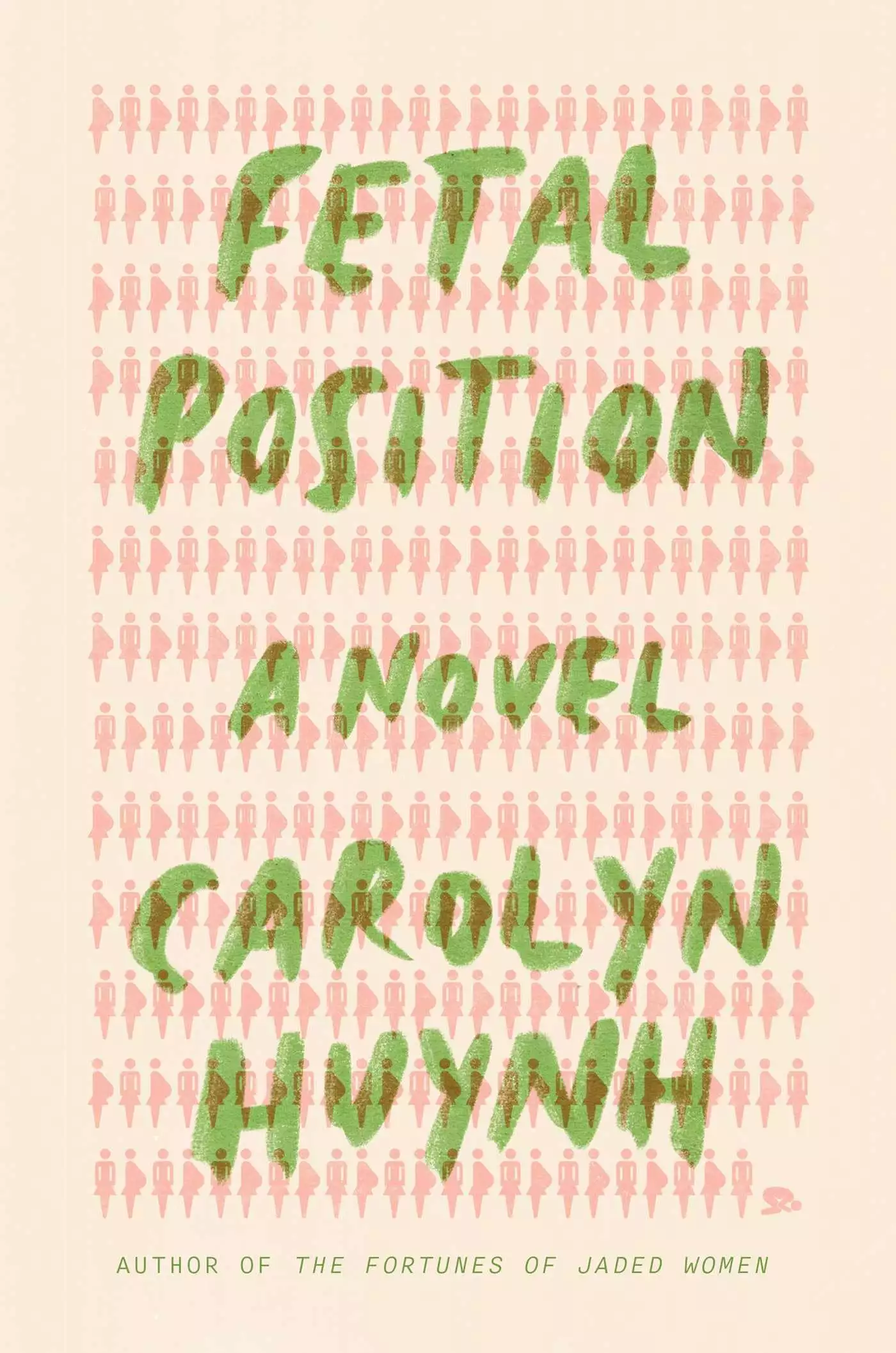
From the author of the Good Morning America Book Club Pick The Fortunes of Jaded Women comes a heart-pounding speculative novel in which a burnt-out corporate woman joins a startup that promises domestic ease and meaning through enforced motherhood—but as women begin to disappear, she must confront the violent cost of complicity before the state-sanctioned solution claims her body for good.
Set moments in the near future, “high-value” intelligent women are recruited by a mysterious start-up called Hatch to become traditional wives, to help combat the historically low birthrate and the male loneliness epidemic. The incentives? You’ll no longer have to work your corporate job, you’ll get a subsidized house, land, and a robot butler that’ll do all your errands and domestic labor for you.
The catch? You simply trade in your corporate labor for child labor—through being inseminated with organic sperm through a male match.
Women in this timeline no longer care for children or marriage, and if they choose to have a child, there’s an option of being inseminated neo-vitro with lab-grown, artificial sperm. The men really are dying out. Hatch believes they’ve privatized a solution to this, but providing incentives upon incentives, and specifically recruiting lonely, corporate women.
Lena Do is one of those women. She’s been stuck in corporate America for far too long—even though she’s exceptionally good at her job, she hates her life. The loneliness of the capitalistic milieu and grind is her entire world. She’s lonely, but not in the sense that we know. Like many people around her, she has no nuclear family, no cousins, no support system. Family trees have shrunk the past few generations—and she has residual resentment towards her late mother, the great scientist, Gemma Do, who had her neo-vitro. Lena has no biological father, but the mystery of why her mother chose to have her has haunted her ever since childhood.
When Lena gets an invite to Hatch, she leaves behind everything she’s ever known to join a cause she’s been taught her whole life to hate. But when women start disappearing and dying around her, she races against the clock to uncover the truth behind the company before her insemination is successful, and she’s trapped forever.
With biting social critique, Fetal Position examines survival, complicity, and the chilling reality of what happens when government policies decide who deserves love—and who deserves to live.
Release date:
December 8, 2026
Publisher:
Atria Books
Print pages:
256
* BingeBooks earns revenue from qualifying purchases as an Amazon Associate as well as from other retail partners.
Chapter 1: Red Planet Chapter 1 RED PLANET So, where do you see yourself in five years?” I asked, my throat hoarse, my brain forcing niceties with the fifth candidate of the day, all before my requisite, miserable lunch: a lukewarm Cobb salad delivered by a delivery-bot. It was too depressing to remember the last time I left my desk, let alone the building.
“Hopefully, right where you’re sitting, ma’am. Working my way up to becoming a middle manager of a global conglomerate, like Finovate,” Rhea responded, smiling sweetly, her innocent, normal brown eyes glistening under the strict fluorescent lights. “I want to be just like you. Able to execute independently and make a direct impact every day.”
Middle manager? Ma’am? The harshest words known to womankind.
“You can just call me Lena,” I gritted out. Rhea’s teeth were lined perfectly like piano keys, blindingly white, her confidence glaring, her youth infallible. She held my gaze; for her whole life she’d been taught to make eye contact and straighten her posture. But I could see her discomfort as she registered the polarizing color of my eyes. A sadistic part of me wanted her to understand the significance of sitting across the table from someone who had eyes that were a bioluminescent yellow. Women were often unnerved by what they symbolized; they understood it meant my mother willingly chose pregnancy during the height of the seventh-wave feminism movement.
Men—especially the men who stared at me in public spaces—hated the color of my eyes and what they stood for: their eradication and “tampering with the natural order.” Bioluminescent yellow eyes signaled that my mother had me via neo-vitro with lab-grown, artificial sperm.
Not organic or man-made. Embryos could not be replicated in a lab like sperm could.
I was impressed by Rhea’s steady expression. She lasted longer than the other women who came through. A few left confused, many left judgmental—mostly at my mother for choosing to do what she did. But the judgment was never aimed at me. Nobody ever blames the child. That would just be cruel.
I scanned Rhea’s résumé again. She would be more than perfect for the job. But all I wanted to do was tell her to run. Run, and never look back. This corporate hellscape wasn’t worth it. Each rotating candidate I’d interviewed had been the same: the same background, the same impressive education, with the same outstanding fun facts that made them the “perfect” dinner party guest. Each woman was exceptional. Beyond exceptional. And yet, here they all were, hoping for a menial job due to an economic depression.
A polite knock on the conference room door.
In walked Gabe, my assistant of barely a year, and behind him came my usual delivery-bot carrying a brown paper bag—my daily dose of human kibble. Gabe stepped aside, unable to meet my eyes, and the delivery-bot stepped forward, all android, metal and clunky steel, topped with a silly little plastic hat emblazoned with its motto: The perfect byte! Delivery in ten minutes or less!
“Thank you,” I said curtly to the delivery-bot as it placed the brown bag on my desk.
“You’re welcome,” the bot responded in a crisp, programmed British accent. “I will see you tomorrow, tomorrow, and tomorrow!” It chuckled, then turned on its metal heels and walked away. Watching the bot’s retreating back, I couldn’t help but shiver at the real unnatural order of things. A new hierarchy.
Gabe stepped forward timidly, looking more disheveled than usual. His shirt was half-untucked, his undereyes baggier and hollower than yesterday. I pitied him, even though I had given myself many pep talks to stop coddling and infantilizing him. He was an adult man, who made adult decisions. I wondered if he’d been up all night again living in his virtual reality game that he loved to talk about in the breakroom. Physically, he teetered on middle age, but maturity-wise, he was seemingly stuck in his young twenties—like most men, who nowadays had regressed to become arrested-development husks.
In a lot of ways, Gabe was like Rhea: just another commoner in his gender—nothing about him was special. But at least the men were cheap labor, cheaper than even the bots and, especially, cheaper than the women.
Rhea gave Gabe a side-eye and I could see a new judgment in her eyes. She glanced at me conspiratorially, expecting a familiar camaraderie between us. Despite the power dynamic between us, we were still on the same side of the gender war. I could almost hear her thoughts: Look at the sad state of men. Aren’t we so lucky?
“Can I get you anything?” Gabe dully asked Rhea. “Water? Coffee?”
Rhea flashed a fake placating smile. “I’m good. Thanks.”
He slumped out of the room. The minute the door clicked, Rhea burst into uncontrollable laughter. “A human assistant? A male assistant? You should just get a secretary-bot. Or hell, hire me. I’ll take the pay cut just so you don’t have to suffer like this. I don’t know how you can stand to have men around you.”
A notification flickered into view, augmented over my laptop screen. My body froze immediately as I clicked into it.
Subject: Congratulations! You’ve been assigned a new match by the federal government!
“I had to hire him. DEI regulations,” I whispered, barely looking at Rhea now. Not only did I not want to engage in talking about the politics of replacing humans with bot-labor, but I also would rather focus on the email. I quickly read through a new profile match. A bit of hope surged through me, even though I knew I should keep my expectations low. This match didn’t seem so bad. He didn’t seem like a complete troll, unlike the others before him. Plus, it was another free meal. And despite my biweekly corporate paycheck, I was still a sucker for a free meal.
At the bottom of the email, a confirmation: Do you accept this match? If so, please accept the terms and conditions. Your meal is comped by the federal government and taxpayer dollars. We hope you two hit it off, marry, procreate, and help reverse the low birth rate!
“Oh my god. Since when did men become a diversity hire?” Rhea laughed, unaware that my attention had shifted. “Who’d have ever thought what benefited our grandmothers would one day come around and bite us in the ass? Imagine what those women had to go through back then, doing what they can to make her-story. Her-story! Can you believe it! So cringe.”
I stood up to indicate a good-bye, my head no longer in the corporate game. She quickly stood up, too, the sound of the chair scraping in confusion.
“Thank you for your time.” I smiled my most professional smile.
She threw a final look around the main conference room, at all the frames behind me. Photos of Finovate employees—all women—in suits, shaking hands with celebrities, ringing the opening bell at the New York Stock Exchange when the company went public. It was a crowded wall. But not a single photo on the wall indicated anyone had any family, children, significant other, or even close friendships. Rhea’s eyes widened, and she stared in wonderment. “We really do have it all, don’t we?” Her sincerity almost made me want to vomit. “The world is our oyster.”
I looked back down at my email, a sad template sent from the federal government. Was I really that lonely that I would subject myself to these matches with bottom-feeder men? The answer was yes. I would. I was that lonely. But I’d never have the gall to ever admit it out loud. I looked back up at Rhea’s normal, brown doe eyes; there was still so much hope and naivete left in them. Had she been conceived with love? Did she have a relationship with her biological father? Had her mother been happy? I looked down at the email again. Surely there must be other women out there, like high-powered executives, who were just as lonely as I was. Right?
I found myself suddenly angry, my mood collapsing within itself, like a black hole. Perhaps my mind was breaking down before my body was, but when I caught myself in the reflection through the glass wall, I cringed at who I saw back—just another corporate drone. Rhea wasn’t wrong; I was just another sad middle manager with a shoulder-length corporate bob and sharp plucked eyebrows. Even though I was good at my job, it didn’t matter at the end of the day. Despite it being only midday, my eyes had turned more red than yellow, because I’d been staring at the screen for over six hours already. I just wanted to go home, but home wasn’t exactly a haven either—it was just a temporary placeholder until I had to return to the office the next day.
“The origin of that expression is Shakespearean.” I found myself harshly opening up a lecture. “Why then the world’s mine oyster, which I with sword will open.”
“Of course. Merry Wives of Windsor. Pistol said it, I believe,” she responded, though quiet. I felt guilty for directing my anger at her, but my own guilt was almost too much to bear. Young women like her looked up to me, and I couldn’t stand it anymore. What was there to look up to? What was the point of accolades when I just wanted rest?
“Then you know that Pistol was a con man who was just trying to get money,” I responded sweetly, playing dumb.
Rhea’s smile faltered. “Sure, but meaning changes throughout history, as idioms, metaphors, expressions tend to do. Context is everything.”
I crossed my arms and leaned back in a thousand-dollar designer office chair. I was so exhausted I wasn’t even sure what diatribe I was trying to spew today. “But don’t you ever wonder if we’re the ones being conned?” I could see her mind scrambling, wondering if this was some sort of final litmus test for this position. Before she could even try to respond, I cut her off, thanked her again for her time, and said that I’ll be following up soon, within the next two weeks, with my decision.
It was apparent that she hadn’t gotten the job, and she was at least self-aware enough to recognize it. “Thank you for your time,” Rhea said before slinking out, the tips of her ears burning bright red. She opened the door, only to face Gabe, who was hunched over at his desk outside waiting for my next command. She stared at him, disgusted, as if he were responsible for her not getting the job. She had been born into a world where diversity, equity, and inclusion had never once benefited her.
I couldn’t help but feel for her; her confusion was deserved. I knew exactly what she was thinking: that she had done everything right, and yet, she still couldn’t get her foot in the door over an android or a man. It was then that I saw her face devolve into a deeper realization: Maybe the ceiling for women had never actually been broken—that it had all been one gigantic marketing lie.
But I had already unpacked that truth for myself for a long time.
I eagerly opened the email back up and started writing about how excited I was for a new match, until an angry knock kicked me out of the room.
I was, after all, just middle management.
The commute home seemed colder and more sterile than usual.
The bus was packed with working women across the socioeconomic strata. I attempted to close my eyes, but the screens that lined the bus came alive with a thousand augmented ads, each one elbowing and fighting with the others, trying to capture the attention of a willing participant. The opening five seconds was crucial for an ad’s lifespan.
A recruiting ad from a new start-up, Hatch, somehow pushed its way to my face. My eyes were immediately drawn to the pastel colors, the idyllic pastures, the flora and fauna that bloomed in exuberance, and the horde of women who looked refreshed and pampered. They waved at me, smiling and welcoming—all wearing smock dresses, or long, flowing gowns, and holding glasses of wine that they raised and toasted toward me. They managed to make homesteading look chic and modern.
A beautiful, stunning, traditional wife in the ad, wearing a flowing smock dress, made her way to the front. “Hello you,” she said cheerfully, blond and blue-eyed. Perfect, even veneers. She hovered so close in front of my face, I could see the pixels. I instantly recognized the woman. Pippa Banks was arguably a celebrity, despite how polarizing she was in the traditional wife space, often paid handsomely to appear in political ads, campaigns, and other content that dealt with homesteading, motherhood, making things from scratch—but most of all, for promoting pro-natalist views.
I knew her for her viral lemon pasta recipe that had millions of views. I had even been influenced to order it once from a pop-up she had in the city.
“My name is Pippa Banks. And I work as a traditional wife, here at Hatch. With a fresh new round of seed funding from the best-of-the-best investors in the tech sector, Hatch is bringing a privatized solution to help combat the low birth rate and the male loneliness epidemic. At Hatch, we’re looking to recruit more high-value, intelligent women to become traditional wives to join us. Are you burnt out from corporate life? Tired of having to be independent with no one to rely on? Looking for an alternative lifestyle that promotes rest and restoration?
“Ladies, you no longer have to work anymore—Hatch will triple your current salary, subsidize a home, land, and so much more! All you have to do is exchange your corporate labor for child labor! Go organic, and go old-fashioned! Use regular sperm today, like how your grandmothers did it, and you’ll be rewarded with never having to lift a finger again. Motherhood has never been easier through the Hatch program. All childcare will be taken care of. No stress, no mess! Help us combat the low birth rate today by ensuring that the lineage is kept pure with organic sperm!”
My eyes dilated and lingered on the ad. There was something oddly satisfying about the commercial. Maybe it was the colors, or the way Pippa spoke, but the ad scratched an itch in my brain. Maybe it was how the women raised their glasses at me, while lounging at the pool or getting massages, being pampered left and right. Pippa kept waving and smiling—her face was so symmetrical and beautiful, I was immediately drawn in. Just as I leaned in to get the QR code for a virtual brochure, the ad was angrily swiped away by my seat neighbor.
“Pro-natalist propaganda garbage,” the woman seethed.
I snapped back to reality and quickly murmured a haphazard agreement, embarrassed by how the ad had sucked me in. But something made me glance back, watching as the ad bounced from row to row, trying to hook its next victim. Each woman swiped it away in anger or annoyance before the ad could even finish. What Hatch was offering felt like a dream. No more work? All I would have to do was have a child? Without my neighbor’s watchful eye, I discreetly pulled up my phone and began to research Hatch. The company had very few articles on it—nothing but a minimal website with a simple recruiting form. They had just left stealth mode, with few case studies. But the mission was simple and showed a difference between a privatized solution and a federal solution.
Hatch had money. A lot of money.
Pippa’s face was splattered everywhere on the website. Smiling, encouraging, welcoming. Her four young children—all boys—including a newborn, surrounded her like a small army.
The bus jerked to an automated halt at my stop. I soon entered my apartment lobby, crammed with familiar faces belonging to neighbors—women of all ages, all independent and overly educated, again, representing every socioeconomic background. Everyone looked exhausted, holding on to their briefcases, large tote bags, or gym bags for dear life while sporting scrubs, pantsuits, or appropriate corporate attire. I knew a few women on a first-name basis, so some recognized me back, but a majority barely registered I was alive, because they were barely alive themselves. Many had natural, organic eyes, while just one other had the same bio-yellow eyes as mine. We all did the usual head nod to one another, and I squeezed in like a sardine into the elevator.
I noticed that one of the women had a house-bot with them—an early model Domex whose steel arms sagged under the weight of grocery bags. I recognized its service uniform: a black jumper with the familiar mantra embroidered on the back, At your service, ladies! The cheap entry-level house-bot emitted a faint stream of cold air as I stood next to it. The metal was rusted in certain areas, and its screen-face had old software running on it. I tried not to let my bare arm touch the android—not out of fear, but because I was still traumatized by them.
My mother had been one of the original scientists behind android sentience. She was a renowned quantum artificer who had worked on the early model bots. Ever since I was a child, I despised androids in all their forms, because I knew in my heart that my mother loved her research and the bots more than she had ever loved me. I could never grasp the concept of a mother—a scientist—who had gone through the trouble of having a child through lab-spawned sperm, only to end up mothering her own research and bots instead.
“Nice bot,” a woman in scrubs murmured, observing. “Is that an older Domex model? I don’t see that type of model around anymore. That thing is barely standing.”
Another woman, who I recognized as someone who lived below me, confirmed. Was her name Jane? Or was it Jackie? “It is. It’s a rental for the week. I needed some help building furniture and with some errands. The older the model is, the cheaper it is to rent.”
“How much?”
The woman shrugged. “Barely ten dollars a day to rent. It’s really not that expensive. There’s so many old models flooding the market, just sitting on the shelf, collecting dust. Not many women use live-in bots, you know?”
“Of course not. We’re not as helpless as the men.”
Everyone in the elevator nodded their heads furiously, our bodies clanging into each other. Nothing brought us together more than misandry.
“Did you see that the newest sex-bots sold out again? Men. Perverts until their last breath. They’d rather get a sex-bot than a house-bot,” the woman next to me said, emboldened by the camaraderie.
“So disgusting,” I said, nodding along. I clutched my briefcase closer to me, afraid to reveal the truth of my betrayal—that I had downloaded a virtual brochure of Hatch on the walk from the bus.
“But what’s the point of them even buying sex-bots? Didn’t you see that new study? Most men are asexual now.”
“Well, better a sex-bot than us, right?”
“Or yet better one of those Hatch women than us. God, have you seen their ads all over the city now? They’re trying so hard to recruit women. Someone should report that company.”
“Sex-bot, Hatch women, same thing.”
“Another useless tech start-up, trying to solve another nonissue.”
“So what if the men are dying out and are lonely? Let them.”
“Honestly, the men should be lonelier.”
A slew of chuckles went around as we acknowledged the common enemy among us: men, and the women who kept us tied to the past.
“Hatch doesn’t have the women have sex with the men who are being rehabilitated through the program,” I suddenly found myself speaking up, reciting what I had read on the website’s FAQ section. My face turned a deeper shade of red. Though mortified, I couldn’t stop. “Because most men are asexual, and our bodies have evolved not to be able to procreate the old-fashioned way, it’s virtually impossible for natural conception nowadays. The women who get hired by Hatch get inseminated through in-vitro with their sperm. The men who sign up for the program just want a lineage.”
A silence fell over the elevator. No one knew how to respond. Someone coughed in the far corner. Even the woman I was friendly with (Jane or Jackie) averted eye contact with me. What really drove the humiliation was when the android kept looking straight ahead, seemingly more embarrassed by my outburst than the others. I shrank back as far as I could as the whole elevator went back to pretending we weren’t neighbors who lived below or on top of one another. What little camaraderie we’d had earlier dissipated into the ether.
But there was a truth in the ugliness: We really didn’t know each other. Our lives revolved around our careers. We clocked in and out, too tired to socialize, with no strength to nurture ourselves at the end of the day. Like most women of my generation, we had grown up with no siblings, no cousins, or were brought up in a one-parent household and had no concept of the nuclear family, community, or any desire to procreate on our own. Then there were a select few like me, who were lab-spawned, carried by our mothers, inseminated through neo-vitro.
All we had been taught was to be independent and to live.
There was no one to fall back on but ourselves.
I rode the rest of the ten floors in silence, up to my sad studio in downtown Los Angeles, dropping women off along the way until I was the only one left. Once the familiar ding of the elevator signaled good-bye to me as it closed, claustrophobia swept in—a rising panic in my chest that I hadn’t felt since childhood.
I opened my door to a cold, dark, tiny home, my hand fumbling for the light. Silence greeted me back, but silence I was used to—know thy enemy more than you know yourself. From the outside, my home looked depressing, sterile, and lonely on paper. But this was just part of the norm; every woman in my complex lived this exact same way. This was the status quo.
I was not allowed to feel lonely.
We hope you are enjoying the book so far. To continue reading...

 Please log in to recommend or discuss...
