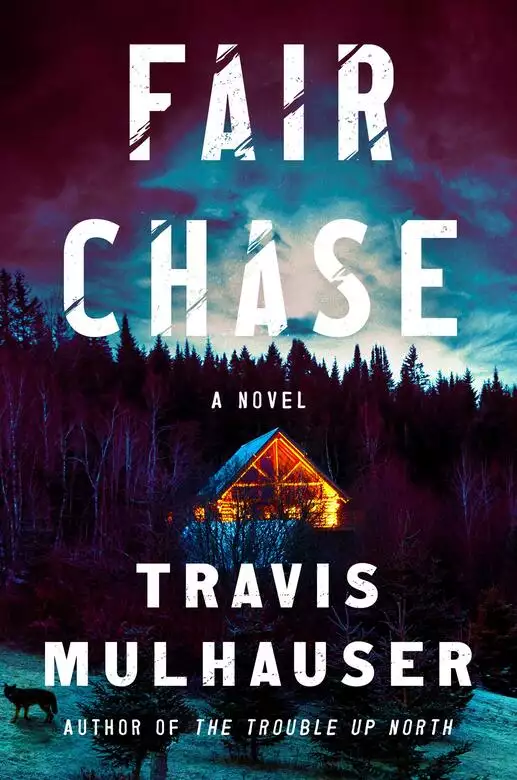
Revisiting the unforgettable world he created in The Trouble Up North, Travis Mulhauser introduces Delos Harris, who has discovered he's a descendant of the Sawbrook clan, and a battle for rights to the ancestral land ensues in this atmospheric novel about a family whose troubled history is ever more complicated.
There hasn't been a gray wolf in Michigan's lower peninsula in over 100 years, but when one migrates onto the Sawbrook family's vast acreage, the small community of Cutler finds itself in the throes of a panic. A trail of mutilated chickens and barn cats have peppered the area's remote outskirts, and concerns about safety are accompanied by the economic and political cost of an endangered species' uninvited return to northern Michigan. High cost development projects are at stake, and the Sawbrook siblings—Lucy, Buckner, and Jewell—find themselves at odds with locals, wealthy and politically connected property owners, and the state's department of resources.
When a fourteen-year-old runaway, Delos Harris, arrives on the property and claims to be the siblings' second cousin, and to have information about the wolf's exact location, he will become the key to protecting the wolf and the Sawbrook land.
The state wants the wolf moved, the locals and the developers want it dead, and the Sawbrooks see its return as a decisive victory in their battle to preserve their property and the natural world in northern Michigan. But when a poacher is hired to settle the matter permanently, the Sawbrooks must fight to protect each other, their land, and the gritty, undaunted child whose mysterious connection to the wolf will either save them all, or deliver the Sawbrooks to their final ruin.
Release date:
April 28, 2026
Publisher:
Grand Central Publishing
Print pages:
288
* BingeBooks earns revenue from qualifying purchases as an Amazon Associate as well as from other retail partners.
The night Mr. Baker told me he was going to kill the wolf, I stole his rifle and ran away from foster care for good. I didn’t plan it out much beyond the leaving part, because I didn’t have the time. I just waited until he was passed out drunk on the back porch and I took that Browning clean off his lap and booked it.
I dumped the rifle in the lime quarry, then made my way up into the forest above the Crow River to see if I could find my people.
The Sawbrooks didn’t know they were my people, they had no earthly idea I even existed, but we were kin and they owned six hundred acres of wilderness along the river and I knew they were for the wolf. In fact, the Sawbrooks were the only people I’d even heard of, besides me, that didn’t want the wolf dead and gone by yesterday.
The Sawbrooks were not the sort of people that you might expect a runaway to seek out, even if we were related. They were generally thought to be lowlife criminals, and two of them had been shot dead by the police on their own property the summer before. Rhoda Sawbrook got accused of burning up a rich man’s boat and killing him, and when the police came to arrest her, she and her husband ran out all guns blazing, got dropped on the spot, and it was about the biggest news story to ever hit Cutler County.
I wasn’t afraid, though. I believed they were good enough people because they were for the wolf, and what else was I going to do? Run away with no money, or turn myself in to the police for stealing a firearm and get myself sent back to Woodyard? Shit, the Sawbrooks were nothing compared to the idea of doing a full year in that hellhole.
Woodyard is a prison they like to call a juvenile correctional facility, that way judges can sleep easy at night for sending kids there over nothing. I spent all winter and spring locked up, which felt like a lifetime, but it was also where I first saw the wolf—when we were out on work release clearing campsites at a state park.
It was early in March and it was damp and cold. There were low, gray clouds above the pine trees and we’d driven the prison van up a windy, misty road into the tall forest above the highway.
We were each assigned our own area while the guards patrolled in four-wheelers and generally acted like assholes, heckling us and throwing trash onto our sites just so we’d have to pick it up.
Joe B was the worst. He chucked an empty tin of his chewing tobacco right at my head, but I plucked it out of the air and dropped it on my trash pile in one smooth motion. Then I looked right at him and did a very dramatic yawn.
That got the other Joe, which is what everybody called him—Other Joe—laughing at Joe B.
I knew Joe B would retaliate with some out-of-his-way meanness, which he did. He made me clean the shitters the next time we got work detail, but I didn’t care. You got to fight over the inches in your life or you wind up losing miles. That’s a quote that somebody said, but it is also my feeling on the matter.
There’d been a storm the night before and we were told to rake leaves and pile the dead branches and debris at our firepits. My spot backed right up against a hill and I was dragging a heavy, wet branch from one end of the site to the other when I looked up and saw the wolf not ten feet away.
He was big as hell and no Labrador retriever. He had tall, straight ears and he leaned forward on his front paws and his fur was shaggy and matted and gray-black and wild.
I did not shout for help or scatter off afraid. I just stood with the wolf in front of me, so close I could see the gummy, black edges of his mouth and his big tongue lolling out all loose and wet inside his misty breath. It couldn’t have been very long we were face-to-face, but at the same time it felt like it was forever before I heard the four-wheeler making its next lap and coming near. I nodded at the wolf and then he turned and slipped into the pines and the holly brush and he was gone.
I didn’t say word one to anybody about that wolf. I didn’t tell Carnell or Other Joe, the only guards I halfway liked, and I certainly didn’t say anything to the idiots I was locked up with. I wasn’t about to share the coolest thing that had ever happened to me with a bunch of solid gold fools, and especially not when there was no upside that I could find to them knowing.
We slept in a big bunkhouse in Woodyard and the whole place stunk like feet and bleach, but I swear when I closed my eyes at night I could see the wolf and smell the damp, piney air that I’d tasted that morning in the woods.
In that time just before you fall asleep, when everything gets fuzzy but not quite a dream, I could see its black eyes shining and its snout all twitchy and wet, and I would remember the way it looked at me and how I looked back and how neither of us flinched.
The only reason I was in Woodyard was because of a bag of cocaine that wasn’t even mine. I’ve never done cocaine a day in my life, but I came home from school one day to find Mrs. Fettering, who ran the foster home I was in at the time, sitting with a sheriff’s deputy at the kitchen table.
They put me in cuffs right off and the deputy held up a baggie and said that Mrs. Fettering had found it in my bunk that afternoon.
“That’s not mine,” I said. “I’ve never seen that before in my life.”
“Then what’s it doing in your bed?”
“Somebody put it there, I guess.”
“And who would put it there?”
The only other boys in my room were in elementary school and they were good kids and obviously hadn’t done it, which left only Mrs. Fettering’s daughter, who had done it, I was certain, but when I said her name Mrs. Fettering went off.
Mrs. Fettering had three kids of her own but two were older and out of the house, plus she had the three of us from the county, and she is one of those who everybody is going to side with because she has a good reputation and looks a little bit like a mom from a commercial for a healthy cereal that supposedly tastes good, too. But when it comes down to it, she’s not so nice at all.
She got all flushed red and pointed her finger right in my face.
“You ought to be ashamed of yourself, Delos Harris.”
I answered her as honestly as I could.
“Well, I’m not. Because I didn’t do nothing. And I’ll take a piss test right this second to prove it. I’ve never failed a drug test in my life, and I won’t start now.”
The deputy said it didn’t matter what I pissed if I was selling. That one threw me for a loop.
“Selling?”
The deputy dropped the baggie on the table.
“That’s what it looks like to me.”
That allegation was pure craziness. If I was dealing drugs, why in the world was I wearing a pair of shoes that were two sizes too small and as ugly as hammered shit?
I swung my feet up on the table for both of them to see and almost went ass over teakettle because I forgot my hands were cuffed behind me. I managed to stay upright just long enough to plead my case, though, which probably didn’t do me any favors.
“Drug dealers don’t wear shoes like this! These shoes don’t even have a brand! They just came in a box that said shoes. I get teased over these every day, and you think I’m selling drugs?”
Mrs. Fettering yelled at me so loud about my manners and the rules that I saw the deputy flinch, and then she slapped my feet clean off the tabletop and got up and left the room to go stand in the kitchen and be angry over there.
There was static on the cop’s radio and then a voice talking and afterwards the cop told Mrs. Fettering that a transport vehicle was on the way.
“For what? I told you I didn’t do nothing!”
The cop pointed at the baggie, like I didn’t know exactly what it was we were discussing.
“That looks to be about eight grams of cocaine, son. You’re in a foster facility and this is a felony no matter what you claim you aren’t doing with it. You know the deal.”
I did know the deal. The Fetterings’ daughter, Denise, was bad off on drugs and she must have stashed the bag beneath my pillow and forgot about it, or didn’t get back to it in time, and then her mom just so happened to be changing out the bedsheets and found it and didn’t want to consider the truth, yet alone admit to it. And that’s how I got sentenced to six months in Woodyard.
Ms. Mary went with me to the court hearing and spoke on my side. She worked at the county foster facility where I always stayed when I was between other places, which wound up being a lot of my life. Since my mom died, Ms. Mary was the closest thing I’d ever had to a family.
Ms. Mary has dark brown hair and wears glasses with little beads on them and she’s always in a sweatshirt and blue jeans, except when she wore sweaters and nice pants if we had to go to court. She is probably the best person I have ever known in my life, and she was pregnant when we went to see the judge.
I remember because I wanted her to be my mom so bad, but I knew she couldn’t and I was jealous of her baby. At the same time, I loved the baby because it was hers and if there ever came a time I knew I would protect that baby with everything I had—even if I hated it for being born into a life that I wanted.
Ms. Mary told the judge that I was a good kid and that I didn’t belong in prison, and the judge said that Woodyard wasn’t a prison. The judge said Woodyard was one of the state’s premier resources for wayward youth.
“Well, I don’t believe he’s wayward, either, Your Honor,” she said. “He’s just been left out, is all.”
“I respectfully disagree,” said the judge, and dropped the gavel.
Woodyard is not one of the state’s best resources for anything or anybody if you want my opinion on the matter, which nobody did.
The thing is, nothing really happened to me in there like you might think. It wasn’t like the movies where there’s always some sort of drama or riot going on, and no, I wasn’t anybody’s girlfriend. Maybe it’s like that in other places, but in Woodyard it was just boredom and this feeling in my chest like I couldn’t breathe.
That’s one thing you don’t hear discussed enough in the movies about prison—it’s the air inside and how heavy it is and how it settles into your blood like poison. You got to be careful breathing the same air as idiots, or I swear you can catch their foolishness and bad ideas like a disease.
In the end, Woodyard was six months of labor and schoolwork and dinners they poured into heating pans out of aluminum drums. It was fences and razor wire and sadness and fear, and the day they took me back to Cutler in the transport van I swore I’d die before I ever returned.
The second time I saw the wolf was late in June. I was with my new foster family, the Bakers, and I was in their backyard pulling weeds when I felt the tiny hairs on the back of my neck stand on end.
I wheeled around and saw him, motionless, on top of a little rise by the tree line about fifty yards away. He had the same matted, gray-black fur and we stared at each other just like we had the first time.
He didn’t linger very long. He must have heard or smelled something, because I saw him twitch, just slightly, and then he darted off into the dark space between the pines and I sat there for a good two minutes with my heart skipping in my chest.
I stayed awake until damn near dawn that night, hoping to catch a glimpse of him out my window, or to hear him howl somewhere off in the trees.
I didn’t see or hear him, though, and I started to wonder if maybe I’d made the entire thing up. I knew for a fact that I saw a wolf when I was locked up, but Cutler is two hours away from Woodyard, by car, and as far as the Bakers’ yard was from the tree line it really could have been a dog or some fucked-up-looking coyote that I’d seen that afternoon. And I do have a known history for imagination.
When I was a kid and my arm used to fall asleep I sincerely believed I was growing superpowers. I’d get that funny, tingling feeling from elbow to fingertips and be convinced I was in the process of developing flame-throwing capabilities, or maybe my arms were becoming wings that would suddenly grant me the ability to fly. I would spend hours thinking on that—wondering which talent would be mine and whether I would use it for good or for evil.
I know most kids have imaginations, but I took mine to entirely different levels. It wasn’t just the superpower stuff. A lot of it had to do with the Sawbrooks.
My mom told me we were related when I was little, and I spun that off in so many directions in my head that I can’t remember what I’ve made up and what I’ve read about or heard.
The Sawbrooks are known all over Cutler County. They go back to the beginning of this town and, while most people dislike them, my mom straight-up hated them.
I remember my mom pretty well. She had long, dark hair and she smoked a lot of cigarettes, and we always rode around together in other people’s cars and whenever we passed the river she would point to it and say the Sawbrooks were our kin and that the property they owned should have been ours too, but that it wasn’t because they were bastards and sons of bitches.
Mom didn’t know who her mom was, but she said her daddy was a Sawbrook and that his family didn’t want her and that was why her mom dumped her at an orphanage and bolted. If she knew her mother’s name she never told me, and I never knew anything about her or where she went.
My mom came up in the orphanage at the Catholic church—Sisters of the Redemptive Light—but she never was adopted and ran away when she was thirteen. Then she got pregnant and had me a little while later.
I never saw her do drugs that I can remember, but I know she died of an overdose because I looked her up on the internet and there was an article about it in the Cutler County Herald. They found her in an abandoned barn on Foster Road and there was a little picture of her face beside the story, but it was small and fuzzy and was one of those photos that looked like it could have been anybody at all.
I do remember we lived in lots of different places with lots of different people and she slept a lot and was sick all the time and sometimes she just disappeared for a while. I spent a lot of time by myself just wandering around and wondering about life. Then she was gone forever and I was in the county system. I think I was about seven years old at the time, maybe eight.
I didn’t claim my Sawbrook heritage right away. Mostly, I sat around county hoping to be adopted, and I knew the Sawbrooks were considered dangerous and not the sort of family that anybody would choose to be associated with.
I kept my bloodline on the down-low for about two years, right up until the moment I decided to stop waiting for some magic family to save me, and put some use to the kin I did have.
It started because this motherfucker, Randy, kept stealing my Little Debbies and one day I just blurted that I was a Sawbrook and that he would have hell to pay if he crossed me again.
We got Little Debbies every Tuesday and Thursday night because the Kiwanis Club donated them and it was the highlight of my week, until Randy came along and ruined it. He was too big and too mean for me to mess with on my own, so I told him that my people would come flying out of the hills the second I said the word and string his ass up on the flagpole in Memorial Park downtown. I told him that if he so much as breathed on another one of my Swiss Rolls it would be the last breath he ever took.
There was no grand plan to it. No strategy whatsoever. I just wanted my rightful dessert.
Randy said if I was a Sawbrook, then why was my last . . .
We hope you are enjoying the book so far. To continue reading...

 Please log in to recommend or discuss...
