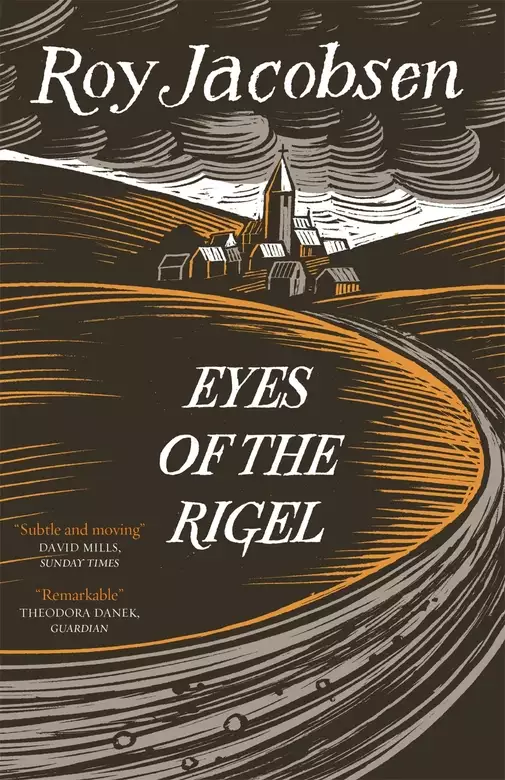
The third novel in a historical trilogy that began with the International Booker shortlisted The Unseen
The journey had taken on its own momentum, it had become an autonomous, independent entity, she was searching for love, and was still happily unaware that truth is the first casualty of peace.
The long war is over, and Ingrid Barroy leaves the island that bears her name to search for the father of her child.
Alexander, the Russian captive who survived the sinking of prisoner ship the Rigel and found himself in Ingrid's arms, made an attempt to cross the mountains to Sweden. Ingrid will follow in his footsteps, carrying her babe in arms, the child's dark eyes the only proof that she ever knew him.
Along the way, Ingrid's will encounter collaborators, partisans, refugees, deserters, slaves, and sinners, in a country that still bears the scars of defeat and occupation.
And before her journey's end she will be forced to ask herself how well she knows the man she is risking everything to find.
Release date:
June 10, 2021
Publisher:
Quercus Publishing
Print pages:
240
* BingeBooks earns revenue from qualifying purchases as an Amazon Associate as well as from other retail partners.
From the sky, Barrøy resembles a footprint in the sea, with some mutilated toes pointing west. Except that no-one has ever seen Barrøy from the sky, other than the bomber crews, who did not know what they were seeing, and the Lord God, who does not appear to have had any purpose with this imprint He has left in the sea.
Snow is now falling heavily on the island, making it white and round – this lasts for one day and a night. Then its inhabitants will begin to form a black grid of tracks criss-crossing the whiteness, the widest of them will connect the two farmhouses, the old, run-down building on the island’s highest point, surrounded by a cluster of trees, and the new one in Karvika, which is resplendent and showy, and in the summer is reminiscent of a stranded ark.
Then paths will appear between the farmhouses and the barn and the wharf buildings and boathouse and peat-stacks and potato cellars and haylofts and moorings, between the islanders’ workplaces and stores, paths that will become entwined into a tangle of wild, random squiggles, the marks of children and play and ephemerae; there are many youngsters on the island in this, the first year of peace, there have never been more.
And then a dirty-brown rivulet winds its way south-west through the landscape, it is the sheep going to graze on the seaweed in the south of the island. Barbro hobbles along behind them, wielding a pitchfork and singing at the top of her voice, her face turned to meet the dancing snowflakes, which she snaps at between the strains of her song.
One might speculate about why she doesn’t drive the animals down between the new wharf building and the Swedes’ boathouse, the shortest distance between the barn and the sea. But Barbro knows what she is doing, it is late winter and the seaweed is in the south, knotted together by storms and driving rain into brownish-black ropes, and left in coils at the highest point of the tide, where it lies, rank and covered in ice.
Barbro shuffles back and forth, pulling the strands apart so that the animals can get to the semi-frozen sustenance they contain, she is soon hot and sweaty and sits on the tree trunk they found drifting here a lifetime ago and secured with pegs and lines hoping that one day it would be worth something. And she begins to ask herself whether they have too many sheep this year, whether these undernourished creatures will manage to carry their lambs through to April and May, at this time of year she always frets about these things – every season has its worries, even the summer, when it can rain for months on end.
But then she feels a stinging sensation behind her left ear, it extends down the back of her neck, into her shoulder, along the arm that is resting on the tree trunk and into her hand. A hot, inner stream flows from Barbro’s head and starts to drip from her longest finger, which immediately stiffens and creaks, as if made of glass.
She opens her eyes and realises that she is lying on her back, the snowflakes are falling on her eyes, she blinks and sees that Lea, the sheep, is standing at her side, staring out to sea, now whiter than ever, it is as calm as milk, there are no birds, except for the three cormorants sitting on the skerry to which they have given their name, and not even they are making any sound.
Barbro digs her fingers into Lea’s wet fleece and drags herself to her feet. The other sheep stand watching. She picks up the pitchfork, feels a protracted stab of pain pass through her waist, and herds the flock in front of her up the same track, to the marsh pond where they cut peat in the summer. She knocks a hole in the ice crust so that the animals can drink, and one by one they waddle up the slope unprompted and disappear into the barn.
Finally Barbro sets off, her right hand still buried in Lea’s wool, and she doesn’t let go until this sheep, too, is swallowed up by the darkness. She bolts the door behind her and stands with her gaze fixed on the farmhouse, but fails to see the hand waving in the kitchen window. Barbro turns and follows the path leading to the new wharf house, goes into the baiting shed and stares down at the three holes in the bottom of an empty line-tub as the wind rattles a loose board in the south-facing wall. She sits down, grabs a bodkin and twine, and her hands set about making netting. The door opens and a voice asks what she is sitting here for.
“Aren’t tha freezen?”
It is Ingrid, who had seen her aunt from the kitchen window and wondered why after going down to the quay, which Barbro often does, she hadn’t come back up to the house today, and a long time had passed, evening was drawing in.
Barbro turns and fixes her with an intent gaze, and asks:
“Who ar tha?”
Ingrid moves closer and peers at her, tucks a few strands of hair under her headscarf and realises that she will have to answer this absurd question truthfully, and at great length.
It is summer on Barrøy, 1946, the down has been gathered, the eggs are in barrels, the fish have been collected from the racks and weighed and tied, the potatoes have been planted, the lambs are gambolling in the Acres, and the calves have been weaned from their mothers. The peat has to be cut, and the old house needs painting so it has no cause to feel ashamed beside the new one. From the hill behind the barn, Ingrid Barrøy is watching the boat in the bay, a cloud of terns above it, it is a whale catcher, the Salthammer, which they acquired when the previous owner went bankrupt, the Barrøyers have become whalers.
The Salthammer has a harpoon cannon on the bow and, on the mast, a white crow’s nest with a black ring around its middle, it has rigging like a sailing ship and a wheel atop the wheelhouse roof, encircled by a white tarpaulin, there is a bait house and a modern line-setter, it is an imposing vessel for all seasons and occasions. Ingrid can hear the sound of hammering and sees Lars and Felix making preparations for the first whale hunt, small boys running to and fro along the deck, she can hear their voices rising and falling from across the water, and Kaja is sleeping on her back in a shawl.
Then her daughter wakes up. Ingrid unwraps her and lets her crawl about in the heather to her heart’s content, and is startled at the sight of her jet-black eyes, takes her into her arms and walks down the hill towards the garden, where the soft-fruit bushes have begun to bud. She sits on the well-cover next to the newly purchased tub of paint and brushes, there are so many things that have to be done on the island, it has never had a brighter future, it has never had so many inhabitants, and it is no longer hers.
*
Ingrid goes into the kitchen and places Kaja on Barbro’s lap, walks down to the shore and rows the færing out to the Salthammer, waits until Lars looks over the gunwale and asks whether she has brought him some coffee.
Ingrid says they have coffee on board, don’t they.
Lars laughs and tells her they have managed to find a harpooner and will pick him up in Træna in a week, weather permitting.
Ingrid rests on the oars and says she will be rowing over to Adolf’s in Malvika with the young’un, this evening, in the færing.
Lars asks what she wants to see Adolf about.
Ingrid shrugs, Lars says it’s no skin off his nose, they’ve got enough boats.
To Ingrid this seems a rather high-handed attitude regarding the island’s assets, so she says she is going to be away for a while.
“Ar tha now?”
The small boys come to the railing, too, Hans and Martin and, behind them, lanky Fredrik, who in the course of the winter has grown taller than is good for him. They spot Ingrid, immediately lose interest, and pester Lars to be allowed to shoot the harpoon, they can practise on some old fish crates they have seen on the shore, can’t they.
Lars laughs and lifts up three-year-old Oskar so that he too can look down at Ingrid, who waves to him. Then Felix also appears, clutching some cotton waste between his oil-blackened fingers – such that all Barrøy’s men, both big and small, are standing in line on the deck of the island’s economic future, like an unsuspecting farewell committee, as Ingrid Marie Barrøy lays into the oars and rows back ashore, relieved that this has been much easier than she had feared.
She walks up to the house and also tells Barbro and Suzanne that she is going away for a while, casually dropping the news as if it were an everyday matter. But here in this women’s world it turns into something rather more serious than it ought to be. Barbro has questions about where she is planning to go, why, and for how long? While Suzanne understands what is afoot and remarks contemptuously that Ingrid is lucky to have someone to miss, to search for, then hurries out to hang the washing on the drying rack.
Ingrid packs the small suitcase she takes with her whenever she tries to leave the island. And after she has gone down to the shore and wrapped Kaja up inside the canvas bag and settled her on the sheepskins at the back of the færing, before putting the suitcase in the forepeak, there is only Barbro, now transformed, who has a sense of the gravity of the situation, she stands and says goodbye with her arms crossed, her dress is sky blue, newly acquired with the proceeds of the winter, it is covered with huge white flowers, she says:
“We war goen t’ paint th’ hus, warn’t we?”
“A’m not stoppen thas.”
Barbro fidgets uneasily and says it’s not possible to paint a house without Ingrid. Ingrid laughs and says they can wait until she gets back then.
“Reit,” Barbro says. “An’ hvan will tha bi comen bak than?”
“It’ll bi some taim.”
“Some taim,” Barbro repeats, standing on the shore, in such a huff, as Ingrid manoeuvres the boat around Nordnæset, that she can’t bring herself to wave until it is too late. By then the sun is in the north, low and white, and beneath it lies the sea, like a grey stone floor.
Kaja slept the whole crossing. When, at the break of dawn, Ingrid had cast the grapnel in Malvika bay on the main island, she curled up on the same sheepskins, the cries of seagulls, the gurgling sea and the gentle cooing of the eider ducks in her ears, and her eyes salty with sleeplessness. She fell asleep and woke up, and was dizzy and cold when she at last caught the smell of birch wood and saw a window opening in the white-walled farmhouse, and two eiderdowns being thrust out into the morning air.
The porch door opened, Daniel emerged with his braces dangling around his thighs, a saw in his hand and a coil of rope over his shoulder, and sauntered off in the direction of the forest. Then two girls came out, Liljan, Ingrid presumed, Daniel’s younger sister, the other might well have been his sweetheart . . . And now the pressure on her was so overpowering that she felt she had no choice but to row home again empty-handed, to give up on this endeavour before it ended in disaster.
But they had seen her.
Daniel re-emerged from the forest, leading a horse. He let go of the reins and strolled slowly down towards the harbour where he stood until Ingrid had manoeuvred the boat so close that it wasn’t necessary to shout.
“Is that tha, Ingrid?”
She threw the mooring ropes ashore, and he dragged the færing in onto the skids. “And the baby,” he said with a surprised smile.
Ingrid was unable to explain to him why she was there, but could at least get to her feet and pick up her sleeping daughter and wait for Daniel to notice the suitcase and carefully lift it onto land. Then she followed, mumbling that she would like to have a few words with Adolf, how was he doing?
Daniel said that his father had got old, and asked:
“Ar tha goen travellen?”
By this time the two girls had also come down to the shore. Ingrid showed them Kaja, who woke up and blinked. She shook Liljan’s hand and introduced herself, they didn’t know each other, there was a sea between them, and Malvika folk were farmers. A sumptuous farmhouse with three dormer windows stood in all its majesty on the hillside, encircled by two enormous trees, barns, cowsheds and summer livestock shelters, outhouses, dairy cows and a host of goats and sheep, potatoes for sale, carrot fields, chickens, pigs, in addition to no fewer than six tenant farmers in various houses and timber cabins to the south along the coast. Even though Adolf in his younger days had been both a much-feared skipper of a cargo boat and a fish wholesaler, after losing two of his brothers when their boat sank, he had turned his back on the sea and transformed the family farm into an estate.
They laughed at the way Liljan held Kaja, who just smiled, and the girl who was new to Ingrid was allowed to hold her too, she was the daughter of one of the tenant farmers and worked as a maid in the main farmhouse, Ingrid was told, her name was Malin. They were commenting on the child’s pretty nose and dark eyes when Ingrid noticed the door of the farmhouse opening again, and the old man himself, Adolf, emerged in a white shirt and with a skipper’s cap on his head, he was dragging a kitchen chair, which he placed in the grass next to a rockery. He sat down and pulled out a pipe and carefully filled it, waiting for the guest to be done with the young ones and tell him the purpose of her visit, nobody rows over from the islands without any purpose, usually it is something important, too.
*
All the peace after the war had made Adolf hunched and stooped, and ruddier than Ingrid remembered. But he had those same darting eyes, which made everyone he talked to wonder whether he was about to end the conversation. Now Ingrid stood in front of him, with her immense lack of anything sensible to say, and an infant in her arms, which, it seemed, was more or less what Adolf had been expecting. The young people left, and he asked if she war starven.
Ingrid ignored the question.
They hesitated, her standing, him sitting, until Adolf raised his eyes and stared almost directly at her before remarking that she had no doubt come to ask him about the letter he had returned to her about a year ago, the letter she had given the Russian P.O.W. from the Rigel?
Ingrid said yes, why had Adolf taken the letter from Alexander, it had been meant to help him on his escape route home?
Adolf said it was a terrible note, she had also written her full name on it, as well as her address, Barrøy, when there was a war going on.
Ingrid nodded, and asked what he had done with Alexander. Adolf said that question had been a long time coming. Ingrid nodded again.
Adolf said that he had known her father, and her mother, they were good folk, but her mother had had a problem with her nerves, hadn’t she?
Ingrid could only nod to that, too.
Her silence seemed to weary Adolf, who told her they had hidden the Russian in the loft for a little over a week, only Mathea had known about him, she had given him food and tended to his hands, and his wounds did heal, although his fingers would never be the same again.
Then one night when there was a snowstorm they had furnished him with a map and compass and sent him over the mountains to the harbour in Innøyr, where one of Adolf’s old friends had taken him on board a freighter named the Munkefjord, it was from Finnmark and transported iron, it still did, he had shares in that boat.
And since Ingrid had nothing to add on this occasion either, he laughed in her face and said that by now she must be proper starven, they should go inside to see our Mathea, she’s laikly bin watchen us from th’ window an’ put th’ coffee on.
*
Mathea had been a housekeeper on the farm. . .
We hope you are enjoying the book so far. To continue reading...

 Please log in to recommend or discuss...
