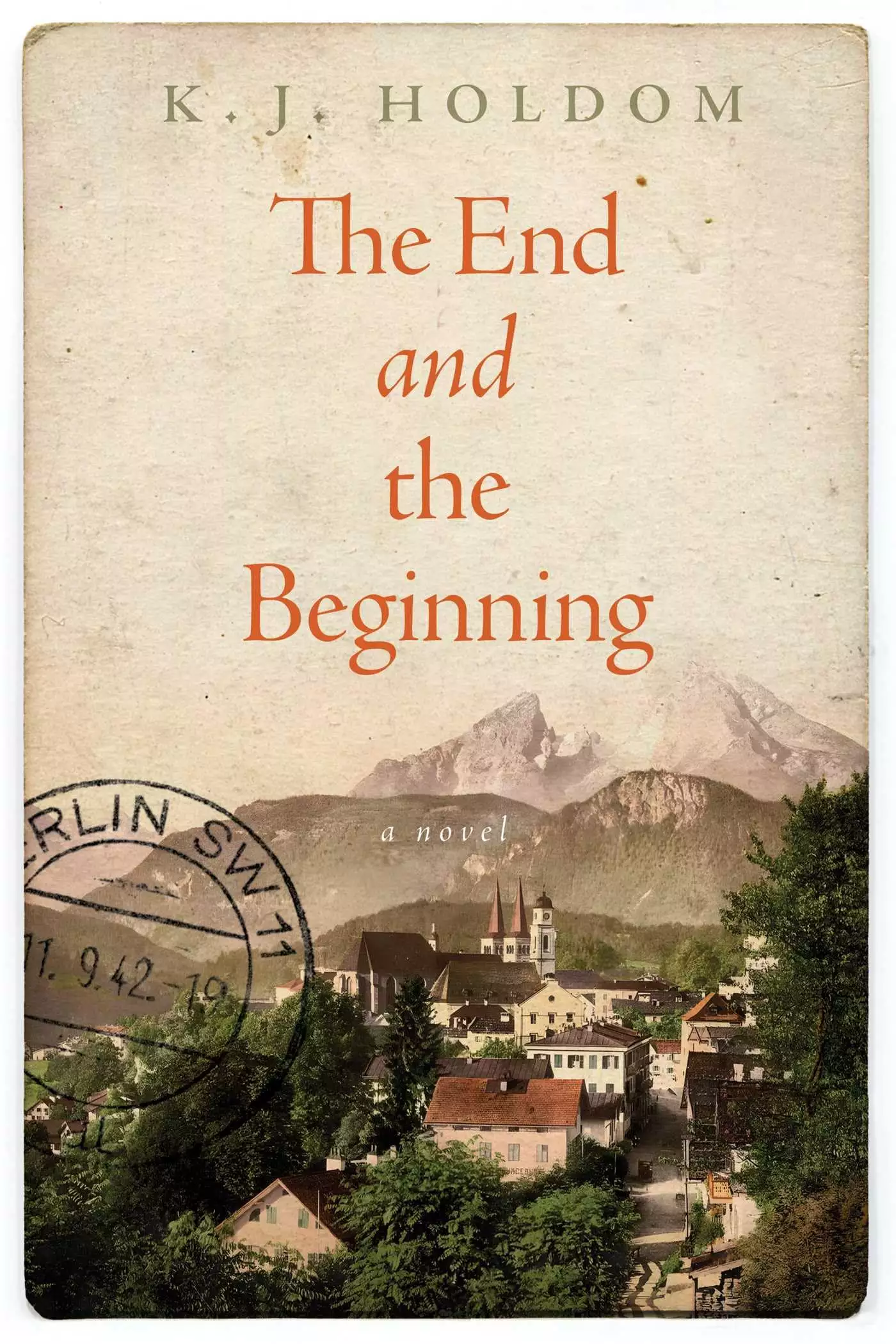
A stunning tour de force of a novel based on the true story of a fourteen-year-old boy’s harrowing experience fleeing a Hitler youth camp with his best friend in the last days of the Second World War—perfect for readers of All the Light WeCannot See and The German Girl.
At the start of the war, eight-year-old Max Bernot lives with his sister and parents in Lauterbach, Saarland, a narrow strip of territory between the French and German defence lines. His German father, Anton, and his French mother, Marguerite, do their best to shield Max and his sister, Anna, from Nazi violence, but in late 1944, their beloved godfather is executed in their garden by the SS, and Max, now thirteen, is conscripted in the Volkssturm. Less than a month later, Max flees a Hitler Youth camp in Bavaria with his best friend, Hans. His mission: to return home and tell his mother the truth about his godfather’s murder As he escapes, he sends postcards to his family that trace his fraught journey across a country in its death throes.
Unbeknownst to Max, his mother is trapped in the German interior, coerced into working for a fanatical Nazi officer. Desperate to escape and reunite her family, Marguerite must first protect Anna from the sinister attentions of their captor, who could hold information on Max’s whereabouts even as Allied planes circle closer.
Deftly interweaving the wartime stories of Max and Marguerite, The End and the Beginning maps the loss of innocence of a generation of children raised in the shadow of the Reich and follows the fate of one family, neither wholly French nor entirely German, who find themselves on the wrong side whichever way they turn.
Release date:
November 5, 2024
Publisher:
Simon & Schuster
Print pages:
352
* BingeBooks earns revenue from qualifying purchases as an Amazon Associate as well as from other retail partners.
Far above the bones of the Lotharingian soldier lies the sparkling village of Lauterbach. Snow has hidden the soot on its roofs and streets just in time for the celebrations. Behind frosted windows, coal miners and steel workers pull corks on the Mosel, give the miners’ greeting—Glück auf!—and salute until their shoulders ache.
The votes have been counted.
The Saar will return to the Fatherland after fifteen long years. No more French administration. No more French language force-fed to the children at school. No more Saar francs and gendarmes and German coal being siphoned into French pockets.
Glück auf. Prost. Sieg Heil!
Two hundred metres to the east, in an upstairs bedroom halfway up the Hauptstrasse, three cousins huddle with a damp dog in a wigwam made from stripped branches and two rough woollen blankets.
Max Bernot, who is nearly four years old, pulls from his pocket a small silver coin.
“It’s bent,” says Anna, his sister, who is six, and knows things. “And dirty.”
“What’s that?” says his cousin Little Josef.
“Uncle Charles gave it to me.”
“Well then, what’s the secret?” says Anna.
The boy searches his mind for the particular words his uncle had used—a marvellous story of a land, a crown, a great and terrible war—before Charles had flipped the coin, spinning it so fast that king and cross blurred and merged and the coin had no sides but was both heads and tails at once.
“It came from a king a long, long, long time ago,” he says, and is pleased with this summary. “It’s real silver so it’s treasure, and I should never sell it even if I’m naked on the street.”
His sister and cousin laugh, which is not his intention, because Charles had been serious on this point, but there is no time to choose better words because Anna has opened her hand to reveal a pink bonbon tin.
“Poison,” Anna whispers, and rattles the tin at Josef. Max snatches it out of her hand and opens the lid to reveal five red berries plucked from the Christmas wreath.
“Mama told you not to—” Max says, but Anna speaks across him.
“I know,” she says. “So that’s two secrets. Poison and forbidden.”
Max brings the tin to his nose, curious at how poison might smell. A whiff of smoke and meat confounds his nostrils. He hands it back to her.
“Why does it smell like speck?”
“It doesn’t,” she says. “Your turn, Little Josef.”
Little Josef pulls from his pocket a small paper flag ripped from its stick. A boot print stains the top right corner of the swastika.
“Forbidden,” he says.
“Holy Christ and all of the saints,” whispers Anna. Max and Josef slam hands across mouths as if it were they, and not she, who have uttered this blasphemy. Argos flips to his front, paws braced, alert to the disturbance.
Anna recovers herself. “It’s ripped,” she says. “Someone has stood on it.”
Little Josef’s face has reddened, and he looks ready to cry.
Anna flicks a plait behind her shoulder and sighs. “It will have to do,” she says. “Now, Argos will choose the best one, as we decided the last time we played.”
Max has no such recollection. He looks to Little Josef for confirmation and sees that his cousin is as clueless as he is about this baffling rule change. The dog rests its snout on Anna’s tin, and she confirms herself the winner once again.
Downstairs, Marguerite Bernot is threatening a pale basil seedling in her speckless kitchen.
“One more week, then it’s the chop,” she growls. She is about to make a scissors gesture with her fingers when the kitchen door flings open and brings with it a blast of arctic air, a rush of snowflakes, and three stamping figures.
“Door!” Marguerite backs up to the bench to shield the plant from the chill. Her husband, Anton, pulls the door to, and the trio crowd around the stove, pulling off their gloves. Puddles are already forming under their boots.
“And so?” she says.
Anton sends her a look. And so. It is decided.
“Will you not reconsider, Anton?” his brother, Josef, says. “I fear for you.”
“Don’t fear for me, little brother. In two weeks’ time the sun will rise, I will get out of my bed, scratch my head, put my trousers on one leg at a time, and go to work. We’re ordinary people.”
The woodstove discharges a loud crack, and Josef’s wife, Cécile, jumps. A bolt of pain arcs through Marguerite’s skull. Is this the new Saarland? Hearing a bullet in the crack of a stove fire?
“They were parading a gallows through Saarbrücken yesterday,” says Cécile. As if that will weaken Anton’s resolve. There is a thump from upstairs where the children are using every blanket in the house to make a wigwam, oblivious to the seismic changes around them. Marguerite is tempted to run up there and climb in with them.
“Anton,” says Josef. A sigh in two syllables. He looks bewildered. How had they got it so wrong? He runs coal-stained palms up and down his unshaven face. “We go tomorrow. France is already dragging its feet on issuing visas. Some are saying the border will close.”
Fires are burning all along the German border. Word is that Hitler ordered the Brownshirts to behave themselves in the buildup to the vote, but the beatings and vandalism have continued, even with all the world watching and international troops in the region to supervise the voting. The home addresses of known status quo campaigners have been plastered to lampposts throughout Saarbrücken. Even before the votes were counted, the thugs were banging on doors to collect their illegal questionnaires: Did you vote? If not, why not? If so, how? Now that the result is in, nothing will hold them back. A mob has gathered outside the socialist headquarters. Spies are trolling the queues at the French embassy.
Marguerite casts her eye around her kitchen—soup pan, ladle, and sieve shining on designated hooks—and it all seems weightless, free to lift from its moorings and float into the air, carrying her with it.
“Reconsider. Come with us,” says Josef.
“I won’t be chased out of my home,” says Anton. “Hitler won’t last.”
“Anton,” says Marguerite. “Could we not—”
“This is our home,” says Anton. “If the Fascists arrest every Saarland miner who was ever a unionist or member of the Social Democratic Party, then who will be left to work the mines, Marguerite? Tell me that. They need us. They need us.”
Has the world ever known two more stubborn men than the brothers Bernot? She would have better luck persuading the pig to grow an extra leg than talking Anton into leaving Saarland.
“Politicians come and go, and so will Hitler,” he says in a gentler tone. “In the end, Saarland belongs to Germany.”
“Never mind who is at the helm?”
“Our home, our land, Josef.”
Cécile weeps and Marguerite lifts a lock of sticky brown hair out of the corner of her mouth.
“Ça ira. Ça ira.” It will be fine, it will be fine. She speaks French to her sister-in-law sometimes, instead of the Platt—the patois that unites them with their German husbands, that has united everyone here since before there was a Germany, before there was even a France.
The snow falls and the adults talk in circles and the children squabble and thump upstairs, while outside, past the blanketed vegetable garden and chicken house, past the ice skeletons of plum trees, past the sleeping potato fields, hundreds of shivering figures pick their way west through the great Warndt Forest, boots creaking on snow, coats snatched by fingers of larch, clambering their way through bracken and bramble, frozen creeks and cut wire, across the border to France.
What do they have that Marguerite does not, these night-walkers—these refugees from the German interior? A knack of the Gypsies. They can see the future.
We hope you are enjoying the book so far. To continue reading...

 Please log in to recommend or discuss...
