Chapter 1
Reg checked Starlight’s food and water dishes before leaving, though she knew that they were probably still full. Sometimes she forgot to do things that should have been routine, but Starlight wasn’t about to let her forget to feed him. What cat wouldn’t tell his owner that his food dish was empty? Or even that his food was stale because it had been sitting out for a couple of hours and obviously needed a refresh?
She had gotten used to being bossed around by a cat. It was a normal part of her life now, even though she had grown up without pets.
Starlight was snoozing in the sunshine in the living room window. Marta had joked that cats were solar-powered and needed to be recharged in the sun. It seemed as good an explanation as any for why Starlight sought to lie in the sun on even the warmest days, when Reg couldn’t imagine how hot it must be to lie in the sunshine in a fur coat.
“I’m going out to Davyn’s,” she told Starlight. “Not sure how long I’ll be.”
Starlight made a murmuring sound and didn’t even open his eyes to look at her, much less raise his head. That was how much he cared what she was doing. As long as his dishes were full and his kitty litter clean, that was all he needed her for.
“Okay, see you later,” Reg told him. She smoothed her colorful skirt, pushed her red box braids back behind her shoulders, and braced herself. She left the cottage.
The garden was in full bloom. Forst did a magnificent job at keeping order and encouraging all of the flowers to show their beautiful faces. He must be able to talk to the bees and the butterflies. They always had the best-looking and most prolific blooms in the neighborhood.
Sarah was proud every time she looked out the kitchen window of the big house and saw the guest cottage Reg rented from her and the lush paradise the garden gnome had cultivated in the few years that Reg had lived there.
Reg needed to take some time to strengthen the wards that kept evildoers from entering the backyard. Sarah had reminded her several times that week already. Reg knew she couldn’t become complacent about it. Their security measures were working, but that didn’t mean there was no danger. She could not slack off, but needed to stay vigilant.
There was always the risk that Corvin might be able to break the wards, even though he had been more reclusive since the werewolf attack. And there had never been a lack of challenges from other directions since she had moved to Black Sands and learned of her gifts and her heritage.
Reg opened the gate and looked around carefully before crossing the boundary of the protected space. It was a quiet day. Birds chirped in the trees, and a light wind blew in from the ocean, bearing with it the scent of seawater. But Reg didn’t have the time to go for a swim. She didn’t know why Davyn had summoned her, but it was such a rarity she knew she needed to go straight to him.
She had regular meetings with Davyn to practice her firecasting. She had to admit she was getting pretty good at controlling her fire. And if Davyn wanted to see her or talk to her sometime outside of their regular meeting schedule, he usually called or messaged her, like anyone else.
What he did not usually do was send her a message via bird.
Reg had been working on her morning coffee—or what she thought of as her morning coffee, even though it was past noon—when she’d heard a tapping on the window. Starlight had jumped up and thrown himself against the window, chattering excitedly.
Reg had put down her mug and hurried over to the window to see what Starlight was going crazy about. A crow, a raven, or some other kind of black bird had been perched on the windowsill, tapping to get her attention.
Reg hadn’t been sure what to do at first. But it had seemed clear that opening the door to invite the bird inside was not a good idea. Not with Starlight so eager to make its acquaintance. So she squeezed out the door, blocking Starlight from following her, and shut it firmly. Then she could see the bird and figure out what to do.
None of the magical practitioners in Black Sands had ever explained the proper protocol for handling a bird delivery. Even practitioners usually used the modern methods of communication. Phone, text, and email, usually. Even letters in the mail were rare.
The black bird stayed on its perch when Reg left the house, not flying away from her in fright, which reinforced Reg’s idea that he had a message meant for her.
“Did you want me?” Reg asked the bird. “Reg Rawlins?”
Did the bird know who the message was for? Or just where to take it? Would it know the difference between Reg and Sarah and their respective houses?
The bird made a weird croaking sound and held one foot out to her. There was a band around its leg with a small capsule attached to it.
“Uh, okay. Am I supposed to take that?” Reg bent in for a closer look to try to work out how to open the capsule. She reached over gingerly, hoping the bird would not peck her. She’d had encounters with some rather mean birds in the past and didn’t want to be pecked and scratched.
The bird had stood still, waiting while Reg worked to get the capsule open and remove the tiny, rolled-up message. She stretched it out. At least Davyn had remembered that cursive writing was a particular challenge for her and had printed his message. It was still obviously done by hand with a fountain pen, and Reg found the old-style letters difficult to parse. But eventually she worked out the brief message.
Reg, please come and see me as soon as you are able. Davyn
So Reg had gulped down her coffee and was now on her way to Davyn’s house, which was out of town on a property in the woods. Not too remote, just far enough away for him to be able to build a big house for himself, not be bothered by door-to-door solicitations, and to help raise Reg’s dragon, Ember.
The dragon sensed Reg as she approached. Reg was stretching her senses out ahead, trying to discern whether something was wrong before she reached the house. As soon as she turned off the highway, Ember dive bombed her little red car, stopping just inches from the hood when Reg slammed on the brakes.
Ember flapped slowly, suspended in mid-air, his tongue lolling out in a dragon laugh. His iridescent scales shimmered in the sunlight. He was getting quite big and ranged farther and farther afield as he matured. Reg was afraid he would either get himself in trouble or just would not come back one day.
“You’re such a tease,” Reg told Ember in good humor. “One day you’re going to misjudge and hit the car! Or I’m not going to be able to stop in time.”
He grinned at her, and Reg saw a picture in her head of him diving and not stopping in time, and totally destroying her car. He himself, though, remained uninjured. Reg shook her head at the picture he had projected.
“I don’t know if dragon hide is quite that strong,” she warned. “You might still get hurt.”
Ember sailed up into the sky and wheeled around in a tight circle. He swooped up and down a few times, inviting Reg to come fly with him. She shook her head.
“I need to see Davyn. Do you know if something is wrong?”
Ember descended and hovered over Reg. He didn’t send her any pictures indicating something might be wrong. She assumed if things were really bad, Ember would know about it. But then, she didn’t know how much time he was spending with Davyn or if he was often close enough to the house to be aware of trouble. She took a deep breath and let it out slowly, focusing on calming herself. She reached down to her inner flame and held it in her mind for a few seconds. Her racing heart slowed.
“Well, I guess the only way to find out is to go see.”
Reg climbed back into the car and drove down the road until she reached the big house in the woods. When she climbed out of the car this time, Ember had landed, and he bounded over to her like a puppy and bumped his head against her shoulder, nearly knocking her over. Reg scratched his ears and his chin affectionately.
“Not so hard! You don’t know your own strength.”
At least he wasn’t landing on her shoulder anymore. He would crush her if he tried that now.
She walked up the sidewalk to the house, and Davyn opened the door as she approached.
“Reg! Thanks for coming!”
“Of course. I thought maybe something was wrong. You don’t usually send me messages by bird.”
Davyn nodded. The handsome warlock looked a little tired and drawn. His usually-perfect goatee looked slightly uneven. Davyn looked around as if making sure no one was listening. “I wanted to make sure there was no trace of the message. On my phone or anywhere else.”
“Ah. Okay.” Reg looked around as well, but everything was quiet. There wasn’t likely to be anyone around that Davyn didn’t know about. Not only was he isolated by his location, but he could walk around his property invisible to any watchers and see if anyone was around that shouldn’t be.
“Let’s go inside,” Davyn suggested.
Reg petted Ember’s head. He was too big now to fit comfortably through the door and she didn’t want him breaking through the frame. “I’ll be out again in a little while,” she assured him. “Then we can play for a bit, okay?”
She sent him reassuring mental pictures of her coming back out of the house to play some games with him.
Ember lay down and put his head between his front claws, sighing.
“That’s a good boy,” Reg encouraged. She gave him another quick scratch behind the ears and went inside.
Chapter 2
Reg followed Davyn into the house and glanced around, again looking and listening for anyone else. Julian Sabat lived with Davyn at least part of the time, and Reg did not want to have any sensitive discussions around him. She didn’t understand what Davyn saw in Julian. He knew that Julian could be a bully and was not stable, but that didn’t seem to matter to him. Reg supposed Davyn was attracted to who he was attracted to. She couldn’t deny that she had felt a pull from Corvin, Jake, and others who were not nice, kind people. One could argue that they had been worse than Julian. So who was she to criticize Davyn’s romantic choices?
They sat down in the airy living room. It was bright with all of the big windows and was dominated by a huge fireplace that was currently empty.
“So, what’s up?” Reg asked. “Your note was a little… cryptic.”
“Sorry to be so mysterious. I just didn’t want there to be any chance that himself would find out about it.”
Reg wasn’t sure of the oblique reference. “Julian?”
“Yeah.” Davyn’s eyes darted around again, as if Julian might pop up at the mention of his name. Were they not allowed to say his name anymore in case it might conjure him up? Reg knew that names had power. She couldn’t discount the possibility without knowing the details of what was going on.
“He’s not home,” Davyn assured Reg. “He’s off on business.”
Business might take him anywhere in the country. Maybe even in the world. Reg didn’t know how far his jurisdiction extended as a magical investigator for the Endangered Species Division.
So why was Davyn acting so nervous about being overheard?
“It’s nothing,” he told her, shaking his head. “No reason for me to be so cloak-and-dagger about this whole thing.” He gave a little chuckle. “Just being paranoid. I don’t want him to think that I don’t trust him, but…” he trailed off.
But he didn’t trust Julian. And he shouldn’t. Reg fully approved of his caution.
“So what’s going on with Julian?” she asked, hoping to move things along.
“Well…” Davyn pursed his lips, considering where to begin. “You wouldn’t know it, but he is a bit of a pack rat. Not a full-on hoarder, but he… collects things. A lot of things. More than I can let him keep around the house.” Davyn’s cheeks flushed a little at this revelation. “He has his house in Salem, and a storage unit, and the barn that was built on this property before I bought it. I don’t know, he might have extra storage in Salem too.”
Reg was not sure that she would agree with the statement that Julian was not a hoarder. That much stuff to be stored seemed to extend far beyond a “pack rat” who kept bits of string in case they might someday be needed.
Kids who had grown up in foster care like Reg and Julian often had trouble parting with physical possessions. Reg had a spare room, which was supposed to be her home office, that was full of junk she didn’t need. And she often felt the need to put away extra food for herself, protection against the lean times that were bound to come.
“What does Julian collect?” she asked Davyn.
“A lot of different things.” Davyn seemed relieved to have a specific question to answer. “Furniture. Canned goods. Things that are old, even if there is no real market for them. But mostly—at least lately—objects of power.”
Reg’s muscles tightened, and she felt dread deep in the pit of her stomach. Hadn’t she dealt with enough objects of power lately? Who knew what Julian might have uncovered in the course of his work.
Of course he wanted objects of power. Julian might not be able to consume their power directly like Corvin, but he could still use them to his advantage in other ways. Or sell them to other collectors or power eaters who could put them to use.
“And he stores them here?” Reg looked around, glancing first over the objets d’art in the living room, examining each for a dark aura. But everything seemed to be Davyn’s rather than Julian’s and reflected his energy.
“He only has a few such relics here,” Davyn said in an effort to reassure Reg, but his voice sounded a little strained as he said it, as though it might be a lie. Or maybe it didn’t matter how many there were, only how powerful they were.
Or what kind of power they held.
Davyn rubbed his chin, finger and thumb scraping against the short whiskers of his goatee.
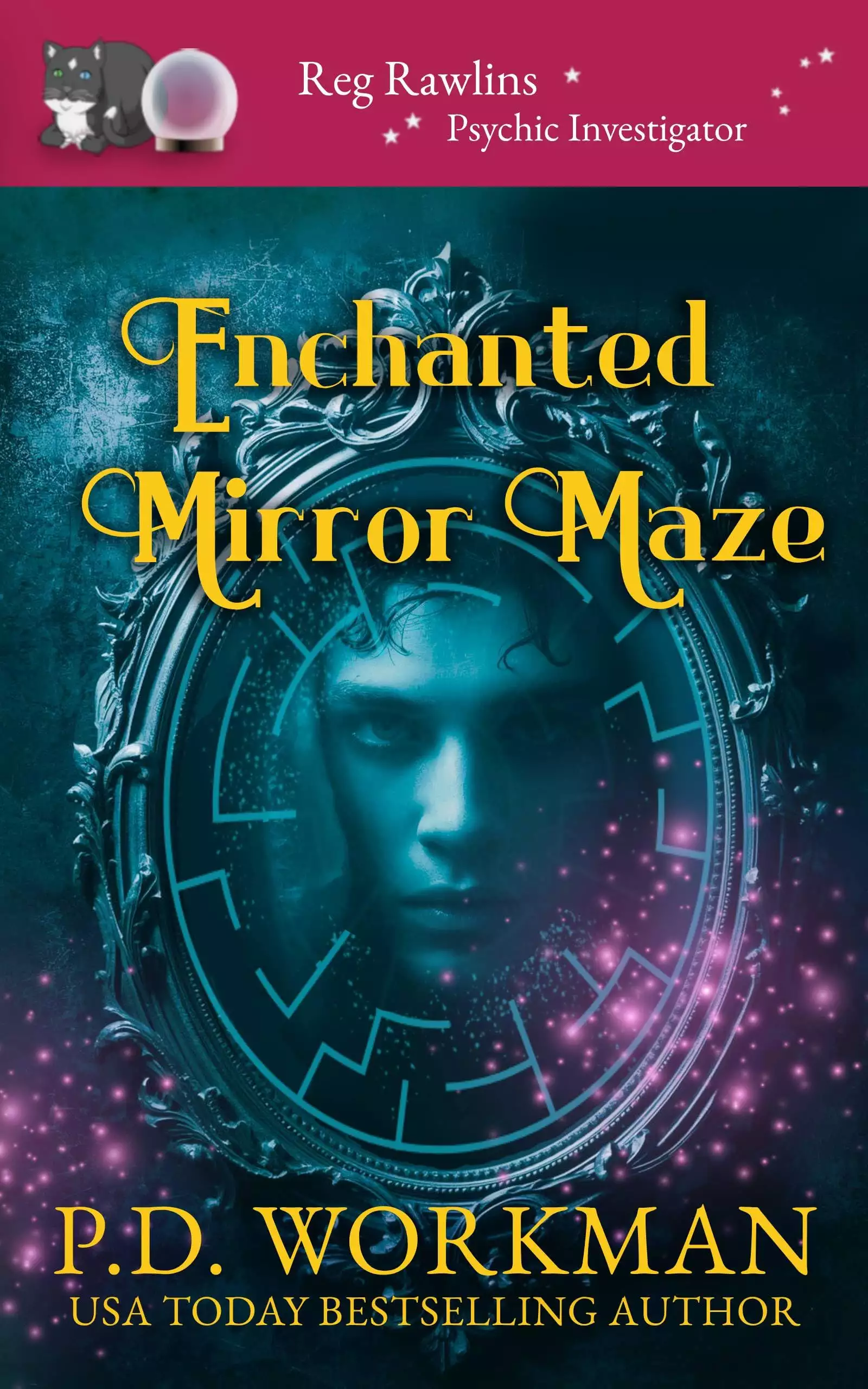
“The one that I am really concerned about is a mirror. It seems like… things have changed since he brought it here. I don’t know, maybe I’m just seeing things, and it is just a coincidence. But… well, I do have concerns.”
“What kind of power does it have?”
And why was Davyn consulting with Reg about it? He was more well-versed in magic in general than Reg. She had only discovered her heritage in the past few years. Davyn had been the leader of his coven for some time and had many more years of experience than Reg. Decades or possibly even centuries. He would understand more about the mirror and its powers than Reg.
“I have not examined it closely. I didn’t want to raise Julian’s suspicions or to make him think that I might want it for myself. And to be honest, if it is affecting his behavior, I don’t want to take the chance it will affect me as well.”
“So you thought you would get me to look at it instead?”
Davyn looked embarrassed. “It sounds a little selfish when you put it that way. But I am very close to him, and that could make me more susceptible. You are also getting very good at maintaining a psychic shield, so I think its influence on you can be mitigated. With me being in the same house, I can’t shield myself against it all the time.”
“Why don’t you tell him he can’t have it here, then?”
Davyn raised his brows and gave a shrug with one shoulder, a gesture that suggested he didn’t want to start a fight with his partner over it.
Reg would have told him to grow up and stand up for himself, especially when his personal safety might be in question. But remembering how she had acted with Jake, how she had twisted herself around to do whatever he wanted, she knew it would be hypocritical. Yes, she had the defense that Jake had bound her, but who was to say that Julian hadn’t done the same to Davyn? If Julian was a collector of powerful objects, he might have given a gift to Davyn that had him under its thrall, and Davyn was powerless to break away on his own.
“What do you think it is doing to him?” she asked.
Davyn took a deep breath and released it. “He’s been more… driven, moody, quick to anger. It could just be work stress or something else. I don’t have any way to be sure that it is the mirror at this point. That’s why… I’m hoping you could take a look at it and give me your read.”
Reg’s heart pounded hard with anxiety, though she tried not to let Davyn see it. Acid burned in her chest, and that deep feeling of dread had settled into her stomach and wasn’t going anywhere.
It was time to decide. Help her mentor figure out whether the object Julian had brought home with him was dangerous, or get out while she could, before having any contact with a potentially perilous relic?
How many times had Davyn helped Reg out when she was in a pinch? Even before he had known her personally, he had tried to protect her from Corvin. And he had always been there for her when she had called on him.
“Did he hurt you?” she asked Davyn worriedly.
He looked surprised. “Hurt me? No. No, this is just… I’m concerned about him. Not my own safety.”
“You said that he got angry more easily. A powerful object could influence him, make him lash out at the people he loves. You know he can be violent. I know he can be violent. I’ve seen it.”
In fact, Julian had nearly killed her when they were both children in the same foster home. Davyn might say that Julian had been too young to know what he was doing, and had since learned to control himself and color within the lines, but Reg knew it wasn’t true. He had pulled his wand and tried to attack Reg in the grocery store. Right out in public where people could see him.
And Reg had been inside his mind. What she had seen there had frightened her.
He might be able to present himself as sane and professional to Davyn and to his superiors, but Reg knew otherwise. He was fractured, broken. His childhood experiences had destroyed the whole and healthy mind that Julian might once have possessed, and what existed there now was both frightened and malevolent. Julian was in no way a safe person ready for a loving, intimate relationship.
“He hasn’t hurt me,” Davyn declared, sweeping this line of inquiry away with a gesture and not meeting her eyes. “That’s not what this is about. So… can you help me with this? Or…”
She didn’t know where the “or” might lead. Who would he go to if Reg said no? Where would he go for help? What would he do next? She had no idea what his plan of action was if she failed.
“I’ll take a look at it,” Reg agreed with a sigh. “I don’t know if I will be able to tell you anything, but I’ll try.”
Davyn breathed a sigh of relief. “Thank you.”
Reg nodded. She stood up from the couch. “Point me at it.”
We hope you are enjoying the book so far. To continue reading...
Copyright © 2026 All Rights Reserved

 Please log in to recommend or discuss...
