A Dark Space Opera Unfolds in the Shadow of a Crumbling Multi-species Empire, Driven by a Nihilistic Quest for Power
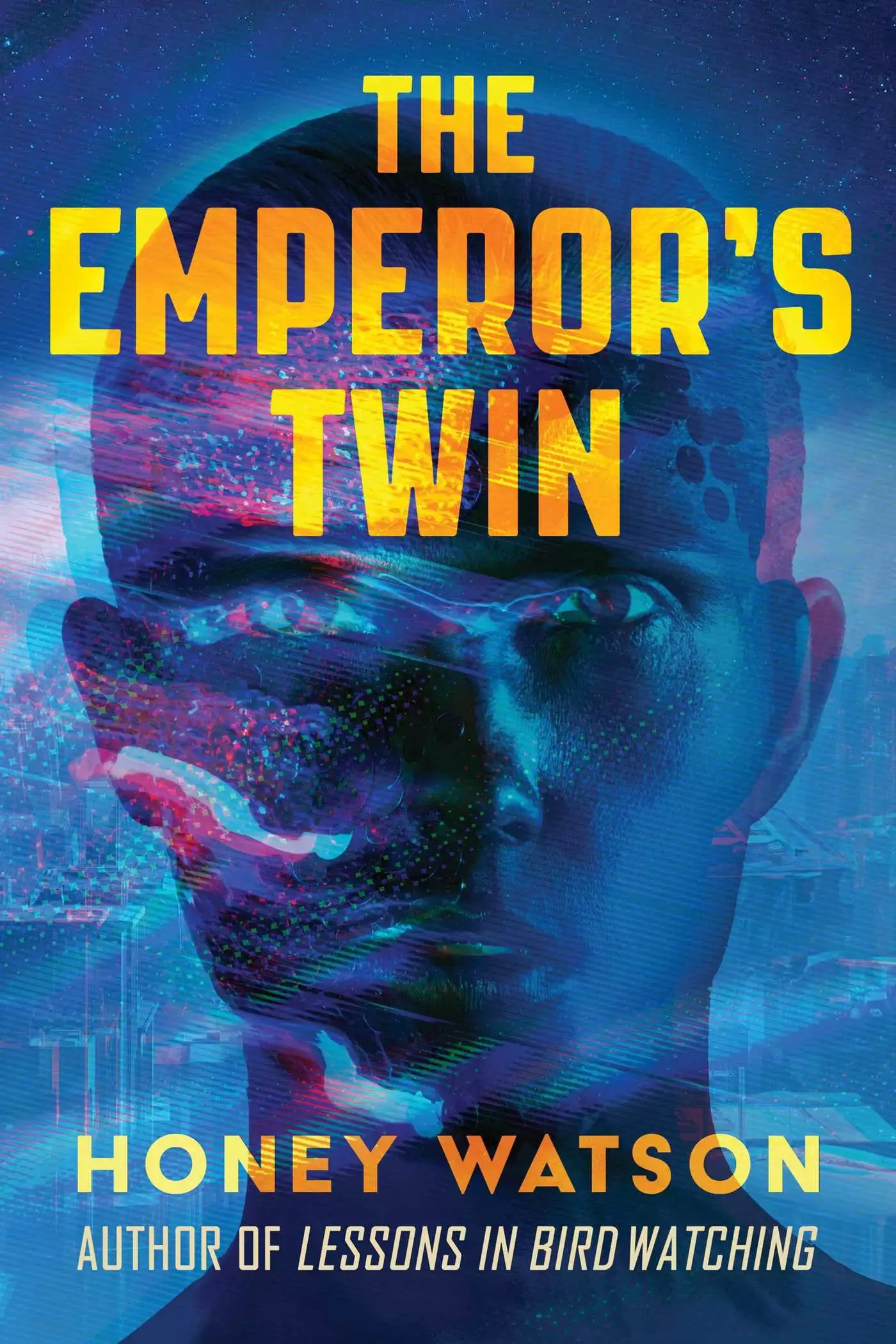
The central palace of Crysth is overrun; the empire has surrendered to an invading army led by Wilhelmina Ming, a traitor from its own capital city. However, the invaders can no longer control their divine power source--a being they worship as god--and now both invader and the invaded are trapped inside the palace with no way to rein in the eldritch force that has taken over, and no choice but to join together against it.
Ming's last hope is Speaker, the slain emperor's twin and former imperial steward who is somehow bonded with the deity. A wannabe artist and writer, Speaker has been held hostage by the invaders for months, forced to recount the final days of the empire in the hopes that something in these details might give a clue as to the god's desires and motives.
The Emperor's Twin is a haunting exploration of power, identity, and the terrifying intersections between the human body and the divine—the grotesque and the sublime—that questions the nature of control, survival, and the price of unrelenting ambition.
Release date:
September 23, 2025
Publisher:
Talos
Print pages:
240
* BingeBooks earns revenue from qualifying purchases as an Amazon Associate as well as from other retail partners.
Hexagonal tiles across a vaulted ceiling in coral shades of pink and green. Therapeutic eruptions from the belly of an enormous bathtub. The scene might have been peaceful in an affectedly mid-century sort of way had Ming not been inhabiting it for so long. Months, but to her it felt much longer.
Stained towels, broken tile, strangers’ clothing. Evidence of violences myriad but only half-enjoyed—Ming’s attempts to alleviate her boredom in confinement.
The wax of rose petals, pinched between her fingers. The stench of disinfectant.
A mechanical arachnid whirled beside her left ear. It cared for her with mindless affection, releasing antibacterial love into the air whenever it sensed the need. It did so. Her tongue emerged through the ragged decay of her mouth to taste it. Acrid. An expression of vacant loss somewhere beneath her damaged flesh.
“Come here,” Ming commanded, her voice soft with pain. One of her experiments in self-mutilation near destroyed her tongue but the captured ship was full of people who could fix it for her whether they liked it or not. “I’m sick of having to press this button to talk to you.”
There was nobody else in the room, the door was closed. She was speaking to the apartment’s former owner, a hostage lightly guarded in the room beyond.
Sound came from a system at the bathtub’s edge. A low voice, enunciating slowly, as if its owner was afraid to talk.
“I don’t think I’m allowed,” the voice said.
“Allowed?” she answered, repeating the distasteful word for to whom did the prisoner think they answered if not to her. She rose, changed her mind, sank back into the grime. She had been angry for so long that she could no longer be bothered to act the part. “Speaker,” she said, the prisoner’s name, “Speaker, get in here.”
The door opened, revealing Speaker’s face. Thin, sleepless, with long lank hair which they had tried to braid despite everything. Unrecognizable from the adorned politician they had been before their capture. “Should the guards come in, too?”
“No. Send them away. You’re not going to hurt me.”
Ming was right. It was not that Speaker didn’t fantasize about killing her, dreamed of the thrill as they fixed their hands around her throat, held her down, watched her face turn Picasso when she struggled and thrashed beneath the water’s distorting surface—revenge for the Crysthian Empire. But though Speaker’s fear of death had long since faded, they still feared pain. The pain that would punish them for Ming’s destruction was painful even to imagine. She was not the sole villain. The other one, her general and coconspirator, was possibly even worse.
The other one spent the majority of his
time outside the safety of Speaker’s apartment, battling in the war zone which he and Ming had made of the palatial ship to which it belonged. But his enemy was no longer Crysth, rather the army of foul things which he and Ming brought into the Zetland when they invaded the Empire. Grounded and infested, the Zetland was becoming home to an uneasy truce between conqueror and conquered as they united to restore order.
Ming heard complaints through the crack in the door, guards protesting their dismissal. She switched languages from her native Crysthian to the guards’ Apechi. She told them to stay where they were. They grumbled a “Yes, Ming” before letting Speaker into the bathroom without them.
Ming is not her given name, it is her surname. Her given name is Wilhelmina but she will not answer to it—a habit begun when she was just a teenager. The peculiarity of her insistence on being “Ming” even then stemmed in large part from the fact that surnames are such a rarity in Crysth. They signal descendance from a few dozen prominent families but little else, having been divorced from any meaning they once had when they were plucked from the Earth era like lost works of art. Crysthian academics and social commentators had flagged the reappearance of surnames as a sign of their empire’s decline—calling it a meaningless aesthetic decadence from the self-appointed ruling class. They may have been right. The empire has fallen and the architect of its destruction was Ming, but this would likely be of little comfort to them.
“Ah, I … I would like to bring in my chair, please. I want somewhere to put all my papers. It’s so dirty in here,” Speaker said.
Ming peered over the side of the tub, observing the fetid swamp she had made of the room as if this were news to her. She waved her hand in a do what you like fashion.
“Thank you.”
Speaker fumbled with the silk legs of their pajamas. It was their last clean pair. They tried to fold the fabric away from the floor. Sweat, soap, semen, piss, blood. Other stuff. Speaker’s heavy ringed eyes landed on their slippers.
There was no hope for saving those without going barefoot, which would be unthinkable. They began to drag their least favorite chaise longue into the room.
As Speaker fussed into position Ming said, “Open some wine, pour us both a glass.”
Speaker almost turned to face her in surprise. There had been no such thing as wine in Speaker’s life since Apech took over the Zetland.
Speaker padded damply to the bar at the room’s edge, a long tile recess built to their specifications back when they were the emperor’s steward rather than a sad hostage. Speaker had spent countless evenings watching old films on the projector wall beyond the bathtub, but Ming never touched it. She did not care about anything other than her goal.
The former steward looked over their wines. They weren’t sure whether red or sparkling was a more appropriate choice for the traitor-monster-usurper-devil in the tub. Surely a bubble bath calls for sparkling. They chose red as an act of rebellion.
A corkscrew trembled in their palm. How pretentious the little tool was, how preciously old-fashioned. But it was sharp. Speaker considered murder again. Their fingers tightened around the corkscrew’s wooden head, steadying the spiral point as it angled downward. They sighed.
A sound of glass on porcelain as Speaker placed Ming’s wine gently beside her.
“You used to drink a lot, didn’t you?” Ming asked, rhetorically. “I said pour us both a glass. Perhaps you’ll be more interesting if you’re drunk.”
Speaker had been recounting Crysth’s final moments to Ming ever since she brought the empire to a standstill. She was searching for a clue in the story, something that might allow her to regain power over the force she had used to invade her former home. Apech is a theocracy, its people worship the weird magic that runs in their veins but they cannot control it; they do not even know what it really is. They think of it as a god, something to revere and persuade. It doesn’t care.
reveal the god’s motives. Despite being Crysthian she worships the Apechi magic more zealously than any Apechi native and therein lies her misery. The god will not give her its blessing—it has given it to Speaker instead. Nobody knows why. Ming has convinced herself that one day the god will love her back.
“Alcohol certainly has the capacity to provide one with a greater self-introspective insight than one is afforded without,” Speaker said.
Ming rolled her eyes. She had tried to torture the dead emperor’s twin out of the habit of annoying her but nothing seemed to work. “Just have a drink, Speaker. Fuck.”
Speaker obeyed. They sat on the chaise longue beside their notes, a selection of papers and tablets which they had begun to think of as their “debut auto-fictional endeavor” in the hopes that self-delusion might improve their psychological condition. “Where shall I begin this time?”
“From the beginning,” she said. “No! I can’t listen to all that miserable eulogizing about Juniper again. Start at the decision to consult Avon Stal.”
Speaker looked for the relevant pages.
“And don’t just read. Think about it, don’t just tell me what you were doing, tell me why you were doing it. Everything. Every thought. It’s in there somewhere.”
As Speaker searched for the right page, they realized that Ming was whispering to herself. They listened.
It’s in there somewhere. It’s in there somewhere. It’s in there somewhere …
2
So … that will have been a week after you killed Juniper.
I’m still going to have to talk about her death, if only to set the scene. I simply must. Atmosphere is crucial, nothing will make sense to a listener who does not understand that we had all gone mad. It was the apocalypse. An emperor of Crysth had been assassinated by an alien god in our capital city. It feels unreal even now; it was impossible. We didn’t even know that Apech was a real threat to us before then. Juniper exploded before our eyes. She erupted into pieces of bone.
Pardon me? Well, I wish I had not been there to see it. It was disgusting.
But I digress.
It was the apocalypse. We only had three emperors left and nothing surprised us anymore. That’s what my hypothetical audience—in this case just you, I suppose—needs to understand. We could not react appropriately to anything because everything was already the worst thing that had ever happened. We were “on the run.” Nobody could believe what was happening to us and so we all simply went along with it. Even when “it,” in retrospect, was the stupidest series of decisions you’ve ever heard in your life.
Juniper’s death seemed huge, all encompassing, but it was just the first domino. I know, poor metaphor. I’m working on it. What I mean to say is that the first event in this series was so large that when the techs warned us that a second one was coming, we just ignored them. They were telling us that the machines weren’t responding correctly to their input, and we were wondering why the hell they were bothering us with such nonsense. Just troubleshoot, we said. Hilarious really. The god of Apech was in our walls, in our ships, in our doors. It was everywhere. The moment of realization was … I don’t know. Like suddenly realizing you’ve mistaken a stranger’s house for your own. We couldn’t troubleshoot shit because your god had converted our entire network to its cause. There was nobody with the capacity to imagine that something so grotesque could happen. It was so perfect an invasion that if we weren’t the victims then I might admire you and Apech for having done it.
This is what we get, I admit, for powering our tech through what I must now understand as slavery. The “demons” were sentient! I didn’t know. I swear I didn’t know. I thought it was just another silly word like
“technomancer” or even “god.” Designed to stop people from looking into how it all really works rather than actually describe the thing itself. Once your god’s virus had sneaked into their minds it was already over for us. They were turned against us overnight and we didn’t notice. Nobody had the intellectual creativity to notice.
Another contributing factor to the whole chaos milieu—milieu of chaos—was that the palace seemed safe. It’s off the grid of course, designed to detach from the capital planet if we needed to escape but that had never been done before. It’s named after a lifeboat you know, that’s where “Zetland” comes from. One of those facts that everybody learns so everybody forgets. It’s almost romantic—refugees in our own home.
Everything was so awful but also very normal. Sleeping in our own beds, brushing our teeth, eating breakfast. Fleeing the occupied, fallen capital through empty space. Low-fat latte, extra foam.
Not that I would ever order such a thing myself. Just an example of what someone might.
Everybody was arguing that day, which was somewhat comforting. A little touch of normality. Juniper’s empty throne still loomed, but the other three emperors were bickering enough that her absence didn’t swallow the place.
“As the Military emperor,” Vard was saying, “my suggestions should be given priority. This is war! It is not the time for philosophy.”
“It is exactly that attitude,” Daksha, the Ethicist emperor, was saying back, “that is always leading your generals into my courts with innocent blood on their hands!” Low blow. The argument wasn’t just contained between the two emperors. The rest of the Military and Ethicist factions behind them were yelling at each other too. Totally incoherent but necessary, you can’t let your faction’s emperor argue without tossing in a good jeer. “It is also that attitude which got us here in the first place!”
“And what do you mean by that?” You could tell that Vard was angry. Was always interesting to watch him lose his cool, purely
because he was very cool. There’s something about allowing oneself to age that makes a person seem very self-assured, I think. Who else do you ever see with a receding hairline? So chic.
“I mean that if Military hadn’t hidden from the rest of us that the things powering our machinery were actual living sentient beings then we wouldn’t have allowed their use! Apech would never have been able to attack us like this!” Daksha hissed.
Vard scowled, which he could do very effectively with all that forehead. “If you truly believe that this is Military’s fault then let Military take responsibility for fixing it.”
I was just standing behind my brother’s throne hoping for the best.
“May I remind you all,” said my brother, and everyone always stopped to listen to him because his voice was so loud that you didn’t really have a choice, “that we are dealing with an unnatural enemy. The technomancers should be better represented in this debate.”
The techs looked like they disagreed. One of them said, “It is not an unnatural enemy we’re up against with Apech, it is a so-called ‘deity.’ We aren’t the deity people, we’re the tech guys.”
“Yes,” called Vard, “and the ‘deity people’ are all dead! Which I once again assert leaves myself and the Military faction in command of this situation.”
Military cheered. The Ethicists started shouting at them again.
Rhododendron had his head in his hands. It can’t have been pleasant for him, holding the deciding vote between Military and Ethicist. Everyone went quiet again when he said, “Vard. Perhaps you could tell us your plan? Then at least we know what we’re agreeing to.”
We—by which I mean myself and the rest of the Reds—gave Rhododendron a round of sensible applause. Well, I say sensible
applause but of course most of our faction have those nasty prosthetic hands which sound absolutely disgusting when they’re touched together so applause was actually a form of psychological torture.
“Oh, stop that!” Daksha snapped at us, and she clicked her tongue in an imitation of the stone-sound the fake hands make to show us what she meant. “It’s a foul noise and don’t act like you don’t know that you’re doing it. I actually agree with you, Rhododendron.”
Vard said, “Well my plan’s no secret! I want to take us to general Avon Stal, who has proven through decades of service that she is our expert on supernatural warfare.”
The Ethicist faction started yelling then quietened down when they realized that their emperor hadn’t reacted yet. They watched her, waiting to see what they were supposed to think.
“That would usually be a good idea.” Daksha began, slowly, feeling out her words. “But. This Apechi deity we are up against has infested our ships, our computers, the whole grid! That’s everything other than the palace. Its virus will have contaminated her warship, too. Moreover, this deity seems to be our only real problem. We should just find the Apechi agent who is controlling it and kill them.”
“We can’t do that,” said one of the techs. “Sorry, emperors. Like I said, deimancer ring’s gone so everyone who could have done the god-finding stuff is dead. Bastards got ‘em when they got Juniper. But Daksha’s point about the virus still stands. Avon’s ship will be compromised.”
Vard shook his head. “Look. I didn’t want to say this publicly.” Congress went quiet when he said that, who doesn’t love a secret? “But Avon Stal’s ship is not on the grid. It is removed, like the Zetland.”
“What!” Daksha yelled, standing up so that the
light shone over her suit in a really beautiful way. She always had these perfect three-piece ensembles. I love the Ethicist colors, almost white but for threads of pink which shift it into a gleaming pearl. Her shoes too, a fabulous collection, don’t think I’ve ever seen her in flats—Pardon me? You said I should say everything that comes to me and I—yes, yes. Sorry.
Naturally, she and her Ethicists were furious. The demons were for surveillance as much as power, nobody should be able to just remove a ship from the grid.
“General Avon Stal is the most experienced and competent commander the Crysthian empire has ever seen.” said Vard. “She has spent her whole life fighting both physical and unnatural entities on our behalf! She needed the greater speed which removal from the grid afforded her. And thank goodness for that! Now we have a warship which this Apechi deity can’t get into! We have hope!”
“Sorry, sorry,” interrupted one of the techs. He wasn’t saying “sorry” like he was apologizing he was saying “sorry” like he had been direly affronted. ...
We hope you are enjoying the book so far. To continue reading...

 Please log in to recommend or discuss...
