- Book info
- Sample
- Media
- Author updates
- Lists
Synopsis
“I spy … a brilliant thriller! Double or Nothing is a clever and utterly compelling addition to the Bond canon.” —Jeffery Deaver, author of Carte Blanche, a James Bond novel
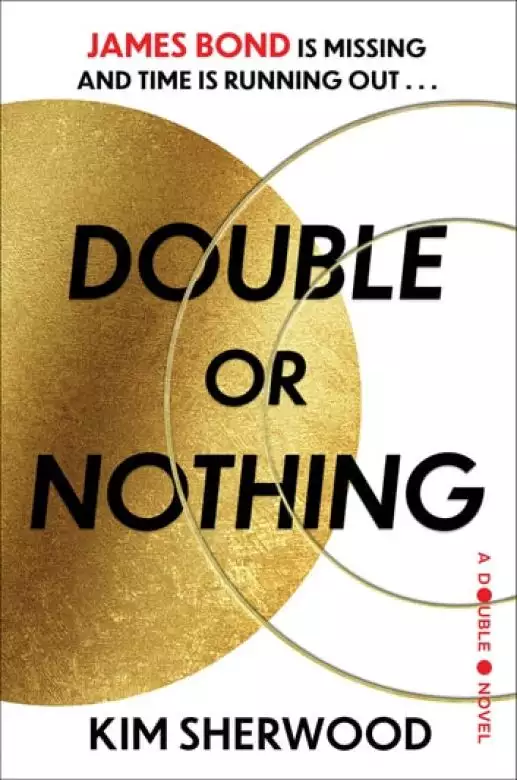
The start of a brand-new trilogy following MI6’s Double O agents with a license to kill, that blows the world of James Bond wide open!
James Bond is missing…
007 has been captured—and perhaps killed—by a sinister private military company. His status unknown. MI6 holds out hope that their most lethal agent will find his way home. But in the meantime, the rest of the Double O division has a job to do.
Meet the new generation of spies…
Johanna Harwood, 003. Joseph Dryden, 004. Sid Bashir, 009. They represent the very best and brightest of MI6. Supremely skilled, ruthless, with a license to kill, they will do anything to protect their country.
The fate of the world rests in their hands…
Tech billionaire Sir Bertram Paradise claims he has developed new cutting-edge technology capable of reversing climate change and saving the planet. But can his grandiose promises be trusted, and are his motives as altruistic as they appear? The new spies must uncover the truth because the stakes could not be higher; for humanity… and for James Bond himself.
Time is running out.
Release date: April 11, 2023
Publisher: HarperCollins
Print pages: 352
* BingeBooks earns revenue from qualifying purchases as an Amazon Associate as well as from other retail partners.
Reader buzz
 Please log in to recommend or discuss...
Author updates
Double or Nothing
Kim Sherwood
An Appointment with the Devil
The White Helmet said, “To save one soul is to save all of humanity.”
Sid Bashir didn’t take the shot. He lowered his camera. His finger lifted from the shutter release.
The White Helmet gave him a friendly knock on the arm. “You must know this, brother. The White Helmets are committed to these words from the Quran: Whoever saves a life saves all of humanity.”
Bashir bowed his head. “My mother used to tell me that.”
“May Allah bless her. She taught you well. I used to carry arms. But it is better to give my life to my people than take lives.”
“May Allah bless your family also.” Bashir gripped the bench seat as the truck swerved to avoid a crater. His chest was tight with smoke, which had poured down his throat like concrete eager to fill a void as he followed the Syrian search-and-rescue volunteers into the fire, digging through rubble for survivors in the long minutes’ wake of a cluster bomb, the Red Crescent warehouse groaning, keening, until it swayed, walls crumpling, and crashed in a cloud of render. Bashir pulled the sleeve of his battered Barbour back from his Casio watch. There was a gash on his forearm. He wiped blood from his watch face. Every vanishing second reduced her chances. Five minutes until the drop.
The man beside him removed the white helmet with his name written in indelible pen, shook dust and debris free from his hair, and replaced the helmet. He played along as Bashir took his portrait, but the gaze fixed on Bashir was probing. “I have known other photojournalists, sir. Even other men from Reuters. I have seen them pull victims into their cars and drive them to hospitals under live fire. Shield children from shells. Give their flak jackets away.” The White Helmet sniffed. “But I’ve never seen a photojournalist do any of that without taking a photograph first. You ran into the fire, and you didn’t take a single shot. Not until we’d cleared the dead for burial. You might be a noble man. But you are not a war photographer. And you hold your camera like a gun.”
Bashir looked down. Three fingers on the grip, thumb on the barrel, finger at the trigger. His heart was haring. “It’s my first war.” He tried a smile. “I haven’t developed a defense against my humanity yet.”
The man studied Bashir. The thick sweat of the other volunteers in the cabin, the squeak of their fireproof overalls, the screams of pain from the medical truck behind, the wind chasing down the mountainside to push at the wheelbase, the sudden rumble overhead, the muscles in each man’s thighs tensing, carrying them to their feet before anyone exchanged a word, until one raised a hand and called, “It’s only a civilian aircraft”—it all filled the breach of silence. The White Helmet shrugged. “I do not think so, sir. I think you are more concerned for your own little war than ours. But I thank you for your help. You may have saved your soul, today. I believe this is where you wished to be dropped . . . for your next photo assignment.”
Bashir could not summon a reply, and had no chance to do so, the truck rolling to a stop.
The White Helmet clapped his palms together, a slick stickiness, as if wiping his hands free of Bashir. But still he added, “Remember, brother: To save one soul is to save all of humanity.”
Bashir had to stoop as he rose. His mother had raised him to keep that sentiment
tucked into his heart, though he had long since subscribed to another philosophy. Sid Bashir had been given a number and license to kill. He was 009, and to him the faith that saving one soul could save something of the world’s humanity was harder to maintain in the face of the calculations his job demanded. He would more readily sacrifice one life for the good of the many. It might be cold, but then logic didn’t have a heart with corners to spare.
Tonight, though—tonight Bashir would try to save just one life, one soul, and if it did not matter a great deal to the world, it mattered a great deal to him.
The doors opened. Bashir gave his thanks and jumped onto a single road snaking the foot of the mountains, the beaten earth and blistered tarmac etched by a faint moon.
The trucks rattled on, headlights fading, and with them the sound of the engine, until the only thing that moved on the hulking slope of the mountain was one small black spot, the figure of Bashir inching ever upward, his outline stretched, flung, and swallowed in the pinstripe shadows of pine trees. As the minutes ticked down, high above a second black spot seemed to ripple from the lily pad shadow of drifting clouds, descending the mountain. This second black spot zigzagged, and its own shadow was distorted by the unmistakable silhouette of a gun. The gun, and the shadow, belonged to Corporal Ilyasov, who was serving his first mission for Rattenfänger PMC.
Rattenfänger PMC offered a year’s average salary in whatever denomination you worshipped for just one month’s service and a trip to the Front, wherever the Front happened to be, however official or unofficial—Yemen, a concert hall or temple, the Central African Republic, a subway in a world capital. PMC stood for Private Military Company, or Pretty Much Crap, because to call Rattenfänger a private military company was like calling the mafia a social club. Registered in ever-changing shell companies, Rattenfänger were terrorists for profit, marauders who turned fluid situations into war zones and peaceful streets into settings for the nightly news. Their soldiers and bases were international. Their fingerprints were suspected on embassy bombings, kidnapping, grand larceny, underreported civil wars, and data breaches. But those fingerprints could never be traced, and neither could their backers.
None of that mattered to Corporal Ilyasov, apart from the 1,240,000 rubles a month. He had a wife and three children, and that mattered a lot. Before Rattenfänger, Ilyasov might have hoped to earn that in a year, if he held his pockets wide open. This was his first posting. Pulling off his mask so he could spit out the taste of that evening’s third-rate vodka, Ilyasov continued down the mountain, treading carefully, just as they’d taught him in Molkino, though there was little risk of attack so far into Assad’s territory, and so far up this godforsaken rock where nothing worth a damn grew. That was why they’d chosen the eastern slopes for the makeshift black site, the mo
untain showing its back to the Mediterranean and the few towns that straggled down toward Tripoli.
The ground beneath his boots was hard but the trees clung to their fir coats. Ilyasov peered up to locate the moon, but she was sulking, just like him. He didn’t see the point in patrolling so far out from the base—suspected Colonel Mora of punishing him for winning at cards. The other boys were watching the show, and he was listening to the wind.
Ilyasov was calculating how much longer the woman they were holding would last when a shape in the trees moved too quickly to be a swaying branch, and then a glitter in the black told him a knife was spinning toward him. That information registered too late. The knife found his jugular and Ilyasov pitched sideways.
The last thing he was conscious of was a boot tipping him onto his back, and then a needle-thin light on his face. In its trembling beam, Ilyasov made out eyes like antique gold and a nose that bumped over a break. He had only another thirty seconds to live, and would not report this to anyone.
Ilyasov’s body would be returned to his wife by a courteous silver-haired gentleman, who would leave five million rubles of “insurance money” on the kitchen table, along with a medal for blood and bravery. When his wife called up newspapers and her local councilman to demand answers, she would be shown her error by foreign men in cheap dark suits.
Bashir pulled the fl
lat throwing knife free and cleaned the blade on the dead man’s arm, at the bicep, where he expected a Syrian flag. He turned the flashlight onto the man’s sleeve. Nothing. He looked back at the face.
Bashir tapped his earpiece. “How do you feel about surprises, boss?”
A chirp, then Moneypenny’s voice: “Depends who jumps out of the cake, 009.”
“I know you were hoping for worn-out soldiers of the Syrian Armed Forces. But how about a well-armed, well-trained, if very dead, soldier with no flag?”
“Rattenfänger?”
“Quiet extraction is looking like wishful thinking.”
“Stand by, 009.”
Bashir scanned the trees, hunting for a sign of a second patrolman. He remembered Bill Tanner briefing him and the other new recruits about Rattenfänger. Bill had been perched on the desk at the front of the seminar room, and rolled his sleeves up as if settling into a bedtime story: a folktale for the ages. “Rattenfänger are out to make money, whether that’s by holding a city to ransom, or lending their services to the highest bidder. Every member has a stake in the profits. Like a diabolical Waitrose.” Bill laughed at his own joke, then hunched closer for the grisly part. “For those who flunked German, Rattenfänger means The Ratcatcher, the original name of the Pied Piper. They earned their name bombing a school track-and-field day after a Russian oligarch refused to pay Der Rattenfänger for their services kidnapping the son of this oligarch’s rival. They killed their own client’s son, and his whole class too, and were paid for their efforts by the original target. The US leveled both businessmen with sanctions. The rival shrugs and says: I am a businessman. That is all. If they want to see the devil, let them see him. But that’s overstating his position. He’s only a disciple. Rattenfänger are the real devil.”
009 waited for the devil now. M had denied permission to carry a handgun into Syria, in case he was searched as a photojournalist. Bashir was glad of the throwing knife now, which he’d concealed in the hinges of his camera case, knowing customs would consent to a hand search in order to avoid X-rays damaging the kit. Rattenfänger had shot 008 in the head last month and left him in the scrub in the Central African Republic. And Donovan had been good. Still, Bashir bent down, prized the RPK-74M from the dead mercenary’s hands, and slung it over his shoulder. Then he took the man’s radio, lowered the volume, and pocketed it.
“Home front to 009. Stand down. I say again, stand down.”
Bashir felt his body temperature drop. “That’s a bad copy, say again?”
“Listen, 009. Rattenfänger must be leasing the base. Q says Rattenfänger’s SOP is to station at least thirty agents inside the compound, most likely alongside the Syrian Armed Forces. The chance of mission success is less than zero. We don’t even know she’s alive. It’s been nineteen days. You know the odds.”
Bashir chewed his lip. He wondered if Moneypenny was conscious of slipping from the language of a strategist, the language she used when hoping to appeal to Bashir’s better angels, to the language of a gambler—into his language. So: What would Bond say? Life is nothing but a heap of six-to-four against, Penny. That doesn’t mean I leave the table. But that didn’t help him. What would 009 say?
“She’s more valuable than I am. This isn’t a zero-sum game. My death is worth the chance of her life.”
White noise. Then: “As romantic as that is, 009, the bank wins this time. Stand down. It’s too dangerous.”
Bashir clenched his jaw. What now? Leave her to die, if she wasn’t dead already. Leave her to the devil, and only in order to save his own skin. Exfil to Istanbul, back to London, and then the Tube to the Regent’s Park office, the silent journey in the lift, the walk along the corridor, avoiding the commiserating or disappointed eyes of the others, refusing Moneypenny’s understanding, and finally facing M’s sympathetic eyes across the table, his “better luck next time,” when, of course, there couldn’t be one, because Bashir would have failed to save her, just as he had failed James Bond.
Bashir straightened up. “Someone once told me it’s always too dangerous. That’s the fun.”
“Sid—”
A soft sound, and then that stern voice came on: “009?” It was M.
“Sir.”
“Try and bring it off. And watch out.”
Bashir smiled. “Sir.” He heard Moneypenny raising an objection, and then tapped his earpiece, silencing the debate on how short his odds were. It was then he heard a boot catching in the undergrowth.
He turned, drew the knife, threw.
A thud.
Bashir inspected the dying patrolman. A second pawn.
He slid his knife out of the man’s thorax and eased the RPK-74M into a comfortable grip. He searched the soldier, found more magazines, which he pocketed. The camera hung from his left shoulder, and Bashir raised it now, switching to infrared. The forest was clear of moving bodies. A walled-off compound with a single watchtower crouched at the peak of the mountain, another fifteen minutes’ sharp hike. Bashir brought the sniper waiting there into focus, and then moved off, considering where they might set up the kitchen. In private military operations like this one, locals put on the food, usually in poorly constructed huts with little regard for regulations. That would be his strategy.
Bête Noire
The compound occupied a half-moon of cleared forest at the peak of the hill: inside the walls, a grid of tents surrounded a stone barracks. At the rear of the compound, a soldier guarding the service entrance stood whistling the same few bars of a song. He seemed to be having trouble finding the bridge. It wouldn’t bother him for long. He slumped forward.
009 caught the man’s Makarov PM before it could clatter across the ground. The favorite pistol of Soviet policemen, before Bashir’s time. Eight rounds in the chamber. Hauling the body into the shadows, Bashir stripped the man of his jacket and pulled it on. He skirted around to the kitchen, a tent with wires straggling from it like the tangled limbs of a dead octopus. Bashir ducked through the door, and found the cook reading on a cot—a skinny man who, Bashir imagined, lived on leftovers. The man started up. With one hand, Bashir covered the cook’s mouth. With the other, he held the pistol to his head.
“One chance,” Bashir whispered, and then switched to Levantine Arabic. “The back door is open. Disappear, quietly. Or burn to death.”
The hand Bashir had clamped over the man’s mouth grew clammy with sweat. The cook nodded. Bashir let go. The cook glanced around, as if the fire had already started and he was considering what to save. Then he looked back into Bashir’s eyes, where he seemed to recognize something. He swallowed, picked up his book, and ducked through the back.
Bashir made a study of the kitchen. He wanted as big an explosion as possible. If he was right, it would draw most of the Syrian troops from their posts, and at least half Rattenfänger, who would have the urge to take command of a crisis. Bashir supposed four or five Rattenfänger had been ordered to remain with the prisoner at all times, and would not stir despite the kitchen finally doing what everyone on base would have joked about at one time or another, given the state of this generator: gone up in flames. Their fear would be the fire spreading to other tents, hovering in the wind, roosting in trees. It would be the forest that killed them, a slow collapse of blazing timber.
Well, there was no point being subtle about it. Bashir kicked over the petrol generator. The back end clunked to the ground. Liquid oozed onto the dirt floor. He popped the back of the camera, prized out the battery, and chucked it in the microwave. He set the thing to one minute, maximum heat. This represented only a marginal departure from his usual culinary skills anyway.
Bashir grabbed a small knife that smelled of onions from the sink, and retreated out the back. After forty-two seconds a bolt of hot air and flame shot from the tent. Twelve seconds later, the whole kitchen went up, slapping the night white with shock. The air twanged, and then there was the sound of boots running and soldiers shouting.
Bashir raced toward the stone barracks, keeping his head down, buffeted by the panic of running Syrian soldiers, who saw his jacket and did not question him. Inside was the usual filth of men in close quarters. Bashir hurried past the Officers’ Mess, where a game of cards had been left abandoned. He was about to take the next turn when he heard orders barked in choppy English. Bashir drew up against the wall, and held his breath as at least five Rattenfänger passed by without looking around the corner.
As the fifth man passed, Bashir grabbed him by the collar and jerked him back.
The man twisted in his grip. Bashir slammed his elbow down on the man’s wrist. He dropped his gun in shock.
Bashir jammed his gun into the man’s gut. “Take me to her.”
A moment’s hesitation, then a quick nod.
Bashir followed the soldier deeper into the compound, tracking left turns and right. The hallway lights were doused, replaced by the flickering aqua of a backup generator. He noticed prison tattoos crawling up the man’s neck.
“In there,” the soldier whispered. “The bitch is in there.”
Bashir peered around the next corner. At the end of the short passage was a locked steel door.
“Do you have the key?”
“No.”
“And you had so much potential.”
Bashir struck the man with the butt of the pistol. He stepped over his unconscious body and around the corner, considering the locked door. And him without a wall charge to his name.
Bashir was slinging the RPK-74M around when he heard the door rattle. He pulled back to the corner.
Three soldiers came out, locking the door behind them, and formed up in front of it: the Rattenfänger men ordered to stay with the prisoner.
He could take them with a burst from the machine gun, but that would draw the others back—if they heard it over the hunger of the fire.
Regardless of whether the troops outside heard it, the Rattenfänger undoubtedly behind the door with a gun to her head would. A steel door could muffle only so much. And the man would follow his orders without question, just as Bashir would.
Quiet it is.
Let’s call it a sample of convenience. Can two knives kill three guards?
Bashir moved into the open, registering three masked soldiers coiled with excitement, fingers on triggers. Before any of them could make a sound, Bashir threw his own knife and the kitchen knife, picking off the left and right men. The man on the right staggered and fell, eliminated. The kitchen knife was poorly weighted and found the cheek of the man on the left. He was about to howl, just as the man in the middle raised his rifle. Bashir rolled forward, hooked one foot behind the man’s ankle, and then smashed the man’s knee. He went down flat. The rifle clattered away. Bashir pulled the knife out of the cheek of the man on the left and slashed his throat just as the man in the middle clambered to his feet. Bashir elbowed back. The soldier hit the wall, drawing his pistol for a point-blank shot. Bashir slammed him into the wall, nothing clever in it, just body against body. Bashir’s ribs shu
ddered, close to breaking. He held on.
“You think you beat Rattenfänger?” the man spat. “Pied Piper is unbeatable.”
Bashir clamped his hand over the soldier’s mouth, as he had the cook’s, only this time he did not let go. The soldier thrashed and pounded. Bashir held on.
As the man sagged, Bashir panted: “I don’t believe in fairy tales.”
“I see you don’t like to give your enemy the chance to surrender, Mr. Bashir.”
Bashir hunched, absurdly readying himself for a bullet to the back of the head. None came. The next thought: they know my name. Bashir turned, his back to the steel door now. At the end of the short passage stood a man whose presence seemed to make the nearby crash of fire seem irrelevant, foolish even. He was a giant, with at least fifteen years on Bashir. He had buzzed graying hair. He wore the uniform with no flag of Rattenfänger. His arms were unusually long, his empty hands hanging by his sides unusually big, seeming to wait for something. The stripes on his shoulder said he was a colonel. The king, and probably the only man who knew who was funding Rattenfänger, who was calling the shots. In the flickering light, Bashir could see the man was smiling indulgently.
The colonel gestured to the bodies. “Not very sporting. I thought you Englishmen had rules.”
“I skipped civics,” said Bashir, and hurled the kitchen knife.
The colonel plucked it from the air. He laughed, and then weighed the blade in his great palm. “Next time, I suggest stealing a bigger knife.”
Bashir was about to pull the Makarov PM and fire when he remembered the gun to her head, just behind the door.
“No need to give less than your best,” said the colonel. “It doesn’t matter who hears. She’s already dead.”
Bashir rocked a little, then planted his feet. “She’s a high-value target. You’d keep her alive as long as possible.”
The colonel shrugged. “She broke.” He said it lightly, as if they were discussing a faulty bicycle. “We extracted what we wanted, and disposed of the remains.”
Bashir listened, tried to locate noises from behind the door. There were none.
“And now all that’s left,” said the colonel, “is to break you.” He tossed the knife away, and came on with his arms still hanging loosely.
Instinct told Bashir to shoot. There was no sound from behind the door. She was dead. He was too late, and she was dead. But he did not draw. His mission was to bring her home. So what if this man said she was dead? A certain event with a probability rate of one hundred percent still might not occur.
Bashir crouched forward in the starting position of Krav Maga. He threw a right. The colonel swayed back, quicker than Bashir imagined, despite his bulk. Then the colonel’s hand shot out, his fingers stiff, and jabbed Bashir in the brachial plexus.
Bashir almost threw up. His right hand went numb. It would not form a fist. Shock sliced through him.
The colonel stabbed Bashir’s tibialis anterior muscle with his boot. Bashir folded to his knees. He swung with his left.
The colonel caught the punch, and dug his thumb between Bashir’s fingers. Bashir’s hand was suddenly boneless. He was attacking Bashir’s nerve points. The colonel knocked behind Bashir’s ear with one knuckle, finding the pit between jaw and neck. Bashir choked. He couldn’t move. He was paralyzed.
The colonel sniffed. He seized Bashir by the lapel and hauled. Bashir swung from his fist. His eyes were streaming.
“This does not reflect well,” said the colonel. “Not well at all. I was led to believe you were something special. 009: the next bright thing from Her Majesty’s Secret Service. Strategic, smart, ruthless. First-class degree with honors in philosophy and mathematics from King’s. Fights with tenacity. High threshold for pain. A promising young man with an exciting future as a professional murderer. Only weakness that big brain of his, persuading him to take measures a mere mortal might shudder at. But this overthinking looks very much like not thinking at all. You are letting yourself down, boy. You couldn’t even die for her. You’re too late. You failed her. And now you’re failing me. Come on, son. Play up, play up and play the game—isn’t that what M would say?”
Bashir flailed about inside, but his limbs would not respond. He’d been rendered impotent with just a few jabs. Fear and revulsion gripped him.
Remember your training. Remember Bond’s words. At the heart of every agent is a hurricane room: in the tropics, the room a house keeps empty at its center so that when a storm begins to shake the skies, the family can retreat to this citadel without fear of flying chairs or the shrapnel of smashed crockery. The hurricane room inside you is painted white, so clean it shines. You retreat there when a situation is beyond your control and no other action can be taken—retreat there, and wait for the storm to rage into exhaustion, for the moment you can step out and ask the heavens: Is that all you’ve got? The moment you can say: Give me your worst, I’ll take it. So, retreat to your hurricane room, and wait for your nerves to come back. They’ll come back to you, and then you’ll stick your thumb into this man’s eye. Until then, lock the door, Sid. For God’s sake, lock the door.
“What would dear Moneypenny think, if she could see you now? Her shiny new toy, to replace all the toys she’s lost, but you’re broken out of the box. Bête noire of the world’s terrorists and criminals?” He laughed. “You’re just a scared little boy, hoping Mother will come along and save him—and knowing she never will.”
The hurricane door burst open. The storm was coming in.
Bashir kicked out, aiming for the colonel’s groin. The colonel caught his an
kle, and hurled him against the wall. Bashir hit the floor.
He was trying to shift his arms when the colonel stamped on Bashir’s solar plexus, with all the pressure he’d give a cockroach.
Bashir almost blacked out.
When the colonel knelt down on his chest, the weight was an ocean. Bashir tried to buck and thrash, but he could not move the monster an inch—he could not move.
Hands like giant pink crabs closed around his throat.
He could not scream.
The walls of Bashir’s hurricane room caved in. She was dead. He had failed her. He could not move, could not breathe, could not scream. He was a child, screaming from night terrors after his mum’s funeral. There was a malevolent ghost squatting on his chest. For all he’d prayed, it was not his mum’s spirit that returned to comfort him, but something vicious and hateful, and his mum did not cross over to save him.
This is how he would die. A child again. A failure. Alone.
As the light faded, Bashir noticed a tattoo spread over the colonel’s chest and neck. A death’s-head hawk moth. His mother had designed her garden to attract butterflies and taught Bashir their names. Must report the tattoo to M, Bashir thought, and then laughed at himself. The moth’s wings fluttered as the cords in the colonel’s neck bulged, and then began to flap as the colonel started to pant, not from any exertion—he batted away Bashir’s protests—but from pleasure. The moth came closer. It wanted to smother him. The monster seemed to want to drink his last gasp. The fingers squeezed. Bashir could not breathe. He could not breathe.
A single gunshot.
The moth panicked, wings hot against his face, and then reared away.
Bashir gasped, swallowing the bitter smell of gunpowder.
The colonel lay on his side next to Bashir. Blood pooled under him, warming Bashir’s fingers back to life.
Air rushed into him. His stomach folded inside out. His nerves blazed. He sat up.
003 stepped through the smoke.
Bashir rested his head against the wall. Breathed out. Tried to laugh. “I’m here to rescue you.”
Harwood smiled back at him. “I can see that.”
She put out her hand. Bashir’s skin crawled as he moved his arm, took her hand, and got shakily to his feet. He looked over her shoulder. The steel door was open, revealing a room with no windows, a chair with restraints hanging from the back, a table with a box of used syringes, and a man lying on the floor, bleeding from the temple.
“I like what you’ve done with the place,” he said.
Her eyes glittered in the half-light. “I thought you might.”
“You got any plans this evening?”
“What did you have in mind?”
“How about breakfast in Istanbul?”
We hope you are enjoying the book so far. To continue reading...