
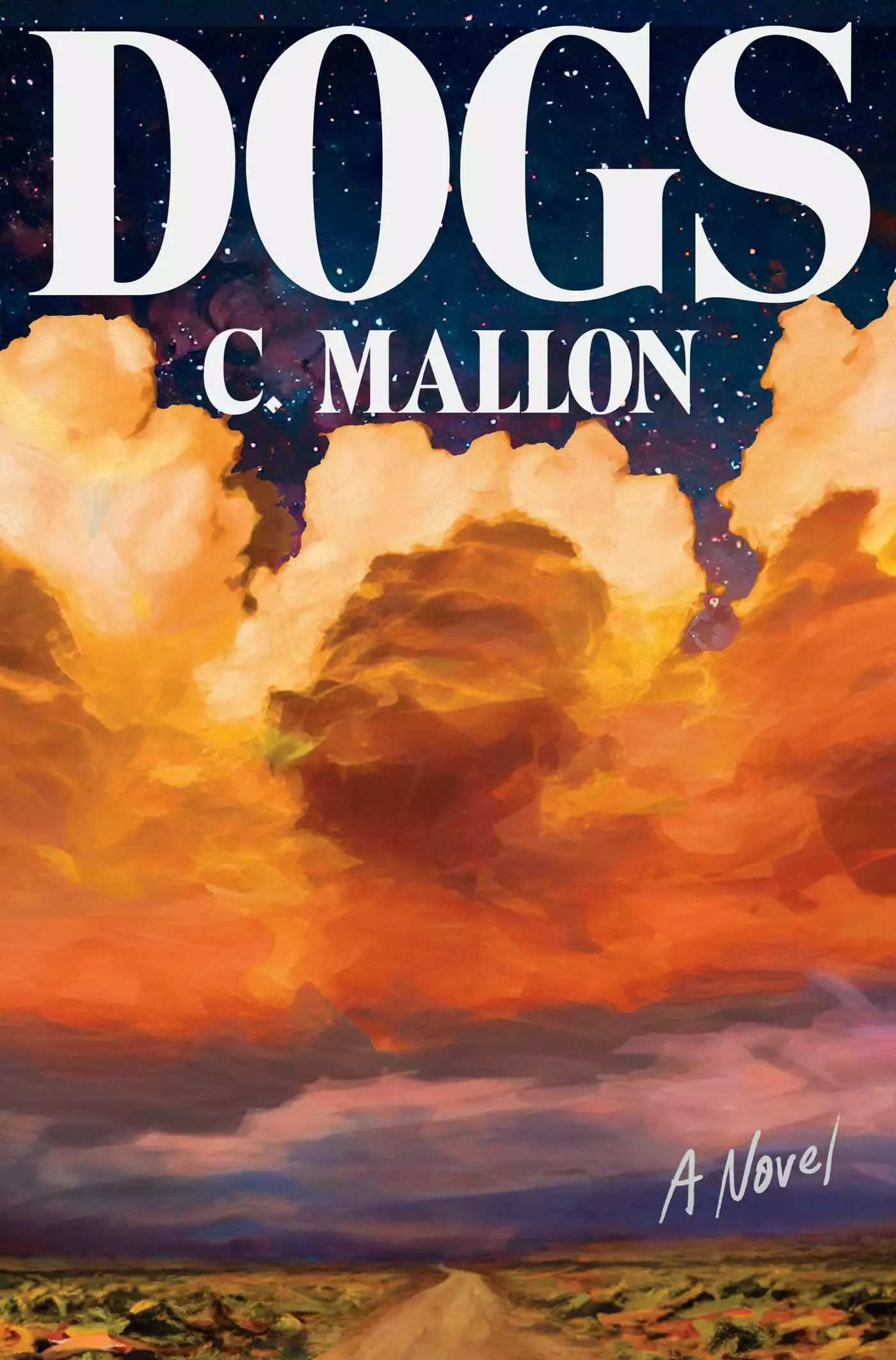
Dogs
- eBook
- Paperback
- Hardcover
- Book info
- Sample
- Media
- Author updates
- Lists
Synopsis
A singular, devastating debut novel, Dogs traces the fallout of one catastrophic night in the lives of five high school wrestlers, asking what can survive in the blast radius of latent trauma and violence.
As night falls on the city of Carbon, Hal and his friends are cruising the backroads in their terrible car. From the wrestling gym to the gas station, from his mom’s kitchen to the mall parking lot, Hal bears quiet witness to the beauty and the horror he perceives in the slow, lonely world of his hometown.
Withdrawn and reticent, Hal is haunted by the specter of violence. Safety and comfort are hard won in Carbon, a town dogged by stories of desperation and brutality, and his own home is a dark vault of troubled and unspoken memory. Hal’s greatest peace is found in the company of his dearest friend, Cody John, whose true compassion offers him a window to a better life.
Over the course of a single night, a catastrophic chain of events is set into motion. Its devastating conclusion will explode the fragile balance that once kept the boys together. Unflinching, resolute and beautifully rendered, Dogs is a stunning exploration of trauma, real love, and the limit of our ability to reach one another.
Release date: August 12, 2025
Publisher: Scribner
Print pages: 224
* BingeBooks earns revenue from qualifying purchases as an Amazon Associate as well as from other retail partners.
Reader buzz
 Please log in to recommend or discuss...
Author updates
Dogs
C. Mallon
What had gone wrong with me didn’t start out with the car. It didn’t end with the car, but the car played a serious part. My friend Dylan bought it used. He got it off a guy called Styrofoam Bob. Bob was this great big autistic kid living in his parents’ converted garage on the west side of town. He was probably in his mid-thirties but everybody would tell you that he had the mental capacity of a little kid. I didn’t think that was true at all. I hadn’t ever understood that. Bob had dropped out of the high school. People were ugly to him there. It made him afraid. For a long time he would only go out at night. You’d see him walking out late in the neighborhood, big gumdrop body, top-heavy, that weird, goofy way that he walked with his knees locked. Broad hands held out right in front of him, cut up in streetlight, making shadow puppets on the split cement and talking to nobody, all by himself, all the time. Kids throwing trash from their scrapped sedans. Kids shrieking terrible things at him. Bob’s mother got him a job, how she wanted him back in the daylight. He worked part-time at the big-box store out by the mall complex, stacking steel shelves too high up for a regular man to reach, bagging the groceries, cautious and totally thoughtful. He did a really good job. His mother drove him there three days a week and his mother would pick him up after. You’d see him waiting on her, sat cross-legged on the curb in his work shirt and his big jeans, sneakers come untied and shoelaces dragging in the dry dirty gutter. I would see her around sometimes. I thought about her sometimes. I thought she had to be so tired. Somebody got to Bob when there was nobody watching him. Somebody sold him the car in bad faith. That was a cruel thing. They cleaned him right out of his savings. He paid what they wanted in cash. It hurt me to think about that. I figured it must’ve been a true blessing for Bob anyhow. Nobody watching him. Something he bought just because he was wanting it, and he had money, he’d worked for that money, and all of his money belonged to him. The car belonged to him. Bob loved the car like nobody had ever loved something before. You’d see him washing it out on his driveway. Dish soap and warm water, big yellow sponge looking just like a regular sponge in his big hands. His hands were always chapped bad from the time that he spent on the car. Anytime he closed his fist tight the knuckles would split up and bleed. He chewed and he gnawed on the pink, itching canyons forged into his quilt skin. His hands looked like hamburger meat. Bob had a lot of sensory problems. He couldn’t stand the grease feeling of all the petroleum jelly smeared onto his skin. They’d spread it on him just like it was peanut butter. It got to be so bad that his mother had to take him to the family doctor. Goldfish and rainbow aquarium gravel. Crayons in the waiting room. She had them slather Bob’s raw hands in lanolin cream and then bind his hands up in long yards of white gauze and tough, flesh-colored medical tape. They sent him back out on the world with his fists tied, the heavyweight champion, nothing won, and he cried hard, and they gave him a grape sucker. Whatever Bob had to give he gave it to the car. It was a bad machine. Brittle and cheap as a tin rocket, inches from rattling red bright combustion. Big boxcar body the color of rough rust and vaulted up off of the axles. It leaked exhaust into itself. You had to drive it with all of the windows down. Both of the driver’s side doors were the wrong color and the suspension was shot. Anytime Dylan hit a ragged, cut-up stretch of road he would hit his head hard on the ceiling. The model had been discontinued. The manufacturer issued a national recall. Anytime somebody crashed it everybody died. I had seen it on the news. Two kids in Colorado left their high school graduation, took the canyon road, headed for some party in somebody’s father’s cabin, and the brakes failed on the mountain highway. They must have been doing eighty-five by the time they struck the power line and rolled, the downed cables still live and binding the car in a tensile cradle, the drag and the spark, and their shirts and hair catching a flame how dry tinder would, tin roof clipped free by their dumb, dark inertia, the driver’s left arm, class ring still on the pointer finger, laying chewed on the median, roughly severed at the shoulder socket joint. Probably carrion birds on the blue sky. None of that was a problem for Bob. He had epilepsy. He was mentally retarded. He hadn’t ever learned how to drive. You’d only ever see Bob hose the bodywork down, work grit out of the treads with a soft-bristle toothbrush or get up on top of the hood with his legs folded, hitting his kneecaps and rocking his body forward, smearing his wet nose upward with his first finger knuckle. Whatever got him to feel good. Bob would sit out on the driveway and talk to the kids and the dogs on the street. Sometimes the fathers would come by and talk with him. Sometimes they’d bring him a bottle of turtle wax, torque wrench, they’d pop the hood for him and look at the spark plugs. Sometimes the mothers would come by and say, how are you doing, Bob, how’s your mom. You’d figure people would be cruel but they mostly weren’t. Mostly they showed him a lot of grace. He was a paperweight. He was a mascot. Even still, Bob’s mom and dad were pretty well inconsolable. They figured sometime he’d get restless and take the car out while they slept. They’d taken to putting the headlights on while Bob was sleeping to run the car battery flat. Somebody always took pity on him, and they’d jump it for him, and his mom and dad would execute the whole sad fraud again until they told him that he really had to put it up for sale. Bob wouldn’t eat for a while about it. You’d see him at the store, stood by the counter with his heart so entirely broken. That was a really sad thing. Bob made the flyers himself and he tacked them up all over town. They said the car had to go to somebody who’d love it for real. They said the price was negotiable. Dylan found the flyer stapled up on some rotted utility pole by the wrestling gym. He tore the printer page, sun-brittle, weakened by weather, down from in between the lost dogs and the garbage thrash bands. He made the long walk to Bob’s faded suburb alone and caught under the black wretched heat of that Indian summer. Dylan smoking, Dylan sweating his shirt through with his foam orange headphones playing punk rock music for him all the time. When I thought about that I could see him do it. Caged in by chain-link, the overpass bridge on the interstate, red eye of October sun open, soldering all the straight lines of his body out. Pausing for red licorice and a cold soda down at the corner store. Dylan found the brick house with the peach pink tulips wilting in the window. Flyer gone damp in his hand, creases shredding how cut cotton would. He went up and knocked on the rusted blue metal garage door. Bob came out, blinking his eyes hard and closing his big fists tight, splaying his fingers back out in a pink baby starfish. Dylan shook Bob’s broad hand, held out the flyer and asked if the car was for sale. Bob said it was, for sure, took the keys out of his back pocket and put them right into Dylan’s hand. Dylan had to have been the first person to come by and look at the car. Any other man would’ve put it in gear and left town. I figure he went through his options. I figure he thought about that really hard. Dylan walked back down the driveway. He got in the driver’s side door and he fit the key into the chrome plate ignition. He punched his tough hands up onto the ridged plastic wheel, and the dash, and he rubbed at his eyes with his knuckles, and hit his fist onto the horn, and he rolled down the window. He called back for Bob and he said, Bob, would you want to come along with me. He said, Bob, all of the car salesmen come for the test drives. He said, it’s policy. Bob’s face split up in this major, bright halogen smile. He scuffed his wrecked tennis shoes on the worn cement, legs straight and stiff in his big jeans, and got in the passenger side. Dylan got the car started. He put it in first and he tooled it out onto the street, left foot double-stamping on the clutch, the seam on his jacket sleeve catching the black rubber seal on the window, locked onto the frame, and Bob, hooting and flapping his hands, just, lit up, so delighted. Coughing on the warm exhaust together in the car. Dylan brought it out wide on the freeway ramp, the tires soft, and bald, and skidding on the powdered gravel, and Bob took to hollering with his head hung out the window like a big dog. I figure it made something different for Dylan, to see Bob that way. He didn’t have to say that out loud for me to know. I could do that for a lot of people. I could work something out for them. We didn’t ever have to talk about it. I wouldn’t ever tell anybody. I just really understood a whole lot more than people probably ever thought. Dylan took the exit on the county line and pulled into the lonesome border truck stop, pissed in the bathroom, paid for Bob’s coffee with cream and with sugar and took out three hundred dollars at the ATM. It was pretty well all of the money he had in the world. It was really decent of him. Dylan drove him home. Bob had his cheek welded onto the factory plastic, fists gripped to the window frame, all of his pale hair sheared back by the drag. When Dylan drew the car up on the driveway he could see Bob’s face, partway crumpled, ridged pink by the outline of the handle and the latch. Dylan thought maybe that he had been saying goodbye. He saw the lace drapes twitch in the window of the house. Bob brought him right on inside the garage. It was dark. He had this great big creased Star Wars poster thumbtacked onto the blue walls. Ice planet of Hoth. Cinderblock under the wallpaper. Wallpaper split with the damp. Bob had a lot of videogames. He had a Super Nintendo videogame console. Plastic faded the blonde color of butter with age and the lettering smeared away, big thumbprint smearing a lilac hollow through the violet plastic of the power button. He had an ivory quilt. Lace trim with the little pink flowers. He slept in a twin wooden bed. I hated that part of the story. Dylan said to Bob, hey, Bob, I really like your room a lot. He was a complicated sort of man that way. He wouldn’t ever have lied to somebody about something like that. He hadn’t ever been cruel in the way where you didn’t know that you were getting hurt. Dylan set the money on Bob’s dresser and he sat down on the carpet floor. Tan carpet, quarter-inch, laid down right onto the concrete. Bob had a hard plastic storage bin, black plastic, yellow lid locked tight down onto it with the thick plastic snaps. Dylan hit the snaps and got it open. The bin was filled partway with Styrofoam packing beads. Bob had been shredding the beads out of big foamy pressed blocks of Styrofoam and he’d been storing them there. It must’ve taken him so long. He must’ve cared about it so much. Dylan sunk his hand down in the polystyrene. He said it felt like television static. Dylan told me, later on, that he couldn’t understand why Bob had done it, but he understood that it mattered. He only ever said that part to me. Dylan wasn’t watching Bob but Bob was watching him. Dylan brought his hand out with the beads stuck on him, clung onto his fingers and his sleeve in a cheap broken set of fake evening pearls. He tried to say, hey, Bob, I like your beads, but by the time he looked around at Bob the big guy was dark blue. He was holding his breath. He’d quit breathing. Dylan tried to get up off the floor and go over to Bob. The cuff on his bluejeans caught the black lip on the plastic bin and tipped it over. The Styrofoam beads spilled on out in a crackling mass of split matter and fixed to the carpet. Bob took a stuttering breath. He was whale-eyed. His body was locked tight and trembling. The way Dylan told it he looked how a stormcloud would. Dylan said that it was something right out of The Exorcist. He said that every time. Let Jesus Fuck You! Bob took a hard breath and screamed. He wouldn’t stop screaming. High, helpless sound in the tin room, just, echoing back. He only quit it to draw in a big breath and then he screamed harder, face dark with the pressure, chest working, ribs pressed out tough, right on the surface, fists split up and clenched, really screaming. Dylan tried to scoop the beads back into the tipped bin. They fixed to his hands and the tan carpet fiber, his wrists, and his shirt, and his bluejeans. Bob smacked his big, clean, pink fist to the cinderblock, got himself bleeding. Thread vessels split in his pink face. Chapped mouth torn wide and bright blood in the fissures. Dylan was losing his mind in the room. He couldn’t manage or stand the great, total, black, battering sound of it. He got up off of his knees and he covered his ears with the heels of his hands, stuck flat, vacuum and pressure. Dylan split out of the blue metal door, walking stiff, agitated, spat out on the heat of the late day. He made it onto the blacktop and turning around he saw Styrofoam Bob’s mother, chewing a cigarette, coming down off the porch steps in her bathrobe. They looked at each other. He said he was sorry. She said to forget it. Forget it. Dylan took to walking down the dotted yellow median. He couldn’t take the pavement. It was too loud on the planet for him, then. Bob’s mother called back for him, got him turned around. She said, please, God, take the car. Dylan went back up the driveway. He got in the driver’s side door. He put all the windows down, leveled the clutch, got it started and rolled it out into the street. In the next yard, and the yard after, all of the dogs were out, pressed to the tough wire strung on the fences, all barking, and drooling, and howling along with Bob’s screaming, the sound of it carrying with Dylan each street that he ran the car down. All over town the dogs were barking for Styrofoam Bob. They wanted to talk. Dylan had his arm hung out the window, looking sometimes at his own wrist and his white hand in the mirror, Styrofoam beads torn away by the warm wind to pack out the cracks in the concrete. All the dogs followed him home with their coarse voices. Dylan with his head hung out the window, tipped back, breathing in the heat, and maybe sometimes he was laughing, sometimes barking with the dogs. I probably heard that story forty times. I figured he didn’t know what to do with it. He didn’t know where to put it and he wanted somebody there with him. Something had scared him bad. He didn’t want to be scared. Nothing about the story was so funny if you thought about it hard, but Dylan told it all the time, and everybody laughed.
The whole of us together was Carter and Cody John, Zachary, Dylan, and me. I was Hal. It was the fall of the following year when we left Thursday wrestling practice, bristling damp from the steam of the showers, all of us packaged, strapped down and assembled in bluejeans and thermals, all of our long fingers fixing the snaps on our jackets, my Nikes laced tight how I liked for the leather to press on the bone. Late in October the parking lot hit us with leaf rot and woodsmoke, tobacco and soil. Dylan was crossing the black asphalt, leaving the rest of us stood by the cinderblock, and I was watching him, smearing his wet hair back out of his face, caught and held in a shaft of pink afternoon light. Zachary lit up a cigarette. Dylan was bringing the car around. Zachary always sat shotgun and Dylan would drive. Carter lay down in the trunk. Me and Cody John sat in the back. I mostly would take the left side and mostly he took the right. There was room, there, on the bench seat for Carter, but he really liked to lay down in the trunk. Now and then I would look back at him and he’d be laying flat with his legs bent and his hands up to cover his face, twitching his fingers apart so that he could change how the light hit him. That was the way that he calmed himself down. Carter was Zachary’s cousin. He was a really strange kid. We were headed to the gas station for chocolate milk. Pretty often we got chocolate milk and gas station hot dogs after a tough practice. They didn’t go well together. Thick and cold fat of the chocolate milk. Smoke and salt fat of the hot dogs. Sometimes it made me so sick. I couldn’t tag myself out of it. We had a ritual. I was a part of it. It really mattered that I was a part of it. Even with all of the windows down the car still stank of raw gasoline. Motor oil. Cody John hid the low half of his face in his shirt and his sweater to cancel out some of the fumes. Nothing but two eyes above the knit collar, but looking his way I could tell he was smiling, still. Dylan smoking while he drove and me and Cody choking in the back seat. If you got pissed off about it, he’d say, okay, go on and walk if you want to walk. Go on and walk. He’d hold the red cherry point of his cigarette down in his lap, tapping the ash on the stiff dirty thigh of his bluejeans. Whatever pants he was wearing were always birdshot through with crispy black cigarette burns. I wasn’t sure how to level with something like that. It didn’t make any sense to me. All of the wrestling coaches were mad at Dylan all the time. That got me frustrated. I couldn’t tell them how it didn’t matter. Dylan just wasn’t a regular man. He couldn’t feel it. He had this red jacket, tough woven nylon, taut, shiny as spun silk. Silk made out of plastic. That was the way that he was. I tried to meet him there. I figured that was all that you could do for somebody. None of us wanted a car that worked right. None of us wanted for Dylan to quit blowing smoke backward into the cavity of it. We wore the oil and smoke in the fibers of our hair and clothes and it made us the same as each other. That was a lot like the laundry detergent my mother used. Lavender. Anybody could’ve known me by that right away. Even with both of their eyes closed. Even with both of their hands up to cover their eyes. The sign on the road told us that we were leaving Carbon city limits. I knew it already. I put my forearms and shoulders out through the rear window and rested the bones of my chest on the rubber seal. There was some power to how the light hit with the sun low and open. Brittle blue haze on the broad sky. First of the hard frost the night prior. All of the leaves burnt the color of rust. Dylan was running a stop sign. We cut out onto a single-track farm road. I knew it already. Yellow wheat. Pylons and radio towers. We crossed Collins Creek. Something bad happened in Collins Creek when we were children. There were these two little twin boys, both dressed in their corduroy dungarees, taking a tan pack of safety matches from the kitchen drawer, coming down off of the screen porch to trample a path through the prairie grass, single file, gone to trap frogs in a Tupperware. Whole of the county the color of dust. Tinder dry. August. Passing the matchbox between them like it was a dollar. Like it was a claw machine prize. Strike strip rubbed rough on their soft hands. They knew not to play with fire in the house. They hadn’t known that upriver and one mile north on the highway a big eighteen-wheeler had jack-knifed, and folded, and come to rest, stiff as a pill bug in death, on its leftward side. Something had run out in front of it. Maybe a coyote. Maybe a kit fox. That truck had carried some eight thousand gallons of concentrated diethyl parathion. Cotton poison. Heavy pesticide. You couldn’t breathe it in. You couldn’t touch your hand to it. It’d damage your brain. The chemical company painted the tank in a sun-golden yellow so nobody would be afraid. Bright hull of steel, crumpled, split by the impact to cut loose the sun-golden toxin. Laminar flow set to foam on the tarmac, slough down through the storm drain and breach the low creek bed. It turned the half-stagnant creek water milky as any blind eye. They hadn’t known any better. They didn’t get anything wrong. I couldn’t help but to see them, there, little feet pinned in the silt and the marsh mud, and probably laughing, with no way to change it, and no way to turn it around. Which one of them struck the spark to light. Which one of them had drawn breath first. Who got a fistful of minutes more. When the bright head of the match hit the bloated creek, grub white and reeking of sulfur, it could have been gasoline. It wouldn’t have made any difference. Some long, tough farm kid ran out of the house when he saw the dark spiral of smoke on the blue sky. He ran track. He was the first on the scene. When they put him on the local news he couldn’t hardly talk. Choking on horror. He sat in the dirt and he wept. Hands gone to blister and ash. Acres of crop razed to cinder. He got there so fast and he dragged them out, burning. Eyes turned to wrinkled white skin on hot milk with the heat of it. Both of them blinded. Lungs charred and hair burnt to filament wires. They hadn’t known they were dying. They’d thought their mom would be mad that they’d ruined their dungarees. I couldn’t think about that for too long. There in the car I was turning my body around to look upward. I hauled my shoulders out through the red window frame. Fence struts and barbed wire smeared soft, blurred soft with velocity. I put my sneakers up onto the mock leather seat. My body a fulcrum. My body a crowbar. I wanted my pelvis, my sternum and femur-bones welded hot red to the tough iron frame of the car. I could’ve been bad machinery, too. I would’ve liked to have been that. I put my hands up to grip the red edge of the roof tight and I lay my head back. Candle aspens and the cottonwoods, cadmium yellow, and searing, and throwing sharp needles of porcelain light. Black wire strung on the blue sky. Monarch maple with its limbs gnarled and catching a sun flame, hands open, stark red on the blue sky. I wanted everything red all the time. I wanted my own bright, terminal planet of October. Drifts of crushed leaves on the hardpack dirt, bleeding. Cody John put his hand up and he gripped onto me. He was strong. He said, come on back, Hal. I thought about that, and looked at him, jaw pinned to collarbone, hung off the roof with my hands hurting. Quick sun shredded through the sparked trees to break up the patterns of his face. One eye gone liquid with light and then stamped out. Hair in a tiger-bright flame and then stamped out. He didn’t look right. I didn’t want to look long at his face. He looked like a videogame and he looked like somebody’s home movie. He could’ve been anybody. He could’ve been any other man. I fit my body back in through the window. All of the tension, caught, pinned tight and lethal as fishing line sewn through his soft face, went slack. I was glad of it. Cody John hit my right shoulder too hard but he wasn’t mad. Back in the car he was wearing his face the same way that he always had. That was a hallowed thing. I could still feel him there, five divot fingertip pressure, stiff, prickling hot through my bluejeans. I screwed my knuckles, tough, onto my sternum, too hard, how I wanted to get it to hurt. Dylan said, keep your limbs inside the ride. He was looking at me really weird in the rearview. Zachary snorted. He was curled down in his seat like a little kid, sneakers stamped up on the dash. He wasn’t wearing his seatbelt. Cody John wore his seatbelt all the time. I wasn’t sure what they kept me around for. Most of the time I was happy to be there. Sometimes somebody would say or do something and I would get troubled and strange about it. Nothing so bad had to happen in real life for me to get really freaked out on the inside. I couldn’t tell it to anyone. Mostly I had all the words but I couldn’t explain. Cody John made it okay for me. That was his big magic power. Nobody taught him to do it and somebody else would’ve gotten it wrong for me. Some other man would’ve been the wrong man.
Dylan pulled up on the soaked, oiled lot of the Chevron station on the western border of our town. We were headed to my parents’ house for dinner. That wasn’t totally unheard of, but it for sure was unusual. My house was far out of town. Zachary popped the trunk for Carter. Dylan was chewing his ragged nails. I hadn’t ever met somebody who bit their nails half as badly as Dylan. He’d bite them right off. I hadn’t known you could even do that to yourself. Carter unfolded his long body, blinking, and set his shredded sneakers on the tarmac. He had this alien energy to him. He was a really good wrestler. He wasn’t big and he wasn’t strong, but he was fast. He was really fast. I found him tough to get close to. I could’ve probably tried harder with him. I could’ve been a lot different. I got up out of the car and I stood with my hands on the heat of the hood, looking out at the farm sat due west of the gas station. Corn stalks clipped stiff and splintered by the combine. Farmhouse with floral bedsheets strung out broad on the clothesline. Pigs in the pen with their thick bodies pink raw and smeared with cold dirt, and a turkey vulture, hanging long, way up, hunched crooked into the thin air. Some type of great orange moonrise, big moon set to shiver so pale on the far twitching rim of the planet that you couldn’t hardly make it out at all. Three grown boys in coveralls, steel boots and lineman jackets hauled cut lumber backward off the flatbed of a baby blue pickup. Sometimes I wanted for power tools. Hardware and drywall screws, claw hammer, box cutter, hundred-grit sandpaper. I wanted something to hold and work over in both of my hands. I liked to feel something change under all of the pressure I put out. I liked to feel my weight met by the mass of the planet. I had a body to strike downward. Earth had a body to hit back. Nobody ever went anywhere. There was just so much to watch on. I could’ve stood there so long. Dylan hit me on the shoulder with his corner fist. I came back to myself. I’d been working on that. He said, come on, Hal, you creep, and he laughed. I wasn’t so sure why we hit each other that way but we did it all the time. Being together would have us all built out of shoulders, big jackets making us feel bigger, hitting up onto each other, just, locking our horns. I figured wrestling gave us an out for those quick, cheap collisions. Cheap contact. Sometimes I thought that my body was miles broad. I didn’t know that I’d fit through the doorway until it had happened already, and that was a blessing. I didn’t mind that so badly at all. I followed Dylan inside of the gas station. Floor tiles mottled pink. Mildew gone black in the grout. Dust blue fluorescent tubes set in the chrome ceiling brackets and throwing light brighter than bleach. Bright as white sugar or rock salt. Carter was counting the Mountain Dew cased up in glass. Zachary was coming out of the restroom. Zachary had to have pissed at least a thousand times a day. Cody John was standing in the candy aisle, touching all the colors on the plastic. I went over to him. He had two bottles of chocolate milk in his hands already. He had got one for me while I was out on the parking lot. Cody John said, hey, Hal, how do you feel about Milky Way bars. I told him that I didn’t like them so much as I liked Snickers. Cody John said Milky Way bars were garbage. He said he’d rather eat fucking Almond Joy. I honestly kind of liked Almond Joy, but I wasn’t about to say that to anybody. I knew that Cody John loved Butterfingers a lot. I found Butterfingers totally frustrating. I hated the way that they fixed into the hollows of my teeth and glued my jaws shut. I took a package of the little Butterfingers off the wire shelving for him anyhow. I had seven dollars in my hip pocket. All the stores were selling dollar bags of candy, individually wrapped for Halloween. I had a thing about that. I wanted the kids to come by to our house with their mothers. I wanted for them to reach for twin fistfuls of plastic, to see them pink, shining, wrapped proud in their costumes with knit mittens safety-pinned into the backs of their jackets, soft length of cord or yarn bridging their wingspans and keeping their little fat hands warm forever. I didn’t ever say that out loud. I figured they would’ve all called me a dumb creep. I felt like a dumb creep, sometimes. I didn’t mean myself always the way that I came across. Dylan was up at the register, Zachary sewn on his shoulder like two people really in love. They were laying their weight on the particle board and the laminate, paying for weak beer and cigarettes and hitting on the waxy girl working the counter. I’d seen them do it before. Her name was Wendy. She’d gone to our high school. She’d gotten pregnant fall semester of her sophomore year. Even though the father didn’t wa
We hope you are enjoying the book so far. To continue reading...
