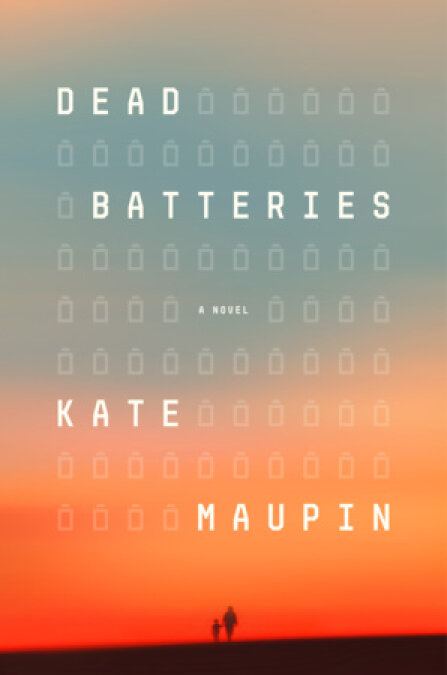
A single mom and her neurodivergent son battle for survival and stability in a post-apocalyptic world, one that is arguably no less harsh to them then the pre-pandemic one, in this gripping, one-of-a-kind debut.
“Imagine The Road from a mother’s perspective.”—The New York Times Book Review
Ever since May’s husband decided parenthood wasn’t for him and left, it’s just been May and her autistic son with high support needs, Davis, against the world. A rather unwelcoming one that never had much patience or understanding.
Then 99.9% of the population was wiped out by a virus in just a few weeks, and that world ended. May has kept herself and Davis alive only through the self-imposed isolation she got so good at in the Before. They have their routines, their cozy nest in an abandoned library, and most importantly, the old battery-powered Game Boy that offers Davis familiarity and comfort in a world that’s difficult to understand.
One day May runs into a stranger while out scavenging for the precious batteries that keep Davis's Game Boy alive. This stranger calls himself Bird, he has intel—and a proposition. Supposedly there’s an entire haven of survivors nearby. Bird wants in, and he needs May and Davis to play along as wife and child in order to guarantee himself a spot. Besides, wouldn’t May want to be part of a community again?
Not particularly—but the survivors have batteries. So she reluctantly agrees. And while May knows better than to trust the man who ripped her and Davis out of their routines, she can’t help but open up to him. But when Bird’s true motivations come to light, her old life collides with the new in terrifyingly dark ways, forcing May to question how far she would go to protect her son. How long can she and Davis last until the batteries run out?
Release date:
October 27, 2026
Publisher:
Crown
Print pages:
288
* BingeBooks earns revenue from qualifying purchases as an Amazon Associate as well as from other retail partners.
Okay, I’ll say it. Standing on a welcome mat that’s not so singed that the cluster in the corner is still recognizable as sunflowers, and turning the doorknob on a decidedly unlocked door, I feel like an idiot. To think, all the time I’ve wasted searching ash-blackened counters in the First Nationals and Dunkin Donuts franchises, I could have been trawling other people’s living rooms, digging through junk drawers and cabinets instead of stockrooms. The businesses are finally all picked dry. Which is a real magic trick, because I haven’t seen more than ten people since this whole thing started, and I’m sure as shit that no one’s traveling by the streets. So there can’t be any loading trucks full of goodies to blame. And I’ve never seen a camel in Connecticut, so where are all these magical pack beasts?
You’d be proud of me, Pat. Your little goody-two-shoes turned into a real cat burglar. Less admirable, I imagine, is how long it’s taken me to figure out that the survivors aren’t the ones responsible for the damage. Even in the beginning, the buildings that were looted were destroyed. Scattered glass, overturned shelves, full Anarchist Cookbook away game. This was before the fires, so it must have happened in the early days, back when every station still ran the twenty-four-hour breaking-news emergency reel. The anchors changed, but the graphic of white lungs in the upper left-hand corner remained like an afterimage against the retinas even when you closed your eyes at night. What if, in the final weeks, while Davis and I stayed inside, staring at those dangling, sickly lungs, everyone else was out doing some early Christmas shopping at a steep discount? I don’t blame the people who squirreled everything away. But that’s when it hit me: squirrels have caches, don’t they?
So here I finally am, Pat, at the crack of dawn in one of the few neighborhoods not turned into coal. I pass through a door where everything waits for me, frozen in the dark. Keys in a bowl by the door. Hooks above a bench in a hallway lined with light jackets and strewn with shoes. A kitchen to the left offers me a jar of unopened peanut butter. I clutch it, praying it’s still edible, and pass into the living room.
The mantel is covered in framed photographs. Even more, easily a decade’s worth, span the wall, transforming a blond baby into a round-cheeked toddler in a wagon and then into a lanky child standing back-to-back with another girl, both in matching riding outfits.
My attention pings on one photo. The group smiles at me from their picnic-blanket huddle in a golden-hour-lit field. They are all dressed in blue, except for the man in the middle wearing a black suit. The blueberry of a baby he holds in his lap nearly blocks the view of his blue tie—the only thing that connects him to the other four, a cohesive cluster of seawater. The mother beams. She looks like a Cathy. With a C, she corrects. Who volunteers for charity bake sales and has hobbies that produce beautiful things. I wonder how much stress she felt, organizing all of these photographs. Did you quarrel with him, Cathy, for coming straight from work without a change of clothes to look like the rest of you? Or were you proud of his business-chic attire? Did you pick out the tie, or was it a compromise from the get?
Something painful curses internally, near my diaphragm, until I realize I am squeezing the peanut butter jar into my stomach. I stop, but still cannot take a full breath. I tried the family-photo thing—once, when Davis was eighteen months old. Not two minutes into the session the temperature dropped and he began screaming. His little body contorted, twisting into rigid shapes that could only break, not bend, as he tore at the tidy miniature chinos and knit sweater I’d bought for the occasion. The photographer didn’t know what to do. She kept backing up, as if a wider-angle shot would blur our imperfections.
I cupped my hands around his beautiful round face to blow hot air onto his nose, and I dragged him from the photogenic, rock-wall-lined New England wooded path to the car, hoping to warm him up. But he was a stone when being fit into the car seat and a river when he broke free and slipped into the crevasses I couldn’t reach. I remember saying, “Please, just another minute. He’ll come around.” But I didn’t really mean Davis.
I thought you were coming, Pat. I know you only said you’d try, and I also know better. But I kept hoping.
In the end, the only usable photos from the session were a short series of Davis, teary-faced but in focus, standing on the wooded path, eyes to the sky. I am a red blur in the background, barely indistinguishable from the autumn foliage. I always meant to frame one of them.
I take a deep breath and scan the wall. The woman in these photos is dead. Her neat-as-a-pin husband who showed up for the photo in his crisp blue tie probably choked to death on his own blood. Their two daughters and that little boy with the freckles who sat so obediently, ready for family-portrait immortality—they only exist here, now. But even though I know this, and my chest clenches like it’s collapsing inward, I can’t overcome the sour sensation that narrows my eyes and keeps me moving.
In the back bedroom, I learn that for once I’m not alone in my scavenging. And I don’t mean in the way Davis is always on my mind as I struggle to meet his needs. It’s a process that increasingly requires my crawling through the ash-blackened remains of buildings, questioning whether I’m a terrible mother for dousing him with enough cough syrup to black out his night in our library hidey-hole some ten blocks away. There’s no winning. If I hadn’t done it, I’d be worried he was waking up without me. No, I mean her—the real reason, if I’m being honest with myself, that I’ve made my life so difficult, trawling through dim megastores and chain pharmacies instead of scavenging any of the houses.
It wouldn’t always be a her. But this time it is. She lies back on the bed, rotting in a pink pajama set and sunshine-yellow robe.
“Hi, Cathy,” I whisper. I wish I could say I had enough humanity left to leap back and scream. I’ll have to settle for wilting against the door frame.
The room doesn’t smell as bad as it should, but then again, she’s probably been here for over a year. Damn near everything that nature’s wanted to do to her has already been done. Nothing about death is neat, even for someone in a beautiful house, quietly alone, wrapped in sunshine. (And why are you alone, Cathy? Husband didn’t come home from the office in time when it really mattered?) She lies on sheets only, a cobwebby quilt crumpled at the base of the bed and brown-speckled pillows cast away on either side. She exists in a halo of muddy darkness, swimming in a stain of blood and fluid and who knows what else. I’m staring, not at the smiling eyes from the photos hugging the wall but at vacant sockets. But my dust-lined throat cracks as a tightness spreads across my chest.
“I never had what you had.”
Yeah, I hear it. God, I’m an asshole.
I edge along the wall of her bedroom. Though the downstairs cupboards and junk drawer didn’t yield results, maybe I’ll fare better in the master bath. I open the medicine cabinet before the harried lady in the mirror can get aggressively honest with me. Mirrors. Add those to the list of things I don’t miss, though technically, none have gone away. Just the obligate pull to look. I always hated pictures of me, I think because they never agreed with my reflection. Is that vanity? Or was I just trained to see myself in third person, ready to stay ahead of judgment’s guillotine by fixing anything that might be deemed inappropriate, unwieldly, too natural, too . . . much, or little, at a moment’s notice? When pictures of me rarely matched that exhaustive cultivation, it felt . . . cruel. Maybe just pointless. Oh well, there is no point to it, anymore.
Cathy keeps a scant medicine cabinet. There are bandages, but we already have too many of those. Some orange pill bottle with a name I don’t recognize, a nasal spray, floss (damn, if it were only in stick form, I can’t get Davis to use the string). I leave the cabinet hanging open, mirror facing away, and dig through the drawers to either side of the sink. Bobby pins, more bandages, and a small, electric razor. My heart skips a beat.
“Holding out on me, Cathy!” I call into the other room as I strip the back casing of the razor to find two AA batteries staring back at me. All batteries are valuable now. But AA’s? Oh, AA’s are gold. Miraculously, these have not corroded acid spittle all over the inside of their tiny home. This brings my stock up to five, and hallelujah for that. Fingers crossed they still have any juice left in them.
We hope you are enjoying the book so far. To continue reading...

 Please log in to recommend or discuss...
