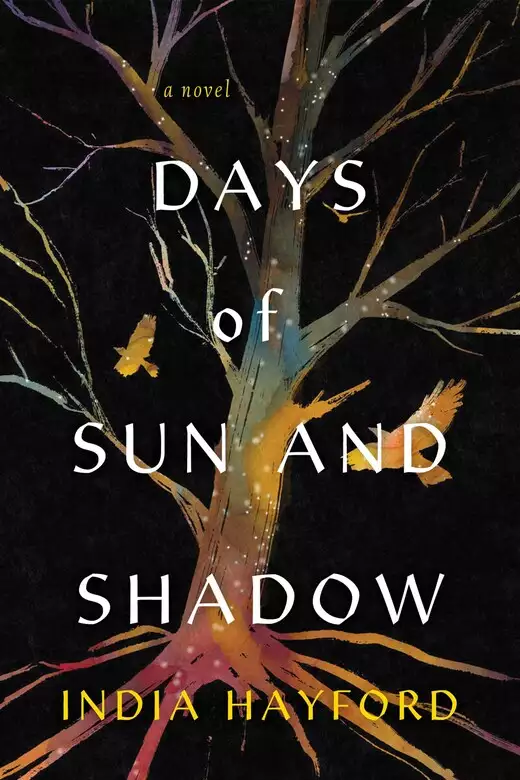
Born into tragedy but gifted with a powerful connection to the natural world, a resilient young woman comes of age amid the wild beauty of early-1800s Alabama, Arkansas, and Texas in this incandescent, hauntingly moving epic about home, horses, human connection, and the transcendent awe of nature for readers of Go As a River and The Giver of Stars.
Alabama, 1813: In the midst of the battle and massacre at Fort Mims, a baby is born. It’s a portentous beginning for Emilie McCain, who has inherited the Sight—visions that come in dreams guided by an owl. Owl is Emilie’s steadfast companion, a welcome balance to her mother’s neglect. Along with the Sight, Emilie possesses an innate talent for communicating with horses. In an era when a woman legally belongs to her husband, such gifts may be the only things that are hers to keep.
The family makes a perilous move to Arkansas Territory, where Emilie becomes a master horse trainer and leatherworker. For all her skill with horses, Emilie sometimes fails to see the dark truth about the people she encounters. Other dangers, even when predicted, may be impossible to defend against—yellow fever, greed, vengeance, and the unforgiving land itself.
Through love, marriage, heartache, and hardship, Emilie gains strength and resilience. After years of avoiding emotional entanglements, she meets a man who presents her with a horse to be trained and an offer of friendship she could sorely use. But with his arrival come other tests of her will and her judgement. Finally, a shocking revelation inspires an act beyond her imagining—and may set her free to find the place she truly belongs . . .
Release date:
June 30, 2026
Publisher:
Kensington Books
Print pages:
400
* BingeBooks earns revenue from qualifying purchases as an Amazon Associate as well as from other retail partners.
Perched in a catalpa tree fifty yards from the gates of Fort Mims, Owl patiently waited for Death. A small, terrified Negro boy ran toward the palisade walls from the pasture where he’d been tending cows. He stumbled, sprawled onto his stomach, and leapt up to run again.
A week earlier, the same child had raced into the stockade, shouting, “Indians! Indians in the woods!” Believing a long-anticipated attack was imminent, Major Daniel Beasley ordered the gates closed and barred as armed men ran to their battle positions at portholes in the walls and along the bastion. White settlers, mixed-blood Creeks, and enslaved Africans huddled in the crowded yard, held their collective breath, and braced for an attack that never came. Days passed without so much as a glimpse of an enemy warrior. Anxiety waned and irritation waxed among Fort Mims’s occupants. At last, Major Beasley sternly reprimanded the child for having too much imagination and sent him back to the pastures to mind the cows. He unbarred the gates and people returned to their daily activities.
Beneath his professional façade, Beasley seethed with resentment. He’d been assigned to the insignificant makeshift enclosure and its quarreling inhabitants when civil war broke out between rival branches of the Creek Nation in August of 1813. Determined to keep their land and their traditional ways, the nativist Red Stick Creeks vowed to destroy the Lower Town Creeks and their American allies. So far, the only fights had been between Beasley’s own soldiers.
The wide-eyed child dashed through the open gate and seized the arm of the first adult he saw. Breathless with panic, he gasped, “Indians! Out in the woods, thick as hair on a dog.”
The accosted soldier seized the child and shook him so hard that his head snapped back and forth like the tip of a whiplash. “You little liar. I’ll show you what happens to boys who holler wolf once too often.”
Five minutes later, the humid August air reverberated with the slap of leather against skin. Childish shrieks punctuated each blow. Tender-hearted folks sought the far edges of the enclosure, palms pressed against their ears to block out the heart-rending sobs. Others, less sensitive to brutality and still irritated by being unnecessarily confined to the fort for a week, watched the flogging without wincing.
Sickened by the child’s cries and frustrated after twenty-four fruitless hours of labor, Delpha McCain lumbered past the gaping spectators and through the unguarded east gate into the countryside beyond. Her mother caught up with her halfway across the field that surrounded the fort.
“Where do you call yourself going?” Morag demanded, grabbing her arm. Delpha shook off the restraining hand and kept trudging toward the trees. “You’ll drop that baby right out here in front of God and everybody.”
“Don’t care,” Delpha panted. “I’d rather have it in the shade with snakes for midwives than spend one more minute inside that madhouse with all those whining, fussing, stinking people.”
Morag sighed. The trees might veil dozens of hostile Indians, but all in all, she’d about as soon face a band of warriors in full war cry as challenge Delpha in one of her moods. She looked back at the fort. Its fragile palisade enclosed her grandchildren and almost five hundred other souls. It wasn’t much, but if the little cowherd wasn’t lying, it was safer than being caught out in the open. Despite the first false alarm, Morag believed the child. His fear fueled her own.
Delpha moaned as another contraction caught up with her. She stopped in her tracks, grinding her teeth against the pain. Once the seizure eased, she resumed her determined trek toward the relative coolness and privacy of the forest. Morag caught her lower lip between her teeth, wondering if she could bodily drag Delpha back into the fort.
I’d have about as much luck dragging the fort to Delpha, she thought. Reluctantly, she followed her daughter.
The unfortunate child’s shrieks had barely ceased when a militia scout galloped past Owl’s catalpa tree on his way to the compound. Catching sight of Morag and Delpha, the rider turned his horse’s head toward them and cantered across the rough ground, waving an arm to catch their attention. The elegant lines of his face bespoke a mixture of races in his ancestry.
“Ladies,” he said, lifting his hat slightly. “Y’all need to go on back to the fort. The Red Sticks are coming. It ain’t safe out here.”
Delpha glared at him. “It ain’t safe in there,” she said, fiercely imitating his mountain drawl. “Dan Beasley just beat the stuffing out of a harmless boy for even suggesting an attack is coming. Mind he doesn’t do the same to you.”
The man’s eyes shifted to Morag. She nodded. His face hardened. “I’ll see what I can do to convince him. In the meantime, y’all head on back into the stockade to be on the safe side.” He touched his hat brim and urged his horse toward the open gate. Turning her back on him, Delpha tromped doggedly toward the trees.
A few feet from the beckoning shade, another contraction rumbled its way through her distended body. Her clutching fingers found Morag’s wrist, and she pressed her tongue hard behind her teeth to keep from moaning aloud. She swore to make this seventh pregnancy her last. James wouldn’t like it, but too bad for James. It wasn’t him walking in the hot sun, dripping with sweat while a Negro boy screamed for his mother. No doubt James was comfortably ensconced at a colleague’s house in St. Stephens where he’d gone to reestablish his law practice. James liked country life but had reluctantly acceded to her insistence that they move back to town. She ignored her part in his absence and devoted herself to resenting his desertion of her and their children at a bad time.
No amount of law is going to convince the Red Stick Creeks to share Alabama with us. He should just take us back home to South Carolina.
In James’s absence, the two oldest McCain sons had collected Delpha, Morag, and the four youngest children from the farm and conveyed them to Sam Mims’s ragged collection of buildings. The surrounding fence was barely sufficient to keep a cow in, much less keep the Red Stick Creeks out. Delpha hated the stockade, hated the people crowded into it, hated the damned Indians who kept her from laboring in her own home. She hated that primitive dogtrot cabin, too. Their house in South Carolina hadn’t been elegant, but it had been made of sawn lumber, had glass in the windows, and looked out onto a city street lined with similar houses. She glared at the tree stumps and churned-over dirt that marked the buffer around Fort Mims. She was sick of looking at ugliness, of hearing ugliness. At least the Negro child had either had his last lick or passed out from pain. Thank the Lord he’d shut up, whatever the reason.
Morag set her teeth against the bruising strength of Delpha’s grip and gazed across the pasture to distract herself until her daughter’s latest contraction subsided. A flicker of movement in the forest on the far side of the clearing stopped the breath in her lungs. She wrenched her wrist from Delpha’s fingers, smacked her hand into the small of the woman’s back, and pushed her toward the shelter of the forest’s edge. Owl swooped out of the catalpa tree to circle over the fort.
“What?” Delpha stubbornly dug her feet into the sandy soil and pressed her free hand against the bulge under her apron. “Ma, quit shoving me! Give me a second to catch my breath.”
“Hush, Delpha,” Morag whispered fiercely. She hauled Delpha’s arm across her own shoulders to support and hurry the laboring woman’s footsteps. “They’re coming.”
She dragged her uncomprehending daughter into the shade of the trees just as the first war cries shattered the air. A narrow game trail unfurled at their feet. Morag dove down it like a scared rabbit, towing Delpha in her wake.
Addled by labor, Delpha stumbled a few feet forward, then glanced back toward Fort Mims. Hundreds of warriors poured from the forest and across the clearing. Some of them carried tree limbs that they jammed into the portholes. With the firing holes plugged, the attackers hacked at the walls. Soldiers shot from the bastion, but as soon as one Indian fell, another took his place. They ripped open the flimsy walls and poured into the compound.
Delpha tore her hand from Morag’s grasp and lumbered toward the fort. “No! My babies are in there.”
Morag grabbed Delpha’s long braid and jerked her deeper into the trees, thanking God that the warriors had not chosen that section of forest for mounting the attack. The younger woman took a wild swipe at her mother. “Let me go, you old witch. My babies—”
Morag swung her around and slapped her so hard across the face that she nearly fell. “If there was any chance of saving them, do you think I’d still be here with you? Move, Delpha. Now.”
Stunned by the shock of being hit and by the screams and gunfire from the fort, Delpha obeyed. They forced their way twenty yards down the game path before the next contraction clobbered her. Something popped and a stream of water poured from between her legs. She wrapped her arms around the nearest tree for support, her lips drawn back in a grimace. Her moan rose to a high keen. Morag wrapped her arms around both Delpha and the tree she clung to, providing what comfort she could, her soft breasts warm against her daughter’s back. When the contraction eased, Delpha turned in her mother’s arms and tearfully returned the embrace.
“My babies …”
“C’mon, lass,” Morag whispered into her tangled hair. “Keep going.”
Inch by hard-won inch, they fought their way through the underbrush, driven on by the sounds from the fort. Upon reaching a small clearing next to a creek, Delpha could go no farther. When babies are ready to come, they come. She squatted on the ground and began to push.
Something crashed down the game path toward them. Morag leapt up and grabbed a broken branch, ready to fight off whatever threatened her daughter. One of her half-Creek neighbors stumbled out of the undergrowth. A painted warrior burst into the clearing right behind him. Before the neighbor caught his balance, the warrior shattered his skull with a single vicious blow of a red-painted war club. The unfortunate neighbor sprawled on the creek bank like a rag doll, one lifeless arm trailing in the water. The Indian spun on the ball of one foot to face the women.
“You get on out of here!” Morag shouted, threatening him with the branch as if she held a steel claymore instead of brittle wood. He leapt toward her. She lunged forward, aiming the tip of the branch at his chest. The Creek knocked her poor weapon aside with contemptuous ease. To his utter astonishment, Morag leapt at him like an infuriated panther, her clawed fingers missing his eyes by the width of a straw. Bloody tracks followed her broken nails down his cheek. Swearing, he backhanded her. She stumbled sideways from the blow and hit the ground on her right hip. With a big smile, he raised the red club again.
A rock thudded into his right elbow and his nerveless hand dropped the club. Another rock cracked him in the jaw. Reeling from the impact, he dodged the third rock and grabbed Delpha’s arm to prevent her from throwing the fourth rock grasped in her fist. She ducked her head and sank her teeth into his wrist until they contacted bone. He yelped and tried to shake her off, but she bit down harder as the strongest contraction yet dropped her to her knees. She howled with fury, fear, and pain. Her victim howled in unison.
Owl landed on a branch above Delpha. Spreading her wings above the laboring woman, Owl spoke harshly to the warrior in the language of owls. He didn’t heed the bird’s warning but twisted his free hand into Delpha’s hair and yanked it viciously, trying to pry her teeth out of his wrist. Owl dropped out of the tree and drove her talons straight into the man’s eyes.
The blinded man grabbed his face with both hands, screaming. Blood poured between his fingers to splatter on the ground. Morag scrambled across the forest floor after the club. Gripping it in her fist, she sprang to her feet. With all the strength in her wiry arms, she slammed the club sideways into the warrior’s head. He collapsed into a heap, bloody and still. The silent owl circled overhead, waiting to see if he got up again.
‘Ma!” shrieked Delpha. A tiny dark head protruded from between her legs. Morag dropped the club and caught the child as it slid into a world that smelled of blood and death. A single cream-and-honey-colored feather floated down, brushing the newborn girl child just as she drew her first breath. Using the hem of her skirt, Morag gently cleared the baby’s nose and mouth.
“A daughter,” she said. She held out the child to Delpha, but the exhausted, grief-stricken woman waved her away.
“I don’t want it,” she said. “Drown it in the creek.”
“You know I won’t do that,” Morag said gently. “Take her. She’s beautiful.”
“You try to hand that thing to me again, I’ll throw it in the creek myself.” Delpha crossed her arms over her chest, shivering so hard in the August heat that her teeth clicked together.
“Delpha …”
“It’s the reason my children are dying!” Delpha cried in anguish. “Kill it! Kill it while there’s still time!”
She groaned and collapsed to her knees as the last stage of labor began.
Morag gathered the baby girl to her breast and backed away, too shocked by Delpha’s words to go to her aid. Keeping her mind a perfect blank, she carried the child upstream of the dead men and knelt beside the flowing water to wash the birth fluids from the baby’s body. Owl perched in a heart pine nearby, watching.
As soon as the last stage of labor ended, Delpha abandoned the bloody afterbirth and stumbled back to the edge of the forest where she could see the fort. Morag didn’t even look up to watch her go. Clutching the baby girl to her breast, she sat cross-legged on the sandy streambank, rocking back and forth, and wondering which screams filtering through the trees belonged to her other grandchildren.
Fort Mims died hard. Man, woman, and child fought until every one of the five hundred lay dead in the ashes of the fire or were pulled off into the unknown by their captors. Delpha, Morag, the baby, and Owl kept silent vigil as their family, their friends, and their enemies perished in the onslaught of violence and fire. Delpha perished, too. She just didn’t die.
The morning I turned seven, I woke up knowing my Aunt Cillie was dead. I loved her so much that I thought the loss of her would kill me. I bawled until I scared my usually unflappable father, who couldn’t get a sensible word out of me. When my parents finally realized I was crying over Papa’s sister, Cillie, my mother stomped her foot and furiously smacked her hands together like she wasn’t any older than I was.
“I oughta slap it halfway to Sunday for pitching such a fit,” she snapped. “Scaring us like that. The very idea! You hush that crying, you!”
“Stop, Delpha,” Papa said. He scooped me out of my tangled sheets and nightgown, pulled my dress over my head, and carried me out the door.
In the stable, I sat sniveling on a milk pail while he tacked up his big black horse. He lifted me onto the saddle, climbed on behind me, and carried me straight to Cillie’s house. She was in the garden peacefully hoeing weeds in the summer heat when we rode up. I dropped off the horse like a stone into a river, not waiting for Papa’s helping hand.
“Aunt Cillie! Aunt Cillie!”
She looked up from her work, astonished to see me running toward her, shrieking like a dozen threatened killdeer. I flung my small body against her legs and threw my arms around her knees, howling with grief. Aunt Cillie bent down to hold me close and whispered soft words of comfort while I gasped and gulped against the rough homespun cotton of her skirt.
She looked up at Papa as he looped Black Jack’s reins over the fence. “James, what on earth?”
He shrugged, the left side of his mouth twisting up into his peculiarly sweet smile. “Well, Priscilla, she woke up hollering and all we could get out of her was that she was worried about you. Delpha …” His voice trailed off, but just saying my mother’s name was enough. Aunt Cillie wasn’t stupid. She could just about imagine what my mother said.
She scooped me up in her strong arms and carried me over to the well house for a cool drink of water. Wetting the hem of her apron, she gently washed my face. I calmed down a little bit, but the sense of loss didn’t evaporate even when she hugged me and said that she felt just fine. She and Papa shared a laugh over what they assumed to be my silliness and assured me I’d just woken up from a real bad dream. I didn’t argue with them—it was never a single bit of use to argue with grown-ups over anything—but when Papa lifted me back onto Black Jack’s saddle and we rode off, I leaned sideways, watching Cillie wave to us.
“It’s a tater snake! You look out for that tater snake!” I cried.
“Tater snake?” said Papa. He laughed and kissed the top of my head. “Honey, you need to use a curb bit on that imagination of yours.”
The road took a left-hand turn and the trees hid Cillie from view. I never saw her alive again. A few hours later, she leaned down to sack up some potatoes she’d just dug out of the ground. The big old timber rattler hidden in the next clump of potato bushes struck her just below her collarbone and just above her heart. Myrt, her twelve-year-old daughter, heard her scream and came running out of the house to see Cillie stumbling across the garden, mindlessly crushing her cherished tomato and okra plants underfoot. She fought for each breath as Myrt half carried, half dragged her back to the house and put her to bed with a wad of white bread pressed to the bite to draw out the poison. Myrt ran straight down to the river where Uncle Matt was working on the gristmill, but by the time they got back to the house, Aunt Cillie was dead.
Papa didn’t say a thing about me taking on so right before Cillie died, probably because he didn’t know what on God’s green earth to say. When Uncle Matt brought the sad news to us, my mother spun toward me, staring like I’d turned into a tater snake myself. She never had much to do with me, but after Cillie died, she stayed as far from me as she could get.
Following the funeral, my mother and Papa loaded Cillie and Matt’s four children in the wagon for the ride to their grandmother’s house, where they’d stay until Uncle Matt decided what to do with himself and with them. In those days, motherless children didn’t often live with their fathers, who worked in the fields from can’t see to can’t see. Aunts, cousins, and grandparents shifted their own families a smidge to take in a child here and a baby there.
Melly, the cousin closest to my own age and my best friend, waved to me as the buggy pulled away from the front of the house. I wanted her to come live with us in town, but my mother didn’t like children, motherless or not. Even with her eyes puffy and red from crying, Melly was the prettiest little girl I ever saw, with true Irish blue eyes and black hair that fell below her shoulders. I sometimes wondered what I looked like, but when I asked my mother, she just said vanity was an ugly vice in a person. All I knew for sure was my hair shone bright and pretty when it fell between my eyes and the sun, a color Papa called blond, and my mother called dirty yeller. I liked blond better. Our dog, Lemon, was yeller and my hair didn’t look a thing like his. Aunt Cillie told me I had cat-green eyes, whatever that meant. All our cats had eyes gold as a gourd, except blue-eyed Tibby, who was deaf as a gourd. She also told me that a rich lady in town had an honest-to-goodness mirror. When she held it up to her face, she saw herself looking back, clear as day without the distortions of gazing into still water. I spent a good amount of time plotting ways to sneak into Mrs. Claiborne’s parlor and borrow her mirror without getting caught. Alas, all the plans had fatal flaws. Years later, I finally saw my reflection in a cousin’s parlor mirror. I wasn’t what I expected or hoped, but I could’ve been worse.
After the wagon disappeared, Granny Morag took my hand, and we walked down the green tunnel of trees that arched over the road between our house in St. Stephens and the family burying ground. We still lived in Alabama in those days, surrounded by forests so thick that a person had to peer up through branches if she wanted to see the sky. Papa had begun to talk about a place called Arkansas Territory far to the west of us. Granny Morag teased him about having itchy feet, though she’d moved many times in her life and was always willing to go someplace new. Our people are like that, gathering up a bunch of families as intertwined as the design on Granny’s cairngorm brooch, and heading out to see what was down the road a piece. That day, though, the road only ran between our house at one end and Aunt Cillie’s new grave on the other.
“Can I live at your house forever, Granny?” I asked as we trudged toward home.
“I reckon your mother and papa’d miss you if you were to do that.”
“My mother won’t care,” I said. “She don’t even talk to me anymore, and she calls me It when she talks to Papa about me. He told her she hurts my feelings, but she don’t care.”
“I’m right sorry to hear that,” Granny said. She sighed. “Child, your mother wasn’t always this way. I wish you could’ve known her in the old days.”
“Before I killed all my brothers and sisters?”
“What?” Granny looked at me, shock radiating across her face.
“At Fort Mims. My mother said Andy and Abner and Sarah and Jerusha and Maggie and little Johnny had to get killed by the Indians so I could get borned.”
“Emmy, that’s not true.“
“Owl and me, we saved you and my mother, but we couldn’t do nothing for the folks in the fort. They just got cut to pieces or burned up, and wasn’t a blessed thing we could do. I said sorry, but she told me to hush, that there wasn’t no owl and if there was, it didn’t care about nobody but me.” I looked up at Owl, floating gracefully through the treetops, sunlight glinting off her pale feathers. “Is that why I’m the only one who can see Owl?”
Granny took a firmer grip on my hand. “Is Owl here now?”
I nodded and pointed. “She’s right up there.”
Granny glanced up. I watched her search the treetops. Her eyes widened when they found Owl, who had lit on a tree branch above us.
“You see her!” I said excitedly. “You see her, don’t you?”
Granny shrugged. “I see something, child, like a bright glow in the shadows. Could be Owl. Probably is Owl, but I never had much of the Sight, and I hardly see at all now.”
“You saw her at Fort Mims. She fought that Indian with the red club.”
“Your mother tell you that?”
“No, ma’am. I saw you hit the Indian with the club after Owl and me punched his eyes out.”
Granny’s step faltered a moment, but she recovered quickly and kept her steady pace, her hand still wrapped around mine. “Did you dream about Fort Mims?”
“No, ma’am. I was there. Wasn’t till after I slid out of Owl into me that I started dreaming stuff. Now I can only fly with Owl in dreams.”
Granny stopped to grasp both of my hands in hers. She stared into my eyes, and I looked back, shivering a little, knowing she was about to say something that would change my life forever. “Mo chridhe, my heart, listen carefully to me. To be able to fly with Owl is a wonderful gift, but even in this time and place, there are fools who would call it witchcraft. It should stay a secret between us and not be shared with others. Do you understand?”
“No,” I whispered. “I don’t understand, but I won’t tell no one else about flying.”
“Have you told anyone else?”
“Only my mother when she said it was my fault the Indians killed her real children.” I didn’t tell Granny that my mother had slapped me so hard that I’d hit the cabin wall before I hit the floor. I raised my hand to my face, still feeling the blow, still seeing the fear and loathing in my mother’s face as she turned away and left me to stem the flow of blood from my nose by myself.
Granny sighed. “When he comes by to get you this evening, I will ask James if you can stay with me for a while. I don’t think he will say no. He loves you, too, and he is not so blind that he can’t see …”
“That my mother don’t love me,” I said softly. Granny didn’t protest. Aunt Cillie would’ve scolded me gently for saying such a thing and insisted that of course my mother loved me. My breath caught in my throat as I thought of Uncle Matt standing in the open grave, reaching up to take Aunt Cillie’s carefully wrapped body from Papa. He laid her gently as could be on the cold dirt, even though he could’ve dropped her and she’d have not known.
“In Scotland, we called knowing what is going to happen the Sight,” she said. “Seeing is a hard burden, Emmy, but it’s a gift, too.”
“It’s not just something wrong with me?”
“No, ma’am. Nothing wrong about it, but it scares folks who don’t understand it.”
“You’re not scared. Do you have it?”
Granny shrugged. “I can tell when a storm is coming. Usually know whether a baby’s going be a boy or a girl.” She looked up at Owl, who was flying up and down the road. “Now that I know she’s there, I can see Owl, after a fashion. Nothing more. My mother, now, she had the Sight.”
“Did she dream?”
“No. She told me once that Knowing came to her like a flash of sunlight through clouds.”
“Tell me a story about her.”
“Child, you’ll be the death of me, always demanding stories and more stories.” She fell silent. From the thoughtful expression on her face, I knew she was thinking over the folk tales, family lore, and history that filled her head, wondering which one was most appropriate for the occasion.
In a community blessed with many grand storytellers, Granny Morag stood out. She not only knew the stories of her own youth, but word by carefully memorized word could recite dozens of tales handed down through generations of McCorkles and associated families. Whenever our sprawling clan of aunts, uncles, and cousins gathered, someone was bound to ask her to relate a tidbit of family history or a sweeping tale of raiding and fighting in Scotland’s Highlands. Some of my sorrow ebbed as Granny chose a story and began to speak, the flow of her accent washing over me like the ripples of a cool stream on a hot day.
“My mother’s name was Una, and she was the most beautiful mother in the whole of Scotland. Mo màthair means ‘my mother’ in the old language, but us children called her Mà. She was a midwife.”
“What’s a midwife?”
“Someone who helps babies come into the world and teaches their mothers how to take care of them. Mà had an advantage over other midwives: she always knew exactly when a baby was ready to come into the world. No one ever had to call her to come to a birth. She got there in plenty of time every time. Better yet, she brought more live babies into the world than other midwives. She was kind from the marrow of her bones. People felt comforted as soon as she walked into a room.
“Now, the McCorkles were related to Clan Gunn by blood, not that it ever did us much good. Mà was a Gallie by birth and also bound to Clan Gunn. The Gallies were even poorer than the McCorkles, a hard thing to manage. Pà farmed land that never belonged to him, no matter how hard he worked. Each harvest, the clan leaders forced him to turn over half the crop to pay for the right to grow any crop at all.” Granny sighed, remembering. “Some years, that left us a little more than nothing to eat through the winter. Even in good years, there was no extra fat on any of us. Thanks to Mà, we lived a little better than we might have otherwise. Folks paid her with eggs or wool or whatever they had to spare. We lived in Bràigh Mhàrr near a clutter of poor houses called Ach’ an Droighinn. Mà called it the coldest place in Scotland.”
She fell silent. We walked for a while, then I said, “When you were born, she said you were the bonniest bairn she ever brought into the world.”
Granny looked down at me, surprised. “Did she say that?”
“Yes, ma’am.”
“Hmm.” She thought about that before continuing her story. “Branches of Clan Gunn sprawled across half of Scotland. Most of them were canny enough to avoid taking sides when James Francis Stuart challenged the Hanover king for the throne in 1715. Unfortunately for the McCorkles, John Erskine was the Earl of Mhàrr. His father left him with debts so deep they’d have drowned an honest man, but John Erskine helped the Sassenachs force the Act of Union down Scotland’s throat, knowing the Tories would richly reward his perfidy. When Queen Anne died, the old blackguard was more than willing to become a Whig to please King George, but the new government didn’t trust him a lick and booted him clear back to Bràigh Mhàrr. Thus, insulted and deprived of a good living, Erskine decided he was a Scot and a Jacobite after all. He went to war in the company of other romantic, shortsighted fools, and dragged his clansmen in his wake, willin
We hope you are enjoying the book so far. To continue reading...

 Please log in to recommend or discuss...
